

Plot Summary
Prologue
At eleven, Violet Bates tries to smuggle her eight-year-old brother, Timothy, out of Matrus. The boy has failed the state’s screening for boys and bears its black crescent mark, so Violet hides him in a wooden crate and rows him toward the border with help from their cousin Cad.
A patrol’s dogs find them before Tim can cross the Veil River. When Tim cries out, the wardens seize him and drag Violet back to Matrus. She is left with his last scream and no way to learn where he has been taken.
Violet’s failed escape makes love an act of resistance, but the state turns her compassion into evidence of disobedience. Tim’s cry gives the failure its lasting shape: Violet is caught because her brother tries to protect her, and she cannot stop his removal. The scene also establishes her governing wound, not simply the loss of family but the conviction that she failed to act decisively enough. The river is both a physical border and a measure of how little choice either child possesses. Their separation fuels Violet’s anger, her later willingness to risk herself, and her hope of seeing Tim again.
The Mill's Broken Photograph
Eight years after Tim’s capture, nineteen-year-old Violet arrives at Merrymount Mill to serve the final two years of her sentence. She shares a room with Josefine, an eight-year-old punished for returning to Matrus with her mother, and steps in when the bully Dina takes the child’s food. Dina retaliates by beating Josefine and shredding the photograph Violet keeps of Tim.
Violet attacks Dina; when Dina uses sharpened braces as weapons, Violet’s attempt to defend herself ends with a fatal cut to Dina’s throat. Because Violet has already been convicted of killing a girl in a school fight, wardens take her to Frenton, where she expects execution. Instead, scientist Alastair Jenks arrives with an offer that could erase her record.
The torn photograph turns Violet’s private grief into the trigger for a public crisis. Her violence is neither presented as calculated murder nor excused as harmless: she knows anger can make her dangerous, yet the institutions around her have repeatedly given that anger nowhere useful to go. The contrast with Josefine matters. Violet protects the child from the same punitive machinery that once took Tim, then repeats the pattern of violence she fears in herself. Her sudden removal from the mill also exposes the state’s conditional mercy: the Court values her not as a person in distress, but as a tool it can deploy.
The Queen's Bargain
Alastair explains that a Patrian raid stole research specimens from the Matrus laboratories. The Court wants one recovered: a silver, egg-shaped container whose contents must remain protected. Violet must cross into Patrus, marry the Matrus agent waiting there, and help retrieve it. Refusal means execution. She accepts, then meets Queen Rina and asks for a personal reward: permission to visit Tim if she succeeds.
The queen agrees, turning a patriotic assignment into a promise Violet can believe in. Her former defense instructor, Ms. Dale, prepares her in the toxic Green, teaching her firearms, crossbows, knives, and improvised weapons. Before Violet leaves, Dale warns her that survival across the river will depend on trusting no one.
The Court’s offer is a bargain disguised as redemption. Violet accepts because death is the immediate alternative, but she negotiates for Tim, making the mission emotionally legible on her own terms rather than the queen’s. That distinction gives her agency without making the choice free. The Green training adds another pressure: Violet’s old aspiration to become a warden is revived only to serve a secret operation. Dale’s warning is both practical advice and a reminder that neither national loyalty nor official protection should be mistaken for personal safety.
A Ring Across Veil River
Violet studies the cover story prepared by Lee Bertrand, the man she is to marry: she is an orphan and former bakery worker who has loved him from afar. At midnight, she crosses Veil River by ferry and meets Lee on the Patrian dock. He takes her by motorcycle to his home in the mountains, where he explains that he was born between the two nations and now works as a scientist in Patrus.
The next day, they register a marriage that legally makes her dependent on him. At Lee’s laboratory, Violet sees the silver egg behind reinforced glass and meets Viggo Croft, a severe, solitary warden who oversees security. Lee cannot open the display case or explain the whole plan yet.
The marriage contract makes the political border intimate: Violet’s new legal identity is built on surrendering freedoms she had previously taken for granted. Yet Lee is not simply the Patrian authority she fears. His mixed upbringing and Matrian loyalties give her a possible ally, although his secrecy leaves her dependent on a plan she cannot inspect. The silver egg is introduced as a concrete objective, but its contents remain hidden, making obedience feel like a wager on someone else’s knowledge. Viggo’s brief appearance establishes the person whose access and character will shape the operation.
The Alleyway Escape
At dinner with Lee’s laboratory colleagues, Violet spots her cousin Cad among the patrons. Afraid he will recognize her and expose her false history, she slips away through a restroom window. Outside, men searching for unguarded women corner her; she refuses to show her wedding ring and strikes one when he grabs her. Viggo arrives, drives the men off, and escorts her back to Lee.
The incident forces Lee to explain the mission’s real shape: they plan to steal the egg during a laboratory banquet, using explosives to distract security. He intends to frame Viggo, whose difficult history with the state makes him a plausible suspect. Violet objects to sacrificing an innocent man, but Lee insists the plan is necessary to protect Matrus.
Violet’s flight from Cad reveals how precarious the cover story is: a single familiar face could unravel a mission built on invented intimacy. Her refusal to rely on the ring shows that she resists the very protection that Patrian law claims to provide, even when that defiance exposes her to danger. The proposed framing of Viggo changes the mission’s moral terms. Retrieval of stolen property might sound like restitution, but Lee’s plan depends on endangering others and assigning guilt to a man who has already suffered under the system. Violet’s unease is not confusion; it is moral perception beginning to outgrow obedience.
A Man in Disguise
To monitor Viggo’s movements, Lee gives Violet a tiny ingestible tracker and sends her to his fight at Brunswick Arena. Disguised as a man, she slips the capsule into Viggo’s water flask before his match. The following day, she uses another disguise to enter Viggo’s gym and inspect his schedule, but her false beard comes loose on the stairs.
Viggo recognizes her and hears her explanation that she wants to explore Patrus without being controlled. Lee backs the story, claiming he had approved the disguise. Rather than report them, Viggo agrees to act as Violet’s second guardian and take her around the city. The arrangement gives Lee access to Viggo’s routine, while giving Violet a chance to know the man she is meant to betray.
The disguise is both a tactical device and a temporary experiment in freedom. Violet can move through Patrus only by presenting herself as male, which makes the society’s gender rules visible through her body rather than through explanation alone. Her exposure to Viggo could end the operation, yet it also creates an unexpected opening: he recognizes the deception but responds with restraint. The tracker reduces Viggo to a moving point on Lee’s screen, while the guardianship brings Violet into contact with his actual life. The gap between those versions of him begins the story’s central ethical conflict.
Viggo's Uneasy Partnership
As Viggo takes Violet through the city, he explains his work policing theft, trafficking, and women deemed strays. At an arms shop, she hears his contempt for Matrus’s boy screening, though he admits he has no proof that the marked boys are not sent to the northern mines as claimed. Later, when wardens pursue kidnappers who have assaulted a woman, Violet helps Viggo catch one of the fleeing men.
On another day, she tells him about a woman screaming in a nearby house. He cannot act on her report because Patrus does not accept a woman’s word as evidence; when Viggo hears the abuse himself, he agrees to file a complaint. These encounters deepen Violet’s trust in him and expose the law’s everyday failures.
Violet and Viggo share a distrust of their nations’ justice systems, but they approach it from opposite positions: she has been punished by Matrus, while he enforces rules he does not wholly respect. Their work together tests whether solidarity can grow inside a relationship initially designed for surveillance. The kidnapping rescue gives Violet a chance to use the self-defense skills that once marked her as dangerous, this time to protect someone else. The woman’s unheard testimony reveals a quieter violence: law can preserve order while making abuse nearly impossible to challenge. Viggo’s willingness to listen offers care, but not yet a remedy.
A Fight Worth Taking
Viggo brings Violet to a major fight event, where they find a lost child and return her to her parents. After gang members stare at Violet, he gets her safely away, then invites her to watch his own match the next evening. At Brunswick, they spar briefly in his changing room before Viggo wins. A Power Fight League recruiter offers him a contract, and Violet urges him to accept.
He agrees to one fight, but Lee is furious: the new commitment could disrupt Viggo’s blank schedule on the night of the planned theft. Lee later kisses Violet, leaving her uncertain whether his affection is sincere or another way to control her. The next day, she plants explosives in the laboratory, nearly discovered by cleaners when Lee’s timing fails.
The match gives Violet a glimpse of a world where physical skill can be celebrated rather than criminalized, and she wants Viggo to claim more of the opportunity available to him. Her encouragement is also a tactical mistake, because it destabilizes the schedule Lee has been using to control the plan. The sudden kiss complicates that tension: Lee’s intimacy arrives alongside surveillance and instructions, so Violet cannot easily separate affection from leverage. Meanwhile, the cleaners’ near discovery makes the operation materially dangerous, not merely morally compromised. Each relationship is now entangled with a different form of risk: emotional, political, and immediate bodily exposure.
Porteque's Basement
Before Viggo’s first Power Fight League bout, a PFL attendant and a gang member abduct Violet and carry her to Porteque. There, captors chain and beat her, while Ada, a woman bound to the gang, brands her as punishment for resisting male authority. The men prepare to torture her for a propaganda recording, but wardens close in.
During the escape, Violet breaks free in a stream and kills one attacker with his own knife. Viggo reaches her, stages the killing to protect her, and carries her away rather than returning to his fight. He takes her to a hospital in an aircraft, where Lee is waiting. Violet learns Lee had tracked her location, but the rescue leaves her more indebted to Viggo and less willing to frame him.
Porteque makes the violence of Patrian patriarchy brutally explicit: the gang does not merely punish Violet, it intends to turn her suffering into a warning for other women. Ada’s role shows how domination can recruit its own victims into enforcing the rules that once constrained them. Violet’s escape is an act of survival with lasting moral weight, since she kills to prevent herself from being killed. Viggo’s choice to abandon a career-making fight and protect her creates a debt that Lee’s plan cannot neutralize. The rescue also exposes the double edge of surveillance: Lee’s tracking saves Violet, but it confirms that her movements were never fully her own.
The Borrowed Numbness
As Violet recovers from her injuries, the banquet draws near and the planned frame begins to feel unbearable. She cannot accept that Viggo’s rescue should be repaid with a false accusation. When she tells Lee she may not be able to go through with it, he insists that the Court has already chosen Viggo and that changing the plan is impossible.
Violet sneaks out to Viggo’s cabin, intending to warn him away from the laboratory. Before she can explain, Lee sends a message threatening Viggo’s life if she reveals anything. Violet kisses Viggo instead, and Lee arrives to take her home. To make her emotionally capable of carrying out the plan, Lee gives her a dose of Benuxupane, the drug that suppresses emotion.
Violet’s crisis is not a sudden conversion from loyalty to rebellion; it is the accumulated consequence of watching Viggo act with more humanity than the mission allows. Lee treats feeling as an operational defect, while Violet experiences it as evidence that the plan has become morally intolerable. The kiss does not solve the conflict. It makes the personal stakes undeniable, even as the message about assassination silences her. Benuxupane literalizes the state’s preferred answer to conscience: do not persuade the person, blunt the capacity to care. Violet’s compliance becomes possible only by chemically distancing herself from what she knows.
The Banquet Ignites
Under Benuxupane’s influence, Violet follows Lee’s instructions and asks Viggo to meet her at the laboratory during the banquet. She and Lee arrive as guests, and King Maxen joins the gathering shortly before dinner. When Lee stages a call from Violet’s imaginary aunt, they move toward the exit; the first bombs explode moments later.
Violet runs upstairs, removes the explosives hidden in a ceiling light, and attaches them to the glass case around the egg. A damaged wire delays the blast, but she repairs it with tongs. The explosion shatters the case, and Violet takes the egg through the smoke and up to the roof. Lee arrives in a homemade rotor aircraft, and they escape over Patrus with the stolen object.
The banquet turns scientific rivalry into spectacular violence. Lee’s carefully staged social performance gives the attack a respectable surface, while Violet’s task requires her to work through panic, fire, and a malfunctioning device. Her success depends on the training she received in the Green and the earlier visit that taught her the lab’s layout. Yet the escape is not a clean triumph: the explosions endanger people who never consented to the mission, and the egg remains unexplained. The moment Violet leaves Patrus, she has fulfilled the Court’s demand but has not secured the moral or emotional reward that once made the bargain bearable.
The Queen's Deadly Library
At Matrus’s palace, Lee tells Violet to wait with the egg while he speaks privately to Queen Rina and Alastair. Violet enters the library and finds both leaders murdered, with a message blaming the deaths on the boys of Matrus. She rushes to the roof, where Lee is already taking off with the egg. He admits nothing, but his actions make clear that he has abandoned her and both governments.
Violet grabs the aircraft’s undercarriage. When Lee tries to knock her loose, she pulls his ankle, sending him falling into the palace grounds. She climbs onto the unmanned machine as it flies away. In Lee’s pack she finds a letter describing his plan to provoke both nations and flee beyond their borders.
The palace scene destroys the story’s last assumption that the Court’s bargain had a stable purpose. The rulers who promised Violet a reunion with Tim are dead, and Lee’s escape reveals that his apparent loyalty was only a means to his own design. Violet survives not by following another plan but by acting against the person who controlled every previous step. Lee’s fall is immediate justice in one sense, but it offers no larger resolution: his letter confirms that he intended to leave a mark, not to repair either society. The promise that began Violet’s mission has vanished with its guarantors.
No Nation Below
Alone in the air, Violet discovers supplies, weapons, and four dead men stored in compartments beneath the aircraft’s balancing boxes. Lee’s letter names them as collaborators he used and discarded. She also finds the key, opens the egg, and sees an embryo-like fetus suspended in warm liquid; she cannot tell whether it is human.
The discovery explains neither government’s motive nor Lee’s full plan. His letter claims he learned the truth about Matrus’s marked boys and King Maxen’s drug, but does not spell out what that truth is. As Violet nears the Green, she realizes she is a fugitive from both countries. With Tim’s fate and Viggo’s survival uncertain, she turns toward an unknown wilderness with no nation left to obey.
The final revelation answers one question only by multiplying others. The silver egg contains a developing life, making the governments’ scientific contest suddenly intimate, but the embryo’s identity and purpose remain unknown. Lee’s letter offers a political motive without supplying the evidence Violet needs, especially about the marked boys. The corpses expose the human cost of his idea of freedom: he escapes the systems by treating other people as expendable. Violet inherits his aircraft but rejects his certainty. Her direction into the Green is not a victory over either nation; it is a first attempt to choose a path without knowing where it leads.
Analysis
The novel builds its conflict through two societies that claim to correct the other’s failures while reproducing coercion in different forms. Matrus speaks in the language of peace but removes boys judged dangerous and confines girls who break its laws. Patrus offers abundance and scientific ambition while reducing women’s legal standing and making their testimony unreliable. Violet’s passage between them is not a simple discovery that one side is good and the other bad. It is a growing recognition that formal systems can disagree about power while sharing the habit of treating individuals as instruments.
Violet’s central psychological struggle is the difference between self-control and obedience. Her anger has made her dangerous, but it is also the force that moves her to defend Josefine, help Viggo catch kidnappers, and resist a plan that would destroy him. Lee treats emotion as noise that must be suppressed; the Benuxupane dose turns that philosophy into a physical intervention. Against it, Violet’s growing attachment to Viggo is not merely romantic distraction. It makes the human consequences of the mission impossible to abstract away.
The story’s repeated disguises deepen this argument. Violet must perform masculinity to move freely in Patrus, while Lee performs national loyalty to move between both governments. These performances create access, but they also fracture trust. The silver egg gathers that fracture into a single object: both nations want it, neither explains its purpose, and its contents reveal a possible life rather than a weapon or formula. Lee’s final revolt rejects both states but reproduces their expendability by sacrificing collaborators and leaving Violet to bear the consequences.
The ending offers no stable new home. Violet is alive, but Tim’s fate, Viggo’s survival, the truth about the marked boys, and the embryo’s purpose remain unresolved. Her movement into the Green is therefore not a completed escape. It is the first choice she makes without a government, a handler, or a promise directing her.
Review Summary
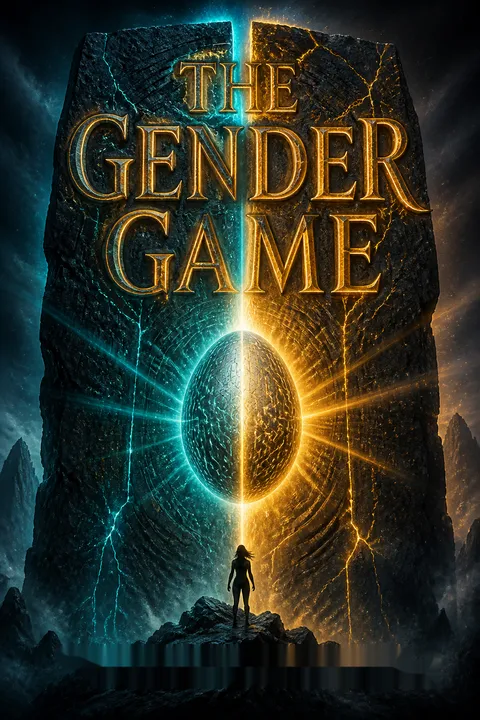
The Gender Game receives mixed reviews, with ratings ranging from 1 to 5 stars. Positive reviews praise the intriguing world-building, fast-paced plot, and strong female protagonist. Critics find the characters underdeveloped, the plot predictable, and the gender-based societies unrealistic. Some readers enjoy the dystopian setting and action, while others critique the lack of depth in exploring gender roles. The romance subplot garners mixed reactions. Many reviewers compare it to popular YA dystopian novels like The Hunger Games and Divergent.
People Also Read





Characters
Violet Bates
A fighter seeking agencyViolet is a quick-tempered survivor from Matrus, shaped by the loss of her mother and the state’s removal of her younger brother, Tim. Her physical confidence and instinct to defend the vulnerable coexist with a fear that anger will make her irredeemable. She has learned to endure detention by narrowing her attention to the next task, but that habit also makes her vulnerable to people who present obedience as the only route forward. Violet wants a chance to see Tim again, yet she increasingly judges her choices by their human cost. Her self-reliance is not simple toughness; it is a response to institutions that repeatedly make care dependent on permission.
Lee Bertrand
A divided laboratory insiderLee is a scientist working within Patrus and secretly loyal to Matrus, a position made possible by his mixed-national upbringing and careful control of what others know. He is methodical, guarded, and skilled at turning personal details into useful cover. His calm manner contrasts with Violet’s impulsiveness, which makes him appear dependable even when he withholds crucial information. He sees planning as a way to reduce risk and treats emotion as something that can disrupt a larger objective. That outlook gives him influence over Violet, who needs his help to survive in Patrus, but also makes their partnership uneasy: he offers protection while reserving the right to decide what she is allowed to understand.
Viggo Croft
A wary warden and fighterViggo is a solitary Patrian warden and accomplished fighter who lives in a mountain cabin and avoids the celebrity his skill could bring. He is observant, physically capable, and sparing with words, but his guarded manner is not indifference. His past marriage to a Matrian woman has given him firsthand knowledge of how the two societies can damage people caught between them. Viggo’s work requires him to enforce laws he does not always respect, leaving him divided between professional duty and private judgment. He responds to Violet’s courage with caution rather than easy approval, and their growing trust develops through shared action, especially when she insists that a woman’s suffering deserves to be heard.
Timothy Bates
Violet's lost younger brotherTim is Violet’s younger brother, marked by Matrus after failing the state’s screening for boys. He is still a child when Violet attempts to smuggle him across the river, and he remains the emotional center of her life after their separation. His affection for Violet is deep enough that he thinks of her as a mother, even though she is his sister. Tim’s absence drives Violet’s choices: she accepts a dangerous mission because the queen promises a visit, and she measures her future against the possibility of finding him.
Josefine Rankin
A child punished for migrationJosefine is an eight-year-old inmate at Merrymount, separated from her mother after they return to Matrus without permission. Curious and spirited beneath her shyness, she wants to become an environmentalist like her mother. Her small acts of resistance, including locking her dormitory door, reveal a child trying to preserve a sense of control inside an institution built to discipline her. Violet recognizes Tim’s vulnerability in Josefine and tries to teach her that refusing a bully is possible.
Queen Rina
Matrus's calculating monarchQueen Rina rules Matrus through a system that promises peace while imposing harsh controls, especially on boys deemed too aggressive. Her public authority is composed and commanding, and she presents national service as both duty and honor. Yet Violet’s private request for a visit with Tim reveals that Rina can be approached through personal incentives as well as patriotic appeals. She is the face of the power Violet serves, and the gap between her assurances and the system’s treatment of families gives the mission much of its moral tension.
Alastair Jenks
The Court's scientific envoyAlastair is a high-ranking scientist and adviser to Queen Rina, responsible for recruiting Violet and arranging the recovery mission. He speaks in terms of specimens, deadlines, and national security, withholding information he considers unnecessary for her role. His family’s work helped establish the screening system that separated Tim from Violet, giving her a personal reason to distrust him. Alastair sees Violet’s combat training and criminal record as useful qualifications, while presenting the mission as a chance for her to redeem herself.
Ms. Dale
Violet's former defense instructorMs. Dale taught Violet defense training before Tim’s capture and encourages her natural ability even after Violet’s life veers toward violence and detention. For the mission, she gives Violet practical instruction with firearms, crossbows, knives, and improvised weapons in the hazardous Green. She is direct but compassionate, aware that Violet has lost control of her anger before. Her warning to trust no one across the river reflects experience rather than cynicism.
Cad Thorne
Violet's cousin across the riverCad is Violet’s cousin and the helper who rows Tim away during the failed escape. Years later, his unexpected appearance in a Patrian restaurant threatens to expose Violet’s false identity. He represents a surviving link to her family, but the mission’s secrecy prevents her from speaking to him.
Dina Bradbury
A dangerous fellow inmateDina is a large, intimidating girl at Merrymount who bullies Josefine and uses hidden braces as weapons. She makes Violet’s protective instincts impossible to keep separate from her history of uncontrolled violence. Dina’s aggression raises the immediate stakes of Violet’s arrival at the mill.
Miriam
Viggo's Matrian wifeMiriam was a Matrian woman who married Viggo and struggled to live under Patrian restrictions. Her history, as Lee recounts it, shows how a woman’s attempt to defend herself can become a crime when the law gives her little credibility. The experience continues to shape Viggo’s caution and his understanding of Violet.
King Maxen
Patrus's ambitious new kingKing Maxen is a charismatic and politically shrewd ruler who wants Patrus to catch up with Matrus in medicine and biology. He backs the development of Benuxupane, a drug designed to suppress emotion while sharpening logic. His ambitions place the laboratory, the stolen specimen, and the strained relationship between the nations at the center of Violet’s assignment.
Ada
A woman inside Porteque's gangAda is a woman living among the men of Porteque, where she participates in the gang’s brutal punishment of women who challenge male authority. Her role makes visible how a coercive system can enlist people it harms to discipline others. Violet’s encounter with her is one of the mission’s most direct exposures to gendered violence.
Samuel
Lee's affectionate dogSamuel is Lee’s large, friendly dog and Violet’s companion during quiet hours at the mountain home. He offers uncomplicated warmth in a household full of secrets, surveillance, and rehearsed identities. Playing with him briefly gives Violet an ordinary routine in a country where she is rarely allowed to move freely.
Plot Devices
Veil River and the two nations
A border made intimateVeil River separates Matrus, ruled by women, from Patrus, ruled by men, and makes every migration a legal and personal rupture. Violet’s childhood attempt to get Tim across it fails, while her later crossing is arranged through a false marriage. The divide shapes the characters’ rights, work, family ties, and ideas of safety. Its toxic water and surrounding Green make the border physically dangerous as well as politically enforced. For Violet, the river is never merely a line on a map: it separates her from Tim and forces her to negotiate which society’s rules she will live under.
The crescent mark
A child's state labelMatrus marks boys who fail its screening with a black crescent, identifying them as unsuitable for its society and sending them away. Tim’s mark is the visible cause of Violet’s first attempted escape and the reason she accepts the later mission’s promise of a reunion. The symbol carries contradictory meanings: Matrus uses it as a verdict, while Patrus’s own crescent signifies growth and strength. The mark ties a private family loss to a national policy, while leaving the actual fate of the boys unresolved in Violet’s story.
The silver egg
A prize without contextThe silver egg is a protective casing stolen from Matrus and kept in a reinforced display at a Patrian laboratory. Lee tells Violet that it contains a vital specimen, but the leaders do not explain what it is before asking her to risk her life to recover it. Its hardened shell, unique key, and glass enclosure create the practical obstacles of the heist. When Violet opens it in the aircraft, she finds an embryo-like fetus suspended in liquid. Its identity and purpose remain unknown, making the device a revelation that deepens rather than resolves the political mystery.
Disguises and the tracker
Access through false identityViolet wears a padded male costume, wig, facial hair, colored lenses, and voice-deepening tablets to move through Patrus with more freedom than a woman is allowed. The disguise lets her plant an ingestible tracker in Viggo’s water and inspect his schedule at the gym. Its limitations are just as important: Viggo recognizes her when the beard comes loose, and a close encounter can expose her at any moment. Together, the costume and tracker show two forms of concealment, one that hides Violet from a society and another that secretly monitors a person she is learning to trust.
Benuxupane
Emotion under chemical controlBenuxupane is a Patrian drug intended to suppress emotion while sharpening logic. King Maxen’s government develops it as an instrument of national ambition, while Lee gives Violet a dose when grief and attachment threaten the mission. The drug does not erase her memories; it distances her from the feelings attached to them, making compliance easier. Its use links state policy to intimate coercion: the same desire to control emotion that guides a ruler’s project becomes a way for one person to manage another. Violet’s numbness therefore advances the heist while making the cost of obedience harder to feel.
The Gender Game Series





About the Author



Download PDF
Download EPUB
.epub digital book format is ideal for reading ebooks on phones, tablets, and e-readers.








