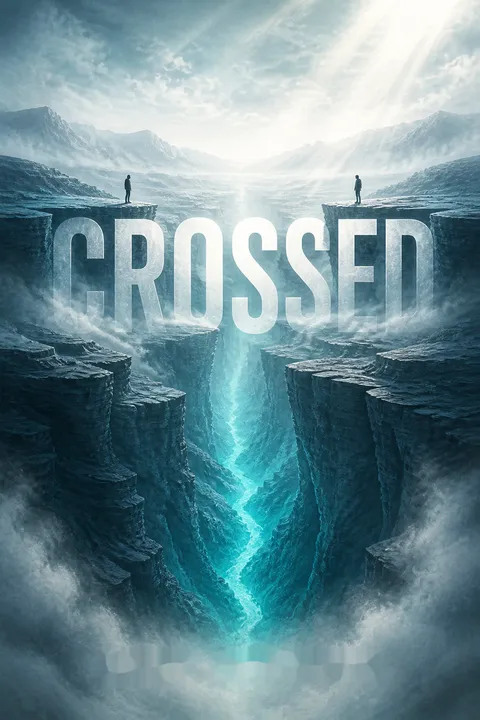


Plot Summary
The River Takes a Body
Ky Markham wades into a poisoned river to dispose of a boy killed by thirst in a holding camp. Vick, another Aberration, helps him despite the Officers’ warnings, and Ky recites a poem over the body because the Society has denied the dead even a final meal. In the Outer Provinces, the two men are forced to pose as villagers while enemy aircraft fire on them.
The Society calls their assignment temporary, but Ky knows the decoys are bait and none return. He and Vick bury the dead anyway, refusing to leave them for the Society to collect. Their small act of care gives Ky a reason to keep seeing each body as a person, not merely another casualty.
Ky’s refusal to leave the boy in the water establishes the novel’s ethical measure: a person’s worth is shown by what someone does after the state has stopped counting them. The Society’s language reduces Aberrations to expendable bodies, while Ky and Vick restore names, ritual, and burial with almost no tools. The poem is not yet a manifesto for Ky; it is a way of resisting the imposed blankness of death. His care is private, but it already carries a political charge because it contradicts the work the Society designed him to do.
Xander Returns
Cassia Reyes has spent months in hard labor camps, hoping to find a route to Ky before the Society sends her to Central for her final work assignment. She keeps a fragment of the painting Xander once gave her, along with Ky’s compass and the blue tablets Xander stole for her, though each object is difficult to protect.
Messages from home bring news of her brother Bram and the family’s relief that her work detail is nearly over. Then Xander, her childhood friend and official Match, appears at the camp for their delayed face-to-face meeting. His presence brings back warmth and grief at once: she loves him, but she has not stopped choosing Ky. The visit gives her one last chance to act before the Society decides where she goes next.
Cassia’s longing is not simply romantic fixation. The camp has stripped away the controlled comforts of her old life, making the objects she preserves into portable evidence of relationships the Society would rather regulate. Xander’s arrival complicates her resolve because affection for him is genuine, not a decoy she can dismiss. The chapter places her between two forms of belonging: the sanctioned future represented by her Match and the uncharted life she has chosen to pursue. Her growing willingness to risk reclassification shows that the search is changing her from a compliant observer into an actor.
The Compass Becomes a Price
On their permitted outing, Cassia asks Xander to take her to a small museum, where a display map might help her locate Ky. The tired museum worker recognizes the Tennyson poem she remembers from her grandfather and responds to it as a signal used by hidden traders.
Cassia offers Ky’s compass, hoping to buy directions into the Outer Provinces, but the Archivist can provide only a story about the Pilot, a leader associated with a rebellion called the Rising. He slips the story beneath her seat at a music hall. Cassia keeps Xander’s blue tablets instead of the compass, choosing a chance at survival over the keepsake that could guide her. Xander also tells her he is headed to Camas, a Border Province, before Central.
The exchange makes knowledge itself a form of contraband. Cassia expects information to function like a map, a direct route to Ky; instead she receives a political narrative whose meaning is uncertain and whose cost is personal. Trading the compass also reverses its symbolism. It was a tool for orientation, but she gives it up to pursue a future that cannot yet be plotted. Xander’s departure sharpens the emotional cost: Cassia does not reject him, but she cannot promise to build her life around the safe path he represents. Her choice is neither pure sacrifice nor certainty. It is an experiment in deciding without permission.
The Carving Beckons
In the village, Ky and Vick learn that the Society has sent younger replacements, including thirteen-year-old Eli. They know the decoys’ guns contain blanks, so Ky works out how to turn scavenged gunpowder into a single crude blast and shows the others how to use it.
He and Vick plan to flee during a night firing, when chaos might conceal their escape. Ky chooses to bring Eli, who reminds him of Cassia’s younger brother, even though the boy may slow them down.
When aircraft attack beneath a full moon, Ky, Vick, and Eli run toward the Carving, a vast maze of canyons. Ky leaves the other decoys behind, hoping the blast will give them a chance to resist. The decision keeps three alive, but leaves Ky carrying the knowledge of whom he could not save.
Ky’s escape is a morally compromised act of care. He cannot rescue the whole village, and he knows that leaving others behind resembles the abandonment he despises. Yet he does not turn that guilt into a grand promise to save everyone. He chooses Vick and Eli, then leaves the others a weapon that might help them fight once. The distinction between leadership and rescue matters: Ky acts without claiming the authority of a leader, while still accepting responsibility for the people beside him. His decision is practical, but his choice of Eli reveals that memory and attachment influence even the calculations he claims are only about survival.
Cassia Boards the Death Ship
At dawn, Officers take girls from Cassia’s camp for transfer to the Outer Provinces. Indie, a sharp-eyed fellow worker, slips away and is caught trying to run; Cassia hides her own citizenship tablets and Xander’s supplies before boarding the same airship.
Indie secretly tucks Cassia’s packet into her coat before the Officers search the passengers, and the two women begin to trust each other without knowing what either is concealing. The Official calls the assignment a temporary farming rotation, but the girls are given little food, no weapons, and instructions to impersonate villagers.
When they land, Ky is nowhere among the black-coated boys. A burned-handed survivor recognizes his description and says Ky escaped two nights earlier into the Carving. Cassia persuades the boy to guide her, and Indie joins the run.
The transfer turns Cassia’s private decision into a physical crossing. Her survival depends not on the Society’s assurances but on a small, improvised alliance with Indie, whose help is both generous and guarded. Their exchange of hidden objects creates intimacy without requiring confession; trust begins as a practical risk taken for another person. Cassia’s failure to find Ky immediately could have broken her resolve, but the survivor’s account changes the problem from a distant search into a dangerous route with a real trail. The Society’s official story and the decoys’ lived knowledge now openly conflict, and Cassia chooses the testimony of those it has marked for disposal.
A Township Without People
Inside the Carving, Ky, Vick, and Eli find the settlement Ky’s father once described, but its farmers have left. Their houses still hold paintings, and the caves contain stored food, books, and maps. Eli spots that the valuable records must have been hidden high above the flood line, and the three discover a cache of old writing along with a map showing a route across a plain toward distant mountains.
Ky hopes to trade the books with an Archivist and send Cassia a message. A light in one of the houses suggests someone remains, so the group leaves quickly, taking food and a map rather than staying to investigate. The records confirm that the Rising is real, but Ky refuses to treat its existence as proof that it can save them.
The empty township offers Ky a model of life outside both Society and rebellion: people built homes, made art, kept books, and learned to survive through collective knowledge. Its absence makes that freedom feel fragile rather than idealized. The map supplies direction, but the books matter just as much because they preserve choices the Society has edited away. Ky’s skepticism about the Rising is rooted in experience, not ignorance; he knows the name, yet doubts that a movement can protect the people drawn into it. The light in the empty settlement unsettles the group’s assumption that the past is finished, and their decision to leave shows how danger governs even their curiosity.
Blue Marks on Stone
Cassia and Indie find little evidence of Ky in their first canyon, so they ration food and keep moving. When Cassia offers Indie a blue tablet, Indie refuses and explains that the tablets can stop a person’s body rather than save it.
As they shelter, Indie describes her mother’s attempt to escape by boat and her belief in a rebellion on an island. Cassia recognizes the story as another path toward the Rising and begins to understand that the rebellion’s symbols mean different things to different people.
The women climb out of the canyon using Indie’s experience as a climber. At the top, they find dozens of charred bodies marked with blue lines and red flags planted along the ridge. The dead appear to be the people they came to find, so they take a rope and leave before whoever killed them returns.
Indie’s story gives Cassia a companion whose hope has its own history rather than merely echoing hers. The boat represents a desire to leave the shore of a prescribed life, while the blue-marked dead reveal the price paid by people who tried to resist openly. Cassia’s belief in the Rising strengthens even as its apparent destruction challenges her. The scene also sharpens the novel’s contrast between symbols and institutions: a poem, a boat, or a colored mark can carry hope, but none guarantees safety. Indie and Cassia’s decision to take the rope rather than remain with the dead is not indifference. It is a recognition that survival may be the only way to learn what happened.
The River Kills Vick
After leaving the township, Ky, Vick, and Eli cross an exposed plain, where Vick teaches the others to catch fish by hand. He tells Ky about Laney, the Anomaly he loved in Camas, and the unofficial ceremony they shared before the Society separated them.
The next morning, aircraft strike the stream, damming its flow and dropping spheres that release poison. Vick is killed beside the water, where a trapped rainbow trout has drawn him close. Ky and Eli pull as many toxic spheres from the pools as they can, though they cannot restore the river.
Then they bury Vick, leave him in his coat, and mark the grave with a sandstone fish. Eli demands the poem Ky usually recites, but Ky cannot say it. He carries Vick’s loss forward, along with the knowledge that even a small act against the Society may be futile and still necessary.
Vick’s death fuses private grief with environmental destruction. The Society’s attack targets a stream, but it also kills a man whose last hope was tied to the living colors of a fish. Ky and Eli’s effort to remove the poison cannot undo the damage; its value lies in refusing to let destruction become an excuse for passivity. Ky’s inability to recite the poem marks a break in his familiar ritual, while the carved fish gives Vick a memorial that the Society’s data cannot interpret. Vick’s story of Laney also makes the decoys’ hidden lives visible: they have loved, chosen, and made commitments beyond the classifications imposed on them.
A Name in the Cottonwood
In a second canyon, Cassia becomes ill after swallowing one blue tablet, and her confidence in Xander’s gift clouds her judgment. She and Indie find their earlier guide dead beside a disguised Society wall, his hands bloodied from trying to enter it.
They use the rope taken from the ridge to return to the first canyon. There, Cassia discovers her name carved into a young cottonwood and bootprints leading onward. Ky and Eli are crossing the plain after burying Vick when Cassia appears on the rocks and signals toward the sky.
Ky recognizes her and runs to meet her. Their reunion is immediate, but the group cannot stop for long: Ky tells her Vick is gone, Indie warns that Cassia’s tablet has poisoned her, and they shelter in the canyon to recover and decide where to go.
The cottonwood makes recognition possible without turning it into rescue by magic. Ky’s carving is a deliberate sign, and Cassia has to survive uncertainty, illness, and a failed route before she can read it. Her belief in Xander’s tablets exposes a painful gap between affection and knowledge: a gift can be made with love and still be dangerous. The reunion does not erase the people lost on either side of it. Vick’s absence enters the group immediately, preventing romance from becoming a private refuge sealed off from consequence. Cassia and Ky have found each other, but they must now learn how to make decisions together under pressure.
The Cavern Stores the Living
Near the farmers’ township, Cassia, Ky, Indie, and Eli watch Hunter bury a young girl and learn that she was his daughter, Sarah. He agrees to help them reach the Rising if they help him investigate a sealed chamber the Society built inside the Carving.
Hunter guides them through a concealed passage into the Cavern, where climate-controlled cases hold hundreds of thousands of tissue samples labeled by name and Province. Cassia realizes the Society has collected samples from living people, not only from the dead, and finds tubes bearing her and Xander’s names.
Hunter breaks one in horror, convinced the Society has preserved people for its own use. A warning light begins flashing, forcing the group to flee. The discovery turns the Society’s promise of long life into a machinery of possession.
The Cavern makes the Society’s ideal of preservation physically visible: human beings are reduced to labeled matter, carefully arranged and kept available for an institutional future. Cassia’s own sample unsettles her because the promise of being protected by the system is inseparable from being owned by it. Hunter’s grief gives the revelation a different scale. He sees the samples not as an abstract medical project but as evidence that people like his family were sacrificed to preserve others. The group’s escape begins before anyone can determine the full purpose of the archive, keeping the discovery morally potent but factually incomplete. Control here is not only surveillance; it is the claim to decide what a person is after death.
The Map Burns Between Them
After the group escapes the Cavern, Indie shows Ky a coded cloth map leading toward the Rising and argues that he may be the Pilot. She also reveals that Xander belongs to the rebellion, a secret Ky has been keeping from Cassia.
Convinced that the Rising could take Cassia from him, Ky burns the map. Cassia arrives with Hunter and stamps out the flames, saving most of it; she confronts Ky for taking away her chance to choose. Indie then returns Cassia’s stolen microcard and a miniport, admitting she had hidden them since the work camp.
Cassia sees Xander’s official record and recognizes Indie’s feelings for him, but the promised secret remains unexplained. She refuses the red tablet that could erase the argument and chooses to remember what Ky did.
The burned map makes the conflict concrete: Ky’s fear becomes an action that limits Cassia’s freedom, echoing the Society’s habit of choosing on other people’s behalf. His motive is protective, but the effect is still coercive. Cassia’s refusal of the red tablet matters because forgetting would let her preserve affection without confronting the damage it has sustained. Indie complicates the scene by returning what she stole, not because her methods were innocent but because she wants Cassia to see Xander and choose with fuller knowledge. The three characters are caught in different forms of concealment: Ky withholds, Indie investigates, Cassia tries to interpret. None can claim that love makes those choices harmless.
The Farmers Choose Their Own Way
A storm traps the group near the township while they gather food, books, and supplies. Hunter explains that the farmers refused the Rising for generations, though younger members sometimes left to join it. He once considered going himself but stayed with Catherine, Sarah’s mother, and later could not leave their sick child behind.
During the Society’s renewed assault, the farmers split: some crossed the plain to escape, while others remained to fight. Hunter left with Sarah because she could not travel, then returned to honor his promise to seal the Cavern.
He tells the others that the Society killed Sarah, and Ky helps him wire explosives to collapse the hidden entrance. The blast also damages houses and dams part of the stream. With the Society closing in, the group must leave the Carving and decide whether to follow Hunter toward the mountains or seek the Rising by river.
Hunter’s history refuses the easy division between courageous rebels and fearful holdouts. The farmers’ refusal to join the Rising is a deliberate form of self-government, while Hunter’s decision to stay is shaped by love and obligation rather than ideological loyalty. Their later split exposes the cost of a collective decision when individuals face different risks. By helping seal the archive, Ky offers Hunter practical solidarity without accepting the Rising as a cause. The explosion then repeats the novel’s pattern: an act meant to protect one thing damages another. The blocked stream and ruined homes make every route forward costly, leaving the group to practice choice under conditions where no option is clean.
One Boat, Four Destinations
As the group reaches the river, they have a boat that can carry only two people. Cassia refuses to sort companions by worth as she once sorted Ky for the Society; instead she sends Eli with Hunter toward the mountains, where he may find the farmers who crossed the plain.
Indie will pilot Cassia downstream toward the Rising, while Ky follows on foot. Before they separate, Ky apologizes for lying and admits that, after his parents died in a firing, he ran rather than carrying or burying them.
Cassia does not excuse the choice, but she recognizes that his guilt has shaped the way he sees himself. They take each other’s hands and try again. When the current catches Cassia and Indie’s boat, they capsize in poisoned water, cling to the hull, and right it together.
This departure turns choice from an abstract political right into a painful distribution of risk. Cassia does not calculate who deserves the safest route; she responds to Eli’s youth, Hunter’s destination, and Indie’s skill, while accepting that Ky will be separated from her again. Her refusal to repeat the Society’s sorting does not mean she can avoid choosing. Ky’s confession is equally important because it replaces a heroic version of survival with a shameful, human one. Cassia cannot alter what happened, but she can refuse to let his worst memory become the only definition of him. The capsized boat tests their new trust immediately, and Indie’s competence converts a symbolic journey into a physical escape.
The Rising Sends Cassia Back
Cassia and Indie reach a Rising camp beside a lake, where Officers question them and test them for river contamination. The Rising studies Cassia’s Society record and assigns her to return to Central, where she can serve from inside the system.
Ky arrives on foot and is assigned to train as an airship pilot in Camas. He finds Indie at the camp and learns that she, too, survived the river. Before leaving, Ky trades access to the farmers’ books with an Archivist, asking that the papers be sent to Cassia in Central.
The Rising’s decision frustrates Cassia’s hope to remain with the rebellion, but it does not end her search for agency. Months later, she receives Ky’s message and turns down a proposed trade whose price is too low. She plans to meet him that night.
The ending avoids treating the Rising as a perfected alternative to the Society. It uses records, assignments, decontamination, and strategic placement, yet interprets Cassia’s data differently and returns her to a position from which she can act. Ky’s pilot training gives his practical skill a new use without confirming Indie’s grander belief that he must be a destined leader. His trade with the Archivist also preserves the material culture the Society tried to erase, sending books and papers toward Cassia rather than claiming them for himself. The final message offers reunion as a possibility, not a completed reward. Cassia’s refusal of a bad trade shows that she now measures value for herself.
Analysis
Crossed makes classification feel most powerful when it becomes ordinary. The Society’s terms, Citizen, Aberration, and Anomaly, do more than rank people. They determine who receives family protection, who is sent to the villages, whose body becomes a source of data, and whose death is treated as an expected outcome. The decoys’ false promise of a six-month return is an administrative sentence disguised as work. Against that machinery, the novel offers small acts with material consequences: Ky and Vick bury the dead, Cassia preserves scraps of art, Indie hides a microcard, and Eli insists the poisoned stream is still worth trying to save.
The book also questions the easy romance of rebellion. Ky distrusts the Rising because his father’s resistance preceded a massacre, and Hunter’s farmers have their own reasons for refusing to join. The rebellion is real, but it is not automatically just, safe, or suited to everyone. Cassia’s desire to find it grows from a genuine need to act, yet Ky’s attempt to burn its map shows that love can reproduce the very control it opposes. Their conflict is not simply between loyalty and freedom. It is about whether protection without consent can still be called care.
Art and memory provide a counterweight to data. The Society stores tissue samples as if a person could be recovered from biological fragments, while the farmers’ paintings, books, and graves preserve particular lives through chosen marks. Ky’s carvings and paintings do not erase his failures; they let him acknowledge them. Cassia’s poems do not solve the political struggle, but they give her language not selected by the Society. The ending remains open because neither a reunion nor an assignment can settle the larger question of who will control their lives. Instead, Cassia and Ky move toward a relationship built on incomplete knowledge, repeated choice, and the willingness to let the other person decide.
Review Summary
Crossed received mixed reviews, with many readers finding it slow-paced and lacking action compared to its predecessor. Some praised Condie's poetic writing style and character development, while others felt the plot was uneventful and the dual narration confusing. The new characters and expanded world-building were generally well-received. Many readers expressed disappointment with the lack of answers to questions raised in the first book. Despite criticisms, fans of the series appreciated the continued exploration of themes like love, choice, and rebellion against society.
People Also Read


Characters
Cassia Reyes
The searching sorterCassia is a gifted sorter raised to trust the Society’s careful categories, yet she is increasingly drawn to what those categories cannot contain: memory, art, and unsanctioned love. Her bond with Ky gives her a reason to cross the Society’s boundaries, while her affection for Xander keeps that choice emotionally complicated. Cassia notices patterns and details, but her skill can also become a way to control uncertainty by trying to classify people. Her challenge is to keep choosing without reducing those she loves to the safest or most useful option. The poems and fragments she carries are not just keepsakes; they are evidence that an inner life can survive outside official records.
Ky Markham
The guarded makerKy is an Aberration shaped by the Outer Provinces, where survival depends on reading land, repairing broken things, and keeping still when attention is dangerous. He writes, carves, and paints, skills the Society has no place for, and his ability to create sits beside a deep mistrust of movements that promise to save everyone. Ky loves Cassia but struggles to let her see the parts of himself he considers shameful. He often mistakes withholding for protection and private endurance for moral strength. His loyalty is real, though it can become possessive when fear takes over. The landscapes he knows are not scenery to him; they are practical knowledge, memory, and a possible route to freedom.
Xander Carrow
The loyal first MatchXander is Cassia’s childhood friend and official Match, a warm, capable young man whose talents have brought him a promising place in Society life. He is skilled at games, perceptive about other people, and inclined to make practical help out of affection. His relationship with Cassia contains genuine tenderness, even when her commitment to Ky wounds him. Xander wants to be understood as a person rather than only as the ideal partner the Society selected, but he is also careful about what he reveals and when. His gifts to Cassia carry both generosity and risk, showing that even someone favored by the system can act beyond its rules.
Indie
The restless climberIndie is a sharp, self-directed girl from a work camp who trusts action more than official assurances. Her bluntness can look like coldness, but she notices when others are vulnerable and can risk herself to help them. She is drawn to escape, the sea, and the possibility of a rebellion that might give her life direction. Indie keeps parts of herself hidden, partly from caution and partly because she wants to discover what others are hiding. Her independence makes her a valuable companion, but it also complicates trust: she may help someone while pursuing a separate aim. Climbing, piloting, and carrying what matters become expressions of her refusal to wait for permission.
Vick Roberts
The reluctant leaderVick is an Aberration from Camas who becomes the informal leader of the decoys because others respond to his steadiness and blunt authority. He is practical, suspicious of the Society, and more openly angry than Ky, yet he also carries a private tenderness connected to Laney, the woman he loved. Vick rarely asks for sympathy, and his jokes often cover the weight of what he has lost. He understands that leadership is not the same as control, even when others look to him for direction. His choices are shaped by an unresolved question: whether the people he loves are still safe beyond his reach.
Eli
The youngest decoyEli is a thirteen-year-old Aberration sent to the Outer Provinces despite his youth. He asks direct questions, notices inconsistencies in the Society’s cover stories, and remains stubbornly interested in what lies beyond immediate survival. His family history gives him grief he does not want to discuss, but he still makes choices for himself and treasures the books he finds. Ky sees a resemblance to Cassia’s brother Bram, though Eli is not simply a substitute for someone at home. His insistence that small efforts matter challenges the older boys’ cynicism and gives the group a younger voice that refuses to confuse realism with surrender.
Hunter
The last farmer guardingHunter is a young farmer who has lived in the Carving, where survival requires knowledge of floods, climbing routes, stored food, and the hidden passages of the township. He speaks with the formality of a community that preserved its own customs outside the Society. Hunter is grieving and tired, but he remains bound by promises to the people who trusted him. His loyalty to his family and his responsibilities to the farmers pull in different directions, making him wary of simple answers about the Rising. He is capable of force, yet his choices are often shaped by care for the dead and protection of the records left behind.
Bram Reyes
Cassia’s younger brotherBram is Cassia’s younger brother, still living with their parents while she is sent to work camps. His messages keep her connected to home and to a family life she cannot easily return to. He is playful and prone to exaggeration, which makes his reports feel recognizably personal rather than official.
Patrick Markham
Ky’s adoptive unclePatrick is Ky’s adoptive uncle, a practical and compassionate man who gave Ky a place in his household after the loss of his own son. He quietly helped Ky learn to sort and find ways to use his intelligence despite the Society’s low expectations for him. Patrick’s care is expressed through discreet acts that protect Ky without pretending the system is fair.
Aida Markham
Ky’s adoptive auntAida is Ky’s adoptive aunt and Patrick’s partner. She offers Ky familial warmth without making him earn it, and she passes along an inherited compass that links him to the family he lost. Her presence gives Ky a model of love that is generous rather than possessive.
Grandfather
Cassia’s keeper of poemsCassia’s grandfather leaves her poems and memories that she cannot fully interpret until she has left the Society’s protected world. He is a patient presence in her childhood, encouraging her to notice what official histories omit. His gifts become a private inheritance of language, beauty, and unanswered questions.
Laney
Vick’s lost loveLaney is the Anomaly Vick loved in Camas. She shared his belief that a person could choose a life beyond Society rules, and her disappearance gives his memories their quiet ache.
Sarah
Hunter’s young daughterSarah is Hunter’s daughter, a child raised among the farmers of the Carving. Her life reflects the close family bonds and fragile survival that shape the community there.
Anna
The farmers’ former leaderAnna leads the farmers before the events of the novel. Her decisions reflect the community’s long commitment to independence and its cautious refusal to join the Rising.
Catherine
Hunter’s partnerCatherine is Hunter’s partner and a member of the farmers’ community. She is closely tied to its future and to the family life Hunter builds in the Carving.
Cassia’s parents
The family left behindCassia’s parents allow her to search for Ky even though they fear what leaving the Society may cost her. Their messages and their care for Bram remain an emotional anchor, reminding Cassia that choosing freedom does not erase the people she loves.
Plot Devices
The Pilot and the poems
A coded path to rebellionA poem Cassia inherits from her grandfather becomes a signal recognized by hidden traders, while a story about the Pilot gives her a first glimpse of the Rising. Ky also knows related traditions, but keeps what he knows to himself. The poems therefore function as both literary inheritance and imperfect intelligence: they connect people who have never met, but never provide a complete map. Their shifting meanings let Cassia and Indie imagine different kinds of leadership, while the story’s repeated acts of recitation and remembrance resist the Society’s control over language and history.
The compass and tablets
Gifts with hidden costsKy’s compass offers direction, while Xander’s blue tablets appear to offer a way to survive without food or water. Cassia gives up the compass to obtain information about the Outer Provinces, then relies on the tablets when she is hungry and exhausted. Their true danger emerges when she becomes ill and learns that the Society’s claims about them are false. The objects carry the care of the people who gave them, but their usefulness is not guaranteed by good intentions. Together they test whether Cassia can distinguish affection from safety and whether she can keep moving after familiar tools fail.
The wired coats
Warmth conceals surveillanceThe coats issued to the decoys contain warming wires that help them survive the cold, along with blue wiring and small disks that record bodily data. Ky discovers the hidden devices and removes them from his own coat and Vick’s, depriving the Society of information it expects to collect after their deaths. The coats embody the system’s method of making exploitation feel like care: the Society keeps the prisoners warm not because it values them, but because it wants complete records. Later, the Cavern’s tissue archive reveals a wider version of the same impulse to preserve and possess human material.
The farmers’ map
A choice beyond the canyonThe map found in the farmers’ hidden archive charts a route out of the Carving, while a separate coded cloth map points toward the Rising. Together, the maps change escape from a desperate run into a series of decisions about destination and allegiance. The farmers’ records also preserve routes, stories, and knowledge that the Society has excluded from its official geography. Ky’s attempt to destroy the coded map shows that a map can be more than information: controlling who sees it is a way to control another person’s future. Cassia saves it because she insists the decision must remain hers.
The Carving
A hidden world of choicesThe Carving is a network of canyons, streams, caves, and settlements that hides people from the Society while making survival physically difficult. Ky knows its landscape through childhood memories, while Cassia and Indie learn it through climbing, hunger, and failed routes. It shelters the farmers’ homes and archives, but also exposes travelers to flash floods, poison, and Society incursions. The Carving functions as an alternative geography: what the Society’s map omits is not empty space but another history, with its own communities and ways of living. Its scale makes escape possible, never safe.
FAQ
Synopsis & Basic Details
What is Crossed about?
- Journey for love and freedom: Crossed follows Cassia's determined journey to find Ky in the Outer Provinces, while Ky struggles to survive as a decoy. Both characters are drawn into the mysteries of a rebellion called the Rising, challenging the Society's control.
- Exploration of choice and sacrifice: The story explores the sacrifices characters make for love and freedom, as Cassia and Ky navigate dangerous landscapes and make difficult decisions that test their loyalties and beliefs.
- Unveiling a larger world: The narrative expands the world beyond the Society's control, introducing new characters, settings, and the complexities of a rebellion, hinting at a larger conflict and a fight for a different future.
Why should I read Crossed?
- Intense emotional journey: Crossed offers a deeply emotional experience, exploring the power of love, loss, and hope in the face of oppression, making readers invested in the characters' fates.
- Complex characters and relationships: The novel features complex characters with nuanced motivations and evolving relationships, adding depth to the story and prompting readers to question their own beliefs.
- Thought-provoking themes: The book delves into thought-provoking themes of control, freedom, and the nature of choice, encouraging readers to reflect on the world around them and the power of individual action.
What is the background of Crossed?
- Dystopian Society control: The story is set in a dystopian future where the Society controls every aspect of life, from career choices to relationships, creating a world of rigid rules and limited freedom.
- Outer Provinces as a dumping ground: The Outer Provinces serve as a harsh and dangerous environment where the Society sends Aberrations and Anomalies, highlighting the Society's cruelty and disregard for human life.
- Emergence of a rebellion: The Rising, a rebellion against the Society, provides a backdrop for the characters' journeys, hinting at a larger conflict and the possibility of a different future beyond the Society's control.
What are the most memorable quotes in Crossed?
- "For tho' from out our bourne of Time and Place / The flood may bear me far, / I hope to see my Pilot face to face / When I have crossed the bar.": This quote, used by Ky over the dead, symbolizes hope, guidance, and the possibility of a life beyond the Society's control, connecting to the theme of rebellion.
- "You left me before you left Oria.": Xander's poignant statement to Cassia reveals the emotional complexities of their relationship and the impact of her choice to pursue Ky, highlighting the theme of love and sacrifice.
- "You really want this? You want Ky, whatever the cost?": This question from Xander to Cassia underscores the central conflict of the story, forcing Cassia to confront the sacrifices she is willing to make for love and freedom.
What writing style, narrative choices, and literary techniques does Ally Condie use?
- Alternating perspectives: Condie uses alternating perspectives between Cassia and Ky, allowing readers to experience the story from different viewpoints and understand their individual struggles and motivations.
- Symbolism and imagery: The author employs rich symbolism and imagery, such as the poisoned rivers, the Carving, and the color blue, to enhance the story's themes and create a vivid and immersive reading experience.
- Poetic language and allusions: Condie incorporates poetic language and literary allusions, such as the poems by Tennyson and Thomas, to add depth and meaning to the narrative, connecting the characters' experiences to broader human themes.
Hidden Details & Subtle Connections
What are some minor details that add significant meaning?
- Notches on boots: The notches carved into the boots of the decoys in the Outer Provinces serve as a subtle yet powerful symbol of time survived and the harsh realities of their existence, highlighting the Society's disregard for their lives.
- The color blue: The recurring motif of the color blue, from the blue tablets to the sky, symbolizes both hope and the Society's control, creating a complex and layered meaning that evolves throughout the story.
- The silver box: The silver box from Cassia's Match Banquet, initially a symbol of the Society's control, becomes a hidden object of value, representing her connection to her past and the choices she has made.
What are some subtle foreshadowing and callbacks?
- The Tennyson poem: The poem "Crossing the Bar," which Ky recites over the dead, foreshadows his own journey and the possibility of finding a "Pilot" or guide, hinting at the rebellion and his role in it.
- The red garden day: Grandfather's memory of "the red garden day" foreshadows Cassia's connection to the natural world and her eventual journey into the Outer Provinces, where she encounters red rocks and a different kind of life.
- The broken paintbrush: Ky's broken paintbrush from his childhood foreshadows his later ability to carve and create, highlighting his artistic nature and his connection to his past, as well as the Society's attempts to suppress creativity.
What are some unexpected character connections?
- Indie and Xander: Indie's hidden admiration for Xander, revealed through her possession of his microcard, creates an unexpected connection between two characters who never directly interact, adding complexity to the love triangle.
- Ky and the Archivists: Ky's father's past connection to the Archivists, revealed through his trading history, creates a link between Ky and the underground network, hinting at a larger world beyond the Society's control.
- Vick and Laney: Vick's story about Laney, an Anomaly he loved, reveals a hidden connection between the Aberrations and Anomalies, highlighting the Society's attempts to divide and control them.
Who are the most significant supporting characters?
- Vick Roberts: Vick's leadership and his shared experiences with Ky in the Outer Provinces make him a significant supporting character, highlighting the bonds of friendship and the struggle for survival.
- Indie: Indie's resourcefulness and her connection to the Rising make her a crucial ally for Cassia, adding depth to the story and challenging Cassia's perceptions of the world.
- Hunter: Hunter's knowledge of the Carving and his connection to the farmers make him a significant guide for Cassia and Ky, revealing the history of the Outer Provinces and the complexities of the rebellion.
Psychological, Emotional, & Relational Analysis
What are some unspoken motivations of the characters?
- Ky's fear of leadership: Ky's reluctance to embrace the Rising stems from his fear of repeating his father's mistakes and the responsibility of leading others, highlighting his internal struggle with his past.
- Cassia's need for control: Cassia's desire to sort and organize her surroundings reflects her need for control in a world where she feels powerless, revealing her internal struggle with the Society's influence.
- Indie's desire for belonging: Indie's fascination with the Rising and her desire to be part of something larger stems from her longing for belonging and purpose, highlighting her search for identity outside the Society's control.
What psychological complexities do the characters exhibit?
- Ky's survivor's guilt: Ky's survivor's guilt over his parents' deaths and his inability to save the other decoys in the villages creates a complex psychological burden, shaping his decisions and his view of the Rising.
- Cassia's internal conflict: Cassia's internal conflict between her love for Ky and her loyalty to Xander reveals the psychological complexities of her choices and the challenges of navigating a world where love is controlled.
- Indie's hidden vulnerability: Indie's tough exterior hides a deep vulnerability and a longing for connection, revealing the psychological impact of her past experiences and her search for belonging.
What are the major emotional turning points?
- Cassia's reunion with Xander: Cassia's reunion with Xander, while comforting, forces her to confront her feelings for both him and Ky, creating a major emotional turning point that tests her resolve.
- Ky's discovery of the blue tablets: Ky's discovery that the blue tablets are poison, not a means of survival, shatters his trust in the Society and forces him to confront the reality of their cruelty, leading to a major emotional shift.
- Cassia's discovery of the Rising: Cassia's discovery of the Rising and the Pilot ignites a new sense of hope and purpose, marking a major emotional turning point that fuels her determination to find Ky and fight for a better future.
How do relationship dynamics evolve?
- Cassia and Ky's bond deepens: Cassia and Ky's relationship deepens as they navigate the challenges of the Outer Provinces, their shared experiences strengthening their bond and highlighting the power of love in the face of adversity.
- Cassia and Indie's alliance forms: Cassia and Indie's alliance evolves from a shared experience in the work camp to a complex friendship based on mutual respect and a shared desire for freedom, highlighting the power of female solidarity.
- Ky and Vick's friendship tested: Ky and Vick's friendship is tested by the harsh realities of the Outer Provinces, as they grapple with the weight of leadership and the fear of loss, revealing the complexities of male bonds in a dystopian world.
Interpretation & Debate
Which parts of the story remain ambiguous or open-ended?
- The true nature of the Rising: The true nature of the Rising and its goals remain ambiguous, leaving readers to question whether it is a force for good or another form of control, adding complexity to the characters' choices.
- The Pilot's identity: The identity of the Pilot and their true motivations remain a mystery, leaving readers to speculate about the leader of the rebellion and their role in the larger conflict.
- The Society's ultimate goals: The Society's ultimate goals and the reasons behind their actions remain ambiguous, leaving readers to question their motives and the true nature of their control.
What are some debatable, controversial scenes or moments in Crossed?
- Cassia's choice to leave Xander: Cassia's decision to leave Xander and pursue Ky is a controversial moment, prompting readers to question the nature of love and the sacrifices one is willing to make for it.
- Ky's decision to leave the decoys: Ky's decision to leave the other decoys behind in the villages is a controversial moment, prompting readers to question the morality of his actions and the complexities of survival.
- The use of blue tablets: The Society's use of blue tablets as a means of control and death is a controversial element, prompting readers to question the ethics of power and the value of human life.
Crossed Ending Explained: How It Ends & What It Means
- Cassia and Ky's separation: The ending sees Cassia and Ky separated once again, with Cassia returning to the Society and Ky heading towards the Rising, highlighting the challenges of their relationship and the uncertain future they face.
- Indie's decision to join the Rising: Indie's decision to join the Rising, while Cassia returns to the Society, underscores the different paths the characters choose and the complexities of their individual journeys.
- Hope for the future: Despite the separation, the ending leaves readers with a sense of hope, as Cassia and Ky remain determined to fight for a better future, hinting at the possibility of change and the power of individual action.
Matched Series
Download PDF
Download EPUB
.epub digital book format is ideal for reading ebooks on phones, tablets, and e-readers.








