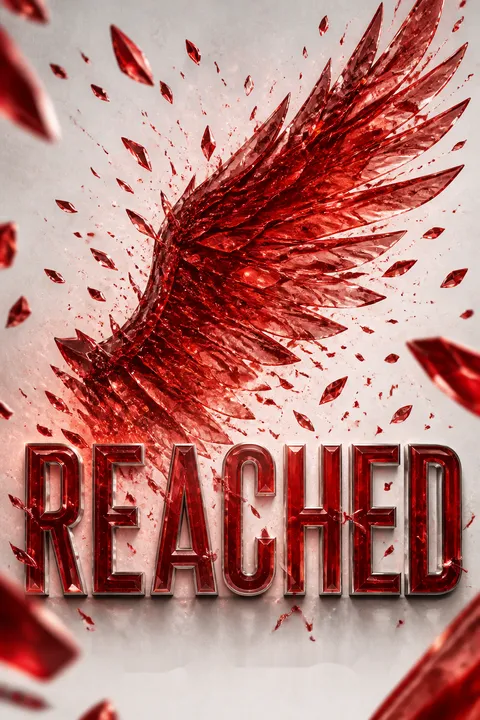


Plot Summary
Prologue
A man repeatedly pushes a stone uphill, wearing a channel into the ground as villagers watch from a distance. A curious child discovers that the stone bears the names of the world’s sorrows.
The man explains that he is shaping a river, and when rain finally fills the groove, the current carries him away. The child takes his place. The Pilot, the story says, is not one immortal person but a role passed from one life to another, guiding a rebellion that must keep moving.
The parable makes leadership an act of labor rather than a special identity. The stone’s burden is the accumulated suffering of people who have been abandoned, while the channel turns repeated effort into a route others can use. The child does not inherit a throne or a finished world; she inherits responsibility. That image prepares the novel to question whether the Rising’s celebrated leader can truly save anyone alone, or whether the work of piloting belongs to many people.
A Red Mark Appears
Newly appointed Medical Official Xander Carrow carries out a quiet act of rebellion during a Welcoming Day ceremony in Camas. He replaces newborn Ory Farnsworth’s Society tablet with one supplied by the Rising, which should protect the child from disease and from the memory-erasing red tablet.
As Xander leaves, Ory’s father runs after the Officials: the baby’s older brother lies unresponsive, breathing slowly, with a red mark between his shoulders. Xander recognizes the sign from Rising intelligence. The Society has tried to contain this illness, but its arrival in an ordinary home means the outbreak is no longer hidden. Xander believes the Rising has a cure and waits for the revolt to begin.
Xander’s first intervention is both intimate and political: he changes one infant’s future while standing inside the institution that controls it. The sick boy turns the rebellion’s promised timetable into a family’s immediate terror. Xander’s confidence in the cure lets him interpret the mark as evidence of a plan, but the parents experience only uncertainty. The scene establishes a tension the book keeps testing: a resistance can possess knowledge the public lacks, yet its secrecy leaves ordinary people alone with the consequences.
The Banquet Sort Breaks
Back in Central, sorter Cassia Reyes lives under a cover story that says she survived the Outer Provinces after losing her memory. She hides poems against her skin and keeps a scrap marked with a reminder in case Officials make her take the red tablet. At an unexpected late shift, she finds the exact sorting task the Rising told her to watch for.
Cassia deliberately mismatches people in a Match data set, helping disrupt the Society’s most public ceremony. Officials then order the sorters to swallow their red tablets. Cassia hides her reminder in her sleeve and takes hers. On the train home, she realizes the tablet worked: she has forgotten the shift, though she still remembers Ky is meant to meet her.
Cassia’s resistance depends on preserving the possibility of memory, even when she cannot preserve the memory itself. Her hidden scrap is a small safeguard against a system that defines forgetting as normal. The compromised Match sort matters beyond romance: the Society’s claim to know people through data is vulnerable to a sorter’s deliberate human judgment. Cassia’s own lost hours expose the cost of that resistance. She helps break the system, then becomes one of its victims again.
The Cure Takes Flight
In a Rising flight camp, Ky Markham trains as a pilot and hopes an assignment to Central will bring him close to Cassia. Instead, he flies with Indie Holt and runner Caleb toward Grandia.
Mid-flight, the Pilot reveals that the Society created the Plague to destroy the Enemy, then concealed its existence and blamed deaths on the Outer Provinces. The Rising has prepared a cure and selected immune recruits to carry it into the worst-hit cities. Ky learns that the Banquet failures are part of the uprising, accelerated by sabotage at the sorting centers.
When he lands, he runs cases of red-tubed medicine into a crowded medical center rather than diverting toward Cassia. Seeing the motionless patients changes his priorities: for now, delivering the cure matters more than reaching her.
Ky begins the mission seeking reunion, but the patients force him to confront what his private longing leaves out. The Pilot’s disclosure also complicates the rebellion before it has won: the Rising is resisting a regime that has weaponized disease, yet its recruits are expected to trust another secretive authority. Ky’s choice to keep carrying medicine marks growth through action, not conversion. He does not stop loving Cassia; he accepts that saving strangers may be the necessary path toward the world in which they could meet.
Quarantine Changes Sides
As the Plague overwhelms Camas, Xander and the Farnsworth family are sent into quarantine inside City Hall, where transparent cells display patients to one another. The Rising storms the building, releases selected recruits, and broadcasts the Pilot’s message.
Xander leaves his white Official uniform behind and joins the medical staff, administering the cure to people who had seemed lost. He accepts responsibility for the sick even though he cannot help everyone at once.
After the first emergency, he welcomes new workers into the Rising and vouches for Official Lei, allowing her to remain with the medical team. The rebellion has taken control, but its hospitals still rely on Society procedures and urgently need people willing to care for patients.
The change of uniform is visible, but Xander’s more important change is his willingness to work beyond the boundaries of his new title. He becomes a physic who gives medicine by hand, not simply an administrator of it. The transparent cells expose suffering in a way the Society’s polished ceremonies did not, yet visibility alone does not equal care. Xander’s choice to vouch for Lei makes trust a practical risk: the new order cannot function without admitting people whose loyalty is uncertain.
The Gallery Takes Shape
After taking the red tablet, Cassia reconstructs her missing hours and returns to the lake, where she has hidden the poems Ky sent her. The waterproof box is empty. That night, Central’s screens show rows of Plague patients, and the Pilot announces the Rising and its cure. Cassia mourns the Society even as she sees its failure.
Seeking answers, she learns from the Archivists that the illness is real and spreading. Later, when a mother seeks green tablets for her sleepless son, Cassia gives her a poem instead, hoping the mother can turn it into a song. With Dalton Fuller, she finds a sheltered space among dismantled barricade panels and helps create the Gallery, where people can display art without trading it away.
The theft strips Cassia of the private archive she used to bargain for contact and safety. Her response is not to rebuild the same store of possessions, but to offer a poem without payment. That choice changes art from scarce currency into a shared resource. The Gallery grows from this shift: people do not need official permission or an approved canon to make meaning together. Cassia’s grief for the Society remains real, which prevents the new community from feeling like an effortless replacement.
The Cure Begins to Fail
Months into the outbreak, Xander sees Plague patients develop a spreading rash and internal bleeding despite receiving the Rising’s cure. A virologist identifies a mutation, and the medical team’s confidence collapses as more patients become ill. Xander discovers that people bearing the small mark left by the first live Plague appear protected from the mutation; he has one, but Lei does not.
Lei chooses to keep working beside the patients and soon goes still herself. Xander stays with her, gives her fluids, and listens as she recalls a Border story about people escaping the Society through the stone villages to the Otherlands. When Indie arrives with a message from the Pilot, Xander leaves the medical center to help search for a cure.
The mark reverses its meaning: what first signaled infection becomes evidence of protection, while the Society’s formal immunization proves insufficient. This is a plot revelation and a psychological injury, because Xander’s medical skill cannot prevent Lei’s collapse. Lei’s story offers a different model of choice, one shaped by escape rather than allegiance to either power. Xander’s departure is not abandonment so much as a changed form of service, though the patients he leaves make that distinction emotionally difficult.
Caleb's Last Cargo
During a supply flight over Oria, Ky sees the barricades failing and argues for dropping food beyond City Hall, where residents are trapped outside the walls. Their runner Caleb becomes violently ill.
On the return flight, Caleb reveals that the cases he secretly carried back from deliveries held tissue-preservation samples, not medicine. The Pilot has used the samples to satisfy families who want control of their dead relatives’ remains. Caleb also tells Ky about the stone villages and the distant Otherlands, places the Society erased from its maps.
Caleb then goes still, and the ship returns to a Rising base, where Ky and Indie are quarantined. Indie later flies to Central to bring Cassia and Xander back, setting the three young people on a collision course with the Pilot.
Caleb’s disclosure punctures the Rising’s claim to clean moral difference. The samples do not resurrect the dead, but they can be used to purchase loyalty from people in grief. Ky recognizes the familiar logic of control beneath the rebellion’s language of liberation. His argument over the supply drop likewise reveals a growing concern for those outside the walls, not only those the organization has selected to save. Caleb’s death leaves Ky with knowledge that is useful but costly, and with less reason to trust authority without question.
Three Under Suspicion
Indie brings Cassia and Xander to meet Ky, then the Pilot carries all three toward the mountains. The reunion is interrupted when Ky learns that he lacks the protective mark, while Cassia and Xander have it. The Pilot accuses the trio of being connected to deaths, poisoned water, stolen blue tablets, and the destruction of Society tissue stores.
He also reveals that Cassia is descended from an earlier Pilot and that her poems have drawn his attention. The three explain that they were trying to protect people, not overthrow the Rising, and infer that impatient rebels contaminated city water to accelerate the Plague. The Pilot admits the mutation is out of control and that Cassia’s parents are still in Keya. They agree to help find a cure.
The interrogation turns the protagonists’ separate acts of resistance into a shared moral record. Good intentions do not erase the deaths their choices touched, and the Pilot’s authority makes him both a possible ally and a threat. Cassia’s ancestry risks becoming another explanation imposed on her, but her practical skill matters more than inherited status: she can sort data. The group’s decision to cooperate is not renewed faith in the Rising. It is a judgment that the sick need their combined abilities more urgently than they need certainty.
Endstone's Last Chance
At Endstone, an isolated mountain settlement of people the Society classified as Anomalies, Ky collapses from the mutated Plague. Xander brings firsthand medical records, while Cassia joins the village sorters to compare the diets and histories of Endstone residents with those of the farmers who fled the Carving.
Oker, an elderly former Society researcher, directs treatment and develops nutrient mixtures that keep patients healthier than the Rising’s supplies. He explains that the blue tablet contains a dormant engineered virus activated by the tablet, rather than being ordinary medicine.
The villagers are immune to the mutation, but they need a cure before their patients die and before the promised journey to the Otherlands becomes impossible. Xander is assigned to Oker’s lab; Cassia sorts for a pattern.
Endstone reverses the Society’s social ranking: the people once deemed defective now hold the knowledge needed to save the central Provinces. Yet the village is not an uncomplicated refuge. It has its own boundaries, custody rules, and urgent interest in leaving. Oker’s account of the blue tablet exposes how medical care can conceal a mechanism of control inside a promise of protection. Ky’s collapse gives the research a human deadline, preventing the search for a cure from becoming an abstract puzzle.
The Vote Turns Deadly
With the village divided over Oker’s camassia treatment, residents vote to try his cure first. While they are gathered, Hunter secretly disconnects patients’ nutrient lines, believing it is unfair that the Provinces receive care after leaving Anomalies like his daughter Sarah without medicine. Two patients die before Cassia discovers what happened.
Meanwhile, Oker tells Xander that camassia is wrong and orders him to destroy every prepared cure while he searches for another ingredient. Xander obeys, trusting Oker despite lacking an explanation. Cassia finds Oker dead outside the lab, and the villagers blame Xander for wasting their last chance. Hunter and Xander are imprisoned, while Cassia must protect Ky and work out what Oker had seen.
The crisis brings two different injuries into the same room: Hunter’s remembered abandonment turns justice into deliberate deprivation, while Xander’s obedience to Oker destroys a treatment the village had voted to test. Neither man acts from simple malice, but consequences cannot be repaired by motive alone. The communal vote gives people a voice, yet it cannot guarantee wisdom or fairness. Cassia is left to work between grief and procedure, recognizing that the cure may depend on information others dismissed.
The Lily in the Paper
Anna brings Cassia drawings of the wildflowers in the villagers’ food records. Cassia recognizes that mariposa lily and sego lily are two names for the same plant, a data split that hid its importance in the sort. Her mother’s folded paper flower confirms the match, and Cassia finds the real lilies growing near Endstone.
She persuades the guards to let Xander prepare a trial dose, using Oker’s base formula and the lily bulb. Though Xander fears repeating earlier mistakes, Cassia trusts his medical judgment. She injects the first dose into Ky’s line while Anna distracts the infirmary staff. Ky begins to respond, and Cassia keeps watch as the village prepares to judge Xander and Hunter.
The breakthrough comes from joining forms of knowledge that the Society would keep separate: a mother’s remembered name, a child’s paper craft, a sorter’s eye for duplicate data, and a medic’s ability to compound a treatment. Cassia’s insight is not solitary genius but careful attention across disciplines. The paper flower serves as both evidence and affection, carrying the mother’s knowledge into a public emergency. Trust also becomes operational: Cassia risks Ky’s body on Xander’s skill, and the cure begins with that shared risk.
Ky Returns to the Room
The cure gradually brings Ky back from the still, just as the Pilot arrives at Endstone with news that the Provinces are collapsing. The Rising plans to disconnect a growing share of patients to save resources, and some families are surrendering tissue samples in exchange for abandoning loved ones. Cassia shows the Pilot the treatment, and Ky’s recovery convinces him to risk a trial beyond the village.
Indie is reported dead after flying into the old Enemy territory while sick. In the flight away, the Pilot admits the Rising had been infiltrated by the Society, which hoped to absorb the rebellion and retain power. Impatient Rising supporters had contaminated water to hasten revolt; the resulting mutation was not planned.
Ky’s recovery is a narrow, bodily proof against a political system that has begun treating patients as expendable entries in an allocation problem. The Pilot’s emergency arrival exposes the cost of his centralization: he must decide quickly, but his authority has already helped create the conditions for distrust. Indie’s death underscores that daring cannot guarantee survival. The revelations about the Rising and Society remove the comfort of a clean opposition between them. The cure may succeed, but legitimacy must now be earned through accountability and shared work.
What the Cure Cannot Restore
With Xander’s formula and the sego lily, medics begin treating patients across the Provinces. Cassia reaches Keya and finds her brother Bram tending their still mother, Molly; their father has already died.
After Molly recovers, Cassia learns that her mother sent the paper flower and remembers the field where the lilies grew. A conversation about Grandfather’s microcard restores Cassia’s red garden day memory: years earlier, she secretly altered a Match sort at the Rising’s request, adding excluded people to the pool before the red tablet erased the act.
She later realizes this helped place Ky and Xander among her Matches. In Camas, Xander learns that Lei’s hidden name connects her to Vick’s lost love, Laney, and finds a chance to choose love again.
The cure restores bodies, not the lives or relationships that disease has already taken. Cassia’s recovered memory shows how both Society and Rising treated her as an instrument, relying on the red tablet to erase her agency after using it. Yet Grandfather’s clue and her mother’s flower allow her to reconstruct a self the institutions tried to manage. Xander and Lei’s connection offers no simple replacement for grief; it is a decision to risk attachment after loss. The section distinguishes recovery from reversal.
A Vote Beyond the Walls
As the villagers prepare to travel toward the Otherlands, Xander remains in the mountains with Lei rather than join them. Cassia and Ky return to Camas, where Anna and Eli also come back, and the city holds its first election between the Pilot, a Society Official, and Anna, who represents those excluded by both powers. Cassia and Ky vote for Anna, though the result is unknown.
Ky is still searching for his aunt and uncle, Patrick and Aida. At the river, Cassia releases Grandfather’s preserved tissue sample as he had wished, and later gives Vick’s sample to Lei so she can decide what to do with it. The story ends not with a settled government, but with people exercising choices the Society once denied.
The ending refuses to equate survival with a completed revolution. The election is an experiment whose outcome remains open, and the protagonists must trust people rather than a guaranteed design. Releasing Grandfather’s sample rejects the fantasy that preservation can cancel loss; giving Vick’s sample to Lei returns a choice to the person most connected to it. Ky and Cassia choose to stay engaged with the damaged world, while Xander’s departure from them is not defeat. Their different routes make freedom concrete as the right to choose differently.
Analysis
Reached makes the cure for the Plague only one part of its crisis. The Society’s original crime is clear: it engineered a disease for use against the Enemy, concealed the consequences, and managed citizens through selective memory and medical secrecy. The Rising initially appears to offer an alternative, but its leaders also withhold information, ration protection, and use people’s grief. The novel therefore resists a simple story in which changing rulers automatically creates freedom. Its sharper question is what institutions do when they believe their goals justify using individuals as instruments.
The answer emerges through the book’s collaboration. Cassia notices that two names identify one flower. Xander understands treatment and patient care. Ky carries supplies and learns when not to abandon others for private desire. Anna contributes knowledge preserved outside the Society, and Molly’s memory of a crop helps locate the source. None of them can complete the work alone. The novel’s repeated images of sorting, trading, and voting ask who has authority to assign value, and whether a person can be reduced to data, a preserved sample, or a resource.
Art provides a counterpractice. The Gallery does not promise that poems can cure infection or undo death. It lets people make and share things without proving their usefulness first. That matters because the Society has trained citizens to accept only approved forms of meaning. The final election extends the same principle into politics: people must choose without being promised a flawless outcome. Cassia and Ky’s vote for Anna is a beginning, not a guarantee. By leaving the result open, the novel makes freedom a continuing responsibility to remember, create, care, and revise what has failed.
Review Summary
Reached, the final book in the Matched trilogy, received mixed reviews. Some praised its beautiful writing and satisfying conclusion, while others found it slow-paced and lacking action. The focus on a plague storyline disappointed readers expecting more romance and rebellion. Many felt the characters' development was strong, especially Xander's, but the love triangle resolution was predictable. Overall, readers appreciated the themes of art, hope, and change, but some found the plot less engaging than previous installments.
People Also Read








Characters
Cassia Reyes
The rebel sorterCassia is a trained sorter whose skill lies in noticing patterns and inconsistencies, but she is also drawn to poems, memory, and the possibility that people exceed their assigned data. She loves Ky and cares deeply for Xander, whose affection complicates rather than cancels her choices. Her grandfather gave her poems and encouraged her to trust her own judgment; her mother’s work with plants gives her a different inheritance of practical knowledge. Cassia resists by preserving words, altering records, and helping people create. Her central tension is between the precision of systems she understands and the messy human lives those systems claim to predict.
Ky Markham
The unwilling pilotKy is a skilled pilot shaped by exile, loss, and years of learning to survive without being noticed. He loves Cassia with a loyalty that does not make him indifferent to other people’s suffering. His friendship with Xander carries old competition as well as hard-won respect, while his connection to Indie is built from shared danger and her unguarded way of seeing the world. Ky distrusts organizations that ask people to sacrifice without explaining what comes next. He is most himself in motion, yet his deepest development comes when he chooses to remain responsible for people beyond the ones he loves.
Xander Carrow
The careful healerXander is a medical administrator and rising official whose instinct is to help, organize, and reassure. He loves Cassia, but he does not treat her affection as something he is entitled to receive. His friendship with Ky is marked by rivalry softened into mutual respect. Xander believes that a good decision can be made through careful work, which makes uncertainty and failure especially difficult for him. He is practical rather than artistic, yet he listens closely to others and takes on responsibilities beyond his formal training. His impulse to be useful is both his strength and the pressure point through which institutions can exploit him.
Indie Holt
The fearless pilotIndie is a gifted pilot with an intuitive sense of space, movement, and risk. She is difficult for others to read because she ignores many social rules while remaining sharply perceptive about physical danger. In the Carving, she travels with Cassia and Ky; later, she flies for the Rising. Her attachment to Ky is direct and brave, but she does not mistake love for ownership. Indie is captivated by the sky and sea and imagines a future larger than the maps she has been given. Her independence can unsettle people who expect loyalty to look like obedience.
The Pilot
The rebellion's leaderThe Pilot leads the Rising, a rebellion built through secrecy, infiltration, and preparation. His voice carries authority across the Society, and his followers believe he can guide them toward a different future. He knows more than most people about the history of the Plague and the people living beyond the Society’s borders, but he also makes decisions with limited time and resources. His public promise of rescue inspires genuine courage while raising questions about who controls the mission. The Pilot represents both the power of a shared cause and the danger of concentrating a movement’s hopes in a single leader.
Oker
The relentless researcherOker is an elderly medical researcher living at Endstone, a mountain settlement beyond Society control. He is brilliant, impatient, and protective of his independence, with a long memory of the institutions that once employed him. He approaches illness as a technical problem that demands evidence, experimentation, and speed. His abrasive manner makes collaboration difficult, but he recognizes practical ability when he sees it. Oker’s knowledge is grounded in decades of research, while his distrust of other people’s methods can isolate him. He embodies the tension between expertise that saves lives and the authority that expertise can claim for itself.
Lei
The watchful medicLei is an Official in Camas who works alongside Xander before and during the Plague. She is disciplined and empathetic, but she does not accept the Rising’s explanations without scrutiny. Her stories and observations draw on knowledge that the Society has not taught its citizens. She carries grief for someone she loves and speaks with a quiet independence that resists easy classification. Lei is important to Xander as a colleague who can question his assumptions, not merely affirm them.
Anna
The keeper of memoryAnna is an elder from the people who once lived in the Carving and now make a home near Endstone. She has led others through danger and carries knowledge of plants, stories, and the losses that forced her community to move. Her blue markings preserve a tradition of remembrance, and she treats that history as a responsibility rather than decoration. Anna is firm without being unfeeling; she listens to younger people while insisting that survival must not mean taking everything from the future.
Hunter
The grieving fatherHunter is a survivor from the Carving, marked in blue and shaped by the death of his daughter, Sarah. He is capable, protective, and accustomed to solving immediate problems with his own hands. His grief makes him suspicious of promises made by distant leaders, especially when he remembers how little help his family received. Hunter’s closeness to Eli gives him a reason to keep moving, while his experience of abandonment informs the harsh moral conclusions he sometimes reaches.
Eli
The young survivorEli is a boy who escaped the Society’s Outer Provinces with Hunter and found refuge among the mountain communities. He shares a history with Cassia and Ky and serves as a living link between their journey through the Carving and the wider world beyond the Society. Eli is observant and resilient, but remains a child who needs adults to protect him. His presence makes the future more than a political abstraction: it is a life that must be carried forward.
Bram Reyes
Cassia's stubborn brotherBram is Cassia’s younger brother, energetic and often underestimated because his attention does not always follow the paths adults expect. He is closely connected to Cassia through childhood games and coded messages. Their relationship is affectionate but shaped by separation and the Society’s rules. Bram’s ingenuity emerges when he has a reason to focus, and he values action over being judged by official measures of ability.
Samuel Reyes
The poet grandfatherSamuel Reyes is Cassia and Bram’s grandfather, a keeper of poems and family stories who believes that memory should remain imperfectly free. He gives Cassia old writing without dictating what she must do with it, and he trusts her to make her own decisions. His relationship with his son is more complicated, shaped by different ideas about safety and rebellion. Samuel’s gifts become clues, but his deeper influence is his permission to wonder.
Molly Reyes
The growing things expertMolly is Cassia and Bram’s mother, a plant specialist who has traveled among the Society’s farmlands and learned to recognize useful crops. She once reported growers to protect her family, illustrating how ordinary care can be entangled with complicity. At home, she teaches through flowers and practical knowledge rather than abstract rules. Her work gives Cassia a vocabulary for noticing the living world.
Abran Reyes
Cassia's cautious fatherAbran is Cassia and Bram’s father, a gentle man who values safety and the stability the Society promises. He differs from his own father in his willingness to accept the system, but his caution comes from a desire to protect his family rather than from indifference. His relationship with Cassia leaves her room to make choices he might not have made himself.
Caleb
The secretive runnerCaleb is a Rising runner assigned to Ky and Indie’s ship. He keeps his history and motives close, while carrying out tasks the pilots are not told about. His presence reveals how the Rising divides knowledge among its recruits.
Leyna
Endstone's strategistLeyna coordinates the mountain community’s response to the Plague and negotiates with the Pilot on its behalf. She is confident, politically alert, and focused on securing her people’s future. Her practical leadership contrasts with Oker’s solitary research style.
Matthew Markham
Ky's missing cousinMatthew is the son of Patrick and Aida Markham, whose disappearance was explained by the Society as a death. He remains part of Ky’s family history and raises questions about the Society’s account of who is lost and why.
Dalton Fuller
The maker of the birdDalton is a young woman who makes a small bird from mud and salvaged silk. Her gift to Cassia helps turn private creativity into the shared practice that becomes the Gallery.
Plot Devices
The three tablets
Medicine with hidden costsThe Society requires citizens to carry blue, green, and red tablets, presenting them as safeguards against emergencies. Their uses conceal forms of control: the red tablet suppresses memory, while the blue can activate an engineered virus that makes a person go still. Green tablets are used to quiet distress. The Rising secretly modifies the infant tablet intended to protect babies, giving some children immunity to the red tablet and the original Plague. Across the story, the tablets force characters to ask whether protection is still protection when people are denied knowledge or choice.
Tissue-preservation tubes
Grief turned into currencyThe Society preserves tissue samples from selected citizens, implying that the samples might someday restore the dead. The Rising inherits access to this store, and the tubes become objects families can seek, trade, or use as leverage. They cannot bring back a person, but the hope attached to them is politically valuable. The device shows how institutions can profit from grief by offering control over a symbol of the person lost, even when they cannot reverse the loss itself.
Poems and coded letters
Memory carried between peopleCassia and Ky use handwritten marks and changing codes to communicate across cities when the Society restricts contact. Poems hidden against the body preserve a history the Society has tried to erase, while written messages let characters verify one another’s identities. As the Gallery develops, writing shifts from private evidence and bargaining material to something people can share freely. The words do not solve every crisis, but they let isolated people recognize that others are still remembering, creating, and trying to reach them.
The sorting system
Prediction undermined by human judgmentThe Society uses sorting algorithms to arrange Matches, rank data, and plan citizens’ lives. Cassia’s skill lets her interfere with a Match sort, and later helps her identify a crucial error in the cure research: mariposa lily and sego lily are the same plant. The system’s promise of objective certainty is weakened by missing information, manipulated records, and the limits of the categories it uses. Sorting remains valuable, but only when people question what the data leaves out.
The sego lily
A remembered flower becomes medicineThe sego lily appears in the mountain communities’ food records under a different name, hiding its importance from the sorters. Cassia connects the names with help from her mother’s folded paper flower and Anna’s illustrations. Its bulb becomes the basis for a cure the Rising’s official research had not found. The flower joins practical survival, family memory, careful observation, and scientific work; its value depends not on rarity but on people learning to describe the same thing accurately.
FAQ
Synopsis & Basic Details
What is Reached about?
- Dystopian society's unraveling: Reached concludes the Matched trilogy, depicting the Society's collapse as a deadly plague spreads and the rebellion gains momentum. It focuses on the intertwined journeys of Cassia, Ky, and Xander as they navigate love, loyalty, and the fight for freedom.
- Search for a cure: The story centers on the characters' desperate search for a cure to the plague, which has mutated and become more dangerous. This quest forces them to confront their pasts and make difficult choices about their future.
- Personal and political conflicts: The narrative explores the characters' personal struggles alongside the larger political conflict, highlighting the sacrifices they must make for love and freedom. It examines the complexities of their relationships and the challenges of building a new world.
Why should I read Reached?
- Compelling conclusion: Reached provides a satisfying conclusion to the Matched trilogy, resolving the central conflicts and offering a glimpse into the characters' futures. It ties together the themes of love, loyalty, and rebellion, providing a sense of closure.
- Intricate character development: The novel delves deeper into the characters' motivations and complexities, exploring their internal struggles and the evolution of their relationships. Readers will find themselves invested in the characters' journeys and their fight for a better world.
- Thought-provoking themes: Reached explores complex themes such as the nature of freedom, the power of choice, and the importance of human connection. It challenges readers to consider the implications of a society that values control over individual liberty.
What is the background of Reached?
- Dystopian setting: The story is set in a future society that values order and control above all else. The Society dictates every aspect of its citizens' lives, from their careers to their relationships, creating a world of conformity and oppression.
- Technological control: The Society uses advanced technology to monitor and control its citizens, including memory-erasing pills and a complex system of data collection. This technology is used to maintain order and suppress dissent, creating a world where individual freedom is limited.
- Rebellion and resistance: The Rising, a rebellion against the Society, is a key element of the story's background. The Rising is composed of individuals who seek to overthrow the Society and create a world where people can live freely. The rebellion is fueled by the desire for autonomy and the hope for a better future.
What are the most memorable quotes in Reached?
- "The Insurgence is for everyone.": This recurring phrase encapsulates the core message of the rebellion, emphasizing its inclusive nature and the promise of freedom for all. It serves as a rallying cry for those who seek to overthrow the Society's oppressive control.
- "We are here to save your blood, not to spill it.": This quote highlights the Rising's commitment to non-violence and its focus on saving lives rather than engaging in bloodshed. It underscores the rebellion's goal of creating a better world through compassion and empathy.
- "I love you and I want you.": This quote, spoken by Xander, encapsulates the complex love triangle and the characters' deep emotional connections. It highlights the personal stakes of the rebellion and the sacrifices they are willing to make for love.
What writing style, narrative choices, and literary techniques does Ally Condie use?
- Alternating perspectives: Condie employs alternating perspectives, shifting between Cassia, Ky, and Xander, which allows readers to gain a deeper understanding of each character's motivations and experiences. This technique also creates suspense and allows for a more comprehensive view of the story's events.
- Symbolism and motifs: The author uses recurring symbols and motifs, such as the color red, the image of the Pilot, and the concept of the river, to enhance the story's themes and create a sense of interconnectedness. These elements add layers of meaning and depth to the narrative.
- Foreshadowing and callbacks: Condie uses subtle foreshadowing and callbacks to create a sense of anticipation and to connect seemingly disparate events. This technique enhances the story's complexity and rewards careful readers who pay attention to the details.
Hidden Details & Subtle Connections
What are some minor details that add significant meaning?
- The color red: The recurring color red, often associated with the Society's medical department, also symbolizes rebellion and passion. This dual symbolism highlights the characters' internal conflicts and the complex nature of their allegiances.
- The use of names: The names of characters, such as "Pilot" and "Matched," carry symbolic weight, reflecting their roles and destinies within the Society and the Rising. These names add layers of meaning and underscore the themes of identity and purpose.
- The significance of objects: Seemingly minor objects, such as the silver boxes and the microscheda, become important symbols of memory, identity, and resistance. These objects serve as tangible reminders of the characters' pasts and their hopes for the future.
What are some subtle foreshadowing and callbacks?
- The "day at the red garden": Cassia's recurring memory of a "day at the red garden" foreshadows the importance of her past and the secrets it holds. This memory becomes a key to understanding her connection to the rebellion and her family's history.
- The mention of the "villages of stone": The subtle mentions of the "villages of stone" foreshadow the existence of a hidden community outside the Society's control. This detail hints at the possibility of a world beyond the Society's reach and the hope for a new beginning.
- The recurring image of water: The recurring image of water, whether it's the river in the Provinces or the lake in Central, symbolizes both danger and hope. This motif foreshadows the characters' journeys and the challenges they must overcome.
What are some unexpected character connections?
- The Archivist Capo and Cassia: The Archivist Capo's interest in Cassia's poems and her willingness to help her navigate the world of the Archivists reveals a hidden connection between them. This connection highlights the importance of knowledge and the power of shared stories.
- Oker and the Pilot: The revelation that Oker, the creator of the cure, was once a pilot who flew people to the "villages of stone" reveals a hidden connection between him and the Pilot. This connection underscores the themes of sacrifice and the search for a better world.
- Lei and Xander: The shared experience of working in the medical field and their mutual understanding of loss create an unexpected bond between Lei and Xander. This connection highlights the importance of empathy and the power of shared experiences.
Who are the most significant supporting characters?
- Indie: As a skilled pilot and a key member of the Rising, Indie plays a crucial role in the characters' journeys. Her independence and fearlessness make her a valuable ally, and her actions often drive the plot forward.
- Oker: As the creator of the cure, Oker is a complex and enigmatic figure who challenges the characters' understanding of the Society and the Rising. His knowledge and experience are essential to the characters' quest for a cure.
- Anna: As a leader of the contadini, Anna represents the resilience and strength of those who have lived outside the Society's control. Her wisdom and compassion guide the characters as they navigate the complexities of their world.
Psychological, Emotional, & Relational Analysis
What are some unspoken motivations of the characters?
- Xander's desire for Cassia's love: Xander's actions are driven by his unspoken desire to win Cassia's love and prove himself worthy of her. This motivation fuels his loyalty to the Rising and his willingness to sacrifice his own happiness for her.
- Ky's need for redemption: Ky's past in the Society's camps has left him with a deep sense of guilt and a need for redemption. His actions are driven by a desire to atone for his past and to create a better future for himself and those he loves.
- Cassia's search for identity: Cassia's journey is marked by her unspoken desire to find her true identity and purpose. She grapples with her past, her present, and her future, seeking to define herself outside the constraints of the Society.
What psychological complexities do the characters exhibit?
- Xander's internal conflict: Xander struggles with the conflict between his loyalty to the Society and his love for Cassia and the Rising. This internal conflict creates a sense of tension and uncertainty, as he grapples with his dual allegiances.
- Ky's survivor's guilt: Ky's past in the Society's camps has left him with a deep sense of survivor's guilt, which fuels his determination to protect those he cares about. This guilt creates a sense of vulnerability and drives his need for redemption.
- Cassia's struggle with control: Cassia grapples with the desire for control over her own life and the lives of those she loves. This struggle is evident in her attempts to navigate the complexities of the Society and the Rising, as she seeks to create a world where she can make her own choices.
What are the major emotional turning points?
- Cassia's decision to leave Central: Cassia's decision to leave Central marks a major emotional turning point, as she chooses to risk everything for love and freedom. This decision is driven by her desire to be with Ky and her growing disillusionment with the Society.
- Ky's reunion with Cassia: Ky's reunion with Cassia is a major emotional turning point, as he finally achieves his goal of finding her. This reunion is bittersweet, however, as they must confront the challenges of their situation and the uncertainty of their future.
- Xander's acceptance of Cassia's choice: Xander's acceptance of Cassia's choice to be with Ky marks a major emotional turning point, as he learns to let go of his personal desires and embrace a different kind of love. This acceptance is a testament to his growth and his capacity for empathy.
How do relationship dynamics evolve?
- Cassia and Ky's bond deepens: Cassia and Ky's relationship evolves from a shared desire for freedom to a deep and abiding love. Their bond is tested by separation and danger, but it ultimately emerges stronger and more resilient.
- Xander's acceptance of his role: Xander's relationship with Cassia evolves from a romantic pursuit to a deep friendship and mutual respect. He learns to accept her choice to be with Ky and finds his own path to happiness and fulfillment.
- The trio's complex dynamic: The dynamic between Cassia, Ky, and Xander is marked by love, loyalty, and sacrifice. They must navigate the complexities of their relationships while also working together to achieve their shared goals.
Interpretation & Debate
Which parts of the story remain ambiguous or open-ended?
- The nature of the Altrove: The true nature of the Altrove, the place where the characters hope to find freedom, remains ambiguous. The story leaves it up to the reader to imagine what this place might be like and whether it truly represents a better future.
- The long-term effects of the cure: The long-term effects of the cure for the mutated plague are not fully explored, leaving the reader to wonder about the future health and well-being of those who have been treated. This ambiguity highlights the uncertainty of the characters' future and the challenges they will face in rebuilding their world.
- The future of the Society and the Rising: The story does not fully resolve the conflict between the Society and the Rising, leaving the reader to wonder about the long-term implications of the rebellion and the future of the world they have created. This ambiguity underscores the ongoing nature of the struggle for freedom and the challenges of building a just and equitable society.
What are some debatable, controversial scenes or moments in Reached?
- Xander's actions with the blue pills: Xander's decision to give Cassia the blue pills, knowing their potential dangers, is a controversial moment that raises questions about his motivations and his willingness to risk her life for his own desires. This scene highlights the complexities of his character and the ethical dilemmas he faces.
- The Pilot's methods: The Pilot's methods, including his use of propaganda and his willingness to sacrifice lives for the greater good, are debatable and raise questions about the nature of leadership and the ethics of rebellion. This aspect of the story challenges readers to consider the complexities of power and the difficult choices that leaders must make.
- The ending's ambiguity: The ending of Reached, with its open-ended questions about the future and the characters' ultimate fates, is a controversial aspect of the story that has sparked debate among readers. This ambiguity forces readers to confront the uncertainty of life and the challenges of creating a better world.
Reached Ending Explained: How It Ends & What It Means
- The cure is found: The characters successfully create a cure for the mutated plague, offering hope for a new beginning. This achievement underscores the power of human ingenuity and the importance of collaboration in overcoming adversity.
- The Society's collapse: The Society's power is significantly diminished, as its systems of control are undermined by the rebellion and the spread of the plague. This collapse represents the end of an era and the beginning of a new chapter in the characters' lives.
- A future of choice: The ending of Reached emphasizes the importance of choice and the characters' ability to shape their own destinies. The characters are left with the responsibility of creating a new world, one that is free from the oppression and control of the Society. The ending is open-ended, leaving the reader to imagine the possibilities of the future and the challenges that lie ahead.
Matched Series

Download PDF
Download EPUB
.epub digital book format is ideal for reading ebooks on phones, tablets, and e-readers.








