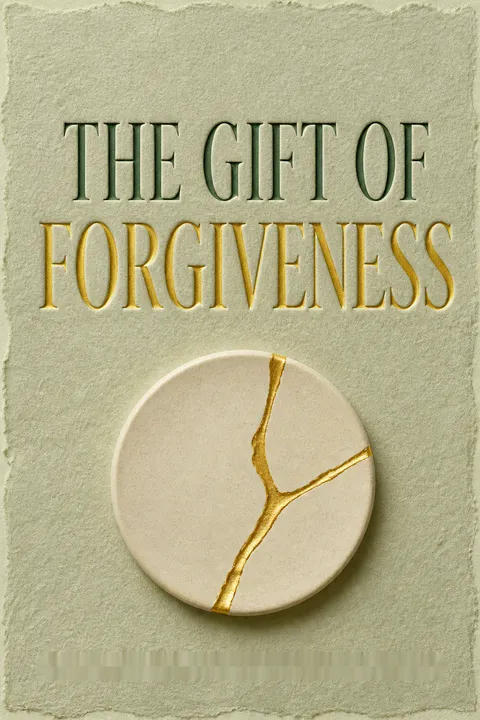


Key Takeaways
Forgiveness can free you without declaring the harm acceptable.
Freedom is not acquittal. The book’s central idea is that forgiveness can loosen the hold of resentment without excusing an injury, denying its seriousness, or restoring the relationship. Elizabeth Smart, kidnapped at fourteen and abused for nine months, came to see forgiveness as a way to reclaim her life, not as a claim that her captors deserved pardon. Chris Williams, after a car crash killed his wife and three children, rejected revenge because it could not bring them back and might further damage the family he still had.
Their stories frame forgiveness as a choice about what the injured person carries forward. Smart’s recovery began with accepting her anger and caring for herself. Williams treated forgiveness as a repeated decision, not a feeling that arrived fully formed.
This distinction helps separate emotional healing from moral judgment. A person can release the wish to remain consumed by an offender while still naming the act as wrong and supporting consequences. That is especially important where the offender remains dangerous or institutions have failed to protect victims. The book’s strongest cases show forgiveness as regained agency, not a universal moral duty. Its language can still sound aspirational enough to pressure people who are not ready, so the freedom it describes must remain an option, never a test of someone’s character.
Let anger and grief be heard before demanding that they disappear.
Feelings are not failures. Elizabeth Smart advises survivors to acknowledge anger, sadness, and the reality of trauma rather than shame themselves for having those reactions. Sarah Klein, abused as a young gymnast by Larry Nassar, did not begin to experience forgiveness until she spoke publicly at his sentencing. Addressing the court gave voice to the child she had been and helped her recover a sense of power. Tanya Brown, whose sister Nicole was murdered, struggled for years before therapy gave her space to grieve, write, and face the pain she had not processed.
These accounts resist the shortcut of saying I forgive you to end discomfort. The work may involve naming what happened, talking with trusted people, and allowing painful emotions to surface before deciding what to do with them.
This approach aligns with a basic insight from trauma-informed care: emotional regulation is not the same as emotional suppression. Naming a feeling can make it easier to examine without letting it dictate every action. The stories also show why outward composure is a poor measure of recovery. A person may function well and still be carrying unprocessed pain. At the same time, emotional expression is not a single prescribed route; speaking publicly helped Klein, while others may need privacy, therapy, faith, or time. The useful principle is permission to face experience, not a required performance of grief.
Forgive on your own clock, whether it takes weeks or decades.
Readiness has no deadline. Deborah Copaken contacted the man who raped her at age twenty-two three decades after the assault. Writing to him was a major part of her process, and his apology helped her feel that the injury had finally been heard. She regarded the timing as right for her, not as proof that everyone should seek contact or wait so long. Tanya Brown also needed years before she could address her sister’s murder and the grief that had overwhelmed her.
Other accounts move at a different pace. Polly Sheppard says her faith helped her forgive the man who murdered nine people at her church within weeks. The range matters: a quick response is not superior to a long struggle, and a return of anger does not erase past progress.
The range of timelines challenges the assumption that healing should follow a neat sequence. Recovery is often nonlinear, and anniversaries, news, or new contact can stir up old reactions. That does not automatically mean a person has failed. Copaken’s story also illustrates that an apology may help, but it cannot be made a prerequisite for healing: many offenders are absent, unrepentant, or unsafe to approach. The book wisely treats timing as personal. Its encouragement to forgive is most humane when paired with the equal right to pause, change course, or decide that forgiveness is not currently possible.
Keep the boundary: forgiveness does not require renewed access.
Release need not reunite. Sarah Klein forgave Larry Nassar while making clear that she did not want him back in her life. Her distinction between forgiveness and reconciliation allowed her to seek emotional freedom without surrendering safety or judgment. Cora Jakes Coleman reached a similar conclusion after a close friend broke her trust during a painful custody dispute. She forgave her friend, wrote to her, and still ended the friendship.
The book also shows that some relationships can be rebuilt when both people commit to repair. Christy Little Jones chose to work through her husband’s affair with him, supported by counseling and ongoing conversations. Her decision was specific to their marriage and their shared commitment. Forgiveness alone did not restore trust; sustained participation did.
The distinction between inner release and restored access is ethically crucial. Reconciliation requires conditions beyond one person’s feelings: safety, accountability, changed behavior, and mutual willingness. Without those conditions, renewed closeness can expose an injured person to further harm. The book’s examples are useful because they refuse a single relationship outcome. Klein and Cora protect distance, while Christy and her husband attempt repair. Neither path is automatically more virtuous. The practical question is not whether forgiveness demands contact, but whether contact is safe, wanted, and supported by credible change.
Use empathy to understand a harmful person without excusing the harm.
Context can loosen hatred. Immaculée Ilibagiza hid with seven other women for ninety-one days during the 1994 Rwandan genocide, while her family was killed. Her Catholic faith and reflection helped her recognize that hatred was consuming her, and she eventually visited the imprisoned man who had killed members of her family to tell him she forgave him. Scarlett Lewis, whose six-year-old son Jesse was killed in the Sandy Hook school shooting, tried to understand the shooter’s pain and isolation. That understanding helped her redirect anger into work for children’s emotional well-being.
Empathy does not make an offender innocent. Mark Kelly, whose wife Gabby Giffords was shot, focused on her recovery and viewed the attacker’s untreated mental illness as a factor, while leaving criminal responsibility to the justice system.
Understanding causes can make prevention more imaginable. It shifts attention from the comforting simplicity of a villain story toward conditions that may be changed, such as isolation, untreated illness, or institutional neglect. But explanation must not become exoneration. Victims should not be asked to perform empathy, and a person’s suffering does not cancel the harm they cause. The book’s most careful examples keep both truths in view: compassion can coexist with accountability, and may help redirect attention toward reducing future harm rather than rehearsing hatred.
Offer or request forgiveness without treating it as a debt owed.
A request cannot compel release. Sebastián Marroquín, the son of Colombian drug lord Pablo Escobar, approached families harmed by his father’s crimes to apologize on his father’s behalf. Some families welcomed him, including relatives of political leaders killed by Escobar’s organization. Marroquín accepted that others might refuse, because asking for forgiveness did not entitle him to a favorable answer.
Ron Hall’s story shows the other side. His wife Debbie forgave him after he admitted to an affair, and her response profoundly shaped his later life and friendship with Denver, a homeless man she had urged him to befriend. Hall took time to believe the forgiveness was real. Together, these stories show that receiving forgiveness can invite change, but neither an apology nor a plea guarantees reconciliation or absolution.
Forgiveness is often described as a gift, but gifts can become coercive when recipients are expected to accept them. Marroquín’s willingness to respect refusal is therefore as important as his apology. It preserves the harmed family’s authority over its own response. Hall’s account, meanwhile, highlights the possibility that being forgiven can motivate a person to live differently. That possibility should not be confused with proof of reform: repair requires behavior over time, not just gratitude or remorse. The book captures both the transformative potential and the limits of forgiveness between people.
Forgive yourself by owning your choices, not sentencing yourself forever.
Self-forgiveness faces the past honestly. DeVon Franklin resented his mother for missing school events until he understood that she was working to support the family. He also reconsidered his anger toward his deceased father, whose alcoholism had shaped his childhood. That shift did not erase the pain; it helped Franklin stop carrying the resentment into other relationships. Lewis Howes faced a different burden when he disclosed childhood sexual abuse to a men’s group. The group’s support helped him release shame and blame himself less for what had happened.
Iskra Lawrence’s struggle centered on body image and an eating disorder. Her mirror challenge, a daily practice of speaking kindly about her body, helped counter years of self-criticism. These stories distinguish responsibility for one’s choices from blame for being harmed.
Self-forgiveness is not the same as declaring that every past decision was harmless. It can mean accurately locating responsibility, including recognizing coercion, youth, limited knowledge, or circumstances that narrowed a person’s choices. That distinction matters in abuse, where victims often inherit shame that belongs to the perpetrator. Franklin’s and Lawrence’s accounts also suggest that new practices can make a different self-understanding easier to sustain. Yet positive reframing cannot substitute for material repair when someone has harmed others. Self-compassion is strongest when it supports honest accountability rather than avoiding it.
If forgiveness language feels wrong, choose another route to release.
The word is not the whole work. Sue Klebold, mother of Columbine shooter Dylan Klebold, rejects the idea that she must forgive her son. She prefers terms such as understanding, balance, and recovery. She also struggles with guilt over not recognizing his distress, and turns that anguish into efforts to educate others about suicide prevention. Her perspective complicates the book’s emphasis on forgiveness: releasing anger can matter even when someone does not use that word.
Mark Kelly likewise says forgiveness was not a step he consciously needed after the attack on his wife. His attention stayed on her recovery. The book presents these accounts as legitimate differences, not as failures to complete a process. The central question becomes whether a person can move toward a life less governed by resentment, not whether they can say a prescribed sentence.
Language shapes moral roles. As Klebold observes, saying I forgive you can imply that the speaker has authority to pardon someone, or that the recipient committed a wrong for which pardon is appropriate. In some relationships, that framing feels false or self-righteous. Her alternative vocabulary preserves the possibility of healing without demanding a ritual of absolution. This is a valuable correction to popular advice that treats forgiveness as universally necessary. Still, the book’s broader idea of release remains close to what many people mean by forgiveness, even when the label is rejected. The distinction is both semantic and deeply personal.
Turn painful memory into prevention, advocacy, or care for others.
Healing can become public action. Mark Rozzi, sexually abused by a priest as a child, eventually forgave the priest but continued to direct anger at church officials who had allowed abuse to persist. He entered Pennsylvania politics and campaigned for changes to laws affecting childhood abuse survivors. His story shows that forgiveness need not eliminate anger at systems or weaken demands for accountability.
Scarlett Lewis founded the Jesse Lewis Choose Love Movement after her son’s murder, promoting social and emotional learning for students. Mark and Gabby Kelly, after the shooting that nearly killed Gabby, focused on gun-safety legislation. Their responses vary, but each turns painful memory toward an effort to protect others. The book does not claim that activism erases grief; it shows that purpose can give grief somewhere to go.
These stories widen forgiveness beyond a private emotional exchange. Prevention work can preserve memory while resisting a cycle in which harm is merely endured and forgotten. Rozzi’s distinction is particularly important: forgiving an individual does not require forgiving institutions that enabled abuse. Public action can also create risks, including exhaustion and pressure to make suffering useful. No survivor owes society a mission. The more humane lesson is that advocacy is one possible way to reclaim agency, alongside quieter forms of recovery, and that accountability can remain necessary even when personal resentment loosens.
Analysis
The book is a story-driven anthology rather than a single step-by-step program. Its organizing claim is that forgiveness can free an injured person from the continuing weight of resentment, but its many voices prevent that claim from becoming entirely uniform. Survivors describe forgiveness as self-love, faith, empathy, a choice, a repeated practice, or a decision not to remain emotionally attached. Sue Klebold questions the word itself, while Mark Kelly describes moving forward without consciously forgiving. These differences are not distractions. They are the book’s strongest evidence that forgiveness has no single emotional script.
The stories also distinguish several acts that everyday speech often collapses: acknowledging harm, releasing resentment, forgiving oneself, apologizing, rebuilding trust, and reconciling. Sarah Klein and Cora Jakes Coleman show that forgiveness can coexist with permanent distance. Christy Little Jones illustrates repair inside a relationship when both partners engage. Sebastián Marroquín demonstrates that an apology can be offered without demanding acceptance. Mark Rozzi shows that personal forgiveness need not suspend institutional accountability. Together, these cases offer a more useful framework than a simple instruction to let go.
The book’s main limitation is that the language of forgiveness can imply a moral ideal that burdens people who are still wounded. Some stories involve profound trauma, and their subjects’ choices cannot become general prescriptions. The strongest safeguards are present in the book itself: take time, feel what is there, preserve boundaries, and do not judge another person’s pace. A careful reader can treat forgiveness not as a duty or verdict, but as one possible route toward less domination by the past. The result is an emotionally generous, sometimes faith-centered account whose most durable lesson is pluralism: healing may involve forgiveness, but it must belong to the person who was hurt.
Review Summary
The Gift of Forgiveness received mixed reviews. Many readers found the stories of forgiveness inspiring and thought-provoking, praising the book's message and its potential to help others. However, some criticized the writing style as simplistic and repetitive, feeling the author's commentary lacked depth. Critics also noted that the book oversimplified complex forgiveness processes and relied heavily on well-known stories. Despite these criticisms, many readers appreciated the diverse range of experiences presented and found the book emotionally impactful.
People Also Read




Glossary
conscious forgiveness
A repeated choice to move forwardThe author’s term for forgiveness understood not as a single declaration, but as a choice that may need to be made again over time. In her example of repairing a broken friendship, it meant moving toward mutual respect without trying to recreate the former closeness.
forgiveness muscle
Capacity strengthened through practiceA metaphor used by Chris Williams and Michelle LeClair for the ability to forgive. Like a muscle, it may feel difficult to use at first and become more familiar through repeated effort. The metaphor frames forgiveness as a practice that can grow, rather than a trait someone either possesses or lacks.
mirror challenge
A body-kindness practiceIskra Lawrence’s practice of looking at her body in a mirror and deliberately naming what she values about it. Rather than focusing on features she once judged, she links them to strength or function. The exercise is intended to counter habitual self-criticism and support self-forgiveness.
cognitive triangle
Thoughts, feelings, and behaviorA mental-health concept cited by Scarlett Lewis to describe the relationship among thoughts, feelings, and behavior. She used it to explain why remaining focused on the shooter could continue to shape her emotions and actions. Choosing forgiveness, in her account, was a way to interrupt that influence and reclaim agency.
FAQ
What's "The Gift of Forgiveness" about?
- Collection of Stories: "The Gift of Forgiveness" by Katherine Schwarzenegger Pratt is a collection of inspiring stories from individuals who have overcome seemingly unforgivable situations through the power of forgiveness.
- Exploration of Forgiveness: The book delves into the complexities of forgiveness, illustrating how it can be a transformative process that leads to healing and personal growth.
- Diverse Experiences: It features a wide range of experiences, from personal betrayals to public tragedies, showcasing the universal nature of forgiveness.
- Personal Journey: The author shares her own journey with forgiveness, providing a personal touch and encouraging readers to reflect on their own experiences.
Why should I read "The Gift of Forgiveness"?
- Inspiration and Hope: The book offers hope and inspiration by showing how forgiveness can lead to healing and peace, even in the most challenging circumstances.
- Practical Insights: Readers gain practical insights into the process of forgiveness, learning from the experiences of others who have faced similar struggles.
- Emotional Connection: The personal stories create an emotional connection, allowing readers to empathize with the individuals and their journeys.
- Self-Reflection: It encourages self-reflection, prompting readers to consider their own relationships and the role of forgiveness in their lives.
What are the key takeaways of "The Gift of Forgiveness"?
- Forgiveness is Personal: Forgiveness is a deeply personal journey that varies for each individual, and there is no one-size-fits-all approach.
- Healing Process: It is a process that involves acknowledging pain, letting go of resentment, and finding inner peace.
- Empowerment Through Forgiveness: Forgiving others can be empowering, allowing individuals to reclaim their lives and move forward.
- Forgiveness and Self-Love: The book emphasizes the connection between forgiveness and self-love, highlighting how forgiving others can lead to self-acceptance and compassion.
What are the best quotes from "The Gift of Forgiveness" and what do they mean?
- "Forgiveness is not a gift you give to others; it’s something you do for yourself." This quote emphasizes that forgiveness is primarily about freeing oneself from the burden of anger and resentment.
- "Forgiveness is a process, not a destination." It highlights that forgiveness is an ongoing journey that requires time and patience.
- "The power to ask for, or to give, forgiveness resides in us." This quote underscores the idea that forgiveness is a personal choice and an act of empowerment.
- "Forgiveness is truly an act of self-love." It suggests that forgiving others is a way to nurture and care for oneself, promoting inner peace and healing.
How does Katherine Schwarzenegger Pratt define forgiveness in "The Gift of Forgiveness"?
- Complex and Nuanced: Forgiveness is portrayed as a complex and nuanced process that involves honesty, courage, and self-reflection.
- Not Just Saying "I'm Sorry": It goes beyond simply saying "I forgive you" and involves doing the work of letting go of resentment.
- Self-Love and Compassion: Forgiveness is linked to self-love and compassion, both for oneself and for others.
- Ongoing Journey: It is described as an ongoing journey that requires continuous effort and commitment.
What are some inspiring stories from "The Gift of Forgiveness"?
- Elizabeth Smart: Kidnapped at 14, Elizabeth forgave her captors, focusing on reclaiming her life and finding inner peace.
- Chris Williams: After losing his family in a car accident, Chris chose forgiveness over anger, finding healing and peace.
- Sarah Klein: A survivor of abuse, Sarah forgave her abuser, using her experience to help others and find personal freedom.
- Polly Sheppard: A survivor of a church shooting, Polly forgave the shooter, guided by her faith and compassion.
How does "The Gift of Forgiveness" address the challenges of forgiving?
- Acknowledging Pain: The book emphasizes the importance of acknowledging and processing pain as a step toward forgiveness.
- Letting Go of Resentment: It discusses the difficulty of letting go of resentment and the freedom that comes with it.
- Personal Struggles: Many stories highlight personal struggles with forgiveness, showing that it is not always easy or straightforward.
- Support Systems: The book underscores the role of support systems, such as family, friends, and faith, in the forgiveness process.
What role does self-forgiveness play in "The Gift of Forgiveness"?
- Essential Component: Self-forgiveness is presented as an essential component of the forgiveness process, necessary for personal healing.
- Releasing Guilt: It involves releasing guilt and shame, allowing individuals to move forward with self-compassion.
- Empowerment: Self-forgiveness empowers individuals to take control of their lives and make positive changes.
- Interconnected with Forgiving Others: The book illustrates how forgiving oneself is often interconnected with forgiving others, as both lead to inner peace.
How does faith influence forgiveness in "The Gift of Forgiveness"?
- Guiding Principle: For many individuals in the book, faith serves as a guiding principle that supports their journey toward forgiveness.
- Source of Strength: Faith provides strength and comfort, helping individuals to let go of anger and embrace compassion.
- Moral Framework: It offers a moral framework that encourages forgiveness as a path to healing and reconciliation.
- Community Support: Faith communities often provide support and encouragement, reinforcing the importance of forgiveness.
What advice does Katherine Schwarzenegger Pratt offer for practicing forgiveness?
- Be Patient: Forgiveness is a process that takes time, and it's important to be patient with oneself.
- Seek Support: Surround yourself with supportive people who can help you on your journey.
- Focus on Self-Love: Prioritize self-love and compassion, both for yourself and for others.
- Embrace the Journey: View forgiveness as an ongoing journey that will continue to evolve over time.
How does "The Gift of Forgiveness" explore the relationship between forgiveness and mental health?
- Healing Trauma: Forgiveness is shown to be a powerful tool for healing trauma and improving mental health.
- Reducing Stress: Letting go of resentment can reduce stress and promote emotional well-being.
- Empowerment and Control: Forgiveness empowers individuals to take control of their mental health and move forward positively.
- Connection to Self-Love: The book highlights the connection between forgiveness, self-love, and mental health, emphasizing the importance of nurturing oneself.
What impact does "The Gift of Forgiveness" aim to have on its readers?
- Inspire Change: The book aims to inspire readers to embrace forgiveness as a transformative process that can lead to personal growth and healing.
- Encourage Reflection: It encourages readers to reflect on their own experiences and consider how forgiveness can play a role in their lives.
- Promote Empathy: By sharing diverse stories, the book promotes empathy and understanding for others' struggles with forgiveness.
- Foster Hope: Ultimately, it seeks to foster hope and positivity, showing that forgiveness is possible even in the most challenging circumstances.
Download PDF
Download EPUB
.epub digital book format is ideal for reading ebooks on phones, tablets, and e-readers.








