

Key Takeaways
Look beyond honey hives to the 25,000 bee species around you
A bigger bee world. The authors begin as urban beekeepers, expecting to help the familiar honeybee. Their first surprise is that the honey-making, hive-living bee is only one small part of a much larger family: roughly 25,000 bee species have been recorded worldwide, and most live alone rather than in colonies. Only honeybees make the honey commonly eaten by people, and the idea that every bee stings or looks alike is false.
Notice what is overlooked. Bees range from tiny, metallic solitary species to large, furry bumblebees. Some nest in soil, hollow stems, or old walls. Learning to recognize them turns an ordinary garden into a place full of distinct lives, not just a blur of striped insects. The book's central invitation is to know these neighbors before deciding how to save them.
What's striking is how naming changes the scale of attention. A person who sees only “bees” may notice a hive or a sting; someone who can distinguish a mason bee from a bumblebee can notice nesting sites, seasonal timing, and different needs. That resembles biodiversity monitoring, where careful identification makes broad environmental change visible. The book's focus on affection is persuasive because concern often begins with familiarity. Still, public campaigns naturally gravitate toward charismatic honeybees. The challenge is to use their visibility as an entry point, then widen attention to the quieter species that lack a familiar face.
Protect pollination as living infrastructure, not a free service
Plants need couriers. Pollination moves pollen from a flower's male parts to its female parts, allowing plants to reproduce. Bees evolved specialized bodies for this work: branched hairs catch pollen, and some species carry it in leg baskets or dense abdominal hairs. As bees visit flowers for food, pollen travels with them to the next bloom.
The benefits reach the table. The book estimates that bees pollinate about one in every three mouthfuls people eat. Their work supports many fruits, vegetables, nuts, seeds, and oil crops, as well as forage for livestock and plants used for medicines and materials. Pollination can raise crop yields and improve fruit size and quality. The book cites an estimated annual global value of up to $577 billion for pollinators, while stressing that their contribution to wild ecosystems is more than a market calculation.
The infrastructure comparison helps make an invisible service legible. Pollination is not a machine that can simply be repaired after a breakdown: it depends on living organisms, suitable habitat, and timing between flowers and insects. The economic estimate can strengthen policy arguments, but it also has a limit. A price tag captures some benefits to agriculture, not the full value of wild plants, food webs, or ecological resilience. The book is careful to distinguish crops that depend entirely on insect pollination from those that merely produce more or better food with it. That distinction prevents urgency from turning into exaggeration.
Design bee habitat around nests, materials, and life cycles
Food is only half a home. Most bee species are solitary. A female red mason bee, for example, places eggs in separate chambers, stocks each with a mixture of pollen and nectar called bee-bread, then seals the nest with mud. Her offspring develop inside and emerge the following spring. Other species excavate soil, use leaves or plant fibres, or gather resin. A flower-rich garden can still be poor habitat if suitable nesting places and building materials are absent.
Fit help to species. A bee hotel with hollow tubes can assist cavity-nesting bees, but it is not a universal solution. Mining bees need suitable ground, while wool carder bees collect soft plant fibres. Some solitary bees are cleptoparasites: they lay eggs in another bee's nest, where their young consume the host's provisions. These relationships are part of bee ecology, not a reason to intervene.
This is conservation at the scale of a life history. Ecologists often distinguish resources that support feeding from those that support breeding; the distinction matters because animals can visit a site for food without being able to reproduce there. The bee hotel example makes that concrete and shows why a single attractive intervention can be too narrow. A useful next question is whether an intervention is occupied and supports successful emergence, rather than whether it looks wildlife-friendly. The book's account of nest-sharing and parasitic bees also guards against a sentimental view in which every interaction must be harmonious.
Understand a colony as a coordinated organism, not a queen's kingdom
One colony, many roles. A honeybee colony can contain tens of thousands of bees: workers gather food, care for young, build comb, and defend the nest; drones mate; and the queen lays eggs. The authors describe the colony as a superorganism, meaning a group whose members perform interdependent roles that sustain the whole. The queen is not a ruler issuing commands. Workers regulate her care and the colony's needs.
Information moves through the hive. A forager can use the waggle dance, a patterned movement on the honeycomb, to communicate a food source's direction and distance. Bumblebee colonies are smaller and annual, while honeybee colonies store honey and survive winter. These contrasts matter: “bee behavior” is not one fixed pattern, but a range of social systems shaped by different ways of living.
The superorganism idea connects biology to distributed systems: coordination can emerge from many limited actions without a single executive directing every choice. The waggle dance makes that especially vivid, since a worker conveys information that helps other bees locate a resource. This framework is useful, but it can overemphasize the colony and underplay the individual animal. The comparison to a tree leaf, used in the book, helps explain the colony's continuity, yet each bee still has a short, demanding life. Holding both scales in view avoids treating social insects as either isolated individuals or interchangeable parts.
Treat bee decline as a pileup of pressures, not one culprit
Several risks converge. Bees face habitat loss, pesticide exposure, disease and parasites, invasive species, climate shifts, and reduced genetic diversity. These pressures can reinforce one another: a bee weakened by poor nutrition may be less able to withstand disease, while changing weather can disrupt the timing between a bee's active season and the flowers it needs. Intensive farming removes hedgerows and wildflowers, then often relies on managed bees to replace the pollinators that the simplified landscape once supported.
The losses are substantial. The book reports that nearly one in four European bumblebee species is threatened with extinction. In the UK, six species had declined by at least 80 percent. Managed honeybee colonies also face major losses; annual losses of 40 to 50 percent were recorded in the US and Europe during the period discussed. Colony collapse disorder describes sudden colony losses, but the book presents several interacting stressors, not one proven cause.
The strength of this account is its refusal to offer a single villain. Environmental risks often behave less like separate checklist items than interacting constraints: removing food, adding toxic exposure, and spreading pathogens can make the combined damage greater than any one factor alone. That is a useful systems perspective for conservation and public policy. It also suggests that monitoring should track wild species and habitat, not only hive counts. The statistics in the book describe the evidence available around its 2019 publication, and bee populations vary by region and species. Their value is as warning signals, not as timeless measurements.
Don't replace diverse wild pollinators with a trucking system
A crop can hide a dependency. California's Central Valley grows about 82 percent of the world's almonds across roughly one million acres. The trees bloom for a short period, then the landscape offers little food for many wild pollinators. Each year, about two million managed honeybee hives are brought in to pollinate the crop, then transported elsewhere for other flowering crops. This immense logistics operation is a response to a landscape that has lost much of its year-round ecological support.
Different bees do different jobs. Wild bees can outperform honeybees on particular crops. The book describes Japan's native horn-faced mason bee as up to 80 times more effective than honeybees at pollinating apples. The lesson is not that managed hives are useless, but that they cannot reliably substitute for the diversity of wild pollinators, especially when food and nesting habitat have disappeared.
The almond example resembles a just-in-time supply chain: a vast, coordinated system keeps production moving, but it depends on repeated transport and can be vulnerable to disruption. Ecological redundancy offers a different kind of security. Multiple pollinator species, each adapted to different crops and conditions, can spread risk across a landscape. The comparison should not imply that wild bees can immediately replace managed hives at industrial scale; the book notes that many solitary species reproduce more slowly and in smaller numbers. The deeper point is that dependence on a mobile workforce is not a durable substitute for rebuilding the conditions that support pollinators locally.
Feed city bees from winter's first flowers through autumn
Make the calendar bloom. A garden full of lavender may feed bumblebees in summer but leave early-flying solitary bees and newly emerged bumblebee queens without food. Planting flowers, shrubs, and trees that bloom in succession provides a steadier supply of pollen and nectar. Early crocuses, pussy willow, and cherry blossom can help in spring; later flowers extend the season into autumn. Bees also need water, and a shallow dish with stones gives them a safe place to land.
Keep more than flowers. Reduce mowing so clover and dandelions can flower, avoid weedkillers and bug sprays, and leave nesting places such as bare earth, hollow stems, and undisturbed leaf piles. Urban green spaces can be valuable habitat: a Nottingham study counted 48 solitary bee species in city sites, with greater abundance and diversity than nearby meadows and nature reserves.
The seasonal approach turns gardening into habitat planning rather than a hunt for one supposedly perfect plant. It also fits the ecology of networks: a small garden becomes more useful when neighboring gardens, parks, road verges, and rooftops provide connected food and shelter. Urban nature is not automatically healthy, however. A neatly paved yard or a lawn mown before flowers set seed may offer little, even in a green-looking neighborhood. The book's emphasis on local conditions is important: sunlight, soil, and the species already present shape what will work. The best garden is not a checklist, but a reliable sequence of resources.
Make conservation work for farms and communities, not just bees
Design for shared gains. On farms, restoring hedgerows, wildflower margins, and diverse forage can support pollinators while improving crop pollination. The book describes Knepp, a former conventional farm in England where land was allowed to recover through rewilding. After a decade, 62 bee species had been recorded there, including seven of national importance. The example shows what habitat restoration can make possible, though the book notes that such results depend on local conditions and long-term commitment.
Build local support. In Kenya, the Elephants and Bees project used beehives linked by wire to deter elephants from raiding crops. The fences protected villagers' harvests, produced honey for sale, and reduced the killing of elephants. This illustrates how conservation can address human needs as well as wildlife. Farmers, businesses, residents, and governments all influence habitat, so lasting change depends on incentives and decisions beyond individual gardens.
What's powerful here is the search for aligned incentives. Conservation is easier to sustain when people can see a concrete benefit, whether that is income, crop protection, or a landscape that supports livelihoods. This is a central insight of environmental governance: local participation can improve both legitimacy and practical fit. Yet a successful project does not automatically scale. Beehive fences suit a particular conflict and ecosystem, while farm restoration may require public funding or changes to agricultural markets. The examples make a strong case for designing policy around real costs and benefits, rather than asking individuals or farmers to carry the burden alone.
Analysis
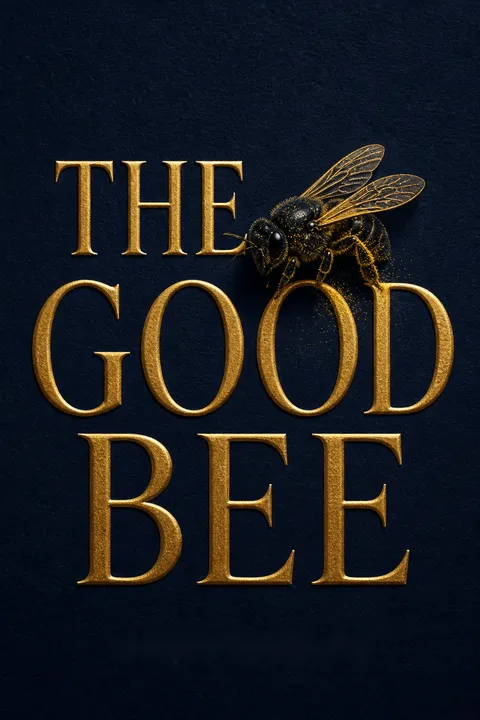
The Good Bee works as both a natural history and a conservation argument. Its organizing move is to begin with the authors' conversion from aspiring urban beekeepers to observers of a much broader bee world. That personal discovery creates a useful narrative arc: curiosity reveals diversity, diversity reveals ecological dependence, and dependence makes the threats and remedies concrete. The book's most valuable correction is cultural as much as scientific. “Bee” commonly means honeybee in public discussion, although most bee species are solitary and do not produce honey. That mismatch can distort conservation priorities.
The book also makes scale visible. A single bee gathers pollen, but the colony, flower community, farm, and food system are linked levels of organization. Its strongest examples, including imported hives for almond pollination and urban gardens that support many species, show that habitat is not scenery around production. It is part of production's operating conditions. The practical advice follows from this: support seasonal forage, nesting sites, and pesticide reduction, while also addressing the agricultural policies that shape land use.
A useful qualification is that pollination claims need careful interpretation. The estimate that bees pollinate one in three mouthfuls is memorable, but it does not mean one third of all food would vanish without bees. Some crops depend wholly on animal pollination, while others gain yield or quality from it, and many staple grains are wind-pollinated. That nuance strengthens rather than weakens the case: pollinators matter profoundly, but their value lies in food quality, crop diversity, wild plant reproduction, and ecosystem function, not a single dramatic number.
Published in 2019, the book's threat statistics and regulatory status should be read in their historical context. Its enduring contribution is a way of looking: identify the species, learn what its life requires, and connect local actions to structural causes. The resulting conservation ethic is neither sentimental nor purely economic. It treats bees as remarkable animals and as participants in the systems that make human life possible.
Review Summary
The Good Bee receives mostly positive reviews, with readers praising its informative content and engaging writing style. Many appreciate the book's focus on various bee species, not just honey bees. Readers find the illustrations and practical advice on helping bees particularly useful. Some criticize the book for being too basic or lacking flow, but overall, it's recommended as an excellent introduction to bees for both beginners and enthusiasts. The book's emphasis on bee conservation and environmental awareness resonates with many readers.
People Also Read

Glossary
superorganism
interdependent social colonyA group of organisms whose members perform specialized, connected roles that sustain the group as a whole. The book uses the term for honeybee colonies, where workers gather food, care for young, build comb, and defend the nest, while the queen lays eggs. The colony's survival depends on coordination among its members.
waggle dance
food-location signalA honeybee movement performed on the comb to recruit other foragers to a food source. The direction of the dance indicates the source's direction relative to the sun, while the length of its waggle indicates distance. The recruited bees also use the flower's scent to locate the precise source.
bee-bread
pollen-nectar larval foodA provision of pollen mixed with nectar that a solitary female bee stores in a nest cell for her developing larva. She lays an egg on or near the food and seals the chamber. Once the egg hatches, the larva feeds on the stored provision while growing.
oligolecty
specialized pollen feedingA feeding specialization in which a bee gathers pollen from a narrow range of related plants, sometimes from a single plant family. Such bees may be closely synchronized with the flowering period of their food plants. If those plants become scarce or disappear, the bees can lose an essential source of nourishment.
cleptoparasites
nest-using beesBees that lay their eggs in the nests of other bee species instead of building and provisioning their own. The parasite's offspring may consume the host bee's eggs or larvae and the food stored for them. The book describes these bees as part of natural ecological relationships, rather than as a reason for people to intervene.
colony collapse disorder
sudden colony lossesA pattern of honeybee colony loss in which adult worker bees disappear from a hive, sometimes leaving the queen, young bees, and stored food behind. The book describes it as a widely reported problem associated with multiple possible stressors, including poor nutrition, pesticides, and parasites, rather than a condition with one established cause.
varroa mite
honeybee parasiteA parasitic mite that weakens honeybees and can transmit viruses. It spread from Asian honeybees to western honeybees, which had not evolved comparable defenses. The book describes varroa as a major cause of honeybee losses and notes that beekeepers use different methods to manage it.
biophilia
affinity for natureThe idea, associated in the book with biologist E. O. Wilson, that humans have an innate affinity for the natural world. The authors connect time in nature with emotional and psychological development, and argue that daily life removed from natural systems can weaken people's awareness of them.
Download PDF
Download EPUB
.epub digital book format is ideal for reading ebooks on phones, tablets, and e-readers.








