

Key Takeaways
Judge Black Republicans by whom they hold accountable, not their party label
Douglass challenged power. Clay Cane argues that the model for Black Republicanism is Frederick Douglass, not the simplified legend of Abraham Lincoln. Lincoln delayed emancipation, resisted Black enlistment until military necessity pressed him, and favored plans to deport freed people. Douglass, a formerly enslaved abolitionist, criticized him publicly while organizing for freedom and equality. About 180,000 Black men eventually served in the Union Army, and nearly 40,000 died. Their service helped secure Union victory, while the Emancipation Proclamation applied unevenly and did not free most enslaved people at once.
Pressure mattered more than proximity. Douglass could work with Lincoln without confusing access to the president with justice. The book calls leaders who center Black communities and demand accountability from their own party Douglass Republicans. Its contrast asks readers to examine what a politician does with power, not simply which party claims their history.
What's valuable here is the distinction between access and influence. Political science often treats representation as a question of who occupies office, but substantive representation asks whether officials advance the interests of people they purport to represent. Douglass illustrates the second standard: cooperation can be tactical, while criticism remains essential. The contrast also resists a comforting great-man story in which emancipation flows from presidential virtue. One caution is that Lincoln's motives and shifting conduct remain historically debated. The stronger lesson does not require a single verdict on his character: organized pressure and Black military service were indispensable forces in the struggle.
Reconstruction shows rights vanish when federal protection yields to white reconciliation
A new political order emerged. After the Civil War, Black communities organized conventions, demanded schools and equal rights, and helped secure the Civil Rights Act of 1866 and the Fourteenth and Fifteenth Amendments. In 1868, roughly 80 percent of Black men registered to vote. Black officials served across the South, while the federal government briefly used troops to protect voters and enforce new rights.
Retreat enabled terror. White violence, Black Codes, economic coercion, and political intimidation steadily attacked these gains. In the Compromise of 1877, Republicans accepted Rutherford B. Hayes's presidency while federal troops left the South, abandoning Black citizens to white supremacist rule. Cane presents this not as a sudden collapse but as a political bargain that made rights unenforceable. The legal promise survived; the protection needed to make it real did not.
The episode makes a broader institutional point: rights depend not only on law but on enforcement capacity. In contemporary terms, a constitutional guarantee without accessible remedies, administrative follow-through, or protection from coercion can become a paper entitlement. Reconstruction also shows that political participation is not self-sustaining. When one coalition treats another group's safety as negotiable, formal inclusion can be reversed without repealing every law. The book's account rightly emphasizes federal retreat, though local organizing and economic conditions also shaped the outcome. Its lasting insight is that reconciliation among powerful actors can impose its costs on people excluded from the bargain.
The GOP did not simply lose Black voters; it pushed many out
Party labels changed. Black voters were once strongly associated with Republicans, but that history did not guarantee permanent loyalty. Franklin Roosevelt's New Deal helped shift support toward Democrats, even though its programs often excluded Black workers. The Social Security Act, for example, left out agricultural and domestic workers, occupations held by about 60 percent of Black Americans at the time.
The eviction became explicit. Cane traces a later Republican turn toward winning white Southern voters through racial resentment. In 1964, Black Republicans were pushed out of convention delegations in states including Tennessee, Georgia, and Mississippi. Jackie Robinson opposed Barry Goldwater, whose campaign opposed the Civil Rights Act, and Black voters gave Goldwater only 6 percent of their support. Senator Edward Brooke later summarized the shift as an expulsion rather than a voluntary departure. The book argues that modern party identities reflect political choices, not timeless loyalties.
This history is a useful antidote to arguments that treat party coalitions as fixed by ancestry or tradition. Parties are organizations competing for voters, donors, and governing power, and their priorities change when leaders decide which constituencies are expendable. The New Deal example complicates a simple moral narrative: Democrats offered material benefits while preserving discriminatory exclusions. That tension helps explain why Black voters could move without becoming uncritical Democrats. The book's account focuses on racial strategy as a major cause of realignment, while individual voters also respond to region, class, religion, and specific policies. Historical memory should clarify those choices, not turn party labels into inherited identities.
A grift turns Black identity into cover for policies harming Black communities
The label has a narrow meaning. Cane defines a grifter as an opportunist who changes public positions to gain personal advancement and proximity to power. His argument is not that every Black Republican, conservative, or dissatisfied Democratic voter is a grifter. The focus is on figures who use Black identity to gain attention or credibility while advancing policies the book sees as damaging to Black communities.
Visibility can be the reward. A Black commentator willing to defend Trump, dismiss racism, or attack civil rights activism may receive television bookings, campaign support, and access to influential Republicans. Tim Scott's use of personal experiences with policing alongside opposition to major voting-rights measures is one example Cane examines. The test is not whether someone sounds independent, but whether their actions and policy record serve the people invoked in their rhetoric.
The concept is strongest when it describes incentives rather than presumed inner motives. Media markets reward conflict and novelty, while political campaigns can use a minority spokesperson to signal inclusion without changing the policies being defended. That dynamic resembles tokenism in workplaces, where a visible representative can be made to stand for an institution's fairness. Still, disagreement within a community is normal, and no single group has one political interest. The distinction between conservative conviction and opportunism therefore needs evidence: consistency over time, material benefit, and a record of whom a politician serves are more reliable tests than ideological distance from the majority.
Proximity to power is not influence unless leaders can change policy
Some Republicans resisted the script. Colin Powell criticized the GOP's hostility to affirmative action and later supported Democratic presidential candidates, though his speech promoting the Iraq War remains a serious failure in Cane's account. Michael Steele, the first Black chair of the Republican National Committee, tried to expand the party's appeal and acknowledged that race shaped his and Barack Obama's political treatment. His clashes with party figures and departure from the chair show the limits of that effort.
J. C. Watts also changed. Early in Congress, he used familiar bootstrap rhetoric and attacked Black leaders. He later defended affirmative action and criticized Republicans for expecting Black conservatives to deny their own experiences. These cases complicate a story of uniform betrayal. Cane's point is that sincere service and partisan identity can coexist, but officials who challenge party priorities often lose standing or support.
These examples make the book more persuasive because they distinguish individual judgment from a monolithic political identity. They also expose an organizational problem: parties may recruit representatives for symbolic credibility yet punish them when they use that credibility to criticize leadership. A leader can sometimes alter policy from inside, so leaving is not the only measure of integrity. But influence should be assessed by concrete changes, not by titles or invitations. Powell's role in selling the Iraq intelligence case is a reminder that moral courage in one domain does not erase consequential mistakes in another.
Audit records, not representation: symbolic inclusion can mask policy harm
Office does not guarantee advocacy. Cane uses Clarence Thomas, Condoleezza Rice, and Tim Scott to show how Black officials can reach powerful positions while opposing measures intended to address racial inequality. Thomas benefited from affirmative action before becoming a prominent critic of race-conscious remedies. As a justice, he has supported decisions the book argues weaken voting and civil-rights protections. Rice, a Stanford provost and secretary of state, acknowledged benefiting from affirmative action but opposed using it for faculty tenure and defended policies that narrowed access.
Scott's symbolism is especially useful. His family story and personal encounters with policing help establish his authority on race, yet Cane emphasizes his opposition to voting-rights legislation and to an inquiry into the January 6 attack. The book's warning is not that representation is worthless, but that it cannot substitute for examining decisions and consequences.
Descriptive representation can matter: people bring different experiences, networks, and questions into institutions. But it does not mechanically produce shared policy preferences, and an officeholder's identity cannot certify a policy as fair. This is a familiar problem in organizational governance: diversity at the visible leadership level may coexist with unchanged incentives and outcomes. The most rigorous reading separates symbolic value from substantive performance, then asks who gains protection, resources, and voice. The book sometimes links complex judicial or legislative outcomes to a stark moral interpretation. Readers can scrutinize that interpretation while retaining its central demand for evidence-based accountability.
Measure economic policy by who gains power, not by Black success stories
Individual wealth is not collective security. Cane challenges Black capitalism when it is presented as a substitute for public investment, decent wages, housing, and education. Richard Nixon promoted Black entrepreneurship and created federal support for minority-owned businesses, but the book argues these initiatives did not reach many poor Black families. The proposed Black-owned town Soul City, led by civil-rights organizer Floyd McKissick, also depended on federal support that was later withdrawn.
Follow the distribution. Senator Tim Scott's opportunity-zone policy offered tax incentives for investment in low-income areas. Cane cites concerns that such incentives could enrich investors and accelerate displacement rather than empower existing residents. He contrasts that approach with the 1967 Freedom Budget, which proposed jobs at living wages, income support, land and capital access, and a major federal role. The useful question is who gains durable security and decision-making power.
This argument shifts attention from exceptional success stories to the structure of opportunity. Entrepreneurship can create jobs, ownership, and community institutions, but those benefits depend on who controls the assets, who bears the risk, and whether residents can remain in place. That is why public policy and private enterprise are not natural opposites. Tax incentives can attract investment while still producing weak local returns or displacement, so outcomes require measurement rather than promotional language. The Freedom Budget's scale is ambitious, and any such program would face design and funding tradeoffs. Its value here is as a reminder to evaluate policy by material distribution.
Treat turnout as infrastructure, especially in local races and midterms
Participation requires preparation. Cane describes how he once dismissed voting because he knew little about the officials shaping his neighborhood. Learning more about history, civic institutions, and the consequences of national policy changed that disengagement. He points to Reconstruction, when high Black registration helped elect Black officials, and urges readers to build similar political capacity through voter education and sustained participation.
Local power compounds. The book notes that Black turnout exceeded 65 percent in the 2008 and 2012 presidential elections, but midterm turnout has remained lower. It argues that school boards, state legislatures, prosecutors, and election administrators matter alongside presidential races. The proposed strategy is to support candidates who address material needs, participate between elections, and push the Democratic Party to invest in qualified Black candidates. Voting is presented as a long-term tool, not a promise that one election delivers every desired result.
Calling turnout infrastructure usefully moves the discussion away from election-day enthusiasm toward durable capacity: civic knowledge, registration access, local organizations, candidate development, and repeated participation. That framing also protects against the mistaken idea that a low turnout rate is simply a character flaw among individuals. Barriers, distrust, work schedules, and weak political outreach all matter. Turnout alone cannot guarantee responsive government, so it works best alongside organizing, public scrutiny, and coalition-building. The book's partisan conclusion is forceful, but its more general strategic insight applies across parties: citizens need continuing leverage, not just a ballot cast when national attention peaks.
Analysis
The book's central contribution is a distinction between political identity and political function. A Black Republican is not automatically a grifter, just as a Black Democrat is not automatically an advocate. The question is what an officeholder's choices do, whose interests they advance, and whether they challenge the coalition that rewards them. That distinction lets Cane connect nineteenth-century Reconstruction figures to television pundits, senators, cabinet officials, and judges without pretending their circumstances are identical.
Its historical arc is especially effective when it treats rights as institutions requiring force, funding, and enforcement. Reconstruction's collapse was not merely a failure of good intentions. It followed organized white violence, federal retreat, and a bargain that prioritized national reconciliation over Black political security. Later party realignments likewise emerge as strategic choices rather than a simple tale of voters switching loyalties. The paired histories complicate nostalgia for the party of Lincoln and expose the selective use of Black history in modern political messaging.
The book's most transferable analytic tool is its attention to incentives. Media attention, donor support, campaign access, and promotion can reward politicians who provide symbolic reassurance without changing policy. Yet the argument is openly polemical, and its sharp moral language sometimes moves from documented behavior to claims about a figure's motive. Readers should distinguish the observable record, such as votes, public statements, and appointments, from interpretations of why a person acted. That scrutiny strengthens rather than weakens the book's call for accountability.
Its closing political prescription is more debatable than its historical diagnosis. Cane urges readers to work through the Democratic Party because he sees the contemporary Republican Party as beyond repair. That judgment follows from his account, but the broader civic lessons do not depend on accepting it wholesale: learn local power structures, evaluate policies by their effects, build coalitions around material needs, and refuse to mistake representation for justice. The book is ultimately a case for political memory as a practical defense against manipulation.
Review Summary
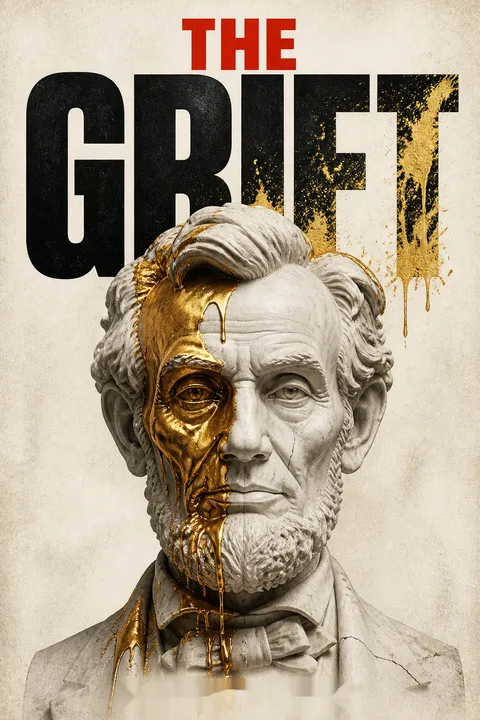
The Grift examines the history of Black Republicans from Lincoln to Trump, criticizing those who prioritize personal gain over community interests. Readers praised its thorough research and powerful insights, though some found it biased. Many appreciated the historical context and analysis of prominent figures like Clarence Thomas. The book sparked discussions on political integrity and the complexities of race in American politics. While some criticized its partisan tone, others found it enlightening and timely, particularly for understanding current political dynamics.
People Also Read




Glossary
grifter
Opportunist seeking powerCane uses grifter for an opportunist who changes or performs political positions to gain personal advancement and closeness to power. In this book, the term is not meant to describe every Black Republican, conservative, or voter who disagrees with Democrats. It refers to people whose public rhetoric and political conduct are presented as serving their own standing at the expense of communities they invoke.
Black Republican grift
Identity used for advancementCane's term for a political pattern in which Black figures gain visibility, money, or influence by offering Republican audiences reassurance about race while supporting positions he argues harm Black communities. The pattern includes selective appeals to Black identity, dismissal of systemic racism, and attacks on civil-rights claims. It describes conduct and incentives, not Black Republicans as a whole.
Douglass Republicans
Community-accountable Black RepublicansCane's name for early Black Republicans who pressed the party to defend Black freedom, political participation, education, economic opportunity, and protection from white violence. Frederick Douglass is the central example because he worked with Republican leaders while publicly challenging them. The term marks a model of political accountability, not simply a historical party membership.
Southern strategy
Appeal to white racial resentmentA Republican electoral approach, associated in the book with Barry Goldwater and Richard Nixon, that sought support from white Southern voters by appealing to racial resentment and opposition to civil-rights change. Cane argues that later campaigns adapted this strategy through coded language about welfare, crime, states' rights, and color-blind policy, sometimes using Black spokespeople to make the message more persuasive.
non-Negro politics
Race-muted electoral appealA phrase associated with Edward Brooke's strategy of reassuring white voters that his campaign was not centered on Black political demands. Brooke used this approach in a predominantly white Massachusetts electorate. Cane treats it as a politically effective way to win office, while distinguishing Brooke's later legislative work from the more damaging use of racial distancing by other Black Republicans.
Black capitalism
Black-owned business developmentA political approach that emphasizes Black business ownership and entrepreneurship as routes to economic advancement. Cane examines versions promoted under Richard Nixon and by Black political leaders, including the proposed town of Soul City. He argues that business growth alone cannot remedy poverty or unequal power without public investment, fair wages, housing, education, and benefits that reach working people.
Freedom Budget
Federal anti-poverty programA 1967 economic proposal associated with A. Philip Randolph and Bayard Rustin and supported by Martin Luther King Jr. It called for federal action to reduce poverty through living-wage employment, adequate income for people unable to find work, access to land and capital, and meaningful public participation. Cane presents it as an alternative to relying on private wealth or entrepreneurship alone.
FAQ
What's The Grift about?
- Focus on Black Republicans: The Grift by Clay Cane examines the evolution of Black Republicans from the post-Civil War era to the present, focusing on their shifting roles and political choices.
- Grifting Defined: Cane defines "grift" as the opportunistic behavior of individuals who prioritize personal gain over community interests, particularly within Black Republican circles.
- Historical Context: The book provides a historical backdrop, discussing figures like Frederick Douglass and the changing relationship between the Republican Party and Black Americans, especially under Trumpism.
Why should I read The Grift?
- Insightful Analysis: The book offers a critical examination of Black Republicans' motivations and actions, providing a nuanced understanding of their role in American politics.
- Historical Lessons: It draws parallels between past and present, helping readers understand the historical context of current political dynamics and implications for Black communities.
- Engaging Narrative: Clay Cane combines personal anecdotes with historical analysis, making the book both informative and engaging for those interested in politics, race, and history.
What are the key takeaways of The Grift?
- Evolution of Black Republicanism: The book illustrates the transition of Black Republicans from civil rights advocates to figures aligning with policies detrimental to their communities.
- Critique of Opportunism: Cane emphasizes the dangers of political opportunism, arguing that many Black Republicans today prioritize careers over constituents' needs.
- Call for Accountability: The author urges readers to hold political figures accountable and recognize the importance of community-focused leadership.
What are the best quotes from The Grift and what do they mean?
- “Grifting is a betrayal.”: This quote highlights how political opportunism undermines the interests of the Black community.
- “All my skin folk ain’t my kinfolk.”: It emphasizes that shared racial identity does not guarantee alignment with the Black community's interests.
- “Grifters reap from the grift.”: This reflects the idea that those who compromise values for political gain often achieve success at a moral cost.
How does Clay Cane define "grift" in The Grift?
- Opportunistic Behavior: Cane defines "grift" as actions of individuals who manipulate identities for personal gain, often at their communities' expense.
- Political Context: The term describes Black Republicans prioritizing political careers over Black voters' needs and interests.
- Cultural Implications: Grifting is seen as a broader cultural issue affecting political landscapes and Black American representation.
How does The Grift address the concept of systemic racism?
- Racism in Politics: Cane argues systemic racism is embedded in Republican policies and practices, particularly in engaging with Black voters.
- Denial of Racism: The book critiques Black Republicans who downplay systemic racism, suggesting such denial protects political interests over community needs.
- Historical Context: The author connects current political dynamics to historical racism patterns, illustrating ongoing systemic oppression effects.
What role does the media play in The Grift?
- Amplifying Grifters: Cane discusses how media platforms elevate Black Republicans aligning with conservative narratives, providing visibility and influence.
- Critique of Representation: The book critiques media portrayal of Black Republicans as representative of the entire Black community, ignoring diverse opinions.
- Impact on Public Perception: Media representation shapes public perception of Black political figures, challenging or reinforcing harmful stereotypes.
How does The Grift compare past and present Black Republicans?
- Historical Shifts: Cane illustrates the shift from early Black Republicans fighting for civil rights to contemporary figures aligning with undermining policies.
- Opportunism vs. Advocacy: The book contrasts motivations of historical figures like Douglass with modern Black Republicans prioritizing personal advancement.
- Consequences of Change: Cane emphasizes the shift's consequences, leading to a decline in meaningful representation and advocacy for Black interests.
How does The Grift address the concept of "opportunity zones"?
- Critique of Opportunity Zones: Cane discusses how opportunity zones often fail to benefit intended communities, leading to gentrification and displacement.
- Political Manipulation: Politicians like Tim Scott defend opportunity zones despite evidence of ineffectiveness, framed as political maneuvers.
- Call for Reform: Cane advocates for reforms ensuring investments genuinely benefit low-income communities, aligning with residents' goals.
What role does police reform play in The Grift?
- Inadequate Legislative Efforts: The book critiques weak police reform proposals by Black Republicans, like Tim Scott's Justice Act, as insufficient.
- Personal Experiences: Cane shares anecdotes of Black politicians' experiences with police discrimination, highlighting political identity complexities.
- Need for Genuine Reform: The author calls for comprehensive police reform addressing systemic racism and accountability within law enforcement.
How does The Grift explore the historical context of Black Republicans?
- Historical Legacy: Cane traces Black Republicans' history from Reconstruction to present, emphasizing contributions to civil rights and representation.
- Evolution of Identity: The book examines Black Republicans' identity evolution in response to changing political dynamics.
- Impact on Communities: Cane argues many Black Republican policies stray from promoting equality and justice, underscoring accountability and reform need.
What does The Grift say about the future of Black Republicans?
- Decline of Integrity: Cane suggests the current trajectory is troubling, with many prioritizing loyalty to Trump over community needs.
- Need for New Leadership: The book advocates for new Black leaders committed to genuine progress and accountability.
- Call for Unity: Cane calls for unity among Black voters to challenge the status quo and demand better representation.
Download PDF
Download EPUB
.epub digital book format is ideal for reading ebooks on phones, tablets, and e-readers.








