



Plot Summary
A Body Behind Costumes
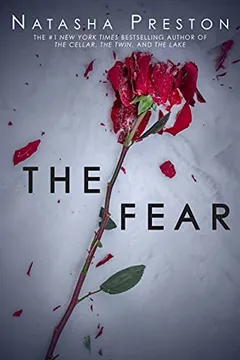
On the anniversary of Jackson Whitmore’s Halloween murders, Penny Langley1 studies the memorial to five dead classmates and thinks of Nash,2 Jackson’s son2 and her former boyfriend.2 Their town still treats Nash2 and his sister3 Grace3 as guilty by association, while Penny’s parents10 have forbidden her to contact him.
At Party Town, where she and her best friend4 Adi4 are shopping for costumes, Penny1 kicks a hidden body. It is Noah,14 a schoolmate, stabbed in the chest. As shoppers flee and police arrive, Adi4 immediately fears another serial killer and suspects Nash.2
Penny1 rejects the accusation, then spots Nash2 across the street, silently watching her before he slips away. His presence turns a fresh murder into a personal crisis: she cannot leave him alone under suspicion again.
The memorial makes the town’s grief public, but it also gives that grief a target: Nash and Grace inherit suspicion from their father. Penny’s discovery of Noah abruptly shifts her from remembering violence to encountering it again, in a costume shop associated with the holiday she once loved. Her first response is not simply fear; she resists the town’s reflex to treat family resemblance as moral evidence. Nash’s silent appearance reinforces the emotional bind. Penny has been trained to stay away, yet the crisis makes distance feel like a choice with consequences.
The Whitmore Farm Door
Penny1 leaves Adi4 and drives to the Whitmore farm, where Nash2 receives her with anger and suspicion. He expects her to blame him, while she admits she misses him and regrets obeying her parents.10 After police take Nash2 in for questioning, Penny1 waits near the station and sees Grace’s3 red truck pass with a tall driver8 whose cap and profile remind her of Jackson.7
Nash2 emerges with his lawyer and insists he had nothing to do with Noah’s14 murder, but he avoids explaining who drove the truck. Penny1 takes him home, and they arrange to meet at midnight in the old movie theater. She wants to rebuild trust; he remains wary, leaving both their reunion and the unidentified driver8 unresolved.
The farm visit reverses the town’s public logic: Penny approaches Nash as a person, while he anticipates being treated as an extension of his father. His hostility protects him from another rejection, but it also makes trust difficult to restore. The truck’s driver introduces a second kind of uncertainty, one tied to resemblance rather than proof. Penny notices a possible likeness to Jackson, yet she has no reliable way to interpret it. Their midnight plan therefore carries two pressures at once: the intimacy they once shared and the danger neither can name.
The Mask After Midnight
Penny1 sneaks out to meet Nash,2 but he never reaches the theater, and her messages remain unread. On the walk there, she notices a figure in a plain white mask like the one Jackson wore. A metallic scraping sound comes from inside the abandoned building, and she hides until Zayn5 tracks her location and drives her home.
In the car, Zayn5 admits he tried contacting Nash2 weeks earlier and was ignored too. He later visits the farm, finds Nash2 inside, but cannot get him to speak. Penny1 interprets Nash’s2 silence as retaliation for the months she abandoned him. Fear has now mixed with guilt: she does not know whether Nash2 is avoiding her, hiding something, or in danger.
The empty meeting place is a potent breach between Penny’s expectation and the facts: she has risked disobeying her parents, but Nash is absent, and the mask makes the darkness feel organized rather than random. Zayn’s rescue restores a measure of safety while complicating Penny’s assumptions about who has remained loyal to Nash. His disclosure that he also tried to reach him corrects her belief that she alone cares. Yet the unresolved silence keeps intimacy from becoming certainty, a pattern that will shape how Penny reads every later clue.
Karter’s Convenient Arrest
The next day, Penny1 joins Zayn,5 Adi,4 and Omar6 inside the abandoned theater after Zayn5 reports hearing scraping there. They find no intruder, only a loose metal shelf dragged by drafts, and leave embarrassed by their fear. At the Halloween fair, they learn Karter,11 the costume-shop owner’s son, has been arrested because he fought with Noah.14 The town accepts the arrest as an ending.
Penny1 does not. That evening, Zayn5 visits her at home and confirms Nash2 was inside the farm, while Penny1 tells him about the mysterious driver8 in Grace’s3 truck. They decide to investigate the Whitmore house for evidence of the stranger.8 Karter’s11 arrest quiets the crowd, but Penny’s1 suspicions and the repeated mask sightings keep the case open in her mind.
The loose shelf provides a rational explanation for one frightening sound, but it does not explain the mask or the larger recurrence of violence. The town’s relief at Karter’s arrest reveals how badly people want a usable culprit, especially one whose social position already makes him easy to suspect. Penny resists that closure without possessing stronger evidence. Her decision to investigate the Whitmore home shows both perceptiveness and risk: she is trying to distinguish real warning signs from trauma-driven pattern seeking, but she has no dependable authority to help her do so.
The Mask at Scream Fest
At Scream Fest, Penny1 attends with Adi,4 Zayn,5 and Omar,6 hoping a familiar ritual will make the week feel ordinary. The event’s performers wear black clothes and different white masks, but Penny1 twice spots one plain mask matching Jackson’s. Someone also grabs her wrist in the confusion.
Her friends see nothing unusual, so she wonders whether shock is distorting what she sees. The following morning, she confronts Ruby,12 a classmate who has been posting cruel accusations about Nash,2 and shoves her during an argument.
Later, in the pumpkin maze, Penny1 unexpectedly meets Nash.2 He explains that police arrived at the farm just before their planned meeting because someone reported seeing him near the crime scene. Before they can repair their trust, Penny1 finds Ruby’s12 body in a portable toilet.
The festival converts the mask from a remembered instrument of violence into a purchasable performance, making Penny’s uncertainty socially plausible even when her fear is justified. Her friends’ inability to confirm the sighting leaves her alone with evidence that can be dismissed as imagination. Meanwhile, the encounter with Nash corrects her earlier belief that he deliberately stood her up: a caller had redirected the police toward him. The discovery of Ruby’s body then overturns the town’s premature confidence in Karter, making the old pattern feel newly active.
Ruby Falls from the Stall
Penny1 and Zayn5 find Ruby’s12 body at the pumpkin patch, where Penny1 had been searching the maze and speaking privately with Nash.2 The police question both teenagers, and Penny1 admits she argued with Ruby12 that morning and recently contacted Nash.2 She also tells FBI Agent Rosenthal9 that she saw Jackson’s exact mask at Scream Fest. Before she can return to a normal routine, Penny1 skips school to visit Nash.2
In a cornfield beside the Whitmore land, a masked attacker pursues her with a knife. Penny1 escapes over a fence and reaches Nash’s2 farm, where she faints from exhaustion and lack of food. After she wakes, Nash2 drives her toward school and spots the same masked figure6 entering Benji’s abandoned theater, prompting him to report the sighting.
Ruby’s death makes Penny’s own recent conflict relevant to the investigation, forcing her to choose candor over self-protection. Her report to Rosenthal is a first step toward treating her perceptions as evidence rather than private panic. The cornfield chase then confirms the danger physically: someone is targeting her, and the mask is not confined to a staged attraction. Penny’s collapse also exposes the bodily cost of her distress, particularly her inability to eat. Nash’s act of feeding and helping her rebuilds trust through care, not declarations, before the theater sighting sends the investigation forward.
Mae in the Theater
Despite Penny’s parents’10 objections, Nash2 joins Penny,1 Adi,4 Zayn,5 and Omar6 for a Scream movie marathon. Their awkward reunion gradually gives way to familiar ease, and Grace3 briefly appears to check whether the invitation is sincere.
During the film, Penny1 notices a masked person leave through a fire exit, but Nash2 cannot confirm it. After the screening, a scream draws the group to an accessible bathroom, where a body has been found. Rumors identify the victim as Mae,13 Penny’s1 schoolmate and friend.
The FBI holds the crowd inside while officers investigate, then allows them to leave. Zayn5 drives everyone home, including Nash.2 Penny’s father10 sees Nash2 in the car and angrily orders Penny1 inside, but she refuses to pretend Nash2 is responsible for the murders.
The movie night briefly restores a shared social world, and the group’s familiar banter suggests that estrangement has not erased affection. Grace’s guarded check on the gathering shows how thoroughly public rejection has altered her expectations. Mae’s death cuts through this attempted normality, and the theater’s crowded setting challenges the assumption that the killer follows Jackson’s habits. Penny’s refusal to reject Nash in front of her father is a small but consequential act of autonomy. It does not settle their relationship, but it ends her willingness to perform indifference.
A Crash on the Farm Road
Before dawn, Nash2 tells Penny1 that Grace3 has disappeared and is not answering her phone. Penny1 drives to the farm, where she and Nash2 search Jackson’s7 old workshop after hearing a noise.
Grace3 returns from a friend’s home, explains she has been leaning on Brant,16 a coworker, and reacts with concern when Penny1 says Mae13 has been killed. On the drive back, a vehicle strikes Penny’s1 car and sends it rolling into a ditch. The masked attacker approaches, but Penny1 escapes through a damaged door and runs toward town before collapsing.
She wakes in hospital with a concussion and broken wrist. Rosenthal9 says Nash2 and Grace3 were questioned but insists investigators found no evidence of another vehicle, even as Penny1 maintains that the masked person was there.
Penny’s visit to the farm begins as an act of loyalty toward Grace, whose isolation she understands, and produces a fragile thaw between them. The attack transforms that concern into direct danger. Penny’s escape depends on instinct and persistence, but the crash leaves her unable to make her account immediately credible. The conflict with Rosenthal is not simply disbelief versus truth; it is the gap between lived perception and evidence investigators can verify. Penny’s injury intensifies her vulnerability while making her testimony, and her judgment, easier for others to question.
Jensen’s Hidden Place
In hospital, Penny1 tells Rosenthal9 that an anonymous caller had sent police to Nash’s farm on the night he was supposed to meet her. She also tells Nash2 that the caller may have been Zayn,5 though neither can prove it.
During a visit, Nash2 reveals that the unknown driver8 is Jensen,8 an uncle8 he and Grace3 only recently discovered. Jensen8 resembles Jackson,7 has been staying at the farm for a month, and is due to leave soon. Penny1 urges Nash2 to question his imprisoned father,7 suspecting the new relative8 could be connected to the killings.
Nash2 resists but eventually arranges an emergency call with Jackson.7 Jackson7 says he has had no contact with Jensen,8 offering no explanation that clears the uncle.8 Nash2 leaves angry and shaken, while Penny’s1 suspicion deepens.
Jensen’s arrival exposes how little the Whitmore siblings know about their own family history, a consequence of Jackson’s secrecy that now carries investigative weight. Penny’s insistence that Nash question his father is simultaneously practical and emotionally costly: it asks him to reopen a relationship he has tried to sever. Jackson’s lack of contact does not prove Jensen guilty, but it removes the easy reassurance Nash wants. The anonymous call also widens the circle of suspicion to include Zayn, showing how fear can turn even protective friendships into evidence to be interpreted.
Smoke Over the Memorial
After leaving hospital, Penny1 attends a town memorial for Noah,14 Ruby,12 and Mae13 with her parents10 and FBI protection. Nash2 and Grace3 are there too, no longer openly shunned because their alibis have been checked. Inside the church, Penny1 and Nash2 discover Billy’s15 body.
Before investigators can secure the building, the lights fail and a fire begins. Smoke fills the rooms, separating Penny1 from her parents.10 Nash2 keeps her low and guides her toward a side exit; Penny1 sees the white mask behind them as they crawl.
They escape, and her parents10 make it out safely as well. Nash’s2 rescue changes how Penny’s father10 treats him, but the killer disappears during the evacuation. The fire confirms that the attacker can strike even with federal agents nearby.
The memorial offers a provisional return to community, but Billy’s body turns remembrance into another crime scene before grief can settle. The fire then weaponizes the church, a place expected to shelter mourners. Nash’s practical rescue gives Penny’s parents evidence of his character that argument had failed to provide. Yet the escape does not bring security: the masked figure vanishes amid the emergency. The episode captures the novel’s recurring conflict between what people know personally and what fear makes them believe, while showing how costly it is when institutions cannot protect public space.
Adi Becomes the Bait
On Devil’s Night, Penny1 learns classmates are holding a party despite the murders and church fire. After her friends leave, an unknown sender texts her a photograph of Adi bound and unconscious in a car, then directs Penny1 to the party.
Penny1 slips past the FBI agents outside her house, takes a kitchen knife, and reaches Sarah’s dark, empty home. There she finds Nash2 unconscious with a head wound. When he wakes, they search for Adi4 and discover a bloody message directing them to Benji’s theater. Nash2 and Penny1 travel there through the cold, avoiding the main streets.
They enter the party, where masked costumes conceal everyone’s identity. When the crowd scatters in colored smoke, Penny1 and Nash2 search upstairs and find Jensen8 stabbed. His presence at the theater turns Penny’s1 suspicion into immediate grief.
The photograph turns Penny’s loyalty into leverage: the attacker knows she will risk her own safety to reach Adi. Her escape past the agents repeats her earlier defiance, but this time the danger is not a reckless attempt to reconnect with Nash. It is a deliberate rescue attempt under coercion. Finding Nash unconscious makes their partnership necessary before trust can be discussed. The bloody clue structures their movement like a forced game, while Jensen’s body abruptly shifts the search from rescue to mourning and suggests the violence reaches inside the Whitmores’ private life.
Grace Drops the Mask
Penny1 and Nash2 search the theater’s remaining rooms while Zayn5 arrives, having followed the music and smoke. Behind the screen, they find Adi4 alive but bound and disoriented. Grace3 enters moments later carrying a large knife.
She admits she has hated the town for years and intends to leave with Nash2 after settling matters. Nash2 is stunned; Penny1 realizes Grace’s3 phrase about giving them answers implicates her brother2 too. Before they can make sense of the accusation, Omar6 appears with a bloodied knife and claims responsibility for the killings.
Grace3 says she and Omar6 planned the attacks together, while Omar6 carried them out. Their confession reveals that the original five murders were committed by the pair, and Jackson7 took the blame after Grace3 manipulated him into protecting her.
Grace’s reveal shatters the assumption that familial resemblance is the central danger: the Whitmores are not simply victims of their father’s reputation, though the town’s ostracism has helped shape her grievance. Her plan to take Nash with her turns sibling love into possession. Omar’s appearance further destabilizes the group, because the violence comes from someone they have trusted since childhood. The confession reframes Jackson’s imprisonment as a sacrifice engineered by his daughter. The story’s central question shifts from whether Nash inherited guilt to how loyalty can be manipulated into complicity.
Friends Turn Their Knives
Omar6 explains that he and Grace3 had planned the murders for months, sharing violent fantasies before turning them into action. Grace3 says Jackson7 discovered signs of her involvement but chose to cover for her, even planting his hair at a crime scene after she pretended to seek help.
She and Omar6 now expect to escape together with Nash.2 When Grace3 orders Omar6 to finish the others, he stabs Adi4 in the abdomen. Zayn5 presses against the wound while Penny1 tries to keep Omar6 talking and secretly calls emergency services.
Omar6 briefly wavers, then sides with Grace.3 Nash2 offers to let the pair flee if they spare the rest, but Grace3 rejects the bargain and stabs Omar6 repeatedly. His betrayal and death leave Penny,1 Zayn,5 and Nash2 facing Grace3 with no safe way out.
Omar’s confession reveals that his humor and long friendship never guaranteed moral safety; intimacy can conceal a parallel self, especially when a shared grievance rewards secrecy. Grace’s account of Jackson’s sacrifice complicates the idea that parental protection is inherently benevolent: his silence preserved his daughter’s freedom while making him the public villain. Omar’s attack on Adi is the point where fantasy becomes irreversible action. His hesitation suggests conflict, but his choice shows that recognizing manipulation is not the same as resisting it.
Nash Fires in Darkness
After Grace3 kills Omar,6 she turns on the remaining friends and threatens Penny.1 Nash2 steps between them, trying to keep his sister3 talking while Penny’s emergency call remains connected. Zayn5 urges Penny1 to escape, but she refuses to leave Nash.2 As police sirens approach, Grace3 charges. Nash2 tells Penny1 to run, then Grace3 stabs him in the abdomen.
Zayn5 grabs Omar’s6 knife and lunges at Grace3 while Nash,2 bleeding on the floor, reaches into Omar’s6 pocket and finds a gun. Penny1 cannot tell whether Nash2 is aiming at Grace3 or trying to stop Zayn5 from reaching her. He fires. The account ends at the gunshot, without revealing whom the bullet hits or what happens to Penny,1 Zayn,5 Nash,2 or Grace.3
The climax makes the novel’s emotional conflict physical: Penny refuses the old pattern of abandoning Nash when danger makes him socially costly, while Nash repeatedly tries to put himself between her and harm. Grace’s violence collapses family loyalty into threat, and Zayn’s decision to attack her becomes another act the friends may not be able to undo. The hidden gun changes the balance, but the shot withholds resolution. Ending at that instant leaves survival, justice, and the possibility of reconciliation suspended together.
Analysis
The novel’s central horror is not only that a killer returns, but that the town has already built a story about who is capable of violence. Nash2 and Grace3 are treated as inherited threats before evidence supports that judgment, while Penny’s1 loyalty is interpreted as foolishness or disloyalty to the victims. This social machinery makes every new clue emotionally charged: a familiar face, a phone call, or a mask can become proof in people’s minds long before it becomes proof in court.
Penny’s1 point of view makes uncertainty bodily. She stops eating, loses sleep, faints, and questions her own perception after finding bodies and being chased. Her physical vulnerability does not make her observations meaningless, but it complicates how others receive them. The tension between lived experience and verifiable evidence is especially sharp when investigators cannot confirm the second vehicle or the masked attacker Penny1 saw.
The Whitmore family story finally overturns the town’s convenient belief that Jackson’s7 guilt explained everything. Grace3 and Omar’s6 concealed partnership reveals how resentment can become a private permission structure: each validates the other’s violent fantasies, while Jackson’s7 protection converts silence into complicity. Yet the book does not suggest that social rejection caused murder. It shows instead how exclusion can feed a grievance that its perpetrators use to rationalize choices they remain responsible for.
Penny’s1 changing relationship with Nash2 supplies the emotional counterpoint. She begins ashamed that she abandoned him and repeatedly tries to repair their bond through risky acts. By the end, loyalty means refusing to leave him, but the unresolved final gunshot complicates any simple celebration of that courage. The text ends before revealing who is struck. It leaves the reader inside the same suspended uncertainty that has governed Penny’s1 choices: love can motivate protection, but it cannot guarantee that anyone will survive.
Review Summary
Reviews for The Haunting are mixed, averaging 3.58/5. Many readers enjoyed its Halloween atmosphere, fast-paced plot, and whodunit mystery, praising its creepy setting and suspenseful copycat-killer premise. However, common criticisms include the abrupt, unsatisfying cliffhanger ending, a predictable mystery, and an unlikable, reckless protagonist in Penny. Several readers noted the title is misleading, as the book contains no paranormal elements. Comparisons to the Scream franchise were frequent, with some finding this a negative and others less concerned.
Characters
Penny Langley
The loyal witnessPenny is an academically accomplished teenager, a pianist and former track runner whose confidence has narrowed under grief, public scrutiny, and family pressure. She once felt at home in the Whitmore household and remains attached to Nash2 even after fear and her parents’10 rules separate them. Her instinct is to investigate, but her courage is tangled with guilt: she repeatedly puts herself at risk because she believes she failed Nash2 and Grace3 when the town rejected them. Penny notices details others dismiss, yet she also questions her own perceptions after trauma. Her arc centers on learning that loyalty cannot be reduced to secrecy or self-sacrifice; she must decide what to reveal, whom to trust, and when helping someone means seeking aid rather than facing danger alone.
Nash Whitmore
The blamed sonNash is Jackson’s7 son, Grace’s3 younger brother, Penny’s1 former boyfriend, and a onetime member of Penny’s1 close-knit friend group. After his father’s7 crimes become public, Nash withdraws from school and town life, leaving him isolated on the family farm. He is protective of Grace3 and fiercely rejects any suggestion that he shares his father’s7 nature, but anger and mistrust often make him push away the few people still trying to reach him. His bond with Penny1 remains emotionally important even when neither knows how to repair it. Nash wants his family’s past to stop defining him, yet he cannot simply discard the relationships and questions that come with it.
Grace Whitmore
Nash’s guarded sisterGrace is Nash’s2 older sister, a young woman who helped hold their household together after their mother died. She is intelligent, independent, and used to taking responsibility for her brother2, qualities that can make her appear more self-contained than she feels. After Jackson’s7 crimes, she shares Nash’s2 isolation but responds with greater interest in understanding the family history and less willingness to trust outsiders. Her ambition and desire for a life beyond the farm coexist with a strong attachment to the people she considers her own. Grace’s guardedness reflects the cost of being treated as an extension of her father7, while her relationships reveal how fiercely she wants control over her future.
Adi
Penny’s blunt confidanteAdeline, usually called Adi, is Penny’s1 best friend: expressive, funny, observant, and quick to challenge the stories Penny1 tells herself. She loves Halloween festivities and food, but her loyalty to Penny1 does not automatically extend to Nash2 and Grace3, whom she initially views through the town’s fear. Adi can be impatient with Penny’s1 attachment to Nash2, yet she is also willing to comfort her and remain close through frightening events. Her directness makes her a useful counterweight to Penny’s1 secrecy, even when their disagreements show how grief can divide friends who experienced the same tragedy.
Zayn
The watchful friendZayn is one of Penny’s1 oldest friends, steady in a crisis and attentive to the people around him. He tracks Penny1 when she sneaks out, picks her up from the theater, and admits that he has tried to reconnect with Nash2. His history with both Penny1 and the Whitmores leaves him emotionally complicated, but he usually expresses concern through practical help rather than long explanations. Zayn’s caution sometimes clashes with Penny’s1 determination to keep investigating. He represents the protective instincts of the friend group, while his silences remind Penny1 that even close friendships contain private histories.
Omar
The irreverent classmateOmar is the group’s quick-witted, food-loving friend, fond of horror attractions and reckless ideas. His jokes can relieve tension, although they sometimes land badly when Penny1 or Adi4 is frightened. Beneath the humor, he belongs deeply to the group and understands their shared history, including the grief surrounding Brodie’s death. Omar is often the person who makes a frightening plan sound manageable, a quality that brings people together but can also encourage them to underestimate risk.
Jackson Whitmore
The imprisoned fatherJackson is Nash2 and Grace’s3 father, an isolated scrapyard owner who once seemed welcoming to Penny1 and encouraged her musical ambitions. His ordinary acts of hospitality make the truth of his crimes difficult for Penny1 to reconcile with her memories. He is serving a life sentence for killing five teenagers, and his arrest transformed his children2 into targets of suspicion. Jackson’s presence persists even in prison: his mask, the memorial, and the town’s fear shape how the younger characters interpret one another.
Jensen
The unfamiliar relativeJensen is an adult connected to Nash2 and Grace’s3 family, and his arrival offers the siblings a rare link beyond their isolated home. He is practical and appears willing to help them while they navigate the aftermath of Jackson’s7 crimes. His resemblance to Jackson7 unsettles Penny1, who is already alert to the way appearance can provoke suspicion. Jensen’s presence raises questions about what the Whitmores know of their family history and how much of that history has been deliberately kept from them.
Agent Rosenthal
The FBI investigatorRosenthal leads the FBI’s involvement in the new murders. She questions Penny1 carefully, gathers details about the mask and Penny’s1 contact with Nash2, and tries to distinguish a witness’s fear from evidence investigators can verify. Her professional reserve frustrates Penny1, who wants immediate protection and answers, but Rosenthal takes the threats seriously enough to keep agents near her. She embodies the difficult distance between procedural caution and the urgency felt by the people in danger.
Penny’s parents
Protective parentsPenny’s parents are caring, demanding, and deeply frightened by the violence that has touched their town. They value her academic future and musical talent, and their instinct is to protect her by restricting her movements and keeping her away from Nash2. Their caution is understandable after Jackson’s7 crimes, but it also asks Penny1 to accept the town’s rejection of his children2. As danger escalates, their concern becomes more visible, and their willingness to reconsider Nash2 is shaped by what they witness firsthand.
Karter
The volatile classmateKarter is the costume-shop owner’s son, a bully with a reputation for picking fights and ordering other students around. He clashed with Noah14, making him an easy suspect when Noah14 is found dead. His temper and family’s connection to the crime scene encourage the town to draw conclusions before the evidence is settled.
Ruby Mountford
The online provocateurRuby is a classmate who gained attention by posting sensational videos about the Whitmores and the town’s murders. She speaks bluntly and often turns other people’s pain into public content. Penny’s1 anger at Ruby grows from the way those posts intensify the blame falling on Nash2 and Grace3.
Mae
The kind classmateMae is a friendly schoolmate who shares classes and ordinary conversations with Penny1. She belongs to a different social circle but is warm enough to make Penny1 feel remembered rather than merely observed. Her presence at school helps anchor the story’s violence in the everyday relationships the teenagers are trying to preserve.
Noah
The football teammateNoah is a student from Nash’s2 former football circle, known to Penny1 more through school than close friendship. His death becomes the event that reopens the town’s fear of another Halloween killing. His past conflicts with Karter11 provide an early, plausible lead for the investigation.
Billy
Adi’s shy crushBilly is a quiet schoolmate who makes Adi4 nervous and gives her a rare reason to feel shy. Their tentative connection brings a gentler thread to the group’s tense week. He is part of the teenagers’ ordinary social world, where crushes and plans continue even as fear presses in.
Brant
Grace’s work friendBrant works with Grace3 and becomes someone she can turn to when her usual friendships have fallen away. He offers her a connection outside the Whitmore farm and the town’s judgment. Grace’s3 reliance on him shows her need for support that is not defined by her family name.
Officer Barone
The local investigatorOfficer Barone is a local police officer and the mother of one of Penny’s1 school acquaintances. She questions Penny1 after Ruby12 is found and handles the conversation with patience, helping Penny1 give a clear account despite her shock.
Plot Devices
The Halloween anniversary
A calendar of dreadThe murders begin on the anniversary of Jackson’s7 first killing and appear to echo the schedule of his previous spree. Each date makes the town anticipate a specific next event, especially the double murder associated with Devil’s Night. The calendar functions as evidence and psychological pressure at once: it gives investigators a pattern to test, while making ordinary Halloween gatherings feel dangerous. When the new killer departs from Jackson’s7 locations and methods, the pattern stops being a reliable guide and becomes a trap for anyone who assumes the past explains the present.
Jackson’s white mask
A face that misdirectsThe plain white mask turns up in Penny’s1 memories, on a figure in town, and among Halloween performers. Because the town already associates it with Jackson7, the mask can provoke fear without proving who is wearing it. Penny’s1 repeated sightings first make her doubt her own perception, then become a crucial warning that someone is deliberately invoking the old murders. It also allows the attacker to hide identity while exploiting the Whitmores’ reputation, so the mask operates as both practical disguise and social accusation.
The anonymous police call
Suspicion by telephoneAn unidentified caller reports seeing Nash2 near the costume store, causing police to interrupt his planned meeting with Penny1 and strengthening the town’s suspicion of him. Because the caller’s identity remains unknown, the report becomes a measure of trust as much as an investigative lead. Penny1 and Nash2 consider whether Zayn5 might have made the call, while the FBI treats it as information to investigate. The device shows how an apparently small claim can isolate a vulnerable person and redirect the night’s events without leaving an obvious trail.
The staged evidence
A father’s false guiltThe story initially presents Jackson7 as the known killer whose crimes have left a clear public history. Later, Grace3 explains that she and Omar6 committed the original murders and that Jackson7 deliberately took the blame after she pretended to seek help. His hair planted at a crime scene gave investigators evidence pointing to him. This device reconfigures the town’s accepted account and exposes how a single piece of evidence can become a family’s entire public identity. The revelation also shows that Jackson’s7 silence helped preserve Grace’s3 freedom while making Nash2 and Grace3 inherit the consequences.
Penny’s phone
A fragile evidence trailPenny’s phone connects her to Nash2, lets Zayn5 track her location, carries the attacker’s image of Adi4, and records the final confrontation. It is alternately a lifeline, a privacy risk, and a way to preserve testimony when Penny1 cannot safely summon help aloud. The device also reflects how the town processes fear through messages and online rumors, often spreading accusation faster than verified information. Near the climax, Penny1 uses its emergency call and recording function to seek help and preserve what the group learns.
About the Author
Other books by Natasha Preston





Download PDF
Download EPUB
.epub digital book format is ideal for reading ebooks on phones, tablets, and e-readers.








