

Plot Summary
The Tenth-Year Summons
Maya Seale, a criminal defense lawyer, is challenging the search that uncovered her client Belen Vasquez’s husband’s severed head. The arresting officer cannot explain how he supposedly glimpsed the head inside a closed glove compartment, and Maya uses the contradiction to weaken the prosecution’s case.
In the courthouse corridor, she encounters Rick Leonard, the fellow juror who once helped acquit Bobby Nock of murdering Jessica Silver. Ten years after that notorious trial, Rick is organizing a documentary reunion and claims he has found decisive proof of Bobby’s guilt.
Maya refuses to participate. Her senior partner, Craig Rogers, argues that she should hear the evidence and protect the firm’s reputation. Maya does not say yes, but she eventually travels to the reunion.
The opening makes legal judgment concrete before making it philosophical: Maya wins ground by exposing an officer’s inconsistent account, yet her professional skill cannot erase the verdict that defines her public identity. Rick’s return turns a suppressed past into an active pressure. His promise of certainty tempts Maya with the very thing she has spent a decade resisting, while Craig’s appeal reveals how reputational interests can masquerade as personal choice. Belen’s case also establishes Maya’s instinct to scrutinize procedure rather than accept an authority’s narrative.
Numbers Become Neighbors
In 2009, graduate student Rick Leonard reports for jury duty and meets Maya Seale in the waiting room. They joke about the other prospective jurors and discover matching Obama campaign buttons, but court rules forbid them from exchanging names.
Both are selected for Bobby Nock’s murder trial. Rick sees a young Black defendant facing a wealthy white family’s enormous influence and believes he can judge the evidence fairly. Maya, newly arrived in Los Angeles and unsure what to do with her life, approaches jury service as a civic adventure.
When the press obtains the jurors’ identities, the judge sequesters them at the Omni Hotel for the trial’s remaining months. Wayne Russel breaks the tension by urging them to use their real names among themselves, creating their first act of solidarity.
The jurors begin as numbered strangers, but their first rebellion is not against the verdict or the judge. It is against the reduction of their private selves to a security procedure. Wayne’s insistence on names gives the group a fragile sense of mutual responsibility, even as their forced proximity will intensify differences in class, race, temperament, and need. Rick’s faith in impartiality and Maya’s openness to experience are sincere, but both underestimate how quickly a courtroom’s formal rules will enter their emotional lives.
A Future Behind Closed Doors
As testimony fills the courtroom, prosecutors describe Bobby’s explicit texts with fifteen-year-old student Jessica, his false library alibi, and hair and blood linked to her in his car. Defense attorney Pamela Gibson challenges what each item can actually prove, especially because Jessica’s body has never been found.
Outside court, Rick explains how urban planning can preserve racial segregation through street design, and Maya begins to see both his intelligence and his warmth. Their private conversations grow into an affair, though Maya still has a boyfriend, Hunter.
They promise one another honesty and carefully avoid discussing the case. Meanwhile, Peter Wilkie’s fixation on anonymous sexual fantasies escalates into an assault on hotel housekeeper Margarita Delfina. Bailiff Steve accepts Peter’s denial and keeps the assault from the court.
Maya and Rick’s intimacy depends on a boundary that feels ethical because it protects the trial, but it also shelters them from confronting incompatible beliefs. Their imagined future grows in a sealed space, built from talk about everything except the evidence that governs their days. The jury’s isolation creates different forms of pressure: Peter’s private fantasies distort his understanding of consent, while Steve’s decision to suppress Margarita’s report shows how institutions can convert a vulnerable person’s experience into an inconvenient risk. The trial’s moral questions are already reaching beyond Bobby’s guilt.
A Grieving Father Testifies
The prosecution’s forensic case appears strong until Gibson establishes that evidence samples from Bobby’s car were handled in ways that could have contaminated them. Then Lou Silver, Jessica’s billionaire father, testifies and reveals his fury at Bobby, using a racist insult in court.
The outburst shakes the jurors and gives Gibson a reason to believe that at least one of them may doubt the prosecution. Bobby and his lawyer had prepared witnesses and an alternative account, but they abandon that plan rather than expose Bobby’s prior assault conviction through his testimony.
Their choice leaves the defense resting without calling a witness. As the trial closes, Maya’s belief that Bobby may be innocent grows, while Rick remains convinced that the accumulating evidence points to murder.
Lou’s testimony exposes the instability of moral authority: a bereaved father can be both genuinely grieving and openly prejudiced, while a flawed defendant may still deserve a fair hearing. The defense’s decision not to call Bobby protects him from damaging prior-act evidence, but it also leaves jurors with a silence they can interpret as evasion. Maya notices the system’s asymmetries; Rick gives greater weight to the prosecution’s pattern of facts. Their disagreement is no longer a difference of emphasis. It is a difference in what each considers knowable.
The Holdout Raises Her Hand
At the start of deliberations, a blind vote produces eleven guilty ballots and one for not guilty. Maya identifies herself as the dissenter and asks the others to justify their certainty, rather than requiring her to prove Bobby’s innocence.
She challenges the meaning of the texts and the reliability of the forensic evidence, gradually winning jurors over. Her private relationship with Rick collapses when he argues that Bobby should be convicted; she refuses to resume their intimacy while they are deliberating.
Rick remains the lone guilty voter and asks the judge to declare a hung jury. When the judge refuses, Rick changes his vote rather than hand Bobby’s fate to a new panel. The jury returns a unanimous acquittal. Public condemnation follows, and Rick publicly blames Maya.
Maya’s intervention shifts the burden of discussion back toward the prosecution’s obligation to prove its case, but her success also makes her the symbolic author of a decision shared by twelve people. Rick’s change of vote is not a conversion so much as a surrender to a procedural dilemma: he fears an unknown jury more than he trusts his own certainty. Their romance ends at the moment their shared civic role becomes impossible to separate from their private attachment. The acquittal settles the legal question while magnifying every uncertainty around it.
The Reunion Turns Fatal
At the Omni reunion, Maya finds the jurors older, scattered, and still marked by the trial. She and Rick briefly reconnect, then retreat to her room to talk privately. Their old closeness returns until Rick notices Maya’s evidence notes and accuses her of refusing to face new facts. He will not reveal the proof he plans to present on camera.
Maya leaves in tears for a walk through downtown, past the museum funded by Lou Silver. When she returns, Rick is dead on her living-room floor, his skull struck against the desk. A worn H-O-P-E button lies in his hand. Maya touches his body, gets his blood on her hands, and is immediately treated as a suspect by the police.
The reunion sells a staged return to the jurors’ shared past, but the identical hotel rooms and cameras cannot recreate the intimacy they once had. Maya and Rick’s argument revives their unresolved conflict just before violence makes ordinary reconciliation impossible. The button compresses their vanished idealism into physical evidence, though its placement is also suspiciously symbolic. Maya’s first response is grief and shock; the investigators’ response is to translate her contact with the body into suspicion. The novel’s central question changes from whether Bobby killed Jessica to who killed Rick, and whether anyone can establish the truth without exploiting appearances.
The Lawyer Becomes Suspect
Maya refuses to answer detectives without counsel, and Craig arrives to protect her before the police can turn her shock into a statement. He delays the collection of her blood evidence until contamination is possible, then tells her not to invent an account before they know what investigators have.
Rick’s death could look like a fall, but the wound and blood on the desk suggest a struggle. The absence of forced entry means Rick likely let his killer in. A juror has also told police that Maya and Rick were lovers during the original trial, giving prosecutors a possible motive.
Craig considers arguing self-defense, but Maya insists Rick never abused her. As she recounts their affair and its end, she recognizes that the secret may be more useful to the prosecution than to her.
Maya’s legal training gives her composure, but it cannot free her from the ethical trap of defending herself. Craig treats a story as a strategy that must fit the evidence, while Maya experiences any false account as a further injury to Rick. Their conflict is not between morality and amorality: Craig’s professional duty is itself a principled commitment to protecting a client from state power. Still, the proposed self-defense narrative would turn intimacy into evidence and recast Rick as a threat. Maya must choose whether survival requires her to lie about someone she once loved.
Rick’s Files Name Everyone
Maya asks her friend Crystal Liu to help find what Rick knew, and Shannon, an earnest Murder Town assistant, arrives at Maya’s house with access to his files. The investigation is vast: Rick had spent years documenting the Silver case and building dossiers on every juror, including Maya.
His notes record their legal histories, private vulnerabilities, and possible biases, material he could have used to challenge the old verdict publicly. One file contains Bailiff Steve’s late account of Peter assaulting Margarita during the sequestration.
Rick had visited Margarita shortly before the reunion, pressing her to make a statement. Another clue shows that Bobby disappeared from his parole residence days after Rick visited him. These discoveries suggest Rick’s hidden evidence may concern a juror as much as the murder.
Rick’s archive turns scrutiny inward. He did not merely reopen the case against Bobby; he assembled a prosecutorial version of the people who had judged him, reducing their lives to potentially damaging facts. The files are powerful precisely because they omit kindness and context, demonstrating how evidence can be accurate yet distortive. Maya also discovers that Rick’s obsession continued after she believed it had ended, a painful reminder that their shared history meant something different to each of them. His search for justice has become a machinery capable of harming the people it claims to correct.
Margarita Names Peter
Maya finds Margarita, who reveals that Rick approached her twice, once years earlier and again just before the reunion. He threatened to expose Peter’s assault, but Margarita feared losing her job and dragging her family into public attention.
Maya promises to respect her privacy and visits Peter. He admits that he assaulted Margarita during the sequestration, describing how his online fantasies blurred his sense of consent, but denies killing Rick. Maya records the admission and explains that Margarita may pursue a civil case that threatens Peter’s cannabis business license.
Peter insists the criminal limitation period has passed and swears he did not kill Rick. His past conduct gives him a powerful motive to silence Rick, but his confession does not identify the murderer.
Margarita’s reticence is not evidence of unreliability; it reflects the unequal costs of being believed. She has a job, children, and a reputation to protect, while Peter has money and the means to shape his public image. Maya’s choice to promise discretion recognizes that extracting information can repeat the coercion she is investigating. Peter’s explanation reveals how rehearsed fantasy can become an excuse for violence, but his admission is not proof of murder. The case widens without resolving, and Maya must distinguish a credible motive from a satisfying answer.
Lou Sends Her East
In Miracle, a remote settlement for registered sex offenders, Maya learns from a former neighbor of Bobby’s that Rick searched for him and left Lou Silver’s office number. Lou admits that he funded Rick’s investigation and hired him to pursue evidence against Bobby, though Rick never disclosed his supposed breakthrough.
Lou believes Bobby killed Rick, but says he knows where Bobby has gone. He points Maya toward East Jesus, a desert art camp beyond the Salton Sea, reasoning that Bobby may speak to the juror who once acquitted him. Maya accepts the lead because she needs to learn what Rick found. Lou’s help is not trust: he wants Bobby exposed, and Maya is useful as the person most likely to reach him.
Lou’s power lies less in issuing orders than in arranging other people’s motives so they serve his purpose. He offers Maya information that could help her defense, but the offer also makes her an instrument in his pursuit of Bobby. His grief is real, yet it has narrowed into a demand for punishment that leaves little room for uncertainty. Maya understands the manipulation and proceeds anyway, because her need for answers has begun to resemble Lou’s. The scene tests whether information can be accepted without accepting the giver’s moral frame.
Bobby Runs Again
Maya reaches Bobby at East Jesus, where armed residents guard an improvised community of art, tents, and drug users. Photographs with timestamps place Bobby there during Rick’s murder, clearing him as the immediate suspect. Bobby says Rick found him in Miracle but never produced evidence against him; he fled because he could not endure renewed publicity and pursuit.
He claims Jessica told him that Lou abused her and Elaine, and that she trusted him because he tried to help. Bobby admits their relationship was inappropriate, though he disputes the prosecution’s interpretation of their texts and the blood in his car. Before Maya can assess his account, news crews arrive. Bobby bolts into the desert, convinced Maya has exposed him again.
Bobby’s account complicates rather than absolves him. He admits crossing boundaries with a child who depended on him, while describing a home life that may have made his failure to act more consequential. His story about Lou is plausible but uncorroborated, and Maya cannot turn sympathy into certainty. The camp’s sudden invasion by reporters shows how quickly a person becomes public property once a story can be sold. Bobby’s flight repeats his old pattern of withdrawal, but this time it is driven by a fear that extends beyond himself.
The Locket Reappears
After East Jesus, police report that DNA recovered from Rick’s clothes and the room belongs only to Maya. Craig says investigators are preparing to arrest her, and she refuses his advice to claim self-defense.
At her arraignment, she pleads not guilty, and Craig wins bail by arguing that her notoriety makes detention dangerous. Then news breaks that Bobby has died by apparent suicide in a Texas motel. A note beside his body apologizes, and Jessica’s silver locket lies nearby, apparently tying him to her murder.
Reports rapidly contradict one another, but officials say blond hair was found on the locket. Maya, who heard Bobby deny killing Jessica, faces the possibility that she protected a guilty man and that Rick died because he found the locket.
The locket appears to convert uncertainty into a clean story: Bobby fled, died, and left behind the missing girl’s keepsake. Yet the speed with which news outlets turn partial facts into certainty mirrors the public reaction to the original trial. Maya’s refusal to use self-defense preserves her account of Rick but leaves her vulnerable to prosecution. Her faith in Bobby is now tested not by argument but by an object whose meaning seems undeniable. The reader is invited to feel the pull of proof while remembering how often this case has made appearances do more work than evidence.
Wayne Was in Los Angeles
Once Bobby’s death dominates the news, Maya returns to the jurors. A photograph in her files links an alligator drawing in Lila Rosales’s home to one Bobby kept in his tent, but she first discovers that Wayne Russel is hiding at Fran Goldenberg’s house.
Wayne admits he drove to the reunion and arrived after police had taken Maya away. Fran concealed him because she feared the investigators would treat his absence as guilt. They say neither knows who killed Rick, though Wayne saw Maya and Rick together during the original trial.
Maya agrees to keep searching with them. At Lila’s home, Aaron’s drawings include the same distinctive red alligator. Lila asks Maya not to do anything rash, making the child’s connection to Bobby impossible to ignore.
Wayne’s secrecy looks incriminating until its cause emerges: fear, loyalty, and the old jurors’ distrust of police procedure. Fran’s instinct to protect him repeats a pattern that has repeatedly blurred care and concealment. Maya does not mistake their explanation for proof of innocence, but she recognizes that a suspicious behavior can have a human motive other than murder. The alligator drawing shifts the investigation from the jurors’ shared past toward Lila’s private life. A child’s ordinary artwork becomes a fragile link to a history adults have tried to keep hidden.
Lila Tells the Truth
Lila reveals that Bobby is Aaron’s father and that she had a relationship with him after the trial. Rick discovered their secret and threatened to expose it unless Bobby confessed to Jessica’s murder, putting Aaron’s future at risk. Bobby fled to protect the child. On the reunion night, Lila came to Maya’s room seeking help but found Rick instead.
He said Maya knew nothing and refused to stop his plan. During their argument, Lila pushed Rick, he shoved her back, and her next push sent him against the desk. He died from the blow. Lila left, fearing that the police would uncover Aaron’s identity. Maya realizes Rick’s secret evidence was not a locket but a child’s parentage, and that his pursuit of justice had become blackmail.
The mystery resolves through an intimate chain of fear rather than a mastermind’s design. Rick’s obsession has crossed into coercion, while Lila’s act is both accidental and causally clear. Her decision to conceal the truth protects her son but transfers suspicion onto Maya, whose history with Rick makes the false inference especially persuasive. Bobby’s flight also acquires a different meaning: he was not necessarily escaping proof of murder, but trying to prevent Rick from destroying a child’s life. No one here is simply innocent or guilty in the way a courtroom would prefer.
The Jury Chooses a Lie
Maya gathers the surviving jurors at Cal Barro’s home and asks them to decide what should happen to Lila. She lays out two paths: report the truth and risk Lila’s imprisonment, Aaron’s public exposure, Peter’s escape from accountability, and her own conviction; or create a false alibi together. Lila leaves them to make the choice. The eight jurors vote to protect her.
They devise a story in which Trisha was with Maya when Rick died and Fran heard about it soon afterward. Peter must provide substantial financial support for Margarita and Aaron. The jurors understand that their agreement is a crime, but hold to it unanimously. Trisha and Fran give the account to police, and two weeks later the state drops all charges against Maya.
The jurors’ second verdict is not a finding about what happened but a deliberate construction of what should happen next. Their motives differ, from protecting a child to protecting themselves, yet they make accountability a collective act rather than leaving it to institutions they no longer trust. Their decision does not restore Rick or erase Lila’s responsibility. It does, however, refuse to let a legal process treat Aaron as collateral damage. The group’s unity returns through another breach of procedure, making their mercy inseparable from their willingness to deceive.
The Missing Girl Lives
After the charges are dropped, Maya returns to work and writes Rick a farewell letter she burns without sending. Lou later summons her to his office, where she notices photographs of Jessica wearing a silver locket identical to one Elaine also owns.
Maya realizes Lou planted the second necklace on Bobby after killing him, making his death look like suicide and framing him for Jessica’s murder. Elaine confirms the larger truth: Jessica was never killed. She and Elaine planned her disappearance so the girl could escape Lou’s abuse and build a new life elsewhere.
Elaine helped conceal the plan, but says she did not know Lou would murder Bobby. She threatens to expose Maya’s role in covering up Rick’s death if Maya reveals Jessica’s survival. Maya leaves knowing the truth and choosing silence to protect the living.
The final revelation does not restore justice; it rearranges the losses. Maya was right to doubt that Bobby killed Jessica, but the acquittal did not prevent his later imprisonment, flight, or murder. Lou’s grief and rage made him capable of killing the man he believed responsible, while Elaine’s protection of Jessica required a lie that eventually enabled further violence. The matching lockets expose how a small physical object can be both evidence and instrument of deception. Maya’s silence is not a clean moral victory. It is a choice among harms, made for people who cannot safely bear the full truth.
Analysis
The novel treats a verdict as a human decision made under limits, not as a machine that produces truth. Maya’s first acquittal is defensible because the state’s evidence does not eliminate doubt, yet that legal correctness does not protect Bobby from subsequent punishment, public condemnation, or Lou’s violence. The later group decision to invent an alibi reverses the jury’s role: these citizens once assessed evidence supplied by institutions, and now they manufacture evidence to prevent an institution from harming a child. Their act is compassionate, self-interested, and criminal at once.
The story’s treatment of race refuses to make identity a shortcut to moral knowledge. Bobby is vulnerable to racialized suspicion, but his misconduct toward Jessica cannot be excused by the injustice of his prosecution. Trisha resists being assigned a political position because she is Black, while Rick’s understanding of structural racism coexists with his conviction that Bobby is guilty. The jurors’ disagreements expose how bias can shape what seems visible without making every judgment reducible to bias.
True-crime culture forms another courtroom, one with no burden of proof and no reliable rules. The documentary reconstructs the hotel, Rick’s files turn intimate lives into exhibits, and the news cycle transforms rumor into apparent fact. In that environment, certainty is profitable and restraint looks like evasion. Maya’s final silence is therefore neither pure virtue nor simple cowardice. She protects Jessica and Aaron, but also preserves a lie that prevents accountability for Rick’s death and Lou’s crimes. The book’s most unsettling proposition is that justice may require action, while the available actions still leave someone carrying the cost.
Review Summary
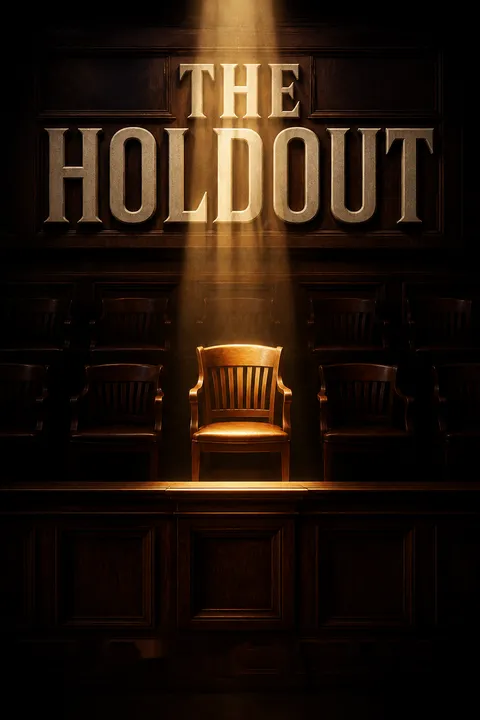
The Holdout by Graham Moore receives mostly positive reviews, averaging 3.83 stars. Readers praise this legal thriller's dual-timeline structure, following a controversial 2009 murder trial and a present-day murder. Maya Seale, the lone holdout juror who convinced others to acquit Black teacher Bobby Nock of killing white student Jessica Silver, becomes a suspect when a fellow juror dies. Reviewers appreciate the exploration of racism, justice system flaws, and jury dynamics. Common criticisms include unlikeable characters, far-fetched plot elements, preachy commentary, and convoluted endings. Most agree it's fast-paced and entertaining, perfect for screen adaptation, though some found it implausible.
People Also Read


Characters
Maya Seale
Defense-minded jurorA sharp Los Angeles criminal defense lawyer, Maya first entered the Bobby Nock trial as a young woman without a settled profession or a legal education. Her attention to procedure and doubt makes her wary of conclusions that outrun evidence, but her idealism can become its own form of certainty. Years of public blame have left her guarded, professionally capable, and reluctant to revisit the verdict that shaped her reputation. Maya is drawn to people who share her appetite for argument, yet she struggles to distinguish loyalty from responsibility. Her legal skill gives her tools for survival; her deeper challenge is learning that those tools cannot guarantee a clean answer.
Rick Leonard
Obsessive fellow jurorA thoughtful graduate student when he meets Maya, Rick takes jury service seriously because he believes justice depends on citizens who pay attention. His interest in urban planning reflects a mind drawn to systems and hidden structures. He and Maya share humor, intellectual curiosity, and a private intimacy, but Rick is less able to live with uncertainty than she is. The public humiliation after the acquittal deepens his self-reproach and pulls him toward the case long after the other jurors try to move on. He is both a sincere seeker of accountability and a man vulnerable to the damage that certainty can inflict.
Bobby Nock
Accused teacherA young Black teacher accused of murdering his fifteen-year-old student, Jessica Silver, Bobby is judged through a mixture of physical evidence, his own lies, and the racial assumptions surrounding the case. He is intelligent and reserved, but his relationship with Jessica crosses an unmistakable boundary of responsibility. The trial reveals how little the jurors know about him, while his later life is shaped by the consequences of being publicly branded and legally punished. Bobby’s story resists easy categories: he can be responsible for serious harm without every accusation against him being true.
Lila Rosales
Compassionate youngest jurorThe youngest member of the original jury, Lila is warm, attentive, and quick to comfort whoever has been isolated in an argument. Her compassion can make her receptive to other people’s needs, but it also leaves her vulnerable to the pressures of loyalty and belonging. As a teenager, she is far from the established lives of the older jurors, and the trial becomes an intense education in judgment, intimacy, and public scrutiny. Later, she is a devoted mother trying to give her son security in a world that has already made decisions about people he has never met.
Aaron Rosales
Child caught in adult secretsLila’s young son is lively, self-possessed, and devoted to his toy trucks and drawings. He has no understanding of the long legal and emotional history surrounding the adults in his family. His presence gives the older characters a concrete measure of what their choices may cost the next generation. Aaron’s need for ordinary safety stands in contrast to the public appetite for scandal and the adults’ competing demands for truth, punishment, and privacy.
Lou Silver
Powerful grieving fatherA wealthy real-estate magnate and philanthropist, Lou is accustomed to shaping the city around his ambitions. His daughter’s disappearance leaves him devastated, but grief does not make him reflective or gentle. He directs his loss toward the pursuit of Bobby Nock, whose guilt becomes inseparable from Lou’s need for vindication. Lou understands how to identify other people’s motives and put them to use, often without asking their permission. Beneath his polished authority is a man who wants an answer strong enough to relieve pain, even when the means of obtaining it threaten others.
Elaine Silver
Composed mother in mourningJessica’s mother is present through the trial, enduring its intimate revelations with a composure that others struggle to interpret. Elaine comes from a less privileged background than her husband and has spent years navigating the force of his wealth and personality. Her restraint can look like strength, detachment, or calculation, depending on who is watching. She is fiercely protective of her daughter, but her understanding of protection is shaped by fear, dependence, and the compromises required to survive within the Silver household.
Craig Rogers
Maya’s formidable mentorA senior partner at Maya’s firm, Craig is an experienced Black civil-rights lawyer who has moved into a powerful corporate practice without abandoning the cases he considers important. He is strategic, unsentimental, and precise about the difference between what a client knows and what a lawyer can responsibly argue. His care for Maya rarely arrives as comfort; it comes as preparation, hard boundaries, and a refusal to let her make avoidable mistakes. Craig’s professional pragmatism grows from a serious belief in the adversarial system’s duties.
Crystal Liu
Blunt loyal colleagueCrystal works in arbitration at Maya’s firm and is known for keeping her head during difficult negotiations. Ten years sober, she has a directness that cuts through Maya’s self-protective explanations. Unlike people who approach Maya through the old trial, Crystal befriends her without demanding a performance about it. When Maya’s life becomes a public spectacle again, Crystal offers practical help and personal loyalty while refusing to flatter her. Her steadiness gives Maya a rare relationship not founded on shared guilt or courtroom history.
Wayne Russel
Restless juror by the windowA construction worker recovering from a devastating accident, Wayne manages claustrophobia and post-traumatic stress with strategies learned in therapy. He is blunt, physically imposing, and easily angered when authority makes him feel trapped. During the trial, his need for sunlight and space becomes one of the group’s clearest signs of the strain imposed by sequestration. Wayne’s loyalty can be generous, but his suspicion and temper complicate the help he tries to offer.
Trisha Harold
Skeptical juror and IT workerA Black woman who works in information technology for City Hall, Trisha is perceptive, dryly funny, and alert to the assumptions others make about her. She refuses to let race dictate what she must think about Bobby or what role she must play in the jury. Trisha’s discomfort with being reduced to a symbol makes her a sharp observer of Maya’s attempts to interpret other jurors’ identities. Her skepticism is not indifference; it is a defense of each person’s right to be more than a category.
Fran Goldenberg
Order-keeping jurorA maternal, practical juror, Fran brings cookies, collects the group’s markers, and notices who is struggling before they ask for help. Her impulse to care for people is genuine, but it can lead her to shelter someone from consequences or decide that protection matters more than disclosure. Fran’s experiences as a mother shape how she responds to vulnerable people, especially those whose pain recalls her own family. Her gentleness should not be mistaken for a lack of resolve.
Peter Wilkie
Restless finance jurorA white man with a background in finance, Peter likes status, novelty, and the feeling of being more sophisticated than the people around him. His time in the sequestered hotel intensifies his boredom and sexual frustration, revealing how readily he confuses desire with entitlement. Peter can be personable and commercially astute, but his self-image depends on treating his wants as reasonable. He represents the danger of a charming person who mistakes another person’s vulnerability for permission.
Jae Kim
Ambitious construction workerJae is a father of four who believes ambition and self-belief can help people rise beyond poverty. He admires successful builders and business leaders, and he dislikes easy contempt for wealth. His outlook makes him attentive to Lou Silver’s influence and wary of explanations that reduce people to class or race. Jae can be proud and defensive, yet family responsibility anchors his decisions. He is among the jurors most conscious of how a verdict might shape an ordinary person’s future.
Kathy Wing
Reluctant jury forepersonA pharmacist and mother, Kathy worries about the family responsibilities she has left behind while the trial consumes months of her life. Her husband’s criticism makes her doubt whether she belongs in the jury room at all. She is instinctively attentive to people’s feelings and often tries to calm conflict before it grows. The court’s demand that she help lead deliberations draws her into a role she did not seek, testing whether self-doubt can coexist with sound judgment.
Yasmine Sarraf
Romantic-minded jurorYasmine comes from a Persian Jewish family whose arguments are intense, intimate, and followed by reconciliation. She is inclined to see spirited disagreement as a sign that people still care about one another. That instinct makes her a perceptive observer of Maya and Rick’s connection, though it can cause her to misread conflict as proof of love. Yasmine’s emotional fluency helps her notice shifts in the jury’s alliances, even when she does not know what those changes will mean.
Cal Barro
Eastside real-estate veteranAn older Los Angeles native and longtime property manager, Cal knows the city through its changing neighborhoods and the people who live in them. He is curious about mysteries and fond of detective fiction, but real life has taught him that cases do not always provide a confession or a final answer. Cal is socially observant and often sees the loyalties forming between jurors. His dry perspective makes him skeptical of tidy explanations, though he remains willing to help when someone is in danger.
Carolina Cancio
Elderly civic-minded jurorAn eighty-two-year-old Catholic immigrant, Carolina regards jury service as a privilege earned through decades of citizenship. She is observant, outspoken, and impatient with what she considers foolishness. Her sister runs a fortune-telling shop, though Carolina rejects its claims, and their disagreements reveal her stubborn investment in reason and responsibility. Carolina sees the jury as an unlikely gathering of decent people whose good intentions may still produce harm.
Margarita Delfina
Hotel housekeeperA housekeeper at the Omni Hotel, Margarita is a working mother who has good reason to guard her privacy. She understands that reporting harm can expose a person to scrutiny and risk without guaranteeing protection. Her caution should not be mistaken for uncertainty about her own experience. Margarita’s circumstances make visible the distance between wealthy jurors and the people who maintain the spaces in which their lives unfold.
Shannon
Earnest production assistantA young assistant on the Murder Town production, Shannon is fascinated by the original trial and admires Maya’s willingness to defend her verdict. Her enthusiasm sometimes leads her to treat other people’s painful histories as compelling television material. Yet she is also brave enough to take risks when she believes someone is being wrongly accused. Shannon embodies the audience’s appetite for true-crime stories, along with the possibility that curiosity can become genuine concern.
Hunter
Maya’s former boyfriendHunter moves to Los Angeles with Maya for a finance job and initially represents the settled life she thinks she should want. He is career-focused and prefers their relationship to remain separate from the trial that consumes her attention. His frustration grows as the case becomes a constant presence between them. Hunter is not a villain; he is a person whose need for ordinary companionship cannot meet Maya’s need to understand what the trial has made of her.
Pamela Gibson
Bobby’s defense attorneyA disciplined and incisive defense lawyer, Gibson finds the weak joints in the prosecution’s apparently solid case. She tests whether investigators’ interpretations are actually supported by the texts, forensic handling, and testimony. Her composure lets her move between warmth and pressure without surrendering control of the courtroom. Gibson understands that a defense need not prove an alternative story if the state has not met its burden, and she protects Bobby from strategies that could expose him to damaging evidence.
Ted Morningstar
Ambitious trial prosecutorThe prosecutor in Bobby Nock’s case, Morningstar builds his argument from the texts, the car evidence, and Bobby’s false account of his whereabouts. He favors a clear, memorable narrative and presses jurors to see the facts as one connected pattern. His confidence in the prosecution can become overstatement, particularly when the evidence leaves room for competing interpretations. Morningstar’s courtroom style shows how a persuasive story may outrun what the underlying proof can securely establish.
Bailiff Steve
Guardian of the sequestered juryThe bailiff assigned to the trial, Steve manages the jurors’ movements, calls, and confinement at the hotel. He presents himself as approachable and dependable, becoming part of the strange routine that replaces their ordinary lives. His authority is limited, but his choices matter because he controls what information reaches the court. Steve’s character illustrates how a person can mistake keeping proceedings undisturbed for protecting the people caught inside them.
Belen Vasquez
Maya’s battered clientBelen is a woman who has endured severe abuse from her husband before killing him. She is quiet and cautious during her hearing, unwilling to treat a favorable moment as a guaranteed victory. Her case gives Maya an immediate example of how legal outcomes can turn on procedure as well as underlying events. Belen’s guardedness also contrasts with the public appetite for simple stories about guilt, motive, and deserved punishment.
Plot Devices
Reasonable doubt
Tests what evidence provesThe trial’s legal standard drives Maya’s original vote and her later defense of it. The prosecution presents texts, a false alibi, and DNA evidence as a single persuasive chain; Gibson shows that each item admits uncertainty. The absence of Jessica’s body further complicates the case without proving that she is alive. Reasonable doubt is both a legal threshold and a discipline of mind: it requires the jurors to separate what they suspect from what the state can establish. The novel repeatedly tests whether that discipline remains possible under grief, public pressure, and personal investment.
The sequestered jury
Turns strangers into a unitThe jurors’ months at the Omni Hotel remove phones, news, and ordinary privacy, concentrating their lives around the trial. Their numbered identities, enforced proximity, and restricted communication create an unusual social world in which friendships, factions, romance, and resentments grow. The confinement also makes minor rule-breaking consequential, from using real names to smuggling DVDs. Later, the reconstructed hotel and its cameras turn that private world into a media set, showing how the jurors’ shared experience can be repackaged for an audience.
The juror dossiers
Make private lives evidenceRick’s files collect the jurors’ histories, relationships, legal troubles, and potential biases. He intends to use these records to reopen public scrutiny of the original verdict, but the dossiers also provide Maya with leads after his death. Their selective emphasis on damaging details demonstrates how a collection can be factually based and still distort its subjects. The files turn the jury itself into a second case, raising the question of whether a verdict can be challenged by exposing the people who reached it.
The alligator drawings
Connect Bobby to AaronA child’s red alligator drawing appears in both Bobby’s desert shelter and Lila’s home. It is an ordinary, personal object rather than forensic evidence, but its resemblance directs Maya toward the connection between Bobby and Lila’s son. The image also carries emotional weight: Bobby has few possessions, while the drawing represents a private bond that public records and the trial have erased. The device shifts the investigation from Rick’s accusations about Bobby’s past to the hidden family life he hoped to protect.
The matching lockets
Expose a staged deathJessica’s silver locket appears in the original trial photographs and later beside Bobby’s body, where it seems to confirm his guilt. Maya eventually notices that Jessica and Elaine owned matching lockets. The duplicate changes the object from singular proof into something that could be planted, reopening the meaning of Bobby’s apparent confession and death. The necklace embodies the novel’s central problem: physical evidence can be powerful without being self-explanatory, and a genuine object can be used to support a false account.

Download PDF
Download EPUB
.epub digital book format is ideal for reading ebooks on phones, tablets, and e-readers.








