Plot Summary
Ghosts in the Interview Room
The novel opens with an elderly Chinese woman, Mei, being interviewed by her daughter, Susanna, a true-crime writer. Susanna is determined to uncover the truth behind the infamous Maidenhair House massacre in 1953 Hong Kong—a mystery shrouded in urban legend, blood, and vanished women. Mei, haunted by her own memories, is reluctant to revisit the past, but Susanna's persistence and her own unresolved trauma draw her in. The interview is not just about the crime; it's about the ghosts—literal and metaphorical—that have followed Mei across continents and decades. The tension between mother and daughter is palpable, as is the sense that the past is not dead, but waiting to be unearthed, with both women seeking answers for different reasons.
Mother and Daughter, Unraveled
Susanna, recently widowed, is paralyzed by grief, her life in Seattle reduced to a cold, empty routine. Mei, her mother, is the only one who can reach her, but their relationship is fraught with misunderstandings and unspoken pain. Susanna's obsession with Maidenhair House is both a distraction from her loss and a way to connect with her mother's hidden history. Mei, meanwhile, is burdened by her own unresolved trauma—a violent attack she remembers from the perspective of her attacker. Their journey to Hong Kong is as much about confronting personal demons as it is about solving a historical mystery, with each woman hoping the other will provide the key to moving forward.
The Invitation to Maidenhair
In 1953, Mei, now a refugee in Hong Kong, receives a mysterious invitation from Holly Zhang, a glamorous former actress and the wife of George Maidenhair, to participate in a week-long series of séances at Maidenhair House. Six mediums are summoned, each with their own secrets and scars, to compete for a prize by contacting the spirits that haunt the mansion. The house itself is a character—oppressive, labyrinthine, and alive with history. Mei's decision to accept the invitation is driven by desperation, curiosity, and a simmering desire for revenge against George, whose past actions have left her life in ruins. The stage is set for a collision of the living and the dead.
Childhood Lost in Shanghai
Mei's story flashes back to her childhood in rural China, where her mother, a gifted but troubled artist, disappears under mysterious circumstances. Mei is uprooted and sent to live with relatives in Shanghai, only to be abandoned and locked in an attic by a cruel foster mother. The trauma of war, family betrayal, and the loss of her mother shape Mei's psyche, instilling in her a deep sense of otherness and a unique ability to see ghosts. These formative experiences lay the groundwork for her later life as a medium, and for the unresolved grief and anger that drive her actions in Hong Kong.
The Attic and the Wardrobe
Locked in the attic, young Mei encounters the ghost of a girl with bound feet and a severed tongue—a vengeful spirit trapped by violence and silence. This spectral encounter is both a literal haunting and a metaphor for the generational trauma Mei inherits. Her mother's legacy is encoded in cryptic paintings and a signature peony motif, clues that Mei clings to in her search for answers. The attic becomes a symbol of all that is repressed: family secrets, unspoken pain, and the ghosts that refuse to be laid to rest. Mei's vow to find her mother and understand her fate becomes the central quest of her life.
Six Mediums, Six Séances
At Maidenhair House, Mei joins five other mediums—each desperate, damaged, and dangerous—for a series of nightly séances. The rules are simple: after each séance, one medium is eliminated, either by choice or by force. The sessions are fraught with fear, rivalry, and supernatural phenomena. The house seems to feed on their anxieties, blurring the line between reality and hallucination. As the séances progress, the mediums begin to die in increasingly violent and inexplicable ways, their bodies marked with Mei's signature peony design. Suspicion falls on Mei, but she is as much a victim as a suspect, caught in a web of manipulation spun by forces both human and spectral.
The Lotus Lady's Game
It becomes clear that the true antagonist is not any of the mediums, but the spirit possessing Holly Zhang—the Lotus Lady, a vengeful ghost who drowned long ago and now seeks a new body. The séances are revealed to be a test, designed to find the strongest medium to possess. Mei's resilience and her mother's protective spirit shield her from the worst of the Lotus Lady's influence, but the other competitors are not so lucky. The house itself becomes a battleground for control, with reality warping and the past bleeding into the present. The Lotus Lady's motives are both personal and universal: the desire to be seen, to be remembered, and to escape the prison of her own death.
The Puppet Room's Secret
The search for the Puppet Room—a hidden chamber in Maidenhair House—becomes the key to unraveling the mystery. George Maidenhair, once Mei's mentor and surrogate father, is revealed to have been both a collector of art and a perpetrator of violence. The puppets he commissioned from Mei and her mother are not just objects, but repositories of memory and guilt. The final séance is to be held in the Puppet Room, where the boundaries between performer and puppet, victim and perpetrator, living and dead, collapse. Mei must confront the truth about George, her mother's fate, and her own capacity for vengeance.
Letters Across Generations
Letters, written, lost, and found, serve as bridges between generations. Mei's mother's letters, dictated to a village scribe, reveal her struggles with possession, exile, and the burden of the Sight. Mei's own letters, and those of her granddaughter Liana decades later, become acts of both confession and exorcism. The act of writing is shown to be both a way of preserving memory and a means of haunting: the past is never truly past as long as its stories are told and retold. The novel suggests that trauma, like a ghost, is inherited, but so too is the possibility of healing.
The Mirror and the Murder
A series of murders at Maidenhair House are linked by a recurring motif: a mirror that is also a door, and a peony design carved into the victims' flesh. Mei's trances produce sketches that point to the locations of the bodies and the identity of the killer, but the truth is elusive. The mirror becomes a symbol of self-confrontation: to solve the mystery, Mei must face her own reflection, her own guilt, and the possibility that she is both victim and perpetrator. The act of looking—at oneself, at the past, at the dead—is both dangerous and necessary for liberation.
The Weight of Vengeance
Mei's quest for revenge against George Maidenhair is complicated by her lingering love for him and her recognition that vengeance cannot bring back the dead. The novel explores the corrosive effects of hatred, the temptation to become what one despises, and the difficulty of letting go. Mei's journey is mirrored by Susanna's struggle with grief: both women are haunted by the desire to punish, to remember, and to move on. The story suggests that true freedom comes not from retribution, but from forgiveness—of others and of oneself.
The Past That Haunts
The narrative moves fluidly between past and present, showing how the traumas of war, exile, and family violence echo across time. Mei's experiences in wartime Shanghai, her years in the Hongkew ghetto with Max, and her eventual emigration to the West are paralleled by Susanna's struggles as an immigrant's daughter, a widow, and a mother. The ghosts of the past are not just personal, but collective: the novel is a meditation on the ways history shapes identity, and on the possibility of breaking the cycle of suffering.
The Final Séance
The last séance at Maidenhair House is a showdown between Mei and the Lotus Lady, with the fate of the living and the dead hanging in the balance. Mei, armed with the knowledge of her mother's sacrifice and her own hard-won self-acceptance, is able to resist possession and free the ghost trapped in the mirrors. The act of exorcism is both literal and symbolic: Mei must let go of her own ghosts, and allow the past to rest. The house, once a prison, becomes a place of release.
The Truth in the Basement
The truth about the Maidenhair murders, George's crimes, and the fate of the missing women is finally revealed in the basement of the house. The bodies are gone, erased by the Lotus Lady's power, but the knowledge remains. Mei is exonerated, but the cost is high: innocence lost, relationships shattered, and the realization that some wounds never fully heal. The basement is both a literal and metaphorical underworld, a place where the dead and the living meet, and where the possibility of redemption is found in the act of telling the truth.
Letting Go of Ghosts
In the aftermath, Mei must decide what kind of life she wants to lead. The ghosts that have haunted her—her mother, Max, George, the Lotus Lady—are finally laid to rest, not by violence, but by understanding and compassion. Mei's relationship with Susanna is transformed: the secrets that once divided them become the foundation for a new, more honest connection. The novel suggests that the only way to escape the past is to acknowledge it fully, and then to choose to live in the present.
The Daughter's Inheritance
Susanna, having witnessed the supernatural firsthand, must come to terms with her own inheritance: the Sight, the trauma of her ancestors, and the responsibility to break the cycle for her own daughter, Liana. The story comes full circle as Liana begins to experience visions, and Mei offers to teach her how to live with them. The inheritance is not just of pain, but of resilience, creativity, and the capacity to love. The family's story is one of survival against all odds, and of the power of women to shape their own destinies.
The Fourth Step
The novel's philosophical core is encapsulated in the idea of the Four Steps, taught to Mei by her friend Max: seeing the future and trying to change it; seeing the future but no longer trying to change it; no longer trying to see the future; and, finally, not seeing the future but trying to change it anyway. This final step is an act of faith, of choosing to live despite uncertainty and loss. Mei, Susanna, and Liana each take this step in their own way, forging a path toward healing and hope.
A Walk Toward Tomorrow
In the closing scenes, Mei and Jamie Nakamura, the writer and fellow survivor, meet again in a Hong Kong market years after the events at Maidenhair House. Their conversation is tentative, full of the weight of the past and the possibility of a future. Mei, having finally let go of her ghosts, is able to choose life, love, and the blank page of tomorrow. The novel ends not with closure, but with openness—a recognition that the past will always be with us, but that we can choose what to do with it.
Characters
Chen Mei
Mei is the novel's central figure, a woman shaped by war, exile, and the loss of her mother. As a child, she is sensitive, imaginative, and marked by trauma—her ability to see ghosts is both a gift and a curse. Her journey from rural China to Shanghai, then to Hong Kong and beyond, is one of survival against overwhelming odds. Mei's relationships—with her mother, her surrogate father George, her friend and lover Max, and her daughter Susanna—are complex, defined by love, betrayal, and the longing for connection. Psychologically, Mei is driven by a need to understand her past and to break free from its hold. Her development is a gradual process of self-acceptance, forgiveness, and the relinquishing of vengeance.
Susanna Thornton
Susanna is Mei's American-born daughter, a successful journalist and author whose life is upended by the death of her husband, Dean. Her relationship with Mei is strained by cultural differences, unspoken pain, and the weight of inherited trauma. Susanna's obsession with the Maidenhair House mystery is both a professional pursuit and a personal quest for meaning in the wake of loss. She is analytical, determined, and skeptical, but her experiences in Hong Kong force her to confront the reality of the supernatural and the depth of her own grief. Over the course of the novel, Susanna moves from denial and paralysis to acceptance and action, ultimately forging a new bond with her mother and daughter.
Holly Zhang / The Lotus Lady
Holly Zhang is introduced as a faded movie star and the enigmatic wife of George Maidenhair, but is soon revealed to be possessed by the Lotus Lady—a ghost who drowned long ago and now seeks a new body. As the orchestrator of the séances, Holly is both victim and villain, her identity fractured by the spirit within her. The Lotus Lady is driven by rage, loneliness, and the desire for release, using her powers to manipulate reality and ensnare the living. Her interactions with Mei are charged with rivalry and recognition, as both women are haunted by the need to be seen and understood. Holly's ultimate fate is a reflection on the dangers of refusing to let go of the past.
George Maidenhair
George is a complex figure: an American-born, Oxford-educated businessman who becomes Mei's teacher, patron, and surrogate father. He is charming, erudite, and seemingly benevolent, but beneath the surface lies a capacity for obsession and violence. George's love for Mei's mother turns dark, leading to betrayal and murder. His collection of puppets and his creation of the Puppet Room are symbolic of his desire to control and rewrite the past. Psychologically, George is a study in the dangers of unchecked longing and the inability to accept loss. His relationship with Mei is both nurturing and destructive, shaping her life in ways she only gradually understands.
Max Friedman
Max is a Jewish refugee from Munich, a fellow survivor in wartime Shanghai, and Mei's closest friend and eventual lover. Gifted with the Sight, Max is both a guide and a mirror for Mei, teaching her the Four Steps and helping her navigate the world of spirits. His own trauma—displacement, loss, and the burden of foresight—parallels Mei's, and their relationship is one of mutual support and unspoken longing. Max's death is a devastating blow, reinforcing the novel's themes of impermanence and the necessity of letting go. His legacy endures in the lessons he imparts and the love he inspires.
Liana
Liana is Susanna's daughter and Mei's granddaughter, a young woman struggling with nightmares and visions she cannot explain. Her experiences connect the past and present, revealing the intergenerational nature of trauma and the persistence of the supernatural. Liana's role is both as a catalyst for the story's resolution and as a symbol of hope: the possibility that the cycle of suffering can be broken, and that the next generation can be taught to live with, rather than be destroyed by, their inheritance.
Mistress Lau
Mistress Lau is one of the six mediums invited to Maidenhair House, a woman marked by desperation and a willingness to do anything to win. Her practice of cutting characters into her own flesh is both a display of power and a manifestation of self-destruction. Lau's rivalry with Mei is intense, but ultimately she is as much a victim of the house's manipulations as anyone. Her psychological unraveling is a commentary on the costs of ambition and the dangers of unresolved pain.
Jamie Nakamura
Jamie is the half-Japanese, half-Chinese son of George Maidenhair, a writer who becomes both a participant in and chronicler of the events at Maidenhair House. His outsider status, complicated heritage, and personal quest for belonging mirror Mei's own struggles. Jamie's relationship with Mei is marked by recognition, regret, and the possibility of redemption. As the author of The Peak House, he serves as a meta-narrative device, blurring the lines between fiction and reality, and highlighting the power of storytelling to shape and heal.
First Wife (Suyin)
First Wife, or Suyin, is Mei's foster mother in Shanghai, a woman embittered by disappointment and obsessed with fate. Her treatment of Mei is harsh, driven by superstition and the desire for control, but beneath her cruelty lies a deep well of longing and vulnerability. Suyin's relationship with Mei is emblematic of the complexities of motherhood: love and resentment, protection and harm, hope and despair. Her eventual breakdown and loss are both a consequence of her own choices and the larger forces of history.
The Ghost in the Attic
The ghost Mei encounters in the attic as a child is a symbol of all that is repressed and silenced: women's suffering, generational trauma, and the secrets that families keep. Her presence is both a warning and a guide, leading Mei toward the truth about her mother and herself. The ghost's eventual release is a metaphor for the possibility of breaking free from the cycles of pain and silence that haunt the living.
Plot Devices
Nonlinear Narrative and Interwoven Timelines
The novel employs a nonlinear structure, moving fluidly between Mei's childhood in 1930s China, her experiences in wartime Shanghai, her life as a refugee in Hong Kong, and the present-day investigation by Susanna. This interweaving of timelines allows for a gradual revelation of secrets, the layering of trauma, and the mirroring of experiences across generations. The structure itself is a reflection of the novel's themes: the past is never truly past, and the present is always haunted by what came before.
The Haunted House as Psychological Space
Maidenhair House is more than a setting; it is a living, breathing entity that absorbs and reflects the fears, desires, and histories of its inhabitants. The house's labyrinthine architecture, hidden rooms, and shifting realities serve as metaphors for the characters' inner lives. The séances, murders, and supernatural phenomena are both literal and symbolic, representing the struggle to confront and integrate the past. The house's power to make people see—or not see—what is real is a commentary on denial, repression, and the difficulty of facing the truth.
The Motif of Mirrors and Reflections
Mirrors recur throughout the novel as symbols of self-examination, duality, and the danger of becoming trapped by one's own image. The act of looking—at oneself, at the past, at the dead—is both necessary and perilous. The mirror that is also a door, the reflection that moves independently, and the final entrapment of the Lotus Lady in the glass all underscore the idea that liberation comes only through honest self-confrontation.
Letters, Art, and Storytelling
Letters, paintings, puppets, and stories are the means by which characters reach across generations, preserve their experiences, and attempt to make sense of their lives. The act of creation—whether artistic or narrative—is shown to be both a way of processing trauma and a means of haunting. The novel is self-reflexive, aware of its own status as a story about stories, and suggests that the only way to break the cycle of suffering is to tell the truth, even when it hurts.
The Four Steps and the Philosophy of Fate
The concept of the Four Steps, taught by Max, provides a philosophical framework for the novel: seeing the future and trying to change it; seeing the future but no longer trying to change it; no longer trying to see the future; and, finally, not seeing the future but trying to change it anyway. This progression mirrors the characters' journeys from denial and paralysis to acceptance and agency. The final step is an act of faith: to live, to love, and to hope, even in the face of uncertainty and loss.
Analysis
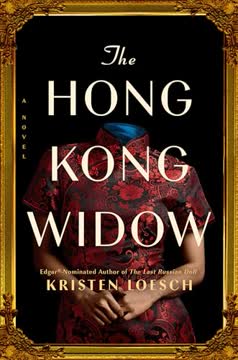
The Hong Kong Widow is a richly layered novel that uses the conventions of the ghost story and the murder mystery to explore the enduring effects of trauma—personal, familial, and historical. At its heart, the book is about the ways in which the past shapes the present, and the difficulty of breaking free from cycles of pain, violence, and silence. The supernatural elements are both literal and metaphorical, serving as vehicles for the exploration of grief, guilt, and the longing for connection. The novel's nonlinear structure, intergenerational cast, and use of art and letters as plot devices underscore the idea that healing is a process of confrontation, understanding, and, ultimately, forgiveness. The lessons the author imparts are clear: that the ghosts we carry are both burdens and teachers; that the act of telling one's story is an act of liberation; and that the future, though unknowable, is always open to change. In the end, The Hong Kong Widow is a testament to the resilience of women, the necessity of facing the truth, and the possibility of choosing life after loss.
Last updated:
Review Summary
The Hong Kong Widow by Kristen Loesch receives a 3.8/5 rating across mixed reviews. Readers praise the lyrical prose, historical depth, and unique blend of ghost story with family drama spanning three timelines (1937-1947, 1953, 2015). The story follows Mei, a Chinese woman with supernatural "Sight," navigating a haunted house competition and confronting past trauma. Many appreciate the emotional resonance and cultural elements, though some find the multiple timelines confusing and pacing slow. The supernatural elements divide readers—some want more horror, others value the metaphorical approach. Most agree it's atmospheric and thought-provoking, rewarding patient readers.