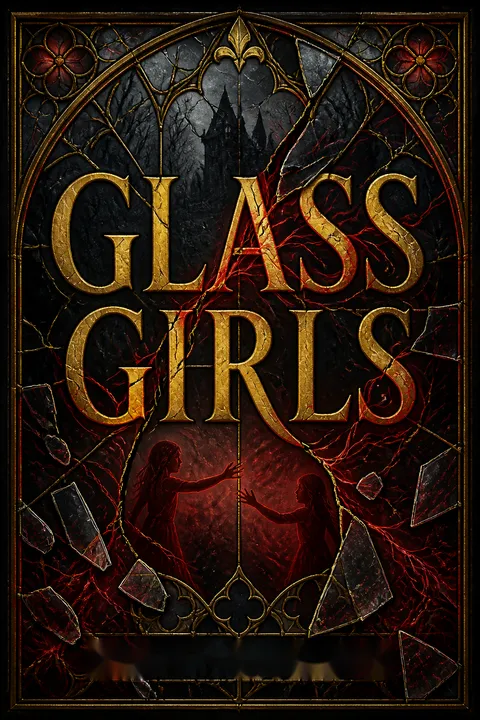


Plot Summary
Prologue
As children, Isabeau and Bronwyn hear their mother’s cautionary tale about a girl who cuts away her shadow to win a man, only to discover that he no longer wants her. Gisele turns the story into a warning: a daughter should never surrender her power to be loved.
The lesson is less simple than she makes it sound. In her hands, a fable about a woman’s choice becomes a tool for teaching her girls that obedience is weakness, while the danger of their home stays unnamed.
The fable establishes the book’s central double bind before the family history can explain it. Gisele presents power as protection, yet she uses that principle to make her daughters wary of any choice that might loosen her control. The story’s shadow is both a source of magic and a piece of the self that can be cut away, so its lesson anticipates Alice’s later struggle to distinguish survival from self-erasure. Its bedtime setting sharpens the contradiction: the person charged with comforting the girls uses intimacy to deliver a threat.
Two Lines, One Sister
Thirty-four-year-old Alice Haserot discovers she is pregnant just before her boyfriend Eli’s difficult mother arrives. She hides the test, then leaves to buy dinner ingredients rather than explain why she is shaken. At the grocery store, a gaunt red-haired woman calls her Isabeau and grabs her arm. Alice recognizes Bronwyn, the sister she has avoided for sixteen years, and punches her before fleeing.
She circles the neighborhood, unable to face home, while Bronwyn’s sudden appearance revives the fear that their abusive mother, Gisele, has found her. Alice tells Eli she became sick at the store, another lie layered over the pregnancy and her past. By night, she has returned to the house but still cannot tell him what is happening.
The book begins with two forms of concealed consequence: a pregnancy Alice cannot yet imagine as a child, and a family identity she has worked to make unreachable. Her cleaning, evasion, and fabricated illness are not mere indecision; they are learned strategies for keeping other people’s needs from becoming claims on her body. Bronwyn’s use of Alice’s former name punctures the careful boundary between past and present. That Alice flees rather than answers makes the reunion an inciting event in both senses: it brings danger near, and it forces her to confront the identity she tried to leave behind.
The Curse of the Glasses
Alice remembers a nomadic childhood shaped by her mother Gisele’s tarot readings and practical witchcraft. Gisele’s Sight lets her glimpse possible futures, but she manipulates clients and family alike to steer events toward the life she wants. One reading promises a rare thread of happiness with Frank, a landscaper who comes seeking her services in Kirtland, Ohio.
Gisele marries him, and the girls move from their camper into his inherited Little House. For a time, she becomes gentler. Then an ultrasound identifies the baby as a girl, and Gisele prepares to keep it. The child is Killian, a boy. In their family, sons die before nineteen, a curse their mother attributes to an ancient bargain, and Gisele’s hope collapses into terror.
Gisele’s fortune-telling is less a power to know the future than a method of narrowing other people’s choices until one desired future seems inevitable. Frank offers material stability and a gentler model of family life, but he cannot erase the violence already governing the household. The curse turns birth into a moral crisis before Killian can act: his existence is treated as a sentence, while the girls’ gifts are treated as the payment that might postpone it. Gisele’s earlier tenderness matters because it shows that affection is possible in this family, but not yet separable from fear and control.
A Ghost Finds Beau
After Killian’s birth, Gisele withdraws into grief, leaving Alice and Bronwyn to care for their infant brother alongside Frank. When Alice is eight, a dead woman leads her from the Carriage House ice-cream shop to her own body in a nearby gully, then accidentally possesses Alice.
The experience leaves Alice terrified but reveals that she can host spirits. Gisele reacts not by protecting her daughter, but by imagining a way to keep Killian with the family after his predicted death.
She makes Alice study ghosts, spells, and possession, while turning the sisters’ séances into paid performances for clients. Alice learns to act possessed as well as endure the real thing. Her unusual gift becomes both the family’s livelihood and Gisele’s proposed remedy for the curse.
Alice’s ability first appears as an encounter with another person’s helplessness, but Gisele immediately converts it into an instrument for managing her own fear of loss. The shift from frightened child to trained medium is not a clean initiation into power. Alice gains authority at séances, yet that authority is assigned by a mother who controls the conditions and profits from it. Meanwhile, caring for Killian gives Alice and Bronwyn a form of attachment their mother cannot reliably offer. The contrast between that chosen care and Gisele’s coercive plan becomes the emotional measure by which Alice later judges what love is allowed to demand.
The Poltergeist Warning
As a teenager, Alice is sent to a séance where a violently altered child spirit attacks the room, overturning furniture and injuring her. The ghost begs for release from the spell that has kept him from passing, giving Alice her first glimpse of what Gisele’s proposed method could do to Killian.
Frank realizes Gisele knew the haunting could be dangerous, but she insists the risk was necessary to learn how to preserve their son. Alice later tells Killian the curse is real and that the plan is to make him inhabit her after death. He is furious that his sisters kept the truth from him. As he grows older, he rejects the arrangement and makes Gisele promise not to trap him in a painful afterlife.
The séance supplies a concrete counterexample to Gisele’s fantasy of preservation: a child can be kept present and still be made to suffer beyond recognition. Yet she interprets the danger as useful evidence, revealing how fear has narrowed her ethical field. Killian’s knowledge changes the family’s power balance. His refusal is not ignorance or adolescent bravado; it is a claim to decide what counts as a life worth continuing. Alice’s affection makes that choice difficult to hear, because she has been trained to equate saving him with loving him.
The Creek Takes Killian
At eighteen, Alice lets Bronwyn persuade her to attend a party while their parents are away and Killian stays home. The sisters return early after the party disappoints, but Gisele is already back, furious that they left him. In the growing dark, they search the clearing by the creek and find Killian’s body between boulders.
His ghost appears nearby, able to speak to Alice. At the burial, he tells her he is at peace with the clearing, while Frank retreats into drink and grief. That night, Alice packs to leave for Columbus, intending to escape Gisele and let Killian pass as he wanted. Before she can go, Gisele knocks her unconscious and takes her to the shed.
Killian’s death arrives through an ordinary risk, not a grand magical battle, which makes the family’s curse feel less like distant mythology than a pressure shaping everyday decisions. Alice’s guilt over going to the party is immediate, but the text also exposes the unfairness of making two teenagers responsible for preventing the loss they were never told how to manage. Her plan to leave is a first attempt to honor Killian’s wishes and claim a future beyond Gisele. The abduction destroys that fragile choice at the moment she tries to enact it.
Ten Days in the Shed
In the shed, Gisele tells Alice she has devised two spells: one to make Killian a poltergeist, the other to bind him to Alice’s body. She cuts Alice’s palm, presses a braid made from Killian’s baby blanket into the blood, and forces her to swear they will share a body. Killian, horrified, cannot stop the ritual.
Gisele chains Alice for ten days, offering food only if she repeats the oath. On the tenth day, Killian steals the keys and helps Alice escape. He refuses the childhood pet name she uses and tells her she betrayed him by consenting under pressure. Even so, he accompanies her. Their bond has become a tether neither sibling chose freely.
The oath turns care into a literal binding: Alice’s blood and Killian’s remains make the family’s emotional demand physically enforceable. Gisele frames coercion as rescue, and Alice’s learned inability to refuse makes the distinction brutally clear. Killian’s anger after freeing her is not a simple rejection of his sister; it is the first assertion that his suffering cannot be redeemed by her good intentions. His decision to leave with Alice keeps their connection alive, but on terms warped by the violence that created it.
Alice Cuts the Shadow
For years, Alice and Killian share her body in intervals, and his death-itch grows worse whenever he is outside it. He begs her to return to Kirtland and destroy the blood-knot, which he believes will let him pass. Alice agrees, then panics and banishes him instead.
She cuts the bind runes into her heels, completing the shadow-binding ritual that removes her mediumship and limits his reach to the Little House. Afterward she changes her name to Alice Haserot, moves through several cities, trains as a hairdresser, and eventually builds a home with Eli in Saginaw. She and Eli care for each other through trauma and recovery, but Alice keeps her family history sealed away.
Alice’s escape is both necessary self-preservation and a betrayal with lasting consequences. The narrative refuses to make either description cancel the other: she is too traumatized to face Gisele again, yet the choice leaves Killian trapped. Cutting her shadow gives her the ordinary life she had once believed impossible, but it also severs a capacity through which she might have helped others. Her new name is not simply disguise; it is a partition between a surviving self and memories she cannot yet integrate. Eli’s gentleness gives that partition somewhere to rest, but does not dissolve it.
Bronwyn’s Dead Daughter
After their grocery-store reunion, Bronwyn visits Alice and reveals that her sixteen-year-old daughter Willow died three months earlier. Willow was an Empath whose gift overwhelmed her, and Bronwyn believes she is becoming a poltergeist.
Alice refuses to reopen her gift, but Bronwyn explains that Willow’s twin, Ryann, may be at risk. Alice agrees to go to Cleveland, leaving Eli with no explanation beyond a family emergency. On the drive, she learns Bronwyn has another daughter and that their mother once took Bronwyn and the twins back into the Little House.
Alice also realizes Bronwyn’s claim that Gisele might come for her was meant to frighten her into helping. The sisters arrive at Bronwyn’s home with distrust intact and a new child in danger.
Bronwyn’s grief reactivates the very pattern Alice escaped: a mother afraid of losing a child, a girl with a dangerous gift, and pressure to make one body answer another’s need. Alice’s consent is compromised by threat, but it is not merely coerced; she also recognizes the familiar danger and chooses to protect Ryann. The drive exposes how little the sisters know about each other’s intervening lives, including Bronwyn’s motherhood and her history with Gisele. Their reunion therefore offers no easy restoration of sisterhood. It begins as a bargain between people who share a wound but disagree about what it permits.
Willow Breaks the House
At Bronwyn’s house, Alice meets Ryann, a shy sixteen-year-old whose weaker mediumship lets her sense ghosts but not reliably hear them. That night, water runs in the bathroom and Willow’s spirit attacks the house, hurling a lamp and breaking a picture frame near Ryann. Alice sends Bronwyn and Ryann outside, finds one of Ryann’s juniper bundles, and coaches her through a simple banishing spell.
It buys them time, but Ryann sees a boy in the house, not Willow. Searching for an explanation, Alice realizes the family’s protection may be failing. She returns to the bedroom, cuts the binding scars from her heels, and summons her magic. A teenage ghost appears: Willow, frightened and able to speak with Alice at last.
The attack forces Alice’s knowledge out of abstraction and back into bodily practice. She does not simply resume her old role; she adapts a spell so Ryann can perform it despite lacking the theory and training Alice once received under coercion. That difference matters. The scene places inherited knowledge in a new relationship, one based on protection and explanation rather than exploitation. Cutting the scars is a deliberate reopening of a capacity Alice surrendered to survive. Her choice is costly, but it marks a shift from treating her past as a sealed room to using what she knows on terms she can choose.
The Wrong Herbs
Willow explains that Gisele summoned her to the Little House four months earlier. Facing her own failing gift, Willow drank tea made with Killian’s ashes and unknowingly completed a spell that tied him to her. Gisele then advised her to make bundles containing mugwort and wormwood, ingredients that trap ghosts rather than banish them.
Willow’s attempt to keep Killian away from Ryann instead helped hold both spirits in the house. Believing she could save her twin, Willow took her own life, but Killian remained. Alice recognizes Gisele’s design: the haunting was arranged to draw Bronwyn to her and bring Alice back within reach. She and Bronwyn decide the original blood-knot must be found and burned.
Willow’s account reveals how Gisele’s power operates most effectively through partial truths. She does not need to compel every action when she can exploit grief, offer selective knowledge, and make a desperate person believe a harmful choice is the only available one. Willow’s responsibility is real in the narrow sense that she acted, but the conditions were engineered by an adult who understood her vulnerability. Alice recognizes this pattern because she has lived inside it. The revelation also reframes the haunting: the sisters are not confronting a random supernatural escalation, but the consequences of a plan that has made grief a delivery system.
A House Left Behind
Alice and Bronwyn return to the ruined Little House, where broken floors, salt barriers, and Gisele’s makeshift defenses show how long Killian has been destroying the place. They find a box containing Gisele’s will, her tarot deck, and a letter. The will leaves the house and land to Ryann, while Alice and Bronwyn receive only a penny each.
In the letter, Gisele admits she will be dead before they arrive and asks Alice to let Killian take Ryann’s body if that is what he wants. The sisters have come expecting to confront their mother, but the empty house offers no apology or chance to answer her. Then sulfur rises from the living room: Killian is approaching.
The letter is a final act of control disguised as a final gift. Gisele distributes property to Ryann, but her emotional bequest is another demand that a daughter surrender her body to preserve her son. The will gives the next generation a material foothold, while the note tries to repeat the old moral arrangement. The ruined house embodies the result of that arrangement more honestly than Gisele’s words do: years of pain have made the family home uninhabitable. Her absence denies Alice the confrontation she may have imagined, leaving her to decide what justice means without the possibility of extracting remorse.
The Knot Burns
Killian reaches the kitchen as a lucid but rotting child spirit and accuses Alice of choosing herself when she left him. He briefly possesses Ryann, proving he could have taken her earlier, but Alice persuades him that Ryann is not the life he wants. She admits her fear and guilt without pretending they excuse what happened.
Killian retrieves the blood-knot from the house and returns it to her. Alice promises to burn it and offers her body if the ritual fails. He lets her hold him, then inhabits her one last time as Bronwyn lights the knot. Its destruction releases him from the oath and the death-itch. Alice collapses into Bronwyn’s arms, alive, while Killian passes on without being forced into another host.
The climax resolves the book’s central conflict through consent rather than conquest. Alice cannot undo the original coercion by making Killian choose what she thinks best; she can only offer the truth, accept the risk, and leave him room to decide. His brief possession of Ryann demonstrates the temptation built into the family’s logic, but his refusal to keep her breaks that logic at its most intimate point. Burning the knot does not erase Alice’s betrayal or guarantee forgiveness. It ends the mechanism that made one sibling’s survival depend on another’s body, allowing release without pretending that love alone could repair the harm.
Epilogue
Back in Saginaw, Alice tells Eli the truth about her brother, her magic, and the family she hid from him. He believes her and helps her prepare for the work ahead, while making clear that support cannot replace her own recovery. Alice decides not to continue the pregnancy and is at a clinic with Eli beside her.
The next day they plan to return to Cleveland so she can help Willow pass. Bronwyn and Ryann send a message of love and support. Alice enters the appointment knowing that motherhood, if she chooses it later, need not repeat the family’s curse or be forced by fear.
The ending does not treat honesty as a single confession that repairs everything. Eli remains hurt, and Alice must accept that trust requires continuing openness rather than relying on his compassion to absorb each omission. Her pregnancy decision is similarly framed as agency, not punishment or a neat cure for inherited trauma. She does not have to become a mother to prove she can be different from Gisele; she can choose later, including through adoption. The planned rite for Willow also leaves Alice connected to her gift without making her permanently responsible for every grieving spirit. Her future is no longer dictated by a family bargain.
Analysis
Glass Girls makes inherited trauma tangible through magic. A curse is not simply a family’s misfortune; it is a story about that misfortune that adults use to organize the children’s bodies, choices, and loyalties. Gisele’s central distortion is to treat love as a mandate to prevent loss at any cost. Her daughters learn the same urgency, but their responses diverge: Alice escapes by cutting away her gift, Bronwyn searches for help while protecting her children, and Willow tries to solve a danger she believes she caused. Their motives are compassionate, yet compassion becomes dangerous when it overrides another person’s right to refuse.
The supernatural rules sharpen the novel’s ethical questions rather than replacing them. A blood oath turns a promise into a binding mechanism; possession makes the family’s demand for closeness literally invasive. In this world, care can shelter someone, but it can also become a claim to their body. The repeated image of a girl losing her shadow links power to identity: denying a gift may enable escape, while keeping it may expose its bearer to exploitation. Neither option is morally pure, and Alice’s hardest task is not proving she is innocent but learning to act without repeating Gisele’s certainty that she knows what others need.
The book’s treatment of trauma is equally specific. Alice’s dissociation, avoidance, and careful management of daily life are survival adaptations, not character flaws that love alone can cure. Eli’s support matters because he asks for honesty while refusing the role of savior. Likewise, Alice changes the pattern with Ryann by explaining the danger and respecting her grief, even when she must overrule her wish to participate. Killian’s release becomes meaningful because it follows an acknowledged harm and gives him a choice. The ending offers no magical erasure of grief. Instead, it proposes a less possessive form of love: telling the truth, setting limits, and allowing another person’s future to remain their own.
Review Summary
Glass Girls follows Alice (formerly Isabeau), a former child medium who fled her traumatic past and family of witches. When her sister Bronwyn appears seeking help with a ghostly possession threatening her daughter, Alice must confront her abusive childhood. The debut novel blends Gothic horror, family drama, and supernatural elements with themes of generational trauma and sisterhood. While praised for beautiful prose and emotional depth, some reviewers noted slow pacing initially and an underwhelming climax. Most appreciated the unique magic system where girls receive gifts while boys die before nineteen.
People Also Read




Characters
Alice Haserot
The runaway MediumBorn Isabeau Glass, Alice is a hairdresser who has built a careful adult life in Michigan after fleeing a childhood ruled by magic, fear, and her mother’s demands. She is observant, self-sufficient, and practiced at managing other people’s distress, but she often mistakes concealment for safety. Her mediumship makes her unusually useful to her family, a fact that leaves her wary of being needed. Alice loves intensely, especially her siblings, and carries a deep conflict between protecting herself and answering that love. Her relationship with Eli offers an alternative to the family’s coercive intimacy, though her silence threatens it. She is driven by a longing for an ordinary life and a growing need to decide what she will do with the power she has inherited.
Bronwyn Glass
The searching older sisterAlice’s older sister, Bronwyn has a gift for tracking people and objects through their energy. As a child she is sharp, defiant, and fiercely protective of her siblings, often pushing against rules that Alice obeys to stay safe. She has spent years building a life and raising her daughters, though grief and old family loyalties complicate her judgment. Bronwyn can be funny and tender, but she also uses threats and bluntness when fear leaves her few other tools. Her fierce attachment to her children shapes her choices, as does the unresolved bond with Alice. She wants help without surrendering her authority as a mother, and she struggles to protect her daughters without repeating the control that shaped her own childhood.
Gisele Glass
The controlling OracleThe sisters’ mother, Gisele reads possible futures through tarot and calls herself an Oracle. Charismatic, resourceful, and capable of moments of real warmth, she is also manipulative and physically abusive. Her fear of losing her children, particularly her son, drives her to treat prediction as permission to control the present. Gisele understands people keenly, but often uses that understanding to steer them rather than meet them as separate minds. She teaches her daughters magic while deciding which parts of their education they may have, and she casts sacrifice as proof of love. Her character is defined by the tension between genuine grief and the harm she inflicts in its name.
Killian Glass
The cherished younger brotherAlice and Bronwyn’s younger brother, Killian is curious, sharp-witted, and fond of games, books, and exploring the woods. His sisters help raise him, making their bond unusually close. He grows up surrounded by secrets about the family curse, while his parents disagree over whether protecting him means hiding the danger or preparing him to face it. Killian wants the chance to make choices about his own life, even when those choices frighten the people who love him. His relationship with Alice is especially intimate, shaped by childhood tenderness and the family’s plans for his future. He is more than the object of his mother’s fear or his sisters’ devotion: he has his own will.
Eli
Alice’s patient partnerAlice’s boyfriend, Eli is an architect who designs the home they share in Saginaw. He has survived a devastating accident and an eating disorder, and he approaches recovery through routines, therapy, and deliberate care for his body. His gentleness is not passivity: he values honesty, sets boundaries with his mother, and notices when Alice is hiding something. He offers her a model of intimacy that does not require her to perform or surrender control, but he cannot build trust on her behalf. Eli wants a shared life, and his vulnerability makes Alice’s secrecy consequential rather than abstract. He is loving without being a rescuer, a distinction that matters to both of them.
Willow
The overwhelmed EmpathBronwyn’s daughter and Ryann’s twin, Willow has an unusually strong ability to sense the emotions of others. The constant pressure of other people’s feelings shapes her relationships and makes ordinary settings, including school, difficult to navigate. She is artistic and thoughtful, but also carries guilt about how her gift affects her twin. Willow wants answers about her family and the magic she inherited, especially when her own attempts to manage the gift fail. Her bond with Ryann is loving but complicated by the closeness and friction of twinhood. She is drawn to understanding people, yet has trouble distinguishing compassion from responsibility for their pain.
Ryann
The guarded twinBronwyn’s younger daughter and Willow’s twin, Ryann is sixteen, bright, artistic, and more self-possessed than her mother often allows. Her early-emerging mediumship is weaker than Alice’s, but she can sometimes sense or hear spirits. Ryann wants to understand what is happening in her home and resents being excluded from decisions that affect her. Her relationship with Willow contains affection, rivalry, and the everyday irritations of growing up beside a twin. She is not eager to be treated as fragile, though she is inexperienced with the dangers of the family’s magic. Ryann’s desire to help comes from love and guilt, making it difficult for her to recognize when protection is necessary.
Frank
The gentle stepfatherA landscaper who marries Gisele and brings Alice and Bronwyn into his inherited home, Frank offers the girls a glimpse of practical kindness. He cooks, helps with schoolwork, and takes an active role in raising Killian. Frank recognizes that Gisele’s behavior can harm the children and sometimes challenges her, but his interventions do not consistently protect them. His love is genuine, yet his fear and uncertainty limit what he is willing to do. Through him, the girls experience both the comfort of an attentive adult and the anguish of discovering that affection is not always enough to make someone act.
Susan
Eli’s demanding motherEli’s mother, Susan is particular, socially confident, and comfortable making plans for other people. She criticizes Alice’s choices and worries about Eli’s recovery, sometimes confusing concern with a right to private information. Her visits intensify Alice’s anxiety, while Eli’s attempts to set limits expose the tensions in their family. Susan is not the source of Alice’s deepest danger, but her ordinary intrusions help show how Alice’s past makes even manageable conflict feel threatening.
Plot Devices
The Glass Family Curse
Power with a priceThe family believes its inherited witchcraft was purchased through an ancient bargain that causes its sons to die before nineteen. The curse shapes Gisele’s terror after Killian’s birth, the secrecy surrounding his future, and the plan to preserve him as a spirit. It also intensifies the daughters’ burden: they are expected to use their gifts to compensate for a danger they did not create. The curse is not only supernatural lore but a family story used to justify control. Its effects are real, but the belief that sacrifice is the only answer is repeatedly reinforced by Gisele’s choices. This device is central to the plot and includes major revelations.
Mediumship and Poltergeists
The dead can lingerSome family members can see, hear, or host ghosts. Alice’s mediumship lets spirits enter her body temporarily, while Ryann can only sense them faintly. Spirits who cannot pass may suffer a death-itch, and a ghost deliberately bound in place can become a poltergeist able to move objects and harm the living. The rules create the novel’s practical danger: banishing, shielding, and communication require specific knowledge, and a mistake can trap rather than release a spirit. Mediumship also provides a metaphor made concrete, as the living must decide how much of their bodies and attention they can give to the dead. The device includes major plot revelations.
Shadow-Binding
A gift can be severedA person can cut away a magical gift by carving binding runes into the heels and completing a painful ritual with herbs and ash. The act is permanent in practical terms and trades a supernatural capacity for distance from its demands. Alice uses the ritual to escape the family’s control and stop her brother from following her, while Willow’s imperfect attempt leaves her vulnerable to further harm. The ritual echoes Gisele’s bedtime fable and gives its central image physical consequences: a person may survive by removing part of herself, but the loss changes how she moves through the world. This description reveals key plot developments.
The Blood-Knot
A promise becomes a tetherGisele uses Killian’s baby blanket, blood, and knotted intention to bind his spirit to Alice and make him a poltergeist after death. The knot anchors the spell and ties Killian’s reach to Alice’s mediumship. Later, an altered binding uses Killian’s ashes to connect him to Willow, showing that the principle can be repeated in weaker form. The knot supplies the physical object around which the plot’s questions of consent, guilt, and release gather. Destroying it becomes the possible means of ending the original spell, but recovering it requires Alice to face both her family and her own role in the binding.
Gisele’s Tarot
Possible futures, narrowedGisele’s handmade tarot deck allows her to read multiple possible futures and use her knowledge of a person to influence which path becomes likeliest. The Sight is not absolute: she can misread events, and the dead disrupt the patterns she depends on. Gisele nevertheless uses the cards to present her plans as inevitable, persuading her daughters that resistance is futile and that she is acting from necessity. The deck is both a supernatural tool and a symbol of her need to manage uncertainty. Its limits matter as much as its power, because Gisele cannot fully control the people whose futures she tries to arrange.
Download PDF
Download EPUB
.epub digital book format is ideal for reading ebooks on phones, tablets, and e-readers.








