Plot Summary
Frozen Secrets Unveiled
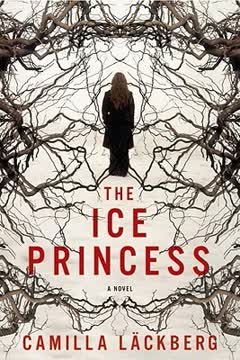
The story opens with the chilling discovery of Alexandra Wijkner's body, frozen in her childhood home's bathtub. The scene is stark and haunting, setting the tone for a narrative steeped in secrets and emotional coldness. Erica Falck, a writer recently returned to her hometown of Fjällbacka after her parents' death, is drawn into the mystery when she stumbles upon the body. The town is immediately abuzz with speculation, and the initial assumption is suicide. Yet, the coldness of the scene and the icy isolation of the victim hint at deeper, more sinister undercurrents. Erica's personal grief intertwines with the shock of finding her childhood friend dead, propelling her into an investigation that will force her to confront both the town's and her own buried past.
Childhood Bonds, Adult Shadows
Erica reflects on her childhood bond with Alex, a friendship that once defined her world but ended abruptly when Alex moved away without explanation. This loss left Erica with a lingering sense of abandonment and self-doubt. As she reconnects with the Carlgren family, Erica is reminded of the warmth and complexity of their home, and the ways in which childhood relationships cast long shadows into adulthood. The emotional distance between the adult Erica and the memory of Alex is palpable, yet the discovery of Alex's body reignites Erica's need to understand what happened to her friend—and to herself.
The Town's Whispered Truths
The small town of Fjällbacka is a character in itself, its streets and squares alive with gossip, suspicion, and the weight of tradition. As Erica navigates the town, she is confronted by neighbors eager to speculate about Alex's death, each conversation revealing more about the town's collective psyche than about the victim herself. The town's insularity and its resistance to change are evident, as is the way secrets are both protected and weaponized. Erica's outsider-insider status allows her to observe the subtle dynamics of power, shame, and memory that shape the community's response to tragedy.
A Writer's Return Home
Erica's return to her childhood home is marked by grief for her parents and a sense of creative paralysis. The house is filled with memories, each object a trigger for nostalgia and regret. Erica's relationship with her sister Anna is strained by the practicalities of inheritance and the emotional baggage of their upbringing. The process of sorting through her parents' belongings becomes a metaphor for Erica's attempt to make sense of her own life, her failed relationships, and her longing for connection. The discovery of Alex's death offers Erica both a distraction and a possible new purpose: to write a book that will explain the tragedy and, perhaps, herself.
The Ice Princess Found
The police investigation, led by the bumbling but ambitious Superintendent Mellberg and the more sensitive Patrik Hedström, quickly reveals that Alex's death was not a suicide but a murder. The autopsy uncovers evidence of sedation and staged wounds, as well as the shocking revelation that Alex was pregnant. The news devastates her family and husband, Henrik, and raises new questions about Alex's secret life. Erica, drawn into the investigation by her personal connection and her writer's curiosity, begins to interview those who knew Alex, uncovering layers of deception, longing, and pain.
Grief, Guilt, and Gossip
As the investigation deepens, suspicion falls on those closest to Alex: her husband, her parents, her childhood friends, and even the town's outcasts. Each character is forced to confront their own guilt, whether real or imagined, and the ways in which they failed Alex or themselves. Erica's interviews reveal the complexity of Alex's relationships, her perfectionism, and her emotional distance. The town's gossip becomes both a source of clues and a barrier to the truth, as old wounds are reopened and new alliances are formed.
The Past Never Dies
The narrative delves into the past, revealing that Alex and another local, Anders Nilsson, shared a traumatic history involving abuse by a trusted adult, Nils Lorentz. The abuse was covered up by their families and the town's elite, leaving both victims to struggle with lifelong scars. Alex's attempts to confront her past and seek closure are met with resistance and denial, both from herself and those around her. The legacy of silence and shame is shown to have devastating consequences, not only for Alex and Anders but for the entire community.
Lovers, Lies, and Loss
The investigation uncovers a web of secret affairs, unfulfilled desires, and broken marriages. Alex's marriage to Henrik is revealed to be emotionally distant, and her affair with Dan, a local fisherman and Erica's former lover, adds another layer of complexity. The revelation that Alex was pregnant with Dan's child shatters the lives of those involved, particularly Dan's wife, Pernilla. The theme of love as both a source of comfort and destruction runs throughout, as characters grapple with the consequences of their choices and the lies they tell to protect themselves and others.
The Art of Suffering
Anders Nilsson, once a talented artist and childhood friend of Alex, is now a broken man, consumed by alcoholism and haunted by his past. His art, filled with violent colors and chaotic forms, becomes a visual representation of his inner torment. Anders's relationship with his mother, Vera, is marked by mutual guilt and dependence, each unable to save the other from their shared suffering. Anders's eventual suicide, staged to look like murder by Vera in a misguided attempt to protect his dignity, is a tragic culmination of years of pain and silence.
The Family's Hidden Wounds
The investigation uncovers the deepest secret of all: Alex's pregnancy as a teenager, the result of abuse by Nils Lorentz, and the birth of a child, Julia, who was raised as Alex's sister rather than her daughter. The Carlgren family's decision to hide the truth, motivated by shame and the desire to protect their reputation, is revealed to have caused irreparable harm to both Alex and Julia. The revelation shatters the family, forcing each member to confront the consequences of their actions and the lies that have defined their lives.
The Weight of Silence
Vera, Anders's mother, ultimately confesses to murdering Alex, driven by fear that Alex's decision to reveal the past would destroy what little remained of her son's life. Vera's actions are shown to be both a crime and a desperate act of love, shaped by a lifetime of silence and sacrifice. The novel explores the ways in which secrets, once kept to protect, become corrosive, destroying individuals and families from within. The cost of silence is measured not only in lives lost but in the inability to heal and move forward.
The Unraveling of Vera
As Vera is brought to justice, the community is forced to reckon with the truth of what happened to Alex and Anders. The police, particularly Patrik, struggle with the moral complexities of the case, recognizing that legal justice cannot undo the damage done by years of silence and denial. Erica, too, must come to terms with her own role as both observer and participant, using her writing to bear witness to the pain and resilience of those around her. The novel ends with a sense of closure, but also with the recognition that healing is a slow and uncertain process.
Confessions in the Dark
In the aftermath of the revelations, characters confront their own complicity and seek forgiveness, both from others and themselves. Erica and Patrik's relationship deepens as they support each other through the emotional fallout, while Anna finds the strength to leave her abusive husband and protect her children. The town, though forever changed, begins to move forward, its secrets no longer hidden but acknowledged and, in some cases, understood. The final confessions, both spoken and unspoken, allow for the possibility of redemption and new beginnings.
The Three Musketeers Pact
The truth about the childhood pact between Alex, Anders, and Jan Lorentz is revealed: a blood oath forged in the aftermath of shared trauma, and a secret act of vengeance against their abuser, Nils. The pact, meant to bind them together, instead becomes a source of lifelong guilt and isolation. The novel explores the ways in which childhood experiences shape adult lives, and the difficulty of breaking free from the patterns established in youth. The legacy of the Three Musketeers is both a cautionary tale and a testament to the enduring power of friendship.
Justice, Forgiveness, and Farewell
As the legal and emotional threads of the case are tied up, the characters seek forgiveness and the chance to start anew. Vera's fate is left in the hands of the justice system, but her confession brings a measure of peace to those she has harmed. Erica and Patrik, having faced the darkness together, look toward a future built on honesty and mutual support. The town of Fjällbacka, though scarred by tragedy, is shown to be capable of change and renewal. The novel ends with a sense of hope, tempered by the knowledge that the past can never be entirely left behind.
New Beginnings, Old Scars
In the final chapter, the characters begin to rebuild their lives, carrying with them the scars of what has happened but also the lessons learned. Erica finds new purpose in her writing and her relationship with Patrik, while Anna and her children begin to heal from the trauma of abuse. The town, too, is changed, its secrets no longer festering in the dark but brought into the light. The novel closes with a sense of cautious optimism, acknowledging that while the past can never be erased, it is possible to move forward with hope, compassion, and the courage to face the truth.
Characters
Erica Falck
Erica is the novel's protagonist, a biographer who returns to her hometown after her parents' death. Her journey is one of both external investigation and internal reckoning. Haunted by the loss of her childhood friend Alex and the unresolved pain of her own upbringing, Erica is driven by a need to understand the past and to find meaning in tragedy. Her relationships—with her sister Anna, her former lover Dan, and the sensitive policeman Patrik—reveal her capacity for empathy, resilience, and growth. Erica's evolution from passive observer to active participant mirrors the novel's central theme: the necessity of confronting painful truths in order to heal.
Patrik Hedström
Patrik is the police officer assigned to Alex's case, distinguished by his intelligence, sensitivity, and integrity. Unlike his blustering superior Mellberg, Patrik approaches the investigation with patience and compassion, seeking to understand the emotional realities behind the crime. His growing relationship with Erica provides both characters with a sense of belonging and support. Patrik's own history of heartbreak and his commitment to justice make him a stabilizing force in the narrative, guiding both the investigation and the emotional journeys of those around him.
Alexandra "Alex" Wijkner (née Carlgren)
Alex is the "ice princess" at the heart of the novel, her life and death shrouded in mystery. Outwardly successful and admired, Alex is revealed to be deeply wounded by childhood abuse and the burden of family secrets. Her perfectionism and emotional distance are coping mechanisms, masking a profound sense of isolation. Alex's attempts to confront her past and seek happiness are thwarted by the silence and denial of those around her. Her death is both a personal tragedy and a catalyst for the unraveling of the town's collective guilt.
Anders Nilsson
Anders is a once-promising artist whose life has been destroyed by alcoholism and unresolved trauma. Like Alex, he was abused by Nils Lorentz and silenced by the complicity of adults. His art is a visual expression of his suffering, and his relationship with his mother, Vera, is marked by mutual dependence and guilt. Anders's suicide, staged as murder by Vera, is a final act of despair and a testament to the corrosive power of secrets. His story is a poignant exploration of the long-term effects of abuse and the difficulty of finding redemption.
Vera Nilsson
Vera is Anders's mother, a woman hardened by loss and shaped by the demands of survival. Her decision to cover up Anders's abuse and later to murder Alex is driven by a complex mix of love, fear, and shame. Vera's actions are both criminal and deeply human, reflecting the ways in which good intentions can lead to devastating consequences. Her eventual confession is an act of courage, forcing the community to confront the truth and allowing for the possibility of forgiveness.
Anna Maxwell (née Falck)
Anna is Erica's younger sister, trapped in an abusive marriage to Lucas. Her journey is one of awakening and self-assertion, as she finds the courage to protect her children and leave her husband. Anna's relationship with Erica is marked by both dependence and resentment, reflecting the complexities of sibling bonds. Her story parallels the novel's central themes of silence, shame, and the struggle to break free from destructive patterns.
Dan Karlsson
Dan is Erica's high school sweetheart and Alex's secret lover. His affair with Alex and the revelation that he is the father of her unborn child bring turmoil to his marriage and his sense of self. Dan is portrayed as fundamentally decent but weak, unable to confront the consequences of his actions until forced by tragedy. His story highlights the ways in which love, guilt, and fear can coexist, and the difficulty of making amends for past mistakes.
Birgit and Karl-Erik Carlgren
Birgit and Karl-Erik are complex figures, both loving and deeply flawed. Their decision to hide Alex's abuse and the true parentage of Julia is motivated by shame and the desire to protect their family's reputation. Their inability to confront the truth leads to lasting harm for both Alex and Julia. The couple's eventual reckoning with their actions is painful but necessary, illustrating the destructive power of denial and the possibility of redemption through honesty.
Julia Carlgren
Julia is raised as Alex's sister but is, in fact, her daughter, the product of abuse. Her sense of alienation and anger is palpable, and her search for identity drives much of the novel's emotional tension. Julia's relationship with Nelly Lorentz, her biological grandmother, offers her a sense of belonging but also complicates the family's dynamics. Julia's story is a powerful exploration of the ways in which secrets shape identity and the longing for acceptance.
Jan Lorentz
Jan is the adopted son of Nelly Lorentz and a childhood friend of Alex and Anders. Like them, he is a victim of Nils's abuse, and his role in Nils's disappearance is a central mystery of the novel. Jan's outward success masks a deep well of pain and moral ambiguity. His confession to Patrik reveals the complexity of his character: both victim and perpetrator, shaped by trauma and capable of both loyalty and ruthlessness. Jan embodies the novel's central question: can the past ever truly be escaped?
Plot Devices
Interwoven Timelines and Multiple Perspectives
The novel employs a non-linear narrative, shifting between past and present, and between multiple points of view. This structure allows the reader to gradually piece together the truth, mirroring the investigative process and the characters' own journeys toward understanding. The use of flashbacks and shifting perspectives deepens the emotional resonance of the story, highlighting the ways in which the past continues to shape the present.
The Small Town as Microcosm
The setting of a small, tightly knit community is used to explore themes of gossip, conformity, and the pressure to maintain appearances. The town's collective silence and complicity are both a source of protection and a breeding ground for harm. The physical coldness of the setting mirrors the emotional coldness that pervades the characters' lives, reinforcing the novel's central metaphor of the "ice princess."
Symbolism of Ice and Water
The recurring imagery of ice, water, and coldness serves as both a literal and metaphorical backdrop. The frozen body in the bathtub, the icy landscape, and the characters' emotional numbness all point to the ways in which trauma and secrecy freeze individuals and communities in place. The eventual thawing—both literal and emotional—signals the possibility of healing and renewal.
Foreshadowing and Red Herrings
The novel makes effective use of foreshadowing, with early hints about Alex's past, Anders's suffering, and the town's secrets gradually coming to fruition. Red herrings—such as the initial suspicion of suicide, the focus on various suspects, and the misdirection surrounding Anders's death—keep the reader and the characters guessing, heightening the tension and emotional stakes.
The Writer as Detective
Erica's position as both a writer and an amateur investigator allows the novel to explore the ethics of storytelling, the search for truth, and the power of narrative to heal or harm. Her journey from passive chronicler to active seeker of justice mirrors the novel's broader themes of agency, responsibility, and the necessity of confronting the past.
Analysis
Camilla Läckberg's The Ice Princess is a masterful exploration of the ways in which secrets, shame, and silence can shape—and destroy—lives. Set against the icy backdrop of a small Swedish town, the novel uses the conventions of crime fiction to probe deeper questions about trauma, family, and the search for identity. At its heart, the story is less about the mechanics of murder than about the emotional and psychological costs of denial. The characters are richly drawn, their flaws and virtues rendered with empathy and nuance. Through Erica's journey, the novel suggests that healing is possible only when the truth is faced, no matter how painful. The intergenerational consequences of abuse, the corrosive effects of gossip and conformity, and the redemptive power of love and honesty are all woven into a narrative that is both suspenseful and deeply moving. In a modern context, The Ice Princess serves as a reminder of the importance of breaking the cycle of silence, of listening to those who have been hurt, and of finding the courage to speak—and live—the truth.
Last updated:
Review Summary
The Ice Princess by Camilla Läckberg receives polarized reviews averaging 3.76 stars. Common criticisms include withholding clues from readers until reveals, timeline inconsistencies, excessive romance subplot, weak characterization, and slow pacing. Many reviewers found the mystery predictable and disliked that detectives find evidence but don't share it with readers immediately. Some praised the atmospheric Scandinavian setting and relationship between protagonists Erica and Patrik. Positive reviews appreciated the character development and small-town mystery, while negative reviews criticized shallow female characters, poor police procedure, and translation issues. The ending divided readers between satisfaction and disappointment.