

Key Takeaways
See MIT as an idea factory: it trains judgment, not merely recall
The real product is thinking. White arrives at MIT expecting to become an energy expert, but a professor tells him the lasting education is learning how to think. The institute’s “idea factory” identity captures both its power and its risk: research, industry, and engineering are tightly linked, while students are pushed to produce work at a punishing pace.
Rigor changes the student. White leaves a broad policy program for mechanical engineering, where he must master demanding technical courses and eventually build a research experiment. His first term brings three disappointing grades and academic probation. The education is not a smooth march toward brilliance. It is a process of acquiring judgment through hard problems, practical work, and repeated correction.
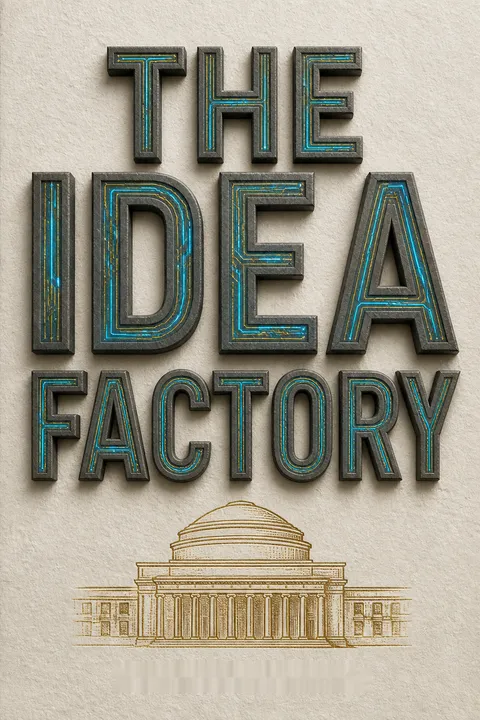
The idea-factory metaphor is more revealing than a simple claim that MIT is demanding. It describes an institution that converts talent into useful knowledge through concentrated work and close ties to industry. That arrangement can create unusual technical capability, but production is not the same as education: a factory can also measure output while overlooking the people making it. The distinction matters for any elite training ground. High standards can sharpen judgment, but only when students receive enough feedback, support, and room to understand what the standards are meant to develop.
Work problems from first principles until the answer becomes yours
Effort beats imitation. In fluid mechanics, Professor Shapiro urges students to solve problems themselves rather than copy a worked example. White’s notes are meticulous, but transcription alone cannot make him understand the material. The difference becomes painfully clear in thermodynamics, when he asks for help and cannot define basic concepts well enough to frame his question.
Practice is the point. A problem set about pumping water forces students to compare human effort with a gasoline engine, accounting for energy efficiency and cost. Later, White learns to explain Bernoulli’s equation through a study group’s concrete examples, including how pressure changes as fluid speeds up. Each attempt, including dead ends, builds a grasp that polished notes cannot provide.
This is a strong account of active learning: knowledge becomes usable when learners retrieve it, apply it, and discover where their understanding breaks. Cognitive science distinguishes that effortful practice from passive exposure, such as rereading notes, which can feel fluent without producing reliable recall. The book also shows why feedback matters. Independent struggle is productive when a learner can check a solution or ask a question; without that safety valve, the same difficulty can become confusion or shame. The goal is not suffering for its own sake, but the ability to reason without a template.
Simplify reality into a model, then test what the simplification misses
A model makes a problem manageable. For an independent study project, White must predict how a balloon fills with air. The real balloon stretches in three dimensions, making the problem difficult to calculate. He instead imagines a simplified balloon whose skin moves in one direction and whose elasticity behaves like a spring. The model preserves the features he needs to study while setting aside others.
Turn the model into steps. White links equations for air flow, balloon pressure, and skin motion, then programs the computer to update the balloon’s position over small increments of time. A later controls course adds a moving mass and internal friction to the model. The exercise teaches him to break a complex system into parts, connect them, and make assumptions explicit.
Modeling is not a choice between a perfect copy and a false picture. It is a disciplined decision about which features matter for a specific question. That principle connects engineering to fields such as economics and climate science, where simplified representations make analysis possible but can conceal important effects. White’s balloon example is especially useful because the model evolves as his understanding deepens. A model should therefore be treated as a provisional tool, not a miniature truth. Its assumptions need scrutiny, particularly when neglected details could change the decision being made.
Learn from machinists and technicians, not only professors
Knowledge lives in the shop. White begins his research assistantship with an old rapid compression machine and little idea how to repair it. Nick, a technician, teaches him to take the apparatus apart, use a lathe, measure small dimensions, weld a cracked shaft, and handle heavy equipment safely. Those skills do not arrive through lectures. They come from working alongside someone who knows the material and tools firsthand.
Craft makes theory real. A thousandth of an inch matters when a part must fit or a seal must hold pressure. The team also discovers that the machine’s shaft stretches under greater force, requiring redesign. White learns that engineering is not only equations and ideas. It includes the judgment to build, inspect, repair, and notice when a physical object contradicts the plan.
The book makes a case for tacit knowledge, the practical understanding that is difficult to convey fully through written instructions. In craft traditions, expertise is transmitted through demonstration, correction, and attention to materials. That insight challenges institutions that place academic credentials above technicians’ experience. Yet hands-on work should not be romanticized as automatically empowering: technicians may contribute essential knowledge without receiving equal recognition or authority. Good engineering teams make that expertise visible, give credit, and treat safety as shared responsibility rather than an individual’s private burden.
Treat failed experiments as evidence that narrows the next attempt
A failure can answer a question. When White and his colleagues raise pressure in the rapid compression machine, the piston repeatedly rebounds instead of completing its stroke. The test shows that the apparatus has no obvious leaks, but its tank and shaft cannot handle the required force. That result leads to new components and a revised design. The test fails to produce the hoped-for data, yet it reveals what must change.
Separate the test from the prediction. White later helps investigate a supposed perpetual motion machine. His team estimates the small power needed to overcome friction, then tests possible energy sources, including air jets, room lights, and electromagnetic effects. They do not win, but they learn to form explanations, make measurements, and revise claims when evidence disagrees.
This approach resembles the logic of falsifiable science: a useful experiment must distinguish between competing explanations, not merely confirm a preferred story. The rapid compression machine provides a vivid example because the failed run yields actionable engineering information. But failure is informative only when the test is designed well and the result is interpreted carefully. A broken apparatus, ambiguous measurement, or unsafe procedure may reveal little. The book’s broader lesson is not to celebrate failure indiscriminately, but to ask what the evidence rules out and what the next test should discriminate.
Treat isolation as a warning signal, not a badge of seriousness
Pressure can hide distress. White describes students who work alone, fear falling below the class average, and worry that academic setbacks will end their futures. As a dormitory tutor, he is asked to keep an eye on Steve, a gifted student who feels lonely and overwhelmed. White makes ordinary efforts to connect with him, but a crisis still follows. The account offers no simple explanation for one person’s suffering.
Attention is part of care. White also remembers Mary, a talented colleague who dies by suicide. He regrets failing to challenge sexist comments and allowing a friendship to fade. The book does not establish that these moments caused her death. It does show the cost of a culture where people’s distress can disappear behind grades, research, and technical achievement.
The memoir’s insistence on human connection is essential, but suicide cannot be reduced to a single cause or prevented by one friend’s vigilance. The value here is more modest and more practical: isolation, hopelessness, and talk of self-harm deserve attention rather than dismissal as ordinary academic stress. In teams, psychological safety means people can express uncertainty or distress without being treated as defective. That cannot replace professional care or institutional support. It can help create the conditions in which someone is noticed, believed, and directed toward help.
Leave, transfer, or pause before prestige turns struggle into harm
There is more than one route. White’s first MIT term leaves him on probation, and he sees students dismissed from programs when grades or research progress fall short. Some leave without a degree; others transfer or find work elsewhere. White points to a student who moved to a less prestigious school and built a satisfying career, arguing that a change of direction need not be a disgrace.
A failed threshold is not a failed life. White earns his master’s degree but does not pass the doctoral qualifying examinations. He imagines the result as a closed door, then returns to work and builds a career in energy consulting. The book’s Everest-in-an-ice-storm image captures a practical truth: continuing toward a summit is not always the wisest response to dangerous conditions.
Prestige can distort decision-making by making sunk costs feel like obligations. People may persist not because a path still serves them, but because leaving seems to invalidate past effort. Behavioral economics calls attention to this sunk-cost trap, while a more humane account asks what future costs continued investment will impose. Still, leaving is not always the answer: a temporary setback may be recoverable with support or a change in strategy. The useful lesson is to assess the actual options, not treat endurance as proof of worth or a credential as the only legitimate outcome.
Keep human judgment beside technical rigor, especially when people bear the costs
Engineering choices are moral choices. White studies energy conservation and repeatedly sees how technical work connects to economics, pollution, defense, and public policy. A professor warns that engineers must keep social benefit in view even when the energy industry offers substantial financial rewards. White’s own work eventually involves deciding what energy savings are appropriate, including refusing to prioritize lower costs over cooling for elderly people during a heat wave.
Precision can obscure people. MIT’s mechanistic habits make some problems legible, but they can also turn students into grades, research units, or points on a curve. The book also confronts sexism in engineering and the ease with which colleagues let harmful remarks pass. White’s reflection is that technical competence does not excuse indifference to the people affected by technical systems.
This is the book’s answer to the divide between technical and humanistic education. Engineering can quantify energy, pressure, and cost, but choosing a boundary for the calculation is already a value judgment. A housing project that minimizes utility bills while making vulnerable residents dangerously hot is not successful simply because its spreadsheet balances. At the same time, ethical intentions need technical competence to become effective action. The strongest professional judgment joins both: it asks what can be built, who benefits, who bears risk, and which human needs the model leaves outside its frame.
Build a career from useful skills, not credentials alone
The degree is not the destination. After MIT, White works on a small hydroelectric project, learns practical building systems, joins an energy consulting firm, and eventually becomes self-employed. He develops expertise in lighting, utility data, energy savings, and specifications by doing concrete work for clients. His path is less glamorous than the institute’s promises, but the technical habits learned there help him make his own opportunities.
Keep learning outside elite institutions. White takes night classes in steam engineering and air-conditioning controls, learning from working technicians and contractors. The experience broadens his view of competence beyond the people with prestigious degrees. The book ends with him still applying fluid mechanics to ordinary scenes, while recognizing that professional knowledge is most useful when it helps solve real problems.
White’s career illustrates a distinction between credentials as signals and skills as working capacity. A degree can help an employer decide whom to interview, but practical competence is demonstrated through judgment, communication, and results. Continuing education also resists the idea that learning ends at graduation. There is a caveat: credentials can still control access to regulated professions, resources, and status, so their influence should not be waved away. The more useful conclusion is that credentials matter, but they are strongest when supported by adaptable skills and a willingness to keep learning.
Analysis
The Idea Factory works as a memoir of technical education, but its deeper subject is how institutions shape a person’s definition of competence. MIT teaches White to convert physical situations into models, test assumptions, and build functioning devices. The same habits can become instruments of self-judgment: grades and exams reduce a complicated student to a score, and the student may begin to treat that score as a verdict on his worth. This makes the book’s account of learning inseparable from its account of institutional pressure.
Its most persuasive educational insight is that engineering knowledge is distributed. Professors supply theory, peers provide explanations, technicians contribute craft knowledge, and experiments expose what none of them can know in advance. The balloon model, the rebuilt compression machine, and the design contest show learning as iterative coordination between abstraction and material reality. This is closer to apprenticeship than to simple information transfer. It also explains why the author’s growth cannot be attributed to coursework alone.
The memoir is deliberately ambivalent about MIT. Its rigor changes White’s abilities and supports a meaningful career, yet its competitive routines leave little room for social development or failure. That criticism is not a controlled study, and the author’s retrospective scenes and composite characters cannot establish that the institution caused individual tragedies. They can, however, document how isolation, humiliation, and relentless evaluation felt to one student, and why institutional prestige does not guarantee humane teaching.
The book’s central tension is productive: engineering depends on abstraction, but a life cannot be reduced to an engineering problem. Models are powerful because they omit detail; institutions become dangerous when they forget that their students are not models. White’s final standard is therefore broader than technical success. A good engineer must solve problems, remain teachable, and notice when efficiency or status has made human consequences disappear.
Review Summary
The Idea Factory receives mixed reviews, with an average rating of 3.83 out of 5. Readers appreciate the author's detailed account of MIT graduate student life, technical problem-solving, and engineering education. Many find it engaging and insightful, praising the author's honesty and humor. However, some criticize the book's inconsistent pacing, excessive technical details, and occasional tedium. The book is noted for its candid portrayal of the pressures and challenges at MIT, including discussions of student suicides. Overall, it offers a unique glimpse into the demanding world of elite engineering education.
People Also Read



Glossary
idea factory
University-industry idea engineA postwar ideal for a research university closely connected to nearby industry, producing ideas, discoveries, and technologies. White applies the phrase to MIT, whose labs, faculty consulting, corporate sponsors, and engineering training form a system for turning research into practical work. The metaphor also raises a concern: an institution built around production can neglect the people who do the producing.
MIT-cubed
Three MIT degreesThe book’s shorthand for a person who earned a bachelor’s, master’s, and doctoral degree at MIT. White uses it to describe academic insiders who progressed through the institution’s own pipeline. The term carries both admiration for their achievement and concern that a closed educational path may limit social experience or make the culture harder for outsiders to navigate.
abstraction barrier
Boundary around a subsystemA defined boundary separating one part of a complex system from the details of the rest. Within the boundary, a designer can focus on a subsystem’s inputs, outputs, and behavior without tracking every internal mechanism. Clear boundaries let different people work on separate parts, but they can also restrict what each person understands about the larger system.
test matrix
Planned experiment combinationsA structured set of experiments in which selected input variables are varied to measure their effects on an outcome. In White’s engine research, air temperature and air motion are varied, while ignition delay is measured. A matrix helps researchers compare cases systematically instead of changing conditions unpredictably, making patterns and interactions easier to identify.
ignition delay
Injection-to-combustion intervalThe time between the start of fuel injection and the start of combustion in a diesel engine. White measures this interval while varying conditions in a rapid compression machine. His results help show how temperature and air motion affect when fuel ignites and how the combustion process unfolds.
qualifiers
Doctoral qualification examinationsA set of written, oral, and research-presentation examinations used by MIT’s mechanical engineering department to decide whether a graduate student may proceed toward a doctorate. White’s exams cover technical subjects and demand rapid problem solving. Passing marks entry into the doctoral track; failing does not erase the master’s degree or the skills gained.
perpetual motion machine of the first kind
Claimed energy-producing machineA hypothetical device that produces more energy than it receives, or delivers energy without an input while returning itself to its original state. The thermodynamic principle of energy conservation rules out such a machine. White’s contest team investigates a wheel that appears to run continuously, then searches for hidden energy sources and mechanisms.
available energy
Maximum useful workThe maximum useful work that can be extracted from a system together with a specified environment at constant temperature and pressure. In White’s thermodynamics course, the concept depends on defining the system and its reference environment. Its abstractness becomes part of the difficulty: learners must understand the precise meaning rather than rely on a loose everyday sense of the words.
FAQ
What's The Idea Factory: Learning to Think at MIT about?
- Personal Journey at MIT: The book chronicles Pepper White's experiences as a graduate student at MIT, highlighting the challenges and triumphs he faced.
- Learning to Think: It emphasizes critical thinking and problem-solving over rote memorization, showcasing how MIT shapes innovative thinkers.
- Cultural Insights: The narrative provides a glimpse into MIT's culture, including academic pressures, social dynamics, and mental health issues.
Why should I read The Idea Factory: Learning to Think at MIT?
- Unique Perspective: Offers a firsthand account of life at a leading institution, appealing to those interested in engineering, technology, or academia.
- Inspiration for Students: Serves as motivation, illustrating the importance of resilience and adaptability in overcoming challenges.
- Understanding MIT's Environment: Provides insights into the pressures and expectations at MIT, enlightening those unfamiliar with such an intense setting.
What are the key takeaways of The Idea Factory: Learning to Think at MIT?
- Critical Thinking Skills: Emphasizes the development of critical thinking through White's journey at MIT.
- Resilience in Adversity: Highlights the need for resilience and the ability to recover from failures.
- Balance Between Work and Life: Stresses the importance of maintaining a balance between academic pursuits and personal well-being.
What are the best quotes from The Idea Factory: Learning to Think at MIT and what do they mean?
- "If you want to see why I haven't given any money to MIT, read Pepper White's book.": Reflects a critical perspective on the institution, suggesting the book reveals uncomfortable truths.
- "You become invisible.": Captures the isolation felt in competitive environments, emphasizing the need for connection.
- "The rational and the expressionistic.": Speaks to the duality of MIT, balancing technical skills with creativity and emotional intelligence.
How does Pepper White learn to think at MIT?
- Experiential Learning: Education is shaped by hands-on experiences and real-world applications of theoretical knowledge.
- Mentorship and Guidance: Benefits from professors and peers who challenge him to think critically.
- Trial and Error: Learns through failures and successes, understanding mistakes are essential for growth.
What challenges does Pepper White face at MIT?
- Academic Pressure: Grapples with intense workload and high expectations, leading to stress and anxiety.
- Social Isolation: Experiences loneliness and invisibility in a competitive environment.
- Mental Health Issues: Addresses serious topics like mental health and suicide, highlighting struggles in coping with MIT's pressures.
How does The Idea Factory: Learning to Think at MIT address mental health issues?
- Acknowledgment of Struggles: Discusses mental health challenges, including stress and suicide prevalence.
- Call for Support: Advocates for better support systems and mental health resources.
- Personal Reflection: Reflects on personal experiences and the loss of friends, illustrating mental health's profound effects.
What is the significance of the title The Idea Factory?
- Metaphor for MIT: Suggests MIT is a place where ideas are generated and developed.
- Focus on Innovation: Emphasizes creativity and problem-solving culture at MIT.
- Personal Growth: Reflects White's transformation, learning to harness ideas and creativity.
How does the author describe the engineering projects at MIT?
- Hands-On Learning: Projects like the rapid compression machine serve as a foundation for learning engineering principles.
- Collaboration: Teamwork is essential, showcasing the necessity of collaboration and communication.
- Real-World Applications: Projects solve real-world problems, reinforcing engineering education's relevance.
What role do professors play in The Idea Factory: Learning to Think at MIT?
- Mentors and Guides: Professors provide guidance and support as students navigate their academic journeys.
- Challengers of Thought: Challenge students to think critically, fostering intellectual rigor.
- Influencers of Culture: Shape MIT's culture, influencing values and expectations.
How does the author’s perspective on education evolve throughout The Idea Factory: Learning to Think at MIT?
- Initial Idealism: Begins with a romanticized view of education as a path to knowledge and success.
- Realization of Complexity: Confronts complexities and harsh realities, including competition and mental health issues.
- Emphasis on Practicality: Values practical experience, resilience, collaboration, and personal growth over mere academic achievement.
What insights does the author provide about the engineering profession?
- Real-World Relevance: Emphasizes solving real-world problems and making a positive impact.
- Continuous Learning: Highlights lifelong learning and adaptation as technology evolves.
- Ethical Responsibility: Reflects on ethical implications, advocating for sustainability and social responsibility.
Download PDF
Download EPUB
.epub digital book format is ideal for reading ebooks on phones, tablets, and e-readers.








