

Key Takeaways
Near-death reports challenge brain-only theories, but do not settle what survives.
A real puzzle. A near-death experience, or NDE, is a vivid experience reported by someone who survived a life-threatening crisis. In a Dutch study cited by the authors, 62 of 344 cardiac-arrest survivors recalled something from the arrest period, and 41 described a deep NDE. Common features include peace, seeing the body from outside, meeting deceased relatives, and reviewing one’s life. Some reports include details witnesses later said were accurate.
The hard question. In one well-known account, a patient reportedly described a shoe on a hospital ledge that the witness later found. Such cases raise a serious question about when and how experience occurs. Yet the authors also note that a dying brain can show unusual activity, and that tunnels or lights may have physiological explanations. A striking report is evidence to investigate, not a complete explanation of survival.
The strongest contribution here is the question, not the conclusion. A report made after resuscitation cannot by itself establish precisely when an experience occurred, and clinical measures may not capture every aspect of brain activity. Still, detailed accounts can generate testable protocols, such as hiding targets where ordinary sight cannot reach them and recording events in real time. This shifts the debate from whether an experience feels profound to whether its information could have been acquired by ordinary means. The distinction protects both scientific rigor and the experiencer’s dignity.
Demand verifiable details before treating an encounter as evidence of survival.
Different kinds of reports. Apparitions are perceived appearances of the dead; after-death communication, or ADC, is a broader term for experiences in which someone believes a deceased person has communicated. Reports range from comforting dreams to claims containing specific information. A Society for Psychical Research survey mailed to 17,000 people found 300 reports of seeing someone who had died, including some cases in which the witness did not know the person had died. The later ADC Project collected more than 3,300 personal accounts.
Check the details. In one historical report, a woman described her brother’s clothing and the rope involved in his fatal accident, details later checked with the crew. In another, a dream reportedly led a son to a hidden will. But the will’s authenticity did not resolve whether the dream involved a deceased father or a living person’s deception. Verification strengthens a case; it does not automatically settle its cause.
These accounts show why evidential quality matters as much as emotional force. A detail recorded before it is checked carries more weight than one reconstructed after a family has compared memories. The same principle is used in forensic work, where investigators distinguish contemporaneous notes from later recollections. Reports gathered through open surveys also tend to attract people with memorable experiences, so they cannot establish how often such events occur in the population. A careful reader can take grief experiences seriously while keeping the claim of postmortem communication distinct from the experience itself.
Test mediumship against information leakage, fraud, and extraordinary information gathering.
The medium’s role. In medium-transmitted communication, a medium enters an altered state and conveys messages to a living person, called the sitter. The authors focus on mental communication rather than physical effects such as moving objects, which they regard as especially vulnerable to fraud. They describe Leonora Piper’s sittings with people introduced anonymously, and messages attributed to George Pellew, a deceased man whose friends reportedly recognized his personality and private relationships.
A clever test. In cross-correspondences, separate mediums received fragments that appeared meaningless alone but formed a coherent message when combined. The method aimed to reduce the chance that any one medium had access to the whole answer. Even so, the authors acknowledge that unusual information gathering from living people, sometimes called super-ESP, cannot be ruled out. The cases may challenge ordinary explanations without uniquely identifying communication with the dead.
The chapter’s most useful lesson is methodological: a strong test is designed around the easiest alternative explanation, not around the investigator’s preferred conclusion. Anonymity, independent recipients, and fragments that only make sense together all raise the evidential bar. But the remaining alternatives matter. If the hypothesis includes extraordinary access to information from the living, then survival is not the only account left standing. Good inquiry does not demand absolute certainty; it asks which explanation makes the fewest unsupported assumptions and what further observation could distinguish them.
Treat electronic voices as intriguing recordings, not self-authenticating messages.
A technological channel. Instrumental transcommunication, or ITC, is the claimed use of electronic devices to receive messages from deceased people. Researchers have reported voices in tape hiss, radio static, and other background noise, as well as images on television screens. Konstantin Raudive said he recorded tens of thousands of voices, while later experimenters built equipment intended to support two-way exchanges. In one account, engineers used shielded recording equipment and reportedly heard voices on playback.
Interpretation remains difficult. A sound emerging from noise can be hard to distinguish from accidental radio signals, equipment artifacts, or the listener’s expectations. The authors recount efforts to use controls and independent witnesses, but also note that devices can be manipulated and that some researchers suspected subconscious influence. A recording can preserve an anomalous sound; deciding that it is a particular deceased person requires additional evidence about identity, information, and how the signal was produced.
Electronic records appear more objective than private visions, but a file is not automatically an explanation. Speech perception is highly sensitive to expectation, especially when listeners know whose voice they hope to hear. Blinded transcription, independent agreement among listeners, and clear documentation of the signal chain would help separate words in the recording from words supplied by the mind. The chapter’s history is valuable because it shows how each new technology invites both experimentation and new opportunities for error. Technical complexity is not the same as evidential strength.
Childhood memories may preserve unknown histories without proving literal reincarnation.
Two routes to the past. The authors distinguish memories elicited by hypnotic regression from spontaneous childhood reports. Regression can produce vivid scenes, voices, and apparent memories, but suggestion and imagination complicate interpretation. The Bridey Murphy case became famous when a woman under hypnosis described an Irish life; some details were reportedly checked, while critics pointed to possible sources of prior knowledge.
Children’s cases. Psychiatrist Ian Stevenson investigated children, often ages two to six, who described another life and whose statements could be compared with records or witnesses. One girl, Swarnlata Mishra, reportedly identified people and events associated with a deceased woman; Stevenson recorded 49 points he considered confirmed. Some children also had birthmarks or behaviors linked to the person they described. The authors treat these cases as evidence that information can appear outside a subject’s known biography, while allowing that recall need not mean the same soul has been reborn.
This distinction is intellectually important: evidence for anomalous information is not identical to evidence for personal identity continuing across lives. A child might be reporting a genuine but unexplained source of information, while the metaphysical interpretation remains open. Retrospective matching can also inflate apparent accuracy, particularly when many details are offered and only the hits are emphasized. Stronger case records preserve statements before investigators identify a deceased person, then report misses as carefully as matches. That standard would make the most unusual cases more persuasive without demanding that they prove an entire theory of rebirth.
Use the Akasha as a metaphysical model, not a result established by physics.
A deeper layer. The Akasha is the authors’ name for a proposed reality beneath spacetime, an informational whole from which observable matter and events emerge. They connect this idea to developments in physics, including entanglement, string-net models, and the amplituhedron, a mathematical structure used to simplify calculations of particle interactions. Their analogy is software and display: the visible world is like a screen, while deeper relations supply its underlying rules.
A bridge, not a measurement. The authors propose that a deep informational field could explain how consciousness persists and how separate minds might connect. But the cited physics results concern mathematical structures and relationships among physical systems. The Akasha’s status as a conscious field is an additional philosophical interpretation, not something those results directly demonstrate. The distinction matters: an elegant analogy can inspire a theory, but it does not by itself confirm the theory’s claims about mind or survival.
The book is most imaginative when it treats the cosmos as more than a collection of isolated objects. Information-centered models can make familiar assumptions about space and matter feel less inevitable. The risk is a slide from a technical result to a metaphysical conclusion: nonlocal correlations do not automatically imply a universal memory, and mathematical descriptions beyond ordinary spacetime do not automatically contain experience. Keeping those steps visible helps readers appreciate the proposal without mistaking scientific vocabulary for experimental confirmation. The Akasha is best read as a speculative framework whose worth depends on distinct, testable consequences.
The brain-as-receiver analogy reframes consciousness, but still needs a mechanism.
A different picture. The authors argue that the brain transmits and displays consciousness rather than producing it. They compare the brain to a radio: when a radio stops, the broadcast becomes inaudible, but the signal need not have vanished. In their account, individual minds are localized expressions of a larger cosmic consciousness, while the brain shapes how that consciousness appears in a particular life.
A proposed bridge. They discuss Orchestrated Objective Reduction, or Orch OR, a theory associated with physicist Roger Penrose and anesthesiologist Stuart Hameroff. It proposes that quantum processes in tiny brain structures may connect physical events with consciousness. The authors use it to suggest a route between a nonphysical field and neural activity. Yet the receiver analogy and the proposed quantum mechanism are not the same claim: the analogy illustrates independence, while Orch OR attempts to describe an interaction.
The receiver metaphor neatly separates the existence of experience from its expression, but metaphors can conceal the hard part. A damaged radio loses signal quality; likewise, brain injury can alter memory, personality, and awareness. A receiver theory must explain why those changes track the brain so closely and specify what evidence would look different if the brain filtered rather than generated consciousness. This is not a fatal objection, but it is a demanding research program. Theories of consciousness become stronger when they predict observations that competing theories do not.
In Laszlo’s model, death releases a life-pattern into shared cosmic memory.
Memory beyond the body. The authors propose that thoughts, feelings, and memories are continuously integrated into the Akasha. They compare this to information stored in a shared digital system: a device may fail while its files remain accessible elsewhere. On this view, a living person in an altered state could reexperience elements of another person’s life, explaining mediumship and some past-life reports without requiring a soul to move intact from one body to another.
The proposed transition. Death ends the brain’s role in organizing a person’s local experience, but the person’s consciousness remains part of the cosmic whole. Near-death accounts of peace, life review, or encounters with the dead are treated as glimpses of this transition. Traditions such as Tibetan Buddhism describe an intermediate state, or bardo, between lives. These ideas offer an interpretation of the reports, not independent proof that memories are actually stored beyond the brain.
The shared-memory model offers a striking alternative to the usual all-or-nothing choice between a permanently separate soul and total erasure. It also clarifies why the book allows recalled memories to belong to someone other than the person experiencing them. Its central difficulty is empirical: the proposed archive has no independently measured storage mechanism, and the analogy to digital files risks making access sound simpler than it is. A productive version of the idea would identify what information survives, how it is encoded, and why some people can access it while most cannot.
Let possible continuity deepen responsibility without confusing hope with proof.
Four ways of seeing life. In the afterword, the authors sketch four historical eras: unconscious immortality, when people were embedded in nature without reflecting on death; intuitive immortality, when survival after death was widely believed; conscious mortality, shaped by modern materialism; and a hoped-for era of conscious immortality. They argue that a credible sense of continuity could reduce fear of death and encourage care for other people and the natural world.
An ethical proposal. The book ends by connecting its account of consciousness to how people live. If life is not confined to one body or lifetime, short-term self-interest may seem less compelling, while responsibility for a shared world may grow. That conclusion is a moral aspiration, not a result logically forced by evidence for survival. Beliefs about an afterlife can inspire generosity, but they can also be used to justify other values. The ethical case still needs to stand on its effects in this life.
The final movement is less a scientific inference than a wager about culture: a wider sense of belonging might produce a less extractive way of living. That possibility is worth taking seriously, especially because mortality can make both compassion and urgency vivid. But immortality does not guarantee virtue; some traditions have paired life after death with fear, hierarchy, or indifference to present suffering. A robust ethic should therefore be judged by whether it supports care, fairness, and stewardship here and now, regardless of whether consciousness continues. Hope can motivate responsibility without being treated as evidence.
Analysis
The book advances through three different kinds of argument: reports of anomalous experience, a proposed cosmology, and a moral vision. Its most persuasive move is to keep the first question open long enough to assemble varied evidence: NDE reports, deathbed visions, mediumship, electronic recordings, and children’s memories. Those phenomena are not interchangeable. Some involve first-person experience, some depend on witnesses, and others require several layers of interpretation. Their combined force is suggestive, but a collection of suggestive cases does not necessarily become proof simply by growing larger, especially when the same interpretive assumptions shape how cases are selected and assessed.
The Akasha proposal then provides a unifying story: consciousness is fundamental, the brain localizes it, and death returns individual experience to a cosmic information field. This is conceptually coherent, but its appeal exceeds its demonstrated support. Quantum entanglement establishes correlations that classical intuition finds surprising; it does not show that minds exchange usable information or that the universe stores personal memories. Holographic approaches in physics are mathematical frameworks, not evidence that spacetime is a screen for a conscious archive. Likewise, Orch OR remains a disputed proposal, not an accepted explanation of consciousness.
The book’s lasting value is therefore not that it settles survival. It makes readers notice how strongly the conclusion depends on what counts as evidence, and how quickly scientific language can be recruited to bridge gaps that remain open. A productive reading separates three claims: people have powerful experiences near death; some reports contain information that deserves rigorous investigation; and consciousness survives bodily death. The first is plainly true, the second is a research question, and the third remains unestablished. That distinction need not diminish the human importance of NDEs, grief encounters, or spiritual traditions. It allows wonder to coexist with disciplined uncertainty, which is a more durable starting point for research than either reflexive dismissal or premature certainty.
Review Summary
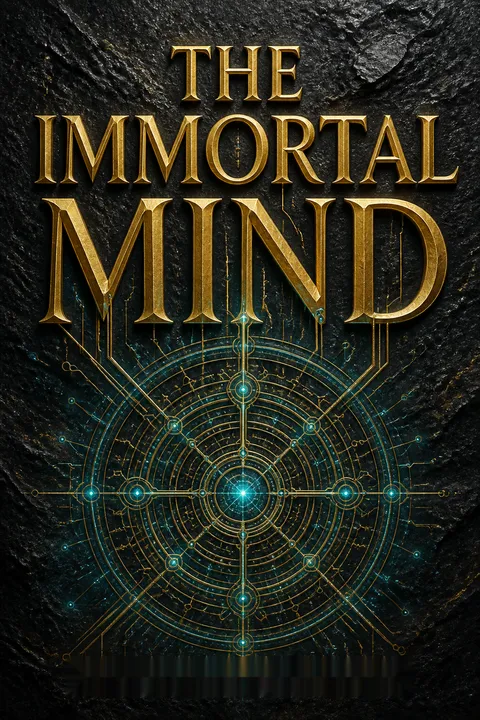
The Immortal Mind receives mixed reviews, with an average rating of 4.02/5. Many readers find it fascinating and thought-provoking, praising its exploration of consciousness beyond the brain and its scientific approach. Positive reviews highlight the book's compelling premise, case studies, and integration of quantum physics. Critics argue it lacks sufficient scientific evidence and relies too heavily on anecdotal experiences. Some readers find the writing style dry or overly complex, while others appreciate the thorough examination of near-death experiences, reincarnation, and the possibility of immortal consciousness.
People Also Read


Glossary
near-death experience (NDE)
experience during a crisisA vivid experience reported by someone who survives a life-threatening event, commonly cardiac arrest or severe illness. Reports may include peace, an apparent view of the body from outside, a tunnel or light, encounters with deceased people, or a review of one’s life. The book treats NDEs as evidence that experience may occur during severe brain dysfunction, while noting that they do not alone establish survival after irreversible death.
after-death communication (ADC)
perceived contact with the deadAn experience in which a living person believes that a deceased person has communicated with them. The book uses the term for a range of experiences, including visions, dreams, voices, and contact induced during a therapeutic or altered state. Some reports include information later checked against events or records, though the experience and its explanation remain separate questions.
cross-correspondences
linked messages from separate mediumsA method of mediumship research in which different mediums receive separate fragments that appear incomplete or meaningless on their own. Investigators then attempt to combine the fragments into a coherent message. The method was intended to reduce the chance that one medium could obtain or invent the full message, although it cannot by itself rule out every form of information transfer or interpretation bias.
Instrumental Transcommunication (ITC)
claimed electronic spirit communicationThe claimed use of electronic devices, including radios, tape recorders, telephones, computers, and televisions, to receive communications from deceased people or other nonphysical entities. Reported forms include voices heard in static and images appearing through video experiments. The book describes efforts to record and control these phenomena, while recognizing that equipment artifacts, interference, expectation, and fraud complicate interpretation.
reincarnation-type experiences
reports resembling memories of another lifeExperiences in which a person, often a young child, reports memories, preferences, behaviors, or knowledge that appear to belong to a deceased person. Investigators compare these reports with witnesses, records, birthmarks, and other details. The term describes the pattern of experience without assuming that the deceased person’s soul literally entered the child.
Akasha
proposed cosmic information dimensionThe book’s term for a proposed deep dimension that underlies observable spacetime and contains or integrates information about the manifest world. Laszlo presents it as a cosmic whole from which matter and localized consciousness emerge. He uses the concept to explain how consciousness might persist beyond the brain and how one person might reexperience another’s memories. The proposal is metaphysical and is not established by the physics theories discussed.
Orchestrated Objective Reduction (Orch OR)
proposed quantum consciousness mechanismA theory associated with Roger Penrose and Stuart Hameroff that links consciousness to quantum processes and objective reduction, a proposed physical collapse of quantum superpositions. The book uses the theory as a possible mechanism through which consciousness could interact with brain activity. It remains a hypothesis, and the book’s broader claims about cosmic consciousness do not follow directly from the theory.
bardo
intermediate state between livesA Tibetan Buddhist term for an intermediate or transitional state, especially the period between death and rebirth. The book describes this interval as a state in which consciousness is no longer associated with a physical body and may experience perceptions or disturbing visions before rebirth. It presents bardo as a religious framework that offers one interpretation of accounts about the transition after death.
FAQ
1. What is "The Immortal Mind" by Ervin Laszlo about?
- Explores Consciousness Beyond Death: The book investigates whether consciousness, mind, or soul continues after the death of the physical body, drawing on scientific evidence and case studies.
- Challenges Materialist Paradigm: Laszlo questions the mainstream scientific view that the brain produces consciousness, proposing instead that consciousness may exist independently of the brain.
- Presents Multidisciplinary Evidence: The book reviews data from near-death experiences (NDEs), apparitions, after-death communications, mediumship, past-life recollections, and reincarnation cases.
- Introduces the Akasha Paradigm: Laszlo integrates findings from quantum physics and cosmology, suggesting that consciousness is part of a deeper, non-material dimension called the Akasha.
- Offers a New Vision of Immortality: The book concludes with the idea that understanding the immortality of consciousness could transform individual and collective human life.
2. Why should I read "The Immortal Mind" by Ervin Laszlo?
- Evidence-Based Exploration: The book provides a comprehensive, evidence-driven examination of life after death, appealing to both skeptics and believers.
- Interdisciplinary Approach: It bridges science, philosophy, and spirituality, offering insights from neuroscience, physics, psychology, and parapsychology.
- Paradigm-Shifting Ideas: Laszlo challenges conventional scientific dogma, encouraging readers to reconsider the nature of consciousness and reality.
- Personal and Societal Impact: Understanding the continuity of consciousness could reduce fear of death and inspire more meaningful, responsible living.
- Accessible and Engaging: The book is written for a general audience, with clear explanations, real-life cases, and thought-provoking arguments.
3. What are the key takeaways from "The Immortal Mind" by Ervin Laszlo?
- Consciousness May Survive Death: Multiple lines of evidence suggest that consciousness can exist independently of the brain and persist after physical death.
- The Brain as a Receiver: Rather than producing consciousness, the brain may act as a transmitter or receiver of a more fundamental, nonlocal consciousness.
- The Akasha Field: Laszlo proposes that consciousness is rooted in the Akasha, a deep dimension of reality that underlies space and time, as supported by modern physics.
- Empirical Support: Case studies of NDEs, mediumship, reincarnation, and instrumental transcommunication provide robust, cross-cultural evidence for survival.
- Implications for Humanity: Accepting the immortality of consciousness could usher in a new era of human understanding, ethics, and purpose.
4. How does "The Immortal Mind" by Ervin Laszlo define and explain the Akasha paradigm?
- Ancient and Modern Roots: The Akasha is described as a concept from Indian philosophy, representing a fundamental, all-pervading field or dimension.
- Scientific Correlates: Laszlo connects the Akasha to modern scientific ideas such as the quantum field, holographic universe, and information theory.
- Source of Consciousness: The Akasha is posited as the origin and repository of consciousness, where all experiences and information are stored and accessible.
- Explains Nonlocal Phenomena: The paradigm accounts for phenomena like entanglement, telepathy, and past-life memories as interactions with the Akashic field.
- Integrative Framework: The Akasha paradigm unites spiritual traditions and cutting-edge science, offering a holistic view of mind and cosmos.
5. What evidence does "The Immortal Mind" present for consciousness existing beyond the brain?
- Near-Death Experiences (NDEs): Documented cases where individuals report veridical perceptions and experiences while clinically brain-dead.
- Apparitions and After-Death Communication: Accounts of people receiving information from deceased individuals, sometimes with verifiable details unknown to the living.
- Medium-Transmitted Communication: Investigations into mediums who convey messages from the dead, including cross-correspondences and proxy sittings with robust controls.
- Instrumental Transcommunication: Reports of electronic voice phenomena (EVP) and other technological means allegedly enabling contact with the deceased.
- Past-Life Recollections and Reincarnation: Cases, especially in children, where memories, behaviors, and birthmarks correspond to previous lives, often verified by independent sources.
6. How does "The Immortal Mind" by Ervin Laszlo interpret near-death experiences (NDEs)?
- Consciousness During Clinical Death: NDEs provide evidence that conscious experience can occur when the brain is nonfunctional or clinically dead.
- Common Traits: NDEs often include out-of-body experiences, encounters with deceased relatives, life reviews, and a reluctance to return to the body.
- Veridical Perceptions: Some NDEs involve accurate observations of events or objects that the experiencer could not have known by normal means.
- Scientific Studies: The book cites research by Pim van Lommel, Bruce Greyson, and others, showing significant percentages of NDEs among cardiac arrest survivors.
- Challenges to Materialism: NDEs are presented as anomalies that cannot be explained by current materialist neuroscience.
7. What are apparitions and after-death communications according to "The Immortal Mind," and what evidence supports them?
- Spontaneous and Induced Contact: Apparitions involve the perceived presence of deceased individuals, sometimes providing verifiable information; after-death communications (ADCs) can be spontaneous or induced in therapy.
- Historical and Modern Cases: The book reviews cases from the 19th century to the present, including deathbed visions and messages with factual content unknown to the recipient.
- Large-Scale Studies: Surveys by researchers like Karlis Osis and Emily Williams Kelly show a significant percentage of dying patients report visions of the deceased.
- Cross-Cultural Phenomenon: Such experiences are reported worldwide, across different cultures and belief systems.
- Implications for Survival: The evidence suggests that a form of consciousness or self persists and can interact with the living after bodily death.
8. How does "The Immortal Mind" by Ervin Laszlo address mediumship and medium-transmitted communication?
- Types of Mediumship: The book distinguishes between physical and mental mediumship, focusing on the latter due to its greater evidential value.
- Controlled Investigations: It highlights cases where mediums, under strict controls, conveyed information unknown to themselves or anyone present, such as the Leonora Piper and cross-correspondence cases.
- Proxy Sittings and Group Communication: Describes methods to rule out fraud or telepathy, including using proxies and multiple independent mediums.
- Notable Cases: Includes examples like the chess game with a deceased grandmaster and the Edgar Vandy case, where detailed, verifiable information was transmitted.
- Super-ESP vs. Survival: While acknowledging the super-ESP hypothesis, the book argues that the evidence more plausibly supports genuine communication with discarnate consciousness.
9. What is instrumental transcommunication (ITC) in "The Immortal Mind," and what are its most compelling cases?
- Definition and Methods: ITC refers to the use of electronic devices (radios, tape recorders, computers, TVs) to receive messages from the deceased.
- Historical Development: The book traces ITC from early 20th-century experiments to modern research by figures like Konstantin Raudive, Friedrich Jürgenson, and Anabela Cardoso.
- Notable Experiments: Includes cases where voices or images appeared under controlled conditions, sometimes recognized by relatives or containing personal information.
- Cross-Verification: Some ITC events were witnessed by multiple people, recorded, and analyzed by independent engineers to rule out fraud or technical error.
- Implications: ITC is presented as further evidence that consciousness can interact with the physical world after death, supporting the Akasha paradigm.
10. How does "The Immortal Mind" by Ervin Laszlo approach past-life recollections and reincarnation?
- Regression and Spontaneous Memories: The book discusses both hypnotic regression and spontaneous past-life memories, especially in young children.
- Verifiable Details: Many cases involve specific names, places, and events later confirmed by independent investigation, sometimes including birthmarks matching fatal wounds.
- Cross-Cultural Evidence: Reincarnation-type experiences are found worldwide, not limited to cultures with a belief in reincarnation.
- Notable Researchers: Highlights the work of Ian Stevenson and Jim Tucker, who documented thousands of cases with rigorous methodology.
- Alternative Explanations: While acknowledging possible alternative explanations (e.g., super-ESP, Akashic recall), the book argues that the evidence strongly supports the survival and continuity of consciousness.
11. What scientific theories and concepts does "The Immortal Mind" use to explain the persistence of consciousness?
- Quantum Physics and Nonlocality: The book draws on quantum entanglement, holographic spacetime, and the amplituhedron to suggest a reality beyond space and time.
- The Brain as a Transmitter: Proposes that the brain receives and displays consciousness, rather than generating it, analogous to a radio or computer accessing the cloud.
- Akasha as Information Field: The Akasha is likened to a cosmic information field where all experiences are stored and accessible, explaining phenomena like past-life recall and mediumship.
- Orchestrated Objective Reduction: References Penrose and Hameroff’s Orch OR theory as a possible mechanism for consciousness interacting with the physical brain.
- Integration of Science and Spirituality: The book argues that modern science is converging with ancient spiritual insights about the fundamental nature of mind and reality.
12. What are the broader implications and key quotes from "The Immortal Mind" by Ervin Laszlo?
- Transforming Worldview: Accepting the immortality of consciousness could lead to a new era of conscious immortality, changing how individuals and societies view life, death, and purpose.
- Ethical and Existential Impact: A belief
About the Author
Download PDF
Download EPUB
.epub digital book format is ideal for reading ebooks on phones, tablets, and e-readers.








