

Plot Summary
Prologue
In a jungle dream, Vanessa Munroe kills two hunters who attack her, then recognizes a familiar blond man in the bloodied body at her feet. She wakes in Tangier with a knife buried in the mattress beside her, her clothes soaked with sweat.
Noah, her partner, has already left for work; had he still been in bed, the blade might have struck him. The nightmare turns her trained reflexes against the person she loves and makes sleep feel like another place where she cannot trust herself.
The dream makes Munroe’s central danger intimate: the same instincts that protect her in waking life can make her a threat to the people she loves. Its false awakening also erases the boundary between deliberate violence and involuntary action, which is precisely the boundary she will struggle to defend. The familiar face in the dream is not a mystery to solve so much as a sign of guilt spreading into her private life. The knife left in the mattress gives that guilt a physical consequence. Munroe is not simply afraid of being harmed; she fears what her own survival skills may do.
Logan Comes Begging
Logan, a fellow survivor of the religious commune The Chosen, crosses the Atlantic to ask his closest friend, Vanessa Michael Munroe, for help. Munroe meets him in Morocco, but her warmth cannot hide what he soon notices: she has returned to codeine and carries knives, signs that the nightmares have begun to control her life.
She keeps the reasons for her move to Tangier private, and the distance between her and Noah, the man she loves, is plain. Logan has spent eight years searching for Hannah, the daughter his childhood friend Charity lost after her boyfriend David Law abducted the five-year-old and took her back into The Chosen. Now Logan has a lead in Argentina. Munroe agrees to hear the survivors’ case.
Logan’s request arrives inside a friendship already strained by secrecy and pain. His need is urgent, but Munroe is not in a stable position to become anyone’s rescuer; the knives and medication show how she has been managing danger by suppressing consciousness rather than mastering it. The story therefore links two kinds of disappearance. Hannah has been hidden from her family, while Munroe is withdrawing from the people closest to her. Logan’s appeal works because he is not an abstract client. He is one of the few people who knows her history and can ask for help without pretending the cost is ordinary.
Hannah Learns Silence
In Buenos Aires, thirteen-year-old Hannah is taken by Sunshine, a Chosen adult, to meet a wealthy sponsor, Mr. Cárcan. Sunshine instructs her to obey and keep the outing secret. Left alone with Cárcan, Hannah is given ice cream before he orders her to undress; she escapes the encounter without being able to tell the adults who brought her.
When she cautiously asks Rachel, another girl, whether the sponsor hurt her too, Rachel confirms it, then reports the conversation. Elijah, the Haven’s leader, punishes Hannah with silence and surveillance, but uses the private meeting to touch her under the pretense of affection. Hannah has learned that disclosure brings blame, so she retreats into daydreams rather than risk asking for help.
Hannah’s captivity is maintained not only by locked doors but by a moral system that makes obedience seem safer than perception. Adults define abuse as spiritual correction or secret privilege, while Hannah is denied the language and authority to name what is happening. Her brief attempt to approach Rachel shows that solidarity is possible, but the punishment that follows teaches her to distrust even that opening. The reader sees the mechanism clearly because Hannah does not: she interprets fear as evidence of her own disobedience. The novel’s most disturbing coercion is this conversion of a child’s self-protection into apparent consent.
A Night in New York
To persuade Munroe to consider the mission, Logan brings her to New York to meet six adult survivors of The Chosen. Their accounts make clear why a police raid could scatter the communes and lose Hannah again, so the plan requires someone unknown to infiltrate the group. Before the meeting, Munroe intervenes when two men assault a young woman in an alley; one ends up dead, and she later learns a body identified as a police officer has been found.
Miles Bradford, the former soldier who knows her worst history, finds her and challenges her drug use and knives. Munroe gives him the blades, then accepts the Argentina assignment. She does not do it for money. The survivors’ childhoods and Hannah’s vulnerability have made the choice personal.
Munroe’s decision grows from recognition, not uncomplicated compassion. The survivors describe a childhood structure that stripped away education, family choice, and protection, and she recognizes a version of her own injuries in their accounts. At the same time, the New York killing exposes the danger of treating violence as a reliable route to justice. Bradford offers care without denying her capacity for harm, while Munroe accepts the mission because work gives her focus and because she chooses to intervene. That distinction matters: her agency is not the same as recovery, but it is the first deliberate movement away from numbing herself.
The Secret Father
In Buenos Aires, Munroe catches Logan withholding documents about The Chosen and refuses to continue without the truth. He finally admits that Hannah is his daughter. When he was twenty, confused about his identity and returning from military service, he fathered her with Charity, but the Haven concealed the pregnancy and kept him at a distance.
He later helped Charity leave the commune, only for David Law to take Hannah back inside and flee across borders. The revelation transforms Munroe’s assignment from a favor for a friend into a promise about a child whose father has spent eight years searching.
Logan also explains that Hannah’s location came through Maggie, Charity’s sister, who remains within the movement. Munroe accepts his apology and begins tracing the Havens.
Logan’s concealment is both a breach of trust and a strategy shaped by years of seeing survivors exploited by media and institutions. He feared that the most sensational fact would eclipse Hannah’s lived experience, yet withholding it makes Munroe carry a risk she did not knowingly accept. The revelation also changes the emotional scale of his persistence: his search is not only solidarity with Charity, but an attempt to recover a relationship stolen before it could begin. Munroe’s response is not to absolve the deception. She insists on truth, then recommits with full knowledge, making the promise hers rather than a service Logan has manipulated her into providing.
The Van Leaves Tracks
Because the Haven residences move often, Munroe rejects Gideon’s wish to question a grocery owner who supplies the group. Instead, she uses a shop clerk’s view of the street to learn that a Chosen van collects donated goods on the same weekday and at the same hour.
She and Bradford plant a tracker and listening device on the van, then map its stops to identify two possible Havens. Munroe scouts both properties, sedates dogs to install cameras, and nearly gets caught when they wake as she crosses the yard.
Bradford helps monitor the feeds while she studies the routines. The first recordings do not locate Hannah, but the surveillance gives Munroe a way to distinguish the communes without alerting their leaders or causing them to move the child again.
Munroe’s method depends on refusing the most obvious route. A direct question might produce an answer, but it could also warn the people she is trying to observe. Instead, she treats ordinary aid deliveries as infrastructure: the movement’s need for food leaves a pattern that technology can follow. The strategy also reveals her professional ethic. She accepts danger herself rather than expose the children or enlist the police in a raid likely to scatter them. Yet this restraint is not morally neutral. The longer she watches, the more intimate the harm becomes, and the work of gathering information begins to look uncomfortably like entering a life she cannot safely remain outside.
Faith Behind the Gate
Using her ability to read people and adapt her identity, Munroe approaches the rural Haven as a spiritually desperate woman named Miki, with Bradford posing as her boyfriend. A cash gift wins them entry, and Bradford secretly plants listening devices while Munroe earns Elijah’s confidence.
On a later visit, she waits in darkness as residents return from street fundraising. One girl has Logan’s blond hair and green eyes, and Munroe hears her call another woman her mother.
Hannah now goes by Faith, and the woman is a Chosen caretaker rather than the mother who has searched for her. Munroe keeps still instead of grabbing the girl, knowing an impulsive escape could expose the operation. She returns to cultivate access and learn where Hannah sleeps.
Munroe’s disguise works because it answers what Elijah wants to believe: that an outsider has arrived seeking spiritual direction and is willing to contribute. The performance is especially costly because she is not merely imitating a social role; she is borrowing religious trust to enter a place where children have already been betrayed by adults claiming divine authority. Her first sight of Hannah intensifies the mission but does not simplify it. The girl’s use of another woman as mother shows how thoroughly the commune has rewritten her relationships. Munroe’s restraint is therefore tactical and humane: she refuses to confuse reaching Hannah with being able to take her safely.
Two Survivors Push Back
Gideon challenges Munroe’s authority, but she stops him physically and warns him away from the Haven. Heidi, hoping to find her estranged father and siblings, searches for Chosen members on Buenos Aires’s crowded Calle Florida; Logan catches her before she can approach them and risk Hannah’s safety.
Meanwhile, Munroe learns that Gideon was sexually abused as a teenager in a Haven and expelled when his trauma appeared as behavioral trouble. She tells him about her own captivity and the man she killed to escape, then offers him information after Hannah is safe.
Gideon agrees to wait. Bradford, uneasy about Munroe’s exposure to the group, asks Heidi whether cult influence can erase free will. Heidi insists that responsibility cannot be dismissed as brainwashing.
These conflicts prevent the survivors from functioning as a unified rescue team. Each has a private wound that pulls against the mission: Gideon wants a particular abuser, Heidi wants to reconnect with family, and Logan struggles to keep both from acting independently. Munroe gains Gideon’s cooperation not through rank but through mutual recognition of trauma and a concrete bargain. Heidi’s account to Bradford complicates the easy explanation that harmful adults were simply controlled by a leader. The survivors may have been shaped by coercion, but the distinction between conditioning and choice preserves their moral clarity, especially when the system’s leaders use ideology to excuse harm.
The Sponsors Take Hannah
Munroe confirms that Faith is Hannah and discovers how tightly the household has arranged her place in it. In the kitchen, Hannah says her real mother belongs to the Void and that her father serves elsewhere; Morningstar dismisses reports of abuse, though Hannah’s reaction betrays her.
Munroe suspects Elijah is touching the girl in ways that frighten her, but she restrains herself. The Haven’s wealthy Cárcan visitors complicate the planned quiet extraction. That night, surveillance shows Hannah leaving with an older woman and suited men.
Recordings reveal that a guardian is to accompany her, while vehicle checks connect the visitors to a powerful crime family. Munroe realizes the Chosen may have moved Hannah deliberately, either to hide her or to provoke a raid and discredit the survivors.
The Haven’s hospitality and its danger occupy the same rooms. Munroe sees Hannah’s fear, yet she cannot treat suspicion as proof or act without considering the other children in reach. The Cárcan visitors turn an already compromised refuge into a political arrangement: the commune receives protection and resources, while its children become vulnerable to the powerful. Hannah’s sudden transfer breaks Munroe’s timetable and suggests the searchers themselves may have been drawn into a trap. The possibility that The Chosen engineered the lead is not just a thriller reversal; it reflects a group skilled at controlling public narratives, where even a rescue can be staged as evidence that former members are unstable.
The Hotel Extraction
With no time to search the entire city, Munroe sifts through recordings and finds a conversation about Hannah’s move. Bradford’s contacts narrow the likely destinations to three Cárcan-owned lodgings. Disguised as a drifter, he enters the roughest hotel and confirms Hannah is on the third floor with an older Chosen woman.
Munroe and Bradford use knotted bedsheets to lower Hannah from a window while the security men remain inside. When the guards discover them, Bradford catches the girl and drives away as Munroe stays behind to delay pursuit. The Cárcan men bind and blindfold her, then take her to a warehouse. Bradford’s plan has saved Hannah from immediate danger, but the woman who made the extraction possible is now in enemy hands.
The rescue succeeds only because Munroe and Bradford divide the task according to what each can bear. Bradford must get Hannah away; Munroe understands that her own capture can keep the pursuers focused on her instead of the child. This is a deliberate sacrifice, not an accident, and its emotional cost is clearest in Bradford’s forced departure. Hannah’s safety depends on adults making choices she cannot yet understand, repeating the instability of her life even as they try to end it. The escape is therefore not a clean triumph. It transfers danger from a child to Munroe, who knows exactly what kind of attention the Cárcan family will bring.
Munroe Breaks the Warehouse
The Cárcan boss interrogates Munroe at the warehouse, but she loosens her rope bonds and turns his knife against him. She wounds him, seizes two pistols, and uses the darkness to escape as his men lose control of the room. Logan and Gideon, acting on Bradford’s information, reach the warehouse and find seven men dead; Munroe has already stolen the boss’s car and driven away.
At her hotel, she discovers Bradford has cleared their room and followed the plan to get Hannah to Uruguay. Logan and Gideon have remained behind, so Munroe takes money from Logan’s stash, then boards a Buenos Aires ferry by overpowering a crewman and using his identification. A message left in Montevideo points her to Bradford and Hannah.
Munroe survives by turning the captors’ confidence into their weakness, but the violence does not arrive as uncomplicated empowerment. She has to use the very capacity she distrusts, and the warehouse becomes another source of images likely to return in her sleep. Logan and Gideon’s pursuit is similarly double-edged: their loyalty brings them into danger, while Bradford’s demand that they help makes the rescue harder to control. The ferry passage exposes Munroe at her most morally precarious, taking a stranger’s identity and freedom to move. The acts are expedient, not costless. Still, she keeps moving toward Hannah, and her ability to act without waiting for perfect conditions is what allows the reunion to remain possible.
A Family Reunites
Munroe reaches Bradford’s hotel suite in Montevideo bruised but alive. Hannah is still sedated, and Bradford has kept her safe while waiting for Charity, her mother, to arrive.
When Hannah wakes, Munroe speaks gently, gives her food, and explains that David Law abducted her and that Charity and Logan have searched for her for years. Hannah resists the idea that her parents belong to her, having been taught that life outside The Chosen is evil, but she begins to accept that they wanted her.
Charity arrives first and reunites with her daughter; Logan joins them shortly afterward. Munroe asks that Hannah meet her mother before the larger circle of survivors, giving the child a chance to face one relationship at a time rather than another crowd of strangers.
Hannah’s recovery cannot be accomplished by changing her location alone. She has been trained to experience the outside world as danger and her own parents as enemies, so Munroe begins with food, familiarity, and the story of how the separation happened. The distinction between biological fact and emotional attachment is handled gently: Hannah is not ordered to feel love or instantly reject the family that raised her. Charity’s reunion is placed before Logan’s because Hannah needs a manageable first encounter, not a demand to repair eight lost years in a single scene. The rescue’s deepest work begins after the escape, in helping a child regain the right to interpret her own past.
The Road Opens
Before the group departs, Munroe warns Heidi that reports about her father may emerge, and Gideon reveals that the woman he seeks is the same kind of Chosen insider who publicly denied his abuse. Munroe offers him the information she promised, but Gideon chooses to remain behind rather than travel with her and Bradford.
Charity, Logan, and Hannah board a flight to New York, carrying the hope of a slower recovery with them. Munroe and Bradford leave the airport together. The evidence from New York also confirms that the man Munroe killed there was an impersonator using a police badge, not an officer. After months of violent dreams, Munroe finally sleeps and dreams of riding freely on her motorcycle, with Bradford beside her when she wakes.
The ending resolves the immediate rescue while refusing to pretend that justice has been completed. Gideon still has a reckoning ahead, Heidi must confront what she learns about her family, and Hannah’s healing will take time. Munroe’s promise to Gideon gives him a route toward evidence, not revenge guaranteed. The confirmation about the false police officer does not erase Munroe’s guilt, but it loosens one knot of uncertainty. Her peaceful dream matters because it changes the texture of sleep: the mind that once replayed death now imagines motion and freedom. Bradford’s presence makes that shift relational, not miraculous. She remains dangerous and wounded, but no longer has to face the night alone.
Analysis
The novel makes rescue a problem of knowledge before it becomes a problem of force. Munroe must identify which details are reliable, which people are safe to approach, and which apparent family relationships have been imposed on Hannah. The Chosen’s control operates through information as much as through confinement: children are denied the language to describe abuse, survivors are reduced by outsiders to sensational stories, and the leaders manipulate public attention to protect the movement. Munroe counters this by listening, observing, and refusing to let a plausible story substitute for evidence.
Yet the book does not present information as morally pure. Munroe lies to gain entry, invades private spaces, steals an identity, and uses violence when restraint no longer protects the vulnerable. Her professional skill and her trauma are entangled; the speed that saves Hannah also gives Munroe a rush she fears. Bradford’s acceptance offers a counterweight, not by declaring every violent act righteous, but by recognizing that conscience and capacity can coexist. Munroe’s final peaceful sleep suggests a fragile shift: she has not become harmless or healed, but she has allowed herself to act without treating her own nature as proof that she is monstrous.
The survivors’ parallel stories deepen this argument. Logan’s concealment comes from fear that institutions will exploit the truth; Gideon’s anger follows years of being told to forget; Heidi’s hope of recovering her family risks pulling her into danger. None can simply step outside the past, yet each has choices within it. Hannah’s reunion therefore cannot restore an untouched childhood. It can give her something more modest and essential: adults who tell her the truth, listen to her fear, and let her decide what she wants next.
Review Summary
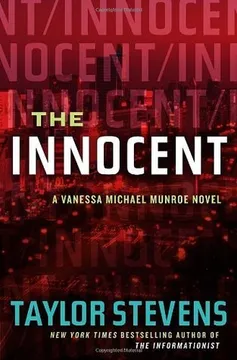
The Innocent receives mostly positive reviews, praised for its fast-paced plot, complex characters, and intense action. Readers appreciate the protagonist Vanessa Michael Munroe's strength and complexity. The cult storyline resonates with many, noting the author's personal experience adds authenticity. Some critics find the character overpowered or the plot slow to start. Overall, reviewers commend Stevens' storytelling ability and compare the series favorably to other popular thrillers, recommending it for fans of action-packed novels with strong female leads.
People Also Read



Characters
Vanessa Michael Munroe
The relentless informationistMunroe is a multilingual investigator and covert operator who can study a person’s expectations and become the identity that person trusts. Raised amid instability and shaped by prolonged violence, she is disciplined in the field but struggles with nightmares, self-medication, and the euphoric force of her own capacity to kill. Her closest relationships are with Logan, who trusts her with his most painful request, and Miles Bradford, who understands the danger without reducing her to it. She resists being controlled, even by people trying to help, and measures care through choices rather than promises. Her defining tension is not whether she can survive danger, but whether she can use her skills without surrendering her humanity to them.
Logan
Munroe’s oldest allyLogan is a childhood survivor of The Chosen and Munroe’s closest friend. He has built an adult life from a beginning designed to keep him dependent, uninformed, and loyal to the movement. His patience, humor, and ability to read people help him move between the world he escaped and the one he created, but his loyalty can harden into secrecy when fear takes over. He asks Munroe for help because he believes she can enter a world he and the other survivors cannot safely approach. His bond with Charity and his fierce concern for Hannah shape his choices, while his friendship with Munroe gives him someone who can challenge him without abandoning him.
Hannah
The hidden childHannah is a thirteen-year-old raised inside The Chosen after being taken from her family as a small child. She is observant, imaginative, and careful about adult moods, skills developed in a world where rules can change without explanation. Religious lessons have taught her to interpret fear and sadness as personal failures, while her private daydreams preserve a small space beyond the commune’s control. Hannah wants connection and reassurance but has little experience making choices without permission. Her intelligence shows in the way she listens for what adults leave unsaid. She is not simply a child to be rescued; she must also learn that her memories, boundaries, and questions belong to her.
Miles Bradford
The soldier at her backBradford is a former Special Forces soldier and private security operator who has seen Munroe at her most capable and most vulnerable. He responds to danger with planning, patience, and a protective instinct sharpened by military losses. Unlike people who want to manage Munroe, he understands that care cannot mean taking away her agency. His concern about her medication and nightmares is direct, but he remains available when she refuses help. Their chemistry rests on mutual respect and a shared familiarity with violence, though his wish to keep her safe conflicts with her insistence on choosing her own risks.
Charity
Hannah’s searching motherCharity is a former member of The Chosen who escaped with her young daughter and tried to build a life outside the commune. Her history links her closely to Logan and to the other survivors, while her long search for Hannah gives the rescue its emotional center. She understands that leaving the movement does not erase its teachings or the practical damage caused by isolation. Charity’s story is shaped by the painful distinction between loving a child and being allowed to protect her. She remains committed to finding Hannah without turning the child’s suffering into a public spectacle.
Gideon
The angry survivorGideon is an IT director and former Marine who left The Chosen as a teenager and had to survive without the education or family support most people take for granted. He carries anger at the adults who harmed him and at institutions that treated survivors’ accounts as entertainment. His confrontational manner can endanger a careful operation, but beneath it is a fierce demand that his history be acknowledged honestly. He responds to Munroe when she offers neither pity nor a demand to forgive, only recognition and a concrete bargain.
Heidi
The hopeful survivorHeidi is a project manager whose warmth and intelligence helped her build a life after a childhood in The Chosen. She explains the movement’s inner logic to Munroe and Bradford, including how adults use spiritual language to rationalize choices. Her desire to reconnect with her father and siblings reflects the family ties that escape does not automatically restore. Heidi can underestimate the risks of acting on hope, particularly when she searches for her relatives without permission. She is also capable of articulating why survivors reject the claim that harmful actions were simply the product of mindless conditioning.
Noah Johnson
Munroe’s distant partnerNoah is an American raised in Morocco and Munroe’s partner when Logan arrives. He offers her laughter and tenderness, but he cannot fully understand the violence and emotional withdrawal that shape her life. Their relationship is not presented as a simple failure of affection; the difficulty lies in the distance between the person Noah hopes to love and the person Munroe cannot pretend not to be. His presence reveals what Munroe fears she brings to intimate relationships: not only danger, but grief that she believes others should be spared.
Elijah
The Haven’s spiritual leaderElijah leads the Argentine Haven and presents himself as a fatherly guide to its members. He uses religious authority, discipline, and family language to define what children may ask, feel, or disclose. His apparent concern for spiritual wellbeing masks a willingness to violate the boundaries of those under his control. Elijah is also Heidi’s father, making the distance between his public role and private conduct especially painful for the people who once trusted him.
Sunshine
Hannah’s appointed handlerSunshine is a Chosen adult who takes Hannah to meet an outside sponsor and teaches her that obedience and secrecy are necessary for divine protection. She treats the child’s compliance as more important than Hannah’s confusion or safety. Her role shows how abuse can be enabled by people who escort a child into danger and then forbid the child to speak about it. Sunshine is also connected to Gideon’s painful history with insiders who hid or denied what they knew.
Morningstar
The loyal older sisterMorningstar is Elijah’s daughter and one of the young women with influence among the Haven’s teenagers. She guides Munroe through communal routines and is proud of her place in the group, yet she has been taught to dismiss her sisters’ accounts of abuse. Her confidence rests partly on the belief that what she has not personally experienced cannot be true. The gap between her affection for her family and her refusal to question its leaders makes her both a source of access and an example of how denial is learned.
David Law
The fugitive kidnapperDavid was Charity’s boyfriend when he took Hannah from the life she had begun outside The Chosen and returned her to the movement. He was not Hannah’s father, but he assumed the authority to move her across borders and keep her hidden. The group’s protection allowed him to evade the legal consequences of the abduction. His motives remain difficult for Logan and the other survivors to explain, which makes his actions more disturbing than a conventional custody dispute.
Magdalene
Hannah’s substitute motherMagdalene is the woman Hannah calls her mother within the Haven. She provides a household role that replaces Hannah’s knowledge of Charity and encourages the child to regard her biological family as enemies of faith. Her presence helps make the commune feel like a family to Hannah even as the movement controls which relationships she may recognize.
Mr. Cárcan
The protected sponsorMr. Cárcan is a wealthy sponsor whose influence gives the Haven access to money and protection. He exploits the authority adults grant him and treats Hannah as someone he can command. His connection to organized crime turns the commune’s dependence on powerful outsiders into a direct threat.
Rachel
Hannah’s fellow captiveRachel is another young member of the Haven who confirms that a sponsor has harmed her. Her brief willingness to acknowledge Hannah’s experience offers a moment of companionship, though fear and the commune’s rules make trust difficult.
Eli
Charity’s half brotherEli is one of the former Chosen survivors who joins the effort to recover Hannah. He contributes to the shared planning and represents the extended network of relatives and childhood companions affected by the commune.
Plot Devices
The Haven network
A moving maze of homesThe Chosen’s communes relocate when attention from neighbors or authorities becomes inconvenient. Their dependence on donated food and supplies creates recurring visits to local businesses, which Munroe uses to trace the vans without alerting the leaders. The Havens are more than a setting: their movement makes ordinary legal searches ineffective and forces the rescue team to choose between a risky raid and patient infiltration. The network’s instability also mirrors the children’s lack of control over where they live or who counts as family.
Munroe’s assumed identities
Access through performanceMunroe studies what people want to believe, then adapts her language, clothing, manner, and story to meet that expectation. In Argentina she enters the Ranch as Miki, a woman seeking spiritual meaning, while Bradford plays her boyfriend. The disguise secures access to Hannah and gives Bradford time to plant surveillance equipment. The technique is effective because Munroe treats identity as practical craft, but this mission makes the performance ethically uncomfortable: she borrows religious trust to enter a community whose leaders have already abused it.
The surveillance trail
Technology narrows the searchTrackers, cameras, listening devices, and intercepted recordings let Munroe and Bradford reconstruct the movements of the Haven vans and monitor activity inside the Ranch. The equipment turns fleeting habits into evidence: donation schedules reveal routes, household conversations reveal Hannah’s transfer, and Bradford’s contacts identify the likely hotel. Surveillance does not hand them certainty immediately. It produces fragments that Munroe must interpret alongside observation and cultural knowledge. Its limits keep the rescue from becoming a simple technical solution and leave room for misinformation and the possibility that the searchers have been drawn into a trap.
The Chosen’s doctrine
Control disguised as faithThe movement uses spiritual instruction to regulate childhood, family ties, work, education, discipline, and disclosure. Children are taught that the outside world is dangerous and that obedience protects them, while adults can frame punishment and exploitation as religious care. This doctrine explains why Hannah does not readily accept rescue and why former members struggle to describe their experiences to outsiders. It also exposes the difference between being shaped by coercion and being absolved of responsibility: the survivors’ accounts show that leaders and followers still make choices, even within a system designed to narrow them.
The false lead
A rescue becomes baitThe tip that Hannah is in Buenos Aires appears to give the survivors their first real opening, but Munroe suspects the Chosen may have allowed that information to reach them. Hannah’s removal from the Ranch just as Munroe prepares to act raises the possibility that the movement wants a raid or a botched rescue to support its public claim of persecution. The suspected setup shifts the danger from a hidden commune to the Cárcan crime family and forces Munroe to follow the child into a hotel guarded by armed men. The uncertainty keeps motive and timing in play even after the search seems close to success.
Download PDF
Download EPUB
.epub digital book format is ideal for reading ebooks on phones, tablets, and e-readers.








