


Plot Summary
Memphis Falls Apart
Deputy Chief Vera Boyett is packing her office in Memphis after a catastrophic incident suspends the elite police unit she helped build. Before she can decide where to go next, her younger half sister, Luna, calls from their Tennessee hometown with news that their long-missing stepmother, Sheree, has been found dead.
The discovery overturns the story Vera and her sister Eve have lived with for more than twenty years: they believed Sheree had abandoned the family. Vera drives home, carrying a career already in ruins and a dread she cannot explain. She has avoided the family farm and her father, whose dementia has worsened, but now her sisters need her there. Whatever happened to Sheree has been waiting longer than Vera's career.
Vera's return begins as a double collapse. Her professional identity has been damaged by a tragedy she believes she should have prevented, while Sheree's discovery makes the family past newly dangerous. Work has functioned as Vera's chosen form of distance: not only from a painful home, but from the unanswered questions that shaped her decision to become a police officer. Luna's call strips away that refuge. The story's central pressure is established through the collision of public accountability and private secrecy, two arenas in which Vera is accustomed to managing consequences but has never fully controlled the facts.
Back to Good Hollow
At the farmhouse, Vera finds Luna baking through her grief and Eve, an undertaker who has been sober for seven years, still bristling at her older sister's long absence. The sisters explain that two teenagers found Sheree's remains in a hidden cave on their property.
Vera wants the evidence, but she cannot approach the scene as a neutral investigator: she and Eve know the cave from childhood, and their shared past there is something they have never discussed aloud.
The sheriff is Gray Benton, called Bent, the man Vera loved as a teenager before he left town for the army. He now asks whether the sisters knew the cave. Vera admits they played there, concealing how much more the place means to them. Their old secret has become the investigation's first danger.
The farmhouse is not simply a setting Vera revisits; it is the physical archive of the decisions she has kept sealed. Luna's openness and Eve's defensiveness represent different adaptations to the same family history, while Vera's instinct is to take charge before anyone can examine her. Bent's appointment as sheriff makes that reflex harder to sustain. He knows enough of Vera's past to read her discomfort, yet he also carries emotional history that compromises her sense of distance. The cave turns childhood play into latent evidence, binding the sisters' private memory to an official inquiry.
The Bathroom Secret
A flashback returns Vera to her final year of high school. On the day Sheree dies, Eve wakes to Luna screaming and discovers Sheree trying to drown the baby in a bath. Their father arrives from work and confronts Sheree, who has threatened to leave with Luna unless she is paid. In the struggle, he shoves her away; Sheree falls, strikes her head, and does not get up.
Eve, terrified that their father will be blamed and that the family will split apart, persuades him to leave the scene. When Vera arrives, she helps Eve carry Sheree to the cave, hide her beneath rocks, and plant belongings that suggest she ran away. They take the secret into adulthood, believing they protected one another.
The sisters' cover-up grows from panic and loyalty, not from a settled criminal identity. Eve's immediate fear is that her father will be taken away; Vera's response is to turn terror into a task list. The practical labor of moving Sheree's body lets the girls postpone the emotional meaning of what they have done. Yet their choice also freezes the family in a false account, forcing every later intimacy to rest on an omission. The scene complicates the difference between culpability and responsibility: Sheree's death may be accidental, but the sisters knowingly shape the story that follows.
More Than One Body
Bent initially treats Sheree as a likely homicide and questions Vera about her family's access to the cave. Soon forensic investigators discover a concealed chamber beyond the space where Sheree lay. Two older female victims are inside, their arms arranged similarly and their bodies covered with rocks; each wore a matching silver cross necklace, and two friendship rings link them to one another.
Then investigators find a fourth victim, a man tucked into a crevice and carrying a University of Alabama ring engraved with a single word. The different placement suggests a separate act or motive, but all four deaths now share the Boyett property. Vera recognizes that the cave contains a history far larger than the one she and Eve buried there.
The second chamber changes the cave from a container for one family's secret into a crime scene with its own prior history. Repeated gestures, especially the arranged bodies and matching crosses, invite investigators to impose a single pattern, while the male victim disrupts that easy explanation. For Vera, every new similarity threatens to implicate someone she loves; every difference offers a possible escape route. The evidence also exposes the limits of her professional method. Pattern recognition is useful, but the urge to make separate events cohere can itself become a form of denial.
Warnings at the Door
The sisters receive anonymous messages claiming someone knows what they did, and threats are scrawled on Vera's car and the farmhouse door. Eve says another vehicle rammed hers near Dead Man's Curve, prompting Bent to warn the family to stay alert. Vera later discovers an intruder searching their father's bedroom; she gives chase, falls down the stairs, and cannot catch him.
The break-in raises a practical question: what could the intruder expect to find in an old bedroom? Eve eventually admits that she caused the apparent crash herself by backing into a church deacon's truck, hoping to make Bent investigate beyond the Boyett family. Her lie is meant to protect them, but it damages the trust Vera needs to make sound decisions.
Fear does not make the sisters uniformly honest. Eve responds to uncertainty by manufacturing an external threat, an attempt to control the investigation's direction without confronting what the investigation may uncover. Vera recognizes the tactic as dangerous because it reproduces the same logic as their original cover-up: manipulate the evidence now, deal with the consequences later. The genuine intruder, however, prevents her from dismissing every warning as Eve's invention. The result is a particularly unstable suspense: the sisters cannot tell which danger is real, and their own secrecy makes it harder to ask for help.
A Career Left Behind
As the cave investigation expands, Vera learns why her Memphis unit collapsed. Detective Lorna Carver, reeling from divorce, killed colleague Detective Bedwell after discovering he had helped her estranged husband manufacture evidence of an affair, then took her own life.
Vera had noticed Lorna's distress but trusted her reassurance and missed the danger. Memphis officials recommend removing Vera from duty; she resigns rather than become a convenient scapegoat. Back home, Bent questions her father, Vernon, whose dementia leaves his answers unstable.
Vernon recalls ordering Sheree to leave and admits he had been angry enough to imagine harming her. He also confirms that Vera and Eve often played in the cave, giving investigators a reason to examine the sisters more closely.
Vera's professional failure mirrors the investigation at home: in both cases she must confront how affection and proximity can blur perception. She trusted Lorna's account because she wanted it to be true, and she fears she may be doing the same with her family. Resigning is both an act of accountability and an attempt to stop Memphis from defining her entire future. Vernon's fragmentary statements create a sharper ethical problem. His illness makes him vulnerable to leading questions, but it does not erase the legitimate need to investigate him.
A Grave Reopened
County medical examiner Charles Higdon alleges that Vera's mother, Evelyn, may have been strangled rather than killed by cancer. The claim rests on bruising Higdon says he noticed decades earlier but never investigated. Vera objects, but Higdon's son, a judge, approves the exhumation. Reporters gather as Evelyn's coffin is removed, turning an old family loss into public spectacle.
Testing finds no fractures or evidence of past abuse, undercutting Higdon's theory. Meanwhile, Vernon mistakes Vera for Evelyn during a visit and anxiously refers to a secret he should have protected her from. The comment deepens Vera's suspicion that her parents concealed something, but the exhumation offers no confirmation of Higdon's accusation.
The exhumation makes grief an evidentiary procedure. Vera must watch the person whose death defined her childhood become an object of public inspection, while a powerful local family turns a neglected observation into a claim with institutional force. The negative findings matter, but they do not restore the dignity the process has taken from Evelyn or erase the suspicion it has spread. Vernon's confused reference to a secret intensifies the conflict between memory and evidence: his words may contain a truth, but his illness makes their meaning impossible to secure.
Names Beneath the Rings
Vera traces the man's university ring to Norton Gates, a missing Huntsville teacher whose former students remember rumors of sexual misconduct. She also finds that Eve's closest friend, mortician Suri Khatri, studied microbiology under him, a connection Eve has not volunteered.
A private investigator, Teresa Russ, brings Vera the histories of Trina Sutton and Latesha Johnson, two Huntsville women who disappeared years earlier. Their friendship rings, Trina's engraved band, and Russ's photographs match the objects found with the female remains.
The women had followed a secretive local lover to Fayetteville. Vera passes the evidence to Bent, but she keeps Suri's link to Gates to herself, unsure whether her sister is concealing something more serious.
Identification converts anonymous remains into relationships, and relationships produce motives. The rings are powerful not because they solve the murders outright, but because they restore the victims' individual histories and link their disappearance to a living social world. Vera's discovery about Suri introduces a conflict between investigative completeness and familial loyalty. She withholds a potentially relevant connection even as she criticizes Eve for withholding information. Her behavior shows how easily professional standards become conditional when the evidence threatens someone she loves.
Eve's Hidden History
Under pressure, Eve finally explains the secrets behind the second chamber. As a child, she watched Evelyn, Florence Higdon, and Beatrice Fraley hide the first woman there; her mother later returned with flowers and crosses, insisting Eve keep quiet. Eve does not know which woman killed the victims, but she knows Evelyn helped conceal them.
Eve also reveals that Gates raped Suri when Suri was his student. Years later, when he tried to assault Suri again at home, Eve struck him repeatedly with a cast-iron skillet and killed him. She and Suri hid his body in the cave, where Eve already knew the concealed chamber existed. Vera now understands why Eve was guarded, but the new confession places both sisters in grave danger.
Eve's revelation makes the cave a repository of repeated acts of concealment, not a single accidental discovery. Her childhood loyalty to her mother and adult loyalty to Suri are psychologically continuous: in both cases, she takes responsibility for protecting someone vulnerable, then keeps the consequences to herself. The self-defense context matters, but it does not cancel the deliberate disposal of Gates's body. Vera must now choose between the truth her profession demands and the sister she has spent a lifetime trying to protect.
The Higdons Close In
Searching family albums, Vera spots Latesha at a party hosted by the Higdons, evidence that connects the missing woman to the family. Judge Preston Higdon later confirms his parents had worried about Vernon and Evelyn, while his expensive aftershave matches the scent Vera noticed on the intruder.
Soon after Vera questions him, a black SUV forces her off a rural road and leaves her injured. She recognizes the attack as connected to her inquiries, though she cannot yet prove who ordered it. The clues sharpen the picture around Charles Higdon, his wife Florence, and their son Preston. Bent asks Vera to let him work by the book, but she continues pursuing answers on her own.
The case turns on details that seem socially trivial until they acquire evidentiary weight: a face at a party, a fragrance, a vehicle. Vera's skill lies in connecting them, but her impatience repeatedly puts her in physical danger. The Higdons' status also complicates the ordinary promise of law enforcement. A judge, a medical examiner, and a prominent family can influence what becomes credible, who is heard, and how quickly the investigation moves. Vera's independent pursuit is both necessary and hazardous because she no longer has official authority to protect her.
The Room Behind the Trap
After Preston sends Vera a message urging a private meeting, she arrives at his house and is struck from behind. Florence and Beatrice transport her to Pete Brooks's trailer, where Brooks lies bound and drugged. Florence tries to force Vera's hands around a revolver so the scene will implicate her in Brooks's death.
She admits Preston lured Vera and arranged the earlier threats and attacks; the women need to silence Brooks and protect their old secret. Beatrice hesitates, then steps between Florence and Vera when the plan turns toward murder. Vera breaks free, knocks Florence down, takes the gun, and orders Beatrice to call for help. Brooks survives, and the Higdons' coordinated attempt to bury the truth collapses.
The climax makes the novel's recurring metaphor of concealment brutally literal: Vera is placed beside a body and pushed toward becoming evidence in someone else's story. Florence treats violence as a practical extension of social control, while Beatrice's intervention reveals a conscience that has been compromised but not extinguished. Vera survives through physical action rather than superior access or institutional rank. The danger also clarifies her earlier choices. Concealment may postpone exposure, but it gives the most ruthless person in the room time to decide what the truth will look like.
The Cave's Other Killers
Bent reports that Florence killed Latesha and Trina after Charles's affair with Latesha threatened the family's standing and Preston's future. Beatrice helped conceal the first body and later regretted her part; Preston assisted in the scheme surrounding Vera's kidnapping, while Charles and Preston accept plea deals and resign their positions.
Florence faces a murder trial, and Beatrice receives probation and house arrest for her role in the kidnapping. Brooks also negotiates a deal, claiming Garth Rimmey killed Sheree and producing Sheree's wedding ring as evidence.
His account conflicts with Eve's memory of Vernon accidentally causing Sheree's fatal fall. The other cave murders are substantially resolved, but Gates's killing remains concealed from authorities.
The resolution does not offer a clean division between monsters and innocents. Florence's ambition, Charles's affair, Preston's protection of his prospects, and Beatrice's jealousy and fear combine into a network in which each person makes another person's crime easier. The legal outcomes reflect degrees of participation, but they cannot settle every factual dispute. Brooks's account of Sheree's death jars against Eve's confession, leaving Vera with an unresolved secret at the center of her own family. The case can close publicly while remaining morally unfinished.
A Different Kind of Return
After recovering from her concussion, Vera receives offers from both the FBI and the Tennessee Bureau of Investigation. She declines them, choosing instead to work as an independent consultant from Fayetteville and remain near her sisters. Luna prepares for her wedding, while Eve and Suri make their relationship official and plan to live together.
Bent tells Vera that Brooks's plea deal has strengthened the case against Rimmey, though the discovery that Rimmey possessed Sheree's ring leaves her uncertain about the full story. Vera and Bent move toward a partnership that is both professional and personal. She has not recovered the life she left Memphis to protect; she is choosing what comes next with greater honesty about its cost.
Vera's decision to stay is not a retreat into the small town she once fled. She builds a working life on her own terms and accepts that family connection need not require self-erasure. Her relationship with Bent remains open-ended, but their renewed cooperation gives intimacy a more reciprocal basis than their adolescent romance had. The ending resists total closure: Gates's murder and Sheree's disputed fate remain unresolved, and Vera chooses life amid uncertainty rather than waiting for every secret to be settled.
Analysis
The novel's central problem is not simply who killed the people found in the cave, but how families and institutions manufacture a usable account of violence. Vera and Eve's original cover-up begins in an emergency, when two frightened girls believe concealment is the only way to keep their father and baby sister together. That decision becomes a family structure: the sisters protect one another by controlling what can be known. The later murders expose the danger of treating silence as care. It can shelter a vulnerable person, but it can also preserve a killer's access to power.
The cave gives this problem material form. Each hidden body occupies a different layer of the same place, yet the repeated crosses and poses tempt investigators to flatten distinct histories into one pattern. The novel repeatedly challenges that urge. Similar evidence can conceal different motives; a victim's identity may change the meaning of a crime scene; and a witness's sincere memory may still be incomplete. Vera's analytical skill is most useful when she allows contradictions to remain open. It is least reliable when loyalty tells her in advance what the truth must be.
The sisters embody two different responses to trauma. Vera turns responsibility into achievement and tries to solve pain through competence. Eve withdraws into routine and care for the dead, whose needs seem more predictable than those of the living. Neither strategy is simply healthy or unhealthy. Each has helped them survive, and each can become a way to avoid asking for help. Their eventual honesty is therefore not a clean moral release. Eve's account of Gates, like Vera's knowledge of Sheree, carries legal and emotional consequences that love cannot erase.
The ending's unresolved elements matter. The Higdons' crimes are exposed, but Sheree's death remains contested between Eve's recollection and Brooks's claim, while Eve's killing of Gates remains hidden. Vera chooses a future in Fayetteville without having solved every family mystery. The book suggests that justice requires more than disclosure, but secrecy cannot guarantee protection. What remains is the harder work of deciding which truths can no longer be carried alone.
Review Summary
Deeper Than the Dead received mixed reviews, with many praising its suspenseful plot and character development. Readers enjoyed the twists and turns, finding it engaging and difficult to put down. Some appreciated the unique writing style and small-town setting. However, others found it slow-paced, repetitive, and lacking in suspense. Criticisms included underdeveloped characters, predictable plot points, and excessive internal monologue. Despite these issues, many readers expressed interest in continuing the series.
People Also Read






Characters
Vera Boyett
The returning investigatorVera is a disciplined Memphis police leader whose analytical ability has helped her build a career around anticipating danger. She is also the eldest Boyett sister, shaped by her mother's death, her father's later collapse, and the years she spent trying to protect Eve from the fallout at home. Vera often treats competence as proof that she can repair whatever has gone wrong, which makes professional failure especially painful for her. Returning to Fayetteville forces her to reckon with the gap between what she can infer and what she is willing to see. Her loyalty to family is genuine, but it can compromise the very objectivity she prizes.
Eve Boyett
The guarded undertakerEve is Vera's younger sister, a mortician whose comfort around the dead contrasts with her unease among the living. She has survived years of addiction and now values sobriety, routine, and the quiet intimacy of caring for the deceased. Her humor can be sharp, and her emotional reserve often makes it difficult for Vera to know what she is feeling. Eve has spent much of her life relying on her older sister while also resenting Vera's departure. Their bond is loving but asymmetrical: Vera tends to protect, while Eve tends to conceal what she thinks would burden her.
Gray Benton
The hometown sheriffBent, as Vera has long known him, is a former soldier who returns to Fayetteville and takes over a sheriff's department weakened by corruption. His younger self was reckless and dependent on alcohol; his adult self is patient, observant, and methodical, though not free of old habits. He is Vera's first love, a history that makes their renewed partnership emotionally charged. Bent wants to protect the Boyett sisters, but he understands that protection cannot replace evidence. His challenge is to investigate people he cares about without allowing affection, guilt, or small-town loyalties to dictate the result.
Luna Boyett
The youngest sisterLuna is Vera and Eve's much younger half sister, the daughter of Sheree and Vernon. A library worker with a lively, generous temperament, she has tried to build a hopeful life without sharing her sisters' long history of pain. She responds to stress by baking and seeks family rituals, including a memorial for the mother she barely knew. Her closeness to Vernon gives her a different view of their father from the older sisters. Luna's trust and vulnerability remind Vera and Eve that their secrets affect someone who had no part in making them.
Vernon Boyett
The ailing family patriarchVernon is the sisters' father, once a hardworking and devoted husband whose life deteriorated after Evelyn's death. Grief and alcohol altered the way he cared for Vera and Eve, while his later attention centered on Luna. Now living with dementia, he moves between confusion and moments of striking clarity. His memories matter to the investigation, but their reliability is difficult to establish. Vernon embodies the difference between being loved and being absolved: his daughters remain attached to him even as they confront the harm his choices caused.
Sheree Boyett
The vanished stepmotherSheree was Vernon's second wife and Luna's mother. She entered Vera and Eve's lives soon after Evelyn died, bringing instability to a household already raw with grief. Her neglect of Luna and hostility toward the older girls made her a source of anger, while her charm and beauty helped her move through Fayetteville's social world. Sheree's reputation for infidelity and her difficult relationship with Vernon shape how others interpret her disappearance. The sisters remember her through resentment, but Luna's birth makes her presence inseparable from the family they became.
Evelyn Boyett
The remembered motherEvelyn is Vera and Eve's mother, remembered as attentive, creative, and deeply connected to the natural world. She filled the farm with flowers, treasured small stones, and made ordinary family gatherings feel special. Her death from cancer divides the sisters' lives into a happier before and a more painful after. Evelyn's place in their memories is almost idealized, which makes any question about her past difficult for Vera to accept. The handmade garden and family photographs preserve her warmth even as the investigation complicates what her daughters believe they know.
Suri Khatri
Eve's closest friendSuri is Eve's longtime friend and a skilled mortician at a local funeral home. She offers Eve a steady, nonjudgmental companionship that has survived addiction, grief, and years of unspoken feeling. Suri is reserved about her own history, in part because past experience has made trust difficult. Her work alongside Eve creates a bond grounded in practical care and shared respect for the dead. To Vera, Suri initially seems like one of the few people who can make Eve feel safe without demanding that she explain herself.
Florence Higdon
The town's social authorityFlorence is a prominent Fayetteville woman, the wife of the county medical examiner and the mother of a successful judge. She presents herself as generous and socially indispensable, often arriving with food or concern when a neighbor is in distress. Her interest in local news makes her a powerful presence in a town where reputations travel quickly. Florence's status gives her access to influential people, while her confidence can disguise how much she wants to control the version of events others hear.
Beatrice Fraley
The retired schoolteacherBeatrice is a former fifth-grade teacher and the wife of longtime sheriff Walter Fraley. She was close to Evelyn and remembers Vera from childhood, giving her a place between the Boyett family and the town's official past. Her manner is gentler and more reflective than Florence's, though she can be reluctant to confront painful truths. Beatrice's devotion to her husband and her history with Evelyn shape how she responds when old events return. She represents the way a respected community member may carry private knowledge without knowing how to speak about it.
Charles Higdon
The county medical examinerCharles is the longtime county medical examiner and Florence's husband. He is an established figure whose professional authority gives weight to his claims about the dead. His friendship with Vernon's circle places him near the family's history, while his marriage links him to Florence's social power. Charles is accustomed to being treated as a reliable authority, a position that can make it difficult for others to separate his professional role from his personal interests.
Preston Higdon
The ambitious local judgePreston is Florence and Charles's son, a polished judge whose education and career have made him one of Fayetteville's most visible success stories. As a teenager he was known for his superiority and cutting remarks, traits that sit uneasily beside his adult prestige. He is attentive to status and to the consequences a scandal might have for his family. Vera's old school memories make it hard for her to approach him without suspicion, even before their renewed contact becomes relevant to the investigation.
Pete Brooks
Rimmey's old associatePete is a rough, aging local whose history with Garth Rimmey includes petty crime and drug dealing. He knows details about the period when Sheree vanished and understands how small-town secrets can be used as leverage. Pete is self-protective, opportunistic, and willing to trade information when the terms suit him. His unreliable manner does not make his claims useless, but it forces Vera and Bent to distinguish what he can prove from what he says to protect himself.
Garth Rimmey
Sheree's dangerous former loverGarth was a violent, disreputable man who had an on-and-off relationship with Sheree before she married Vernon. Rumors tied him to drugs and other criminal activity, and many people feared crossing him. His history gives the old investigation a plausible suspect beyond the Boyett family. Pete Brooks knew him closely, but the details of their association are difficult to verify.
Teresa Russ
The Huntsville investigatorTeresa is a veteran private investigator who has spent years searching for answers for families of missing women. Her professional experience has made her wary of institutions that have not always taken women's reports seriously. She brings Vera carefully assembled information about two missing friends from Huntsville, including records that connect them to the remains in the cave. Teresa wants the victims' families to have answers, but she is cautious about whom she trusts with her work.
Walter Fraley
The former county sheriffWalter, called Walt, served as Lincoln County sheriff for decades and was a longtime friend of Vernon and Evelyn. Multiple sclerosis has left him physically frail, though his memory and instincts remain valuable. He investigated Sheree's disappearance and still feels connected to the case that marked the end of his service. His loyalty to old friends is sincere, but it can make his recollections and omissions difficult for Vera to interpret.
Patricia Patton
The relentless reporterPatricia is a high-profile Memphis television reporter who pursues Vera for comment about both the police tragedy and the remains on the Boyett farm. She is quick to recognize that Vera's personal past could make a compelling public story. Patricia is ambitious and willing to test boundaries to get access, making her a recurring reminder that private grief can become public material before the people involved are ready.
Norton Gates
The missing professorNorton was a Huntsville teacher and college professor whose disappearance becomes relevant when investigators trace a university ring found among the remains. Former students remember a reputation that raised concerns but did not produce formal complaints. His professional standing and private behavior sit in uneasy contrast, making his story another example of how authority can discourage people from speaking openly.
Eric Jones
Vera's Memphis contactEric is Vera's former boyfriend and continuing friend, now a useful research contact in Memphis. He is willing to help her trace people and records even after her departure from the department. Their cordial friendship reflects a relationship Vera ended before it became a commitment, and his steady support gives her a professional connection outside the town's tangled loyalties.
Plot Devices
The Boyett Farm Cave
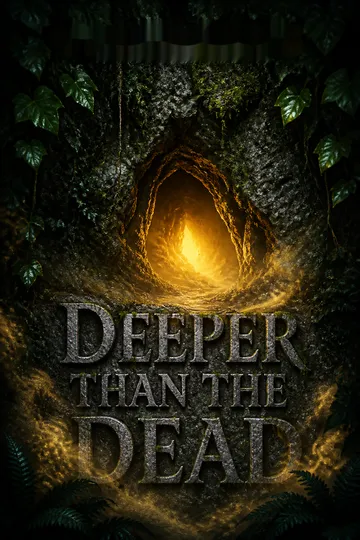
A shared hiding placeThe cave on the Boyett property first serves as a childhood refuge for Vera and Eve, then becomes the place where Sheree's body is concealed. Its second chamber holds older remains and later receives a more recent victim, transforming a private family location into a crime scene spanning generations. Because the cave is difficult to find and has multiple spaces, it allows different people to hide bodies there without knowing the full history. It also makes the sisters' childhood memories evidence that investigators can test against their accounts.
Crosses and Friendship Rings
Objects identify the deadSmall objects left with the remains distinguish victims from one another while linking their stories. Matching friendship rings connect two missing women from Huntsville; an engraved band and a photograph help Teresa Russ identify them. Repeated silver cross necklaces suggest a pattern, but do not by themselves prove that one killer was responsible. The objects make the dead legible to investigators and relatives, while also inviting mistaken assumptions about who arranged the bodies and why.
The Sisters' Cover Story
Silence protects and endangersAfter Sheree dies, Vera and Eve conceal her body and allow the town to believe she left voluntarily. Their shared story protects their father and keeps the family together, but it also turns any later questioning into a test of loyalty. The lie encourages both sisters to manage evidence instead of seeking help, and it makes the cave discovery dangerous even before the other victims are identified. As the investigation grows, their silence prevents Bent from seeing the difference between a family secret and a broader series of crimes.
Vera's Parallel Inquiry
Local memory challenges procedureVera combines Bent's official investigation with her own interviews, family photographs, and research through Eric and Teresa Russ. This informal inquiry allows her to notice links that are easy to miss in a distant forensic process, including the identities behind the rings and the Higdons' connection to the victims. It also creates risk: Vera withholds information when it threatens Eve, makes decisions without Bent, and acts while emotionally compromised. The device dramatizes the tension between professional evidence gathering and the personal loyalties that shape what a witness chooses to disclose.
The Threat Messages
Fear obscures the real dangerAnonymous texts and threatening messages on the Boyett property suggest that someone knows the sisters' secret and may be targeting them. The threats make Vera and Eve question whether they are facing the old killer, an opportunist, or someone trying to redirect the investigation. Eve's staged accident further complicates the evidence by making one genuine warning appear manufactured. These messages heighten danger while revealing how fear can distort judgment and encourage the sisters to manipulate the inquiry rather than trust it.
FAQ
Synopsis & Basic Details
What is Deeper Than the Dead about?
- Career in jeopardy: Deputy Chief Vera Mae Boyett's career is threatened by a scandal, forcing her to confront her past.
- Family secrets revealed: A call from her sister about their stepmother's remains being found leads Vera back to her hometown and a web of family secrets.
- Multiple murders uncovered: The discovery of more bodies in the cave on the family farm suggests a serial killer, drawing Vera into a complex investigation.
Why should I read Deeper Than the Dead?
- Intricate mystery: The novel offers a complex plot with multiple layers of secrets and unexpected twists.
- Compelling characters: The characters are well-developed, with their own motivations and flaws, making them relatable and engaging.
- Emotional depth: The story explores themes of family, loyalty, and betrayal, creating an emotionally resonant reading experience.
What is the background of Deeper Than the Dead?
- Small-town setting: The story is set in Fayetteville, Tennessee, a small town with a close-knit community and long-held secrets.
- Family history: The Boyett family's history and relationships are central to the plot, with past events influencing the present investigation.
- Law enforcement context: The novel incorporates elements of police procedural and crime thriller genres, with a focus on investigation techniques and legal processes.
What are the most memorable quotes in Deeper Than the Dead?
- "It wasn't the end of the world.": This quote reflects Vera's initial attempt to downplay her career crisis, highlighting her resilience.
- "Mama's dead. She's been dead all this time.": Luna's shocking revelation about their stepmother's fate underscores the central mystery and emotional core of the story.
- "A secret isn't a secret if anyone else knows.": This quote, spoken by Vernon, foreshadows the dangers of hidden truths and the consequences of betrayal.
What writing style, narrative choices, and literary techniques does Debra Webb use?
- Fast-paced narrative: Webb employs a fast-paced, suspenseful narrative style that keeps the reader engaged and eager to uncover the truth.
- Multiple perspectives: The story is told primarily from Vera's point of view, but also incorporates other characters' perspectives to enhance the mystery.
- Foreshadowing and flashbacks: Webb uses subtle foreshadowing and flashbacks to reveal clues and build suspense, creating a complex and layered narrative.
Hidden Details & Subtle Connections
What are some minor details that add significant meaning?
- The paperweight: Vera's childhood paperweight, a smooth stone painted by her mother, symbolizes the need for stability and connection to the past.
- The old Toyota: Eve's car, which belonged to their mother, represents a link to their past and a reminder of their shared history.
- The ceiling fans: The old ceiling fans on the porch symbolize the passage of time and the unchanging nature of their childhood home.
What are some subtle foreshadowing and callbacks?
- Bent's voice: The description of Bent's voice as "soulful" foreshadows the deep connection and emotional pull he has on Vera.
- The missing car: The mention of the old Toyota being kept in the shed foreshadows its later significance as Eve's car.
- The high school crush: Vera's memories of her high school crush on Bent foreshadow their complicated relationship and the resurfacing of old feelings.
What are some unexpected character connections?
- Bent and Evelyn: The revelation that Bent had a connection with Vera's mother, who saw him as a good person, adds depth to his character and his relationship with Vera.
- Suri and Eve: The close friendship between Eve and Suri, who work at competing funeral homes, highlights their shared interest in death and the macabre.
- Florence and Beatrice: The long-standing friendship between Florence and Beatrice, and their connection to Vera's mother, adds a layer of betrayal to their actions.
Who are the most significant supporting characters?
- Luna Boyett: As the youngest sister, Luna's emotional journey and her connection to Sheree drive much of the plot.
- Beatrice Fraley: Her role as a former friend of Vera's mother and her eventual confession are crucial to uncovering the truth.
- Pete Brooks: As Rimmey's friend, Brooks provides key information about the past and becomes a suspect in the present investigation.
Psychological, Emotional, & Relational Analysis
What are some unspoken motivations of the characters?
- Vera's need for control: Vera's drive to solve the case stems from her need to regain control after her career crisis and to protect her family.
- Eve's desire for connection: Eve's actions are often driven by her need for connection and her desire to protect her family, despite her troubled past.
- Bent's guilt and loyalty: Bent's determination to solve the case is fueled by his guilt over leaving Vera in the past and his loyalty to her family.
What psychological complexities do the characters exhibit?
- Vera's analytical mind: Vera's analytical mind and her ability to compartmentalize her emotions are both strengths and weaknesses.
- Eve's trauma and addiction: Eve's past trauma and addiction issues contribute to her secretive nature and her difficulty in trusting others.
- Bent's internal conflict: Bent's internal conflict between his duty as sheriff and his personal feelings for Vera adds depth to his character.
What are the major emotional turning points?
- Luna's call: Luna's call about their stepmother's remains being found is a major emotional turning point, forcing Vera to confront her past.
- The discovery of more bodies: The discovery of more bodies in the cave intensifies the emotional stakes and forces Vera to confront the possibility of a serial killer.
- The confrontation with Florence and Beatrice: The confrontation with Florence and Beatrice is a major emotional turning point, revealing the extent of their betrayal and the danger Vera faces.
How do relationship dynamics evolve?
- Vera and Eve's bond: The sisters' bond is tested by the secrets they keep from each other, but ultimately their loyalty and love for each other prevail.
- Vera and Bent's connection: The relationship between Vera and Bent evolves from a complicated past to a present alliance, with old feelings resurfacing.
- The Boyett family: The Boyett family's dynamics are strained by the investigation, but they ultimately come together to protect each other and seek justice.
Interpretation & Debate
Which parts of the story remain ambiguous or open-ended?
- The identity of the intruder: The identity of the intruder who broke into the house remains somewhat ambiguous, leaving the reader to wonder about his true motives.
- The full extent of the Higdons' involvement: While Florence and Preston are exposed, the full extent of their involvement and their motivations remain open to interpretation.
- The future of Vera and Bent's relationship: The future of Vera and Bent's relationship is left open-ended, leaving the reader to speculate about their potential future together.
What are some debatable, controversial scenes or moments in Deeper Than the Dead?
- Eve's actions: Eve's decision to fake the car accident and her past drug use raise questions about her reliability and her role in the events.
- Vera's decision to return: Vera's decision to return to her hometown and get involved in the investigation is debatable, given her past and the potential risks.
- The portrayal of the Higdons: The portrayal of the Higdons as villains may be seen as controversial, given their status in the community and their past relationships with the Boyett family.
Deeper Than the Dead Ending Explained: How It Ends & What It Means
- Justice for the victims: The ending brings justice for the victims, with the real culprits exposed and held accountable for their actions.
- Vera's new path: Vera's decision to stay in her hometown and become an independent consultant signifies a new beginning and a sense of purpose.
- Family bonds: The ending emphasizes the importance of family bonds and the power of love and loyalty in overcoming adversity.
Vera Boyett Series
Download PDF
Download EPUB
.epub digital book format is ideal for reading ebooks on phones, tablets, and e-readers.








