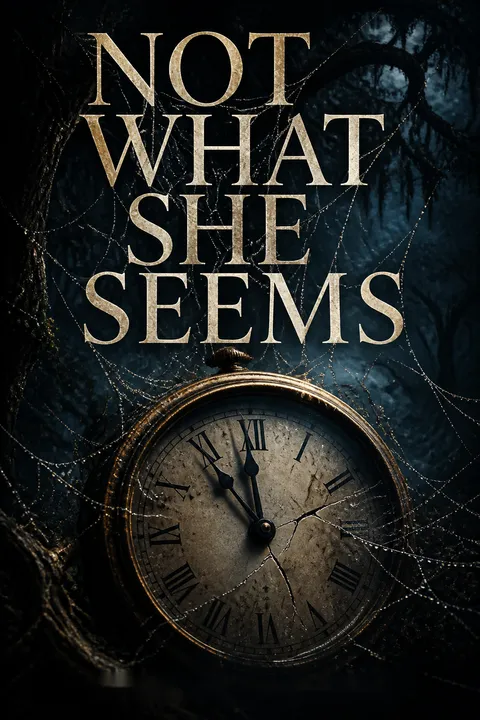


Plot Summary
Prologue
Retired detective Montavious Brodie is alone at his woodland cabin when a name from an old case jolts his memory: Colleton. He posts the clue to his online circle of amateur investigators, then calls his estranged granddaughter Jacinda, hoping this new lead will bring her home.
Before he can explain, an unexpected visitor arrives. Recognizing the person, Montavious lowers his guard. The visitor shocks him repeatedly with a Taser, disrupting the pacemaker that keeps his heart beating. As he dies, he believes his final discovery may finally guide Jacinda back to Brook Haven.
Montavious’s murder turns the familiar rituals of retirement into an unfinished investigation. His forum, old case files, and call to Jac are not merely signs of a detective who cannot let go; they are the tools through which he tries to repair a family separation. His fatal mistake is an act of recognition and trust, not ignorance. The prologue also gives the reader information Jac does not yet possess, creating suspense through dramatic irony: what she initially treats as a family tragedy is already a crime, and her grandfather’s last clue is both an invitation and a warning.
The Fellowship Is Stolen
At Capitol University, Jacinda Brodie expects the prestigious research fellowship to launch her writing career. Instead, her friend Maura reveals that Conrad Meckleson, Jac’s former lover and supervising professor, reopened the committee vote with objections that cost her the position.
Jac confronts Conrad by phone and learns he has built a true-crime book proposal around the night her father died, drawing on private details she shared while they were together. He boasts that he can alter Jac’s race for a film adaptation, treating her life as his material.
Jac sends university administrators an account of their affair and his professional retaliation, then enters his condo with a key he never got back. She takes his handwritten research and draft, determined to keep him from publishing her story.
Jac’s injury is not simply the loss of a career opportunity. Conrad has converted intimacy into professional leverage, first by influencing the fellowship decision and then by packaging her trauma for sale. Her response mixes justified self-defense with dangerous impulsivity: exposing their relationship may protect other employees, but taking his papers risks making her own case harder to prove. The scene establishes a recurring problem in Jac’s life. When people with institutional power control the accepted version of events, she acts before she has a safe strategy. Her defiance is real, but so is the cost of having to make it alone.
Brook Haven Calls Her Back
As Jac leaves Conrad’s condo with the stolen manuscript, her mother, Angela, calls with news that Montavious has suffered a severe heart attack and may not survive. Jac abandons her plans in Washington and drives through the night toward Brook Haven, South Carolina, carrying Conrad’s papers and the fear that she has ruined her career.
She has stayed away since her father’s death, when the town blamed her and she did not correct them. At the hospital, Angela and Jac’s younger sister, Penelope, explain that Montavious was found at his cabin after his pacemaker failed. Jac reaches his bedside in time to see him wake briefly. He tells her she belongs with the Brodies and urges her to be careful, then suffers another fatal attack.
The return is compelled by love, but it also strips Jac of the distance she has used to manage guilt. Her career crisis and family emergency arrive together, leaving no clean transition from one life to another. Montavious’s brief insistence that she belongs at home offers the acceptance she has been avoiding, yet it arrives too late to repair their relationship through ordinary conversation. His death also sharpens the novel’s central tension between what a community believes and what actually happened. Jac comes home carrying a public accusation, a private memory she cannot reconstruct, and a family that has not stopped wanting her.
A Town Watches Jac
After Montavious’s death, Jac attends his funeral beside Angela and Pen, acutely aware that Brook Haven still remembers her as the daughter suspected of causing her father’s death. Her childhood friends Sawyer Okoye and Nick Tate reconnect with her, restoring some of the ease she lost when she disappeared.
Nick is now a police officer’s son returned from military service, while Sawyer works at the local police department. Jac also notices Faye Arden, the polished fiancée of Mayor Tate, who is restoring the notorious Moor Manor as an inn.
Faye had collided with Jac at the hospital and dismissed her; at the funeral, she seeks Jac out, apologizes, and proposes that they become friends. Jac accepts, though Faye’s quick changes in manner leave her uneasy.
The funeral makes Brook Haven feel less like a homecoming than a public hearing. People’s attention reminds Jac that her identity has been shaped by a story she never corrected, while Sawyer and Nick offer relationships not wholly governed by that story. Faye’s offer exploits Jac’s hunger to belong again, but it also unsettles her because Faye seems able to shift from chilly dismissal to intimacy without effort. The scene introduces two competing forms of recognition: old friends who know Jac through shared history, and a newcomer who appears to understand her isolation before she has earned that understanding.
The Cabin Holds Clues
Angela encourages Jac to sort Montavious’s cabin, giving her a reason to work away from the crowded family home. At the side door, Jac questions the reported position of her grandfather’s body and cannot make the account of an accidental fall fit the distance from the doorway to the table where he struck his head.
Inside, she finds his normally crowded whiteboard nearly erased, with the words Colleton Girls faintly visible beneath the wiping. A hidden safe contains two old case files, one marked Colleton, Nevada, and another concerning a body found in a barrel in Lake Worth, Texas. The safe holds no handgun-shaped clock that Montavious had treasured for decades. Its absence convinces Jac that someone removed it after his death.
Jac’s first investigation begins with a physical inconsistency, not a sudden gift for detection. Reconstructing where Montavious fell lets her use habits learned beside him, even while grief makes every object in the cabin intimate. The erased board and missing clock show that someone has disturbed his work, turning the home into a crime scene without the authorities recognizing it as one. The two files also connect different scales of mystery: an old case far from South Carolina and a recent death close to home. Jac’s need to restore order becomes the means by which she notices that the disorder was deliberate.
The Clock at Moor Manor
Jac takes charity paperwork to Moor Manor, where the renovated mansion bears little resemblance to the derelict place of her childhood fears. She meets Mrs. Harris, a former teacher who now works there and quietly warns her to be careful around Faye.
In Faye’s locked office, Jac spots the missing handgun clock on a shelf. Faye claims Montavious may have given it to her, but Jac knows he would not have parted with it. She also notices a Taser on Faye’s desk.
When Chief Linwood, Mayor Tate, Patrick, and Nick enter, Faye presents herself as the injured party, and the men urge Jac to leave with the clock. Outside, Patrick calls her destructive, while Nick tries to soften the rebuke. Jac leaves with the keepsake, unconvinced by Faye’s explanation.
Moor Manor’s restored beauty is not proof that its history has been overcome. The building’s polished public face echoes Faye’s social performance, while the locked office and the unexplained clock suggest a private order inaccessible to the town. Jac’s accusation is reasonable but incomplete, and Faye’s ability to recruit authority figures against her exposes Jac’s credibility problem before the investigation properly begins. Patrick’s criticism also lands because it names a real pattern: Jac’s actions affect people who must remain in Brook Haven after she might leave. The scene asks whether suspicion is enough to justify escalation when the suspect controls the room.
The Cotillion Memory Breaks
When Jac’s investigation starts disrupting Angela’s work with Faye, her mother confronts her and grabs her in anger, briefly seeing someone else in Jac. The episode brings back the night six years earlier when Jac, then a college student, argued with Angela at Pen’s cotillion and fled. Hiding in a storage shed, Jac discovered her father, Chief Montavious Brodie Jr., having sex with another woman.
She ran to Nick, then later met her father at Moor Bluff, where he tried to stop her from leaving with Nick. Jac remembers shoving him in anger and seeing him fall, but not the crucial moments afterward. Angela’s reaction suggests her fear of Jac is tied to something deeper than disobedience, though neither woman can face that truth yet.
The memory complicates Jac’s guilt without resolving it. She has treated the fall as proof of her own moral failure, but her recollection is fragmented, and anger, alcohol, betrayal, and fear blur what happened at the bluff. Angela’s physical reaction suggests a family history neither daughter can name, while her long-standing need to shape Jac into a careful, respectable young woman begins to look less like simple conservatism than fear. The scene makes memory an unstable form of evidence: emotionally vivid, ethically consequential, and still insufficient to establish the sequence of events.
A Pacemaker Raises Alarm
Mrs. Harris tells Jac that Montavious had grown suspicious of Faye and had recently complained that something she said unsettled him. Jac also learns that Mrs. Harris and Montavious had become close.
When Dr. Weigert reviews the autopsy with Jac and Pen, he explains that the pacemaker stopped after a significant electrical event. The examination recorded four small marks and bruising near the device. Jac remembers the Taser in Faye’s office and recognizes that repeated contact could explain the pattern.
The evidence is not yet proof, and she has no clean way to connect Faye to the weapon, but the clock, Faye’s evasive account, Montavious’s death, and the injuries now form a plausible chain. Jac decides she must find evidence the police will accept.
The forensic clue gives Jac’s suspicion a material basis, but it does not erase the weaknesses in her case. A Taser can disrupt a pacemaker, yet many people could own one, and the physical marks require expert confirmation. The novel carefully distinguishes pattern recognition from proof: Jac sees a coherent explanation, while the authorities still need an admissible chain of evidence. Mrs. Harris’s information matters because it supplies motive-shaped context, not certainty. Jac’s renewed purpose is emotionally understandable, especially after losing Montavious, but her urgency risks turning a strong hypothesis into a conclusion before she can secure it.
A Key to the Locked Office
At the grocery store, shoppers confront Jac with rumors about her father, but cashier Mia quietly offers help. She says Faye keeps her office locked and may conceal a secret space inside it. Mia can obtain a spare remote for the electronic lock because she cleans Faye’s private room. Jac accepts the risk and brings Sawyer to the Moor Manor charity gala, where they use the tour of the restored house to create a brief opening.
While Sawyer distracts the guests, Jac slips into Faye’s office with Mia’s remote. She finds the Taser in a desk drawer and takes it, but discovers no hidden passage before Sawyer signals that time is up. At the gala, Jac also meets a visiting cowboy in a plum suit who asks about her family and Montavious.
Mia’s assistance turns Jac’s private suspicion into a shared risk. The support matters because Jac has been isolated by the town’s judgment, but it also raises the stakes: any retaliation could reach someone with less protection than Jac. Sawyer’s participation shows loyalty mixed with reluctance, while the gala’s public glamour provides cover for a covert search. The Taser is tangible evidence, yet Jac obtains it through trespass, compromising the very case she hopes to build. The stranger’s questions about the Brodies create a second mystery at the edge of the main one, foreshadowing that Montavious’s files contain more than Jac expected.
The Evidence Turns Against Jac
Jac takes the Taser to Chief Linwood and explains the pacemaker findings, but Faye is already there reporting her weapon missing. Linwood treats Jac’s break-in as the central issue and orders her to return the Taser, leaving her with no support. Jac later returns Mia’s remote, then sees Faye beating Mia inside the office.
She calls emergency services and tells the police what she witnessed. When officers search, the room is spotless and Mia is gone; Faye denies everything, and Linwood sends Jac home. The next day Jac runs alone through the back roads. A dark SUV follows her, clips her, and forces her down an embankment. From the road, Faye warns Jac that she should have stopped investigating.
Jac’s evidence collapses under the very conditions that make it valuable: she stole it, and Faye can report it missing first. The police response shows how procedural credibility is socially distributed. Faye’s reputation and Jac’s history determine which account seems plausible before the facts are tested. Mia’s disappearance deepens the cost of Jac’s action, whether or not the authorities believe she saw a killing. The attack on the road removes any remaining ambiguity about Faye’s willingness to use force, but Jac is injured and still lacks proof. Her investigation has become a contest between what she knows and what she can make others see.
Conrad Comes to Town
The day after the road attack, Conrad finds Jac on Brook Haven’s Main Street and demands the notes and manuscript she took from his condo. He insists that the book could make them both wealthy and treats her objections as an inconvenience. When he threatens to tell the town about their relationship and taunts her about her father’s fall, Jac loses control and beats him in front of witnesses.
A visiting cowboy pulls her away before the assault goes further. Conrad leaves for a nearby hotel, while Faye watches from the crowd. That night, Jac drinks at Montavious’s cabin and remembers little. In the morning, police arrive at the Brodie home: Conrad’s car has been found damaged near Sugar Creek, and he is missing.
Conrad’s return brings Jac’s two crises into the same public space. His original betrayal is not only professional; by presenting her trauma as a lucrative hook, he tries to claim authority over the story she cannot yet tell herself. Jac’s violence gives him a new weapon against her, confirming the town’s existing image of her as volatile. The scene also reveals how readily public witnesses accept the version that looks orderly: Conrad appears controlled, Jac appears dangerous. The missing-man report then converts a humiliating confrontation into a criminal investigation, and Jac’s blackout leaves a gap she cannot confidently fill.
Blood in the Beetle
Chief Linwood questions Jac at the station, initially presenting the visit as an informal conversation. When an officer reports blood in the trunk of Jac’s Volkswagen Beetle, the chief’s tone hardens.
Jac cannot remember the night after her drinking, and her attempt to defend herself only makes her uncertainty sound incriminating. Linwood keeps her under scrutiny while the town’s gossip turns the missing professor into another reason to blame her.
Patrick, Pen, and Angela watch her leave the house with the police, and Patrick privately tells her not to answer questions beyond what she knows. Jac recognizes that she cannot safely accuse Faye while she herself is a suspect. Her family’s concern is now mixed with fear that her actions have brought danger into their home.
The blood in Jac’s car creates a stark reversal: the person pursuing an investigation is suddenly the person investigated. Her impaired memory echoes the larger trauma surrounding her father’s death, making uncertainty a recurring vulnerability that other people can exploit. Patrick’s practical advice is a small but significant change in their relationship; he does not absolve Jac, but he refuses to assume she is guilty. The sequence also shows how legal suspicion can become a form of social punishment before any charge is filed. Jac’s need for proof becomes more urgent precisely when her own reliability is under attack.
Carl Knows Angela’s Past
After the police leave, the cowboy, Carl, arrives at Angela’s house and claims Jac contacted him through a message about the Lake Worth body. He says he came because the name Montavious Brodie connects to his cousin Ralph, who vanished nearly thirty years earlier.
Carl accuses Angela of killing Ralph. Angela admits that Ralph abused her in Texas and threatened to kill her when she tried to leave him for Montavious Jr., the marine she later married. When Ralph attacked her, Angela shot him in self-defense.
Montavious helped hide the body in a metal barrel, and Angela later learned she was pregnant with Jac, who is Ralph’s biological daughter. She raised Jac as Montavious Jr.’s child. Jac realizes her mother’s fear and control were rooted in buried violence, not simply disappointment in her.
The revelation reorganizes the family’s emotional history without invalidating its love. Angela’s strictness now appears shaped by trauma and by terror that violence might repeat itself through her daughter. Yet the truth also exposes the cost of protection through secrecy: Jac has spent years interpreting her mother’s fear as rejection and her own guilt as proof of inherited evil. Carl’s arrival threatens to turn private survival into public prosecution, but he is also a witness to a history that Angela could not safely disclose. The novel refuses a simple moral equation between killing and evil, insisting on the difference between predatory violence and desperate self-defense.
Faith Wears Faye’s Face
At Montavious’s cabin, Jac contacts Rachel Anderson, whose stepdaughter Faith once lived in Colleton, Nevada. Rachel describes Faith as charming, calculating, and skilled at turning friends against one another. Her account makes Jac reconsider the five Colleton girls in Montavious’s file.
The online Armchair Detectives notice that Faith Anderson’s initials match Faye Arden’s, and a photo comparison finds the same distinctive features in an old image and a recent picture of Faye. Jac then listens to Montavious’s final voicemail and finds his note that Faye was the loose end from Colleton.
When the old handgun clock falls, a hidden seam opens and releases a flash drive containing Daphne Franklin’s account of Faith’s role in the girls’ deaths and Daphne’s coerced suicide. The clock was evidence all along.
The case turns on accumulated details rather than a single miraculous revelation. Montavious’s research, Rachel’s testimony, the Armchairs’ collective pattern recognition, and the clock’s concealed compartment each correct a different blind spot. Jac’s digital search alone had failed because she did not know what name to seek; the old detective’s notes provide the missing context. The flash drive also shifts the story from circumstantial suspicion toward testimony authored by a victim. Yet the evidence has arrived at a moment when Jac’s own legal exposure is severe. Discovery does not equal safety, and the truth now makes Faye more dangerous.
The Manor’s Hidden Room
Before Jac can bring the flash drive to the police, she learns the blood in her car is Conrad’s, strengthening the case against her. She goes to Moor Manor, hoping to make Faye believe she will surrender the evidence in exchange for her family’s safety.
Faye calls Angela and Pen to the property, then attacks Jac in the hedge maze and knocks her unconscious. Jac wakes in a concealed treatment room beside Conrad, who is alive, bound to a gurney. Faye explains that the room once served the old institution and now hides the people she removes.
She gives Jac a knife and orders her to kill Conrad as proof of loyalty. Jac refuses. Faye stabs Conrad herself and shocks Jac with the Taser. Jac later regains consciousness in a refrigerated body drawer with Conrad’s corpse and forces her way out.
The hidden room literalizes the difference between Moor Manor’s public renovation and its continuing private use. Faye has not merely restored a haunted building; she has converted its institutional history into infrastructure for control. Her demand that Jac kill Conrad is a psychological trap: it would make Jac complicit, destroy her claim to moral distance, and give Faye leverage over her. Jac’s refusal is a decisive break from the coercive logic Faye uses on others. Escaping beside Conrad’s body is both physical survival and an encounter with the consequences of letting another person author her identity.
Nick’s Secret at the Bluff
Jac finds Angela and Pen held at gunpoint and distracts Faye with the promise of the Colleton evidence. Nick arrives, but Faye reveals that she has been involved with him and knows his secrets. She then tells Jac that Nick, not Jac, pushed her father over Moor Bluff six years earlier.
As the old night returns in full, Jac understands that Nick has let her carry the blame. In the struggle, she wounds him and escapes toward the bluff; he follows. Nick admits he shoved Montavious Jr. to keep him from separating them.
Police spotlights close in as Nick lunges for Jac, and a gunshot sends them over the edge. Jac catches a rock ledge while Nick clings to her ankle. Angela and Pen reach her, and Nick finally lets go, allowing them to pull Jac to safety.
The climax makes romantic desire answerable to its consequences. Nick’s claim that he acted to preserve a future with Jac cannot soften the fact that he killed her father and let her live under the blame. The recovered memory does not merely solve a mystery; it changes Jac’s understanding of six years of self-punishment. At the bluff, the physical positions reverse the original scene: Jac is now the one hanging, and Angela reaches toward her rather than leaving her alone with guilt. Her survival depends on accepting help and refusing to sacrifice herself for the person who harmed her.
The Cases Close
After the rescue, investigators connect Faye to Montavious’s death and Mia’s murder. Mia’s body is found weeks later, wrapped in a tarp and dumped in another county. Faye is convicted for attacking Jac and killing Montavious and Mia, then extradited to Nevada to face the Colleton murders and Daphne’s death.
Nick’s role in Jac’s father’s death is no longer hidden, while Conrad’s death becomes a national story because of the university scandal and his attempt to publish Jac’s history.
His publisher approaches Jac about writing her own account. She does not need to accept the old bargain in which a powerful man controls her story. With her mother’s support and the Armchairs’ help, Jac prepares to leave Brook Haven for a Fulbright teaching fellowship.
The resolution distributes accountability across legal, familial, and professional domains. Faye’s crimes become prosecutable, Mia is restored from rumor to a named victim, and Jac’s father’s death is no longer a private accusation lodged against his daughter. The publisher’s offer repeats Conrad’s original temptation, but Jac now has the choice to speak on her own terms. That distinction matters more than career success alone: authorship becomes an act she can consent to rather than a resource another person extracts. Her departure is not a return to flight; she leaves with relationships repaired enough to make leaving a choice rather than an escape.
Epilogue
At Pen and Patrick’s wedding reception at Moor Manor, Jac stands beside Angela, whose affection is now easier and less guarded. Faye has been convicted locally and sent to Nevada for the Colleton case; Mia’s body has been recovered.
Jac visits the Brodie graves, tells her family that publishers want her account, and prepares to leave for South Korea on a Fulbright teaching fellowship. She still carries grief for Nick and guilt over Mia, but she no longer treats either as proof that she must stay trapped. As the wedding unfolds, she chooses a future organized around her own work and identity.
The epilogue refuses to make recovery equivalent to forgetting. Jac still grieves Nick, remembers Mia, and carries the knowledge of her mother’s history, yet she can act without letting those histories dictate every choice. Pen’s wedding at the once-feared Manor turns a site of concealed violence into a place chosen for family celebration, without pretending the past has vanished. Angela’s relaxed closeness signals a relationship no longer governed by unspoken tests. Jac’s fellowship gives her a future beyond Brook Haven, but the important change is that she departs openly and purposefully, not in shame.
Analysis
Not What She Seems makes storytelling itself a contested form of power. Conrad wants to turn Jac’s private history into a profitable plot, while Brook Haven reduces her to a rumor about her father’s death. Faye survives by controlling appearances, recruiting others to repeat the version of events that protects her. Jac’s central challenge is therefore not only to discover what happened, but to make evidence legible in a community already invested in distrusting her.
The novel treats memory as neither a perfect archive nor a convenient excuse. Jac’s recollection of the bluff is incomplete, and her guilt fills its gaps with the worst possible explanation. Recovering the truth requires outside evidence, including Montavious’s notes, the medical report, Daphne’s account, and Nick’s eventual admission. This structure makes psychological healing depend on factual reconstruction, while showing that self-blame can feel like certainty even when it is not.
The family revelations complicate moral judgment without flattening it. Angela’s hidden history links violence to survival, secrecy, and the desire to protect a future. Her fear shaped the way she treated Jac, but understanding its source does not erase the harm between them. Nick’s claim that he acted from love is similarly exposed as a self-serving story: desire does not excuse the loss he caused or the blame he allowed Jac to carry.
Finally, Jac’s development is measured by a change in authorship. She begins by reacting to other people’s decisions, often with actions that weaken her own credibility. By the end, she can distinguish testimony from speculation, ask for help, and choose what parts of her life to tell. Her future as a writer is not valuable because it promises fame, but because the story will be hers to shape.
Review Summary
Not What She Seems received mixed reviews, with an average rating of 3.75 out of 5. Some readers praised its suspenseful plot, character development, and fast-paced action, while others criticized the protagonist Jac as frustrating and unrealistic. The book's length and pacing were contentious points. Several reviewers found the story predictable, while others enjoyed the twists and turns. The novel's exploration of small-town dynamics, family secrets, and racial themes sparked both appreciation and criticism among readers.
People Also Read







Characters
Jacinda Brodie
The returning investigatorJac is a sharp, funny writer and former teaching assistant whose instinct to act quickly often outruns her ability to plan. She has spent years avoiding Brook Haven and the unresolved night that divided her family, using work and romantic entanglements to keep painful questions at a distance. Her closeness with her grandfather taught her to notice physical details, but she initially doubts her own judgment and lets the town’s view of her shape her self-image. Jac’s irreverence protects her from shame, while her loyalty can make her reckless. She is driven by a need to be believed and to belong without being molded into someone else’s idea of a respectable daughter.
Montavious Brodie Sr.
The retired case hunterMontavious is Jac’s grandfather, a retired police detective whose investigative habits survive in his cabin, his handwritten files, and his online Armchair Detectives group. He is patient with evidence, suspicious of easy explanations, and happiest when Jac joins him in solving a case. His humor and affection give her a version of home less governed by judgment than by shared curiosity. Even in retirement, he treats unanswered cases as obligations to victims and families. His attention to small inconsistencies makes him a powerful model for Jac, while his tendency to keep dangerous knowledge close reveals the limits of working alone.
Angela Brodie
The family’s careful anchorAngela is Jac and Pen’s mother, a devoted community organizer who values preparation, propriety, and a family reputation that cannot easily be damaged. She is loving and attentive, but her anxiety often emerges as criticism, especially toward Jac, whose choices unsettle her. Angela believes structure protects her daughters from hardship, though that instinct can make Jac feel watched rather than understood. Her polished social manner conceals a history she has never known how to share. She is defined by resilience and by the tension between the life she has built and the parts of herself she has kept hidden.
Penelope Brodie
The steady younger sisterPen, usually called Pen, is Jac’s younger sister and a medical student with a natural instinct to care for people. She is cheerful, capable, and more comfortable than Jac with the routines and expectations of their family. Her easy manner can obscure how much she notices and how deeply she feels the distance between the sisters. Pen often mediates between Jac and Angela, but she is not simply a peacemaker; she can be direct when the family needs someone to act. Her loyalty is affectionate rather than naïve, and her presence gives Jac a route back into a relationship she has neglected.
Faye Arden
The polished benefactorFaye is a real-estate investor who has restored Moor Manor and become a prominent figure in Brook Haven. Stylish, socially skilled, and generous with public support, she understands how to make people feel welcomed and valued. Her relationship with Mayor Tate places her near the town’s political center, while her interest in the Manor’s history gives her a distinctive local profile. Faye’s confidence can shift into intensity when she is challenged, and her poise makes it difficult for others to know what she genuinely thinks. She is drawn to influence, reinvention, and the freedom to decide how much of herself anyone else gets to see.
Nicolas Tate
Jac’s old confidantNick is Jac and Sawyer’s longtime friend, the son of Brook Haven’s mayor and a former military serviceman. He grew up with advantages that could have separated him from his Black friends, yet he became part of their close trio through shared history and genuine affection. His charm and composure make him easy to trust, while his family’s political expectations place pressure on his choices. He has long-standing feelings for Jac, though the relationship between them is complicated by their past and by the consequences of loyalty to his father. Nick wants to protect the people he loves, but his desire to manage difficult truths creates strain.
Sawyer Okoye
Jac’s irreverent allySawyer has been Jac’s best friend since childhood and is the third member of the trio with Jac and Nick. Her Ghanaian and Nigerian heritage, quick wit, and lively presence make her a counterweight to Jac’s intensity. She works in the Brook Haven Police Department, where her knowledge of the town’s routines is useful but also limits what she can safely share. Sawyer is loyal without being uncritical, and she can tell Jac when friendship is becoming another demand placed on her. Her humor helps restore the ease the two friends lost during Jac’s long absence.
Patrick Stanton
Pen’s protective fiancéPatrick is Pen’s fiancé and a Brook Haven police officer. He is physically imposing, disciplined, and protective of the people he considers family. His bluntness initially puts him at odds with Jac, whom he sees as someone whose impulsive choices create burdens for Angela and Pen. Beneath that harshness is a practical sense of responsibility: Patrick understands the risks of police procedure and does not want Jac to make her situation worse. He represents the town’s expectation that people should consider the consequences their actions leave behind.
Montavious Brodie Jr.
Jac’s beloved fatherKnown in the family as MJ, Montavious Jr. is Jac and Pen’s father and the former chief of Brook Haven’s police department. He is remembered as a devoted father, a respected officer, and Angela’s great love. His authority carries particular weight with Jac, whose choices and arguments with him remain central to her unresolved memories. MJ’s public reputation and private life are both important to the family, but his daughters know him first through the care he gave them and the standards he tried to uphold.
Conrad Meckleson
The opportunistic professorConrad is a successful novelist, Jac’s former professor, supervisor, and lover. He knows how to use his literary prestige to influence younger writers and expects his authority to protect him from consequences. Jac initially values his attention as both mentorship and escape from her past, but Conrad’s ambition makes him careless with other people’s trust. He is drawn to recognition and a major comeback, and he treats personal experience as potential material. His polished public standing contrasts with the entitlement he shows in private and at work.
Mrs. Harris
The town’s wary witnessMrs. Harris is the widow of Jac’s former geometry teacher and a worker at Moor Manor. She is observant, plainspoken, and less impressed by Faye’s public charm than most of Brook Haven. Her growing connection with Montavious gives her insight into his concerns, while her age and experience make her willing to speak up when the town’s gossip becomes cruel. Mrs. Harris offers Jac both caution and compassion, reminding her that seeking help is not a failure.
Mia
The resourceful housekeeperMia works at Moor Manor, cleaning rooms and helping wherever the understaffed property needs her. She is alert to Faye’s habits and willing to take a personal risk when she believes Jac deserves a fair chance. Mia’s resentment has its own history, rooted in the way Faye treated her brother, but she is not driven only by revenge. She recognizes how easily authority can silence workers and chooses to help someone the town has already dismissed.
Carl
The Texas family seekerCarl is a visitor from Texas who appears at Moor Manor and asks careful questions about the Brodie family. He is patient, reserved, and accustomed to carrying a long family grievance. His connection to a missing relative draws him toward Brook Haven, where he must decide whether the truth matters more than the costs of exposing it. He speaks sparingly and watches closely, making his motives difficult for Jac to read at first.
Daphne Franklin
The quiet Colleton studentDaphne is a quiet student who enters the social circle of Faith Anderson and several popular classmates in Colleton, Nevada. She wants affection and acceptance, and her trusting nature makes her vulnerable to someone skilled at exploiting both. She is also a writer, attentive to details other people overlook. Daphne’s perspective becomes important to Montavious’s old investigation and to Jac’s effort to understand what happened in Colleton.
Dr. Chris Weigert
The family’s physicianDr. Weigert treats Montavious at the hospital and explains complex medical findings to Jac and Pen. He is professional, thoughtful, and willing to answer questions beyond a rushed bedside update. His interest in Jac is genuine, though her attention is divided by grief and investigation. Through him, the family learns how a pacemaker failure might occur and what the autopsy can establish.
Maura Singh
Jac’s university confidanteMaura is Jac’s roommate and close friend at Capitol University. She is candid about workplace power and warns Jac that becoming involved with Conrad could leave her professionally exposed. Her loyalty shows in her concern after Jac abruptly leaves Washington, though she cannot prevent Jac from acting on her own judgment. Maura understands the institution Jac hopes to succeed in and the risks women face when a senior man controls access to opportunity.
Rachel Anderson
The Colleton witnessRachel is the former stepmother of Faith Anderson and a resident of Nevada. She remembers Faith’s ability to charm adults while provoking conflict among peers. Her recollections give Jac a valuable perspective on the old Colleton case and on the difference between Faith’s public reputation and her private behavior.
Chief Linwood
Brook Haven’s cautious chiefLinwood leads the Brook Haven Police Department and once worked alongside Jac’s father. He is familiar with Jac’s family and wants to balance that history with the demands of his office. His caution can become a liability when a polished local figure offers a more comfortable explanation than Jac’s accusations. Linwood’s decisions show how personal loyalties and public pressure can shape an investigation.
Mayor Tate
Nick’s political fatherMayor Tate is Nick’s father and a prominent political figure in Brook Haven. He values influence, family reputation, and his son’s future. His engagement to Faye places him at the center of the town’s enthusiasm for Moor Manor’s restoration, while his relationship with Nick carries expectations that are not always spoken aloud.
Plot Devices
The handgun clock
A keepsake conceals evidenceThe cheap, handgun-shaped clock sits on Montavious’s mantel as a reminder of an unsolved Colleton case. Its personal meaning leads Jac to notice when it disappears from the cabin and reappears in Faye’s office. The clock’s hidden compartment ultimately contains Daphne’s account of the old killings, transforming an object Jac first recognizes as a family keepsake into a carrier of testimony. Its importance depends on the emotional history attached to it as much as on the evidence inside.
Montavious’s case files
Old investigations guide JacMontavious’s handwritten files preserve details about the Colleton girls and the Lake Worth barrel case. His erased whiteboard, safe, and final voicemail give Jac a route into research he had kept private. The files reveal how he connected people and dates, but they do not solve the cases by themselves. Jac must combine them with witness accounts, image comparison, and her own observations. Their physical form also reflects Montavious’s belief that careful, patient investigation cannot be replaced by quick searches.
The pacemaker and Taser
A medical clue suggests murderMontavious’s dependence on a pacemaker initially makes his death look like a medical accident. Autopsy marks near the device and a report of a powerful electrical event suggest that an external shock may have stopped it. Jac connects this possibility to the Taser she sees in Faye’s office. The clue gives her a plausible theory, but possession of a Taser alone cannot prove who used it. The plot device forces a distinction between a compelling explanation and evidence gathered in a form the police can test.
The Armchair Detectives
A distributed case-solving networkMontavious’s online group brings together amateur investigators and people with professional experience. Jac turns to them when local police dismiss her, and their varied knowledge helps connect Faith Anderson to Faye Arden. The group contributes leads and analysis rather than a magical solution: members need Jac to provide the old notes and photographs, and their theories still require confirmation. Their collaborative method echoes Jac’s relationship with her grandfather, giving her a community where questions matter more than her reputation in Brook Haven.
Moor Manor’s concealed chamber
A restored inn hides its pastMoor Manor’s history as a medical and mental facility leaves behind a hidden treatment room and refrigerated body drawer. Faye exploits that concealed architecture while presenting the estate as a bright, respectable country inn. The hidden space gives her a way to imprison Jac and conceal evidence, while the hedge maze makes the grounds feel like an extension of the same trap. The device ties the town’s stories about the Manor to present violence without making the supernatural real: the danger comes from a person using the building’s history.
Download PDF
Download EPUB
.epub digital book format is ideal for reading ebooks on phones, tablets, and e-readers.








