

Plot Summary
The Birthday Funeral
Joanna Wilding is giving the eulogy for Rachel Willoughby, her closest friend since secondary school. They share a birthday, and this funeral falls on it. Rachel died suddenly six weeks earlier, leaving Joanna with a grief she cannot yet make real. Her husband, Tim, handles the arrangements while Joanna tries to speak steadily and keep the service focused on Rachel.
At the reception, Rachel’s aunt Poll remembers Joanna’s place in the Willoughby family. Joanna also has to reckon with her recent divorce from Terry, who has taken much of the money she expected to retire on. With Rachel gone, the person who heard every crisis and knew every old joke is missing, and Joanna cannot tell what her own future should be.
The funeral makes private intimacy public, but the eulogy cannot contain the friendship it commemorates. Joanna’s birthday sharpens the loss: the day once shared with Rachel now marks Joanna’s survival without her. Financial upheaval and bereavement arrive together, leaving her without either her closest witness or a secure home. Her polished tribute is an act of care, but its composure also reveals how she has learned to make herself useful when overwhelmed. The opening therefore gives grief a practical shape: she must manage a ceremony, a divorce, and an uncertain future before she can understand what Rachel’s absence means.
Clachan Changes Hands
After the funeral, Tim tells Joanna that Rachel left her Clachan, the old family cottage on the Scottish coast. He needs help sorting its contents while the inheritance moves through probate, and Joanna needs somewhere inexpensive to regroup after renting out her own house.
She returns to the place where she spent decades of holidays with Rachel, carrying more luggage than she has ever brought before. The cottage is already being redecorated by Meg, a young interior designer Rachel hired, who has been living in Joanna’s usual bedroom.
Joanna is unsettled by the stranger’s presence, but Meg has nowhere else to go and the work is already under contract. In Rachel’s childhood bedroom, Joanna finds a stuffed envelope of letters and photographs addressed to her dead friend.
Clachan is both an inheritance and a contested emotional space. For Joanna, its value lies less in property than in the routines, family history, and shared memories that made her feel included. Yet she arrives needing shelter, while Meg also depends on the cottage for work and lodging. Their conflict is not simply over who owns a room; each woman has a different claim to safety. The renovation makes the old house visibly change before Joanna can absorb Rachel’s death. That tension prepares the story’s central question: whether preserving a past means keeping it untouched, or making room for people who need it now.
Val’s Hidden Correspondence
The envelope contains years of letters from Joanna’s estranged mother, Val. Joanna has not spoken to Val for nearly four decades, yet Rachel quietly kept their correspondence and received updates about Joanna’s life.
The discovery makes Joanna feel betrayed: Rachel knew she was carrying a secret connection to the mother who rejected her, and never explained why. Some letters refer to Ben, Meg’s father, and Val’s hopes for Rachel’s new beginning. Joanna asks Meg whether Ben is her father; Meg confirms it, but says the private history is not hers to disclose.
Joanna also finds evidence that Rachel had planned a serious conversation at Clachan shortly before she died. The archive promises an explanation, but its scattered pages deepen Joanna’s suspicion that she never knew her friend completely.
The letters turn intimacy into an archival problem. Joanna has treated her bond with Rachel as a place where nothing essential could remain hidden, so the correspondence feels like a violation even before she knows its purpose. Yet the letters also preserve a connection Joanna herself had severed, complicating the simple division between betrayal and care. Meg’s guarded answer establishes a second boundary: inherited secrets do not automatically belong to the person who discovers them. Joanna’s search is driven by grief, but also by a need to restore a coherent self. The more evidence she finds, the less reliable her old account of friendship becomes.
A Childhood Under Watch
As a girl, Joanna lives with Val, whose mental health becomes increasingly unstable after Joanna’s father leaves. Val draws them into a strict religious community and expects Joanna to follow its rules, leaving her isolated from school friends and ordinary teenage life.
Rachel, her schoolmate and birthday twin, becomes her refuge. The Willoughbys include Joanna in their holidays, meals, and traditions, offering the warmth and steadiness she cannot find at home. When Rachel visits during one of Val’s unpredictable periods, the two girls mock the household’s solemn prayer rituals and are caught by Val’s religious leader.
Val punishes Joanna by cutting her off from Rachel’s family for nearly a year. Joanna learns to hide her feelings and mistakes, fearing that one wrong choice could cost her the only place she feels welcome.
Joanna’s childhood gives her attachment to the Willoughbys its psychological force. They are not merely wealthier friends; they provide ordinary care, continuity, and permission to be a child. Val’s religious certainty offers structure while making emotional safety conditional on obedience. Joanna therefore becomes skilled at concealment, treating humour as a way to survive experiences she cannot safely name. The estrangement that follows the girls’ irreverence teaches her that belonging can be withdrawn suddenly. This history helps explain why she clings to Rachel’s approval and why later secrets feel existential rather than incidental: losing trust threatens the family structure Joanna built around friendship.
The Broken Jetty
During a summer at Clachan, teenage Joanna joins Rachel and Rachel’s older brother, Tristan, on a rowing trip to the island across the bay. Tristan insists on landing at a deteriorating jetty. When Joanna climbs out, the timber breaks beneath her and she plunges headfirst into the sea, striking the boat and swallowing water.
Rachel dives beneath the dock and drags her up; Tristan performs resuscitation until Joanna breathes again. The rescue binds Joanna more closely to both siblings, but it also deepens her infatuation with Tristan, whose tenderness after the accident feels like a promise.
Rachel warns that her brother can be cruel, though Joanna cannot yet reconcile that warning with the boy who held her while she recovered. The sea becomes both a danger she fears and the setting of her longing.
The accident establishes a pattern in which Joanna’s body carries knowledge that her conscious mind tries to soften. Rachel’s decisive dive and Tristan’s resuscitation make the siblings appear jointly protective, while Joanna’s gratitude feeds her romantic idealization of Tristan. That idealization is not foolishness in isolation; it grows from a young woman who has rarely been made to feel chosen or safe. The sea will later become a measure of agency, because Joanna’s fear is real even when others treat it as something to overcome. The scene also introduces the difference between care that respects her limits and care that only appears tender.
The Night in Tristan’s Room
At eighteen, Joanna arrives early at Clachan and finds Tristan there alone. They share food, wine, and a moonlit walk to the shore. Joanna chooses not to enter the water, and Tristan accepts her refusal without pressure. Later, however, he initiates sex in bed.
Joanna initially wants him, then changes her mind and says no; Tristan continues. The following days blur the assault with the romance Joanna had imagined, and she stays silent when he later dismisses their intimacy as a mistake. Pregnant, Joanna asks Val for help obtaining an abortion.
Val condemns her, blames her, and turns her out. Rachel collects Joanna after the procedure and takes her to Clachan, but Joanna hides what Tristan did. She cuts a poem about them from the visitors’ book and keeps the page concealed.
The contrast between Tristan’s respect for Joanna’s choice at the water’s edge and his disregard for it in bed makes the violation especially difficult for her to interpret. Her desire before she withdraws consent becomes, in her own mind, evidence against herself, while Val’s condemnation seals that confusion into shame. Silence is not a single decision here; it is a chain of survival strategies. Joanna hides the assault to preserve Rachel’s friendship, then hides her mother’s reaction because she cannot bear to expose the whole wound. The removed page becomes a material version of that history, a memory preserved and amputated at once.
The Room Takes Her Breath
Back in the present, Meg finishes restoring Clachan’s dining room and proudly shows Joanna the orderly shelves and carefully arranged family photographs. One picture of young Rachel sends Joanna into a panic attack. Ben, arriving to see his daughter, recognizes the symptoms and helps Joanna regulate her breathing.
With Meg and Ben nearby, Joanna finally recounts what happened with Tristan, her pregnancy, and the abortion. Meg gently challenges Joanna’s belief that changing her mind made her responsible for the assault.
Joanna cannot yet accept that interpretation, but she allows the story to be heard rather than burying it again. The disclosure shifts her relationship with Meg: the younger woman is no longer only an inconvenient housemate, but someone who can meet Joanna’s pain without demanding that she make it tidy.
The panic attack is a bodily interruption of the narrative Joanna has maintained for herself. She has survived by converting violation into a story of youthful error, but the renovated room rearranges the past into a view she can no longer avoid. Meg’s response matters because she does not replace Joanna’s account with an easy verdict; she offers a framework for consent and waits for Joanna to decide what she can bear. Ben’s practical care contrasts with Val’s earlier punishment, showing that authority can stabilize rather than shame. Joanna’s disclosure does not resolve the trauma, but it breaks the isolation that kept self-blame intact.
Ben Is Not the Lover
Joanna travels to Glasgow to question Ben about his connection to Rachel and the visit they made to Val. At the Burrell Collection, Ben refuses to reveal Rachel’s private disclosures, leaving Joanna frustrated and more suspicious.
She then confronts Tim, who confirms that he knew Rachel had gone to see Val. Tim also explains that Ben was not Rachel’s lover: he was an addiction counsellor who had worked with her for several years. Rachel had struggled with alcohol, a problem she concealed even from Joanna, who shared many of her drinking rituals.
Tim says Rachel had begun trying to change, and that she planned to tell Joanna about her recovery at Clachan. The truth recasts the letters and the planned weekend, but Joanna still cannot understand why Rachel hid so much.
The mistaken belief that Ben was Rachel’s lover exposes how quickly grief turns incomplete evidence into a story. Joanna’s suspicions are understandable, but the correction does not restore uncomplicated trust: Rachel’s real secret is more intimate and more difficult, because it concerns an illness Joanna thought they shared only as conviviality. Ben’s refusal to disclose confidential material is ethically frustrating to Joanna, yet it protects Rachel’s agency after death. Tim’s confirmation shifts the question from whom Rachel loved to what she could not admit. The revelation makes secrecy less a sign of disloyalty than a symptom of shame and fear.
The Bottles in the Cupboard
While sorting Clachan, Joanna finds hundreds of miniature liquor bottles hidden in an old biscuit tin, proof that Rachel had concealed drinking in the very house where she meant to stop. Tim explains that Rachel had planned a medically supervised detox with Ben, but went to Clachan and quit abruptly on her own.
Before arriving, she took a suitcase of bottles to the local tip and destroyed them, believing she had cleared the way for a new life. Severe withdrawal placed unbearable stress on her body and caused the brain haemorrhage that killed her.
Joanna remembers the disturbed drawers and overturned rooms where Rachel had searched desperately for alcohol. She is forced to confront how their shared drinking habits helped disguise the scale of Rachel’s dependence.
The hidden bottles transform an abstract diagnosis into a domestic fact. Rachel’s secrecy was not simply a lie told to Joanna; it was a system built into luggage, cupboards, and familiar rituals, allowing an illness to remain invisible even to someone close. Her trip to the tip carries a double meaning: a courageous attempt to discard the past, and a dangerous removal of the substance her body depended on. Joanna’s guilt is therefore complicated by the limits of what friendship can detect. The novel refuses the comforting fantasy that love grants perfect access to another person. Care may be profound and still fail to identify the crisis.
Meg Goes to Glasgow
During the same stretch of upheaval, Ben receives word that his former wife, Wendy, has overdosed while trying to manage her drug use without medical help. Meg and Joanna drive to Glasgow so Meg can reach the clinic and see her mother. On the way, Meg admits she has hidden her debts and the end of her relationship with Liam because she feared Ben’s judgment.
At the hospital, Ben explains that Meg’s younger brother, William, died of sudden infant death syndrome, and that Wendy’s dependence began after doctors prescribed medication to help her survive the loss. Meg realizes she has punished her father for years while he was the parent who stayed. She visits Wendy, accepts her apology, and lies beside her until she falls asleep.
Meg’s family story parallels Joanna’s without duplicating it. Both women have interpreted a parent’s failure through the narrow evidence available to a child, then carried that interpretation into adulthood. The revelation about William does not erase Wendy’s addiction or excuse its effects; it supplies the grief that shaped the family without turning grief into absolution. Meg’s visit is significant because she chooses contact while still recognizing the damage. Her conversation with Ben also loosens the shame surrounding her own debts. The book treats reconciliation as an act of honest proximity, not a declaration that the past was harmless.
Val Names the Cover-Up
Joanna visits Val in hospice after receiving another letter addressed to Rachel. Val is frail but lucid enough to explain why she kept writing: first to Rosie, then to Rachel, because she wanted news of the daughter she had lost.
She admits that she blamed Joanna for the pregnancy and should have supported her instead. Then she reveals her own old secret. Val worked in the coroner’s office when Tristan died, and Duncan used his influence to have toxicology findings removed from the records.
Tristan and the three passengers had been intoxicated and using drugs; the family concealed the evidence. Rachel had carried guilt over the car’s faulty brakes, but the report showed Joanna that the crash was not her responsibility. Before leaving, Joanna forgives Val, though she cannot recover the mother she needed.
Val’s confession dismantles two inherited burdens at once: Joanna’s belief that her mother’s rejection reflected her own worth, and Rachel’s belief that she had caused Tristan’s death. The cover-up demonstrates how privilege can edit public memory, converting preventable danger into a respectable family tragedy. Val participated in that concealment, yet her account also reveals years of shame and a desire to remain connected to Joanna from a distance. Forgiveness here is neither reconciliation with the past nor a claim that harm has been repaired. It is Joanna’s decision to stop organizing her life around a verdict imposed by someone else.
Rachel’s Last Permission
After Val’s visit, Joanna reads Rachel’s final letter to her mother. Rachel admits she should have told Joanna that she could trust her with anything, and recognizes that remaining silent about Tristan’s assault helped leave Joanna alone.
She also writes that Val’s support mattered during her struggle with addiction. Joanna then visits Tristan’s grave and separates her own decision to end the pregnancy from the shame others attached to it. She does not excuse his actions or claim she has recovered the years lost to secrecy; she simply stops treating the abortion as a punishment she deserved.
Back at Clachan, she plans to buy a small nearby cottage and turn the inherited house into a catered retreat. She kisses Ben, but refuses to make him a replacement for Rachel or a shortcut to a new identity.
Rachel’s letter offers no miraculous closure; it offers Joanna a more accurate witness. Its importance lies in Rachel’s recognition that silence has consequences, even when it begins in fear or immaturity. Joanna’s visit to Tristan’s grave likewise changes the moral frame: she can remember tenderness and harm without letting the first cancel the second. Her plans for work turn grief toward practical authorship. The kiss with Ben matters precisely because Joanna does not let attraction dictate the shape of her future. She can welcome connection while refusing to build her life as an extension of Rachel’s or anyone else’s.
A House of Her Own
A year after Rachel’s funeral, Joanna hosts Poll and two friends at the restored Clachan, now operating as a high-end catered retreat. Meg has completed the interior design, carrying Rachel’s taste into the cottage without erasing its old furniture and family history.
Joanna cooks for the guests and learns that they want to return, this time as paying customers rather than testers. Poll entrusts Joanna with the Willoughby visitors’ books, recognizing how much of Joanna’s own life fills their pages.
Joanna now lives in the smaller cottage nearby, where she can build a home and business of her own while keeping Clachan alive for others. Rachel’s absence remains, as does the grief for Val, but Joanna’s new rituals let memory accompany rather than govern her.
The ending answers the opening’s practical and emotional uncertainty without pretending grief has ended. Joanna has made a livelihood from the skills she once set aside, and Meg’s work makes the cottage a collaboration rather than a shrine. Poll’s gift of the visitors’ books recognizes Joanna as a custodian of the Willoughby history, but Joanna no longer needs to belong to that family in order to possess a future. The final arrangement preserves connection while establishing distance: she can visit the bay, cook for guests, and remember Rachel without living inside the old house. Continuity becomes something made, not inherited intact.
Analysis
The novel examines how love can be real and still fail to produce complete knowledge. Joanna believes that her lifelong closeness with Rachel should have made every important fact visible. Rachel’s concealed addiction, her correspondence with Val, and her plans for recovery unsettle that belief, but the story does not treat secrecy as proof that friendship was false. Instead, it asks what kinds of shame make disclosure difficult, and how a friend can be both deeply attentive and unable to see what is hidden.
The book’s treatment of consent is similarly concerned with the stories people build around harm. Joanna remembers wanting Tristan before she withdrew consent, then uses that earlier desire to blame herself for what followed. Val’s condemnation makes the self-blame feel like moral truth. Meg’s intervention offers a different frame, but does not force Joanna to adopt it instantly. The slow revision of memory shows how social judgment can outlast the event itself, especially when a young woman has learned that preserving belonging matters more than naming what happened.
Class and family reputation shape the plot’s silences. The Willoughbys give Joanna refuge, but their status also lets them influence the official record of Tristan’s crash. Their generosity and their capacity for concealment coexist. The cottage therefore holds both care and compromise, resisting the idea that a beloved home must be morally innocent.
Finally, Clachan’s changing rooms and Joanna’s new business present inheritance as something that can be adapted rather than obeyed. She does not erase Rachel, Val, or the Willoughby history. She makes space for them without surrendering her own future. The novel’s quietest lesson is that mourning does not require perfect forgiveness or total closure. It asks instead for a life in which memory remains present but no longer has sole authority.
Review Summary
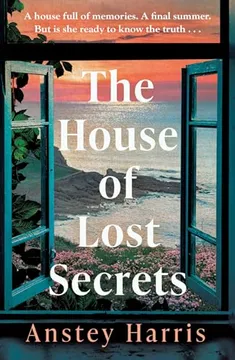
Reviews for The House of Lost Secrets are largely positive, averaging 4 out of 5 stars. Readers frequently praise the evocative Scottish setting, beautiful prose, and nuanced exploration of friendship, secrets, and grief. Many found the story compelling and emotionally resonant, particularly its themes of loss, forgiveness, and self-discovery. Common criticisms include pacing issues, underdeveloped characters, a somewhat disjointed narrative structure, and an ending that divided opinion. Several readers noted it as a pleasant surprise from a Kindle First Reads selection.
People Also Read





Characters
Joanna Wilding
The grieving home-makerJoanna, usually called Jo, is a practical, observant woman in her fifties who has built much of her identity around being useful to the people she loves. She cooks, organizes, remembers details, and often uses humour to make painful circumstances bearable. A difficult childhood and unstable marriages have taught her to doubt her own judgment, even as she shows considerable resilience in work and daily life. Her bond with Rachel is central to how she understands herself, so being alone with unfamiliar versions of their shared past unsettles her. Jo’s attention to food, household objects, and place reveals a person who expresses care through concrete acts, while her guardedness shows how difficult it is for her to ask for care in return.
Rachel Willoughby
Joanna’s lifelong confidanteRachel is Joanna’s oldest friend, a charismatic and generous woman whose warmth lets her move comfortably among people from very different backgrounds. She has a lively appetite for conversation, travel, food, and shared rituals, and she often draws Joanna into experiences that the more cautious woman might avoid. Rachel belongs to a confident, affluent family, but she is not defined by privilege alone; she is attentive to people who feel excluded and capable of deep loyalty. Her close relationship with Joanna rests on decades of ordinary moments as much as on dramatic support. She can be impulsive and difficult to pin down, qualities that make her radiant to others and leave parts of her inner life hard to read.
Meg
The resourceful young designerMeg is a young interior designer whose skill and imagination are matched by financial insecurity and a tendency to conceal mistakes until they become difficult to manage. She wants meaningful work, not simply temporary jobs, and treats Clachan as a chance to prove what she can do. Her easy physical confidence contrasts with Joanna’s caution, but Meg is not careless about other people’s pain. She is blunt when she thinks someone is blaming themselves unfairly, and she learns to temper that impulse with patience. Her difficult family history has made her wary of judgment, while her creative ambition gives her a route toward independence.
Ben
Meg’s measured fatherBen is Meg’s father, a physician whose past work in psychiatry has given him a calm, attentive manner. He is deliberate with words and careful about boundaries, qualities that can make him seem withholding to people who want quick explanations. His care for Meg is genuine, though their relationship has been strained by her secrecy and his strong opinions. Ben tends to offer practical help rather than dramatic displays of emotion. He is drawn to difficult human problems because he believes that skilled support can change what happens next, but he also understands that another person’s private story is not his to disclose.
Tim
Rachel’s composed husbandTim is Rachel’s husband, a precise, traditional man who values order, predictability, and competence. His reserved manner often makes him seem dull or controlling to Joanna, particularly when he tries to manage plans around Rachel. Yet his formality also provides structure, and he is capable of facing painful realities without turning them into spectacle. Tim and Joanna share a deep loss but experience it from different positions: he knew Rachel as a spouse, while Joanna knew her as a lifelong friend. He is not naturally fluent in emotional conversation, so practical acts and carefully chosen disclosures become his way of navigating grief.
Terry
Joanna’s magnetic exTerry is Joanna’s second husband and former business partner, charming, funny, and skilled at making himself seem like the answer to someone’s loneliness. He can be perceptive when he chooses, but his warmth often serves his own interests. He and Joanna once shared an appetite for food and adventure, which helps explain why their marriage was appealing at first. In conflict, both could be cruel, and Terry’s financial demands leave Joanna with a diminished sense of security. Their post-divorce connection remains complicated because affection, habit, and self-protection continue to coexist.
Val
Joanna’s estranged motherVal is Joanna’s mother, a civil servant whose emotional instability and religious convictions shape the household in which Joanna grows up. She can be loving and ordinary in calm moments, but her certainty about faith and morality leaves little room for a child’s complicated choices. Val seeks safety in firm rules, prayer, and explanations that give suffering a purpose. Her relationship with Joanna is marked by affection and harm, making it difficult for either woman to understand the other clearly. Val’s history also includes grief and isolation that she rarely knows how to express directly.
Tristan Willoughby
Rachel’s dazzling older brotherTristan is Rachel’s older brother, handsome, athletic, and endowed with the charm that allows him to dominate a room. Joanna remembers the excitement he brings to Clachan, while Rachel sees a more selfish and destructive side of him. He is difficult to reduce to one memory because tenderness and entitlement sit close together in the accounts of those who knew him. Tristan’s place in the family gives him unusual freedom, and other people often adapt themselves around his wishes. He remains an important presence in Joanna’s history even when she is trying to understand what his actions mean.
Meg’s mother
A mother in recoveryMeg’s mother, Wendy, is a theatre worker whose life is shaped by bereavement and drug dependence. She remains emotionally important to Meg despite long stretches of distance and disappointment. Wendy’s affection does not always translate into reliable care, leaving her daughter unsure whether contact will bring comfort or renewed hurt. She is more than her addiction, with a history, a profession, and a bond with her child that persists through conflict. Her vulnerability forces Meg to distinguish compassion from the belief that she must repair her mother.
Rosie Willoughby
The welcoming family matriarchRosie is Rachel and Tristan’s mother, an elegant English teacher who helps make Clachan a place of welcome for Joanna. She is practical without being cold and generous without making generosity feel like a debt. Rosie’s care is expressed in food, invitations, and the quiet work of including a child whose home life is unsettled. She belongs to a family that values tradition and social codes, but her kindness reaches beyond those codes. Her influence remains present in the house and in the relationships formed there.
Duncan Willoughby
The booming family patriarchDuncan is Rachel and Tristan’s father, a sociable, confident man who enjoys sport, family gatherings, and the rituals of Clachan. His loud humour helps hold the household together, though it can also obscure what the family would rather not discuss. He treats Joanna as a welcome guest and helps give her a sense of belonging unavailable at home. Duncan’s attachment to family reputation and old networks reflects both the security and the blind spots of his social world.
Aunt Poll
The family’s sharp-eyed elderPoll is Rachel’s elderly aunt and one of the last living members of the older Willoughby generation. She is direct, affectionate, and alert to the social undercurrents others try to ignore. Her memories connect Joanna to Rachel’s family beyond the years when the girls were young. Poll offers sympathy without fuss and understands that inherited objects carry obligations as well as comfort. Her presence gives the story an older perspective on bereavement and the long work of remembering.
Karen Roberts
The old school rivalKaren is a former schoolmate who once belonged to the more popular circle around Rachel. She is socially polished but can use other people’s insecurities to protect her own position. Her history with Rachel and Joanna is shaped by envy, proximity, and missed chances at friendship. In adulthood, she is capable of recognizing when she has behaved badly, though an apology does not require Joanna to renew the relationship.
William
Meg’s remembered brotherWilliam is Meg’s younger brother, whose brief life remains a defining absence in his family. Meg knows him through photographs and her parents’ memories, and his loss shapes the grief that surrounds her childhood. He represents the future his family imagined but never had the chance to know.
Jeff Jones
Rachel’s teenage first crushJeff is a popular boy in Tristan’s year who briefly dates Rachel as a teenager. His attention matters because Rachel sees it as social recognition, while Joanna watches from the edges of the same school world. He serves as a small but telling measure of the girls’ different experiences of adolescence.
Evan
Joanna’s first husbandEvan is Joanna’s first husband, whom she marries young while searching for stability after leaving home. Their brief marriage reflects her early belief that building a conventional family might repair the insecurity of her childhood. He belongs to a stage of her life she later understands with greater compassion.
Plot Devices
Clachan Cottage
A refuge with historyThe old Scottish cottage is the main physical setting and the place where Joanna’s past and present meet. Its beach, forest, island, family possessions, and visitors’ book hold memories that the characters cannot easily state aloud. Rachel’s decision to leave it to Joanna gives the protagonist a reason to return, while its renovation forces her to see history changing rather than remaining sealed. Clachan is at once shelter, inheritance, workplace, and emotional test. Its importance comes from accumulated human use, not from a supernatural quality: the house seems to answer its occupants because they have made it a repository of shared rituals.
The Visitors’ Books
A record with gapsThe Willoughby family visitors’ books record holidays, jokes, drawings, births, and losses. Their casual entries preserve details that official accounts leave out, making the books a counter-memory to the polished public image of the family. A page Joanna removed as a teenager embodies the secret she could not share, while later entries mark the changing meaning of Clachan. The books are not neutral evidence: their silences reveal what a family and its guests could not face. Their transfer to Joanna recognizes her as a keeper of shared history, even as she learns to make a life beyond it.
Val’s Letters
A delayed family confessionThe correspondence between Val and Rachel gives Joanna a partial account of years she believed had remained separate. The letters disclose that Rachel maintained a connection to Joanna’s estranged mother and kept news of Joanna’s life. Because the archive contains Val’s side but not Rachel’s replies, it provides clues without a complete explanation, propelling Joanna to question Meg, Ben, Tim, and eventually Val herself. The papers turn private memory into an investigation, but they also force Joanna to confront the limits of what she is entitled to know. Their meaning changes as new context emerges.
The Sea and Selkie
A measure of chosen freedomThe sea shapes the novel’s images of danger, recovery, and choice. Joanna’s childhood accident leaves her afraid of entering it, while Meg swims to quiet thoughts she otherwise cannot control. The selkie story, passed through Meg’s family, gives the women a way to imagine freedom without denying the costs of leaving or returning. The bay also changes with tides and seasons, echoing the characters’ unsettled relationship to the past. These images gain force through specific actions: Joanna paddles only where she feels safe, Meg chooses when to emerge, and the landscape remains present without dictating what either woman must do.
Hidden Alcohol
An illness made invisibleRachel’s concealed bottles reveal the difference between shared drinking rituals and the dependence she kept private. The stash turns scattered clues into physical evidence and helps Joanna understand why the rooms were disturbed when she found Rachel. It also connects Rachel’s attempted recovery to the danger of stopping without medical supervision. The bottles are not a mystery clue in the conventional sense; they show how affection and familiarity can coexist with profound ignorance. Their presence forces Joanna to revisit ordinary memories without reducing Rachel to her illness or treating friendship as a guarantee of detection.
Download PDF
Download EPUB
.epub digital book format is ideal for reading ebooks on phones, tablets, and e-readers.








