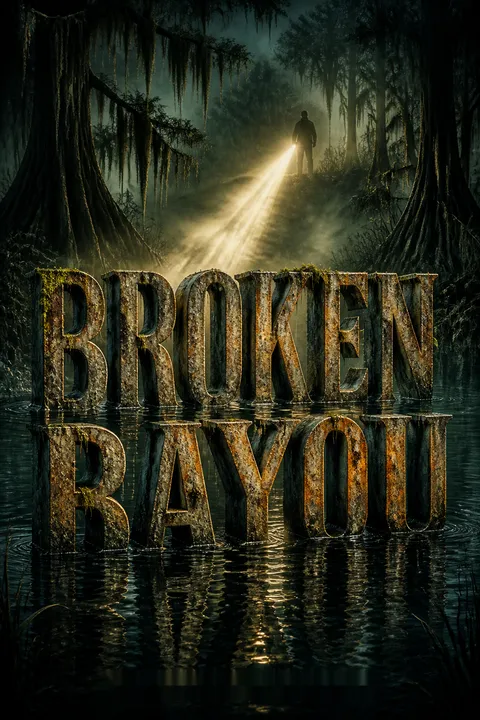


Plot Summary
Prologue
In January 2002, Suzy Weatherton wins at a Louisiana casino and thinks the money might steady life for her pregnant daughter. As she searches for her keys in the parking lot, a stranger photographs her with a Polaroid.
The flash disorients her; a second picture is the last thing she remembers. Her disappearance will remain unexplained for years, one of several absences the drought will eventually force back into view.
Suzy’s ordinary hope makes the abduction chillingly specific: she is not chasing danger, but trying to turn a jackpot into help for her family. The photographs establish a ritual that makes the killer’s attention feel both deliberate and grotesquely casual. Beginning with a woman whose disappearance goes unresolved also gives the later mystery a long memory. The bayou is not simply a crime scene waiting to be discovered. It has been holding the consequences of a pattern while the people left behind live without answers.
Back to Broken Bayou
Dr. Willa Watters has built a career advising parents, written a bestseller, and become a familiar voice through her podcast. Then a caller on live television says a word tied to Willa’s childhood with her younger sister, Mabry.
Willa panics, tears off her microphone and blouse, and becomes a viral spectacle. Already shaken by a letter saying her late great-aunts’ house holds her mother’s belongings, she drives from Fort Worth to Broken Bayou, hoping to retrieve one particular videotape before anyone else finds it.
Her mother, Krystal Lynn, is frail and living in rehabilitation; her relationship with Mabry is broken. Willa tells herself this is a practical errand, but the town is where she left the secret that now threatens her hard-won professional credibility.
Willa’s public unraveling is not simply embarrassment. The caller’s word breaches the boundary between her polished expert persona and a childhood in which she had to interpret danger before she could name it. Her return is similarly double-edged: she claims to be retrieving property, while actually trying to control evidence and avoid an old moral reckoning. The professional identity she has constructed depends on helping others speak clearly, yet her own history has been preserved through concealment. The trip begins when concealment stops feeling safer than exposure.
Shadow Bluff's Locked Attic
At Shadow Bluff, Willa remembers summers spent there with Mabry and Krystal Lynn, whose volatility made the aunts’ home a refuge. The house is deteriorating, and the attic door, where the boxes are supposed to be, is locked.
Willa’s call with her longtime friend and producer, Amy, brings another threat: Willa’s former marriage to her clinical supervisor, Christopher Fulton, is becoming gossip, and a national television appearance has been canceled. The next morning, Willa forces the attic door and finds boxes of her mother’s things, including Mabry’s sketchbook and old VHS tapes.
A police officer arrives and pretends to arrest her before revealing himself as Travis Arceneaux, Willa’s first love and now a local officer. Their reunion draws Willa into breakfast, where Travis tells her about a missing teacher and bodies found in barrels.
The locked attic gives Willa’s avoidance a physical form: she has returned with a plan, but the past will not yield merely because she has decided to collect it. Her career scandal mirrors that obstruction, since private choices threaten the public authority she has earned. Travis complicates the return by reconnecting Willa with a version of herself who acted impulsively and relied on other people to help contain the damage. The chapter’s movement from childhood refuge to police news makes clear that her personal history and the town’s present crisis are about to occupy the same space.
Red Car, Rising Water
At Nan’s Café, Travis shows Willa news coverage of a barrel containing the remains of Destiny Smith, a teenager who disappeared after running away. The missing teacher, Katharine Boudreaux, may also have driven into the bayou. When Travis brings Willa to the levee, divers and a crowd are already watching a tow truck haul up a car. It is not Katharine’s white vehicle.
The mud reveals a red convertible Willa recognizes as her mother’s, the car she helped push into the water as a teenager. The discovery transforms her visit from a search for a tape into an active investigation. Travis is worried, but Willa cannot yet tell him what the car means, or why the thought of its trunk makes her feel sick.
The drought is a material force that collapses Willa’s distinction between past and present. The car was meant to disappear, and its return makes the old cover-up visible to a crowd that includes police, reporters, and the families of missing women. Willa’s private guilt now has public consequences, but she still controls only a fragment of the story. Her silence with Travis signals the central psychological pattern: she wants help, yet fears that disclosure will endanger the people and identity she has spent years protecting.
One Favor, Many Barrels
Willa tells Travis that Krystal Lynn claimed the convertible was meant to generate insurance money, and that she asked Willa, then a minor, to hide it. Travis admits he helped her move it, but neither can explain the remains now suspected to be in its trunk.
Willa learns that more barrels have surfaced, including the remains of Teri Thompson and Claire Fonteneau, a senator’s daughter. At the impound yard, she studies the ruined convertible and hears that investigators found something inside.
She also reconnects with Ermine Taylor, who once gave her summer work, and encounters Travis’s brothers Doyle and Eddie. Eddie gives Willa a small metal figure he made; Doyle unsettles her. She finds Mabry’s drawings among the boxes, including a picture of a girl and boy she cannot yet identify.
Willa’s account frames the car as an adolescent crime undertaken under pressure, but the present evidence makes that explanation feel dangerously incomplete. Her confession to Travis creates a bond of shared responsibility while also exposing the unequal weight they carry: she has been haunted by the act, whereas he has treated it as a closed episode. The handmade figure and sketchbook introduce communication beyond ordinary speech, a recurring concern in Willa’s work and family life. Her professional instinct to read behavior is already active, though she has not yet learned which clues deserve her attention.
Three Tapes of Trouble
Unable to wait for her ordered VCR, Willa searches for one locally and learns the old tapes may have deteriorated. While sorting them, she asks Krystal Lynn about the car and its former owner, a man who employed her in Broken Bayou. Her mother evades the questions.
When the VCR arrives, Willa tests several recordings, then finds a security tape showing the parking lot outside the man’s office. Krystal Lynn and a cowboy-hatted man arrive in the red convertible. After an argument, he strikes her.
Mabry moves from the back seat to the driver’s seat and drives into him, pinning him against the building. Krystal Lynn puts his body in the trunk. Willa stops the tape, overwhelmed by the discovery that Mabry had been present and that the car held a body before Willa ever hid it.
The tape converts memory into evidence, but it does not offer the emotional clarity Willa expects from proof. Instead, it reveals a child placed inside an adult crisis and shows Mabry acting in the instant when her mother is down. Willa’s old explanation of the car as insurance fraud can no longer contain what happened. The surveillance footage also creates a tension between seeing and understanding: Willa can replay the images, yet still cannot know whether the man died or what her mother intended. Her urge to stop watching reflects the cost of acquiring the truth she demanded.
The Man Who Escaped
Investigative reporter Rita Meade tracks Willa down and identifies the employer as Zeke Johnson, a bookie who disappeared after suspected drug dealings. Rita tells Willa that Zeke is alive and serving time in federal prison. Alarmed, Willa returns to the tape and watches what she had stopped before: after Krystal Lynn drives away, the man crawls out of the convertible and runs.
The revelation means Mabry did not kill him, though neither girl knew he survived. Willa also realizes the trunk had been empty when she and Travis put the car in the bayou, leaving open the possibility that someone added the remains later. Rita’s research links the car, missing women, and barrels, while Willa’s confidence in her own memories begins to fracture.
Zeke’s survival changes the moral geometry of the past. Willa and Mabry believed they might have participated in a death, but the tape shows a different outcome and a different burden: they were children trapped in Krystal Lynn’s crisis, not reliable interpreters of it. At the same time, the empty trunk at the moment of the cover-up becomes a crucial distinction between Willa’s guilt and the larger crime. Rita’s role is not merely to expose Willa; her reporting supplies facts that Willa’s family has withheld, forcing the protagonist to move from private rumination toward verifiable evidence.
Five Barrels, One Confession
At a press conference, state investigator Tom Bordelon announces that five barrels have been recovered and that Walter Delaroux, whose property borders the bayou, has been arrested. Police have also recovered Katharine Boudreaux’s car and Willa’s mother’s convertible.
Human remains were found in the convertible’s trunk, and its missing plate complicates the investigation. Willa takes a recording of the security tape to police and explains how she and Travis moved the car as teenagers.
She gives them the plate left anonymously at Shadow Bluff and tells them a truck resembling Doyle Arceneaux’s may have been nearby. The investigators ask her to stay in town. Willa has chosen disclosure over flight, but the authorities focus on Walter, while the unexplained body in the trunk and the plate suggest the case is not settled.
Willa’s decision to approach the police is a meaningful reversal of the childhood bargain that taught her to protect Krystal Lynn through silence. Yet confession does not immediately produce understanding. The authorities can accept her account of the car’s original condition while still following evidence toward Walter, whose arrest offers a convenient explanation for a sprawling case. The section emphasizes the difference between legal progress and epistemic certainty: bodies and physical clues accumulate, but the investigator’s framework remains provisional. Willa’s insistence on staying involved reflects both responsibility and the danger of mistaking personal intuition for proof.
Emily's Room Behind the Lock
Mabry’s sketch of a girl and boy leads Willa to the Arceneaux home, where Travis’s mother, Liv, rejects her questions about Emily, Travis’s frail younger sister. Liv tears Emily’s image from the sketchbook, while Eddie guides Willa to a locked bedroom that has been kept as Emily’s.
He confirms that it was her room and that his metal figures were made for her, but cannot explain why he is giving them away now. Willa leaves with more questions than answers. Rita later reports that Emily was pulled from school, repeatedly treated for illnesses, and buried on the family property after dying young.
Neighbors believe her grave may have been disturbed. Rita’s research suggests the unidentified remains from the convertible could belong to Emily, making Willa’s old car central to the Arceneaux family’s buried history.
Emily’s locked room turns family memory into a contested space. Liv’s insistence on keeping the drawing, then destroying part of it, suggests that remembrance itself is governed by control. Eddie’s figures offer a quieter counter-record: objects he made for Emily survive where conversation has failed. Willa’s clinical knowledge helps her notice patterns, but the scene also exposes the limits of diagnosis when access is controlled by a family’s fear and secrecy. The possibility that Emily’s remains are in the car links Willa’s childhood choices to an older household’s unresolved grief without yet clarifying who moved the body.
Letting Mabry Speak
Rita’s questions draw Willa into explaining why the caller on television sounded like Mabry: five years earlier, Willa found her sister dead after Mabry had taken prescription pills and climbed into their mother’s bathtub.
Willa has kept Mabry’s phone and ashes, unable to accept the finality of either loss. Ermine Taylor feeds her and lets her grieve without turning the moment into an investigation. After the town’s first rain in months, Willa cancels Mabry’s phone account and throws the old handset into the bayou, but she cannot release the ashes.
Travis tells her that Emily repeatedly ran away and that he used to bring her home. Willa asks about Doyle and Emily’s death; Travis refuses to discuss his family further, leaving their old intimacy strained by a new suspicion.
Willa’s grief is not an aside to the mystery; it explains why the safe word can overwhelm her and why she has confused preservation with care. Keeping Mabry’s phone has allowed Willa to postpone the fact of loss, while canceling the account gives her a small, chosen experience of letting go. She does not yet release the ashes, which makes the change credible rather than neat. Ermine’s practical tenderness contrasts with Willa’s professional habit of managing distress. Travis’s account of Emily also adds a troubling parallel between siblings who need protection and the family systems that fail to provide it.
Raymond in the Sketchbook
Rita tells Willa that sand from playground supplies was found in some barrels and Doyle’s fingerprints were found on Katharine’s missing plate. Willa studies Mabry’s drawing again and recognizes the boy as Raymond St. Clair, now a deputy who once knew Emily.
Travis says Doyle has gone missing. Soon after, Willa hears someone moving in Shadow Bluff’s attic and finds Doyle holding her own gun. He says he needs a place to hide, then attacks her when she tries to escape, knocking her unconscious.
Willa wakes bound in Emily’s bedroom at the Arceneaux house. Doyle has called Raymond for help. When Raymond arrives, a gunshot sounds in the front of the house. Eddie helps Willa force open the window, and she escapes outside, uncertain whether Raymond is coming to rescue her or silence her.
The sketchbook converts an old image into a new investigative lead, while the physical traces of sand and fingerprints make Doyle appear increasingly culpable. Willa’s failure to settle on one suspect matters: the same observational skill that helps her notice behavior can be distorted by fear, family loyalty, and incomplete evidence. Doyle’s kidnapping collapses the distance between investigation and personal danger. The locked room also gains a second meaning, shifting from Emily’s confinement to Willa’s captivity. By ending with the gunshot and an uncertain escape, the section forces the reader to share Willa’s inability to distinguish rescue from threat.
Inside the Last Barrel
Outside the house, Willa finds Rita drugged near the barrels. Travis appears, shoots Doyle, and reveals that he has used the bayou to dispose of women for years. He killed Emily after she tried to escape, then placed her remains in Willa’s mother’s car during the night Willa and Travis hid it.
Travis and Eddie force Willa into a steel barrel. Inside, Eddie leaves her a metal figure sharp enough to cut the bag over her head and helps loosen the lid. The barrel rolls into the bayou; Willa escapes into the water, finds Rita, and sees Travis raise his gun at Eddie.
She retrieves her handgun and shoots Travis until he falls. Eddie survives. Police reach the scene, while Willa lies injured beside the water that has exposed the truth and nearly claimed her life.
Travis’s betrayal revises the meaning of every earlier gesture: his concern, his police role, and his shared history with Willa become instruments of access and control. His violence toward Emily emerges from a possessive claim disguised as protection, a distortion that also explains the barrels as a grotesque attempt to supply his sister with companions. Eddie’s small act of aid opposes that logic through care expressed in the only forms available to him. Willa’s survival depends on accepting help and acting decisively, not on professional interpretation. The bayou finally returns evidence, but it also becomes the setting in which Willa breaks Travis’s control.
Epilogue
Six months later, Willa returns to Fort Worth Live with Rita to tell the story in her own voice. Police have identified Emily among the remains in the convertible, found photographs and drugs at the Arceneaux home, and established that Travis killed the women, Emily, Liv, and Raymond.
Willa is seeing a trauma therapist and has paused her podcast and book tour. She has helped arrange a supported home and hospital job for Eddie, and Krystal Lynn is moving in with her while trying new medication. Mabry’s ashes are still with Willa. She plans to take them back to Broken Bayou, where her sister was happiest, and finally set them free.
The ending refuses a simple cure. Willa has survived the immediate violence and taken concrete steps toward care, including treatment for herself, support for Eddie, and a more stable arrangement with her mother. Yet she has not completed the farewell to Mabry. Her decision to return to the bayou with the ashes makes healing an ongoing action rather than a declaration that grief is over. Going on camera with Rita also reverses the viral humiliation that began the story: Willa will speak publicly again, but this time by choice and with support, rather than being ambushed by the past.
Analysis
Broken Bayou is built around the difference between keeping a secret and protecting someone. Willa’s childhood taught her to treat concealment as care: she hides her mother’s actions, helps dispose of the convertible, and later preserves the tape because she fears what it might mean for Mabry. That strategy gives her short-term control while extending the harm into adulthood. Her professional identity sharpens the contradiction. She can explain how children need advocates, yet she has mistaken competence for immunity from the family patterns that shaped her.
The novel’s physical landscape makes that contradiction visible. Drought lowers the bayou and exposes evidence, but the recovered objects do not instantly produce truth. A car can hold different histories at once: Krystal Lynn’s attempted cover-up, Willa and Travis’s adolescent complicity, and a later crime neither of them understood. The tape corrects Willa’s memory, while the sketchbook and Eddie’s figures demonstrate that knowledge can survive in forms adults dismiss or overlook.
The book also resists a simplistic equation between trauma and violence. Willa and Travis share childhoods marked by neglect and family instability, but their responses diverge. Willa’s work, though imperfect, is oriented toward listening and advocacy; Travis turns protection into possession and violence. Eddie’s disability does not erase his agency: his handmade figures and timely assistance become crucial acts of communication. The difference is not that pain chooses a single outcome, but that relationships and choices shape what people do with it.
Healing arrives through concrete, unfinished acts rather than a clean resolution. Willa gives evidence to police, cancels Mabry’s phone account, seeks trauma therapy, and helps Eddie secure support. She still carries Mabry’s ashes and remains in a complicated relationship with Krystal Lynn. The ending treats accountability and grief as ongoing work. Willa’s final decision to speak publicly on her own terms answers the opening humiliation not by restoring her old image, but by replacing involuntary exposure with chosen testimony.
Review Summary
Broken Bayou is a debut thriller that has garnered mostly positive reviews. Readers praise its atmospheric Louisiana setting, complex characters, and suspenseful plot involving a child psychologist uncovering dark secrets in her hometown. Many found it gripping and unpredictable, though some felt the pacing was uneven and characters underdeveloped. The twist ending surprised some readers while others found it predictable. Overall, reviewers commend Moorhead's potential as an author and look forward to her future works.
People Also Read









Characters
Willa Watters
The returning psychologistA child psychologist turned author and podcast host, Willa has built a composed, successful life far from the unstable home where she grew up. She is observant and resourceful, especially around children who struggle to communicate, but her professional fluency does not make her immune to old family patterns. She learned early to protect her younger sister and manage her mother’s moods, habits that blur the line between responsibility and self-erasure. Willa prizes independence, yet gravitates toward emotionally unavailable men and tries to control distress by compartmentalizing it. Her return to Broken Bayou places her public expertise beside the private history she has never fully understood.
Mabry Watters
Willa's artistic sisterWilla’s younger sister is visually perceptive, deeply attached to her, and affected by developmental challenges that their family does not consistently address. Drawing gives Mabry a way to record people and moments that others overlook. She depends on Willa’s protection, but their closeness is shaped by the strain of Willa taking on a parental role while both girls are still children. Mabry’s memories and art remain important to Willa’s understanding of their childhood, though Willa gradually recognizes that she did not know every part of her sister’s inner life.
Krystal Lynn Watters
Willa's volatile motherWilla and Mabry’s mother is charismatic, funny, and capable of fierce affection, but her bipolar illness, alcohol use, and impulsive choices make home life unpredictable. She often pursues immediate relief or excitement without considering the cost to her daughters, then relies on Willa to repair the consequences. Krystal Lynn’s charm can make danger look like adventure, while her periods of vulnerability invite her children to excuse harm they should not have had to manage. Her complicated bond with Willa is built from both genuine love and repeated failures of care.
Travis Arceneaux
Willa's first loveA local police officer with a difficult family history, Travis was Willa’s first love during their teenage summers in Broken Bayou. He is physically confident and socially easy, qualities that once made him a welcome escape from Willa’s chaotic home. His connection with Willa carries the unfinished charge of a relationship interrupted by fear and secrecy. Travis is protective of his siblings and proud of his work in a small department with few resources. His familiarity with the town and its families makes him a natural guide for Willa, though his history also complicates what she believes she knows.
Rita Meade
The relentless reporterA nationally recognized investigative reporter, Rita follows evidence with energy and an appetite for stories others might leave alone. She is direct, polished, and comfortable pressing people who would rather not speak. Her ambition can make her intrusive, but she also takes research seriously and is willing to share what she learns. Rita recognizes that Willa’s personal history intersects with the bayou case and approaches her as both a source and a person. Their uneasy alliance tests whether public exposure can be shaped into testimony rather than spectacle.
Amy Owens
Willa's steadfast producerWilla’s oldest friend and podcast producer, Amy understands the family instability that shaped them both. She helped Willa turn a fading radio career into a successful podcast and tries to protect that work when the television scandal erupts. Amy is practical and action-oriented, sometimes pressing Willa to return to work before Willa is ready. Beneath that urgency is loyal care: she stays close through Willa’s crises and helps her recognize when healing requires more than managing public opinion.
Ermine Taylor
The town's generous anchorThe longtime owner of Taylor’s Marketplace, Ermine gave Willa a summer job and offered her a dependable adult presence during childhood. She is frank, observant, and generous without pretending that difficult things are easy. Ermine remembers the Watters family and the Arceneauxes, but she is careful about the difference between memory and rumor. As Willa returns, Ermine provides food, welcome, and a place to grieve without demanding that Willa explain herself first.
Eddie Arceneaux
The quiet metalworkerTravis’s adult brother has limited speech and relies on handmade metal figures to communicate care and attention. He is physically imposing but emotionally vulnerable, especially around family conflict. Willa recognizes that his silence should not be mistaken for a lack of thought or feeling. Eddie’s connection to his sister Emily remains vivid in the objects he makes and the places he protects. His circumstances reflect how disability can be compounded by isolation when a family and community fail to provide appropriate support.
Doyle Arceneaux
Travis's troubled brotherDoyle is a volatile, socially awkward member of the Arceneaux family who supports his mother and Eddie through irregular work building playground equipment. He has a history of legal trouble and a sharp, unpredictable manner that makes Willa wary. His relationship with Travis carries old resentments and obligations, while his care for Eddie complicates the impression he makes on outsiders. Doyle has spent much of his life in a household shaped by loss, neglect, and competing demands for protection.
Liv Arceneaux
The grieving family matriarchTravis, Doyle, Eddie, and Emily’s mother is a reclusive woman whose home and family history are marked by poverty, illness, and loss. She resists outsiders and reacts fiercely when anyone asks about Emily. Liv’s protectiveness can feel controlling, and her account of family events is difficult to separate from grief and denial. Willa sees in her a parent whose need to hold on has shaped the children around her, though the full history of the household remains obscured.
Emily Arceneaux
The secluded younger sisterThe only daughter in the Arceneaux family, Emily is remembered as physically fragile and closely guarded by her mother. She had a complicated relationship with her brothers and a life that appears to have included more independence than the adults around her acknowledged. Mabry’s drawing offers a glimpse of Emily with a boy, suggesting a private world beyond the locked rooms and family rules. Her story becomes central to Willa’s effort to understand what the Arceneaux family has kept hidden.
Raymond St. Clair
The former local boyRaymond grew up in Broken Bayou alongside Willa, Travis, and the Arceneaux brothers. As an adult he works for the sheriff’s office and has a background as an EMT. In childhood he was shy and often remained at the edge of the group, where his peers’ cruelties and loyalties shaped his relationships. Willa recognizes him only gradually, while Mabry’s drawings preserve a connection between Raymond and Emily that the adults around them have not explained.
Zeke Johnson
Krystal Lynn's former employerA businessman who employed Krystal Lynn during one of the family’s summers in Broken Bayou, Zeke moved in a world of gambling and suspected illegal dealings. He gave her the red convertible that later becomes central to Willa’s return. His disappearance left a gap in the town’s account of that summer, and his connection to Krystal Lynn gives Willa a reason to question the story she has carried for years.
Walter Delaroux
The landowner under suspicionWalter is a local landowner whose property borders the bayou and whose history includes disputes with authorities over dumping. His connection to the land and barrels makes him a central focus of the investigation as the drought exposes evidence. The attention on Walter offers the police a concrete lead, but the case contains unresolved details that resist an easy conclusion.
Tom Bordelon
The state investigatorA Louisiana State Police investigator brought in to lead the bayou case, Tom Bordelon works alongside local officers and tries to keep evidence and public speculation separate. He interviews Willa after the convertible is recovered and asks her to remain available. His measured approach contrasts with Rita’s public probing, though his team must work through a complicated set of old and new crimes.
Jute Wilson
Broken Bayou's chiefChief Wilson leads a small, underfunded police department and knows many of the families involved in the unfolding case. He tries to manage an increasingly large crowd and coordinate with state authorities while keeping residents away from contaminated scenes. His familiarity with Willa’s mother and her great-aunts reflects the town’s close social memory, which can be useful but also makes privacy difficult.
Charles LaSalle II
The family lawyerThe lawyer handling the aunts’ estate, Charles brings Willa into contact with the belongings left at Shadow Bluff. He is earnest and somewhat awkward, but willing to accompany Willa when she seeks help from the police. His concern for his young son leads him to take Willa’s professional advice seriously, giving her a chance to help a family even while her own life is unsettled.
Christopher Fulton
Willa's former supervisorA psychologist twenty years older than Willa, Christopher supervised her clinical training before becoming her husband. Their secretive relationship began under ethically troubling circumstances and later ended in divorce. Though absent from Willa’s return to Louisiana, renewed gossip about him threatens the professional reputation she has built.
Suzy Weatherton
The hopeful casino winnerA Houston woman who visits a Louisiana casino hoping to help her pregnant daughter and future grandchild. Suzy is practical, hopeful, and willing to make a long drive for a chance at financial breathing room. Her last known evening begins with a jackpot and ends in an unexplained disappearance.
Destiny Smith
The runaway teenagerA fifteen-year-old from Birmingham, Destiny runs away to New Orleans, where she imagines she can work, recover, and eventually reach California. She is searching for safety and affection, but her drug use and precarious circumstances leave her exposed to people who exploit vulnerability.
Teri Thompson
The cautious motherA mother of two who rarely relaxes, Teri travels to New Orleans for Jazz Fest with friends and tries to enjoy a night away from her family routines. Her careful planning and concern for her sons make her disappearance especially devastating to those who expect her home.
Claire Fonteneau
The senator's restless daughterA fourteen-year-old whose mother is a Louisiana senator, Claire slips away with her older brother’s friends to enjoy Mardi Gras in New Orleans. She is sharp-tongued and eager for independence, but the adults around her underestimate how exposed she is in a crowded city.
Katharine Boudreaux
The missing schoolteacherA young teacher from Broken Bayou, Katharine disappears after a night out in New Orleans. Her parents search for her and believe her route home may have taken her across the local bridge. Her case brings the town’s residents and outside media to the bayou just as the drought begins exposing older evidence.
Alice and Calvin Boudreaux
The searching parentsKatharine’s parents plead for help finding their daughter and travel to the bayou when divers search for her car. Alice speaks openly from grief, while Calvin is guarded and difficult for Willa to read. Their search gives the missing-person case a human cost beyond the investigation and television coverage.
Plot Devices
The security videotape
Evidence against memoryHidden among Krystal Lynn’s soap-opera recordings, the old security tape captures the night at Zeke Johnson’s office. Willa retrieves it because she fears what it might reveal, then uses a newly purchased VCR to watch it. The grainy footage separates what Willa remembers from what actually happened, showing Krystal Lynn, Mabry, and the convertible at the scene. A later section of the tape changes the meaning of the car again. It functions as physical evidence, but its greatest effect is psychological: Willa must choose whether to keep watching and whether to give the record to investigators.
The drought
The bayou's forced confessionThe severe drought lowers the water in Broken Bayou and makes a long-hidden car and multiple steel barrels discoverable. It turns a local environmental crisis into the engine of the thriller, drawing divers, police, families, and reporters into town. The falling water level also gives Willa’s return a physical urgency: what was submerged can no longer be kept out of sight. Its threat is double-edged, since residents fear both continued drought and the possibility of flooding if rain finally arrives.
The word okra
A childhood alarm signalWilla and Mabry used an unusual word as a private signal when Mabry felt unsafe. Years later, Willa thinks she hears it from a caller during a live television interview. The misunderstanding triggers her public breakdown and eventually connects her professional humiliation to buried family memories. The word is not a magical clue; it is a learned alarm, carrying the emotional force of a childhood when Willa believed she had to interpret danger and rescue her sister before anyone else noticed.
Polaroids and steel barrels
A killer's repeated signatureThe Polaroid flash appears in the abduction stories of women who vanish in different years and circumstances. Their remains are later found in steel drums submerged in the bayou. The repeated camera ritual and barrels connect victims who otherwise appear to have little in common, giving investigators a pattern to pursue. The barrels also conceal the crimes until drought and volunteer searches bring them back into view. Together, the objects show how a private method can persist across years while leaving families with no clear explanation.
Mabry's drawings and Eddie's figures
Objects that speak indirectlyMabry’s sketchbook preserves faces and relationships that Willa cannot immediately place, including a girl and boy connected to the Arceneaux family. Eddie’s welded figures serve as gifts and a form of communication when speech is difficult for him. The objects reward careful attention, but neither gives Willa a complete explanation by itself. Their importance lies in showing how children and adults with limited power can record attachment, fear, and memory through images and crafted things when the surrounding family refuses or cannot speak plainly.
FAQ
Synopsis & Basic Details
What is Broken Bayou about?
- Haunted by the past: A successful psychologist, Willa Watters, returns to her childhood town, Broken Bayou, after receiving a letter about her great-aunts' belongings. She is forced to confront her troubled past, including her manipulative mother and the secrets surrounding her sister's death.
- Unearthing dark secrets: Willa's return coincides with the discovery of a car and human remains in the bayou, revealing a history of violence and a possible serial killer. She becomes entangled in the town's mysteries, forcing her to confront her own role in past events.
- Seeking truth and redemption: As Willa navigates the town's secrets, she must confront her family's lies and her own past actions, seeking truth and redemption while protecting her future. The story explores themes of family, trauma, and the power of confronting one's past.
Why should I read Broken Bayou?
- Intriguing mystery: The novel combines a compelling mystery with a psychological thriller, keeping readers engaged with its twists and turns. The discovery of the car and the barrels creates a sense of suspense and intrigue.
- Complex characters: The characters are well-developed and flawed, with hidden motives and complex relationships. Willa's internal struggles and her interactions with other characters add depth to the story.
- Exploration of themes: The novel explores themes of family, trauma, and the impact of secrets on one's life. It delves into the complexities of human nature and the search for truth and redemption.
What is the background of Broken Bayou?
- Small-town Louisiana setting: The story is set in the fictional town of Broken Bayou, Louisiana, a place with a history of secrets and a strong sense of community. The town's setting is a character in itself, with its bayous, old houses, and small-town dynamics.
- Cultural context: The story incorporates elements of Southern culture, including its unique dialect, traditions, and social dynamics. The setting adds to the atmosphere of mystery and suspense.
- Historical undertones: The story hints at a history of violence and secrets in the town, with references to past events and unsolved mysteries. The town's past is intertwined with the present, creating a sense of unease and foreboding.
What are the most memorable quotes in Broken Bayou?
- "Sometimes we do things for fun and don't realize the consequences. That's just how life is.": This quote, spoken by Willa's mother, Krystal Lynn, highlights a central theme of the novel: the unintended consequences of actions. It foreshadows the tragic events that unfold and the impact of past decisions on the present.
- "Get rid of it, sweet girl.": This recurring quote, spoken by Krystal Lynn to Willa, reveals the manipulative nature of their relationship and the burden Willa carries from her mother's past. It underscores the theme of family secrets and the lengths one will go to protect loved ones.
- "I'm not sure I know what that is anymore.": This quote, spoken by Willa, reflects her internal struggle and her loss of direction as she confronts her past. It highlights the theme of self-discovery and the challenges of finding one's identity amidst chaos.
What writing style, narrative choices, and literary techniques does Jennifer Moorhead use?
- Dual timelines: The narrative shifts between the present and the past, gradually revealing the events that led to the current situation. This technique creates suspense and allows the reader to piece together the puzzle alongside Willa.
- First-person perspective: The story is told from Willa's point of view, allowing readers to experience her thoughts, emotions, and internal struggles. This perspective creates a sense of intimacy and allows for a deeper exploration of her character.
- Foreshadowing and symbolism: The author uses subtle foreshadowing and recurring symbols to hint at future events and deeper meanings. The bayou, the car, and the barrels all serve as symbols of the town's dark secrets and the characters' inner turmoil.
Hidden Details & Subtle Connections
What are some minor details that add significant meaning?
- The recurring Polaroid camera: The Polaroid camera, used by the stranger who takes Suzy Weatherton's picture and later by the man who attacks Destiny Smith and Claire Fonteneau, becomes a symbol of the predator's presence and the loss of control. It foreshadows the danger lurking in the town.
- Eddie's metal dolls: Eddie's metal dolls, which he gives to Willa, are not just random objects. They are a form of communication for him, and they also foreshadow the danger that is coming. The dolls also represent his innocence and his desire to protect those he cares about.
- The missing silver bell: The absence of the silver bell at Taylor's Marketplace, a detail Willa remembers from her childhood, symbolizes the changes in the town and the loss of innocence. It also hints at the passage of time and the fading of memories.
What are some subtle foreshadowing and callbacks?
- The "okra" safe word: The safe word "okra," used by Willa and Mabry as children, resurfaces during the live interview, triggering Willa's emotional breakdown. This callback highlights the lasting impact of childhood trauma and the power of seemingly insignificant details.
- The red convertible: The red convertible, initially presented as a symbol of Krystal Lynn's recklessness, becomes a symbol of the dark secrets and violence that have plagued the town. Its reappearance in the bayou serves as a catalyst for Willa's journey of self-discovery.
- The recurring phrase "say cheese": The phrase "say cheese," used by the predator before taking a picture of his victims, becomes a chilling reminder of the danger lurking in the town. It foreshadows the violence and loss of control that the victims experience.
What are some unexpected character connections?
- Raymond St. Clair and Emily Arceneaux: The connection between Raymond and Emily, revealed through Mabry's sketch, is unexpected and adds a layer of complexity to the story. It suggests a hidden history and a possible motive for Raymond's actions.
- Charles LaSalle II and Willa: The connection between Charles and Willa, initially professional, becomes personal as Charles seeks Willa's help with his son. This connection highlights the intersection of personal and professional relationships in the pursuit of truth.
- Ermine Taylor and Willa: Ermine's role as a mother figure to Willa, a connection that is revealed through their interactions, adds a layer of warmth and support to the story. It also highlights the importance of community and the power of human connection.
Who are the most significant supporting characters?
- Ermine Taylor: Ermine, the owner of Taylor's Marketplace, serves as a maternal figure for Willa, offering her support and guidance. Her knowledge of the town's history and her connection to Willa's past make her a valuable ally.
- Charles LaSalle II: Charles, the lawyer, provides Willa with legal advice and support, but his personal connection to her through his son adds another layer to their relationship. He represents the intersection of personal and professional relationships in the pursuit of truth.
- Rita Meade: Rita, the investigative reporter, serves as a catalyst for Willa's journey, forcing her to confront her past and the town's secrets. Her relentless pursuit of the truth challenges Willa's perceptions and pushes her to take action.
Psychological, Emotional, & Relational Analysis
What are some unspoken motivations of the characters?
- Travis's need for control: Travis's actions are driven by a need for control, stemming from his troubled past and his desire to protect his family. His need for control manifests in his actions as a police officer and his manipulation of Willa.
- Liv Arceneaux's fear and denial: Liv's actions are driven by a deep-seated fear of losing her children and a denial of her own role in their suffering. Her actions are a result of her own trauma and her inability to cope with the reality of her situation.
- Doyle's desire for acceptance: Doyle's actions are driven by a desire for acceptance and a need to prove himself. His attempts to help Willa and his loyalty to his family are a result of his own insecurities and his desire to belong.
What psychological complexities do the characters exhibit?
- Willa's trauma and self-doubt: Willa's past trauma and her mother's manipulations have left her with deep-seated self-doubt and a tendency to self-sabotage. Her journey is one of confronting her past and learning to trust herself.
- Travis's sociopathic tendencies: Travis's charm and charisma mask his underlying sociopathic tendencies, which are revealed through his actions and his manipulation of others. His character highlights the complexities of human nature and the potential for evil to hide behind a facade of normalcy.
- Liv's mental instability: Liv's mental instability and her denial of reality are evident in her actions and her interactions with others. Her character highlights the impact of trauma and mental illness on one's perception of reality.
What are the major emotional turning points?
- Willa's breakdown on live television: Willa's emotional breakdown on live television is a major turning point, forcing her to confront her past and her own vulnerabilities. It also sets the stage for her return to Broken Bayou and her journey of self-discovery.
- The discovery of the security tape: The discovery of the security tape is a major turning point, revealing the truth about Krystal Lynn's actions and forcing Willa to confront her mother's lies. It also sets the stage for Willa's quest for justice and closure.
- The confrontation with Travis: The final confrontation with Travis is a major turning point, forcing Willa to confront the reality of his betrayal and her own role in his actions. It also marks the beginning of her journey toward healing and redemption.
How do relationship dynamics evolve?
- Willa and Krystal Lynn: The relationship between Willa and her mother, Krystal Lynn, evolves from one of manipulation and control to one of understanding and acceptance. Willa's journey is one of learning to forgive her mother and herself.
- Willa and Travis: The relationship between Willa and Travis evolves from one of teenage infatuation to one of betrayal and disillusionment. Willa's journey is one of learning to trust her instincts and to recognize the true nature of those around her.
- Willa and Mabry: The relationship between Willa and her deceased sister, Mabry, evolves from one of guilt and responsibility to one of love and acceptance. Willa's journey is one of honoring Mabry's memory and finding peace with her loss.
Interpretation & Debate
Which parts of the story remain ambiguous or open-ended?
- The full extent of Liv Arceneaux's involvement: While Liv's mental instability and neglect are evident, the full extent of her involvement in Emily's death and the other crimes remains ambiguous. The story leaves open the possibility that she was more than just a victim of her own circumstances.
- The true nature of Raymond St. Clair's motives: While Raymond's actions are presented as heroic, his true motives and his connection to Emily remain somewhat ambiguous. The story leaves open the possibility that he was more than just a concerned police officer.
- The possibility of other victims: The story hints at the possibility of other victims, leaving the reader to wonder if there are more secrets hidden in the bayou. The open-ended nature of the story suggests that the town's dark history may not be fully resolved.
What are some debatable, controversial scenes or moments in Broken Bayou?
- Willa's decision to help her mother hide the car: Willa's decision to help her mother hide the car is a controversial moment, raising questions about her own moral compass and her complicity in her mother's actions. It also highlights the complexities of family loyalty and the impact of manipulation.
- Travis's actions as a police officer: Travis's actions as a police officer, particularly his manipulation of Willa and his involvement in the town's secrets, are controversial, raising questions about the abuse of power and the potential for corruption. It also challenges the reader's perceptions of trust and authority.
- The ending: The ending, with its violent confrontation and the deaths of Travis and Doyle, is controversial, raising questions about the nature of justice and the possibility of redemption. It also leaves the reader to ponder the long-term impact of trauma and the complexities of human nature.
Broken Bayou Ending Explained: How It Ends & What It Means
- Travis's death and the end of the cycle: The ending sees Travis's death, which brings an end to his reign of terror and the cycle of violence that has plagued the town. It also represents a moment of catharsis for Willa, as she finally confronts her past and takes control of her future.
- Willa's journey of healing and self-discovery: The ending highlights Willa's journey of healing and self-discovery, as she learns to forgive herself and her mother and to embrace a new beginning. It also emphasizes the importance of confronting one's past in order to move forward.
- The ambiguity of the future: While the ending provides closure for some of the characters, it also leaves the reader with a sense of ambiguity about the future. The story suggests that the town's dark history may not be fully resolved and that the cycle of violence may continue.
Download PDF
Download EPUB
.epub digital book format is ideal for reading ebooks on phones, tablets, and e-readers.








