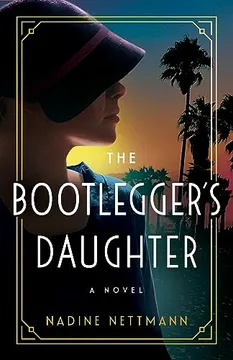


Plot Summary
A Rifle at the Barn
In the San Fernando Valley, twenty-four-year-old Letty Hart catches Billy and his younger brother Lawrence trying to steal a barrel of wine from the family winery. She points her late father’s rifle at them and fires a warning shot into the barn, buying enough time for the brothers to flee. Only after they are gone does her confidence break: the rifle held a single bullet, and her hands are shaking.
Her mother, Virginia, fears the thieves will return, while Letty insists she can protect them. By morning she has repaired the barn lock and found the bullet lodged in the wall. Its removal reveals a hidden door beneath the boards, and a descent into the dark exposes barrels of brandy her father concealed.
Letty’s first show of force is effective, but it is also a performance built on a bluff. She protects her mother and the family’s livelihood by appearing more powerful than she feels, a survival habit learned after her father left. The hidden brandy complicates that inheritance: the farm contains both the work that sustains Letty and a secret tied to the man whose rules still govern her. Her discovery turns the break-in from an isolated threat into the beginning of a new choice.
The Church Closes Its Door
Father O’Leary and his assistant, Charles, arrive with news that the archdiocese is ending the Hart winery’s sacramental-wine contract. They will buy the current harvest, but the money may last only a few months. Letty understands that Virginia’s peach canning cannot keep the farm afloat, while Virginia refuses to touch the brandy hidden beneath the barn because it belonged to her absent husband.
Letty decides to sell some anyway. She visits her old friend Sal in Hollywood, but he warns her away from bootlegging. Margaret, Sal’s daughter, offers a different route: a speakeasy called the Nine. There Letty meets bartender Otto and bootlegger Shorty Paulson, who agrees to consider buying the brandy if she first completes a delivery for him.
The contract’s cancellation removes the moral shelter that let the Harts survive Prohibition without joining its criminal economy. Letty’s choice is not simple greed or rebellion: she sees the farm, her mother’s security, and a family history slipping beyond repair. Virginia’s refusal to handle the brandy makes clear that economic necessity cannot erase the emotional meaning of the father’s secret. Letty, however, treats action as a form of care. Her decision begins to separate her own judgment from the rules inherited from a man who abandoned the consequences to her.
Forman Gets a False Case
At the Los Angeles Police Department, Annabel Forman watches junior officer Daniel Wallace receive the detective promotion she has earned through hard work. Captain Warrenson denies that women can be detectives, then gives Forman two days to solve what he expects to be a humiliating dead end: a necklace supposedly stolen from wealthy Mrs. Michaels.
Forman visits the mansion and finds a similar necklace in the owner’s jewelry box, but Mrs. Michaels rejects it and abruptly withdraws her complaint after mentioning her deliveryman, Thomas.
Forman learns that Thomas brought regular supplies to the estate and has now lost his job. The guard confirms that Thomas made a delivery on the day the necklace vanished, but refuses to explain what he carried. Forman leaves with a suspect and a case her colleagues dismiss.
Forman’s assignment is designed to make institutional exclusion look like an individual failure. Warrenson gives her a case with no prestige, little time, and a complainant whose own habits invite ridicule. Forman nevertheless insists on the difference between a missing object and a theft, treating Mrs. Michaels’s claim as worth investigating even when its history makes it easy to dismiss. Her rigor is both professional and personal: she knows what it means when authorities decide some victims do not merit attention. The case becomes a test of whether she can recognize a serious pattern inside an apparently trivial complaint.
A Delivery Through Hollywood
Letty disguises her brandy in peach cans and brings a sample to Shorty’s garage. He likes the liquor but will not buy it until she proves she can be trusted, so he sends her to deliver cases of gin, rum, and whiskey to a party at the Michaels estate. Letty completes the job and meets Otto there, learning that Shorty supplies both the Nine and the mansion.
She also sees Charles, her childhood friend, enjoying the same illegal nightlife he once tried to keep her from. Meanwhile, Forman asks Ruthie, a young woman she has helped before, to identify Thomas. Ruthie supplies his full name, Thomas Rudinsky. Forman learns that Rudinsky is dead, strangled and found in the river, before she can question him about the necklace.
Both women discover that access depends on crossing boundaries other people have drawn for them. Letty gains entry to the liquor trade by doing work that exposes her to arrest, while Forman gains a usable lead by treating Ruthie as a person rather than merely an informant. Each exchange carries risk, but the women recognize competence in one another across different social worlds. Charles’s presence also unsettles Letty’s assumptions: the law-abiding boy is not outside the illicit city, and her own entry into it will not be controlled by his approval.
The Garage Holds Two Bodies
When Letty returns to Shorty’s garage to collect her payment, she finds his guard shot and Shorty strangled over the desk. A killer is still inside, searching the room. Letty hides beneath the desk, close to Shorty’s body, until the man leaves with her branded peach can and Shorty’s ledger.
She follows him through Hollywood and downtown to the central police station, where she retrieves both items from his sedan before he returns. The ledger contains coded customer and supplier records, and Shorty entered her under the nickname Marks.
Forman, meanwhile, compares Rudinsky’s death with files on other bootleggers found dead in or near the Los Angeles River. She sees a pattern of strangulation, but Warrenson tells her not to pursue murders outside her assignment.
Shorty’s murder strips away the illusion that the criminal market has stable rules or safe intermediaries. Letty survives by observing rather than fighting, then turns the killer’s own confidence against him by recovering the ledger from a police car. Forman faces the same danger in institutional form: she can see a pattern, yet her superiors define her authority so narrowly that insight itself becomes insubordination. The ledger and the case files are parallel instruments of knowledge. Each woman must read incomplete records while deciding whom she can trust with what she learns.
Peaches Become a Calling Card
Using Shorty’s ledger, Letty approaches his former customers, but several already have suppliers and one bar serves a deliberately alcohol-free gin rickey. She refuses to retreat. After selling a can of brandy to a drunk man, she punches him when he grabs her wrist, then wins an order from Thelma, a café owner who watched her stand her ground.
At Quadling Garage, Forman finds Shorty and the guard dead. A drunk outside carries a Hart Farm peach can filled with brandy, and Detective August Raymond takes the can from Forman and warns her away from the murder. The label connects Letty’s product to the crime scene. Forman sees the clue; Raymond recognizes it as a path to the woman whose ledger he lost.
Letty’s first customers arrive through a mix of commercial nerve and self-defense. The punch matters because it changes how observers read her: she is not merely selling forbidden liquor but refusing the entitlement that lets men take from her. Yet the branded can exposes the cost of a visible identity. Forman recognizes the product as evidence, while Raymond treats it as a lead he can exploit. The peach can is an ordinary object made dangerous by what it conceals, much like the respectable surfaces of the police department and the city’s wealthy homes.
Raymond Takes the Wine
Raymond arrives at the Hart farm with officers and federal agents, accusing Letty and Virginia of bootlegging because of the brandy can. The search turns up no liquor, and Letty’s sealed cans contain only peaches.
Raymond then seizes the winery’s legal sacramental wine until the church contract can be verified, stripping the family of its remaining income. After the officers leave, Virginia blames Letty’s new business for the raid and suggests they move to Salt Lake City.
Letty refuses to abandon the land and reveals that the searchers missed the hidden cellar. She begins shifting from a risky one-time sale to a more careful operation. At the station, Forman continues examining the bootlegger deaths and notices that a file on Richard Hart, Letty’s father, is incomplete.
Raymond weaponizes the law by making legal wine vulnerable to suspicion, showing how enforcement can become a means of economic coercion rather than public protection. Letty’s concealment of the cellar preserves a future, but it cannot restore the trust Virginia has lost in her choices. Forman’s discovery of Richard Hart’s incomplete file links the women’s separate inquiries more tightly: the missing pages suggest that the official story has been edited. Both the cellar and the file are spaces where inconvenient facts have been hidden, though one protects a family’s survival and the other protects a powerful person.
A Farm Becomes a Network
Letty starts selling brandy through small, discreet transactions and turns the farm’s peach business into cover. She recruits Ruthie, Dorothy, and other girls who need safer income than street prostitution, giving them flasks to sell and keeping them away from the property.
Dorothy nevertheless visits the farm for a refill, prompting Letty to build a hidden compartment in her truck. Forman follows Dorothy to the valley, sees her leave the farm with a heavier suitcase, and accepts a ride from Letty without revealing her investigation.
During the drive, Forman mentions Letty’s father’s death and warns her to stay clear of someone called Blue. Letty does not understand the name, but Margaret later explains that Blue is the city’s most powerful bootlegger. Raymond, meanwhile, is ordered to eliminate Letty for taking Shorty’s customers.
Letty’s business begins to resemble a protective system as much as a source of income. She offers the girls a way to earn, but her rules also reveal how little safety she can guarantee: they must carry the risk into the city while the farm stays concealed. Forman’s ride with Letty produces an uneasy intimacy, since each woman recognizes the other’s discipline without knowing the full truth. The warning about Blue places a larger structure over Letty’s local success. Her growing independence has attracted attention from a power that regards competition as a personal threat.
Fire Closes the Cellar
Raymond finds Letty in the cellar beneath the barn and takes her rifle. Rather than arrest her, he traps her inside, ignites the barn, and sets the house alight, intending to erase her and the hidden liquor. Letty escapes through an old passage beneath the farm and reaches the house, where she finds Virginia with Shorty’s ledger.
Together they break through a partition in the cellar and flee into the vineyard as both buildings burn. Forman discovers that the diamond-and-emerald necklace from her case is now on Raymond’s wife, Betty, proof that Raymond stole it from Rudinsky. Letty decides Virginia must go to Salt Lake City for safety, while Letty stays behind. Raymond learns that Letty survived and prepares to hunt her again.
The fire makes the cost of Letty’s secrecy brutally literal: Raymond attacks not only her product but the home, history, and labor bound up in it. Her escape depends on knowledge of the farm’s hidden architecture, while Virginia’s possession of the ledger shows that she has moved from fearful witness to active participant. Forman’s breakthrough is equally concrete. The necklace that began as a petty theft becomes material evidence against a fellow detective. Each woman now knows that the danger is not an abstract criminal world but a person inside the institutions and places meant to protect them.
One Ticket to Salt Lake
At the train station, Letty buys only one ticket, sending Virginia to her sister in Salt Lake City while promising to follow in two weeks. She knows Raymond will pursue them if they remain together, but the separation repeats the abandonment that has shaped her life.
Forman finds Raymond’s planned meeting place by reading the pressure marks left in his notebook and waits on the beach with a borrowed pistol. Letty also prepares for the encounter, arranging for Margaret to sit in her truck as a decoy while Otto waits offshore in a boat.
Charles, still convinced he can protect Letty, tells Raymond where she will be. Letty anticipates that he will report her plans and uses his habit of tattling to draw Raymond into a place where she can face him.
The single ticket is a painful reversal of the family’s defining wound. Letty sends Virginia away not because she wishes to leave her, but because protection now requires separation, the opposite of the abandonment Letty has resented. Her plan also shows how she has learned to use other people’s expectations: Charles’s self-image as guardian makes him predictable, and Raymond’s certainty that he controls the encounter makes him vulnerable to a staged decoy. Forman’s presence complicates the trap. She is not simply arriving to rescue Letty; she must decide whether justice means arrest, exposure, or preventing another killing.
Blue Names His Daughter
At Topanga Beach, Raymond approaches Letty’s truck and draws his gun, but Letty confronts him from the sand while Margaret drives away. Charles admits that he gave Raymond the location, believing the detective would only frighten Letty.
Then John Corizano, known as Blue, arrives and recognizes Letty as his daughter. He reveals that he is Richard Hart, who faked his death with a stranger’s body and built a criminal empire while claiming he meant to protect his family. Letty rejects his excuse. Raymond refuses Blue’s order to stand down and shoots him.
Forman steps out from behind the rocks and orders Raymond to surrender, identifying his killings of bootleggers and theft of the necklace. When Raymond raises his gun again, Letty shoots him. The father who left her has died shielding her from the killer he once employed.
The revelation reinterprets Letty’s inheritance without absolving its source. Richard’s criminal life and false death were presented as protection, but Letty measures care by presence and accountability, not by a father’s private intentions. Charles’s betrayal is also morally complicated: he acts from a familiar rescuing impulse, yet that impulse repeatedly denies Letty the right to choose. The beach forces each character to confront the limits of control. Blue cannot undo abandonment, Raymond cannot command loyalty forever, and Letty finally uses the weapon she once feared to fire at living targets.
A New Name for Power
With Raymond and Blue dead, Forman does not immediately arrest Letty; their exchange leaves open a different arrangement, shaped by Letty’s work protecting the girls. Back at the station, Forman receives the detective promotion Warrenson once withheld.
The department publicly credits her with solving the bootlegger murders and funds help for Raymond’s widow and child, while its account conceals the full chain of events. Letty’s mother settles in Salt Lake City and oversees plans to rebuild the winery with better security.
In the final scene, Letty meets a rumrunner at Topanga Beach, pays for liquor, and directs Otto and Margaret as they load the crates. When he asks what she calls herself, she keeps her own name and claims the larger role for herself: she is no longer taking over one dead supplier’s business, but building a new one.
The ending grants neither woman a clean victory. Forman gains institutional recognition, yet the department’s public version of the beach events is necessarily selective. Letty gains control of a larger enterprise, but her new authority grows from the same illegal economy that destroyed her home and killed her father. Their possible accommodation is therefore practical rather than sentimental: Forman can protect vulnerable women through her office, while Letty can employ them through a network the law would condemn. The final exchange makes identity the book’s last contested resource. Letty refuses a borrowed nickname and chooses to define the scale of her own ambition.
Analysis
The novel makes concealment a material fact of daily life. Letty hides brandy beneath a barn, carries it in peach cans, and eventually organizes a supply chain inside the ordinary rhythms of farm work. Forman confronts another kind of concealment: police files lose pages, a stolen necklace sits openly on a detective’s wife, and institutional sexism disguises itself as neutral procedure. In both plots, truth is not absent so much as deliberately misplaced.
Letty and Forman are parallel protagonists who pursue security through different forms of competence. Letty builds, repairs, negotiates, and learns when violence is necessary. Forman observes, questions, and insists that even a supposedly foolish complaint deserves attention. Their paths meet because each refuses the role assigned to her: Letty will not accept that women need male protection, and Forman will not accept that women officers belong only with female suspects. Their alliance remains morally uneasy, since Letty’s business violates the law even as it protects vulnerable women, while Forman’s badge belongs to a department that tolerates corruption.
The father-daughter revelation sharpens the book’s distinction between intention and care. Richard claims that his criminal life and staged death were meant to protect his family, but Letty measures his choice by what it required of Virginia and herself. His rules helped her survive, yet they cannot excuse his absence. By contrast, Letty’s emerging leadership depends on making protection concrete: she gives the street girls paid work, keeps them away from the farm, and sends her mother out of danger before confronting Raymond.
The ending offers no clean restoration. Forman receives the authority she earned, but the department’s public account simplifies the truth. Letty gains control of the trade that once threatened her family, accepting risk rather than pretending it can be abolished. The story’s final promise is not that power becomes pure, but that Letty will name and direct her own.
Review Summary
The Bootlegger's Daughter receives an overall rating of 4.11/5, with readers praising its fast pacing, strong female protagonists, and vivid Prohibition-era Los Angeles setting. Most enjoyed the well-developed characters of Letty and Annabel, the historical authenticity, and an unexpected twist ending. Common criticisms include a somewhat disappointing or implausible ending, minor plot holes, and occasionally elementary writing. Readers frequently highlighted the refreshing focus on women navigating male-dominated fields, and many noted the book as a quick, engaging page-turner despite its minor flaws.
People Also Read









Characters
Letty Hart
Winemaker turned bootleggerLetty is a practical, physically capable young woman who has kept her family’s San Fernando Valley winery running since her father left. She knows the work of harvesting, repairing buildings, and defending the property, but she is less comfortable with the emotional inheritance attached to her father’s rules. Her loyalty to Virginia and the family land drives her into the liquor trade when the church contract disappears. Letty does not confuse gentleness with helplessness: she dislikes killing, yet refuses to accept male authority as proof of superior judgment. Her strongest instinct is to act when others hesitate, sometimes concealing risk from the people she hopes to protect. Across the story, she moves from preserving a fragile farm to choosing what kind of power she wants.
Annabel Forman
Unpromoted policewomanForman is one of the LAPD’s few women officers, determined to become a detective despite colleagues who reserve serious work and advancement for men. She is observant, exacting, and careful about how she treats witnesses, especially women living on the street. Her commitment to investigation is rooted in her mother’s unsolved murder, a case the police barely pursued. Forman’s discipline can make her seem reserved, but she is not indifferent: she remembers the people behind reports and offers help without demanding information in return. She wants authority not for status alone, but because limited jurisdiction leaves victims exposed. Her relationship with Letty tests whether she can uphold the law while recognizing corruption within her own department.
Virginia Hart
Letty’s cautious motherVirginia is Letty’s mother and partner in the day-to-day survival of the farm. She cans peaches for income and carries the emotional cost of her husband’s departure more openly than Letty does. Her caution about the hidden brandy is not merely fear of arrest; it is a refusal to let the family be pulled back into the life that damaged her marriage. Virginia often tries to preserve stability by accepting small, familiar losses, while Letty sees inaction as another kind of surrender. She is deeply protective of her daughter, but her fear can make her withdraw from decisions. Their relationship is grounded in affection and shared work, even when Letty’s secrecy strains their trust.
Richard Hart
Letty’s absent fatherRichard is Letty’s father, a skilled winemaker and builder whose practical maxims continue to shape how she works. He left Virginia and Letty when Letty was young, taking little with him and leaving the family to manage the farm. His absence remains a central fact in Letty’s life, complicating her memories of their years working side by side. Richard prized preparation, concealment, and finishing a task properly, lessons that Letty has absorbed even as she questions the man who taught them. His choices connect the family’s private history to the dangerous underworld surrounding Prohibition.
August Raymond
Corrupt prohibition detectiveRaymond is a Los Angeles detective assigned to Prohibition enforcement, confident in his position and skilled at turning police authority to private advantage. He cultivates routines that make him appear controlled, but beneath them lies a need to dominate every encounter and remain indispensable to those above him. His work places him between the police and the bootlegging trade, and he treats that access as a source of power. Raymond can perform the manners of a colleague or family man, yet his empathy is limited by his appetite for control. He regards anyone who disrupts his arrangements as a problem to eliminate, making him dangerous precisely because he can hide predation beneath official respectability.
Charles
Church assistant and childhood friendCharles grew up near Letty and now works as an assistant to Father O’Leary. He is generous, nervous, and inclined to see himself as responsible for keeping Letty safe. That instinct can become intrusive: he often reports her actions or tries to redirect her rather than trusting her judgment. His connection to both the church and the city’s night life places him between respectable rules and private temptation. Letty’s independence frustrates him, even when his concern is sincere.
Margaret
Letty’s citywise friendMargaret is Sal’s daughter, Letty’s longtime friend, and a lively presence in Hollywood’s dress shops and speakeasies. She enjoys risk and knows how to move through the city’s hidden nightlife, making her the bridge that introduces Letty to Shorty’s world. Her humor can disguise a sharp sense of what people need, and she supports Letty without demanding that she adopt a more conventional identity. Margaret’s loyalty becomes practical as Letty’s business grows.
Otto
Speakeasy bartenderOtto tends bar at the Nine and understands the liquor trade from the customer side as well as the supply side. He is sociable but cautious, offering Letty a route to Shorty without pretending the business is safe. His knowledge and connections help her move from a single sale toward a more organized operation. Otto also has a personal connection with Margaret, giving him reasons to stay close to Letty’s circle.
Shorty Paulson
Bootlegger with a ledgerShorty is a Hollywood bootlegger who supplies the Nine and several customers across the city. He is shrewd about trust and makes Letty complete a delivery before considering her brandy. His ledger records the routes and relationships that sustain his business. Shorty recognizes Letty’s nerve, but he remains a gatekeeper in a dangerous trade, not a mentor who can guarantee her safety.
Sal
Letty’s wary old friendSal is Margaret’s father and a barber who knew Letty when both families lived in the valley. He hears the private talk of his customers and understands how quickly bootlegging can turn lethal. When Letty asks how to sell brandy, he urges her to stay away and offers ordinary employment instead. His caution comes from concern, though it cannot resolve the financial danger she faces.
Ruthie
Streetwise witnessRuthie is a young woman living on the streets who has previously received help from Forman. She is wary of police because many vulnerable girls do not want to be returned to families or authorities, but she trusts Forman enough to give her Thomas Rudinsky’s name. Ruthie’s independence is hard won, and she evaluates kindness by whether it comes without coercion. Her later work with Letty gives her a chance to earn money outside prostitution.
Dorothy
Resourceful street sellerDorothy is one of the young women Letty recruits to sell liquor in small quantities. She is bold, practical, and inclined to seek more income even when that means bending Letty’s rules about visiting the farm. Her confidence helps her navigate the city, but her need for money exposes how narrow her choices remain. She is also a cautious observer who knows when not to reveal what she has learned.
Father O’Leary
The family’s church allyFather O’Leary is the local priest who has bought the Harts’ sacramental wine and helped their winery survive after Prohibition. He cares for Virginia and Letty, but he cannot override the archdiocese when it ends their contract. His sympathy is genuine, yet his institutional role limits what he can offer beyond charity and pastoral support.
Captain Warrenson
Forman’s obstructive captainWarrenson commands the station and controls access to assignments and promotion. He believes women do not belong in detective work and uses Forman’s test case to make advancement seem conditional on an impossible standard. He is not simply a loud antagonist: his authority is sustained by a department whose routines make bias appear procedural. His willingness to reward Forman later shows that the institution can shift, though only after she forces it to confront evidence.
Beaucamp
A guarded fellow detectiveBeaucamp is a senior detective who knows the station’s Prohibition cases and initially treats Forman’s ambitions with skepticism. He gives her access to files after she proves she can find a real lead, but he also warns her that her inquiry may take her beyond safe boundaries. His conduct reflects the department’s mixed character: he can be obstructive, compromised by habit, and still useful when the evidence becomes difficult to ignore.
Mrs. Michaels
The wealthy complainantMrs. Michaels is a wealthy Hollywood-area resident whose missing necklace brings Forman into contact with Thomas Rudinsky. She is exacting about her household and reluctant to have her private deliveries recorded. Her insistence that the necklace was stolen initially seems like one more misplaced-item complaint, but her details point Forman toward the liquor trade.
Betty Raymond
Raymond’s unsuspecting wifeBetty is Raymond’s wife and the mother of their young daughter. She is warm, socially confident, and proud of the gifts her husband gives her. Her visit to the police station brings Forman face to face with the necklace that links Raymond to Rudinsky’s death, though Betty herself does not understand its significance.
Billy Carter
The first winery intruderBilly is a local dairy worker who tries to steal wine with his younger brother, Lawrence. He assumes the women at the farm will be easy to intimidate, misjudging Letty’s resolve. Their failed burglary later becomes an opening for Letty to approach the Carter family as a potential source of bottles.
Plot Devices
The hidden cellar
Conceals the family’s second livelihoodA concealed room beneath the barn holds the brandy Richard stored out of sight. Its secret allows Letty to respond to the lost church contract without immediately surrendering the farm, and its hidden exits later provide a route through the fire. The cellar is both practical infrastructure and inherited secrecy: it protects Letty while also drawing her into the world her father left behind. The room’s existence is established before its contents become a means of survival.
Shorty’s ledger
Maps a criminal supply networkShorty’s ledger records customers, suppliers, and delivery schedules in compact entries. Letty takes it from Raymond after finding it in his car, then learns enough from its coded contacts to approach the bootlegger’s former customers. The ledger makes the business legible, but it also places Letty in competition with a larger organization. Its value is not only financial: possession of the book gives Raymond a reason to pursue her and lets Letty plan the final beach meeting.
Peach cans
Hide liquor in plain sightVirginia’s ordinary cans of peaches become Letty’s disguise for transporting and selling brandy. Their familiar labels make the liquor appear harmless, and the cans let Letty carry small quantities without revealing the cellar or the scale of her supply. The disguise works until a branded can reaches Raymond, turning Letty’s cover into evidence against her. The cans embody the story’s recurring gap between appearance and contents, from respectable farm goods to police authority.
Mrs. Michaels’s necklace
Connects a theft to murderThe missing diamond-and-emerald necklace gives Forman a case her colleagues consider trivial. Thomas Rudinsky’s connection to the Michaels estate points her toward the bootlegging trade, while the necklace later appears on Betty Raymond. That physical object converts Forman’s suspicion of Raymond into evidence. It also reveals how a supposedly minor property crime can expose a larger structure of violence and institutional corruption.
The false death file
Hides Richard Hart’s pastThe incomplete police record of Richard Hart’s supposed death initially looks like a neglected file, but Forman discovers missing pages and an autopsy report inconsistent with a simple accident. The gaps suggest that someone inside the department has shaped the official account. This record links Letty’s family history to the bootlegger murders and prepares the revelation that the man she believed dead remains connected to the criminal world.
Download PDF
Download EPUB
.epub digital book format is ideal for reading ebooks on phones, tablets, and e-readers.








