

Key Takeaways
Make pleasure part of sexual health care, not a reward for recovery.
A different starting point. Marie White frames herbalism around sexual well-being, sensuality, and pleasure, not only around fixing symptoms after illness appears. Everyday rituals such as a nourishing tea, an herbal bath, or a soothing massage can make care feel inviting and help people build a more attentive relationship with their bodies. The point is not that pleasure prevents every illness, but that wellness can include enjoyment before a crisis arrives.
Pleasure has limits. The book presents herbs as companions, not cure-alls. A pleasurable drink cannot replace consent, a caring partner, reproductive health care, or support for trauma. Its strongest proposal is a shift in orientation: care need not be grim, and pleasure need not wait until every health concern is resolved.
What's compelling is the move from treating sexuality as a problem to be managed toward treating it as a dimension of ordinary well-being. This resembles preventive design in public health: practices are more likely to endure when they are meaningful and pleasant, rather than framed only as compliance. The approach also makes room for people whose sexual lives do not fit a narrow ideal of frequency or performance. Pleasure, however, is not a universal remedy. Pain, disability, trauma, and lack of safety can make pleasure inaccessible, so a pleasure-centered ethic works best when it respects individual choice rather than prescribing a new standard.
Before adding herbs, ask whether the missing medicine is rest, safety, or support.
Look beyond the bottle. White calls her approach integrated herbalism: using herbs alongside other forms of support, and recognizing that sometimes herbs are not what a person needs. Someone exhausted and experiencing low desire might benefit from nourishment, but also from less overwork, a walk, sleep, or time with friends. The book describes rest as a way to ease the body's stress response, while play can support mood and connection.
Care is relational. Consent, attentive communication, trauma-informed therapy, sexological bodywork, and access to knowledgeable health practitioners all matter in sexual health. The book also names forces such as discrimination, poverty, stigma, and medical mistreatment, which cannot be corrected by a tincture. Herbal practice is more useful when it complements these supports instead of obscuring their absence.
This is a useful corrective to the consumer habit of treating every discomfort as a shopping problem. The biopsychosocial view of health, which considers bodily processes alongside emotions and social conditions, helps explain why desire can change with stress, safety, or relationship dynamics. It also guards against blaming an individual for a condition shaped by work, discrimination, or access to care. The framework has a practical test: before choosing a remedy, ask what constraint in daily life could be contributing to the problem. Still, structural barriers may be difficult to change, and herbs can remain a meaningful support even when they cannot remove those barriers.
Learn your body's rhythms before asking herbs to change them.
Body literacy matters. The book introduces sexual anatomy and physiology as interconnected systems involving the brain, hormones, nerves, circulation, and reproductive organs. It stresses that anatomy does not determine gender, while acknowledging that health language often assumes a gender binary. Knowing what is happening in one's own body can help distinguish ordinary variation from a concern worth discussing with a practitioner.
Track patterns, not ideals. Cycle charting means recording changes over time, including bleeding, basal body temperature, cervical fluid, and cervical position. A cycle does not have to match a 28-day template to be healthy; White describes healthy cycles that differ in length. Tracking can help identify patterns and estimate fertile days, but it is not a guarantee of contraception. Fertility awareness requires reliable instruction and careful use, especially when avoiding pregnancy.
The emphasis on observation turns the body from a black box into a source of information. In clinical settings, a person's record of symptoms can improve the specificity of questions and make conversations less dependent on memory. The book's rejection of a single ideal cycle is also important: normal variation is often mistaken for dysfunction when averages are treated as standards. The caution is equally important. A chart is not a diagnosis, and cycle patterns can shift with illness, stress, or life stage. Fertility tracking should not be presented as effortless certainty, particularly when an unintended pregnancy would carry serious consequences.
Reconnect with plant knowledge without treating plants as commodities.
Knowledge has a history. White traces plant medicine across cultures and points to the people often omitted from official accounts, especially women healers, midwives, Indigenous practitioners, and other community knowledge keepers. Archaeological evidence from Alberta includes medicinal plant seeds dated to more than 9,000 years ago. Later written records document plant remedies in ancient Egypt and China. The book also recalls the persecution of women during European witch trials, a period in which healers and their knowledge may have been lost.
Relationship before harvest. Herbalism, in this account, includes growing, observing, and sometimes simply appreciating plants. White recounts her father planting nettles, roses, and fruit trees near railway tracks after losing access to a garden, valuing the act of cultivation as well as the harvest. Foraging should be local, careful, and sustainable. Some popular medicinal plants are threatened by overharvesting or habitat loss.
This history expands herbalism beyond a catalog of ingredients. It asks who preserved practical knowledge, who received credit, and whose traditions are treated as legitimate. Those questions connect botanical practice to the broader study of knowledge, power, and cultural survival. The ecological argument also changes the meaning of a remedy: plants are members of living habitats, not merely inputs for human health. That perspective is especially valuable in a market that can turn interest in nature into demand for rare products. Respectful use also requires care with cultural knowledge, including attention to the communities from whom a practice comes and the conditions under which it is shared.
Build libido support from several body systems, not a single aphrodisiac.
A broad definition. White uses the term full-spectrum aphrodisiacs for a group broader than herbs traditionally labeled as libido boosters. It includes nervines, which support the nervous system; adaptogens, which are described as helping the body respond to stress; tonics, which support a body system; nutritive herbs, which supply nutrients; and herbs that may affect hormonal function. Their potential relevance to sexual health can be indirect, through mood, energy, circulation, or general nourishment.
Different plants, different roles. Nettle and oats are presented as nourishing tonics, while damiana is described as a mood-supporting nervous system herb. Maca is treated as a nutritive and adaptogenic root, and shatavari as a reproductive tonic. These are traditional and research-informed uses, not interchangeable treatments. The book's central practical idea is to consider what may be affecting desire before selecting a plant.
The broader model captures an important feature of sexual function: desire is not isolated from fatigue, mood, stress, or physical health. It also discourages the simplistic search for a botanical equivalent of a performance switch. This resembles systems thinking, where an outcome emerges from interactions among multiple parts rather than one controlling variable. The phrase aphrodisiac can still encourage inflated expectations, especially when studies measure different outcomes or use different preparations. A careful reader can preserve the useful model while asking a more precise question: what outcome is being sought, and what evidence supports this particular plant for that outcome?
Match each preparation to the plant, purpose, and daily routine.
Preparation changes the medicine. An infusion steeps leaves or flowers in hot water; a decoction simmers tougher materials such as roots, seeds, or mushrooms for longer. Tinctures use a liquid solvent, often alcohol, while oils and salves are commonly applied externally. Different solvents extract different plant compounds, and preparations vary in concentration, shelf life, and convenience. The book encourages beginners to learn basic methods rather than assuming every herb works best in a capsule or tea bag.
Make consistency inviting. Remedies for ongoing concerns may need to fit into ordinary routines, so flavor and ease matter. White favors starting with a few plants, labeling preparations clearly, and choosing formats that are actually enjoyable to use. A tea that is unpleasant or a tincture that is inconvenient can be abandoned. A well-organized home pharmacy, she argues, should reflect the person's needs, preferences, and capacity, not the size of a shopping list.
This is where the book turns an abstract interest in plants into a practical craft. Matching extraction to plant material resembles cooking: technique changes what becomes available, and a technically correct preparation still fails if nobody wants to consume it. Attention to labels and storage also reflects a basic principle of quality control: reproducibility starts with knowing what was made and when. The emphasis on pleasure may improve adherence, but convenience does not establish safety or effectiveness. Home preparation is best understood as a way to engage with plants, not as proof that a remedy is medically appropriate.
Read herbal research as a map with uncertain borders, not proof.
Two kinds of knowledge. White brings traditional use and modern research into the same conversation. She notes that plants vary with growing conditions, harvest time, plant part, storage, and extraction method, while people may respond differently to the same preparation. This helps explain why a standardized study may not describe every traditional remedy, and why results from one extract cannot automatically be applied to another.
Evidence has levels. The book cites clinical trials alongside animal studies, laboratory findings, historical use, and practitioner experience. Those forms of evidence do not establish the same things. For instance, a compound affecting cells in a laboratory does not by itself show that an herbal product treats a disease in people. The book is a wide-ranging guide, but its confident descriptions of potential benefits sometimes outpace the strength or scale of the evidence it presents.
The strongest version of the book's argument is that research should not erase the accumulated observations of practitioners and communities. Its necessary companion is evidence calibration. Clinical studies can test specific preparations and outcomes, while traditional knowledge may guide useful questions that narrow trials have not yet asked. Neither approach should be asked to do the other's job. Small studies, animal experiments, and plausible mechanisms can generate hypotheses, but they cannot justify treating an herb as a proven therapy. Readers gain the most by asking what was studied, in whom, with which preparation, and whether the outcome matches the claim.
Keep herbs within clinical care, especially for contraception, infections, and serious disease.
Safety is part of practice. Herbal products can vary in strength and can interact with medicines. The book describes two broad interaction routes: an herb may change how a drug is absorbed or processed, or the herb and drug may reinforce or oppose each other's effects. It specifically warns that St. John's wort may interfere with hormonal birth control. People taking prescriptions, pregnant people, and those using medicines with narrow safety margins need qualified advice rather than guesswork.
Know what herbs cannot replace. The book advises against relying on herbs as an ongoing contraceptive method and warns that herbal abortion attempts can be dangerous. Suspected sexually transmitted infections call for testing and appropriate treatment. Serious conditions such as cancer, severe bleeding, kidney infection symptoms, or persistent pelvic pain need medical assessment. Herbs may have supportive roles, but the evidence described for many disease claims is preliminary and should not displace established care.
The most responsible reading of an herbal health guide is neither blanket dismissal nor uncritical trust. A product's natural origin does not make its dose predictable, its interactions negligible, or its benefits established. This matters especially when the stakes include pregnancy, infection, cancer, or an emergency. The book's own emphasis on collaborative care is a sound principle, though finding a clinician knowledgeable about both medicines and herbs can be difficult. A pharmacist or prescribing clinician can help assess medication risks, while a qualified herbal practitioner may add context about preparation and use. Urgent symptoms should never be managed by delaying evaluation.
Analysis
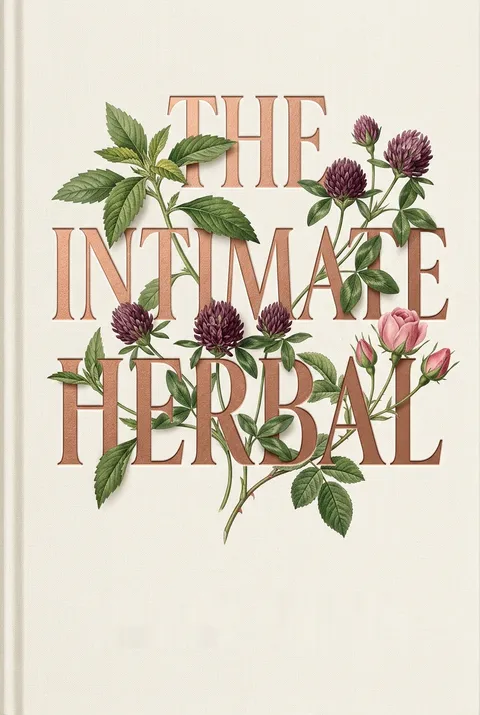
The Intimate Herbal is part practical manual, part cultural history, and part argument for a different philosophy of sexual wellness. Its organizing idea is that herbs belong within a wider ecology of health: bodily knowledge, nourishment, pleasure, rest, relationships, clinical care, and the condition of the land. That breadth is its distinctive strength. It resists reducing libido or reproductive health to a single hormone, diagnosis, or product, and it treats the reader as an active participant rather than a passive recipient of remedies.
The book's structure moves from foundations and safety into preparation methods, anatomy, health conditions, plant profiles, and recipes. That sequence makes it approachable, but the volume's breadth also creates a challenge: a reader can encounter a cautious account of limits beside confident claims about disease treatment. The cited material ranges from human trials to laboratory research and traditional practice. These sources are valuable, but they differ greatly in what they can demonstrate. A biological mechanism or promising cell study is not the same as evidence that a preparation reliably treats a condition in people.
The most durable lessons are therefore not particular prescriptions. They are the habits of attention the book encourages: observe patterns, learn a small number of plants well, choose preparations deliberately, make care pleasurable when possible, and consider social and environmental conditions alongside symptoms. Its warnings about herbal contraception, abortion, and the limits of plant remedies are especially important. Readers should treat the book as an introduction to herbal thinking and a prompt for informed conversations, not as a substitute for diagnosis, medication review, or proven treatment. Its vision is strongest when plant wisdom expands care rather than competes with it.
Review Summary
The Intimate Herbal receives positive reviews, with an overall rating of 4.38/5. Readers praise its comprehensive information on reproductive health, fertility, and herbal medicine. The book is noted for its accessibility to both beginners and experienced herbalists. Highlights include sections on breast health, menopause, and a useful materia medica. Reviewers appreciate the author's competence, the book's depth, and its broader perspective on herbalism. Some criticism is directed at the translation quality in a non-English edition.
People Also Read


Glossary
Intimate herbalism
Herbal care for sexual wellnessWhite's approach to using herbs and plant-based practices in support of sexual and reproductive health, pleasure, fertility, and hormonal wellness. It combines traditional plant knowledge, modern research, home preparation, body literacy, and attention to emotional and social conditions. The term describes a broad practice, not a single treatment protocol.
Integrated herbalism
Herbs alongside wider careAn approach that combines herbal remedies with other supports relevant to health. In this book, those supports include rest, nature connection, education, therapeutic bodywork, relationships, and access to health care. It also means recognizing that an herb may not be the most useful response to a person's concern.
Full-spectrum aphrodisiacs
Broad supports for sexual wellnessWhite's category for plants that may support sexual health through more than direct effects on desire or sexual organs. It includes nervines, adaptogens, tonics, nutritive herbs, and herbs associated with hormonal function. The idea is that mood, stress, energy, nourishment, and general health can all shape sexual experience.
Adaptogen
Herb for stress resilienceA category of herbs that the book describes as supporting the body's capacity to respond to physical, emotional, mental, or environmental stress. White presents adaptogens as broad regulators of stress-related body functions rather than as remedies aimed at one symptom. The category includes plants such as ashwagandha, schisandra, and tulsi.
Nervine
Herb supporting the nervous systemAn herbal category used for plants that affect or support the nervous system. The book distinguishes calming nervines, stimulating nervines, and nourishing nervous system tonics. Examples include passionflower, cacao, and milky oats. Their relevance to intimate health may involve stress, mood, tension, or a person's ability to feel present.
Trophorestorative
Restorative organ-system tonicWhite uses this term for a potent tonic believed to have a strong affinity with a particular organ or body system and to help restore its function. Examples in the book include nervous system and liver trophorestoratives. It is specialized herbal terminology, not a standardized diagnosis or guarantee of clinical effect.
Menstruum
Liquid used for extractionThe solvent in which plant material is extracted during medicine-making. Common menstruums described in the book include water, alcohol, oil, glycerin, honey, and vinegar. The choice depends on the plant part, the compounds sought, the intended preparation, and practical considerations such as taste, preservation, and alcohol avoidance.
Cycle charting
Recording menstrual-cycle patternsA method of tracking signs across menstrual cycles to observe individual patterns. The book discusses recording bleeding, basal body temperature, cervical fluids, cervical changes, symptoms, and mood. Charting can help a person understand cycle variation and estimate when ovulation has occurred, but it is not itself a diagnosis or a guarantee of contraceptive effectiveness.
Download PDF
Download EPUB
.epub digital book format is ideal for reading ebooks on phones, tablets, and e-readers.








