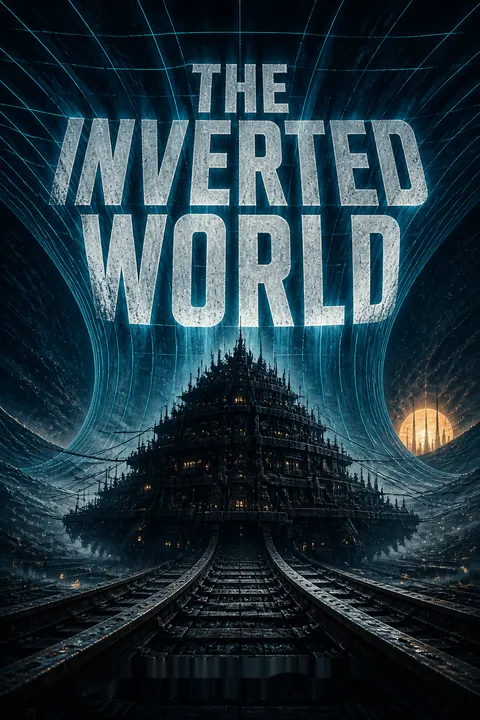


Plot Summary
Prologue
Elizabeth Khan, a nurse newly arrived in a struggling village, joins the villagers at a bonfire. Later, walking alone beyond the houses, she hears an urgent conversation among men she cannot see.
Back at her surgery, she recognizes Luiz, the village’s self-appointed leader, carrying a large bag. He slips indoors without explaining himself. A moment later, horses gallop away into the darkness, leaving Elizabeth with evidence of a meeting whose purpose she cannot yet name.
The prologue plants suspicion before the central story explains the city’s barter system. Elizabeth notices not a dramatic crime but a bag, a private conversation, and departing horses: the small, practical traces by which power hides itself in ordinary life. Her position as a newcomer makes her observant but not yet informed, while the village’s communal celebration contrasts with the secret negotiations that will shape its people’s choices. The scene also gives the novel’s later political conflict a human scale. Before the city’s impossible physics are disclosed, the first mystery is who gets to make decisions for the vulnerable.
The Oath Beneath the Cloaks
At six hundred and fifty miles of age, Helward Mann leaves the enclosed crèche for a ceremony attended by the city’s senior guildsmen. His father proposes him for the Future Surveyors, a guild that will explore the land beyond the city.
Before admitting him, Lord Navigator Olsson requires a lifelong oath: Helward must put the city’s security first, conceal what he sees outside, and accept execution for betrayal. No one explains why the promise is so severe, but Helward swears it, eager to enter the adult world.
The ceremony also announces his engagement to Victoria Lerouex, a crèche companion he barely knows. As strangers celebrate choices made on his behalf, Helward becomes both an apprentice and a husband-to-be, bound to a system whose purpose remains secret.
Helward’s entry into adulthood is staged as consent, but the ceremony sharply limits what consent can mean. He can refuse the oath only before hearing its terms, then must decide under the pressure of public expectation and a future already arranged for him. His excitement is real, which makes the coercion more effective: the guild does not need to crush his curiosity when it can recruit that curiosity. The oath also turns knowledge into a controlled resource. Helward is promised access to the outside world at the exact moment he is forbidden to interpret that experience freely or share it with those who remain inside.
Sunrise Beyond Earth
Before dawn, Future Denton leads Helward through a locked exit to a platform outside the city. Helward watches the sun rise as a disk pierced by vertical spires, then steps onto natural ground for the first time.
Trackman Malchuskin quickly replaces wonder with labor: Helward dismantles rails, sleepers, and reusable foundations with hired local workers, then helps install buffers to stop the city rolling backward. He learns how little his sheltered strength has prepared him for physical work, and how the guild teaches through exhaustion instead of instruction.
Malchuskin explains that the tracks are moved from behind the city to the land ahead, but withholds the reason. The city’s people measure age and progress in miles, and Helward begins to suspect that the world outside is not what the crèche taught.
The sunrise offers Helward a sensory fact before he has any conceptual language for it. The sun looks wrong, but the guild does not invite him to question why; it puts him to work. Malchuskin’s method is not simply harsh training. It makes survival bodily legible: rails must be recovered, buffers built, and labor organized because the city’s continued existence depends on them. Yet the workers’ presence complicates the guild’s self-image. The city’s ordered interior rests on local people’s effort, while its apprentice is taught to regard their lives as operational details. Helward’s first experience of knowledge is therefore also an experience of unequal dependence.
Victoria Sees the Boundary
During leave, Helward finds Victoria working as an administrator and visits her private quarters. She understands more about the city’s internal systems than he does, but she cannot enter a first-order guild because she is a woman.
Victoria resents being steered toward domestic work and repeated childbearing, while Helward is allowed to travel beyond the walls. When she questions his silence, he admits the oath exists and has already technically violated it by discussing it.
Their conflict gives way to intimacy, and they decide to marry despite the arrangement made by their fathers. Victoria signs the marriage forms, and Helward moves into her quarters. He promises to help make the system more open, though he cannot yet say what the system protects or why its restrictions endure.
Victoria identifies the gendered architecture of the city before Helward can see its full shape. His access to danger is treated as privilege and duty at once; her exclusion is defended as protection while also making her reproductive capacity a public resource. Their attraction does not erase this asymmetry. Instead, intimacy gives Victoria a channel into the world that the guilds deny her, while Helward’s promise to share knowledge begins to loosen the oath’s hold. Their marriage is therefore both genuine affection and an attempted workaround to institutional exclusion. The novel makes private commitment politically consequential without pretending that love alone can undo the rules surrounding it.
A City Pulled on Cables
As the crews prepare new tracks, Helward watches the city haul itself over a ridge on strained cables and winches. The operation makes the city’s motion unmistakable, though its purpose remains unclear. Soon afterward, Barter guildsman Jaime Collings recruits Helward to help settle a dispute with the local workers.
A fight erupts when the workers learn that several of their wives are being kept in the city; the Militia intervenes violently, and Helward is beaten while trying to reach Collings.
Collings explains that the women have been taken under the city’s transference bargain, which exchanges food and supplies for labor and pregnancies. Helward sees that the city’s survival depends on a bargain its partners may experience as coercion, and that the guilds’ careful language does not make the arrangement harmless.
The winching converts an abstract civic mystery into machinery under tension, while the later riot reveals the human tension beneath it. Helward’s injury matters because he has crossed from observing labor to participating in its enforcement. The city describes barter as exchange, but its leverage comes from local scarcity, and the workers’ anger exposes how unequal terms can masquerade as consent. The scene also unsettles Helward’s moral innocence: he has benefited from food produced through the same system he is only beginning to recognize. The novel does not let technical necessity settle the ethical question. A practice can sustain a community and still impose costs on people who had little power to refuse.
The Bridge Gives Way
When the city must cross a deep chasm, the BridgeBuilders suspend a railway between steel towers and enlist nearly every available crew. Helward works alongside Victoria’s father, Bridges Lerouex, as the bridge is built under deadline pressure.
A worker falls to his death, and the crossing eventually kills five militiamen when a winching cable snaps. The city reaches the far side, but the bridge and cable require costly repairs. During the same period, Victoria tells Helward she is pregnant, giving their uneasy marriage a shared future.
Helward’s apprenticeship continues through several guilds, and he expects to become a Future Surveyor. Instead, Clausewitz assigns him a southbound escort mission: he must return three transferred women to their settlement, even though Victoria’s first child is due soon.
The bridge is an engineering problem, but its construction also concentrates the city’s moral and political logic. Everyone is mobilized because movement outranks ordinary work, private time, and even the safety of individuals. Victoria’s pregnancy makes the cost intimate: Helward is being asked to leave precisely when his family begins to exist beyond their marriage. The crossing’s deaths do not halt the system; they are absorbed into its accounting as the price of progress. Lerouex’s craft and Helward’s growing competence give the effort dignity, but neither can make its risks disappear. The scene prepares the novel’s recurring question: when survival is treated as an absolute, who is permitted to define what must be sacrificed?
South With Three Women
Clausewitz tells Helward that refusing the escort would violate his oath, so Helward accepts the order and prepares to travel south with Rosario, Caterina, and Lucia. His father, a Future Surveyor, appears abruptly aged and ill before the departure, warning him that the journey will change what he understands.
The women, all young and recently delivered of babies, meet Helward with distrust. They carry little, and Rosario brings her infant son. Helward assumes the trip will take days, but the map warns that distance and direction become unreliable farther south.
He is instructed to follow the old track scars and avoid local food. Victoria supports his departure despite her grief, while Helward leaves without knowing that his brief expedition will consume far more city-time than he can imagine.
Helward’s decision is constrained by a system that calls obedience training and frames personal refusal as a threat to everyone. Clausewitz gives the mission a practical rationale, but the emotional cost remains visible in Victoria’s pregnancy and Helward’s father’s sudden frailty. The three women are not merely companions for an educational trial; they are people returning to a world where the city’s intervention may have altered their standing and safety. Helward begins the journey with the confidence of someone who still believes distance can be measured by familiar experience. The mismatch between his estimates and the world’s behavior will expose how deeply the guild has shaped even his most basic assumptions.
The Southward Distortion
The first miles south are difficult but ordinary: the women tire, the baby becomes sick, and Helward camps beside a stream. After eating local fruit, Caterina recovers while Rosario and Lucia fall ill, prompting Helward to suspect that city food harms people from outside the city, while Rosario’s milk may be harming her city-born infant.
He changes the baby to prepared food, and it improves. Then the women’s clothes split as their bodies grow shorter and broader. The tracks, chasm, hills, and stream distort with them.
A force drags Helward south, and he anchors himself with rope and grappling iron before crawling north out of its pull. From a precarious vantage, he sees a world shaped like the spired sun. He realizes the city cannot stop without being carried toward destruction.
The journey makes the novel’s central anomaly physical and intimate. The distortion is not a trick of sight that Helward can dismiss: clothes tear, bodies alter, a child rejects its mother’s milk, and the ground exerts force. His attempt to care for the infant shows the practical intelligence that has grown through apprenticeship, but his solutions are temporary and local. The world’s shape arrives not as an elegant theory but as a survival crisis that strips away familiar measurement. Helward’s revelation is powerful precisely because it does not resolve into mastery. He understands why the city must keep moving, yet cannot explain the laws that have made stopping fatal.
Seventy-Three Miles Lost
After escaping the strongest southward pull, Helward walks north, repeatedly seeing the mountains return to their ordinary scale as he moves. The journey back seems short to him, but a starving Helward meets apprentice Kellen Li-Chen and learns the city is only five miles away.
At a river, an armed stranger challenges him, then reveals himself as his old crèche friend Gelman Jase. They travel together and find the city scarred by attacks from local fighters who steal apprentices’ uniforms.
Helward learns that seventy-three miles of city-time passed during his absence. His father is dead, Victoria’s infant son died in the attack, and Victoria has ended their marriage and begun a new life. Helward is made a full guildsman, but returns to a home and family that have continued without him.
Time dilation turns Helward’s absence into more than a travel mishap. The city has experienced an entire stretch of danger and grief while he has lived only a few days, so his personal continuity no longer matches the lives of those he loves. Jase’s recognition offers a brief restoration of companionship, but the city’s ruined crèche and Helward’s losses make clear that recognition cannot restore the past. The shock is intensified by the guild’s silence: its leaders knew the trip could take far longer in city-time, yet sent him anyway. The episode exposes the ethical cost of treating subjective time as an operational detail rather than as the measure of a human life.
The Hyperbola in the Sun
With attacks still threatening the city, Future Denton takes Helward north to survey uncharted land. They find that time runs faster for travelers north of the optimum, the point where conditions most resemble those Helward was taught to expect.
Helward begins to connect the city’s changing clocks, the world’s shape, and his crèche lessons in mathematics. He recognizes the sun’s form in an old diagram of a rotating hyperbola. After they return, he reads Francis Destaine’s Directive, the founding document that explains why the city moves and why guilds preserve practical knowledge through experience.
Destaine describes a remote settlement maintaining itself in a hostile environment, and his writings establish movement and survival as the city’s governing rules. Helward now understands more, though neither the origin of the world nor its larger purpose is settled.
The northern survey reverses Helward’s earlier southbound ordeal. The landscape is calmer, but time itself becomes a variable, and the city’s apparent slowness is revealed as relative rather than absolute. His mathematical memory shows how education can conceal as much as it prepares: the crèche supplied the shape without giving him the means to recognize its relevance. Destaine’s Directive offers institutional memory, yet not a final metaphysical answer. Its authority rests on recorded experience and an urgent ethic of survival. Helward’s new understanding is thus not enlightenment in the simple sense. It is a more coherent model of danger, still dependent on the city’s inherited interpretation.
Elizabeth Finds the City
Elsewhere, Elizabeth Khan, a nurse working among poor villagers, encounters Helward beside a stream while he surveys and sketches. His drawings make her appear unnaturally tall, and the sun he records has a shape she has never seen.
When he claims to come from the city of Earth, she thinks he is mistaken or unwell. After city agents negotiate for local women, Elizabeth disguises herself as one of the transfers and enters the settlement to investigate. In the kitchens she finds an old IBM cabinet, and she reads a copy of Destaine’s Directive.
Its account of an inverted world seems to explain Helward’s claims, but she believes the city’s people are misperceiving ordinary Earth. She later meets Helward again and accompanies him and Blayne toward the coast, where an ocean appears to block the city’s route.
Elizabeth’s arrival creates a second interpretive center. Where Helward treats his experience as evidence of a physically altered world, Elizabeth brings the assumptions of a recognizable post-Crash Earth. Her decision to enter through the transference quarters is both investigative and ethically compromised: she uses the very system she wants to understand. The IBM cabinet and printed Directive place traces of her own history inside a society that has forgotten its origin. Yet evidence does not settle the disagreement. The coast becomes a shared object that each can perceive but neither can interpret for the other, turning scientific uncertainty into a problem of trust and communication.
Victoria Rejects the Old Marriage
Once Helward returns, Victoria initially refuses to see him. When they finally meet, she explains the years he missed: she raised their son, lost him in the attack, and believed Helward might never return. She now lives with Yung and is pregnant again, and she and Helward accept that their marriage cannot be restored.
Their dispute shifts to the city’s future. Victoria joins the Terminators, who want to stop its movement and end the barter practices that provoke local hostility.
Meanwhile, the Navigators keep the city open to public scrutiny and approve continuous traction, which eventually brings it back to the optimum. Helward spends long periods surveying in the north, where city-time passes slowly; he fathers twins with Dorita, but their different rates of aging deepen his distance from city life.
Victoria’s break with Helward is not a simple betrayal. She has had to build a life in the time he was absent, while his return cannot undo the losses or restore their shared chronology. Their political disagreement grows from this intimate rupture: Victoria sees movement as the engine of exploitation, while Helward sees it as the condition of survival. Both positions are grounded in experience, but only one has witnessed the lethal southern distortion firsthand. Helward’s later relationship with Dorita and the twins repeats the problem of incompatible time. Affection can cross institutional boundaries, but it cannot make two lived durations equal.
The Coast Has No Bank
Helward and other surveyors confirm that the water ahead is an ocean, not a river with a nearby opposite bank. The city cannot simply go around it, so the BridgeBuilders repeatedly attempt a crossing while the sea and storms destroy their work.
Bridges Lerouex, once confident that every obstacle can be engineered through, admits that the plan may be impossible. With the city behind optimum and resources dwindling, the Navigators consider abandoning the bridge and constructing a ship instead.
The Terminators gain support by arguing that the city’s movement has created its own danger, while Helward refuses a place on the Council’s compromise effort and returns to the bridge site. He believes the city’s survival depends on crossing, even when its leaders are beginning to doubt that their inherited methods can succeed.
The ocean converts a familiar obstacle into a limit case. Rivers had made the guild system look difficult but workable; an apparently endless sea challenges the premise that every barrier can be met with more labor and engineering. Lerouex’s wavering matters because his identity is inseparable from building bridges, while Helward’s commitment to the crossing increasingly resembles faith. The Terminators exploit a real political weakness: the city’s need to move has repeatedly harmed outsiders and endangered its own population. Yet stopping is not neutral in Helward’s understanding. The novel sharpens its conflict by making both sides respond to genuine evidence, while neither can offer a risk-free future.
Elizabeth Names the Generator
After spending months back in England, Elizabeth returns to the city as the Terminators present their case to a large public gathering. She explains that Helward and the city have never left Earth: their perceptions have been altered by a self-sustaining translateration generator built during Francis Destaine’s experiments.
The apparent nuclear reactor is not powering the city as its guilds believe; the generator’s field distorts how its inhabitants experience the world. Elizabeth uses questions about the machinery to expose how little even the Traction guild knows about its supposed reactor.
The revelation gives the crowd a new explanation for the sun, the world, and the city’s history. The Traction guild disconnects the generator, but the announcement does not make Helward’s lived experience disappear.
Elizabeth’s account is the novel’s most destabilizing explanation because it does not merely add facts; it challenges the authority of experience itself. Helward’s observations remain real as experiences, but Elizabeth relocates their cause from an alien cosmos to a technology on Earth. The guild’s ignorance of its own power source reveals how institutional competence can coexist with foundational misunderstanding. At the same time, the public revelation is not a clean victory for reason. A persuasive explanation can alter the social order without immediately changing perception, and technical shutdown does not dissolve the memories or bodily evidence that have shaped the city’s people.
Helward Swims Into Darkness
With the generator disconnected, Elizabeth tells Helward that the sun is now an ordinary sphere and the ocean belongs to the familiar Earth she knows. Helward refuses to accept that his experience was only perception.
He remembers the transformed bodies of Rosario, Caterina, and Lucia, the sick infant, and the force that nearly dragged him south; Elizabeth has never been down past and cannot answer those memories for him. He walks to the unfinished bridge, removes his boots, and dives into the water.
Elizabeth watches from her horse as he swims away from the structure. He turns toward the setting sun, then continues through the waves. The city’s political and physical future remains unresolved, as does the gulf between what Helward and Elizabeth believe they have seen.
The ending refuses the comfort of a final conversion. Elizabeth may have supplied the correct causal account, yet Helward’s memories are not abstract propositions that can be withdrawn when a machine is switched off. His choice to swim is neither a proof that he is right nor a surrender to her explanation. It is a bodily act in a world whose meaning has become contested. The bridge, once the emblem of collective survival, is left behind for the open water. The novel closes by preserving the distinction between evidence and interpretation: what people perceive shapes their loyalties, and no revelation can instantly reconcile incompatible histories.
Analysis
The Inverted World makes epistemology a matter of survival. Helward does not begin as a skeptic but as a recruit eager to enter the guilds, and the novel makes that eagerness essential: the system gains his cooperation by promising experience while rationing interpretation. The oath, the crèche, and the apprenticeship all shape what can be known, by whom, and at what cost. Practical instruction does produce competence, yet competence is not the same as understanding. A worker can keep a city moving for years without knowing what powers it or how its world should be described.
The novel’s most disruptive technique is to place incompatible accounts of reality beside concrete consequences. Helward’s world changes in measurable ways: the women’s bodies distort, a stream contracts, and southward force threatens to pull him away. Elizabeth’s account reframes those events as consequences of a technological field on Earth. Neither character is merely foolish or dishonest. Helward’s certainty is grounded in embodied experience; Elizabeth’s is grounded in a history and material culture he does not recognize. The conflict therefore resists the easy division between objective reason and delusion. It asks how far an explanation can travel when the people who need it inhabit different standards of evidence.
The city’s political economy extends that question into ethics. Guild secrecy is defended as protection, while barter is defended as necessity, but both arrangements suppress the voices of people who bear their costs. Victoria sees that exclusion from decision-making is itself a form of harm. The Terminators offer a powerful moral counterclaim, yet stopping the city may be physically catastrophic. The novel refuses to make survival innocent or dissent automatically wise.
Time distortion gives these conflicts their private wound. Helward returns from a short subjective absence to a city that has endured years of loss, and love cannot restore a shared chronology. The ending preserves that fracture. Turning off the generator may settle a technical question for Elizabeth, but it cannot simply cancel Helward’s memories. In this world, explanation can alter institutions faster than it can alter a person’s lived reality.
Review Summary
The Inverted World receives praise for its imaginative premise of a city moving on rails through a mysterious landscape, chasing an "optimum" while distorting space and time. Reviewers appreciate Priest's exploration of perception, reality, and physics through protagonist Helward Mann's journey. Many highlight the novel's "mind-bending" concepts, medieval-like guild system, and philosophical depth. While some find the pacing slow and characters underdeveloped, most consider it accessible, thought-provoking science fiction. The ending divides readers—some find it satisfying, others abrupt. Several note dated gender dynamics but commend the world-building and narrative structure alternating between first and third person.
People Also Read

Characters
Helward Mann
The searching surveyorHelward begins as a sheltered crèche resident who sees guild service as a gateway to adulthood. He is curious, capable of hard physical work, and more inclined to act than to theorize. His apprenticeship teaches him to distrust easy explanations, but his loyalty to the city can make him mistake obedience for moral clarity. Marriage, parenthood, separation, and repeated journeys force him to confront the cost of a life organized around civic necessity. His strongest trait is his willingness to test what he has been taught against what he experiences. That discipline makes him a reliable witness to events, even when his interpretation of them remains difficult to settle.
Elizabeth Khan
The outside investigatorElizabeth is a nurse and field worker who arrives in a poor village determined to be useful, though the limits of charitable relief frustrate her. She notices practical details others overlook and follows questions even when doing so carries personal risk. Her curiosity about Helward begins as fascination with an unusual stranger, then becomes an investigation of the city and its history. Elizabeth trusts evidence and ordinary physical explanations, but she also recognizes that people can inhabit a sincere worldview very different from her own. Her strength is not simply skepticism. She can revise her understanding when new information appears, while still refusing to confuse empathy with agreement.
Victoria Lerouex
The city’s dissenterVictoria grows up alongside Helward in the crèche and is later engaged to him through their families. Intelligent and politically alert, she understands the city’s internal administration well before he does. Her exclusion from the first-order guilds makes her keenly aware of how gender determines access to work, knowledge, and risk. She wants a life shaped by choice rather than by reproductive duty, and she is willing to challenge the assumptions that others treat as necessary. Victoria’s emotional directness can make her seem severe, but it comes from a refusal to disguise the consequences of the system for those who lack institutional power.
Gelman Jase
The old crèche friendJase is Helward’s older friend from the crèche, where he once cultivated a worldly, rebellious manner. Life outside the city hardens him into a more capable and watchful man. He understands the dangers posed by hostile locals and treats the stolen guild uniforms as a practical threat, not a theoretical one. Though loyal to the city’s security, he remains willing to hear opposing arguments, even when Helward’s certainty makes him impatient. His changing relationship with Helward also reflects the novel’s distorted time: their shared childhood remains emotionally vivid while their adult experiences pull them in different directions.
Jaime Collings
The pragmatic bartermanCollings is a Barter guildsman who combines social tact with practical knowledge of the communities the city encounters. He explains the city’s labor and transference arrangements to Helward without pretending they are morally uncomplicated. His experience gives him a less rigid attitude toward the oath than the formal ceremony suggests, but he still sees secrecy as a tool for protecting a vulnerable city. Collings becomes an important mentor because he answers questions selectively rather than hiding behind ritual. His judgments reveal the city’s capacity for humane reasoning and its willingness to preserve exploitative practices when survival appears to demand them.
Malchuskin
The trackside mentorMalchuskin supervises track crews and teaches Helward through practical work, blunt observations, and carefully rationed explanations. He is physically capable, cynical about guild ceremony, and more perceptive about local workers’ hardship than his rough manner first suggests. He values competence and understands that the city’s movement depends on many people whose contributions are rarely acknowledged. Malchuskin does not offer Helward a theory of the world, but his explanations of tracks, buffers, labor, and delays give the apprentice the material knowledge needed to interpret later events.
Future Clausewitz
The oath’s enforcerClausewitz leads the Future Surveyors and oversees Helward’s apprenticeship. He is formal, controlled, and convinced that the city’s safety must outrank personal preference. His decisions are not presented as sadism: he believes the guild’s procedures preserve knowledge and discipline in a dangerous environment. Yet his commitment to necessity makes him willing to demand severe private sacrifices from apprentices. Clausewitz embodies the institution at its most intelligible and its most inflexible, offering reasons for obedience while rarely inviting those subject to it to help redefine the rules.
Helward’s father
The distant Future SurveyorHelward’s father is a senior Future Surveyor, respected by his guild but emotionally reserved with his son. His professional life has kept him away from the crèche and from ordinary family intimacy. Helward initially interprets his father’s age and absences as signs of authority, not as evidence of the costs of service. Their limited closeness leaves Helward with unanswered questions about family history and about what a guild career demands. The father represents an older generation whose private lives have been shaped by the city’s work.
Bridges Lerouex
The bridge engineerVictoria’s father is a senior BridgeBuilder responsible for designing and supervising major crossings. Lerouex is proud of technical competence and accustomed to treating obstacles as engineering problems. His relationship with Helward is shaped by both professional respect and the awkwardness of becoming family through an arranged engagement. He values the city’s traditions, but the repeated failure of bridge projects tests his confidence in inherited methods. Lerouex’s expertise is real, yet the novel shows that even mastery has limits when the environment exceeds the assumptions behind the craft.
Future Denton
The northern guideDenton is an experienced Future Surveyor who takes Helward on a northern mapping expedition. Quiet and methodical, he teaches through instruments, measurements, and patient demonstrations rather than speeches. He understands that the city needs accurate knowledge of terrain before it can choose a route, and he treats this work as essential even when others view it as secondary to immediate emergencies. Denton’s calm manner contrasts with Helward’s urgency and helps him approach time and distance as variables that must be measured rather than assumed.
Future Blayne
The open-minded surveyorBlayne is a relatively young Future Surveyor who enjoys company and speaks more freely than many guildsmen. He shares technical knowledge with Helward, including ideas about the world’s shape and the changing physical effects found farther north. His willingness to discuss uncertainties makes him an important intellectual companion. Blayne is not free of guild assumptions, but he is less guarded about the questions those assumptions leave unanswered.
Torrold Pelham
The southbound warningPelham is an apprentice Helward once knew from the crèche. Helward encounters him traveling north after a journey south, and Pelham recognizes that the landscape’s effects are difficult to describe until experienced directly. His brief appearance reinforces the pattern of apprentices sent on similar missions and the limited value of explanation before firsthand experience.
Kellen Li-Chen
The next apprenticeLi-Chen is a younger apprentice traveling south with two transferred women. He gives the exhausted Helward food and water, offering practical help without understanding the full experience ahead. His presence shows that the guild continues sending apprentices into the same uncertain territory, even as the conditions around the city change.
Rosario
The protective young motherRosario is one of the women Helward is assigned to escort back to her settlement. She is protective of her infant son and initially distrustful of Helward, whose authority comes from the city that has taken her away from home. Her experience reveals how the city’s transference bargain is lived by the women it moves. Rosario’s concern for her child also gives Helward a direct encounter with the physical consequences of the strange conditions south of the city.
Caterina
The resourceful travelerCaterina travels with Rosario and Lucia on Helward’s southbound escort mission. She adapts quickly to the journey and finds local fruit that helps when the city’s prepared food makes the women ill. Her resourcefulness makes her a practical counterpoint to Helward’s reliance on guild instructions.
Lucia
The wary companionLucia is one of the transferred women returning south with Helward. She shares the group’s distrust of the city and participates in the teasing that gradually eases the journey’s early tension. Her presence helps show that the women are individuals with their own attachments and judgments, not simply cargo in a guild assignment.
Dorita
Helward’s northern companionDorita is a transferred woman who forms a mutual liking with Helward during his long periods in the city. She speaks little English, but the two build a modest domestic connection within the city’s reproductive arrangements. Her relationship with Helward illustrates how intimacy can emerge inside a system designed for practical ends.
Luiz Carvalho
The village spokesmanLuiz is a self-appointed leader in Elizabeth’s village. He negotiates with the city’s visitors because the community needs food and other supplies, and he believes the bargain may be its best available option. His choices are shaped by scarcity, not simple greed, making him a local counterpart to the city’s own leaders.
Father dos Santos
The new village priestDos Santos is a young priest and newcomer to the village, like Elizabeth. He lacks Luiz’s practical authority and cannot easily direct the community’s decisions. His presence reflects the gap between formal ideals and the immediate pressures governing village life.
Plot Devices
The City on Tracks
Movement as survivalThe city is a timber-and-metal settlement hauled along reusable rails by cables and winches. Track crews dismantle the route behind it and rebuild ahead, while Future Surveyors map terrain and BridgeBuilders handle obstacles. This machinery makes survival visible as continuous labor, but it also creates political and ethical pressure: the city must obtain workers, supplies, and routes from the communities it passes. The tracks serve as a physical guide through unfamiliar country and as a record of the city’s passage. Their vulnerability turns every delay, storm, and attack into a threat to the entire population.
The Optimum
A shifting measureThe optimum is the location where the world’s conditions most closely match the city’s inherited expectations. Distance from it affects apparent time, daylight, physical scale, and the force Helward feels while traveling south. The city uses it as a standard for navigation and survival, but apprentices initially receive only fragments of its meaning. Southbound journeys make city-time seem to race ahead, while northern travel can leave the city barely changed on a traveler’s return. The device ties the novel’s physical setting to its emotional structure: characters can share a place yet return to radically different lives.
The Guild Oath
Knowledge under restrictionThe oath binds first-order apprentices to the city’s security and forbids them from sharing what they learn outside. Its threat of execution creates obedience, but its deeper effect is to divide citizens into those permitted to know and those expected to accept the system without explanation. Helward’s gradual breaches, first with Victoria and later through public debate, dramatize the cost of controlled knowledge. The oath is not merely a secret-keeping rule. It is an inherited technology of governance, justified by the city’s vulnerability even as it prevents citizens from assessing the choices made in its name.
Transference Barter
Bodies exchanged for suppliesThe Barter guild offers poor settlements food, medicine, technology, and other scarce goods in exchange for labor and temporary transfers of young women, who may bear children in the city. City officials describe the process as a negotiated exchange, but local poverty and the women’s limited choices complicate that claim. The practice explains the city’s demographic needs and supplies its track crews, while provoking resentment that later feeds resistance. It also draws attention to the difference between a policy’s administrative description and the experience of the people whose bodies and labor make it possible.
The Transliteration Generator
A field that reshapes perceptionThe generator, mistaken by the city’s Traction guild for a nuclear reactor, produces the field that underlies the citizens’ altered experience of the world. Elizabeth connects it to Francis Destaine’s experiments and identifies it as the reason the city’s inhabitants interpret their surroundings so differently from her. The explanation challenges the guilds’ inherited account without erasing the physical reality of what Helward has experienced. When the Traction guild disconnects the machine, the political crisis changes, but Helward’s convictions do not instantly change with it. The device makes perception, not simply geography, the novel’s central contested evidence.

Download PDF
Download EPUB
.epub digital book format is ideal for reading ebooks on phones, tablets, and e-readers.








