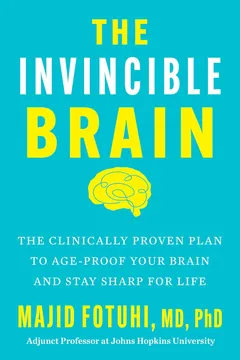


Key Takeaways
Train the brain you have instead of treating today’s limits as destiny
Practice changes the brain. Neuroplasticity is the brain’s ability to reorganize and strengthen its connections in response to learning, experience, and repeated use. In studies described in the book, London taxi trainees who mastered the city’s intricate streets showed growth in a hippocampal region involved in navigation. Beginners who practiced juggling or intensive language learning also showed measurable brain changes. The point is not that every pastime makes someone broadly smarter. Training tends to strengthen the abilities and networks being used.
Start with a chosen skill. Zohreh Etezad Saltaneh, an Iranian artist born without fully developed arms, learned to paint with her toes. Her example illustrates how sustained practice can build abilities that were not initially prominent. Skills can also weaken when they go unused, so improvement depends on continued challenge, not inspiration alone.
The distinction between a fixed brain and a trainable one is both motivating and more precise than the popular idea that the brain simply works like a muscle. Practice changes particular circuits, and the taxi-driver example makes that specificity visible. The harder question is transfer: becoming better at navigation does not automatically improve every other cognitive skill. That does not make practice less valuable. It means goals should be concrete, and progress should be measured in the skill being trained rather than assumed to spread everywhere.
Use cognitive tests as maps, not verdicts on your intelligence
Tests capture slices. IQ and cognitive assessments measure selected abilities, such as reasoning, attention, memory, and processing speed. They cannot encompass every talent, from reading a room to repairing a machine, and a score can be affected by culture, health, and circumstances. The book presents intelligence as a varied set of abilities that can be developed, not a single number that defines a person.
Track change over time. Sue, a chemist with lingering symptoms after a concussion, had an executive-function score at the bottom 1 percent of her age group. After a twelve-week rehabilitation program, her score rose to the 70th percentile, while processing speed reached the 99th percentile. Her experience illustrates why a low score needs context and follow-up, not an automatic conclusion that ability is permanently lost.
A test is most useful when it answers a limited question: what is difficult now, and is it changing? That is different from treating a percentile as a complete account of a person. Sue’s improvement is encouraging, but one clinical case cannot show what any individual should expect, and repeated testing can itself produce practice effects. The responsible approach combines test results with daily functioning, medical history, and professional interpretation. Measurement can guide recovery without becoming a label.
Investigate the whole dementia risk picture, not amyloid alone
Late-life decline has many contributors. The Dynamic Polygon Hypothesis is the book’s model that late-onset Alzheimer’s-like decline can arise from interacting problems, including amyloid, tau, strokes, inflammation, and vascular or metabolic illness. Epigenetics means the interaction of genes with environment and lifestyle; inherited risk is not a certain forecast. The book contrasts this complex picture with the more single-cause account that places amyloid at the start of a chain leading to dementia.
Look beyond one marker. In the Nun Study, some participants had plaques and tangles but remained cognitively sharp, while strokes were strongly associated with dementia. The 2024 Lancet Commission estimated that addressing fourteen modifiable risk factors could potentially prevent or delay 45 percent of dementia cases worldwide. That is a population estimate, not an individual guarantee or a promise that dementia can always be prevented.
The model’s strongest contribution is its insistence that a dementia diagnosis should not end the search for treatable contributors. Vascular disease, sleep problems, and other conditions can affect cognition alongside disease-specific pathology. This also guards against the opposite mistake: declaring amyloid irrelevant or treating a multifactorial account as settled fact. Prevention estimates describe groups, not personal outcomes, and risk reduction is not equivalent to certainty. The useful stance is pluralistic: investigate the person’s symptoms and health rather than letting one biomarker stand in for the whole brain.
Build brain reserve by strengthening the body that supplies it
Capacity creates a buffer. Brain reserve is the extra neural capacity that may help a person cope with aging or injury. The book connects it to neurons, synapses, fiber bundles, and efficient brain networks. Organ reserve is the broader idea that healthy organs have spare capacity when illness or stress makes demands on them. Heart, lung, kidney, liver, bone, and muscle health all influence the brain through factors such as oxygen delivery, circulation, inflammation, and physical activity.
Move to support the system. The author gives exercise special priority because it supports blood flow and the production of brain-derived neurotrophic factor, or BDNF, a protein involved in neuron survival, synapse growth, and plasticity. One study cited in the book found that roughly 10,000 daily steps were associated with a 50 percent lower risk of cognitive decline and Alzheimer’s. Association is not proof that a step target guarantees protection.
Reserve is a useful way to think about resilience: the aim is not merely to avoid a diagnosis, but to have capacity when life puts the system under strain. This framing also connects brain health to routine medical care, strength, and mobility, rather than isolating cognition from the body. It should not imply that illness reflects a personal failure to build enough reserve. Access to safe places to exercise, time, treatment, and support shapes what people can do. The practical priority is sustainable activity and appropriate care, not an idealized fitness standard.
Treat sleep as nightly brain maintenance, and investigate apnea
Sleep is active work. The glymphatic system is the brain’s proposed waste-clearance pathway, involving cerebrospinal fluid moving through brain tissue. The book describes this process as especially active during deep sleep, when the brain clears metabolic byproducts. Sleep also supports memory consolidation and the repair of body systems. Regularly short or disrupted sleep can leave people tired, irritable, and less able to concentrate, making other healthy choices harder to sustain.
Check causes, not just bedtime. Insomnia may be linked to stress, pain, medications, or medical conditions. Obstructive sleep apnea, in which the airway repeatedly narrows or closes during sleep, can disrupt oxygen and rest without the person fully noticing. Snoring, gasping, and daytime grogginess are reasons to discuss evaluation with a clinician. A sleep study can identify apnea; treatment may include CPAP, an oral appliance, or other clinician-guided options.
Sleep is a powerful example of how brain care is not always an extra task. It is a biological process that supports attention and learning while the person is not consciously training either. The waste-clearance account helps explain why sleep matters, but its details are still an evolving area of science, and it should not be treated as a complete explanation for dementia. The more immediate point is practical: persistent poor sleep deserves investigation. A person with apnea needs assessment and treatment, not simply stricter bedtime discipline.
Feed vascular and gut health before chasing brain supplements
Build meals around patterns. The book recommends a Mediterranean-style diet emphasizing vegetables, fruit, legumes, whole grains, nuts, olive oil, and fish, while reducing added sugar and ultra-processed foods. It links these choices to metabolic and vascular health, both of which affect the brain. Dietary fiber also feeds beneficial gut microbes. The gut-brain axis is the two-way communication between the digestive system and the brain, including signals carried by the vagus nerve and compounds produced by gut microbes.
Be selective with pills. The author favors food as the main source of nutrients and recommends checking for deficiencies such as low B12, vitamin D, or iron before supplementing them. He highlights omega-3s, while acknowledging that supplements should be chosen carefully. Diet is not a single magic ingredient: the book’s case rests on the overall pattern and its effects on health, not on a claim that one berry or capsule prevents dementia.
The emphasis on dietary patterns is stronger than the search for a single brain food. Food choices affect several linked systems, including blood sugar, blood vessels, and digestion, so a whole-meal approach has more explanatory power than a supplement ranking. Claims about specific foods and supplements vary in evidence strength, however, and biological plausibility is not the same as demonstrated clinical benefit. The most durable advice is to improve the ordinary pattern of eating and to handle deficiencies or metabolic conditions with qualified medical guidance.
Use a personally meaningful goal to sustain brain-friendly practice
Purpose directs effort. The book argues that a sense of purpose can help people persist with activities that make life meaningful. A meta-analysis cited in the book, covering eight studies and 62,250 adults, found purpose associated with a 19 percent lower risk of cognitive impairment and dementia. Other studies linked it with healthier habits and fewer strokes. These findings are associations, not proof that purpose alone causes better health.
Make stress workable. A growth mindset is the belief that abilities can develop through effort and learning. The author pairs it with practical stress tools, including reframing unhelpful thoughts and slow breathing. Heart rate variability, or HRV, measures small changes in the time between heartbeats and can provide an imperfect signal of how the body is responding to stress. Severe or persistent depression and anxiety require professional care, not a demand to think positively.
Purpose may help because it gives difficult routines a destination: exercise is not just exercise if it helps someone keep traveling, teaching, or spending time with family. It can also organize attention and motivation. Still, the relationship can run in both directions. Better health may make it easier to pursue goals, while illness, grief, or financial strain can make purpose harder to feel. Treating purpose as an invitation to clarify priorities is more humane than making it another health obligation. HRV can support reflection, but a device reading is not a diagnosis.
Practice remembering: attention and vivid associations beat passive exposure
Memory begins with attention. The book describes four broad stages: acquiring information, consolidating it, storing it, and retrieving it. If attention never registers a person’s name, there may be nothing to retrieve later. Emotional importance and repetition can help information stick. The author demonstrates this with a memory palace, a technique that links information to familiar places imagined in sequence. A person might picture number groups at landmarks along a well-known route, then mentally revisit those landmarks to recall them.
Make recall active. The author taught a group of older adults to remember twenty words using exaggerated images and a connected story; they could recite the list both forward and backward after practice. This is a demonstration of a learnable strategy, not a test of overall memory or a guarantee against cognitive decline. For misplaced objects, naming the place aloud as the object is set down can make the moment easier to remember.
These techniques work with attention and association rather than relying on the hope that information will simply stay in mind. Vivid images and familiar locations give retrieval more cues, which is why a grocery list can become easier to recall when turned into a memorable mental scene. Such strategies are especially useful for everyday tasks, but they do not replace evaluation when memory problems are new, worsening, or interfering with independence. External aids such as notes and calendars remain sensible tools; using them is not a failure of memory.
Run a measured 12-week plan across five brain-health pillars
Personalize the starting point. The Brain Fitness Program organizes the author’s approach around fitness, sleep, nutrition, mindset, and brain training. A Brain Portfolio is a personal record of goals, symptoms, relevant medical findings, and progress. The proposed twelve-week plan begins with assessment, targets the areas that need attention, and repeats measures at six and twelve weeks. The author’s clinic offered twice-weekly coaching and tracked both reported symptoms and cognitive tests.
Read the results carefully. In one published clinic study of patients with mild cognitive impairment, 84 percent showed improvements on cognitive tests, and more than half had an average 3 percent increase in hippocampal volume. These are encouraging results, but the clinic studies do not establish that the program prevents Alzheimer’s disease or identify which component caused the gains. A practical plan can use the five pillars while involving clinicians for concerning symptoms or medical conditions.
The program’s most transferable feature is its structure: assess, choose priorities, practice, and reassess. This resembles a personal feedback loop, making progress more visible than a vague resolution to live better. The reported clinic outcomes deserve interest, but retrospective or uncontrolled results can be influenced by who enrolls, how outcomes are measured, and the attention participants receive. Because the program combines several interventions, it cannot tell readers which ingredient mattered most. Its value is best understood as a framework for organized action, not a proven cure.
Analysis
The book’s central argument is that cognitive aging is not a simple countdown written into a person’s genes. Brain function is shaped by learning, health, and daily conditions, and a person can work on several of these at once. Its narrative moves from possibility to explanation to practice: first reframing intelligence and plasticity, then describing memory and the many contributors to dementia, and finally offering a twelve-week plan built around fitness, sleep, nutrition, mindset, and brain training. Patient stories give the science a human scale, especially cases in which problems initially treated as permanent improved after clinicians addressed sleep, medication, mood, or vascular health.
The most useful conceptual shift is from asking only whether a person has Alzheimer’s to asking what combination of conditions may be impairing cognition. That broadens medical attention beyond amyloid and encourages assessment of potentially treatable contributors. The account of the Nun Study, in which strokes helped distinguish cognitive outcomes among people with brain pathology, makes this point memorable. The book’s emphasis on reserve also offers a practical target: build capacity across the brain and body, rather than treating prevention as one supplement or one brain game.
The most important caution concerns strength of evidence. Neuroplasticity and the health benefits of exercise, sleep, and vascular risk management are not equivalent to proof that a particular lifestyle program reverses Alzheimer’s disease. Brain-volume changes on MRI do not, by themselves, demonstrate broad or lasting improvements in everyday function. Clinic outcomes may also reflect selection, measurement, and the combined attention of a care team. Likewise, population estimates of preventable dementia risk should not be read as an individual promise. The book is strongest as a motivating framework for identifying risks, seeking appropriate care, and building sustainable habits. Its boldest claims about preventing or reversing disease should be weighed more cautiously than its practical advice to assess, treat, and track.
People Also Read







Glossary
Neuroplasticity
Brain change through experienceThe brain’s capacity to alter its connections and organization in response to learning, practice, injury, and experience. In the book, neuroplasticity explains why repeated practice can strengthen abilities and why abilities can change across the lifespan. It does not mean every skill improves equally, or that all brain diseases can be reversed.
Dynamic Polygon Hypothesis
Multifactor model of declineThe author’s model proposing that late-onset Alzheimer’s-like decline can reflect several interacting contributors, not only amyloid plaques and tau tangles. These may include vascular damage, strokes, inflammation, metabolic conditions, and lifestyle or environmental factors. The model encourages clinicians to look for multiple influences on cognition rather than assume a single cause.
Epigenetics
Gene activity shaped by contextThe interaction between genes, environment, and lifestyle that can affect how genetic information is expressed. The book discusses DNA methylation as one process involved in gene regulation and argues that long-term habits may influence biological pathways relevant to brain health. Epigenetics does not alter the inherited DNA sequence itself, and it does not make lifestyle a guarantee against disease.
Brain reserve
Capacity to withstand brain strainThe book’s term for extra neural capacity that may help a person maintain function despite aging, disease, or injury. It is associated with neurons, synapses, connecting fibers, and efficient networks. The author argues that learning, exercise, and good management of health conditions can support reserve, while harmful or untreated conditions may erode it.
Glymphatic system
Brain waste-clearance pathwayA proposed system involving cerebrospinal fluid moving through brain tissue and helping carry away metabolic waste. The book emphasizes that this process is especially active during deep sleep and connects sleep quality with brain maintenance. Research on the system is developing, so the book’s explanation should be understood as a useful model, not a complete account of sleep or dementia.
Brain-derived neurotrophic factor (BDNF)
Protein supporting neural growthA protein that supports the survival of neurons and the formation or strengthening of neural connections. The book links BDNF with learning, memory, and neuroplasticity, and describes exercise, sleep, and other lifestyle factors as relevant to its production. BDNF is one biological mechanism discussed in the book, not a stand-alone measure of a person’s brain health.
Heart rate variability (HRV)
Variation between heartbeatsThe small changes in time between consecutive heartbeats. The book uses HRV as an indirect indicator of autonomic nervous system activity and the body’s ability to adapt to stress. Slow breathing and biofeedback are presented as ways to practice stress regulation. HRV varies among people and is affected by health and measurement conditions, so it is not a diagnosis by itself.
Memory palace
Recall through imagined locationsA memory technique that attaches information to familiar places arranged in a mental route. To retrieve the information, a person imagines moving through the route and encountering each associated image. The book uses this method to teach memorization of number groups and lists. It relies on attention, visual imagery, and spatial cues rather than an unusually strong natural memory.
Brain Portfolio
Personal brain-health recordThe book’s name for a record of a person’s goals, reasons for improving brain function, symptoms, relevant tests, and progress. It is intended to help identify priorities at the start of a program and compare results over time. The portfolio may be kept in a notebook, digitally, or with assessment forms, and is meant to complement professional medical evaluation.
Download PDF
Download EPUB
.epub digital book format is ideal for reading ebooks on phones, tablets, and e-readers.








