

Key Takeaways
Treat abstraction as a bridge between examples, not an exit from reality.
Abstraction selects carefully. Cheng presents mathematical abstraction as choosing which details to set aside so a shared pattern becomes visible. Seeing that two apples and two bananas are both pairs lets us use the idea of two across many situations. The process continues: identify an analogy, specify what makes it work, and treat that shared feature as an idea in its own right. Mathematics, in this view, joins rigorous logic to deliberate abstraction.
Keep the details in reach. Abstraction can reveal connections and conserve mental effort, but it can also hide facts that matter. The book’s art students show why the route into mathematics need not begin with fluent arithmetic: abstract structures may speak to learners whom school exercises have discouraged. The aim is not to discard concrete experience, but to move between a general pattern and the particular cases that give it meaning.
The argument resembles model-building in science: a useful model suppresses detail to expose a relation, then returns to the world to test whether that relation matters. Its educational force is unusually specific. It challenges the assumption that arithmetic proficiency is a ticket required before abstract mathematics can be entered. The caution is equally important: abstraction is never neutral about what it omits. A pattern becomes illuminating only when its chosen level of detail fits the question, and readers should ask who or what disappears when the model is simplified.
Fix the context before calling a mathematical statement universally true.
Rules belong to worlds. On a city grid, the shortest route measured by streets differs from the straight-line distance through the air. A circle defined as all points a fixed street-distance from its center becomes a diamond-shaped set of points, not the familiar smooth curve. The objects have not changed; the rule for measuring distance has. Cheng uses this contrast to introduce context as the setting that determines which relationships and rules apply.
Arithmetic can shift too. On a twelve-hour clock, eleven o’clock plus two hours is one o’clock. In arithmetic modulo twelve, numbers wrap around in the same way. The statement is not a rejection of ordinary arithmetic; it belongs to a different system. Being explicit about context lets mathematics make rigorous claims without pretending that one set of rules governs every possible world.
This is a useful corrective to arguments that treat a rule as self-evident while leaving its assumptions unstated. In modeling, a result is conditional on the system being modeled, not a free-floating truth. That distinction supports precision without collapsing into the idea that every claim is equally valid: once a context and its rules are specified, implications can still be tested rigorously. The practical discipline is simple but demanding: identify the frame before debating the answer.
Track relationships, because the same objects can form different worlds.
Relations create context. A collection of numbers can be organized by size, so that one number is less than another, or by divisibility, so that one number is a factor of another. The numbers are unchanged, but the arrows between them produce different mathematical structures and reveal different patterns. Cheng’s family-tree example makes the idea tangible: two parent-to-child relationships compose into a grandparent relationship, even though “is the mother of” is not itself transitive.
Categories formalize this view. A category is a structure with objects and morphisms, meaning arrows that record relationships between objects. It also has identity arrows and a rule for composing compatible arrows. Categories make it possible to study not only what things are, but how they connect and what follows when connections are combined. The same method can describe numbers, paths, shapes, or mathematical systems.
Relational thinking shifts attention from isolated properties to patterns of interaction. That move has clear affinities with network analysis, where a node’s role depends partly on its links, and with systems thinking, where local connections can produce larger behavior. The mathematical gain is a reusable structure: one can reason about many domains using the same rules for arrows and composition. Yet relations must be chosen with care. A diagram can make a selected relationship look exhaustive even when other relationships are relevant to the question.
Replace crude equality with reversible, structure-preserving sameness.
Sameness has degrees. In category theory, an isomorphism is a relationship that can be reversed: moving from one object to another and back returns to the starting point. For finite sets, this is a bijection, a perfect pairing of elements. Two sets with three elements can be isomorphic even when their elements have different names. The same idea applies to groups: rotations of a square and addition modulo four have matching structure, though their elements describe different things.
Structure matters more than labels. An isomorphism shows that two objects behave alike within the chosen category, not that they are literally identical. A bijection between sets alone does not establish that two groups are the same as groups; the pairing must also preserve their operation. This richer notion avoids forcing complicated objects into a yes-or-no test of equality, while keeping the comparison precise.
The distinction between identity and equivalence is central in many disciplines. Two maps can encode the same information in different coordinates, and two organizations can share a structure while retaining different histories. Category theory gives this intuition a disciplined form: sameness is always relative to the structure under examination. That strength also marks a boundary. An isomorphism establishes equivalence within a model, not equivalence in every human or historical sense. The chosen category determines what counts as preserved.
Demand identities, composition, and associativity before trusting an arrow diagram.
Arrows need rules. A picture of dots and arrows is not automatically a category. Each object needs an identity arrow, compatible arrows must be composable, and composition must obey identity and associativity laws. Associativity means that a chain of three arrows has an unambiguous composite, regardless of which pair is combined first. In a family tree, the composite of two parent-to-child relations records a grandparent relation; category theory makes this act of joining relationships part of the structure.
Composition carries the meaning. The arrows need not be ordinary functions. They can represent routes, divisibility, or other relationships, provided the composition rules make sense. This is why categories are more than flowcharts: they specify what it means to follow one connection with another. Diagrams then help make arguments visible, because two paths with the same endpoints can be compared as composites.
Composition is a compact way to encode modular reasoning. A complex route or transformation can be assembled from smaller steps, and the laws guarantee that regrouping those steps does not alter the result. This is the same design problem faced by any system built from components: local operations must fit together coherently. The formalism does not decide what an arrow means, however. A poorly chosen interpretation can satisfy elegant axioms and still model the wrong feature of the situation.
Define important objects by their role in a whole system.
Roles can define objects. A universal property describes an object by how it relates to every relevant object in a category. An initial object has exactly one arrow to each object; a terminal object has exactly one arrow from each object. These definitions do not depend on what the object is made of. In the category of sets, the empty set is initial, while any one-element set is terminal.
Products make the idea concrete. The product of two sets is a set of ordered pairs, with projections that extract each coordinate. Its universal property says that any pair of functions into the two sets combines uniquely into a function into their product. A pullback refines this construction by retaining pairs whose images match, as when pairing items according to a shared color. Such constructions are unique up to a unique isomorphism, not necessarily by literal equality.
Defining something by its role is close to an operational definition: the object is identified by what it enables and how it behaves, rather than by a preferred construction. This makes the idea portable across categories, where the same role may be played by very different objects. The dependence on context remains decisive. An object can be initial in a restricted category and lose that status when the category expands, so a universal claim always needs its surrounding system stated clearly.
Use functors to see what structure survives translation.
Functors preserve the framework. A functor maps objects and morphisms from one category to another while respecting identities and composition. It is therefore a structure-preserving translation, not merely a list of pairings. For example, a poset can be treated as a category, and an order-preserving map between posets becomes a functor. A group can likewise be represented as a one-object category, with its operation encoded by composition.
Forgetting is informative. A forgetful functor sends a structured object, such as a group, to its underlying set, leaving some information behind. The book distinguishes preservation, where a feature remains true after translation, from reflection, where the translated feature lets one infer that it held originally. These are not interchangeable: a functor may preserve isomorphisms without reflecting them. Tracking what survives prevents a convenient representation from being mistaken for the whole object.
A functor resembles a translation between formal languages: it preserves enough grammar to carry valid reasoning across, while potentially changing what is visible. This offers a powerful way to connect mathematical fields without claiming that their objects are identical. It also invites a useful audit: which properties are invariant under the translation, and which are artifacts of the chosen representation? Forgetting can simplify a problem, but any conclusion drawn afterward must respect the information that was discarded.
Compare whole systems of maps, not isolated outputs.
Transformations must fit together. A natural transformation relates two functors by assigning a morphism at every object in their shared source category. The assignments must satisfy a naturality condition: for every arrow in the source, the two routes through the resulting square agree. It is a comparison between entire mapping systems, not a collection of unrelated local choices.
Equivalence loosens identity. Two categories may differ in their inventory of objects yet encode the same structure when their objects are matched up to isomorphism and their morphisms correspond appropriately. This is called equivalence of categories. Cheng’s example of a category with duplicated, isomorphic objects shows how one description can be expanded without changing its essential organization. Natural transformations supply the extra dimension needed to express this more flexible sameness.
Naturality is a coherence test: local comparisons are accepted only when they respect every relationship in the surrounding system. That is a demanding standard, and it explains why a set of individually plausible correspondences may fail to form a meaningful whole. The idea has resonance with consistent translation across interfaces or perspectives. Its limitation is that coherence is internal to the formal structure. A perfectly natural comparison cannot establish that the original categories capture the right real-world features.
Use maps into an object to recover its identity within a category.
Objects are seen through relations. The Yoneda embedding sends an object to a functor that records its morphisms to or from every other object. Such a functor is representable because it arises from one particular object in the category. The Yoneda Lemma states, in one form, that natural transformations from this representable functor to another functor correspond to elements of that functor’s value at the original object.
The identity does the work. The correspondence is driven by composition and the identity morphism: once the image of the identity is known, naturality determines the rest. The Yoneda embedding is full and faithful, meaning it preserves the distinctions and relationships present in the original category. It shows how an object can be understood through its complete pattern of connections, rather than by inspecting it in isolation.
The striking idea is that relational behavior can be a complete description, provided the category contains the right questions and maps. This is stronger than saying context matters: it says an object’s full interaction profile can encode the object up to isomorphism. The qualification is essential. The method recovers identity only relative to the available morphisms. If the category omits a relevant kind of relationship, the resulting profile may be mathematically complete and still practically incomplete.
Add dimensions when equality hides distinctions, but budget for coherence.
More dimensions mean more nuance. A 2-category has objects, morphisms between objects, and 2-cells relating morphisms. Natural transformations are an example of these higher-level relationships. Each added dimension offers a subtler way to compare structures, but also introduces more compositions and conditions that must fit together.
Weak structure needs coordination. In a weakly associative setting, two ways of placing parentheses need not be equal, but must be connected by a specified isomorphism. Those isomorphisms require coherence conditions, such as the pentagon for associativity in a monoidal category. Higher-dimensional category theory extends this challenge, sometimes to infinitely many dimensions. Cheng presents it as a research frontier, not a finished recipe: abstraction broadens the view, while technical complexity makes detail harder to manage.
The chapter’s central trade-off is epistemic as well as technical. Higher dimensions can represent distinctions that equality erases, but every added layer creates new obligations of coherence. The framework is most persuasive when the extra dimension answers a real explanatory need, as with transformations between functors. It is less compelling as abstraction for its own sake. The practical question is not whether more nuance is possible, but whether the added structure clarifies a problem enough to justify its costs.
Analysis
The book’s intellectual achievement is not simply to introduce category theory gently. It reverses the usual educational direction: instead of requiring prior fluency in arithmetic and algebra before abstract structures are permitted, it uses abstraction to make those structures legible. The route from street-grid distance to categories, then from categories to functors and natural transformations, gives readers a felt reason for each increase in formality. The examples are not decorative analogies. They demonstrate the central method: select a relationship, specify how it composes, and ask which features remain invariant across contexts.
The social examples are especially revealing because they show both the promise and the danger of the method. A lattice of privilege can distinguish a hierarchy of accumulated advantages from a hierarchy of social outcomes, helping explain why people may dispute a claim while using different orderings. This is a valuable diagnostic of conceptual disagreement. Yet a formal diagram cannot establish the empirical truth of the social premises used to populate it. The mathematics clarifies implications conditional on those premises; evidence and political judgment must determine whether the premises fit actual institutions and lives. Keeping that boundary visible strengthens, rather than diminishes, the application.
The book also offers a useful account of mathematical rigor as a practice of controlled abstraction. Formal definitions are not presented as ceremonial barriers but as devices that make assumptions inspectable and reasoning reusable. Its most important conceptual progression is from equality to isomorphism, from objects to relationships, and from relationships to relationships between relationships. The Yoneda discussion crystallizes the endpoint: an object can be characterized by its full pattern of interactions within a category. That is elegant, but not magical. What a category can know depends on the morphisms it contains. The book’s lasting lesson is therefore both ambitious and disciplined: abstract boldly, but always state the context, preserve the relevant detail, and distinguish a formal consequence from a claim about the world.
Review Summary
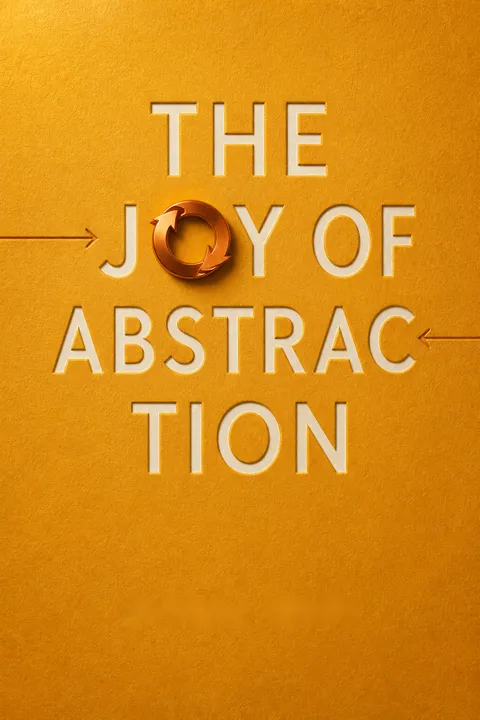
The Joy of Abstraction receives mixed reviews. Many praise its accessible introduction to category theory and mathematical thinking for non-mathematicians. Readers appreciate Cheng's enthusiasm and use of real-world examples. However, some find the book's difficulty level inconsistent, with the second half becoming too technical. Several reviewers criticize the author's inclusion of political and social commentary, feeling it distracts from the mathematical content. Despite these concerns, many still recommend it as an engaging exploration of abstract mathematics, particularly for those interested in category theory.
People Also Read






Glossary
Category
Objects with composable relationshipsA category consists of objects and morphisms between them, together with identity morphisms and a rule for composing compatible morphisms. Composition must obey identity and associativity laws. The objects may be sets, numbers, spaces, or other structures; the definition focuses on how they are related rather than on what they are intrinsically.
Morphism
A structured arrowA morphism is an arrow from one object to another in a category. It can represent a function, a relation, a route, or another kind of connection, depending on the category. Morphisms have sources and targets, and compatible morphisms can be composed. Their meaning is determined by the structure and rules of their category.
Isomorphism
Reversible structural samenessAn isomorphism is a morphism with an inverse that composes with it to give identity morphisms in both directions. Objects connected by an isomorphism count as the same for the purposes of their category, although they need not be literally equal. The isomorphism preserves the structure represented by that category.
Universal property
Definition by relationshipsA universal property characterizes an object through its relationships with other objects in a specified category. For example, a terminal object has exactly one morphism to it from every object. Universal objects are unique up to a unique isomorphism that respects the relevant structure, rather than necessarily being literally equal.
Functor
Structure-preserving translationA functor maps objects and morphisms from one category to another. It preserves identity morphisms and composition, so it carries the source category’s basic structure into the target. Functors allow comparison between mathematical settings and help identify which structures survive a change of representation.
Natural transformation
Coherent comparison of functorsA natural transformation relates two functors with the same source and target. It assigns a morphism between their outputs at every source object, with a naturality condition requiring the resulting square to commute for every source morphism. The condition ensures that the component comparisons work together as a coherent whole.
Pullback
Universal matching constructionA pullback is a universal way to combine two objects equipped with morphisms to a common object. In the category of sets, it consists of pairs whose images in the common set agree. Its universal property makes it the canonical construction for matching objects according to shared information.
Representable functor
Functor arising from an objectA representable functor is naturally isomorphic to a functor that records morphisms from a fixed object, or morphisms into one, across a category. It turns the relationships associated with a particular object into a functor. Representable functors are central to the Yoneda perspective on understanding objects through their interactions.
Yoneda Lemma
Maps characterized by identityThe Yoneda Lemma relates natural transformations from a representable functor to another functor with elements of that functor’s value at the representing object. The correspondence is determined by where the identity morphism goes. It formalizes the principle that an object can be understood through its relationships within a category.
Weak 2-category
Two levels of flexible compositionA weak 2-category has objects, morphisms between objects, and 2-cells between morphisms. Composition and associativity are governed by specified isomorphisms rather than strict equalities, and those isomorphisms must satisfy coherence conditions. A bicategory is the standard term for this structure.
FAQ
What is The Joy of Abstraction by Eugenia Cheng about?
- Exploration of abstraction: The book is a journey through abstract mathematics, focusing on category theory as a way to understand mathematical thinking and its relevance to life.
- Connecting math and life: Cheng uses real-world examples—such as privilege, COVID-19, and social structures—to show how abstract math applies beyond pure mathematics.
- Demystifying math: The book aims to make advanced mathematical ideas accessible, gradually building from basic concepts to more technical material without requiring a formal math background.
Why should I read The Joy of Abstraction by Eugenia Cheng?
- Change your view of math: Cheng challenges the stereotype that math is rigid and uncreative, showing its flexibility, creativity, and visual nature.
- Accessible to all: No prior math knowledge is assumed, making it suitable for adults, students, teachers, and non-mathematicians.
- Develop new thinking skills: The book introduces category theory as a way of thinking about mathematics and thinking itself, helping readers make connections and think more deeply.
What are the key takeaways from The Joy of Abstraction by Eugenia Cheng?
- Abstraction as a tool: Abstraction is presented as a method for simplifying and unifying complex ideas, enabling rigorous and joyful reasoning.
- Category theory’s unifying power: The book shows how category theory reveals deep connections across different areas of mathematics and life.
- Structural and philosophical insights: Readers gain both technical understanding and philosophical appreciation for the spirit and practice of abstraction.
What are the best quotes from The Joy of Abstraction by Eugenia Cheng and what do they mean?
- "Anyone can complicate things, but it takes real intelligence to simplify them." This quote highlights the book’s central theme: abstraction and simplification are powerful intellectual achievements.
- "The mathematics of mathematics." Cheng uses this phrase to describe category theory, emphasizing its role in unifying and clarifying mathematical structures.
- "Develop a categorical-gut instinct." She encourages readers to internalize categorical thinking, moving beyond memorization to deep understanding.
How does The Joy of Abstraction by Eugenia Cheng explain category theory and its significance?
- Mathematics of relationships: Category theory is described as the study of objects and the relationships (arrows) between them, focusing on structure rather than content.
- Unifying framework: It provides a language that connects diverse mathematical areas by emphasizing relationships and composition.
- Nuanced sameness: The book explains how category theory allows for subtle notions of equivalence and sameness, moving beyond strict equality.
What is abstraction, and how does The Joy of Abstraction by Eugenia Cheng present its role in mathematics?
- Controlled forgetting: Abstraction is defined as deliberately ignoring irrelevant details to focus on core structures, enabling precise reasoning.
- Making analogies precise: The book shows how abstraction turns analogies into rigorous mathematical objects, unifying diverse examples.
- Trade-offs of abstraction: While abstraction can temporarily lose details, it enables efficient transfer of insights and intellectual joy.
What are the foundational concepts of category theory introduced in The Joy of Abstraction by Eugenia Cheng?
- Objects and arrows: Categories consist of objects and morphisms (arrows) representing relationships or transformations.
- Identity and composition: Each object has an identity arrow, and arrows can be composed associatively, with unit laws ensuring coherence.
- Nuanced sameness: Isomorphisms and invertible arrows replace strict equality, allowing for more subtle equivalence.
How does The Joy of Abstraction by Eugenia Cheng relate category theory to real-life situations?
- Everyday analogies: Cheng uses family relationships, social justice, and current events to illustrate categorical ideas.
- Patterns in life and math: Abstract structures like equivalence relations, monoids, and groups are shown to appear naturally in both mathematics and daily life.
- Visual tools: The book employs diagrams and visual reasoning to make abstract concepts concrete and intuitive.
How does The Joy of Abstraction by Eugenia Cheng define and explain functors and natural transformations?
- Functors as structure-preserving maps: Functors assign to each object and morphism in one category a corresponding object and morphism in another, preserving identities and composition.
- Natural transformations as morphisms between functors: These provide a way to relate functors, assigning morphisms between their images that satisfy coherence (naturality) conditions.
- 2-dimensional structure: Natural transformations enrich category theory, enabling the study of relationships between functors and forming the basis for higher-dimensional categories.
What are universal properties, products, coproducts, pullbacks, and pushouts in The Joy of Abstraction by Eugenia Cheng?
- Universal properties: Objects are characterized by their roles in a category, not by intrinsic features, enabling unique identification up to isomorphism.
- Products and coproducts: Products generalize Cartesian products with universal factorization properties; coproducts are their duals, generalizing disjoint unions.
- Pullbacks and pushouts: Pullbacks refine products by matching elements under given maps; pushouts generalize coproducts by gluing objects along shared parts, with applications in topology and algebra.
How does The Joy of Abstraction by Eugenia Cheng introduce higher-dimensional category theory and the Yoneda Lemma?
- Motivation for higher dimensions: Studying relationships between morphisms leads to 2-categories and beyond, capturing more nuanced notions of sameness.
- Yoneda embedding and lemma: The Yoneda embedding fully and faithfully represents a category within a functor category, and the Yoneda Lemma reveals deep structural information by relating natural transformations to elements.
- Significance: These concepts are presented as pinnacles of abstraction, unifying and clarifying many categorical ideas.
What advice and methods does Eugenia Cheng offer for learning and thinking categorically in The Joy of Abstraction?
- Think structurally, not by rote: Cheng encourages understanding principles deeply so definitions can be reconstructed, rather than memorized.
- Use diagrams and type-checking: Diagrammatic reasoning and careful type-checking are recommended for coherence and correctness.
- Balance abstraction and detail: Readers are advised to appreciate both the broad overview provided by abstraction and the necessity of detail and rigor in formal mathematics.
About the Author


Download PDF
Download EPUB
.epub digital book format is ideal for reading ebooks on phones, tablets, and e-readers.








