

Key Takeaways
Math is a method for making ideas reusable, not a warehouse of numbers.
Method matters more. Cheng opens by comparing mathematics to cooking: a recipe is not just a list of ingredients, and mathematics is not just a collection of numbers. Its methods determine what can be studied. Logic is the central method: mathematicians turn situations into ideas that can be reasoned about logically, then look for other situations that fit the same pattern. Like an artist choosing cubism, a mathematician's approach shapes what becomes visible and workable.
The subject keeps expanding. Numbers led to techniques for studying shapes, patterns, and relationships. A knot in string, for instance, can be represented mathematically as a loop mapped into space, allowing logical tools to reveal properties of real knots. Mathematics grows by finding new objects its methods can handle, and by inventing methods that make more objects tractable.
This view shifts attention from mathematics as a body of answers to mathematics as a technology for organizing thought. That resembles scientific modeling: a model's value lies not in copying reality perfectly, but in making certain questions answerable. The comparison also clarifies why mathematics can feel detached from daily life. Its power comes partly from not carrying every detail of the original situation. The limitation is equally important: a method can reveal only what its chosen representation preserves.
Abstract only what the question can safely afford to lose.
Strip away selectively. Abstraction means setting aside details that do not matter to the question, so one argument can apply across many situations. In the familiar problem of buying two stamps at 36 cents each, the stamps disappear from the calculation: the relevant structure is 2 multiplied by 36. The same reasoning could describe two objects of another kind. A recipe blueprint works similarly: one topping can pair with many fillings, provided the filling suits the method.
Return to the real world. Abstraction is not the whole solution. A model must be translated back into its original context. A calculation says 100 people divided among 15-seat minibuses requires 6.67 vehicles, but reality requires rounding up to seven. Sending chocolates by mail may instead require rounding down. The context determines which details matter and how the result can be used.
Abstraction has a close cousin in maps and data visualization: every useful representation omits information, and the central question is whether it omits the right information for the task. This is also why simple models can outperform elaborate ones when the extra detail creates noise. Yet omissions are not neutral. A model that ignores a person's constraints or a system's unequal starting conditions may look clean while producing poor decisions. The discipline is not simply simplifying, but stating what has been left out.
Understand the principles beneath a method before trying to modify it.
Principles create flexibility. A cook who knows only a recipe is stuck when an ingredient is missing. Someone who understands what ingredients do can adapt. Cheng's cake examples show the difference: fat helps create air bubbles, so applesauce can sometimes replace it; potato flour can stand in for wheat flour in brownies. Understanding the purpose of a step also makes shortcuts less risky. The same applies to mathematics: memorizing times tables is useful, but knowing multiplication can be reconstructed from repeated addition gives a way forward when memory fails.
Look for reusable rules. Mathematicians identify properties that remain true across different objects. Addition and multiplication share patterns such as associativity, where changing the placement of brackets does not change the result. Matrices obey many familiar number rules, although matrix multiplication is generally sensitive to order. Knowing which rules survive helps identify what can be transferred to a new setting.
This is the difference between procedural fluency and conceptual understanding, a distinction familiar in education and skilled trades. Procedures help people act quickly; principles let them diagnose failure and adapt to unfamiliar conditions. Neither replaces the other. A cook who understands food chemistry still benefits from a dependable recipe, just as a mathematician can use a standard technique without re-deriving it every time. The practical test of understanding is whether someone can explain when a method works, and recognize when its assumptions have changed.
Judge a mathematical answer by the reasoning that produced it.
The route is part of the result. Mathematics values a valid argument, not merely a correct final answer. Cheng illustrates this with students making two sign errors that cancel each other out: the answer looks right, but the reasoning is not. A proof is a chain of logical steps showing why a conclusion follows from stated assumptions. For example, if one number is divisible by a second, and the second by a third, the first is divisible by the third: each divisibility claim can be written as multiplication by a whole number, and the factors can be combined.
Evidence suggests, proof establishes. Testing several numbers can inspire a conjecture, but it cannot establish a claim about every number. A proof must explain the general case. Its reliability depends both on valid inference and on the assumptions from which it starts.
The distinction between a right answer and a sound process matters well beyond mathematics. In law, medicine, and public policy, a conclusion reached through faulty reasoning can cause harm even when it happens to be correct. Proof also makes reasoning auditable: others can inspect each step instead of trusting a confident speaker. Still, formal validity does not guarantee that the starting assumptions fit reality. A flawless argument about an unrealistic model can be mathematically correct and practically misleading.
Make assumptions visible before trusting a precise conclusion.
Axioms set the ground rules. Axiomatization is the act of specifying which basic assumptions a mathematical system accepts, then deriving further results from them. The conclusion is conditional: if these starting rules hold, then this result follows. This makes disagreements more precise. Someone may challenge an assumption without having to dispute the logic that follows from it. Euclid's parallel postulate, once assumed to be necessary for ordinary geometry, could be removed to create consistent geometries in which triangle angles add to more or less than 180 degrees.
Hidden assumptions can hurt. In Sally Clark's wrongful conviction, an expert treated the probability of two infant deaths in one family as the square of the probability of one. That calculation assumed the deaths were independent, which was not established. The result sounded precise, but its unstated premise was the problem.
Making assumptions explicit is a safeguard against false certainty. The same habit strengthens statistical analysis, policy design, and machine-learning systems, where conclusions inherit the limits of their data and premises. The Clark case makes the stakes unusually clear: technical arithmetic can lend authority to an unsupported assumption. There is a further challenge, however. Listing assumptions is not enough if readers cannot evaluate them. Good analysis must explain why each premise is reasonable, what evidence supports it, and how conclusions change if it fails.
Relax one rule at a time to discover which new worlds remain coherent.
Generalization opens alternatives. In mathematics, generalization often means relaxing a condition so that a concept includes more cases. Similar triangles, for example, need the same angles but not the same side lengths, unlike congruent triangles. The change is small, but it creates a broader class. Removing Euclid's rule about parallel lines produced two coherent alternatives: on one kind of curved surface, triangle angles total more than 180 degrees; on another, less.
Even familiar ideas can vary. Distance can also be generalized. A taxi moving through a city grid measures distance by horizontal and vertical travel, not by the straight diagonal a crow would fly. One-way streets can make the journey in one direction longer than the return. The useful question is not whether this matches the everyday idea perfectly, but which familiar rules the new version preserves.
This method resembles controlled experimentation: change one condition, then observe what else must change. It is a powerful way to uncover which features of a concept are essential and which are customary. It also guards against treating familiar definitions as the only possible ones. The caution is that a generalization can become so broad that it stops being useful. A new concept earns its place when the relaxed rules reveal structure, solve a problem, or connect cases that were previously separated.
Category theory organizes mathematics by relationships, not isolated objects.
Context changes meaning. Category theory is described as mathematics about mathematics: a way to study mathematical structures and how they connect. A category contains objects and arrows between them. The arrows, called morphisms, represent relevant relationships or processes. They must compose, and each object has an identity arrow representing doing nothing. Composition must be associative, so grouping a sequence of relationships in different ways gives the same composite.
The same picture travels. An arrow can represent an inequality between numbers, a function between sets, or a structure-preserving map between groups. The objects differ, but the pattern of relationships can be studied with one shared language. A category with one object and many composable arrows is equivalent to a monoid, a system with an associative operation and an identity. This shift of focus helps reveal structure that a list of objects alone would hide.
The framework is valuable because it separates the shape of a mathematical argument from the material it happens to involve. That resembles an interface in software design: different systems can be used in a common way when they satisfy the same rules. The benefit is not merely tidiness; shared structure lets techniques travel between fields. But abstraction has a price. A diagram of arrows may conceal the concrete meaning that made the original problem interesting, so interpretation must move in both directions, from formal structure back to examples.
Use relationships to define sameness and identify an object's role.
Sameness depends on purpose. Exact equality is too strict for many useful comparisons. A triangle can be considered the same shape as a larger triangle, while a donut and a coffee cup count as topologically equivalent because one can be reshaped into the other without cutting or joining. The relevant notion depends on what features matter. Category theory expresses such comparisons through relationships that can be reversed, rather than by insisting that objects be identical in every respect.
Roles can identify objects. A universal property specifies an object through its relationships to other objects, often so precisely that only one object fits. Zero, for example, is the number that leaves any number unchanged when added to it. The empty set is the smallest set; among sets and functions, any one-element set is terminal because exactly one function leads to it from every set. These roles can clarify what an object is for.
Defining something by its role is familiar in biology, law, and organizational theory, where an entity's function can matter more than its appearance. Universal properties make that idea unusually exact: they can identify an object without relying on a preferred label or construction. The subtlety is that every role is defined within a chosen system of relationships. Change the context, and the same object may play a different role. A precise definition is powerful, but it is never context-free.
Proof carries truth between people; illumination explains why it matters.
Proof and insight do different jobs. A proof provides a dependable route from assumptions to a conclusion, so other mathematicians can check and share the result. But someone may follow every step and still fail to see the larger idea. Cheng calls the personal grasp that makes a result feel intelligible illumination. Her distinction is between knowledge of a conclusion, belief that it is true, and understanding of why it holds. A proof can secure knowledge without automatically producing understanding.
Logic has a boundary. Mathematics makes problems easier by removing ambiguity and irrelevant detail. That makes it powerful, but life often demands fast judgment, intuition, or decisions with incomplete information. The book does not treat those capacities as mathematical errors. It argues instead that mathematical reasoning is one disciplined tool, not a complete substitute for human thought.
This distinction connects mathematical communication to the broader difference between explanation and verification. A proof can be checked publicly, while an illuminating idea helps a person build a mental model that transfers to new problems. Good teaching needs both. There is also a healthy limit in the argument: formal reasoning cannot choose its own values, goals, or starting premises. Treating intuition as useless would be as mistaken as treating intuition as proof. The strongest intellectual practice knows which kind of warrant a question requires.
Analysis
The book's narrative moves from kitchen recipes to the architecture of mathematics. Food analogies are not decorative breaks from the argument. They enact it: a recipe distinguishes ingredients from procedure, a substitution tests whether the cook understands a principle, and a dish assembled from parts makes structure visible. This makes a demanding subject approachable without pretending that advanced mathematics is merely arithmetic with stranger symbols.
The central conceptual progression is from objects to methods, from methods to shared principles, and from principles to relationships among entire mathematical settings. Abstraction removes detail so reasoning can travel. Axiomatization declares the conditions under which that reasoning is valid. Generalization tests what happens when a condition is relaxed. Category theory then formalizes the connective tissue: objects, morphisms, composition, and universal roles. Its achievement is less a new inventory of mathematical facts than a change in how facts can be compared and organized.
The book's strongest educational claim is that proof and understanding are not interchangeable. Proof provides a public, inspectable chain of inference; illumination gives a person a grasp of why the chain is meaningful. That distinction explains how a formally correct lesson can still fail to teach. The discussion also offers a useful restraint on rationalism. Mathematics can establish consequences from assumptions, but it cannot make every human choice, value, or uncertain judgment purely logical.
There is a tension worth preserving. The account presents mathematics as clean because it studies what obeys logic, yet mathematical practice relies on intuition to find conjectures, choose definitions, and recognize promising abstractions. The book acknowledges that tension when it distinguishes proof from the insight that motivates it. Its overall lesson is therefore not that mathematics eliminates human judgment, but that it isolates some questions so judgment can be examined, shared, and refined. Category theory extends that discipline by making the relations between mathematical ideas part of the subject itself.
Review Summary
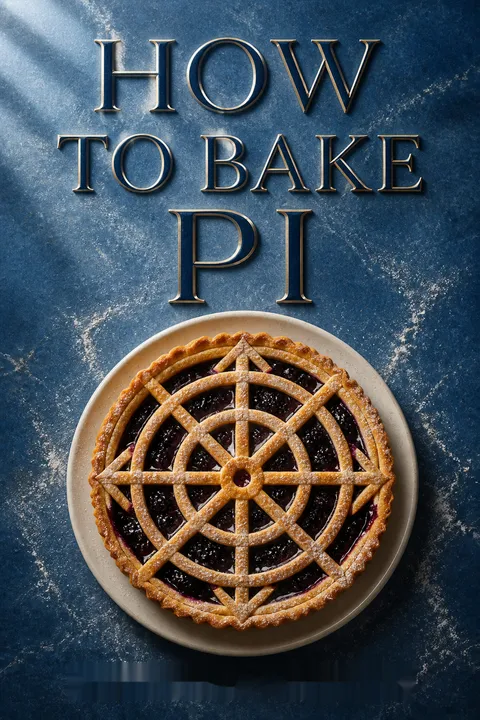
How to Bake Pi received mixed reviews, with praise for its accessible approach to explaining mathematics through cooking analogies. Many found it engaging and insightful, particularly in describing abstract concepts and category theory. Readers appreciated Cheng's enthusiasm and ability to make math relatable. However, some felt the book lacked focus or depth in certain areas. The cooking metaphors were generally well-received, though a few found them gimmicky. Overall, reviewers commended the book for its fresh perspective on mathematics and its potential to change perceptions about the subject.
People Also Read



Glossary
Abstraction
Selective removal of detailA way of turning a concrete situation into a simpler model by ignoring details that do not affect the question being asked. Abstraction allows the same reasoning to apply to different situations, such as counting stamps or fruit. The omitted details still matter when the result is interpreted back in its original context.
Generalization
Broadening a mathematical conceptA process of modifying a familiar concept so it applies to a wider range of cases, often by relaxing one or more conditions. Similar triangles generalize congruent triangles by requiring matching angles but not matching side lengths. Different choices about which conditions to relax can produce different generalizations.
Axiomatization
Stating a system's starting rulesThe process of specifying basic assumptions, or axioms, for a mathematical setting and deriving further results from them using logic. Axioms are the starting rules accepted for that particular investigation, not necessarily universal truths. Making them explicit helps distinguish a disputed premise from a mistake in reasoning.
Category theory
Mathematics of mathematical structureA field that studies mathematical objects through the relationships between them and the ways those relationships compose. It provides a framework for comparing structures across areas such as number theory, algebra, and topology. Its central tools include categories, morphisms, diagrams, and universal properties.
category
Objects and composable arrowsA mathematical structure consisting of objects and arrows, also called morphisms, between objects. Each object has an identity arrow, and compatible arrows can be composed. Composition must be associative, meaning that grouping a sequence of compositions differently does not change the result. The arrows encode whichever relationships are relevant to the setting.
morphism
Structure-respecting arrowAn arrow between objects in a category, representing a relationship or process chosen for that mathematical context. A morphism might be a function between sets, a structure-preserving function between groups, or a transformation between spaces. The term is broad so that different kinds of mathematical relationships can be studied in a common framework.
universal property
Definition by relationshipsA way to characterize a mathematical object by how it relates to every other object in a specified setting. A universal property often singles out an object uniquely without describing its internal construction. For example, a one-element set is terminal among sets and functions because exactly one function goes from any set to it.
homotopy equivalence
Sameness by continuous deformationA notion of sameness for spaces that treats them as equivalent when they can be continuously deformed into one another in a suitable sense. It ignores some geometric details, such as exact size and curvature, while preserving relevant topological structure. In the book's example, a donut surface and a coffee cup are treated as equivalent because one can be reshaped into the other without cutting or joining.
illumination
Personal grasp of whyThe understanding that makes a mathematical result feel meaningful, rather than merely verified by a sequence of formal steps. A proof can establish that a conclusion follows from assumptions, while illumination helps a reader see why the argument makes sense or what larger idea it expresses. Different people may find different explanations illuminating.
free monoid
Unrestricted associative constructionA monoid generated from specified starting elements using an associative operation and an identity, without adding extra relations beyond those required by the monoid rules. The natural numbers under addition can be viewed as freely generated from one element by repeatedly adding it. The term highlights a construction with no unnecessary imposed equations.
About the Author
Download PDF
Download EPUB
.epub digital book format is ideal for reading ebooks on phones, tablets, and e-readers.








