

Plot Summary
The Tin from Brighton
At Haywards Heath, elderly writer Anthony Peardew retrieves a biscuit tin left on a train and finds what appear to be human ashes inside. He labels the tin, adds it to the lost objects filling his locked study, and cannot stop returning to it. For forty years, Anthony has gathered forgotten things, hoping their owners might one day reclaim them.
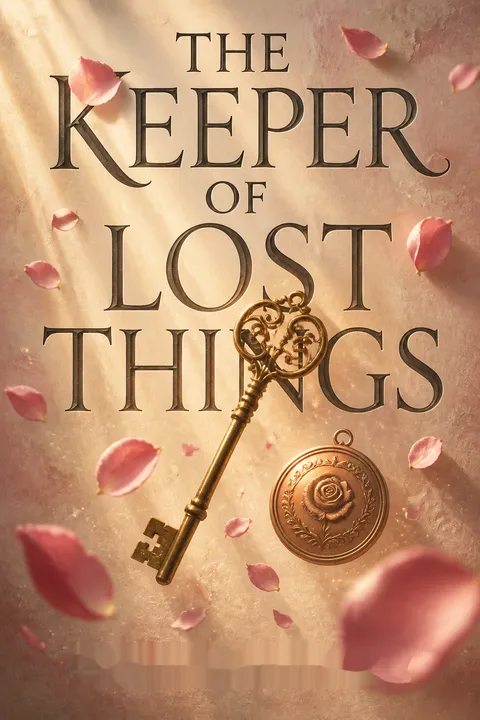
The habit began after his beloved Therese died and he lost the gold Communion medallion she had entrusted to him. He has never found it. Now, feeling his own time is short, Anthony has altered his will and begun considering who might continue his work. Even in a house built around grief, he is still looking for a way to return what was lost.
The tin makes Anthony's private ritual suddenly intimate: this is not merely an object, but possibly someone whose identity has been erased by neglect. His collecting is both practical compassion and a form of penance. He cannot repair his own broken promise, so he preserves other people's small losses in the hope that preservation might become restitution. The unease of the ashes also introduces the book's central tension: the difference between keeping something safe and actually returning it where it belongs.
Eunice Finds a Medal
In 1974, Eunice arrives for an interview at the publishing office of Charles Bramwell Brockley, known as Bomber, a lively editor with a disabled terrier named Douglas. Her quick wit and love of films win her the assistant's job, while Bomber's kindness makes the office feel like the beginning of a more interesting life.
His sister Portia, already demanding that he publish her work, offers a glimpse of the trouble Eunice will face there. After leaving the interview, Eunice spots a small gold-framed religious medallion in the street and keeps it as a lucky charm. She and Bomber grow into close companions through books, films, and daily routines. Eunice's love for him deepens, though their bond remains a friendship.
Eunice's first day joins two kinds of discovery: she finds a vocation and unknowingly takes responsibility for an object carrying someone else's history. Her affection for Bomber grows inside a relationship that offers emotional intimacy without the certainty of romance. The contrast matters. Eunice's loyalty is not a consolation prize, but a chosen attachment with its own depth and cost. Portia's entrance also establishes the office as a family system, where Eunice must learn to belong without being protected from conflict.
Laura's Quiet Refuge
Years later, Laura is living with the wreckage of a marriage to Vince, who has had an affair, and with the grief of a miscarriage that ended her hopes of motherhood. She abandoned university, tried writing fiction, and took low-paid work while planning how to leave him.
A housekeeper advertisement leads her to Anthony, who hires her on her thirty-fifth birthday. At Padua, she finds a home whose careful rituals and quiet rooms answer a longing she has carried since childhood.
Her affection for Anthony is familial, and his kindness steadies her without demanding intimacy. When Anthony finally tells her how Therese died, Laura understands the grief behind his solitude. She does not yet know that he intends to leave the house and its work to her.
Laura's refuge is not simply an escape from Vince. Padua gives form to the life she once glimpsed in other people's homes: beauty cared for as part of ordinary living. Yet the sanctuary also lets her postpone risk. The missed education, abandoned writing, and failed marriage have become evidence in her private case against herself. Anthony's confidence in her offers another interpretation. He sees care not as retreat but as a capacity that can become a way back into the world.
The Study Opens
After telling Laura about Therese, Anthony spends one final night in the bedroom they once shared and dies in the rose garden. Laura finds him among the petals, then stays at Padua because the house has become her true home. His solicitor confirms that Anthony has left her the house and everything in it, provided she lives there and preserves the rose garden.
A sealed letter adds the harder condition: she must try to return the objects in the locked study to their owners. After Anthony's funeral, Laura enters the room and discovers shelves and drawers crowded with carefully labeled buttons, toys, jewelry, and other scraps of lost lives. A key left for her makes clear that Anthony intended her to take over.
The inheritance turns comfort into responsibility. Laura receives the place that has protected her, but she cannot simply preserve it as a private refuge. Anthony's condition asks her to practice outward attention, the very action her fear has kept postponing. The study's inventory gives loss a material form, while the key makes trust tangible. His bequest does not certify that Laura is ready. It gives her a task large enough to require her to become ready.
Lives Inside Small Things
Sunshine, a young woman with Down syndrome who has been visiting Padua, offers Laura friendship and soon helps her examine the collection. When Sunshine touches a china cup and saucer, she senses the lonely older woman who gave it away before moving into sheltered housing.
Other labels open into painful histories: a blue button belonged to Margaret, who left an abusive husband, and a child's hair bobble marks a girl's attempt to face a new school after bullying. A glove is tied to Rose, a grieving mother who died by suicide.
Laura and Freddy, the gardener, realize that a website could let owners search the collection. Laura hesitates to bring technology into Anthony's house, but Freddy argues that using it would honor the task he left her.
The object's smallness is a narrative discipline: it prevents suffering from becoming abstract. A button can mark the precise instant someone walks away; a glove can hold the last trace of a mother's ordinary life. Sunshine's intuitive reading challenges Laura's assumption that knowledge must arrive through orderly evidence. The website translates that intuition into a public method, joining emotional attention to practical access. The work begins when Laura accepts that the objects are not curiosities. Each is evidence that another person's life has crossed theirs.
A Wedding in Roses
Laura, Freddy, and Sunshine gather in the rose garden to scatter Anthony's ashes, playing his and Therese's favorite record. Sunshine conducts the ceremony in her own imaginative words, and Laura feels she has helped Anthony return to the woman he loved. The house soon unsettles that comfort.
The music plays when no one has set the record going, Therese's bedroom is disturbed and then locked from inside, and Laura glimpses a pale figure among the roses. She and Freddy suspect that Therese is still restless, though they do not know why. Sunshine insists that the woman is upset with everyone, not just Laura. The promise of reunion has not ended the haunting, and Laura must learn what the disturbances are asking them to notice.
The garden ceremony appears to complete Anthony's grief, but its failure exposes a gap between symbolic action and actual repair. Scattering ashes can honor the dead without solving the problem that bound them to the living. Laura's uncertainty also reveals how quickly she turns unexplained events into a judgment on herself. Sunshine resists that narrowing: Therese's anger is not simply a verdict on Laura. The haunting becomes a demand to investigate rather than a punishment to endure.
The Date Goes Wrong
Jealous of Freddy's girlfriend Felicity, Laura goes on a date with Graham, an old acquaintance, and discovers too late that she feels no desire for him. Their awkward kiss sends her home to drink, panic, and hide from Sunshine the next morning. Freddy calls her out for avoiding the young woman who trusts her, while Sarah, Laura's old school friend, arrives after receiving her drunken messages.
Sarah reminds Laura that she has spent years treating fear as proof that she should not try. Laura then finds Sunshine and admits that she has been a poor friend. Sunshine accepts her apology and takes her hand. Laura still cannot say what she wants from Freddy, but she has stopped making loneliness the price of staying safe.
The failed date matters less as romance than as a test of Laura's agency. She accepts Graham because he asks, not because she wants him, and then mistakes social politeness for an obligation to continue. Sarah identifies the deeper pattern: Laura has learned to survive by shrinking her desires until they are difficult to disappoint. Her apology to Sunshine is a small but consequential reversal. Instead of withdrawing from someone who needs her, she names her own limits and allows the friendship to become mutual.
Vince Comes Back
Vince appears at Padua claiming he wants to be friends, though his timing makes Laura suspect that her inheritance is the real attraction. When she refuses his attempt to rekindle their marriage, he turns cruel and insults Sunshine.
Freddy steps in, and Vince ends up bloodied and tangled in the fallen Christmas tree. Laura has defended herself without apologizing for the house, her choices, or the people she loves. The confrontation clears space for a different kind of closeness.
At Christmas, Laura invites Sunshine and her parents, Stella and Stan, to Padua; Freddy joins them. They share dinner, music, and a first kiss between Laura and Freddy. That night, Therese's photograph breaks, leaving the haunting unresolved even as Laura begins to feel at home in love.
Vince's return makes Laura's inheritance a pressure point: he assumes that the woman he once controlled remains available to be reclaimed. Her refusal is more than rejection of him. It marks a shift from receiving other people's judgments to deciding who belongs in her life. Freddy's intervention matters, but Laura's own response is the deeper change. The Christmas gathering then tests whether new intimacy can coexist with unresolved grief. The shattered photograph makes clear that romance does not automatically mend the past.
Dress in the Attic
Laura and Freddy search Anthony's attic for clues to Therese's unrest. They find old photographs, rejected story manuscripts, a sapphire engagement ring, and an unworn cornflower-blue wedding dress. Laura assumes the ring is what Therese wants, but the locked bedroom and silent record do not change.
Sunshine sees the clue more clearly: the important thing is a letter. Laura eventually remembers that she put Anthony's final letter in the writing desk in the garden room. Its history leads back to the day Anthony lost Therese's Communion medallion.
Meanwhile, Laura and Freddy keep building the website, and the collection begins drawing attention. The attic has not solved the mystery, but it gives them the objects that show what Anthony treasured and what he could not bear to face.
The attic offers a false solution in the form of the ring, an object whose romantic legibility tempts Laura to stop thinking. Sunshine redirects attention from a symbol of commitment to the written record that contains the actual clue. The distinction reflects the novel's skepticism toward grand gestures: the ring and the garden wedding look meaningful, yet neither answers the practical question of what was lost. Anthony's hidden belongings reveal how memory can be preserved and simultaneously kept at a distance.
The Website Finds Owners
Laura and Freddy launch the Keeper of Lost Things website, listing objects with enough information to invite claims but not enough to let impostors take them. Messages arrive from people recognizing a missing puzzle piece or the green bobbles from a childhood picnic.
A retired reporter identifies Rose's navy glove and recalls the bereaved child left behind. Then Alice, now a university student, visits Padua for a white umbrella with red hearts.
As a child in Central Park, she had met Marvin, a giant of a man giving away repaired umbrellas, and watched her mother dismiss him cruelly. She believes the umbrella was left for her after she blew Marvin a kiss. Sunshine welcomes Alice, and Laura sees the website return a small object carrying a large memory.
The website changes the collection from a private archive into a meeting place. Its design respects the difference between curiosity and ownership: a claimant must know details that only the real owner is likely to recognize. Alice's visit shows that restitution does not require a perfect legal certainty to matter; the object reconnects her with an encounter she has carried for years. The work also expands Laura's sense of success. She is no longer merely keeping the lost things safe. She is creating conditions in which other people can recognize themselves in them.
Bomber's Long Decline
Across the years, Eunice remains Bomber's closest companion, while Portia continues sending him manuscripts built from borrowed plots. Douglas dies, and Eunice helps Bomber endure his grief by bringing home Baby Jane.
Bomber's parents, Grace and Godfrey, later succumb to dementia; Portia avoids much of the burden, then lashes out when family life can no longer be managed by money or charm. After their parents die, Eunice and Bomber grow older together. Portia eventually becomes a bestselling novelist, but her success does not make her gentler.
When Bomber develops Alzheimer's, Portia uses her legal authority to place him in Happy Haven rather than the care home he wanted. Eunice visits faithfully as he loses words, memories, and independence, holding fast to the companionship that has shaped her life.
Eunice's subplot makes caregiving a measure of love that cannot be reduced to sentiment. She stays through grief, illness, and the slow erosion of shared memory, while Portia's wealth repeatedly gives her the power to avoid vulnerability. Yet Portia is not simply indifferent; her fear of losing her father often emerges as anger and control. Bomber's decline echoes Anthony's fear of being lost, but here the question is not whether someone remembers him. It is whether the person who knows him best can still honor his wishes.
The Ashes Escape
At Happy Haven, Bomber's moments of clarity become rare. After he asks Eunice to help him escape, she leaves his balcony window unlocked and places the key in his hand. He falls from the second floor, and officials later classify his death as accidental. Portia arranges a grand memorial, ignoring Bomber's wish for a modest farewell.
With help from a sympathetic funeral director, Eunice takes his ashes from the urn and hides them in a biscuit tin so she can bring him to Brighton. On the train, she follows a small child who has jumped off at a station, leaving the tin behind. Anthony finds it on the Brighton line. Eunice has lost Bomber's remains, but the website will eventually give her one more chance to find him.
Eunice's act is morally fraught because love and agency collide under conditions of prolonged suffering. The story does not make the decision clean; it places her promise, Bomber's request, and the care home's restrictions in the same unbearable frame. The ashes then repeat Anthony's original loss on a new scale: Eunice has carried Bomber's remains toward a chosen farewell and loses them through an impulsive act of kindness. The biscuit tin turns private grief into the chance for an accidental reunion.
The Medal Comes Home
Eunice contacts the website and comes to Padua to reclaim the biscuit tin. She explains how she lost Bomber's ashes and gives Laura the gold-framed medallion she found outside Bomber's office in 1974, keeping it ever since as a lucky charm.
Laura recognizes it as Therese's Communion medal and places it beside the couple's photograph. Therese's bedroom unlocks, the clock begins ticking, the record plays, and rose petals sweep through the open window: at last, the lost object has restored the connection Anthony could not mend.
Freddy returns, and Laura tells him plainly that she loves him; they become engaged. Eunice later takes Bomber's ashes, joined with Douglas's and Baby Jane's, to Brighton and scatters them at the Pavilion. Laura begins writing Anthony and Therese's story as her own first novel.
The medallion resolves the book's central problem through recognition rather than spectacle. Eunice has preserved it without knowing its significance, and Laura understands its history because Anthony's letter taught her what to look for. The reunion depends on several people's acts of care across decades, none of them sufficient alone. Laura's confession to Freddy completes a parallel movement: she stops treating love as a risk to avoid and speaks before fear can speak for her. Her writing turns inherited stories into a future she actively chooses.
Analysis
The novel treats loss as a problem of attention. A lost object is not automatically insignificant because it is cheap, damaged, or unclaimed; its importance depends on the human life to which it belonged. Anthony's labels, Laura's website, and Sunshine's intuitive readings are different methods of resisting the same erasure. They preserve evidence until someone can recognize it.
The two central love stories complicate the idea of reunion. Anthony's devotion to Therese survives through memory, but memory alone cannot restore the object that carried their promise. Eunice's attachment to Bomber is just as durable, though it takes the form of friendship and care rather than a conventional romance. Both stories ask what fidelity requires when the desired life is unavailable or changing. The novel does not present care as a cure for grief. It presents care as the practice of keeping another person's wishes in view.
Laura's arc makes that practice personal. Padua first shelters her from a world in which she feels she has failed, but the inheritance obliges her to act beyond its walls. Her progress is measured in concrete choices: welcoming Sunshine, building the website, confronting Vince, and speaking honestly to Freddy. The haunting gives the house's past an urgency that cannot be managed through tidiness alone. Ultimately, the book's magical events depend on ordinary acts of recognition. A person keeps a medallion, another reads a letter, and a third finally understands what an old object means. The result is not the recovery of time, but a chance to stop loss from having the final word.
Review Summary
The Keeper of Lost Things received mixed reviews, with many praising its charm, whimsy, and heartwarming story. Readers enjoyed the unique premise, engaging characters, and interweaving plotlines. Some found it uplifting and enchanting, while others criticized its predictability and unrealistic elements. The book's quirky style and focus on lost objects resonated with many, but some found the writing simplistic or the plot contrived. Overall, it was generally regarded as a light, feel-good read that divided opinion.
People Also Read










Characters
Laura
Padua's reluctant heirLaura is a capable, tender woman whose life has been narrowed by an early marriage, a miscarriage, and years of doubting her own judgment. She is drawn to order, beautiful domestic rituals, and the safety of Padua, where she works for Anthony as housekeeper and personal assistant. Her care for the house and its objects is genuine, but she often uses care as a substitute for taking risks of her own. Her relationship with Sunshine tests whether she can receive friendship as well as offer help. Freddy's warmth unsettles her because it asks her to imagine a future rather than merely maintain a refuge.
Anthony Peardew
Keeper of lost thingsAnthony is a retired writer who has spent decades collecting objects abandoned by strangers and giving each one a label. His courtesy and quiet routines conceal a grief he has never fully set down. After the death of Therese, he found purpose in preserving other people's lost possessions, partly from compassion and partly from guilt over losing something she entrusted to him. He keeps the collection private, fearing that others will dismiss its importance. His affection for Laura is deep but restrained, and he believes that the work he leaves behind may help her discover a life beyond the walls of Padua.
Eunice
Bomber's steadfast friendEunice is a quick-minded, imaginative woman who finds a home in Bomber's publishing office and remains loyal to him through decades of change. She is funny, observant, and confident enough to challenge bad writing and worse behavior, yet her deepest attachment is one she cannot easily name or claim. She values friendship as an active commitment, not a lesser form of love. Her private courage is often expressed through practical acts: keeping a promise, showing up, or protecting a fragile memory. The medallion she carries for years represents how completely she can preserve something without understanding its whole story.
Bomber
The generous publisherCharles Bramwell Brockley, called Bomber, is an energetic publisher with a taste for films, books, and eccentric humor. He gives his assistant Eunice an office where her intelligence and wit are valued, and he treats his disabled dog Douglas as family. Bomber's generosity coexists with a reluctance to confront the damage caused by his sister Portia. He is a devoted son and brother, shaped by affection for his parents and by the family role he has always occupied. His friendships are sustaining, especially his bond with Eunice, who understands his humor and his silences.
Therese
Anthony's belovedTherese is remembered by Anthony as vivid, independent, and capable of meeting his reserve with warmth and mischief. Their love is embedded in Padua: the rose garden, the music they shared, her photograph, and the objects they intended to use for a life together. She is not merely an idealized memory; Anthony recalls her temper, confidence, and appetite for experience. Her presence in the story makes grief active rather than settled, showing how a person can continue to shape a home through what the living preserve, misunderstand, or fail to return.
Sunshine
The intuitive friendSunshine is a young woman with Down syndrome whose way of speaking is distinctive and whose feelings are direct. She approaches Laura without waiting for an invitation and is unusually attentive to the histories held by objects. Her intuitive readings are sometimes difficult for others to follow, but her conclusions often expose what they have overlooked. Sunshine wants meaningful work and reciprocal friendship, not to be treated as a child or a problem to manage. Her persistence helps Laura loosen her guarded habits, while her practical enthusiasm gives the lost things project a collaborator who sees emotional connections before evidence can confirm them.
Freddy
Padua's thoughtful gardenerFreddy is the gardener at Padua, a man whose quiet competence and wry humor make him easy to underestimate. He restores the grounds and helps Laura imagine a public use for Anthony's collection, including the website that brings the objects to potential owners. His cleft lip has shaped his early confidence, though he no longer lets it define how he sees himself. Freddy is patient with Laura's uncertainty but not indulgent of her avoidance. He also takes Sunshine seriously, responding to her ideas rather than speaking over her. His affection grows through shared work and conversation.
Portia
Bomber's difficult sisterPortia is Bomber's younger sister, wealthy through inheritance and accustomed to having other people manage the consequences of her choices. She behaves with entitlement and sharpness, especially toward Bomber, Eunice, and their parents. Her repeated attempts at writing reveal a desire for recognition beneath her brittle vanity, although she rarely admits to needing approval. Money has given her options without giving her a clear sense of purpose. Portia's relationship with Bomber is marked by affection buried under resentment, competitiveness, and a fear of being judged by the brother whose respect she wants.
Vince
Laura's controlling exVince is Laura's former husband, a status-conscious car dealer who once seemed to offer her an easy passage into adulthood. He values money, appearance, and control, and treats Laura's preferences as comic or inconvenient. Their marriage leaves her with emotional and financial constraints that make leaving difficult. Vince is not a source of comfort even when he presents himself as one; he expects his old claim on Laura to remain intact. His presence exposes the difference between being chosen and being respected.
Sarah
Laura's candid school friendSarah is Laura's longtime friend, now a successful barrister with a family and a clear sense of her own direction. Their friendship is not maintained through constant contact but through trust built over years, including periods of grief and crisis. Sarah refuses to encourage Laura's self-pity and can challenge her in a way few people could without making her feel discarded. Her bluntness is rooted in loyalty: she sees the capable person Laura has hidden from herself and insists that inherited opportunity means little unless Laura chooses to act.
Douglas
Bomber's resilient terrierDouglas is Bomber's small terrier, disabled after being hit by a car and given a wheeled cart by his devoted owner. He is treated as a full member of the publishing office, with his own routines, tastes, and place beside Bomber. His dependence does not make him an emblem of helplessness; he remains spirited and demanding. Douglas's presence reveals Bomber's instinct to adapt the world for a vulnerable creature rather than discard it.
Carrot
Padua's rescued lurcherCarrot is a frightened, severely neglected lurcher whom Freddy finds near Padua. At first he is too wary to trust a hand, but the steady care Laura, Freddy, and Sunshine offer gives him room to become curious. His recovery makes the household's kindness visible in daily, practical terms: food, warmth, patience, and safety. Carrot's attachment to the people at Padua grows without grand gestures, making him a quiet measure of how trust can return after cruelty.
Grace
Bomber's compassionate motherGrace is Bomber and Portia's mother, a warm and perceptive woman who can be firm without losing her humor. She understands the differences between her children but does not always know how to bridge them. Her loyalty to her husband becomes increasingly demanding as his health changes, and she tries to preserve his dignity while accepting help. Grace's affection is often expressed through practical care, family rituals, and small acts of acceptance rather than dramatic declarations.
Godfrey
Bomber's eccentric fatherGodfrey is Bomber and Portia's father, an affectionate, colorful man with a taste for lively clothes, jokes, and old-fashioned warmth. His relationship with Bomber is full of shared habits and private humor. As his memory falters, the family must confront how much love can persist when recognition becomes unreliable. Godfrey's vulnerability makes the family's different ways of coping with illness especially visible.
Robert Quinlan
Anthony's trusted solicitorRobert Quinlan is Anthony's solicitor and a longtime friend who understands the history behind Anthony's formal manners and private grief. He delivers the will and letter to Laura, making clear that Anthony's trust in her was deliberate. Robert also provides memories of Anthony and Therese that Laura could not have learned from their daily life together. He is a careful bridge between Anthony's private past and Laura's new responsibility.
Eulalia
The magpie collectorEulalia is an elderly woman whose love of unusual treasures has filled her home with beautiful, odd, and sometimes troubling objects. As age makes her house difficult to manage, she chooses places where strangers might discover some of her possessions. Her attachment to objects is practical as well as sentimental: she wants their next owners to find them rather than have them cleared away without thought.
Alice
The umbrella's remembered childAlice is a British girl whose childhood visit to Central Park leaves her with a lasting memory of a man offering repaired umbrellas. She is open-hearted and remembers the feeling of being understood even when the adults around her are impatient. Years later, she is confident enough to visit Padua and explain why one small umbrella matters to her.
Marvin
The umbrella repairerMarvin is a large, isolated man in New York who repairs discarded umbrellas and gives them away in Central Park. He wants to be useful and kind, but strangers often interpret his appearance as a threat. A brief encounter with a child allows him to be seen as generous rather than frightening, and he leaves an umbrella where she might find it again.
Rose
A grieving motherRose is the owner of a navy leather glove preserved in Anthony's collection. Her history is tied to severe grief and the love she feels for her young daughter. The glove matters because an ordinary possession can carry evidence of a private crisis that strangers might otherwise never know about.
Stella
Sunshine's protective motherStella works as a carer and is attentive to Sunshine's safety without wanting to deny her independence. She worries that other people may mistake Sunshine's openness for an invitation to exploit her, but trusts Laura and the calm atmosphere of Padua. Her warmth and love of music help explain the welcoming home Sunshine comes from.
Stan
Sunshine's train-driving fatherStan is Sunshine's father and a train driver whose work has brought him into contact with death and grief. He is affectionate, sociable, and careful about what he tells his daughter. His family life gives Sunshine the security to form friendships beyond home, even as he carries memories he has not shared with her.
Felicity
Freddy's demanding girlfriendFelicity is a woman Freddy has been seeing through a social connection. She is status-conscious and used to making her displeasure unmistakable. Her manner helps Laura recognize her jealousy and her own attraction to Freddy, though Felicity is not the cause of Laura's deeper uncertainty.
Plot Devices
Anthony's Lost Things
Small objects, large historiesAnthony's collection gives the novel a way to move from intimate domestic life into separate histories of loss. Each object is labeled with where and when it was found, preserving a trail that might lead back to an owner. The stories attached to the objects reveal lives strangers might otherwise overlook, including a woman escaping abuse, a child facing a new school, and a grieving mother. For Laura, the collection is initially an overwhelming inheritance. Once the website makes the objects searchable, it becomes a form of public care that can connect private memories across time.
The Communion Medallion
A promise's missing linkTherese gives Anthony her first Communion medallion and asks him to keep it. He loses it on the day she dies, and its absence becomes the private wound that shapes his collection. Eunice finds the medallion outside Bomber's office and keeps it for decades without knowing its history. Her eventual gift to Laura connects two storylines and provides the missing object needed to resolve the haunting. The medallion is not valuable because of its material worth, but because its chain of custody carries the history of a promise and several people's acts of care.
Padua's Rose Garden
A home shaped by griefAnthony plants the garden for Therese, and its roses become a living record of their relationship. He scatters her ashes there and asks Laura to preserve the garden, making it both a memorial and part of her inheritance. The persistent scent of roses and the stopped blue clock contribute to the sense that the past remains active inside Padua. The garden also gives Laura and Freddy a place to act on Anthony's wishes. Its meaning changes as the characters learn that preserving a memorial is not always the same as resolving what the dead still need.
The Lost Property Website
A search made publicFreddy's idea for a website transforms Anthony's private collection into a searchable archive. Laura and Sunshine post photographs and limited identifying details, keeping enough information private to test whether a claimant truly recognizes an object. The site brings owners and memories to Padua, including the child umbrella that helps Alice revisit her meeting with Marvin. It also gives Laura a practical way to fulfill Anthony's request and brings Eunice into contact with the biscuit tin. The website turns chance recovery into deliberate outreach without erasing the uncertainty that some objects may never find their owners.
The Brighton Biscuit Tin
Grief travels as lost propertyA biscuit tin containing cremated remains appears among Anthony's finds at the opening. Its label records only the train and carriage, leaving the dead person's identity unknown. Much later, the object is revealed as part of Eunice's attempt to carry Bomber's ashes to Brighton after his death. She loses it when she leaves the train to help a child, and the website eventually lets her reclaim it. The tin links Anthony's first discovery to Eunice's long-running story, turning an apparent stranger's remains into a final act of reunion and remembrance.
FAQ
Synopsis & Basic Details
What is The Keeper of Lost Things about?
- Grief fuels a collection: After losing his fiancée, Anthony Peardew starts collecting lost objects, each with a story, hoping to reunite them with their owners.
- Inheritance of a purpose: Upon Anthony's death, Laura inherits his house and the vast collection, tasked with returning the items and finding her own path.
- Interwoven lives and stories: The novel explores the lives of Laura, Anthony, and others, revealing how lost things connect people and offer a chance for healing.
Why should I read The Keeper of Lost Things?
- Heartwarming and unique: The novel offers a blend of charm, mystery, and emotional depth, exploring themes of love, loss, and redemption in a unique way.
- Intriguing characters: Readers will connect with the diverse cast of characters, each with their own compelling stories and struggles.
- Hopeful and uplifting: Despite dealing with loss, the book ultimately provides a message of hope, highlighting the power of human connection and second chances.
What is the background of The Keeper of Lost Things?
- Victorian setting: The story is set in a Victorian villa, Padua, which becomes a character in itself, filled with history and secrets.
- Post-war influences: Anthony's life is shaped by the loss of his father in WWII, which contributes to his sense of loss and his need to collect.
- Contemporary elements: While rooted in the past, the story also incorporates modern elements, such as the website, to connect the past with the present.
What are the most memorable quotes in The Keeper of Lost Things?
- "Loss always moved him; however great or small.": This quote encapsulates Anthony's motivation for collecting lost things, highlighting his empathy and sensitivity to others' pain.
- "She had been dead for forty years, but she was still his life, and her death had given him his purpose.": This quote reveals the profound impact of Therese's death on Anthony and how it shaped his life's mission.
- "In this world, Daisy, we are tiny. We can't always win and we can't always be happy. But the one thing that we can always do is try.": This quote, spoken by Daisy's mother, emphasizes the importance of resilience and perseverance in the face of life's challenges.
What writing style, narrative choices, and literary techniques does Ruth Hogan use?
- Multiple perspectives: The story is told from various viewpoints, including Anthony, Laura, Eunice, and others, providing a rich and multifaceted narrative.
- Interwoven timelines: The narrative seamlessly blends past and present, revealing how past events shape the characters' present lives and decisions.
- Magical realism: The story incorporates elements of magical realism, such as the scent of roses and the ability of Sunshine to sense the stories of lost objects, adding a layer of enchantment.
Hidden Details & Subtle Connections
What are some minor details that add significant meaning?
- The blue clock: The blue enameled clock in Therese's room always stops at 11:55, the time of her death, symbolizing the moment Anthony's life was forever altered.
- The tray cloth: Laura's love for tray cloths symbolizes her longing for a more refined and orderly life, contrasting with her past experiences.
- The jigsaw piece: The blue jigsaw piece found in the gutter represents the fragmented nature of lives and the potential for even small things to hold great significance.
What are some subtle foreshadowing and callbacks?
- The red gemstone: The red gemstone found in the churchyard foreshadows the tragic events of Eliza's wedding and the loss of her ruby ring.
- The Al Bowlly song: The recurring song, "The Very Thought of You," serves as a constant reminder of Anthony's love for Therese and the enduring power of their connection.
- The blue button: The large blue button found on the pavement foreshadows Margaret's decision to leave her abusive husband and start a new life.
What are some unexpected character connections?
- Anthony and Eunice: Both Anthony and Eunice share a deep love for films and stories, and both experience profound loss, creating a subtle parallel between their lives.
- Laura and Therese: Laura's life at Padua mirrors Therese's in many ways, suggesting a connection that transcends time and death.
- Freddy and Sunshine: Freddy's ability to understand and communicate with Sunshine reveals a shared sensitivity and empathy that connects them.
Who are the most significant supporting characters?
- Robert Quinlan: Anthony's solicitor, Robert, provides crucial insights into Anthony's past and helps Laura understand his motivations, acting as a bridge between the past and present.
- Stella and Stan: Sunshine's parents, Stella and Stan, offer a glimpse into a loving and supportive family, contrasting with the more troubled relationships in the novel.
- Grace and Godfrey: Bomber's parents, Grace and Godfrey, represent a long-lasting love and the challenges of aging, adding depth to Bomber's character and his own experiences with loss.
Psychological, Emotional, & Relational Analysis
What are some unspoken motivations of the characters?
- Anthony's guilt: Anthony's collection is driven by his guilt over losing Therese's medallion and his desire to atone for breaking his promise to her.
- Laura's need for purpose: Laura's eagerness to take on Anthony's task stems from her need to find purpose and meaning after a series of personal failures.
- Eunice's loyalty: Eunice's unwavering loyalty to Bomber is rooted in her deep love for him and her desire to honor his memory.
What psychological complexities do the characters exhibit?
- Anthony's obsessive behavior: Anthony's obsessive collecting is a manifestation of his grief and his inability to move on from Therese's death.
- Laura's self-doubt: Laura's self-doubt and fear of failure stem from her past experiences and her struggle to find her own identity.
- Portia's insecurity: Portia's abrasive behavior and need for attention are rooted in her deep-seated insecurity and her desire for her brother's approval.
What are the major emotional turning points?
- Laura's discovery of the study: Laura's discovery of Anthony's study and the vast collection of lost things marks a turning point in her life, giving her a new sense of purpose.
- Eunice's loss of Bomber: Eunice's loss of Bomber forces her to confront her own mortality and the fragility of life, leading her to make a difficult decision.
- Laura's confrontation with Vince: Laura's confrontation with Vince allows her to finally let go of her past and embrace her new life at Padua.
How do relationship dynamics evolve?
- Laura and Freddy: Laura and Freddy's relationship evolves from a quiet friendship to a deep and meaningful love, marked by mutual respect and understanding.
- Eunice and Bomber: Eunice and Bomber's relationship evolves from a professional partnership to a deep and enduring friendship, highlighting the power of platonic love.
- Laura and Sunshine: Laura and Sunshine's relationship evolves from a reluctant acquaintance to a deep and meaningful friendship, highlighting the importance of acceptance and understanding.
Interpretation & Debate
Which parts of the story remain ambiguous or open-ended?
- Therese's presence: The nature of Therese's presence in Padua after her death remains ambiguous, leaving the reader to wonder if she is a ghost, a memory, or something else entirely.
- The meaning of the lost things: The true meaning and purpose of the lost things remain open to interpretation, suggesting that their value lies in the eye of the beholder.
- The future of the characters: The future of the characters, particularly Laura and Freddy, is left open-ended, allowing the reader to imagine their lives beyond the confines of the novel.
What are some debatable, controversial scenes or moments in The Keeper of Lost Things?
- Eunice's decision to help Bomber die: Eunice's decision to help Bomber fulfill his wish to die raises ethical questions about assisted suicide and the limits of friendship.
- Laura's initial reluctance to help Sunshine: Laura's initial reluctance to embrace Sunshine's friendship raises questions about prejudice and the importance of seeing beyond differences.
- Portia's character: Portia's character is controversial, as she is portrayed as selfish and cruel, yet her actions are also driven by her own pain and insecurity.
The Keeper of Lost Things Ending Explained: How It Ends & What It Means
- Therese's medallion: The discovery of Therese's medallion allows her to finally find peace and reunite with Anthony, fulfilling his lifelong quest.
- Laura's new beginning: Laura's decision to pursue her dream of writing and her engagement to Freddy signify her emotional growth and her embrace of a new chapter in her life.
- The power of connection: The ending emphasizes the power of human connection and the importance of honoring the past while embracing the future, highlighting the themes of love, loss, and redemption.
Download PDF
Download EPUB
.epub digital book format is ideal for reading ebooks on phones, tablets, and e-readers.








