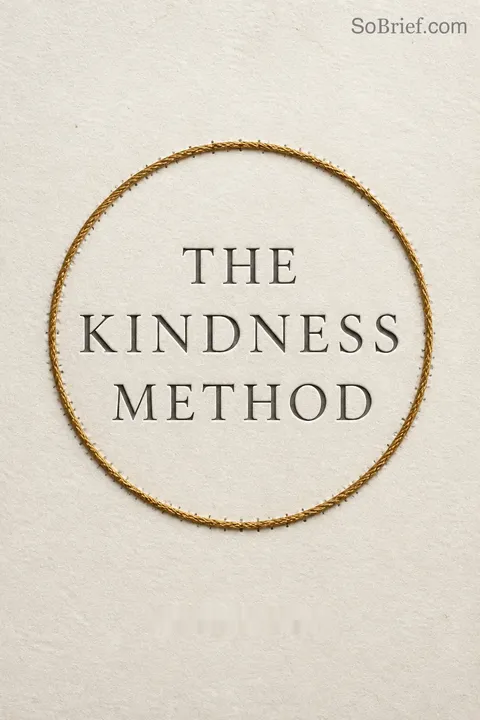


Key Takeaways
Use self-compassion as a method, not a reward for success
Kindness without indulgence. The Kindness Method treats self-compassion as a tool for change, not a prize reserved for people who have already succeeded. Shahroo Izadi describes years of punishing diets and bingeing before she began examining the beliefs and needs beneath her eating habits. The shift helped her lose and maintain an eight-stone loss while improving other parts of her life.
A gentler conversation. Marisa Bate approached Izadi because she wanted to drink less, not necessarily quit. Exploring how alcohol helped her manage self-doubt made change possible without shame or a command to abstain. The book's premise is that a person can take responsibility for a behavior without treating that behavior as proof of personal failure.
The distinction between compassion and permission is crucial. Research on self-compassion links a less punitive response to setbacks with greater emotional resilience, while shame can encourage avoidance. Izadi's approach turns kindness into a practical condition for honest self-examination, rather than a soothing slogan. It also resists a common trap in behavior change: assuming that self-criticism is motivating simply because it feels severe. Compassion is not universally sufficient, however. Severe dependence, trauma, or mental-health conditions may call for professional support alongside self-guided reflection.
Replace the habit's job, not only the habit itself
A behavior has a function. An unwanted habit may once have helped someone relax, manage social anxiety, cope with boredom, or avoid painful thoughts. Removing it without understanding that function can leave a vacuum, making the familiar behavior attractive again. The useful question is not only what the habit costs, but what it has been providing.
Build a better substitute. Izadi describes clients who used cannabis to unwind but had never developed other ways to relax. She also recounts a court-ordered client whose sessions shifted from drug use toward a future he wanted: he resumed football, pursued bike-repair training, and found work. The author suspected his drug involvement ended, though she could not confirm it. The larger lesson is to identify the need a habit serves and create other ways to meet it.
This functional view aligns with behavioral science: actions persist when they reliably deliver short-term relief or reward, even when their longer-term costs are high. A replacement strategy is more credible when it addresses the same need, rather than merely occupying time. The client's shift toward work and recreation also resembles behavioral activation, in which meaningful activity can improve mood and reduce reliance on avoidance. Still, habits are not explained by inner needs alone. Money, housing, access, and social conditions can constrain alternatives, so a plan should account for a person's real environment.
Collect handwritten evidence that contradicts your inner critic
Make capability visible. Izadi uses maps: handwritten pages organized around a theme, with related memories and observations arranged around it. Two early examples gather personal strengths and past accomplishments. They are meant to counter the mind's tendency to dismiss achievements once the immediate pride has faded. A client who had run marathons also recorded how she supported her seriously ill father while managing work and family life. Her personal achievement mattered as much as the public one.
Preserve the starting point. A Snapshot Letter records why change feels urgent now, so a future version of the writer cannot easily minimize the problem. Marisa's story shows why this matters: after a difficult drinking episode, she could later reinterpret it as insignificant. A written record gives motivation something more durable than memory alone.
These exercises turn vague self-belief into retrievable evidence. That matters because memory is selective: recent setbacks can loom large, while earlier competence becomes ordinary and easy to overlook. A written record also creates distance between a person and a harsh self-description, much like reflective journaling can help people examine thoughts rather than simply obey them. The exercise works best as an honest archive, not a forced positivity list. A record that includes difficulty, effort, and context is more credible than one that denies genuine limitations.
Answer your self-talk as kindly as you would answer someone you love
Notice the inner bully. Izadi asks readers to write down what they tell themselves when they fall short, then compare those messages with advice they would give someone they care about. Many people discover a striking gap: encouragement flows easily toward others, while their own internal voice reaches for insults and sweeping judgments.
Challenge, do not erase. The goal is not to insist that every negative thought is false. Readers are asked to consider where a belief began, whether it still fits, and what evidence complicates it. A nurse's paperclip exercise makes the pattern visible: each time a person catches cruel self-talk, a paperclip moves from one pocket to another. The count can reveal how habitual the criticism has become.
The comparison with a loved one makes self-compassion concrete. It interrupts the assumption that harshness is the only honest response to failure and opens space for accountability without humiliation. The book's emphasis on curiosity also avoids a simplistic positive-thinking prescription: beliefs can be tested rather than replaced with empty affirmations. One caution is that counting negative thoughts may initially increase attention to them. The point is not to police every thought, but to notice recurring patterns and choose whether they deserve authority.
Separate confidence from urgency, then strengthen whichever is missing
Two different barriers. Izadi describes readiness to change through two questions: how important is the change, and how confident does the person feel about achieving it? Someone may desperately want change but feel incapable; another may feel capable but see little reason to act. These are different problems and call for different preparation.
Make the future personal. The book asks readers to picture life months ahead with and without change, focusing on daily feelings and choices rather than abstract ideals. It also encourages people to identify their own reasons for changing. One client caring about the appearance of fitting into familiar clothes, rather than a medical warning, is a reminder that motivation need not match someone else's preferred explanation. A goal becomes more compelling when it connects to the life its owner actually wants.
Separating importance from confidence is a practical application of motivational interviewing, which supports a person's own reasons and capacity for change rather than imposing an agenda. It prevents a common mismatch: repeating warnings to someone who already feels urgency, or offering tactics to someone who has not decided the goal matters. Future visualization can help translate intention into personally meaningful outcomes. Its limitation is that imagined futures can become perfectionistic or remote. A useful vision should feel appealing and specific, while remaining compatible with small, imperfect steps.
Predict your personal triggers before they make decisions for you
A trigger is broader than a cue. In the book, a High-risk Situation is any event, thought, or feeling that tests someone's resolve. Fatigue, hunger, stress, worry, social settings, and self-critical thoughts can combine to make an old habit more tempting. Mapping these patterns helps a person recognize the sequence, not just the final behavior.
Prepare before the moment. The optional Headline Journal has a morning entry for anticipated challenges and a later entry about what actually happened. A reader might expect a stressful meeting to trigger an evening takeaway, then plan a different response in advance. Izadi also suggests recording worries and revisiting them when calmer, which can expose how often alarming predictions do not come true. The aim is not perfect prediction, but fewer decisions made while feeling blindsided.
This is close to implementation planning: specifying a likely situation and a deliberate response can make action less dependent on in-the-moment resolve. The method adds a useful personal history, since the same event can be trivial for one person and highly charged for another. Journaling also creates a record against which anxious predictions can be checked. Yet constant monitoring can become another source of rumination. A journal should clarify choices and reduce surprise, not turn every passing thought into a problem requiring analysis.
Start with a plan you can keep, then review it every three weeks
Choose doable over dramatic. Izadi recommends an initial plan challenging enough to create change but realistic enough to keep. Paul, who wanted a new job and a healthier routine, proposed quitting alcohol, going to the gym nightly, eating only a narrow range of foods, and job hunting for hours each evening. A more manageable version reserved two evenings for job searching, included meals he enjoyed, and added a walk to his commute.
Learn by testing. Paul initially felt better, then began doubting his goals after job rejections and the novelty wore off. His Snapshot Letter reminded him what had prompted the change. The book recommends setting a review date, often about three weeks away, then keeping what works and adjusting what does not. Early success is evidence of capacity, not a demand to overhaul life overnight.
Small commitments create opportunities for mastery, the experience of succeeding at a difficult but attainable task. That can strengthen confidence more reliably than an ambitious plan repeatedly abandoned. The review date also makes the plan an experiment rather than a verdict on character. Paul's example shows how several behaviors can reinforce one another: a less tiring evening may support better food choices and career effort. Gradual change is not always appropriate, especially when a behavior carries immediate danger or withdrawal risk. In those cases, professional guidance matters.
After a lapse, interrupt the shame story before it becomes a relapse
Define the setback. The book uses lapse for a departure from a chosen plan, and relapse for a return to the earlier pattern or a worsening of it. The distinction matters because one off-plan choice need not erase previous progress. What a person tells themselves afterward can influence whether they resume or give up.
Return quickly and learn. Izadi encourages readers to identify what happened, note any early warning signs, and make the next step easier. Signs may include isolation, poor sleep, missed support, or returning to risky routines. Her point is not that lapses are harmless. It is that shame and all-or-nothing thinking can compound them. When ready, a person can revise the plan, add the new trigger to their notes, and get back on track without waiting for a fresh Monday.
This approach resembles relapse-prevention work that treats setbacks as opportunities to identify predictable links in a behavior chain. It counters the all-or-nothing response in which one deviation becomes evidence that the entire effort has failed. The distinction is particularly important for behaviors that can be changed gradually. It should not, however, be used to minimize a dangerous episode or a return to substance use with serious medical risks. In those situations, safety and qualified support take priority over self-guided reflection.
If moderating alcohol, slow down and identify your satisfying limit
Observe before changing everything. For readers seeking to moderate drinking, Izadi suggests noticing how pace, food, mood, and drink type affect the experience. Drinking quickly can mean reaching unwanted intoxication before the effects of earlier drinks are fully felt. Slowing down, eating beforehand, and keeping variables consistent can make patterns easier to recognize.
Find the useful point. The alcohol sweet spot is the amount or stage at which drinking delivers the desired effects, such as relaxation or sociability, without losing control or feeling unwell. Izadi asks readers to recall when they enjoyed drinking most and how they felt the next day. One client was inspired by slower, meal-centered drinking observed in Italy. The point is not that moderation suits everyone: the book distinguishes these clients from people whose dependence or risks call for specialist treatment.
The sweet-spot idea challenges the assumption that more of a pleasurable substance keeps increasing pleasure. It uses self-monitoring to make consumption a deliberate choice rather than an automatic continuation. This resembles harm-reduction approaches that aim to lower risk while respecting an individual's goals. But moderation is not a universal or medically safe target. Dependence, withdrawal symptoms, and certain health or medication concerns can make professional advice essential. The method's strongest contribution here is not a prescribed drinking limit, but a careful examination of what the person wants alcohol to do.
Analysis
The book's distinctive move is to make self-knowledge a prerequisite for the practical plan. Its maps externalize memories and inner dialogue, turning a vague intention to change into material a person can inspect, revise, and revisit. Their order matters: readers first gather evidence of competence, then examine costs, benefits, ambivalence, triggers, and possible futures. That sequence tries to prevent reflection from becoming a prosecution of the self. It also gives the method a narrative arc: the person who once saw a habit as proof of weakness can come to see it as an understandable strategy that no longer fits.
The approach is strongest when it treats motivation as variable and personal. A person is not asked to borrow a clinician's preferred reason for change, and early plans are framed as experiments rather than tests of worth. That emphasis connects with autonomy-supportive counseling and self-efficacy: people are more likely to persist when the goal feels theirs and manageable progress supplies evidence of capability. Its distinctive contribution is to join these ideas to tangible records that can be consulted when mood and memory shift.
There are limits. The book combines professional experience, client stories, and the author's own success, but those do not establish that the complete method has been tested as a clinical intervention. Mapping and journaling may be difficult for people with limited time, privacy, literacy, or emotional safety. Nor can kinder self-talk resolve structural pressures or replace treatment for serious substance dependence, trauma, or mental illness. The most responsible reading is therefore neither a promise of self-cure nor a rejection of therapy. It is a self-guided framework for noticing patterns, building a personally meaningful plan, and seeking additional help when the problem exceeds what reflection and habit adjustments can safely address.
Review Summary
The Kindness Method is generally well-received, with readers praising its practical approach to habit change through self-compassion. Many found the mind-mapping exercises helpful and appreciated the focus on being kind to oneself. Some readers noted its particular relevance for addiction recovery. While some felt it was more suited for addressing "bad" habits rather than building new ones, most found value in its techniques. A few reviewers mentioned difficulty with the digital format or felt it wasn't applicable to their situation, but overall, the book was praised for its unique and effective approach to personal transformation.
People Also Read



Glossary
The Kindness Method
Self-guided habit-change processIzadi's framework for changing unwanted habits through self-understanding and self-compassion. It uses personalized written exercises to identify strengths, past experiences, motivations, triggers, and obstacles before a person creates and reviews a practical plan. The method is designed to support self-directed change, not to replace therapy, medical care, or specialist substance-use treatment.
maps
Personalized visual notesBlank-page exercises organized around a central topic, such as personal strengths, past achievements, or situations that may undermine a plan. The writer adds related memories and observations in their own words and arrangement. Izadi presents the maps as private reference tools that make patterns visible and provide reminders when motivation or confidence is low.
Snapshot Letter
Reminder of why change mattersA letter written at the beginning of a change process, when the reasons for change feel vivid. It records the person's current concerns, frustrations, and hopes so that the letter can be revisited if time or improved circumstances make the original problem seem unimportant. It is intended as a personal reminder, not a reprimand.
High-risk Situation
A test of resolveAn event, thought, or feeling that makes a person more likely to depart from a change plan. It may be an obvious cue, such as being around people who smoke, or a less obvious combination of fatigue, stress, worry, and self-critical thinking. Identifying these situations allows someone to anticipate them and prepare a response.
Headline Journal
Daily trigger-planning journalAn optional morning and evening writing practice. In the morning, a person notes what may challenge them that day and how they would prefer to respond. In the evening, they record what actually tested them and what they did. The comparison builds awareness of recurring situations and helps turn surprise into preparation.
euphoric recall
Remembering benefits, forgetting costsA tendency, discussed in addiction contexts, to recall the appealing parts of a past behavior while overlooking its negative consequences. Izadi uses personal records of both harms and improvements to counter this selective memory. The term helps explain why a person may begin to minimize the reasons they originally wanted to change.
sobriety sampling
Time-limited abstinence trialA technique from the Community Reinforcement Approach in which a person agrees to try abstinence for a limited period. The trial can provide firsthand experience of changes that may accompany sobriety and inform decisions about treatment. Izadi applies similar short-term thinking to habit change, so a person need not decide at the outset how they will behave for the rest of their life.
alcohol sweet spot
Most satisfying drinking levelThe amount or point in a drinking occasion at which alcohol seems to provide the desired effects, such as relaxation or sociability, while the person still feels in control and has a positive experience. Izadi encourages reflection on pace, drink type, food, mood, and next-day effects to identify that point. It is not a recommended target for everyone.
readiness to change
Importance plus confidenceA way of assessing two distinct dimensions of a person's motivation: how important change feels and how confident the person is about making it. Someone may strongly want change but doubt their ability, or feel capable without seeing an urgent reason to act. The distinction helps identify whether preparation should focus on confidence, personal reasons, or both.
FAQ
1. What is "The Kindness Method" by Shahroo Izadi about?
- Self-Compassion for Habit Change: The Kindness Method is a self-help book that teaches readers how to change unwanted habits by using self-compassion, understanding, and personalized planning.
- Framework for Sustainable Change: It provides a structured, non-judgmental framework to help individuals identify, understand, and transform their behaviors, focusing on kindness rather than punishment.
- Practical Tools and Exercises: The book is filled with practical exercises, such as mapping, letter writing, and self-reflection, to help readers build self-awareness and resilience.
- Applicable to Any Habit: While many examples focus on substance use and eating, the method is designed to be applicable to any habit, from procrastination to negative self-talk.
2. Why should I read "The Kindness Method" by Shahroo Izadi?
- Gentle, Non-Judgmental Approach: The book offers a refreshing alternative to harsh self-discipline, emphasizing kindness and understanding as the foundation for lasting change.
- Personalization and Autonomy: Readers are encouraged to set their own goals and create bespoke plans tailored to their unique needs and motivations.
- Evidence-Based Techniques: Izadi draws on her experience in addiction treatment and psychology, sharing tools that have worked for both her clients and herself.
- Long-Term, Sustainable Results: The focus is on creating changes that last, not quick fixes, by building self-esteem, self-awareness, and resilience.
3. What are the key takeaways from "The Kindness Method" by Shahroo Izadi?
- Self-Kindness Drives Change: Being compassionate and understanding with yourself is more effective for habit change than self-criticism or punishment.
- Mapping and Self-Reflection: Using personalized maps and written exercises helps uncover triggers, strengths, and patterns, making change more manageable.
- Preparation Over Willpower: Success comes from thorough planning and anticipating challenges, not just relying on motivation or willpower.
- Celebrate Progress, Not Perfection: Recognizing achievements and being forgiving of lapses helps maintain momentum and prevents relapse.
4. How does Shahroo Izadi define "The Kindness Method" and what makes it different from other habit-change approaches?
- Self-Compassion as Core: The Kindness Method is defined as a private, judgment-free process that uses self-compassion and understanding to drive change.
- Focus on Root Causes: Unlike many approaches that target the habit itself, Izadi’s method explores the underlying thoughts, feelings, and needs that drive behaviors.
- Personalized Mapping: The use of “maps” (visual, written exercises) allows for a highly individualized approach, rather than one-size-fits-all solutions.
- No Prescribed Goals: The method does not dictate what you should change; instead, it empowers you to choose and define your own goals.
5. What are the main steps or exercises in "The Kindness Method" by Shahroo Izadi?
- Snapshot Letter: Writing a letter to your future self to capture your current feelings and motivations for change.
- Strengths and Achievements Maps: Creating “Ways I’m Happy to Be” and “What I’m Proud Of” maps to build self-esteem and recognize personal strengths.
- Trigger and Obstacle Mapping: Identifying what has and hasn’t worked in the past, what will test you, and the conversations you have with yourself.
- Action Planning: Developing a realistic, personalized plan with clear rules, review dates, and strategies for handling lapses and setbacks.
6. How does mapping work in "The Kindness Method" and why is it important?
- Visual Self-Discovery Tool: Mapping involves writing a theme in the center of a page and surrounding it with related thoughts, feelings, and experiences.
- Personalized and Flexible: Maps can be free-form or structured, allowing you to explore strengths, triggers, excuses, and more in a way that suits you.
- Memory Aid and Motivation: Having your own words and insights visually laid out serves as a powerful reminder during moments of doubt or temptation.
- Ongoing Process: Maps are meant to be updated and revisited, becoming a living record of your journey and growth.
7. What role does self-talk and internal dialogue play in "The Kindness Method" by Shahroo Izadi?
- Identifying Negative Self-Talk: The book emphasizes that negative self-talk is a major barrier to change, often leading to self-sabotage and relapse.
- Challenging Harmful Narratives: Exercises help you become aware of and challenge the unkind stories you tell yourself, replacing them with more compassionate, truthful ones.
- Developing a Kinder Inner Voice: By comparing how you speak to yourself versus someone you love, you learn to treat yourself with the same encouragement and understanding.
- Building Resilience: Changing your internal dialogue increases your ability to withstand discomfort and setbacks during the change process.
8. How does "The Kindness Method" address setbacks, lapses, and relapses?
- Normalizing Lapses: The book teaches that lapses are a normal part of change and should be treated as learning opportunities, not failures.
- Immediate Recovery Focus: Practical tools like the “Relapse Reminder Snapshot” help you get back on track quickly after a lapse.
- Kindness Over Punishment: Instead of self-blame, the method encourages self-forgiveness and curiosity about what led to the setback.
- Planning for High-Risk Situations: By anticipating triggers and having strategies in place, you reduce the impact of setbacks and prevent them from turning into full relapses.
9. Can "The Kindness Method" by Shahroo Izadi be used for any habit, or is it specific to addiction?
- Universal Application: While the author’s background is in addiction treatment, the method is designed for any unwanted habit, including procrastination, overeating, negative self-talk, and more.
- Focus on Underlying Patterns: The approach targets the root causes and emotional drivers behind habits, making it relevant to a wide range of behaviors.
- Examples Across Contexts: The book includes stories and exercises for habits related to alcohol, food, work, relationships, and everyday routines.
- Adaptable Tools: The mapping and planning exercises can be tailored to fit any goal or challenge you wish to address.
10. What are some of the most powerful quotes from "The Kindness Method" by Shahroo Izadi, and what do they mean?
- “The Kindness Method isn’t about Shahroo being kind to you; it’s about giving yourself the permission to be kind to you.” – This highlights the core message: self-kindness is the key to lasting change.
- “We need to learn why it suits us to stay the same.” – Change is hard because our habits serve a purpose; understanding this is crucial for transformation.
- “One ‘slip’ doesn’t have to dictate who you tell yourself you are.” – A lapse is not a failure; it’s an opportunity to practice resilience and self-forgiveness.
- “Change doesn’t begin when your everyday life looks different, it begins when you do your first map.” – The process of change starts with self-awareness and reflection, not just action.
11. How does "The Kindness Method" by Shahroo Izadi help build long-term motivation and resilience?
- Focus on Self-Efficacy: By documenting strengths and achievements, you build belief in your ability to change, which fuels ongoing motivation.
- Anticipating Fluctuations: The method prepares you for motivation to waver and teaches you to plan for these moments, rather than relying on willpower alone.
- Celebrating Small Wins: Regularly acknowledging progress, no matter how small, helps maintain momentum and prevents discouragement.
- Continuous Self-Reflection: The ongoing use of maps and journals keeps you engaged with your goals and aware of your growth, making setbacks less likely to derail you.
12. What is the overall philosophy and message of "The Kindness Method" by Shahroo Izadi?
- Kindness as a Catalyst: The central philosophy is that self-compassion and understanding are the most effective drivers of lasting habit change.
- Empowerment Through Self-Knowledge: The book empowers readers to become experts on themselves, trusting their own wisdom and experiences.
- Holistic, Lifelong Change: The Kindness Method is not just about changing one habit, but about creating a kinder, more resilient relationship with yourself for life.
- You Are Not Broken: The message is that you don’t need fixing; you need to meet yourself with honesty, curiosity, and kindness to unlock your potential for change.
Download PDF
Download EPUB
.epub digital book format is ideal for reading ebooks on phones, tablets, and e-readers.








