

Plot Summary
Prologue
Thirteen years earlier, Gwyn Jones’s attempt to transform a leaf at Penhaven College produces a snapping little creature that attacks her professor’s boot. As Gwyn tries to undo the spell, a visiting student, Llewellyn Penhallow, intervenes by destroying the creature outright.
His help earns him Gwyn’s contempt, and he leaves before she can learn much about him. The encounter is brief, but it lodges in her memory: she sees a privileged show-off, while he remembers the red-haired witch who once caught his attention.
The prologue makes their later rivalry personal before either character can name it. Gwyn’s unruly spell shows both her talent and her instinct to treat mistakes as challenges she can master, while Wells’s quick destruction of the creature solves the immediate problem without respecting her effort. Their first clash is therefore not simply attraction delayed; it is a disagreement about what competence looks like. Gwyn values experimentation and ownership of a mistake. Wells, still shaped by family status and academic discipline, defaults to control. The memory matters because each has been misreading the other for years.
A Ghost Made of Glitter
In the woods outside Graves Glen, Gwyn joins her cousin Vivi, a witch and college teacher, to investigate reports of a glowing ghost. They find it was conjured by Vivi’s students Sam, Cait, and Parker, who hoped to create a Halloween attraction.
Their glitter-and-glue creation is impressive, but the students cannot undo it. Gwyn throws salt at the apparition, which makes it explode in sticky magical debris rather than disappear. Vivi turns the mishap into a proposal: she and Gwyn should give young witches a safe place to experiment.
Gwyn agrees, partly because the students need guidance and partly because she enjoys their inventiveness. With Vivi and her husband Rhys preparing to leave for Wales, Gwyn will soon be responsible for the town and its novice witches.
The ghost is a small disaster with an important consequence: it gives Gwyn a role she did not seek but proves she can inhabit. Her first response is comic improvisation, not caution, and the resulting mess makes the students’ need for supervision concrete. Vivi supplies a different model of authority, one based on mentorship rather than prohibition. Gwyn’s agreement is revealing because she disguises generosity as irritation and frames responsibility as a joke. That reflex will matter later: she often accepts care and obligation only after translating them into her own irreverent language.
The Penhallow Across the Street
In Wales, Wells’s father, Simon, laments that the family’s old pub is nearly empty and that their magic no longer powers Graves Glen. Wells volunteers to leave the pub and establish a serious witchcraft shop in the Georgia town, believing he can preserve the family’s legacy there. He arrives without warning and finds Gwyn running a bachelorette party in the Penhallow house.
Their first encounter in years becomes a fresh quarrel, especially when Wells announces he is staying permanently. Rhys suspects their father sent Wells to reclaim influence, but Wells says the move was his own choice. He rents the vacant storefront opposite Something Wicked and opens Penhallow’s Magical Goods, an elegant rival to Gwyn’s tourist-friendly shop.
Wells’s move is framed as service, but it also expresses a need to escape a life that has narrowed into dutiful maintenance. The pub preserved family magic in theory, yet its emptiness leaves Wells feeling useless. Graves Glen offers work, customers, and a chance to practice his craft. His conflict with Gwyn immediately turns that private need into a public contest over what witchcraft should look like: inherited seriousness or accessible local commerce. Rhys’s suspicion is grounded in the family’s history, so Wells’s insistence that he chose this life has to be demonstrated through action, not simply accepted as fact.
The Cellar's Pink Cloud
Wells’s shop quickly attracts customers with its fireside comfort, tea, and costly magical-looking goods. Gwyn answers by drawing crowds to Something Wicked with Sir Purrcival, her talking cat, whose Halloween greetings become a local spectacle.
The rivalry exposes their different strengths: Wells creates an inviting refuge, while Gwyn understands how to turn the town’s theatrical spirit into business. Then a customer brings Gwyn a quartz amulet bought from Wells that carries a real clarity spell. Gwyn confronts him, and they search his stockroom for the dangerous item.
A torn box releases pink glitter over both of them, and they kiss with startling intensity. Gwyn later reads that a love spell requires mutual attraction, while Wells discovers the package was misdelivered body glitter. He keeps that fact from her.
Their commercial feud becomes a mechanism for intimacy because each recognizes the other’s competence even while trying to outperform it. Sir Purrcival’s popularity is not merely a gimmick; it reveals Gwyn’s instinct for turning community affection into livelihood. Wells’s mistake, by contrast, exposes the risk in his belief that careful records and good intentions are enough to manage magic. The kiss creates a more difficult problem than the mislabeled shipment: Gwyn can blame enchantment, but Wells knows the explanation is false and withholds it. Desire begins under cover of accident, making honesty the next test of their relationship.
Morgan's Haunted House
Morgan Howell, a former Penhaven classmate of Gwyn and Wells, returns to Graves Glen and invites local witches to a lavish housewarming. The gathering feels unnaturally saturated with magic, and Wells senses something wrong in a private part of the house.
Gwyn follows, and they find an attic filled with grim paintings, old torture devices, and locked trunks. She recalls that Morgan left Penhaven before graduation, though she never learned why. When Morgan approaches, Gwyn kisses Wells to disguise their snooping, and they pretend to be newly involved.
Outside, Wells finally explains that the glitter in the cellar was ordinary body glitter, not a love spell. Gwyn cannot dismiss the truth: their first kiss happened because they both wanted it. They agree to investigate Morgan together.
Morgan’s party shifts the story from romantic rivalry to shared inquiry, but it does not erase the attraction that preceded it. Gwyn’s decision to kiss Wells is tactical, yet the repeated physical closeness makes the tactic emotionally unstable. Wells’s belated honesty forces Gwyn to revise her account of their first kiss and confront desire she had filed under magical interference. Meanwhile, the attic’s objects create suspicion without yet proving wrongdoing. The section’s tension rests on unequal knowledge: Wells has already been withholding one truth, and both protagonists must now decide whether to trust each other while they investigate someone else.
The File Behind the Glamour
The Baby Witches learn that Penhaven keeps paper files on former students, so Gwyn and Wells stage a distraction to enter Dr. Arbuthnot’s office. Parker gives Wells a spellbound coin that can copy writing from the file without removing it.
Gwyn draws the professor away while Wells finds Morgan’s record. It confirms that Morgan studied ritual witchcraft and was told to withdraw before graduation for improper magical practices, but offers no details. The lack of explanation frustrates them, yet confirms that Morgan’s past is more than a rumor.
With the record copied, they leave without being caught. Their investigation has produced a lead, not an answer, and the students’ inventive magic has again helped Gwyn turn a risky plan into a workable one.
The heist shows Gwyn at her best as a practical organizer: she understands people, improvises a distraction, and lets the students contribute instead of treating them as liabilities. Wells’s willingness to take part marks a shift from detached scrutiny to partnership. Yet the file’s vagueness also demonstrates how institutions can preserve authority by recording a judgment without its context. The phrase about improper practices is enough to justify suspicion but not enough to establish guilt. The students’ copying coin becomes crucial later, because the first version of Morgan’s record is not the whole record.
Under the Graves Glen Lights
After finding little more than a warning in Morgan’s file, Gwyn drives Wells to a mountain overlook above Graves Glen. There, Wells admits he regretted leaving Penhaven and remembers the town as a place where he might have made friends instead of spending his student years trying to satisfy his father. Gwyn recognizes the loneliness beneath his formality and kisses him without an excuse.
They choose to be intimate in the back of her truck, then continue together in her bed after a storm knocks out the lights. Their physical closeness makes the relationship real rather than strategic. But Gwyn’s magic has begun to fail in small ways, and after they talk, she and Wells decide that Morgan’s return may be connected.
The overlook gives Wells a setting in which he can describe loss without the family objects and obligations that usually speak for him. Gwyn’s response is not to fix his loneliness but to meet it with chosen closeness. Their intimacy shifts the romance from banter and plausible deniability into mutual risk. At the same time, the magic failure intrudes on their private happiness. Gwyn’s power is part of her identity and livelihood, so its irregularity cannot remain a background inconvenience. The scene binds emotional vulnerability to the central mystery: each has begun to trust the other just as the danger becomes personal.
The Glamour Falls Away
The next day, Gwyn and Wells confront Morgan, convinced she may be behind Gwyn’s failing magic. Morgan denies it and reveals that her grand house is an elaborate glamour; she bought a collection of genuinely dangerous magical objects and stored them in the attic.
She claims she left Penhaven after harmless appearance-changing spells, a story that appears consistent with the sparse student file. Gwyn accepts the explanation but remains without reliable power. That evening, she returns home to find the door open and Sir Purrcival missing.
Her attempts at a locating spell fail. Wells arrives in time to follow a trail of light through the woods and find the cat in a hollow tree. Gwyn brings Sir Purrcival home, shaken, and asks Wells to stay for a drink.
Morgan’s explanation is plausible because it separates two kinds of deception: the house is false, while the objects are real. Gwyn and Wells mistake disclosure for transparency, an error made easier by their desire to find a manageable cause for Gwyn’s problem. The missing-cat episode then strips away Gwyn’s usual comic armor. Her failed spell leaves her frightened and dependent on Wells, who responds with concrete help rather than insisting she be self-sufficient. This care deepens the relationship, but it also sharpens the stakes: the loss of magic is not abstract when Gwyn cannot locate the creature she loves.
A Ring Turns Black
As Wells and Gwyn research ways to restore her power, the Baby Witches discover an old spell combining blood magic with a family ring. They test Wells’s signet ring and watch it glow as a dark band appears on his finger. The students conclude that the ring has been draining magic from Gwyn’s family, and Gwyn realizes Wells has carried it since Simon sent him to Graves Glen.
Wells insists he knew nothing about the enchantment and removes the ring when she asks. He still cannot persuade Gwyn that his father may not be responsible. Determined to learn the truth and find a cure, Wells uses a Traveling Stone to go to Wales, leaving Gwyn behind without saying when he will return.
The ring transforms suspicion into intimate betrayal because the instrument has traveled with Wells, touching him and accompanying every moment of their growing closeness. The students’ discovery is persuasive evidence, but it cannot answer the crucial question of intent. Gwyn can believe Wells is innocent of knowingly harming her and still feel that his family has placed her in danger through him. Wells’s departure is meant as a search for a solution, yet his silence repeats the very pattern that has injured their trust: he decides what Gwyn can bear instead of letting her share the uncertainty.
The Dutiful Son's Break
In Wales, Wells confronts Simon, who confirms that the signet ring was designed to drain the Jones family’s power. Simon expected the process to take much longer and admits that Wells’s closeness to Gwyn accelerated it.
He also reveals that his visit to the pub was meant to make Wells volunteer for the assignment, exploiting his eldest son’s need to be useful and loved. Wells rejects his father’s justification that the Joneses stole the Penhallow legacy and leaves, declaring that the family’s reputation is not worth preserving at this cost.
He then searches for Bowen, hoping his more reclusive brother can reverse the blood magic. Back in Graves Glen, Gwyn keeps working through the Fall Festival, hurt by Wells’s disappearance and unaware of what he has learned.
Simon’s confession exposes the emotional economy beneath Wells’s obedience. His father did not merely give him a cursed object; he built the plan around Wells’s deepest learned habit, mistaking service for love. Wells’s rejection is therefore a break with both a magical scheme and a childhood role. Still, his effort to repair the harm remains solitary. He believes he must return with a solution, but from Gwyn’s perspective the unexplained absence can resemble abandonment or complicity. The section refuses to make good intentions automatically reparative: Wells has chosen the right moral side, yet he has not communicated that choice to the person he hurt.
The Blood-Magic Altar
At the Fall Festival, Morgan lures Gwyn away from her booth and reveals that her old account of leaving Penhaven was false. She and several classmates were expelled for using a student’s ancestral blood in a ritual, hoping to seize power. Now they plan to bleed Gwyn, whose ancestor Aelwyd Jones once held powerful magic, and claim her family’s strength for themselves.
They chain Gwyn to a black stone table in Morgan’s attic. Meanwhile, Parker discovers that Morgan’s file was enchanted and secretly contained the blood-magic history. Sam, Cait, and Parker find Wells with Bowen, who is preparing a reversal spell, and warn him that Gwyn has been taken. Wells and the students return to Morgan’s house as Gwyn summons a spark of her own magic.
The revelation recasts Morgan’s earlier helpfulness as strategic access, but it also clarifies the limits of her ambition: she treats inherited power as a resource to be extracted from another person’s body. Gwyn’s captivity literalizes the violence hidden inside the language of lineage and magical legacy. Crucially, she does not wait for the reversal spell or a rescuer before acting. Her first spark comes from asserting ownership of her own power. Wells’s return matters, but the narrative preserves Gwyn’s agency by making her resistance begin before he reaches the attic.
The Trunk Opens
Wells breaks through Morgan’s magical barrier and reaches the attic as Gwyn’s power flares back to life. He blasts Harrison away from her, while Gwyn drives Morgan back with a burst of light. Morgan stumbles into a locked trunk, and its lid flies open with a forceful howl. Wells identifies it as a Soul Catcher, a device that consumes the coven’s concentrated negative energy and imprisons those it takes.
The trunk draws Morgan, Harrison, Rosa, and their collaborators inside, then shuts. Gwyn’s magic has returned without Bowen’s unfinished reversal spell; her will, rather than the cursed ring, proves decisive. Wells and the Baby Witches find her alive, and the immediate threat to her bloodline and Graves Glen ends.
The climax resolves two systems of coercion at once. The blood ritual tries to make Gwyn’s ancestry determine her value, while the cursed ring has already made her closeness to Wells part of the harm. Her recovered power breaks that logic: it cannot be reduced to a substance other people can harvest or transfer. The Soul Catcher’s intervention is not a clean moral victory, since the coven is imprisoned by a dangerous artifact rather than brought to a formal reckoning. Still, its setup in Morgan’s attic makes the reversal feel earned. The objects she collected for domination become the means of her defeat.
A Home Across the Street
Vivi and Elaine return to Gwyn’s cabin, having sensed something was wrong, and embrace her after the rescue. Wells slips away to give them space, then reunites with Rhys and Bowen to face the damage Simon has caused. Bowen takes responsibility for dealing with their father, while Wells recognizes he must stop deciding Gwyn’s needs for her.
The next day, Gwyn finds Wells at Penhallow’s preparing a grand apology in witch’s robes and a pointed hat. His rambling confession includes admitting he loves her. Gwyn says she loves him too, but makes clear that she wants his honest, imperfect self rather than a performance. They kiss, and the neighboring shopkeepers imagine a shared future in Graves Glen.
The ending makes home a chosen relationship rather than an inherited address or magical claim. Wells has spent the story serving his father’s idea of legacy; now he must accept that love requires presence and disclosure, not grand self-punishment. Gwyn’s response is active rather than merely forgiving: she names the kind of partnership she wants and refuses to let Wells’s apology become another performance of duty. The family reunion restores a wider circle of care, but it does not erase Simon’s harm. The romance resolves its central question through a modest decision: each will remain in the other’s life without pretending either is flawless.
Analysis
The novel makes inheritance tangible through objects and places: the Penhallow pub contains a fading spark, Graves Glen holds a changing current of power, and Simon’s ring turns family history into a weapon worn on Wells’s hand. Against that model of magic as property, Gwyn’s craft is local, improvised, and relational. She sells playful goods, teaches inexperienced witches, and makes a town’s seasonal rituals into shared life. The contrast is not between serious magic and foolish magic; Gwyn’s comic inventions coexist with real responsibility, while Wells’s formal seriousness initially leaves him vulnerable to inherited manipulation.
Romance develops through competing interpretations of agency. Gwyn first attributes their kiss to enchantment, then must accept that attraction was already hers. Wells must make the harder correction: believing himself a dutiful son did not prevent his father from using him, and leaving to repair the damage without telling Gwyn repeats his habit of acting on other people’s behalf. Their reconciliation depends less on chemistry than on Gwyn’s insistence that Wells be present and truthful, and Wells’s willingness to be loved without earning it through service.
Morgan’s scheme offers a dark mirror of the family legacy plot. She and her coven try to turn ancestry into extractable power, treating Gwyn’s blood as a shortcut to authority. Gwyn’s magic returns when she asserts that it belongs to her, not because someone else transfers or restores it. The resolution therefore rejects both Simon’s patriarchal preservation and Morgan’s predatory ambition. Power is most durable when practiced as responsibility, mentorship, and chosen connection, rather than possession.
Review Summary
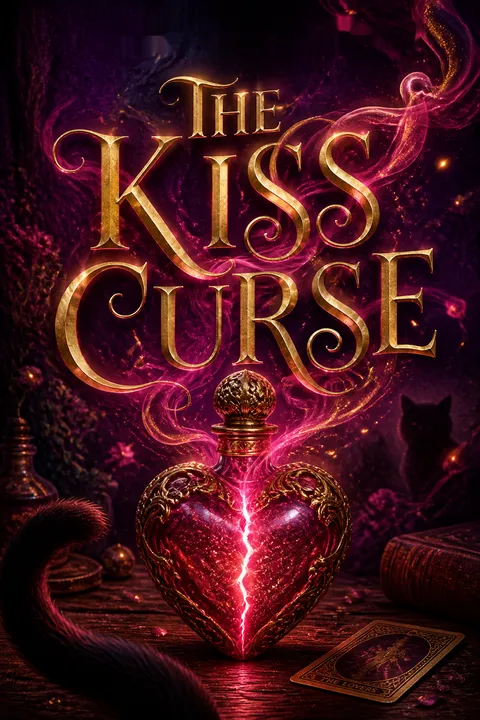
The Kiss Curse receives mixed reviews, averaging 3.74 stars. Readers praise its cozy autumn atmosphere, witty banter between rivals-to-lovers Gwyn and Wells, and charming small-town setting likened to Gilmore Girls. Fan favorites include Sir Purrcival the talking cat and the "Baby Witches." Common criticisms include underdeveloped romance, rushed endings, and slow-building plot. Many consider it an improvement over its predecessor, The Ex Hex, while others preferred the first book. It's widely recommended as a perfect Halloween read.
People Also Read




Characters
Gwyn Jones
The irreverent town witchGwyn is a talented witch who runs Something Wicked, a Graves Glen shop built around Halloween goods, practical charm, and her own artistic flair. She is quick-witted, impulsive, and resistant to rules she considers stifling, but her humor often conceals how deeply she cares for her cousin Vivi, the town, and the younger witches she mentors. She prefers self-reliance and tends to reframe vulnerability as a joke, yet she is also observant about other people’s loneliness and capable of offering them welcome without judgment. Gwyn’s craft is imaginative rather than formal, and her challenge is not learning to be powerful but trusting that responsibility and intimacy need not diminish her independence.
Wells Penhallow
The dutiful Welsh witchWells, whose full name is Llewellyn Penhallow, is an accomplished witch and the eldest son of a proud magical family. He has spent years maintaining his family’s old pub and preserving its dwindling magic, taking usefulness as proof of loyalty and affection. Formal, reserved, and prone to dry humor, he is more emotionally attentive than his stiff manner suggests. Moving to Graves Glen gives him a chance to build a life of his own, though he initially approaches that freedom through another form of service. His relationship with Gwyn challenges his habit of deciding alone what is best for others. Beneath his self-control is a man hungry for belonging and capable of deep tenderness.
Vivi Jones
Gwyn's steady-minded cousinVivi is Gwyn’s cousin, a witch, and a teacher at Penhaven College. She is thoughtful, organized, and more comfortable with rules than Gwyn, but her steadiness comes with warmth rather than rigidity. Vivi often recognizes when Gwyn’s irreverence is masking a real concern, and she encourages her cousin to make choices that serve the wider community. Her marriage to Rhys gives Gwyn a close example of committed partnership, while her planned trip to Wales leaves Gwyn with greater responsibility in Graves Glen.
Rhys Penhallow
The teasing younger brotherRhys is Wells’s youngest brother and Vivi’s husband. Charming, irreverent, and comfortable with affectionate teasing, he has a history of resisting his father’s expectations. His loyalty to Vivi and his new life in Graves Glen makes Wells’s arrival complicated, because he fears his brother may be acting on Simon’s behalf. Rhys is also a bridge between Gwyn and Wells, able to puncture both men’s defenses while taking family ties seriously.
Morgan Howell
The polished returning witchMorgan is a former Penhaven student who returns to Graves Glen after years away. Elegant, socially skilled, and eager to become part of the town’s Halloween events, she presents herself as a confident witch who has built an impressive life. Her history with Gwyn is friendly but not especially close, and her attention to Gwyn’s talent can seem admiring, competitive, or both. Morgan’s charm is carefully managed, making it difficult for others to know where friendliness ends and ambition begins.
Elaine Jones
Gwyn's independent motherElaine raised Gwyn on her own, earning a living through festival stalls, teas, bath salts, and tarot readings. Creative and unconventional, she gave Gwyn a model of a woman who could make a life outside traditional expectations. Her affection is generous rather than controlling, and she remains one of Gwyn’s emotional anchors even when away at a retreat.
Bowen Penhallow
The remote magical researcherBowen is Wells and Rhys’s middle brother, a reclusive witch who studies magic in the Welsh mountains. Laconic and difficult to read, he prefers practical work to family conversation, but his warnings about magical power shifts show a sharp understanding of danger. His distance from Simon differs from Wells’s dutiful closeness, and his blunt advice often cuts through his brothers’ rationalizations.
Simon Penhallow
The legacy-minded patriarchSimon is the father of Wells, Bowen, and Rhys, and the guardian of the Penhallow family’s old magical traditions. Proud, emotionally restrained, and preoccupied with what previous generations built, he measures decisions by their effect on family legacy. His grief and sense of loss have intensified his attachment to history and power. Simon’s relationship with Wells is especially shaped by the eldest son’s instinct to earn approval through obedience.
Sam, Cait, and Parker
Gwyn's inventive apprenticesSam, Cait, and Parker are young witches who study at Penhaven and work with Gwyn outside the college’s formal classes. Sam is energetic and socially perceptive, Cait is eager and outspoken, and Parker enjoys designing clever magical tools. Their early experiments can go spectacularly wrong, but their curiosity is genuine and their loyalty to Gwyn grows through shared work. They bring new ideas into a community where older witches sometimes mistake formality for safety.
Sir Purrcival
The talking black catSir Purrcival is Gwyn’s black cat, made able to speak through earlier magical events. His attention is largely fixed on food, comfort, and opportunities to insult Rhys, but his presence gives Gwyn a familiar source of affection and humor. He also makes Something Wicked memorable to customers, becoming an unlikely partner in Gwyn’s efforts to keep the shop thriving.
Dr. Arbuthnot
Penhaven's exacting professorDr. Arbuthnot teaches witchcraft at Penhaven and once supervised Gwyn’s student work. She is disciplined, formidable, and committed to rules she believes protect young witches from careless spellcasting. Gwyn’s frustration with her methods reflects a real difference in temperament, though Gwyn eventually recognizes the risks that structure can prevent.
Jane Ellis
The town's busy mayorJane is Graves Glen’s mayor and Gwyn’s former girlfriend. Organized and ambitious, she manages the town’s festivals with formidable energy. Their breakup leaves room for an easy, supportive friendship, and Jane’s planning work helps show how the town’s magical community and ordinary residents share its Halloween traditions.
Harrison Phelps
Morgan's former classmateHarrison is a former Penhaven student who remains connected to Morgan and her circle. He is reserved and intent on the group’s magical plans, giving him an unsettling presence when Gwyn and Wells encounter him at the housewarming.
Rosa
A witch from Gwyn's pastRosa attended Penhaven with Gwyn and later reappears among Morgan’s circle. Socially confident and keenly aware of status, she remembers Gwyn’s talent but judges the modest life Gwyn has chosen in Graves Glen.
Plot Devices
Graves Glen's ley magic
The town's living powerGraves Glen’s magical power flows through the town and is connected to its history and the Jones family. It gives Gwyn’s responsibilities a civic dimension: her magic is not only personal skill, but part of what helps sustain the place. The change in who channels that power also makes the town unusually sensitive to magical disturbance, drawing outsiders toward it. This device links the romance and mystery to the town’s contested inheritance without reducing either family’s claim to simple ownership.
The Penhallow signet ring
A hidden drain on powerSimon’s heirloom ring carries a blood-magic spell that siphons power from the Jones family. Wells wears it after arriving in Graves Glen, unaware that its effect increases through proximity to Gwyn. The object turns his father’s political scheme into a personal betrayal, since the ring accompanies Wells through his growing intimacy with Gwyn. Its discovery forces both characters to distinguish Wells’s intentions from the harm his family has caused.
Parker's copying coin
A record's hidden layerParker’s coin copies writing from one page onto another, allowing Wells to inspect Morgan’s student file without taking it from Dr. Arbuthnot’s office. The original record appears to offer only a vague reason for Morgan’s departure. Parker later discovers that the file itself is enchanted, and the coin exposes a concealed account of the blood ritual. A small act of apprentice ingenuity therefore becomes essential evidence, while also demonstrating that official records can be deliberately incomplete.
The Soul Catcher
The attic's dangerous trapA locked trunk among Morgan’s collection contains a Soul Catcher, an artifact that draws in people and holds them in another dimension. Its presence is foreshadowed by the ominous trunks in the attic and by the general danger of Morgan’s magical objects. During the confrontation, Morgan’s stumble breaks its lock, and the device takes her coven when their negative energy gathers around it. The artifact ends the immediate threat, but its use remains frightening rather than reassuring.
The Traveling Stone
A bridge between covensThe Traveling Stone lets a witch move rapidly between distant places by focusing on a destination. Wells uses one to reach Simon in Wales and later to return to Graves Glen. The Baby Witches also use a stone to find Wells and bring him the warning that Gwyn has been abducted. It compresses distance at moments when delay would be dangerous, while making cooperation across the divided Penhallow family possible.
Download PDF
Download EPUB
.epub digital book format is ideal for reading ebooks on phones, tablets, and e-readers.








