



Plot Summary
Rahim Calls from Pakistan
In 2001, Amir,1 an Afghan American novelist, receives an urgent call from Rahim Khan,4 his father3’s old friend and business partner, asking him to come to Pakistan. Afterward, Amir1 walks beside a lake in San Francisco and sees two kites. The sight returns him to Hassan,2 the boy who once ran kites for him in Kabul, and to a childhood betrayal he has spent decades trying to outrun.
Rahim4’s promise that Amir1 can become good again turns the journey into more than a visit. To understand why he is summoned, Amir1 looks back to the Kabul where he and Hassan2 grew up together, close in play but divided by class, ethnicity, and the household that made one boy a master and the other a servant.
The novel begins with a call that makes memory an active force rather than a sealed archive. The kites connect two countries and two versions of Amir, the comfortable writer who has built a life in America and the frightened child whose choices still govern his conscience. Rahim offers neither a verdict nor an easy absolution. His invitation creates a moral task whose meaning Amir does not yet know. The opening’s tension comes from that gap: the reader sees the weight of the past before learning its specific cause, and understands that return will require more than recollection.
Two Boys, Unequal Ground
In Kabul, Amir1 lives in a grand house with Baba,3 a formidable merchant who built an orphanage but struggles to understand his bookish son. Hassan2 lives with his father,5 Ali,5 in a small servant’s hut in the same yard. The boys climb trees, read stories together, and fly kites, yet Amir1’s literacy and social position give him power Hassan2 does not have.
Amir1 sometimes exploits that advantage, teasing Hassan2 with words he cannot read, then trying to make amends with toys or old clothes. Their closeness is genuine, but Amir1 rarely includes Hassan2 when wealthier boys visit. Baba3 notices that Hassan2 protects Amir1 while Amir1 avoids defending himself, and worries that his son cannot face hardship.
The friendship is emotionally intimate but never socially equal. Amir can treat Hassan as a companion in private and as a servant’s son in public because Kabul’s hierarchy permits him to switch between those roles without naming the contradiction. Literacy sharpens this imbalance: Amir controls stories and uses that control to humiliate, while Hassan’s insight often exceeds his schooling. Baba’s admiration for strength also makes Amir feel deficient, so the boy begins to confuse being loved with winning recognition. These habits prepare the central betrayal without making it inevitable. The danger lies in ordinary permission, in small acts that teach Amir whose dignity can be spent.
Assef’s Slingshot Warning
After the 1973 coup ends Afghanistan’s monarchy, Amir1 and Hassan2 encounter Assef,6 a wealthy neighborhood boy who admires Hitler and imagines a country cleansed of Hazaras. He corners them with his friends, Wali and Kamal,15 and threatens Amir1 for associating with Hassan.2
Hassan2 draws his slingshot and threatens to blind Assef,6 forcing the older boys to retreat. Assef6 promises revenge. The encounter gives shape to the prejudice Hassan2 already faces: Ali5 is mocked for being Hazara, and even Amir1’s schoolteacher dismisses Hazara history.
Later, Baba3 arranges surgery by a visiting plastic surgeon to repair Hassan2’s cleft lip as a birthday gift. Hassan2 accepts the painful-looking change with gratitude, but the mark that once distinguished his smile fades.
Assef makes private prejudice explicit and physical. His nationalism turns ethnic hierarchy into a permission structure for cruelty, while his polished family background shows that brutality is not confined to social outsiders. Hassan’s defense of Amir exposes a sharp asymmetry: the servant’s son risks injury to protect the privileged boy, who has little power to protect Hassan in return. The repaired lip adds a quieter complication. Baba’s generosity can cross class boundaries, but it cannot erase the system that makes Hassan dependent on that generosity. The promise of revenge remains lodged beneath the boys’ ordinary games, waiting for an occasion when Hassan cannot defend himself with a slingshot.
The Blue Kite Prize
Kabul’s winter kite tournament offers Amir1 his clearest chance to win Baba3’s admiration. He has watched Hassan2 predict falling kites with uncanny accuracy, and now Baba3 suggests that Amir1 might take the tournament. Amir1 turns the contest into a test of his worth, imagining that victory could finally make his father3 proud. Hassan2 helps him fly their red kite as the neighborhood crowds the rooftops.
One by one, Amir1 cuts down rivals until only a powerful blue kite remains. With Hassan2 feeding the glass-coated string, Amir1 wins the final duel. Baba3 celebrates from the roof, and Amir1 sees his father3 cheering for him at last. Hassan2 immediately sets off to retrieve the blue kite, the trophy that will complete Amir1’s triumph.
The contest is a public sport carrying a private burden. Amir does not merely want to win; he believes success can repair a relationship shaped by his mother’s death and Baba’s disappointment. That belief turns Hassan’s loyalty into an instrument of Amir’s ambition. The kite itself is a clean, visible prize, unlike the emotional bargain Amir is making with himself. Baba’s celebration briefly seems to confirm that affection can be earned through achievement. But the triumph depends on Hassan’s labor and exposes the friendship’s unequal terms: Amir receives recognition while Hassan runs ahead to secure it for him.
The Alley’s Unanswered Test
Amir1 searches for Hassan2 and finds him trapped in a narrow alley with Assef,6 Wali, and Kamal.15 Hassan2 refuses to surrender the blue kite, insisting that he won it fairly for Amir.1 Assef6 attacks him, and Wali and Kamal15 hold him down while Assef6 sexually assaults him. Amir1 watches from around the corner.
He could intervene, but fear and his desperate wish to keep Baba3’s approval silence him; he tells himself the kite is worth the price. When Hassan2 emerges, shaken and injured, Amir1 pretends not to know what happened and takes the kite from him. Hassan2 says only that Baba3 will be worried, then walks home. Amir1 has won the trophy, but the moment that made the victory possible has destroyed the trust beneath it.
Amir’s defining failure is not simply fear. He converts fear into a bargain, accepting Hassan’s suffering as payment for the approval he wants from Baba. The blue kite becomes morally contaminated because Amir knows what it cost and still carries it home. His silence also protects the social order that has always benefited him: Hassan’s injury can remain invisible, while Amir’s success is celebrated. The alley reverses the earlier confrontation with Assef. Hassan once used a weapon to shield Amir; now Amir has the power to help and chooses not to. That choice creates the guilt that will organize the rest of his life.
The Theft That Ends Home
After the tournament, Hassan2 withdraws into sleep and silence. Amir1 avoids him, then tries to provoke him by pelting him with pomegranates, hoping Hassan2 will strike back and punish him. Hassan2 refuses, pressing a split fruit against his own forehead instead.
Later, Amir1 hides his birthday watch and money beneath Hassan2’s mattress, then reports them missing. When Baba3 confronts Hassan,2 Hassan2 admits to stealing, protecting Amir1 from exposure. Ali5 understands the deeper wound and announces that he and Hassan2 are leaving.
Baba3 begs them to stay, but Ali5 takes Hassan2 away in the rain. Amir1 watches from his window and does not chase the car. The boy who once made Amir1’s first memories is gone, and Baba3’s household has been broken by Amir1’s lie.
Amir’s attempted confession by proxy takes the form of cruelty: he wants Hassan to retaliate because punishment would let him imagine the moral account settled. Hassan instead repeats his old pattern of absorbing the cost. His false admission is more devastating than an accusation because it reveals how completely he understands Amir and how little Amir deserves that understanding. Baba’s forgiveness of the theft cannot keep Ali and Hassan in the house; the decisive injury is not the money but the knowledge that life there has become unbearable. Amir’s failure to pursue the departing car marks the difference between remorse and repair.
The Fuel Tank Crossing
In 1981, with Soviet forces occupying Kabul, eighteen-year-old Amir1 and Baba3 escape with other refugees in a smuggler’s truck. At a checkpoint, Baba3 risks being shot rather than allow a Russian soldier to assault a young mother. The refugees reach Jalalabad only to learn that their onward truck is broken, and Baba3 nearly kills the smuggler who concealed the delay.
After a week in a basement, the group hides in a fuel tanker. The fumes kill Kamal,15 the boy once associated with Assef6’s gang, and Kamal15’s grieving father takes the smuggler’s gun and shoots himself. Baba3 and Amir1 reach Pakistan, then settle in California. Kabul, the house, and the life Amir1 shared with Hassan2 recede behind them, but none of Amir1’s guilt does.
Exile strips Baba of the public authority he once commanded, yet his instinct to defend a stranger shows that his courage survives displacement. The contrast between his protection of the young mother and his near-fatal attack on the smuggler complicates heroism: moral conviction can save someone, but anger can also turn lethal. The tanker passage compresses escape into suffocation, with Kamal’s death and his father’s suicide exposing the human cost hidden inside migration routes. Amir reaches safety without earning innocence. The physical journey carries him away from Afghanistan, while memory keeps the old household and the abandoned alley present inside his new life.
A Marriage Beside Loss
In Fremont, Baba3 works long shifts at a gas station and sells secondhand goods at a flea market, refusing public assistance because he cannot bear to live on charity. There Amir1 meets Soraya Taheri,7 a fellow Afghan American who wants to teach.
She tells him about a youthful mistake that damaged her reputation, and he accepts her history without judgment, though he keeps his own secret about Hassan.2 When Baba3’s lung cancer proves inoperable, Amir1 asks him to seek Soraya7’s hand.
Baba3 completes the formal proposal, then attends their wedding despite his illness. Soraya7 moves in to care for him, and Baba3 dies shortly afterward. Amir1 and Soraya7 build a marriage and a writing life together, but repeated fertility treatments fail, leaving them without a child.
The marriage offers Amir intimacy without requiring the confession he most fears. Soraya risks social judgment by telling her past openly; Amir responds with compassion partly because he recognizes his own capacity for wrongdoing, yet he withholds the history that would test that compassion. Baba’s decline reverses the old power dynamic: the son now tends the father, while Baba uses one final act of agency to ask for Soraya’s hand. His death removes both the source of Amir’s longing and the person against whom he has measured himself. The couple’s infertility intensifies an absence that later makes the possibility of caring for a child especially charged.
Rahim’s Summons
By 2001, Amir1 has published novels, and Soraya7 teaches at a school, but their wish for a child remains unanswered. Rahim Khan4 calls from Pakistan, gravely ill, and asks Amir1 to come. Seeing kites over Golden Gate Park, Amir1 understands that the invitation is bound to the past he has avoided. In Peshawar, Rahim4 recounts what happened after Amir1 and Baba3 fled.
He found Hassan2 in Hazarajat in 1986, where Hassan2 lived with his pregnant wife, Farzana.9 Hassan2 later returned with her to care for Baba3’s abandoned Kabul house. Their daughter was stillborn; Hassan’s mother,10 Sanaubar,10 returned years after abandoning him and helped raise his son, Sohrab.8 After the Taliban seized Kabul, they killed Hassan2 and Farzana9 and took Sohrab8 to an orphanage.
Rahim’s account makes the past larger than Amir’s private guilt. Hassan built a family, endured loss, and raised Sohrab amid successive regimes and wars, while Amir’s distance from Kabul allowed him to remain ignorant. Sanaubar’s return gives Hassan a form of belated repair, but the family’s brief shelter cannot withstand the Taliban’s power. Rahim’s illness turns testimony into a deadline: he is not merely filling in missing history but handing Amir responsibility for what remains. The story also reveals how political violence repeatedly invades domestic life, taking children, breaking homes, and making ordinary acts of care into fragile resistance.
Baba’s Hidden Son
Rahim4 gives Amir1 a photograph of Hassan2 and Sohrab,8 along with Hassan2’s letter describing life under Taliban rule. He then reveals that Ali5 could not father children and that Baba,3 not Ali,5 was Hassan2’s biological father. Amir1 realizes that Baba3 hid a second son to preserve his honor, while Amir1 grew up believing Hassan2 was merely a servant’s child.
The revelation recasts Baba3’s kindness toward Hassan2 and his relentless pressure on Amir:1 both boys were loved, but only one could be acknowledged. Amir1 is furious at the men who kept the truth from him, then sees that his own betrayal helped drive Hassan2 away. Rahim4 asks him to bring Sohrab8 out of Kabul. Amir1 agrees, accepting the journey as a chance to act where he once failed.
The revelation does not erase the old hierarchy; it exposes its most intimate consequence. Baba’s secret protects his reputation while denying Hassan his identity and denying Amir knowledge of his brother. The same social code that separated Pashtun from Hazara also shaped the family’s private loyalties. Amir’s anger at Baba is justified, but the discovery prevents him from using inherited wrongdoing as an excuse for inaction. Rahim frames responsibility as something that can cross generations without becoming a simple transfer of blame. Amir cannot repair what was stolen from Hassan, but he can refuse to let Sohrab become another child abandoned by the adults around him.
The Orphanage’s Missing Boy
Amir1 travels into Afghanistan with Farid,13 a Tajik driver and former fighter who initially distrusts him as a privileged exile. Farid13’s criticism forces Amir1 to confront how little he knows of the country’s suffering.
In Kabul, they find rubble, child beggars, and Taliban patrols where Amir1 remembers shops and trees. An old beggar who once taught Amir1’s mother recognizes her name, offering a brief, unexpected piece of her history. At the orphanage in Karteh-Seh, director Zaman14 confirms that Sohrab8 has been taken by a Taliban official.
Zaman14 explains that the official pays the orphanage for children and that Sohrab8 was taken a month earlier. Despite the danger, Amir1 insists on learning where the official can be found, and Zaman14 directs him to Ghazi Stadium.
Farid’s hostility serves as a necessary correction to Amir’s nostalgic claim on Afghanistan. The country is not a memory waiting for him to reclaim it; it is a place where other people have endured the wars he escaped. Yet Amir’s return is not entirely symbolic. He listens to Farid, helps the hungry family that hosts them, and follows the trail to Sohrab. Zaman’s compromised choice exposes the cruel arithmetic of survival: surrendering one child may help feed many others. The old teacher’s fragment about Amir’s mother briefly restores a personal past, but the orphanage’s crowded rooms make the present’s claims impossible to evade.
Stones at Ghazi Stadium
At Ghazi Stadium, Amir1 and Farid13 watch the Taliban stage a public stoning during halftime. The official who throws stones at the condemned couple is Assef,6 the boy who once threatened Amir1 and assaulted Hassan.2 Assef6 now holds Sohrab,8 dressed and made up to dance for him. He recognizes Amir1 and refuses money, demanding that they settle their old conflict.
The guards leave them alone. Assef6 beats Amir1 with brass knuckles, breaking ribs and jaw, while Sohrab8 watches. When Assef6 is about to deliver another blow, Sohrab8 uses his slingshot, firing a metal ball into Assef6’s left eye. The boy’s action gives Amir1 a chance to escape with him. Farid13 carries the badly injured Amir1 to the truck, and they flee Kabul together.
Assef’s return makes the old violence a living institution. The boy who once used ethnic hatred to justify assault now has state power, and his spectacle of punishment turns cruelty into public entertainment. Amir’s beating forces him to occupy the vulnerable position Hassan once endured; this is not a neat exchange of suffering, but it breaks his habit of remaining untouched by the consequences of his choices. Sohrab’s slingshot echoes his father’s defense of Amir, yet the child acts under coercion and trauma, not in a triumphant adventure. His rescue of Amir establishes a bond, but it does not make him safe or healed.
A Promise Broken
In a Peshawar hospital, Amir1 survives a ruptured spleen, broken ribs, and facial injuries. Sohrab8 stays guarded and nearly silent. Amir1 learns that Rahim Khan4 has left, then discovers that the American couple Rahim4 named as possible guardians does not exist.
An immigration lawyer explains that Sohrab8 may need to enter an orphanage while the adoption case proceeds. Amir1 promises this will not happen, but later tells Sohrab8 that a temporary placement may be necessary. Terrified of returning to an institution, Sohrab8 cuts his wrists in the hotel bathroom.
Amir1 finds him and calls for help. Sohrab8 survives emergency surgery, but retreats into silence. Soraya7’s uncle arranges a humanitarian visa, allowing Amir1 to bring him to California without sending him back to an orphanage.
Amir’s most consequential failure after Kabul is a broken promise made under bureaucratic pressure. He intends to protect Sohrab, yet treats the child’s fear as something reassurance can overcome. For Sohrab, another adult’s promise followed by a reversal confirms that dependence is dangerous. His suicide attempt is not a plot device that resolves his trauma; it reveals how little control he feels over his own future. The visa changes his legal situation but cannot restore trust. The section distinguishes rescue from recovery: Amir can secure a route to safety, but he cannot demand that Sohrab feel safe simply because the immediate danger has passed.
A Smile in the Rain
After months in California, Sohrab8 remains withdrawn while Amir1 and Soraya7 learn not to crowd him with plans for a new life. Amir1 tells Soraya7 the truth about Hassan2 and his own childhood betrayal; she supports bringing Sohrab8 home. He also tells her father, General Taheri,11 that Sohrab8 is Hassan2’s son and insists the boy be treated by name, not reduced to his ethnicity.
At an Afghan New Year gathering, Amir1 buys a yellow kite and invites Sohrab8 to help fly it. Sohrab8 says nothing, but follows when Amir1 runs. After Amir1 cuts down another boy’s green kite with a maneuver Hassan2 once taught him, Sohrab8 offers a faint, lopsided smile. Amir1 runs after the fallen kite for him, answering the old loyalty with an act of care.
The ending refuses the fantasy that one brave journey can restore a child’s lost life. Sohrab remains silent, and the smile is fragile rather than curative. What changes is Amir’s relation to care: he no longer asks a child to prove affection, forgive him, or make his sacrifice feel worthwhile. The kite offers a shared activity with no demand for speech, allowing Sohrab to choose a small participation at his own pace. Amir’s run echoes Hassan’s devotion, but it is not a claim that the past has been repaired. It is a modest, repeatable act of responsibility, performed without knowing whether it will be returned.
Analysis
The Kite Runner follows Amir1’s attempt to turn guilt into action across a lifetime shaped by family secrets, ethnic hierarchy, and political violence. Its central moral problem is not whether a frightened child can be judged by an adult standard. It is what happens when the child builds an identity around avoiding the truth, then discovers that avoidance has consequences for other people. Amir1’s betrayal of Hassan2 is intimate, but the social world makes it possible: Amir1 is protected by wealth and Pashtun status, while Hassan2 is expected to serve, forgive, and bear pain quietly.
The novel’s fathers complicate any simple account of inheritance. Baba3’s public generosity coexists with a private deception that deprives both sons of the truth. Amir1 inherits not only Baba3’s privilege but also the possibility of hiding wrongdoing behind reputation. Rahim4’s intervention interrupts that pattern by giving Amir1 knowledge and a concrete obligation. The journey to find Sohrab8 is therefore neither a clean redemption quest nor a claim that one good deed can cancel the past. Amir1 can rescue a child from immediate danger, but he cannot restore Hassan2’s lost years or make Sohrab8 trust him on command.
The book also refuses to separate private life from history. Coup, invasion, civil war, and Taliban rule repeatedly alter what families can protect. The destruction of Baba3’s house and orphanage makes visible how political violence consumes the places where people once imagined safety. Yet intimate acts remain meaningful: Soraya7 tells the truth about her past, Farid13 guides Amir1 through a country he has suffered in, and Amir1 finally tells Soraya7 the truth he withheld.
The ending offers hope in a deliberately small measure. Sohrab8’s faint smile is not recovery, forgiveness, or a promise that life will become easy. It is an opening. Amir1’s run after the kite matters because he does not ask the child to heal him. He runs for Sohrab,8 as Hassan2 once ran for him, and accepts that care must continue without certainty of reward.
Review Summary
The Kite Runner is a powerful and emotionally charged novel that deeply affects readers. Many praise its portrayal of friendship, redemption, and Afghan culture, while others criticize its heavy-handed prose and manipulation of emotions. The story of Amir and Hassan's relationship against the backdrop of Afghanistan's tumultuous history resonates with most readers, though some find the protagonist unlikable. Despite mixed opinions on its literary merits, the book is widely regarded as a moving and thought-provoking exploration of guilt, forgiveness, and the lasting impacts of childhood experiences.
People Also Read










Characters
Amir
A writer haunted by childhoodAmir is a reflective, bookish boy who longs for the approval of his imposing father, Baba3. His closeness with Hassan2 is real, but it exists within a social order that gives Amir more safety and authority. He often understands his own motives only after acting, and shame makes him evasive rather than immediately brave. As an adult, he becomes a novelist and builds a life in America, yet memory keeps drawing him back to the choices that shaped him. His story examines the difference between feeling remorse and accepting responsibility, as well as the difficult work of learning to act for another person without expecting gratitude or absolution.
Hassan
A loyal kite runnerHassan is Amir1’s childhood companion and the son of Ali5, the family’s Hazara servant. He is physically brave, emotionally perceptive, and devoted to the people he loves, though the class and ethnic hierarchy around him encourages others to mistake his gentleness for weakness. Unable to read as a child, he is nevertheless a keen listener and an astute judge of character. His skill at predicting where kites will fall reflects his attentive, intuitive way of moving through the world. Hassan’s loyalty is not naïveté: he often understands more than Amir1 realizes, but chooses compassion even when that choice costs him.
Baba
A formidable Afghan fatherBaba is a wealthy Kabul merchant, builder of an orphanage, and commanding presence whose strength attracts admiration and fear. He believes in action, self-reliance, and a personal code of honor, while distrusting religious hypocrisy and public displays of weakness. His expectations leave Amir1 feeling unlike the son he wanted, even as Baba’s generosity and fierce protectiveness reveal a more complicated man than his reputation suggests. In exile, he loses the status and prosperity that once defined him but retains his pride and force of will. Baba’s contradictions make fatherhood in the novel a matter of love, expectation, and the secrets adults hide to preserve their standing.
Rahim Khan
Amir’s trusted family friendRahim Khan is Baba3’s business partner and Amir1’s most perceptive adult confidant. Where Baba3 prizes force and achievement, Rahim notices Amir1’s imagination and encourages his writing. He is gentle without being passive, and his loyalty to the family sometimes makes him keep difficult truths buried. His friendship gives Amir1 a model of attention that does not depend on performance. Rahim’s decisions are shaped by affection, regret, and a desire to help others face what they have avoided, making him both a source of comfort and a catalyst for painful honesty.
Ali
Hassan’s devoted fatherAli is Hassan2’s father and a longtime servant in Baba3’s household. A Hazara with a disabled leg, he has endured ridicule without surrendering his gentleness or dignity. His faith and quiet steadiness shape Hassan2’s upbringing, while his history with Baba3 links the two households across generations. Ali rarely demands recognition, but his choices carry moral weight; he protects Hassan2 and places family loyalty above his own comfort. His reserve should not be mistaken for ignorance or consent.
Assef
A bully turned enforcerAssef is a wealthy Kabul boy whose physical dominance and polished manners conceal a fascination with cruelty. He embraces racist ideas about Pashtun superiority and treats violence as proof of authority. His friendship with Wali and Kamal15 is built on fear and obedience rather than mutual regard. Assef’s ability to present himself as respectable makes him especially dangerous: his brutality is not an accidental loss of control but part of a worldview that turns other people into targets. He embodies the way private prejudice can grow more vicious when a society rewards it.
Soraya Taheri
Amir’s candid partnerSoraya is an Afghan American woman Amir1 meets at a flea market in California. She is warm, intelligent, and determined to become a teacher despite her father11’s ambitions for her. Having faced harsh judgment over her past, she values honesty and chooses to disclose difficult things directly. Her openness contrasts with Amir1’s tendency to conceal his own history. Soraya offers companionship without erasing her independence, and her care for others is practical as well as affectionate. She and Amir1 share the grief of infertility and the challenge of making a family in ways they had not expected.
Sohrab
A child seeking safetySohrab is Hassan2 and Farzana9’s son, named for a hero in the Persian epic Amir1 once read to Hassan2. He is a quiet, observant child shaped by war, bereavement, and a childhood without dependable safety. He inherits his father2’s skill with a slingshot and his attentiveness to the people around him, but trauma makes trust difficult. Sohrab’s silence is not simple shyness; it is a way of withdrawing when the world has repeatedly taken control from him. He needs patience, consistency, and the right to decide when he is ready to engage.
Farzana
Hassan’s steadfast wifeFarzana is Hassan2’s wife and Sohrab8’s mother. She is shy in company but committed to her family, building a modest life with Hassan2 in Hazarajat and later Kabul. Her experience reflects the vulnerability of women living through war and Taliban rule, when even ordinary public errands can expose them to violence. Farzana’s care for her household persists amid loss and displacement, giving Sohrab8 a source of love and routine.
Sanaubar
Hassan’s absent motherSanaubar is Ali5’s wife and Hassan2’s mother, remembered in Kabul for her beauty, sharpness, and disregard for convention. She leaves shortly after Hassan2’s birth, making her absence an unspoken wound in his early life. Her story is tied to the social expectations placed on women and to the consequences of a marriage shaped by family arrangements rather than affection. Sanaubar’s identity is more complicated than the neighborhood’s judgment of her suggests.
General Taheri
A displaced former generalGeneral Taheri is Soraya7’s father, a former Afghan official who maintains the appearance and habits of his old status while living in California. He is proud, formal, and deeply concerned with family reputation, expecting his daughter to pursue a prestigious career. His attachment to a future political return makes him slow to adapt to exile. Beneath his rigidity is a man shaped by loss and diminished authority, though he rarely acknowledges that vulnerability openly.
Jamila Taheri
Soraya’s affectionate motherJamila is Soraya7’s mother and the general11’s wife. She is hospitable, affectionate, and attentive to the people around her, with a history as a gifted singer and teacher. Her warm manner softens the formality of the Taheri household, though her own ambitions were constrained by the expectations of her marriage. Jamila’s care often appears through food, attention, and practical kindness.
Farid
A driver shaped by warFarid is the Tajik driver who takes Amir1 from Pakistan into Afghanistan. A former fighter whose father and daughters were killed by war, he distrusts privileged exiles who return only to claim property. His directness forces Amir1 to see the difference between remembering Afghanistan and enduring its present. Farid is guarded but not incapable of loyalty, and his own losses give him a clear-eyed understanding of what survival costs.
Zaman
An orphanage director under pressureZaman directs an overcrowded Kabul orphanage with too little food, water, and bedding. He is worn down by impossible choices and the power of the Taliban, yet continues trying to keep the children alive. His compromises reveal the brutal limits placed on people attempting to protect others without resources or safety.
Wali and Kamal
Assef’s fearful followersWali and Kamal are neighborhood boys who follow Assef6 and help him intimidate Hassan2. Their obedience is shaped by fear and the desire to belong to the strongest boy in the group. Together they show how cruelty can spread through a crowd of people who might hesitate to initiate it themselves.
Plot Devices
Kite fighting
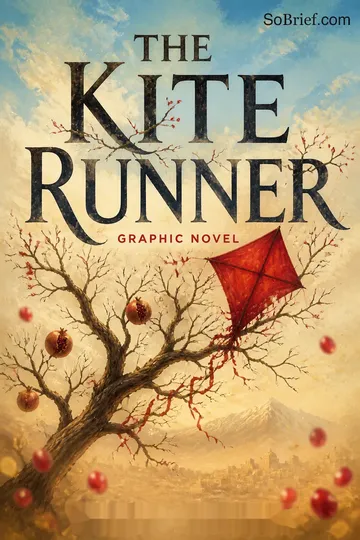
A prize with a priceKite fighting gives Amir1 and Hassan2 a shared winter ritual, but their different roles reveal the imbalance in their friendship. Amir1 fights the kite duel while Hassan2 holds the spool and runs after the fallen prize. The blue kite becomes the object Amir1 believes will win Baba3’s approval, and Hassan2’s effort to retrieve it leads to the alley where Amir1 fails to protect him. Years later, flying another kite with Sohrab8 allows Amir1 to offer companionship without demanding an explanation or immediate forgiveness. The recurring image therefore shifts from ambition and betrayal toward patient, shared activity.
Rostam and Sohrab
A story of hidden kinshipThe Persian epic of Rostam and Sohrab is one of the stories Amir1 reads aloud to Hassan2. Its tale of a father who unknowingly fights his son gives the boys a language for longing, recognition, and irreversible harm. Hassan2 is especially moved by the story, while Amir1 initially fails to understand why. Later, Hassan2 names his own son Sohrab8 after the epic’s young hero. The book then resonates with the concealed family relationship between Baba3, Hassan2, and Amir1, and with Amir1’s responsibility toward the child who bears the name. Its function is not merely to foreshadow events, but to connect inherited stories with choices made in the present.
The Pomegranate Tree
A childhood bond’s markerAmir1 carves his and Hassan2’s names into a pomegranate tree on the hill where they read together. The inscription turns a shared place into a private claim, a childhood declaration that they belong together. After Amir1’s betrayal, the tree and the hillside become difficult to face, and he later uses the setting to try to provoke Hassan2 into punishing him. On Amir1’s return to Kabul, he finds the carving still faintly visible even as the tree and city have withered. The tree measures the distance between remembered childhood and present ruin, while the surviving letters suggest that memory can endure without making the past whole.
The Slingshot
A defense passed onwardHassan2’s slingshot first protects Amir1 when Assef6 threatens the boys on the hill. It later becomes part of Sohrab8’s childhood, as Hassan2 teaches his son to aim. When Assef6 holds Sohrab8 captive, the boy uses the slingshot to stop him from killing Amir1 and help them escape. This repeated use connects father and son through a practical skill rather than an abstract inheritance. The device also reverses the roles established in childhood: the person who once stood between Amir1 and danger is gone, and his son now intervenes. The slingshot signals courage, but the story makes clear that a child should never have to use it to survive.
The Blue Kite
The cost of approvalThe blue kite is the final prize of Amir1’s tournament victory and the proof he believes will secure Baba3’s love. Hassan2 runs after it because he wants to bring Amir1 the object that completes his triumph. As a result, the kite becomes bound to the assault Amir1 witnesses and fails to stop. Amir1 carries it home, but the prize cannot deliver the clean emotional reward he imagined. The book’s later kites carry a different possibility: they create a modest connection between Amir1 and Sohrab8 without erasing either boy’s pain. The kite’s meaning changes from possession and status to an invitation to participate.
FAQ
Synopsis & Basic Details
What is The Kite Runner about?
- A story of friendship: The Kite Runner explores the complex relationship between two boys, Amir and Hassan, in Afghanistan, highlighting themes of loyalty, betrayal, and redemption.
- A journey of atonement: The narrative follows Amir's life from childhood to adulthood, as he grapples with guilt over his past actions and seeks to make amends for his betrayal of Hassan.
- A backdrop of conflict: Set against the backdrop of Afghanistan's turbulent history, the story portrays the impact of political upheaval and war on personal lives and relationships.
Why should I read The Kite Runner?
- Emotionally resonant narrative: The novel offers a deeply moving and emotionally charged story that explores universal themes of guilt, redemption, and the search for identity.
- Cultural insight: Readers gain a profound understanding of Afghan culture, history, and the impact of political conflict on personal lives, providing a unique and enriching perspective.
- Compelling characters: The Kite Runner features complex and memorable characters, whose relationships and struggles resonate with readers long after the final page.
What is the background of The Kite Runner?
- Historical context: The story is set against the backdrop of Afghanistan's tumultuous history, including the fall of the monarchy, the Soviet invasion, and the rise of the Taliban, providing a rich historical context.
- Cultural setting: The novel explores the cultural and social dynamics of Afghanistan, including the ethnic tensions between Pashtuns and Hazaras, and the traditional values and customs of Afghan society.
- Political turmoil: The political instability and violence in Afghanistan serve as a catalyst for the characters' personal struggles and highlight the impact of conflict on individual lives.
What are the most memorable quotes in The Kite Runner?
- "There is a way to be good again.": This quote, spoken by Rahim Khan, encapsulates the central theme of redemption and serves as a catalyst for Amir's journey to confront his past.
- "For you, a thousand times over.": This iconic line, spoken by Hassan, embodies his unwavering loyalty and selfless devotion to Amir, highlighting the depth of their friendship.
- "It's wrong what they say about the past... about how you can bury it. Because the past claws its way out.": This quote underscores the novel's exploration of the inescapable nature of the past and its impact on the present.
What writing style, narrative choices, and literary techniques does Khaled Hosseini use?
- First-person perspective: The story is narrated from Amir's point of view, allowing readers to intimately experience his thoughts, emotions, and internal conflicts, creating a strong sense of empathy.
- Foreshadowing and callbacks: Hosseini skillfully uses foreshadowing to hint at future events and callbacks to connect past and present, creating a sense of thematic unity and depth.
- Symbolism and motifs: The novel employs recurring symbols and motifs, such as kites, pomegranates, and the color blue, to enhance the story's themes and add layers of meaning to the narrative.
Hidden Details & Subtle Connections
What are some minor details that add significant meaning?
- The cleft lip: Hassan's harelip, a seemingly minor physical detail, becomes a symbol of his marginalized status and his inherent goodness, contrasting with the moral flaws of other characters.
- The blue kite: The blue kite, the last one Hassan runs for Amir, represents the ultimate sacrifice and the enduring bond between the two boys, becoming a symbol of Amir's guilt and the possibility of redemption.
- The brass knuckles: Assef's stainless-steel brass knuckles, a seemingly minor detail, symbolize his brutality and the violence that pervades the story, foreshadowing his later role as a Taliban official.
What are some subtle foreshadowing and callbacks?
- The story of Rostam and Sohrab: The tale from the Shahnamah, which Amir reads to Hassan, foreshadows the tragic relationship between Amir and Hassan, mirroring the themes of betrayal and sacrifice.
- The dream about the lake: Hassan's dream about swimming in a lake with Amir, where there is "no monster, just water," foreshadows Amir's journey to overcome his fears and seek redemption.
- The mention of Hitler: Assef's admiration for Hitler foreshadows his later embrace of extremist ideologies and his role in the persecution of Hazaras, highlighting the dangers of unchecked power.
What are some unexpected character connections?
- Baba and Ali's shared history: The revelation that Baba and Ali grew up together as childhood playmates, despite their different social classes, highlights the complex dynamics of Afghan society and the enduring bonds of friendship.
- Rahim Khan's past love: Rahim Khan's story about his forbidden love for a Hazara woman mirrors the societal prejudices that divide Amir and Hassan, adding another layer to the theme of social injustice.
- Assef's parents: The fact that Assef's mother is German and his father is Afghan adds a layer of complexity to his character, highlighting the influence of both cultures on his extremist views.
Who are the most significant supporting characters?
- Rahim Khan: As Baba's best friend and Amir's mentor, Rahim Khan plays a crucial role in guiding Amir towards redemption, serving as a moral compass and a catalyst for change.
- Ali: As Hassan's father and Baba's loyal servant, Ali embodies dignity and selflessness, highlighting the injustices faced by Hazaras and the enduring power of loyalty.
- Soraya: As Amir's wife, Soraya provides unwavering support and love, offering a counterpoint to the toxic masculinity that pervades Afghan society and helping Amir heal from his past.
Psychological, Emotional, & Relational Analysis
What are some unspoken motivations of the characters?
- Amir's desire for Baba's approval: Amir's actions are often driven by his deep-seated need for his father's love and acceptance, leading him to make choices that ultimately harm Hassan.
- Hassan's unwavering loyalty: Hassan's loyalty to Amir stems from a deep sense of devotion and a desire to maintain their friendship, even when faced with betrayal and mistreatment.
- Baba's guilt and redemption: Baba's actions, such as building the orphanage and helping others, are driven by his own guilt and a desire to atone for his past sins, though he never explicitly acknowledges them.
What psychological complexities do the characters exhibit?
- Amir's internal conflict: Amir struggles with a deep sense of guilt and shame over his betrayal of Hassan, leading to a complex internal conflict that shapes his actions and relationships.
- Baba's stoicism and hidden emotions: Baba's stoic exterior masks a deep well of emotions, including grief over his wife's death and a complex mix of love and disappointment towards Amir.
- Assef's sociopathic tendencies: Assef's cruelty and lack of empathy reveal a sociopathic personality, highlighting the dangers of unchecked power and the capacity for human evil.
What are the major emotional turning points?
- The kite tournament: The kite tournament is a major emotional turning point, as Amir's victory is immediately followed by his betrayal of Hassan, setting the stage for his lifelong guilt and quest for redemption.
- The call from Rahim Khan: The call from Rahim Khan is a major emotional turning point, as it forces Amir to confront his past and embark on a journey to make amends.
- The discovery of Sohrab: The discovery of Sohrab's existence and his suffering is a major emotional turning point, as it compels Amir to take responsibility for his past actions and seek to protect Hassan's son.
How do relationship dynamics evolve?
- Amir and Hassan's friendship: The relationship between Amir and Hassan evolves from one of childhood innocence and loyalty to one marked by betrayal and guilt, highlighting the impact of social divisions and personal choices.
- Amir and Baba's father-son dynamic: The relationship between Amir and Baba evolves from one of tension and disappointment to one of understanding and acceptance, as Amir comes to terms with his father's flaws and his own shortcomings.
- Amir and Soraya's marriage: The relationship between Amir and Soraya evolves from one of mutual support and love to one marked by the challenges of infertility and the weight of Amir's past, highlighting the complexities of marriage and the search for healing.
Interpretation & Debate
Which parts of the story remain ambiguous or open-ended?
- Rahim Khan's motivations: Rahim Khan's true motivations for summoning Amir back to Afghanistan remain somewhat ambiguous, leaving readers to ponder the extent of his knowledge and his role in Amir's journey.
- The nature of redemption: The novel leaves open the question of whether Amir truly achieves redemption, prompting readers to consider the complexities of forgiveness and the lasting impact of past actions.
- Sohrab's future: Sohrab's future remains uncertain at the end of the novel, leaving readers to wonder about his long-term healing and his ability to overcome the trauma he has endured.
What are some debatable, controversial scenes or moments in The Kite Runner?
- Amir's inaction in the alley: Amir's decision not to intervene during Hassan's assault is a controversial moment that sparks debate about the nature of cowardice and the responsibility to protect others.
- Baba's secret: The revelation of Baba's secret about Hassan's parentage raises questions about the nature of truth and the consequences of deception, prompting readers to reconsider their understanding of Baba's character.
- The ending: The ending of the novel, with Amir and Sohrab flying a kite, is open to interpretation, with some readers finding it hopeful and others finding it bittersweet, highlighting the complexities of healing and the lasting impact of trauma.
The Kite Runner Ending Explained: How It Ends & What It Means
- A symbolic act of redemption: The final scene, where Amir runs a kite for Sohrab, mirrors the beginning of the story and symbolizes Amir's attempt to atone for his past betrayal and offer Sohrab a moment of joy and hope.
- A fragile hope for the future: The ending suggests that while the past cannot be erased, it is possible to find a measure of peace and healing through acts of kindness and compassion, offering a glimmer of hope for the future.
- An open-ended conclusion: The ending is not a neat resolution, but rather an open-ended conclusion that acknowledges the complexities of life and the ongoing struggle for redemption, leaving readers to ponder the lasting impact of trauma and the possibility of forgiveness.
About the Author
Other books by Khaled Hosseini

Download PDF
Download EPUB
.epub digital book format is ideal for reading ebooks on phones, tablets, and e-readers.








