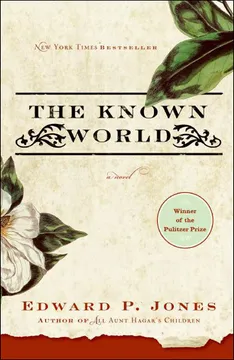


Plot Summary
Rain Over the Fields
Moses, Henry Townsend’s enslaved overseer, finishes a fourteen-hour day, then retreats to the woods where rain and earth briefly release him from the work that rules his life. Alice, a woman considered mad, watches from the trees. At the house, Henry has spent seven days dying while his wife, Caldonia, keeps vigil.
When he dies, his parents, Augustus and Mildred, arrive to mourn, and the people in the quarters gather to learn what will happen to them. Caldonia promises they will stay together, but she does not free them. Moses returns to his cabin, and the plantation’s routines resume around a new mistress, a vacant master’s room, and the same system of ownership.
The opening makes Henry’s death a change in management, not a break in the institution that shaped his life. Caldonia’s promise of family care may be sincere, but the people she comforts remain legally hers. Moses’s private ritual in the rain gives the reader an intimate measure of what plantation order costs him: the little space he can claim exists beyond the cabins, outside the workday, and away from human demands. Alice’s watchfulness unsettles the apparent division between sanity and madness. She sees what others overlook, while the supposedly rational household cannot imagine freedom as the necessary consequence of a master’s death.
Freedom, Then Ownership
Henry was born enslaved to William Robbins and separated from his parents, Augustus and Mildred, when they bought their own freedom. They visited him each Sunday and eventually paid Robbins to release him. Henry became a skilled bootmaker, learned from the free teacher Fern Elston, and built a business with Robbins’s help. His parents expected him to reject the institution that had divided them.
Instead, Henry bought Moses through Robbins and began building a plantation of his own. Augustus struck him with a carved walking stick and sent him away, but Robbins urged Henry to claim the land and authority available to him. Henry returned to work, carrying the injury and the conviction that he had a right to become a master.
Henry’s ascent is neither a simple triumph nor an inexplicable betrayal. His parents’ freedom came through purchase, labor, and white petitioners, so the law taught him that liberation could be privately negotiated without dismantling the structure that made people saleable. Robbins offers Henry a model of ambition with its moral cost removed: take what the world permits, and let the law define legitimacy. Augustus’s blow tries to make Henry feel the violence of ownership in his own body, but Henry reads his future through the protections and opportunities his former owner provides. His success therefore reproduces the boundary that once confined him.
Rita in the Crate
When Henry leaves slavery, Rita, the woman who cared for him at Robbins’s plantation, runs after the family wagon and clings to it. Augustus and Mildred know Robbins could punish them, yet they hide Rita among Augustus’s carved walking sticks and ship the crate north. In New York, the merchant’s wife opens it and lets Rita live.
Robbins responds to the escape, and to earlier losses, by demanding stronger control over the county. Sheriff John Skiffington creates a force of night patrollers, though he and his wife, Winifred, have promised not to own slaves. Skiffington treats enforcement as public duty, separating it in his mind from the private sin of possession. The new patrols make every free Black traveler vulnerable to questioning.
Rita’s escape is a small, practical act of solidarity that exposes how freedom depends on geography, timing, and the courage of people willing to risk punishment. Augustus turns his craft into concealment, using the tools of his trade to make passage possible. Robbins answers the loss not by questioning the conditions that drive people to flee, but by expanding surveillance. Skiffington’s division between personal belief and official duty becomes the novel’s recurring moral technology: he can oppose slavery in his household while protecting its operation in the county. The patrols convert that contradiction into routine, making coercion appear procedural rather than chosen.
A House Built on Chains
Henry marries Caldonia, a free Black woman educated by Fern, and expands the plantation he once built with Moses. Among his purchases is Elias, a man who tries to escape but collapses on the road. Robbins finds him, shoots him in the leg, and returns him to Henry, who has a Cherokee patroller cut off part of Elias’s ear.
Luke, a boy newly purchased by Henry, brings Elias water and food in the barn. Elias later forms a bond with Celeste, whose damaged leg has made her wary of being pitied, and Henry permits their marriage. They take Luke into their household. When Henry hires Luke out for harvest work, the boy dies in the field, and Elias’s grief gives the fragile family a permanent wound.
Henry’s plantation offers moments of care without escaping the logic of property. Elias and Celeste can choose each other only with Henry’s permission, and Luke’s place in their family remains subject to a hiring decision made by an owner. Luke’s kindness to Elias creates a reciprocal bond that the institution cannot recognize as meaningful, yet the same system can send him to exhausting work for a fee. Henry’s self-image as a gentler master does not protect Luke from that consequence. The section makes affection real, but never sufficient: intimacy grows inside a structure that can interrupt it at any time.
The Widow and Moses
After Henry’s funeral, Caldonia’s mother, Maude, urges her to protect the estate and its enslaved people as a family legacy. Maude’s insistence comes from a past in which she poisoned her husband when he planned to free his slaves. Caldonia delays the work of ownership by listening to Moses, who invents stories about Henry building their house and prepares her to imagine him still near.
Their companionship becomes an affair, though Moses remains enslaved and married to Priscilla. At the same time, Fern buys Jebediah Dickinson, a one-legged gambler whose debt to Fern’s husband has turned him into a captive on her property. After punishment and a worsening injury, Fern gives him papers and money to travel north.
Caldonia’s grief makes the plantation’s power relations more intimate, not less consequential. Moses’s invented memories give her comfort, but also grant him access to the house and a measure of influence over its owner. Their affair cannot be treated as an equal romance: she can decide when he enters, while he cannot freely choose where his wife and child belong. Maude’s legacy language likewise converts fear into stewardship of property. Fern’s treatment of Jebediah reveals how even a woman who sees herself as educated and humane can imprison someone, then mistake release for repayment. Care and control remain entangled throughout.
Augustus Taken South
While returning from a job, Augustus is stopped by patrollers Harvey Travis and Oden Peoples. Travis destroys Augustus’s free papers and sells him to a slave trader, Darcy, who travels with his enslaved assistant, Stennis. Augustus resists by refusing to speak when a buyer tests him, but Darcy carries him south.
The traders sell other captives along the route and abandon a sick free child who dies before reaching South Carolina. In Georgia, a struggling farmer named Hillard Uster buys Augustus. Augustus immediately tries to leave for home, and Hillard shoots him. Augustus dies from the wound. His spirit reaches Virginia and kisses Mildred while she sleeps; she wakes knowing he is gone, though the law has not yet brought her the news.
Augustus’s kidnapping strips away the protections his freedom papers supposedly guarantee. Travis and Oden do not need to prove that he is enslaved; they need only overpower him and find a buyer willing to accept the fiction. His refusal to speak in South Carolina briefly frustrates the sale, but it cannot restore the world in which a free person’s testimony would matter. The child’s abandonment makes the traders’ calculus brutally explicit: a life without resale value is treated as a burden. Augustus’s return to Mildred through the supernatural reverses the law’s silence. The state may erase his status, but grief recognizes the person who is missing.
Alice Leads Them Out
Moses uses Alice’s long night walks to make a plan for his wife, Priscilla, and their son, Jamie, to escape. He tells Alice to guide them north while he stays behind, promising to follow later. Priscilla fears leaving without him, but Alice stops her from turning back, and Jamie finds the courage to keep moving. After they vanish, Moses tells Caldonia they have wandered away, expecting the patrollers to return them.
Caldonia believes the explanation at first. Moses continues working, still caught between his family and his growing attachment to his mistress. The three missing people leave him with no clear future: he has helped them cross the boundary of the plantation, but has not freed himself or severed his dependence on Caldonia.
Moses’s decision is both an act of care and an attempt to control the terms of separation. He sends his family toward freedom but keeps himself behind, as if he can make their departure safe by remaining close to the world that owns them. Alice’s role shifts from apparent confusion to purposeful leadership, but her knowledge cannot guarantee arrival. Jamie’s brief confidence gives Priscilla a reason to continue. Moses’s lie to Caldonia extends the concealment, yet his own position remains unresolved. The escape exposes the difference between wanting freedom for someone and being able to imagine a life in which one’s own family is no longer needed.
The Overseer Loses His Hold
Still overseeing the fields after Priscilla and Jamie leave, Moses orders Celeste, six months pregnant, to work despite her pain. She miscarries in the furrow, and Elias threatens to kill him. Caldonia rebukes Moses, while Loretta later holds a knife to his throat when he storms into the house demanding his freedom.
The people in the quarters stop treating his commands as unquestionable. Moses shuts himself inside his cabin, then walks away. Gloria and Clement also disappear, leaving six enslaved people missing from Caldonia’s plantation.
Elias takes over the field work, and the children continue their routines without their former overseer. Moses’s attempt to make a place for himself beside Caldonia has instead cost him his family, his authority, and his home.
Moses’s fall is driven by the collision between his new private desire and the habits of command he has learned as an overseer. He demands Celeste’s labor because plantation productivity has become his responsibility, yet the demand makes him repeat the violence that he seeks to escape. Her miscarriage gives that violence an immediate, bodily consequence. Loretta’s knife marks the moment when the household’s apparent intimacy cannot protect Moses from the power he lacks. The other workers’ withdrawal of obedience is not a formal rebellion, but it deprives his authority of its social support. His departure follows not from one defeat, but from several relationships becoming impossible to maintain.
The Law Hunts Its Own
Sheriff Skiffington searches for the missing plantation workers with help from his cousin Counsel, newly returned after smallpox destroyed his North Carolina household and he wandered across several states. Skiffington suspects Moses but cannot establish where the escapees have gone.
Patroller Barnum Kinsey, ashamed of his delay, finally reports that Travis and Oden sold Augustus to Darcy. Skiffington visits Mildred, who has been waiting for her husband and distrusts the law’s ability to return him.
He rebukes Counsel for withholding her report and warns the patrollers, but does not arrest them. His religious certainty fractures further as he desires Minerva, the young woman he and Winifred have raised as a daughter. He decides to pursue Moses at Mildred’s home, believing the fugitive may be dangerous.
The law’s failure here is not lack of information but selective action. Barnum gives Skiffington the truth, Mildred makes the loss legible, and the sheriff recognizes that a crime has occurred. Yet his authority does not become protection for Augustus or punishment for the men who sold him. Counsel’s return adds a second form of instability: a man shaped by catastrophe enters public office without recovering moral judgment. Skiffington’s private desire for Minerva weakens the clean boundary he relies on between duty and appetite. His pursuit of Moses is therefore not simply justice in motion. It is an effort to restore order while his own idea of order is coming apart.
Mildred’s Open Door
Skiffington and Counsel reach Mildred’s home, where she stands armed and refuses to surrender Moses. As Skiffington tries to draw his rifle, it fires and kills her. Counsel goes inside, finds Moses hiding there, and steals gold from a drawer. He then shoots Skiffington and claims the sheriff was killed by the fugitive.
Moses has not murdered Priscilla, Jamie, or Alice, but Counsel forces him to keep silent with a pistol. On the road back, Travis calls for Moses to be punished. Louis objects, and Barnum rides away rather than join them. Oden cuts Moses’s Achilles tendon and carries him back on horseback. Counsel’s lie turns the law’s hunt into a cover for theft, murder, and mutilation.
The climax turns the sheriff’s language of duty into a physical catastrophe. Skiffington arrives believing that force will recover property and restore his authority; the accidental shot kills Mildred, the very person whose testimony might have clarified the situation. Counsel then exploits the confusion to steal, murder, and invent a version of events that protects him. Moses is not merely punished for escape. He is made vulnerable to a story the authorities can accept because it keeps their own violence out of view. Barnum’s departure and Louis’s protest show that resistance can mean refusing participation, even when neither man can stop the punishment.
Manchester Comes Apart
Counsel brings Moses back to Caldonia’s plantation, where he remains disabled and increasingly withdrawn. Celeste and Elias’s children carry him food, and Celeste keeps wondering whether he has eaten. Barnum takes his family west to Missouri, carrying his shame and his late hope of living differently.
Counsel searches Mildred’s property for more gold, then fights Caldonia over the estate; the feud between Robbins and Colfax widens into murders and helps destroy Manchester County as a political unit.
After the storm that once seemed to offer him death, Stamford becomes a caretaker for children and later helps build a home for Black orphans with Delphie. The war eventually ends slavery, but the county’s land, families, and records have already been scattered by years of human choices.
The aftermath refuses a clean division between survival and repair. Moses remains alive, but the injury that returns him to the plantation makes his world smaller, and Celeste’s care cannot undo what he did or what was done to him. Barnum’s migration is a moral decision expressed through departure rather than victory. Counsel’s pursuit of the Townsend estate shows how violence can persist as legal argument and inherited grievance. Stamford’s later work with orphans offers a contrasting use of authority: he helps make shelter for children instead of claiming ownership over them. The county’s disappearance gives the title’s map a political meaning, since the world itself can be redrawn by those who control its records.
Alice Maps the Missing
In a letter dated April 1861, Calvin tells Caldonia that he has found Priscilla in Washington, where she works alongside Alice and other formerly enslaved people. The hotel displays Alice’s enormous stitched maps of Manchester and Caldonia’s plantation.
The scenes show the people, animals, houses, and even the dead as they were before the escapes, restoring to public view lives that official records reduced to property. Elsewhere, Minerva, living freely in Philadelphia, refuses to return to Winifred after seeing a poster that identifies her as someone who will answer to a diminutive name.
Caldonia rereads Calvin’s letter, then sees the maimed Moses again on the plantation. His former neighbors still bring him food, and Celeste continues to remember him in the ordinary question of whether he has eaten.
Alice’s maps answer the novel’s obsession with what a record can and cannot hold. A census may count enslaved people while miscounting the county; a bill of sale may preserve a price while erasing a family. Alice’s art restores particular lives to the landscape, including the dead, the escaped, and those the owners believed they knew. Minerva’s refusal shows how love can carry the language of possession even when it intends tenderness. The final image of Celeste feeding Moses avoids a simple verdict. Care survives, but it does not absolve him, and memory remains attached to concrete needs: a meal, a name, a place among others.
Analysis
The Known World examines a society in which freedom is treated not as a human condition but as a fragile status that must be purchased, documented, and defended against people who can ignore the evidence. Its most unsettling figure is Henry Townsend, whose rise from slavery does not free him from the institution’s logic. He becomes a Black owner not because he fails to understand suffering, but because he has learned to define success through the same measures that once constrained him. The novel refuses to make his intentions a defense: a kinder master still claims control over others’ bodies, labor, and families.
The book’s many stories expose how power travels through ordinary roles. Skiffington can be devout and still organize the patrols. Caldonia can grieve sincerely while inheriting people as property. Fern can teach freedom of mind while owning enslaved workers. Their contradictions are not presented as isolated hypocrisy; they are habits supported by law, wealth, and a culture that teaches people to separate private kindness from public responsibility. The clearest moral tests come when those habits require action, as when Barnum must decide whether to report Augustus’s kidnapping or when Louis objects to Moses’s mutilation.
The novel’s wide, shifting narrative also challenges the authority of official history. Census counts are wrong, legal records disappear, and the people most affected by ownership rarely control the documents that describe them. Alice’s maps answer that erasure by putting names and lives back into the land. Meanwhile, Moses’s final condition resists a simple redemptive ending. Other people feed him, but neither care nor memory can restore the family he helped lose. The book’s deepest claim is that a known world is never neutral: it is made by whoever has the power to count, classify, remember, and decide whose absence matters.
Review Summary
Reviewers are divided on The Known World, with many praising its rich, immersive portrayal of antebellum Virginia and the morally complex premise of Black slave owners. Admirers highlight Jones's dense, layered storytelling and unforgettable characters. Critics, however, find the non-linear structure disorienting, the large cast overwhelming, and the constant time-jumping frustrating. Common complaints include lack of emotional attachment to characters and narrative inconsistencies. Despite reservations about accessibility, most acknowledge the novel's historical importance and literary ambition, with several noting it demands patience before its intricate threads meaningfully converge.
People Also Read








Characters
Henry Townsend
The ambitious Black masterBorn enslaved and later freed by his parents’ payments, Henry becomes a successful bootmaker and landowner. His former owner, William Robbins, teaches him how to price his work and claim authority. Henry wants to be a more humane master than the white men he has known, but he still builds his future through ownership of other people. That contradiction is central to his character: he is intelligent and tender with some people, yet able to treat others as property. His education, marriage to Caldonia, and friendship with powerful white men help him cross boundaries that remain closed to most Black people, while his ambition keeps him from fully rejecting the world that made those boundaries.
Caldonia Townsend
The grieving inheritorCaldonia is a free, educated Black woman who marries Henry and becomes mistress of his plantation. She values learning and companionship, and Fern Elston’s teaching has given her a strong sense of judgment. After Henry’s death, she tries to comfort the people he enslaved while also managing the property he leaves her. Her grief makes her receptive to Moses’s stories and affection, but her legal and social power remains far greater than his. Caldonia’s struggle is not simply whether she loved Henry, but whether she can see the people attached to his estate as people whose lives exceed her responsibilities as an owner.
Moses
The field-bred overseerMoses has been enslaved all his life and understands the plantation through labor, weather, and the earth he tastes to judge the fields. Henry makes him overseer, giving him authority over other enslaved people without giving him freedom. Moses is capable and observant, but he can be harsh with his wife and those who work under him. He wants family, status, and a life beyond bondage, yet he has learned to pursue those desires through the very habits of command that injure others. His attention to land offers a form of knowledge unavailable to the owners, while his inwardness makes it difficult for those around him to know what he intends.
Alice
The night-wandering witnessAlice is an enslaved woman whose neighbors believe she lost her reason after a mule kicked her. She wanders the roads at night, sings, and unsettles the patrollers who encounter her. Her behavior makes others underestimate her, though she notices more than they expect and moves through the landscape with knowledge gained from repeated journeys. Alice’s story is tied to the difference between how a person appears to authority and what she can understand for herself. She has little protection from owners or law, so her methods of acting in the world are indirect, improvised, and easily mistaken for nonsense.
Augustus Townsend
The maker who buys freedomAugustus is a gifted carpenter and woodcarver who purchases his own freedom and then works to free his wife, Mildred, and their son, Henry. He makes fine furniture and walking sticks, turning skill into money and a measure of independence. His love for his family is practical as well as emotional: he saves, negotiates, and risks what he has to keep them together. Augustus rejects the idea that freedom should require him to own others, which places him in direct conflict with Henry’s ambitions. His craft and persistence make him a source of dignity, but the world around him continues to treat his rights as conditional.
Mildred Townsend
The steadfast freed motherMildred is Augustus’s wife and Henry’s mother. She endures years of separation from her son while Augustus saves enough to free him, and she feeds Henry carefully during their restricted visits. Mildred’s devotion is not passive: she argues for a wider life for Henry and supports his work even when it brings him near William Robbins, the man who once owned him. Her belief in family is shaped by the knowledge that law and money can separate loved ones. She remains alert to what those systems permit, but her hope for reunion never entirely yields to caution.
Elias
The fugitive woodcarverElias is an enslaved man who tries to escape soon after arriving at Henry’s plantation. After his capture and mutilation, he forms a bond with Celeste and uses carving to express affection he cannot easily put into words. He makes combs and toys for his family, including a doll for his daughter Tessie. Elias is fiercely protective of the people he loves, but his anger can also harden into a desire for retaliation. His life shows how tenderness and resistance coexist: he wants to leave the plantation, yet his attachments to Celeste and their children repeatedly shape what risks he is willing to take.
Celeste
The limping carver's wifeCeleste has a severe limp from birth and has learned to anticipate the pity or contempt it draws from others. Her first response to Elias is resentment, because she thinks he watches her disability as a spectacle. Their relationship changes when his carved comb shows that he has noticed her as a person rather than a condition. Celeste is resilient, practical, and protective of children, including Luke when he needs care. She has her own judgment about who deserves shelter and how much pain a family can bear. Her quiet persistence contrasts with Elias’s more visible anger.
John Skiffington
The scripture-bound sheriffJohn Skiffington is a white sheriff who believes he can serve God while enforcing the laws of a slaveholding county. He and his wife Winifred reject slave ownership in their household, but he organizes patrollers to protect other owners’ property. His faith gives him a language for conscience and a method of avoiding its hardest implications. Skiffington wants to be a just man, and at times he intervenes to settle disputes fairly, but his authority operates within a system that denies Black people equal standing. His devotion to order becomes increasingly difficult to separate from his fear, desire, and self-interest.
William Robbins
The white patron and ownerRobbins is Manchester County’s wealthiest landowner and Henry’s former master. He loves his Black children with Philomena and develops an unusual affection for Henry, whom he teaches and promotes as a craftsman. Yet he also raises the price of Henry’s freedom and insists that Henry maintain the distance between master and enslaved person. Robbins can act generously toward individuals while defending the institution that gives him power over them. His feelings are real, but they do not lead him to surrender the advantages of ownership. He understands the law as an instrument that protects those who know how to use it.
Fern Elston
The formidable teacherFern is an educated free Black woman who teaches Caldonia, Calvin, and other children, and later helps Henry learn to read and write. She is proud, exacting, and skeptical of white authority, but she also owns enslaved people and benefits from the society she critiques. Her marriage to the gambler Ramsey and her attachment to teaching complicate her view of duty and independence. Fern’s intelligence does not make her morally untouched by the world around her; rather, it sharpens her awareness of the compromises she has made. She values learning as a form of self-command, while recognizing that education alone cannot remove the power of property.
Winifred Skiffington
The abolition-minded wifeWinifred comes from Philadelphia and opposes the slavery she encounters in Virginia. She and John agree not to own enslaved people, yet they keep Minerva in their household as a dependent child, a category that avoids the legal clarity of freedom. Winifred’s affection is sincere, but her language and expectations are shaped by a culture that treats Black people as dependents. She represents the limits of benevolent intention when it does not challenge the power imbalance beneath it.
Minerva
The unclaimed daughterMinerva is a girl given to John and Winifred Skiffington as a wedding present. She grows up in their home, where they treat her with affection and teach her household work, while the surrounding community considers her a kind of family possession. Her early separation from her sister leaves her with a deep longing that she cannot resolve by simply behaving as her guardians expect. Minerva’s position exposes the gap between being loved and being free to define oneself.
Calvin Newman
The uneasy free heirCalvin is Caldonia’s twin brother and the son of Maude and Tilmon Newman. He is troubled by his family’s slaveholding and by his unreturned love for Louis Robbins. His wish to leave Virginia and begin elsewhere comes from a sense of suffocation more than a clear plan. Calvin often understands the cruelty of the system but struggles to persuade those around him to abandon what they have inherited. He is reflective, lonely, and more capable of seeing contradictions than of resolving them.
Louis Robbins
The patient namesakeLouis is the son of William Robbins and Philomena, raised with his sister Dora in a household that crosses the county’s racial and social boundaries without erasing them. His traveling eye makes others question his attention, so he learns to meet people’s gaze deliberately. Louis is close to Calvin and later becomes important to Caldonia. He is observant and measured, often trying to ease tensions rather than dominate a conversation. His position gives him access unavailable to most Black people, but his father’s wealth cannot make the surrounding racial hierarchy disappear.
Counsel Skiffington
The ruined deputyCounsel is John Skiffington’s wealthy cousin from North Carolina. A smallpox epidemic destroys his family and plantation, leaving him to wander through the South without a stable sense of purpose. He returns to Virginia carrying the habits of a man who once expected his authority to be unquestioned. His appetite for money and his suspicion of other people coexist with a longing for the life he lost. Counsel’s presence tests the difference between suffering and moral change: tragedy can deepen a person’s perception, but it can also leave old appetites intact.
Barnum Kinsey
The conscience-struck patrollerBarnum is a poor white patroller who owns one enslaved man and struggles with drinking. He is gentler than many of the men around him and often recognizes when a person is being wronged, though fear and racial loyalty make action difficult. Barnum’s religious faith is earnest, and he wants a world in which truth can be spoken without being treated as betrayal. His hesitations reveal how a person can understand injustice while remaining entangled in the institutions that benefit him.
Stamford
The lonely field handStamford is an older enslaved man who measures survival through relationships with younger women and becomes distressed when those relationships end. He has been separated from his parents for so long that he cannot easily summon their names, a loss that gives his bravado a wounded foundation. His life is shaped by loneliness, shame, and a persistent search for somewhere to belong. The people around him sometimes laugh at his behavior, but his vulnerability is more visible when he is alone.
Delphie
The protective motherDelphie is Cassandra’s mother and a steady caretaker among the plantation’s enslaved people. She worries about her daughter’s safety and has lived long enough to know that survival often means making choices without certainty. Delphie tends to the injured and distressed, but she also knows when another person’s needs threaten to overwhelm her. Her practical compassion becomes a quiet counterweight to the men who treat desire as entitlement.
Priscilla
The overseer's wifePriscilla is Moses’s wife and Jamie’s mother. She loves Moses despite his harshness and finds it difficult to imagine safety without him nearby. Her hesitation about escape is not a lack of courage; it reflects the danger of stepping into an unknown world without a map or reliable protection. Priscilla’s relationship with Moses exposes the cost of his divided loyalties and the way slavery leaves even family decisions under threat.
Jebediah Dickinson
The one-footed debtorJebediah is a free Black gambler whose debt to Fern’s husband brings him under Fern’s control. He is impulsive, outspoken, and unwilling to let a financial claim be treated as settled when he has not been repaid. His insistence on his own account of events unsettles the people who expect him to accept their authority. Jebediah’s story tests the boundary between legal status and practical freedom.
Loretta
The housekeeper's witnessLoretta is Caldonia’s maid and one of the few people who sees both the household and the quarters clearly. She is observant, restrained, and careful about what she says, having learned that knowledge can be dangerous when power is unequal. Her loyalty to Caldonia does not prevent her from recognizing when Moses’s behavior threatens others. Loretta’s refusal to claim a surname later reflects her independence from the identities owners and husbands try to assign.
Plot Devices
Bills of sale and ledgers
Make ownership legibleThe documents and account books in the novel convert human lives into legal entries, prices, ages, purchases, and transfers. William Robbins records births and sales in his large book, while free papers and bills of sale determine whether a Black traveler can move without being seized. These records can protect someone briefly, as Augustus’s papers should have done, or serve an owner’s account of who belongs to whom. Their apparent precision contrasts with the errors of census takers and the silences around family bonds. The device shows that bureaucracy does not merely describe power. It gives power a form that courts and officials are prepared to recognize.
Passes and patrollers
Police Black movementThe county’s night patrols stop enslaved people on roads and demand papers, while passes let owners authorize travel and give patrollers a reason to release someone. Sheriff Skiffington organizes the system as a public service, even though he rejects slave ownership in his own home. The patrols make movement itself suspicious and allow white men to interfere with both free and enslaved Black people. A forged pass temporarily lets Jebediah travel, while Augustus’s authentic papers fail to protect him. The device makes the law’s racial imbalance concrete: the same document can be treated as proof in one encounter and as worthless paper in another.
Augustus’s carved sticks
Turn craft into passageAugustus’s walking sticks are both a source of income and evidence of his skill as a maker. They help him save toward freedom and become the cover for Rita’s concealed journey to New York. Their carved figures and houses preserve a world built by Black hands, even when their maker has little control over where he can travel. The sticks link craftsmanship to survival: Augustus cannot command the law, but he can shape wood, build a box, and create a chance for someone else to escape. Their later presence among his possessions also makes the work of enslaved and freed artisans part of the county’s material history.
The Known World map
Question the mapped worldA map hanging in Skiffington’s jail bears the title The Known World, though its geography is incomplete and its maker’s account of America is limited. The map offers an early image of how a person’s world depends on what the maker can see and name. The novel later answers that partial vision with Alice’s detailed textile maps of the plantation and county, which restore people, animals, graves, and buildings to the landscape. Together, the maps distinguish official knowledge from lived knowledge. The first measures territory; Alice’s work remembers the lives that territory contains.
Alice’s textile maps
Restore erased livesAlice makes large maps from cloth, paint, and clay that depict the Townsend plantation and Manchester as they existed before people disappeared. Her works include the enslaved people, owners, children, animals, homes, and graves that official records might count only partially or label as property. The maps do not undo what happened, but they refuse the idea that absence is the same as nonexistence. Their placement in a public hotel gives the people who fled a way to represent their past without asking the old owners for permission. Alice’s craft turns memory into a shared, visible landscape.
Download PDF
Download EPUB
.epub digital book format is ideal for reading ebooks on phones, tablets, and e-readers.








