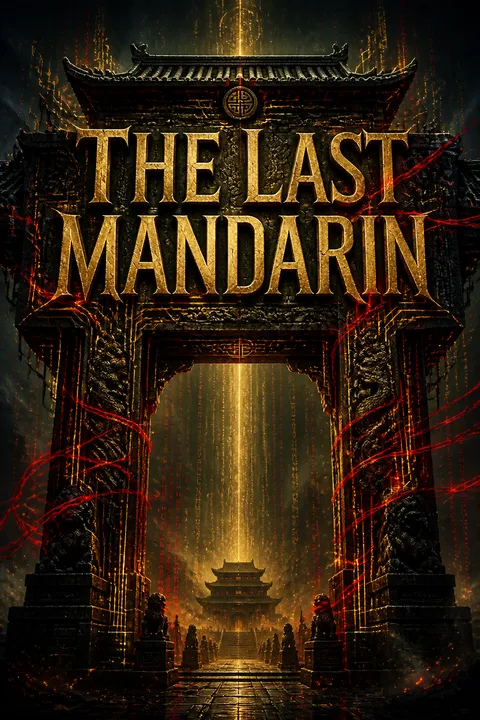


Plot Summary
Pancakes Before the Sirens
At a luxury Washington brunch, twenty-six-year-old food blogger Alice Li tries to endure her formidable mother, Vivien, by retreating to the bathroom and checking a strange message from Liam Palmer, a Columbia friend she hopes may become more.
Their meal has reopened old wounds: Vivien commands the room, while Alice feels reduced to a disappointing child. Then civil-defense alarms erupt across the city and phones flash warnings. In the stampede, Alice thinks Vivien has escaped without her, until her mother grabs her hand and pulls her outside.
Alice sees people trapped in elevators and fails to help a frightened father and child. The alarms stop, but reports say they sounded worldwide. Back at home, she learns her brother Kevin and his husband Paul also survived.
The emergency makes the family conflict physical. Alice has spent the brunch trying to escape her mother, then discovers that fear can turn their distance into a hand she needs to hold. Her failure to help the trapped child matters because it gives the later investigation a moral dimension: she is not simply chasing a puzzle, she is trying to become someone who acts when others need help. The alarms also convert private unease into global vulnerability, establishing that ordinary systems and ordinary habits can be turned against everyone.
Liam's Last Ferry Photograph
Vivien takes Alice to the White House, where intelligence officials and President Fraser Pardington reveal that Liam has been found dead in Hong Kong harbor. They suspect murder, not accident, and show Alice his final message, which she recognizes as an unusual mixture of a ferry selfie and food-blog clues.
The officials connect the alarms to malware originating in China, but admit they do not know who ordered the attack or what comes next. Enlarging Liam's photograph, Vivien identifies two men beside him as Chinese security agents.
The discovery raises the possibility that Liam was operating undercover, though nobody can tell for whom. Alice is stunned that her friend is dead and furious that the government accessed his private messages. She agrees to help because the odd message may explain both his death and the attack.
The White House scene collapses the boundary between Alice's supposedly small life and state power. Her food blog, which her mother treats as trivial, becomes evidence, while the officials' surveillance of Liam makes even friendship feel compromised. The photograph refuses easy interpretation: its cheerful surface conceals men whose presence may mean danger, complicity, or a meeting gone wrong. Alice's grief is therefore mixed with suspicion, but the story keeps her emotional need distinct from proof. She must learn to investigate without converting hope about Liam into a conclusion.
Vivien's Buried Family
Vivien recognizes the secret-police men in Liam's image and warns that China may be using uncertainty itself as a weapon. She believes an attack of this scale required years of preparation, while social media can magnify fear without another strike.
Alice presses her mother about Liam and learns he had been recruited through intelligence director Grant McAllister to contact Vivien's sources in Hong Kong. Vivien also admits that her celebrated dissident life began in personal loss: during the Cultural Revolution, her parents were arrested, and her younger brother Kai-wen later became the protester known as Tank Man.
Vivien escaped China believing Kai-wen had died in prison. Alice sees that the woman she has resented carries a history she never shared, then decides to trace Liam's last movements herself.
Vivien's public authority has been built over a private fracture she has kept sealed even from her children. Her admission does not immediately repair the relationship; instead, it gives Alice a more accurate account of the person behind the persona. The Tank Man story also shows how political symbols can outlive and obscure the human beings who create them. Liam's recruitment complicates the investigation further: Alice's friendship was genuine to her, but it was also useful to an operation her mother helped arrange.
Akron's Empty Office
In Akron, Alice meets Liam's grieving mother Mary and sister Mae, who distrust her until she spots the coconut bun in his ferry photo. They confirm Liam had a severe coconut allergy, making the bun impossible to dismiss as an ordinary snack. Mae gives Alice a small painted li bien ball Liam mailed from Hong Kong, while Alice's visit to his workplace finds his office stripped by unknown officials.
A colleague, Barb, confirms that even touching coconut could burn Liam's skin and identifies one of the men in the ferry photograph as a company fixer. Before Alice can learn more, a warning from Vivien keeps her and Barb off an elevator just before it freezes between floors. Alice now has a murder clue and a personal reason to keep pursuing it.
The bun works because it contradicts intimate knowledge rather than relying on specialist expertise. Alice's memory of Liam's allergy turns a decorative detail into a question, and the family's suspicion forces her to prove that she knew him as a person, not merely as a name in an intelligence file. The emptied office shows that institutions can erase evidence before ordinary investigators reach it. Alice's choice to continue despite grief and embarrassment marks the first shift from imaginative romantic hope toward disciplined attention.
The Elevators Fall
The elevator shutdown spreads across the planet, trapping passengers before lifts begin plunging through their shafts. Among the injured are people close to the leaders who must decide whether China is responsible: President Chen's wife and grandchildren survive with injuries, while American President Pardington fears for his son.
The death toll climbs as rescuers reach crushed cars and trapped survivors. Governments face public demands for retaliation, and Pardington orders military preparations while intelligence agencies struggle to explain how one signal disabled elevators everywhere.
Alice, now out of the building, sees how quickly an attack can turn suspicion against Asian people as well as governments. The second assault transforms the first alarm from a terrifying warning into evidence that an unseen enemy can kill on a global scale.
The elevator attack makes political abstraction bodily and immediate. Leaders are not only strategists; they are parents and spouses watching loved ones become vulnerable to the same systems as everyone else. Yet their private losses do not guarantee humane choices. The catastrophe intensifies the urge to retaliate before the facts are secure, showing how terror can manipulate judgment as effectively as machinery. Alice's experience of racial suspicion parallels the broader public search for a convenient target: fear spreads beyond the people who caused it.
The Grid Goes Dark
Airport security breaks the li bien ball Alice brought from Akron and finds a paper snake hidden inside. Its Chinese writing lists multinational companies, many of them food distributors. Alice boards for Hong Kong, while Vivien travels under the assumed identity Florence Ng, hoping to reach her contacts in China.
A third assault strikes: power and communications fail worldwide, stopping trains, traffic systems, hospitals, and aircraft while fires and crashes multiply. Vivien reaches Xi'an but is seized by the Ministry of State Security.
In Hong Kong, Alice tries to follow the food clues, only to be barred from travel to mainland China and then grabbed by the fixer from Liam's photograph. The two women are drawn toward the same city by clues neither can yet interpret.
The paper hidden inside a fragile ornament turns culture into a practical channel for information. Its concealment echoes the larger danger of assuming that useful knowledge will announce itself in official forms. Meanwhile, the blackout strips away the digital conveniences on which modern coordination depends. The simultaneous journeys separate mother and daughter just as their interests begin to converge. Each is acting on partial information, and each risks being manipulated by people who understand the networks better than they do.
The Father in Xi'an
Blindfolded and frightened, Alice is taken to the excavation site surrounding the Terracotta Army, where she finds Vivien with a man she recognizes as her supposedly dead father, Liu Tongzheng. Liu explains that he and Vivien helped create Pangu, originally a patient pro-democracy network meant to change China from within.
It has since become a violent force using technology to destabilize governments. He says he did not kill Vivien's brother and insists Kai-wen survived in Taiwan. Alice is overwhelmed by her father's return and angry that he let her believe he was dead. When the power fails around the ancient site, Liu helps the women escape. Before they part, he directs them toward Taiwan, where Kai-wen may be found.
The reunion breaks Alice's cherished image of her father without erasing her need for him. His presence offers comfort and betrayal at once, a contradiction the story refuses to simplify. Pangu's history gives the political crisis a generational scale: an organization founded to resist repression can inherit the methods and appetite for control it opposed. The ancient site deepens that irony. Its buried army is a monument to vision achieved through coercion, much like the political projects now threatening to consume their founders.
Peach Blossom Spring
Liu sends Alice and Vivien toward Taiwan, where they reunite with Kai-wen, now a quiet noodle-shop owner, and his wife Ming-na. Vivien learns that her brother has lived for decades without contacting her, while Alice follows the image on Liam's li bien ball to a painting in Taipei's National Palace Museum.
The accompanying text matches Liam's final food-blog post, proving he had visited the museum and left a trail for someone who could recognize it. Kai-wen explains that the peaceful images of the recluse scholars were once his refuge after the Tiananmen crackdown. He and Ming-na had met Liam there and gave him the painted ball as a guide. The clue sends the family back to Hong Kong, where Liam's last contacts may know what he discovered.
The painting is more than a cipher. It identifies a place where a hunted person might seek psychological shelter, so Alice solves the clue by imagining fear and loneliness rather than merely matching symbols. Her uncle's quiet life contrasts with the heroic image attached to his political past; survival has required him to become ordinary. The reunion also makes family history less stable. Vivien must face the possibility that her brother's silence was a choice, while Alice learns that memory can preserve tenderness and still distort the truth.
The Baker's Secret Network
Back in Hong Kong, the group reaches the Last Mandarin Bakery, where Vivien's contact Auntie Gugu explains that Liam met Liu there shortly before his death. Liu had warned him that Pangu had penetrated both the American and Chinese leadership, though he had not identified every conspirator.
Auntie Gugu has gathered intelligence for years by serving late-night buns to officials who mistake her for part of the furniture. Alice and Vivien realize that Liam's allergy clue points to this bakery, whose stamped pastry marks identify its source.
As security forces close in, Auntie Gugu gives the family a hidden route out of the building. Her willingness to risk herself confirms that the food stalls are not incidental scenery but a working intelligence network.
Auntie Gugu's bakery reverses the usual hierarchy of political visibility. Officials assume power belongs to the people who speak at tables, while the person serving them hears what they reveal when they relax. Food becomes both cover and social solvent, creating access without formal authority. The clue about the bun also shows Liam communicating through familiar details rather than an explicit warning. That choice protects his information, but it leaves Alice to reconstruct his meaning through affection, observation, and painstaking comparison.
Fish Balls and False Deaths
The group reaches Cheung Chau, the island Liam had named in his message, and finds Liu waiting among the food stalls. Using his position in the security service, he convinces pursuing agents that the fugitives have been killed, buying them time to return to Xi'an.
Liu says he is trying to stop the attacks, but he cannot identify the power behind Pangu. The group learns that Ministry of State Security chief Wang Lai and American intelligence director McAllister have both been killed, leaving the governments even less able to distinguish allies from enemies.
Liu heads for Beijing to search Wang's private records. Alice, Vivien, Kai-wen, and Ming-na return to the Terracotta Army site with Captain Hu and Corporal Song, following the possibility that the ancient tomb shelters Pangu's operation.
The staged deaths expose how survival in this story depends on manipulating official narratives. Liu uses the authority of the security service against the service itself, while the others accept help from institutions they have spent their lives resisting. Their alliance is not built on trust alone; it is a temporary bargain forced by the scale of the danger. The deaths of Wang and McAllister create a vacuum where rumors can become policy. The group's return to Xi'an is therefore both a physical risk and an attempt to recover evidence before fear hardens into war.
The Emperor's Hidden World
At Xi'an, Alice infers that mercury poisoning may explain Wang's erratic behavior and realizes Pangu could be hiding where no one would dare search. The group breaks into the sealed tomb of Qin Shi Huang, passing through a vast underground world of buildings, treasure, skeletons, and booby traps.
They discover guards whose minds have been damaged by mercury and find a concealed temple filled with computer servers. The old emperor's legendary underworld has become a literal shelter for a modern cyberweapon.
While Alice and Ming-na search for the control room, Kai-wen and Vivien fight to hold off the guards. The landscape is beautiful and horrifying, and the more the group learns about the tomb, the clearer it becomes that its builders and its present occupants share a belief in power without restraint.
The tomb makes political metaphor into architecture. A ruler's fantasy of controlling the afterlife becomes a sealed environment where workers, guards, and dissidents can be trapped for someone else's purpose. The servers hidden among ancient designs fuse technological novelty with an old imperial appetite for total command. Mercury links the historical setting to the present danger, poisoning judgment as well as bodies. Alice's practical reasoning matters because she does not treat legend as proof, but she does not dismiss the physical evidence that gives the legends force.
Nüshu Stops the Countdown
Inside the temple, Alice and Ming-na see a countdown linked to missiles targeting Beijing and other capitals. Alice distracts the operators while Ming-na rushes the control room, but the technician with the laptop escapes into a corridor.
Alice takes his computer and recognizes the marks on its keys from an old photograph of embroidery. She searches her phone for Nüshu, the secret script Chinese women created when denied formal literacy, then uses the script's symbol for woman as the stopping code. The countdown freezes before the missiles launch.
Outside the control room, Ming-na survives the fight, and Vivien reaches Alice in the darkness. The family escapes through the tomb's tunnels with Captain Hu and Corporal Song, sealing the entrance behind them so the remaining extremists cannot emerge.
The climax gives its decisive knowledge to a language historically created by people excluded from official power. Alice succeeds not by mastering a state system but by recognizing a pattern preserved in family memory, a photograph, and a supposedly cheap ornament. Her victory depends on cooperation: Ming-na creates the distraction, Vivien returns for her, and the officers help with escape. The attack is stopped, but the method is not a simple triumph of technology. It is a recovered human practice used to interrupt a system designed to make human judgment obsolete.
The Scarf Names the Traitor
Evidence carried out of the tomb helps Alice and Vivien identify Nüshu markings on a scarf linked to White House Chief of Staff Kathleen Wells. President Pardington stages suspicion around Defense Secretary Joanne Clavelle to give Wells a chance to reveal herself, then has her arrested for treason and terrorism.
The group also identifies Auntie Gugu as Pangu's architect in Hong Kong; her quiet bakery had concealed a command post in plain sight. McAllister had helped the conspiracy and tried to frame others before dying, while Liu and Chen's security forces contain the remaining network.
Pardington and Chen use a private channel through their chefs to exchange warnings and stop their countries from launching a war. With the immediate threat contained, Alice and Vivien return to the United States.
The final identifications make concealment a matter of social expectation. Wells and Auntie Gugu are overlooked for different reasons: one is trusted as part of a leader's inner circle, the other treated as invisible service labor. Both exploit assumptions about who is allowed to wield power. The decoy around Clavelle also shows that evidence must be handled strategically when institutions are compromised. Pardington and Chen's improvised food-based channel echoes the story's larger argument: familiar rituals can carry consequential information when official systems are no longer trustworthy.
Piano After the Storm
At the White House, Vivien and Alice recount the journey over tea, while Chen reports that troops are securing the tomb and its surviving occupants. Kai-wen and Ming-na return to their noodle shop in Taiwan, where a recovered imperial treasure becomes a startling gift.
Back in Washington, Alice finds Kevin recovering after Paul is exposed and killed during the struggle around Vivien's home. Liu is there too, and the family begins to share a meal rather than pretend the old hurts have vanished.
Alice hears Brahms's lullaby from the living room and discovers Vivien at the piano. Her mother, not her father, had been playing it through Alice's childhood. Vivien sings beside her daughter, and Alice accepts the gesture as an imperfect beginning rather than a repaired past.
The ending resolves the opening's emotional question through an action small enough to feel earned. Vivien does not explain away her failures or suddenly become an easy mother; she sits at the piano and offers a form of care Alice can finally receive. Alice, in turn, no longer treats every expression of her mother's love as a performance. The discovery that Vivien played the childhood lullaby revises a foundational memory without destroying its comfort. Reconciliation here means allowing truth and affection to occupy the same room.
Analysis
The novel's central question is not simply who launched the attacks, but how a cause changes when its adherents begin to value victory more than the people they claim to liberate. Pangu originates in a defensible longing for political freedom, yet decades of repression, secrecy, and accumulated grievance transform its patient strategy into mass violence. The organization inherits the habits of the state it opposes: manipulation, hidden authority, and the treatment of ordinary people as expendable. The Terracotta Army sharpens this parallel. Qin Shi Huang's underground kingdom is at once a masterpiece of design and an enormous grave, a world made beautiful by coerced labor and sealed against its own makers.
Alice's investigation offers a smaller, more intimate countermodel to that kind of power. She succeeds by attending to particulars: Liam's allergy, the bakery's stamp, a painting that offers refuge, and marks in embroidery. Her attention is not a magical substitute for expertise. It becomes useful because she listens to people whose knowledge is different from hers, including her mother, her uncle, and the women who built an underground communication system. Food, dismissed as unserious by Vivien and the intelligence officials, becomes both cover and evidence. It is how characters connect when formal trust has collapsed.
The mother-daughter story keeps the political thriller from treating truth as a clean cure. Vivien's disclosures make Alice understand her mother more fully, but they do not erase the years of criticism and distance. Alice's father returns as a beloved figure and a painful contradiction, forcing her to relinquish childhood certainty rather than simply replace it with a new idealization. Their final meal and piano scene offer repair without pretending that old injuries have disappeared. The novel's humane answer to authoritarian control is therefore not innocence or perfect unity, but accountable relationships: people who can revise their beliefs, share knowledge, and choose to protect one another without claiming that love makes them infallible.
Review Summary
Characters
Alice Li
The food-blogging investigatorAlice is a twenty-six-year-old Columbia journalism graduate whose food blog reflects her pleasure in taste and her discomfort with the public identity inherited from her famous mother. She is observant but prone to building hopeful stories around incomplete evidence, especially in her feelings for Liam. Her strained relationship with Vivien has taught her to mistake distance for indifference and criticism for the whole truth. As events force her to follow clues across several countries, Alice learns to turn attention into action: she notices what others overlook, admits when fear has made her hesitate, and increasingly trusts her own judgment without confusing it with certainty.
Vivien Li
The formidable dissidentVivien is a celebrated Chinese dissident, a strategist with powerful contacts, and a mother whose public authority has long concealed private grief. She escaped political repression and devoted her life to opposing the regime, but her certainty and disciplined self-presentation have made intimacy difficult, especially with Alice. Vivien values Chinese history and cultural inheritance, yet her commitment to a cause can crowd out the needs of the people closest to her. Her emotional life often appears as control: a corrected word, a carefully chosen jacket, a hand held too tightly. Beneath that control is a woman still carrying the losses of childhood and afraid of what her earlier choices made possible.
Liam Palmer
The food-loving old friendLiam is Alice's Columbia friend, an account manager in the food-distribution business, and an enthusiastic food blogger who communicates easily through meals and recommendations. His goofy warmth makes him easy to trust, while his professional travels give him access to places and people Alice knows only through posts. He is careful with details, a quality that gives his unusual final messages weight. To Alice, he represents both a real friendship and the future she has quietly imagined with him, which makes separating affection from evidence one of her hardest tasks.
Kevin Li
Alice's favored younger brotherKevin is Alice's younger brother, a lawyer who is more at ease within Vivien's expectations than his sister is. He is loving and protective toward Alice, and his marriage to Paul creates a life of his own beyond their mother's approval. Kevin's apparent ease should not be mistaken for a lack of complexity; he has learned to navigate the family's silences and to choose when not to challenge them. His relationship with Alice provides a rare source of uncomplicated tenderness in a household where affection is often filtered through judgment.
Paul
Kevin's husbandPaul is Kevin's husband and a Commerce Department employee whose work concerns supply networks. He is warm with Alice and has an open fascination with Vivien's past, though his questions sometimes make Alice wary. His place in the family shows how Kevin has built a partnership beyond the boundaries Vivien would prefer. Paul also connects the domestic story to the book's wider interest in the invisible systems that move food, goods, and information.
Liu Tongzheng
Alice's absent fatherLiu is an academic and political figure whose gentle manner, love of food, and remembered closeness to Alice shape her understanding of family. His absence has allowed Alice to preserve him as a source of comfort, especially through memories of Chinese breakfasts and music. His history with Vivien is bound up with the choices they made as young activists and the lasting consequences of those choices. Liu is difficult to read because warmth and political calculation can coexist in him, forcing those around him to distinguish affection from trust.
Kai-wen Li
The quiet keeper of memoryKai-wen is a reserved Taiwanese noodle-shop owner with a deep attachment to Chinese history, poetry, and the art of the recluse scholars. He values a quiet life, yet the political past he carries keeps drawing him into events beyond his shop. His patience and attentiveness contrast with Vivien's forceful public presence. He offers Alice a way to understand how a place or image can shelter a person psychologically, not merely hide them physically.
Ming-na
The practical Taiwanese allyMing-na is Kai-wen's wife and partner in running a noodle shop, as well as a capable member of the couple's network. She thinks ahead, asks the practical questions the others would rather postpone, and remains loyal without becoming blindly compliant. Her food knowledge and clear assessment of danger repeatedly help the group move from speculation to action. With Alice, she creates a bond grounded in shared risk and a candid understanding of fear.
Auntie Gugu
The watchful Hong Kong bakerAuntie Gugu is an elderly Hong Kong baker whose small stall gives her access to people who underestimate her. She listens carefully, remembers what officials say when they relax, and understands the protective value of seeming ordinary. Her warmth is genuine, but it does not make her politically naive. Through her, the story gives labor and hospitality a strategic dimension: serving food can create a place where people lower their guard and speak freely.
Fraser Pardington
The pressured American presidentPardington is the President of the United States, an expressive public communicator suddenly forced to lead through attacks his government cannot explain. His fear for his son complicates his official role, while public anger and military advice press him toward retaliation. He is capable of improvisation and can recognize when bluster has made a crisis worse. His private efforts to communicate with Chen show that he understands diplomacy as a human practice, not only a contest between institutions.
Chen Jiayang
China's embattled leaderChen is the long-serving head of China's Communist Party, a ruler accustomed to command who discovers that fear has isolated him from reliable information. His attachment to family and traditional stories sits uneasily beside his record of suppressing dissent. He sees threats through a political lens, but also recognizes that a state can be vulnerable from within. His relationship with Pardington becomes a test of whether two adversarial leaders can risk cooperation when their institutions are failing them.
Grant McAllister
The intelligence directorMcAllister heads American intelligence and presents himself as a careful professional guiding the government through an unprecedented cyber crisis. He is practiced at managing information and at shaping what others believe they know. His relationship with Alice begins with an attempt to recruit her as a source of facts about Liam. He embodies the danger of treating access to secret information as proof of loyalty, especially when institutions depend on trust they cannot independently verify.
Kathleen Wells
The president's chief of staffWells is Pardington's chief of staff and a trusted political adviser with a close personal history with the president. Her composure and attention to detail make her an essential presence during the crisis. She manages the boundary between private loyalty and public duty, and her friendship with the president shapes how much influence she can exert. Her polished scarf and habitual gestures make her a vivid presence in rooms where every small detail may carry more meaning than it appears to.
Alan Zhou
The China Mission analystZhou leads the CIA's China Mission Center and is a technically gifted analyst under pressure to identify a threat his systems failed to detect. His confidence is tied to his ability to see patterns before others do, so the global alarms strike at both his professional authority and his sense of control. His rivalry with Vivien reflects a broader institutional tension between technical expertise and knowledge built through long cultural and personal relationships.
Joanne Clavelle
The secretary of defenseClavelle is the Secretary of Defense, a military leader responsible for advising Pardington as the attacks push the country toward war. She speaks directly, thinks in operational terms, and understands how little time may remain when systems fail. Her professional discipline is tested by uncertainty over whether the threat is foreign, domestic, or embedded in the military itself. She provides a grounded counterweight to political rhetoric and speculative intelligence.
Wang Lai
The security chief in BeijingWang is China's Minister of State Security and Chen's longtime associate. His immense authority gives him access to the country's most sensitive networks, but his changing behavior unsettles those who depend on him. His old friendship with Chen complicates the formal chain of command, while his presence represents the danger of placing too much national power in one person's hands.
Mary Palmer
Liam's grieving motherMary is Liam's mother, a hospitable woman whose grief makes ordinary rituals such as making tea difficult. She offers Alice kindness before she knows whether to trust her, and her careful attention to the family photographs gives Alice a glimpse of the home Liam left behind.
Mae Palmer
Liam's wary sisterMae is Liam's younger sister, protective of her mother and suspicious of strangers who ask about her brother. Her bluntness comes from grief and from Liam's warning that people might come looking for information. She gives Alice access to the object that helps the investigation move forward.
Barb
Liam's workplace allyBarb is Liam's colleague and friend at Garnett Foods. She recognizes details in his final photograph that Alice cannot interpret alone, and she risks trouble by helping Alice understand what has been removed from Liam's workplace.
Captain Hu
The skeptical MSS officerCaptain Hu is a Ministry of State Security officer who accompanies the group through the Terracotta Army site. He assesses danger quickly and follows orders when he believes the evidence warrants it. His professional caution offers the fugitives a measure of practical support amid a crisis in which even state agents cannot know whom to trust.
Plot Devices
The global alarms
Terror made audibleThe synchronized alarms begin as a worldwide false emergency, triggering panic without explaining who caused it or what it means. Their significance grows when elevators fail and then the power grid collapses, revealing a sequence of escalating attacks rather than a single event. The alarms make uncertainty itself operational: people flee, crash, and mistrust one another before they know what is happening. Their global reach also drives the political leaders toward retaliation, making the warning dangerous even before the later attacks arrive.
Food as a message
Clues hidden in mealsLiam communicates through food-blog language, a photograph of a ferry, a coconut bun, a list of food-distribution corporations, and a painted li bien ball. These objects matter because they fit his ordinary habits closely enough to pass unnoticed, yet contain details that contradict what Alice and his family know about him. The food clues move the investigation between Hong Kong, Taiwan, and Xi'an while linking private affection to intelligence work. They also let Alice contribute through expertise she once feared her mother considered trivial.
Nüshu
A hidden language keyNüshu, a script developed by women who were denied formal literacy, appears in embroidery, on a scarf, and in the markings that Alice must interpret under a missile countdown. The recurring symbols connect domestic objects to political messages and eventually help her stop the attack. The script also embodies the story's argument that people excluded from official power can create tools of communication that outlast the systems meant to silence them. Its use is both a puzzle mechanism and a historical counterpoint to modern cyberwarfare.
The Terracotta tomb
An empire beneath the earthThe sealed tomb of Qin Shi Huang begins as a historical wonder and a source of inspiration for young dissidents. Its hidden world of treasure, traps, skeletons, and underground architecture eventually shelters Pangu's servers. The setting makes the political plot tangible: the emperor's desire to command the afterlife mirrors the modern desire to control networks and populations. Mercury links the tomb's ancient legends to the present danger, while its vastness forces Alice and her allies to navigate a threat they cannot simply destroy by breaking one machine.
Adaptive predictive AI
A weapon in the networkAdaptive predictive artificial intelligence, linked to blockchain and food-distribution systems, allows Pangu to reach infrastructure across national borders. The technology accounts for the alarms, elevator failures, blackout, and attempt to seize control of military missiles. Because it adapts and evades detection, governments cannot reliably distinguish real intelligence from planted information. The weapon's design makes supply networks and digital systems potential instruments of coercion, while its dependence on human access leaves betrayal as important as code.
About the Author
Other books by Louise Penny





Download PDF
Download EPUB
.epub digital book format is ideal for reading ebooks on phones, tablets, and e-readers.








