


Plot Summary
The Book in the Garbage
In a Montreal hotel room, self-help entrepreneur CC de Poitiers presses her new book on Saul Petrov, the photographer she employs and sleeps with. He has begun to feel as diminished and joyless as CC, whose polished certainty conceals a quick temper and a hunger for attention. Then he finds an artist’s portfolio in the garbage.
Its layered images of a hurt but hopeful world stir the creative life he has nearly abandoned. CC claims the work is hers only in the sense that a village artist asked her to show it to a gallery, and she admits she ignored the request. Saul puts the portfolio back, ashamed of helping her bury someone else’s talent, but he cannot forget what he saw.
The portfolio establishes the book’s recurring contrast between performance and perception. CC markets calm while making other people feel small; Saul, who has been absorbing her contempt, briefly recovers his own capacity to see beauty. The discarded work matters not because it promises fame, but because it offers evidence of a life organized around attention rather than status. Saul’s hesitation shows how easily a person can participate in cruelty without endorsing it, especially when dependence and self-doubt have made acquiescence feel safer than resistance.
The Village in the Window
In Three Pines, painter Clara Morrow finally spends the inheritance left by her murdered friend Jane Neal, driving to Montreal with her friend Myrna Landers. At a book launch for the village poet Ruth Zardo, they meet CC’s neighbors and notice Beatrice Mayer, known as Mother, reacting uneasily to CC’s book and its borrowed spiritual language.
Clara has entrusted her portfolio to CC, hoping for an introduction to respected gallery owner Denis Fortin. On an escalator, CC tells Fortin that Clara’s art is amateurish, making sure Clara hears.
Shaken, Clara leaves the store and finds a homeless woman outside. She offers the woman food and coffee. The stranger grips Clara’s wrist and recognizes her artwork, restoring a sliver of confidence Clara thought the criticism had crushed.
Clara’s humiliation and the stranger’s kindness make artistic judgment a question of relationship, not simply taste. CC uses Fortin’s authority as a weapon, converting a private fear into a public verdict; Clara’s instinctive act of generosity interrupts that verdict without erasing its pain. The scene also introduces a central ambiguity: the stranger seems to know Clara’s work without an obvious way to have seen it. The book does not reduce that encounter to a tidy explanation, allowing Clara’s need for validation and her capacity for faith to remain in productive tension.
A Voice Under Snow
CC’s daughter, Crie, is a bright, isolated teenager at a private girls’ school, accustomed to being mocked for her size and treated as a disappointment by her mother. She sews a snowflake costume and steps into a school pageant, hoping CC will notice her effort, but freezes when she cannot find her mother in the audience.
At the village’s Christmas Eve service, Crie unexpectedly sings with a clear, extraordinary voice. The congregation is moved, but CC waits until they are outside the church and scolds her daughter for attracting attention.
She ridicules Crie’s clothes and singing while Richard Lyon, Crie’s father, offers no effective protection. The villagers hear the attack and remain frozen, leaving Crie alone with the shame her mother has taught her to expect.
Crie’s song reveals an ability her mother’s judgments have helped conceal, while the immediate punishment shows how abuse can target not only a child’s failures but also the moments when she becomes visible. Her silence is not evidence of emptiness; it is an adaptation to a home where attention brings danger. The villagers’ failure to intervene complicates their later moral position. Their kindness toward one another is real, but community warmth does not automatically overcome the social paralysis that lets cruelty continue in public.
Death on Lac Brume
On Boxing Day, CC joins Three Pines residents at a charity breakfast and curling match on Lac Brume. During the game she collapses beside the spectators’ chairs; villagers attempt CPR and drive her to hospital, where doctors determine she was electrocuted.
Chief Inspector Armand Gamache arrives with his second-in-command, Jean Guy Beauvoir, and local officer Robert Lemieux. The apparent crime scene has been trampled by people trying to save CC, and the death seems nearly impossible: the lake is frozen, the crowd is nearby, and no obvious power source explains the fatal shock.
Gamache asks witnesses to treat CC as a person rather than a case number, then begins reconstructing the morning. He also recognizes the old Hadley house, now owned by CC, from an earlier investigation.
The setting turns an apparently ordinary community gathering into an engineering puzzle: a public killing that depends on conditions most people would consider incompatible with electrocution. Gamache’s insistence on naming the victim resists the procedural habit of reducing people to evidence, even though evidence will be essential. The earlier trauma attached to the Hadley house adds a personal cost to his return, but he does not let that history replace inquiry. His method is both forensic and relational: recover the physical sequence while learning what CC made people feel.
The Chair Becomes Evidence
The medical examination confirms that CC died by electrocution, but the murder required an unlikely chain: she needed bare hands, a wet patch beneath her, contact with electrified metal, and a way for the current to reach the ground. Her boots provide one answer.
Their soles contain metal claws rather than ordinary insulating rubber, making them capable of grounding the current. Investigators find a blue stain in the snow consistent with windshield washer fluid, which remains liquid in freezing weather, and tests show CC had taken enough niacin to cause a hot flush.
That explains why she removed her gloves. Billy Williams’s generator and booster cables could supply the charge. Each clue makes the death physically possible, but together they suggest planning so intricate that the investigators cannot yet see how anyone managed it unnoticed.
The murder method is assembled from ordinary objects whose functions have been altered: a chair, a vitamin, winter fluid, and a generator. That combination makes the crime feel less like a theatrical trick than a deliberate reading of human behavior and local conditions. The boots are especially important because they turn a fashion choice into a lethal conductor, while the niacin converts a victim’s discomfort into a predictable action. Yet technical explanation does not identify motive. Penny’s puzzle keeps causation and responsibility separate: knowing how the current traveled is only the beginning of understanding why someone arranged it.
A Borrowed Royal Name
Gamache learns that CC’s husband, Richard Lyon, is financially strained, passive, and inventive, while CC has expensive ambitions and a life insurance policy that makes him an obvious suspect. Her photographer, Saul, admits that he was having an affair with her and confirms that she expected publicity photographs from the curling match.
Meanwhile, Agent Isabelle Lacoste discovers that CC’s claimed parents, Eleanor and Henri de Poitiers, do not exist. The names point instead to Eleanor of Aquitaine and Henry II, figures from medieval history.
CC’s company logo resembles Eleanor’s heraldic eagle, and her self-created philosophy, Li Bien, is no recognized ancient teaching. Her book and business appear built from borrowed ideas and a manufactured identity, leaving Gamache to ask what she was trying to hide beneath the story.
CC’s false ancestry is more than vanity: it is a structure that lets her assign herself a prestigious past rather than confront an unknown one. The investigators’ temptation to blame Richard reflects a familiar narrative shortcut, especially when money and infidelity offer clean motives. Gamache resists certainty because the apparent simplicity does not explain CC’s elaborate self-invention. The section also links identity to branding. CC has made a logo, a doctrine, and a royal lineage serve the same purpose: to make a chosen image appear inherited, authoritative, and beyond challenge.
The Ball from the Dump
For Christmas, Peter gives Clara a luminous glass ornament painted on its inner surface with three snow-covered pines and a small initial, L. He found it in a Williamsburg dump days earlier, though he hid its origin because he knew Clara would object to another scavenged gift. Gamache recognizes the ornament as the Li Bien ball described in CC’s book, the one keepsake she claimed to have received from her mother.
Its three pines suggest that CC came to Three Pines searching for someone, not simply for a secluded country home. A second clue lies in the discarded film The Lion in Winter, about Eleanor and Henry. Clara and Gamache begin to suspect that CC’s borrowed royal identity and the ornament belong to the same private history.
The ornament’s beauty and its arrival through a dump bind the book’s competing ideas of value. Peter sees a treasure where Clara sees an old pattern of thrift and concealment; the object is both an intimate gift and a piece of investigative evidence. Its painted image operates as a map, but not a complete one: the three pines identify a place while the initial points toward a person. The clue also revises CC’s invented spirituality. Beneath the incoherent public doctrine sits a genuine attachment to one object and, through it, to a mother she has spent years trying to locate.
The Woman Called L
Gamache’s Boxing Day file exchange with Montreal police brings him a second murder: a homeless woman strangled near Ogilvy’s, recorded in the thin police file only as Elle. Ruth Zardo’s poetry book was found among her belongings, along with a small box of collected capital letters.
Gamache has Robert Lemieux ask the Old Brewery Mission about Elle and learns she wore a silver pendant. A battered necklace recovered from CC’s garbage bears the same screaming eagle as her company logo and the emblem associated with Eleanor of Aquitaine.
The mission’s register shows that the homeless woman signed herself with an L, matching the ornament. Gamache concludes that Elle was Eleanor Allaire, CC’s mother, and that both women’s stories converge in Three Pines.
The parallel murder case transforms a nameless victim into a person whose history has been hidden by the institutions meant to record her. The necklace is simultaneously evidence, identity, and the last possession Eleanor defended. The alphabet box suggests that she preserved relationships in a form small enough to carry, while the shared eagle links mother and daughter through a symbol neither could safely explain. Gamache’s attention to the inscription and the pendant counters the original file’s indifference. Solving the case requires more than identifying a body; it requires taking seriously the life that preceded the body.
Smoke at Tryhorn Road
As Gamache investigates CC’s family and presses the returning agent Yvette Nichol to explain her conduct, the case’s wider institutional tension surfaces. Nichol is secretly reporting information to a superior, while Gamache suspects the Sûreté’s unresolved Arnot scandal is shaping her assignment.
Then a fire breaks out at Saul Petrov’s rented chalet. Gamache, Beauvoir, and Nichol join Three Pines firefighters in the bitter cold. Nichol has entered the burning house, and Gamache and Beauvoir search for her through smoke, a cellar, and a cramped hidden staircase.
They find her upstairs and escape through a window with help from the firefighters. Petrov is not found in time. Investigators later determine that a creosote chimney fire, not arson, caused his death.
The rescue tests the team’s trust in physical rather than procedural terms. Beauvoir’s panic in the narrow stairwell exposes an old fear of confinement, while Gamache steadies him by giving the rescue an emotional purpose. Nichol’s choice to enter the house is entangled with her history and her need to matter, but the scene does not settle whether she can be trusted. Petrov’s accidental death is a sharp correction to the investigators’ suspicion: not every tragedy is an intentional act. The fire also makes the unresolved Arnot affair impossible to treat as background noise.
Three Women on the Ice
Émilie Longpré admits that she, Mother Bea, and Kaye Thompson believed they had helped kill CC to protect Crie. Their friendship began with Eleanor Allaire, the bright young woman they once called El, and their guilt over failing to save her daughter has grown alongside Crie’s abuse.
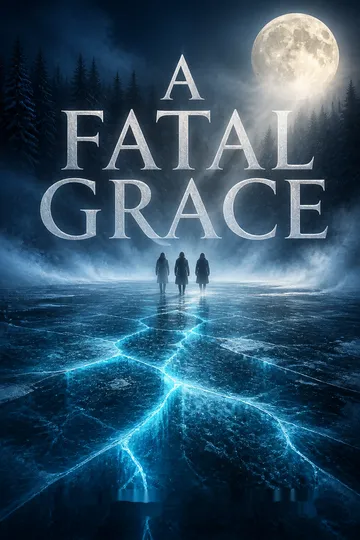
In a blizzard, the three women walk onto Lac Brume, apparently choosing death rather than expose Crie. Gamache reaches the shore with Émilie’s letter and initially accepts their decision.
Then he notices what the letter omits: CC’s metal-clawed mukluks, the essential means of grounding the fatal current. He realizes their account cannot explain the death and that Crie, not the three friends, must have carried out the killing. Gamache races back for help; snowmobilers find the women, but Émilie dies.
The women’s confession is both an act of love and an attempt to take responsibility away from a child already formed by adult failures. Their walk onto the lake repeats the lethal geometry of CC’s death, but Gamache’s recognition of the missing boots prevents remorse from becoming a false resolution. The scene makes moral guilt and legal culpability diverge: the women feel responsible for what they intended and for what they failed to stop, while the physical evidence points elsewhere. Émilie’s death gives that distinction a lasting cost rather than allowing the revelation to feel like a clever escape.
Crie’s Last Defense
Gamache and Beauvoir establish that the Three Graces could not have caused the electrocution without the boots, which only CC and Crie knew about. Kaye had watched Crie put the chair off balance and connect the booster cables; the teenager had also learned about niacin in science class and had access to her mother’s tea and the equipment.
The women later helped conceal the truth, believing their own plan had caused CC’s death. Laboratory results separately show that CC’s blood was on Eleanor’s necklace, confirming that CC strangled her mother and discarded the keepsake in guilt. Gamache confronts Crie, who is almost catatonic, and asks why she killed CC. She is sent for psychiatric care rather than treated as a calculating adult offender.
The final identification depends on distinguishing an attempted rescue from an actual act of self-defense. Crie’s knowledge and actions make the technical solution personal: the same intelligence that earned her high grades has been shaped by a home where survival required silence and observation. Her mother’s murder of Eleanor reveals that violence has crossed generations, but it does not make Crie’s act a simple repetition. The women’s concealment complicates justice without erasing their care. Gamache’s response leaves room for both accountability and the recognition that a child can become dangerous after adults have failed to protect her.
A Village After Midnight
At New Year, Clara and Peter host Gamache, his wife Reine-Marie, and the Three Pines circle. Crie is in psychiatric care, Richard is developing a practical glove that makes hardcovers easier to hold, and Saul’s final letter apologizes for his affair and his private attempt to preserve blackmail material.
Lemieux learns that Gamache plans to recommend him for homicide work. Nichol returns home carrying the emotional wreckage of the fire, while her father still cannot tell her the truth behind the family story of Uncle Saul.
Gamache’s conversation with Superintendent Michel Brébeuf makes clear that the Arnot case remains dangerous within the Sûreté. As the Gamaches leave, Reine-Marie finds a note with a slice of lemon pie, echoing a mysterious moment of kindness from Gamache’s past.
The ending grants ordinary forms of repair without pretending that every wound can close. Richard’s useful invention, Saul’s apology, and Lemieux’s new opportunity are modest acts that move characters out of self-protective isolation. Nichol’s family lie and Gamache’s institutional conflict remain unresolved, preserving the cost of secrets beyond the murder plot. The final pie and note echo Gamache’s private experience of grace without proving a supernatural explanation. That uncertainty fits the novel’s moral world: people may not know whether a kindness came from God, but they remain responsible for offering it.
Analysis
A Fatal Grace builds its mystery around the gap between the person someone presents and the life that presentation is meant to conceal. CC’s white palette, calm language, invented spiritual doctrine, and borrowed royal ancestry all promise control. Yet the more she tries to eliminate disorder, the more violently she treats the people who embody it. Her public philosophy does not merely fail to heal her; it gives her a vocabulary for denying emotion and polishing denial into virtue.
The book counters that performance with acts of attention. Gamache listens for contradictions, but his method is not abstract intuition. He notices the chair’s angle, the boots’ metal claws, the signature on a shelter register, and the person whom other witnesses have failed to see. Clara’s art performs a similar work. It makes room for damage without mistaking imperfection for worthlessness. Her initial need for Fortin’s approval echoes CC’s dependence on recognition, but Clara can be reached by friendship and by the stranger’s kindness; CC treats vulnerability as a threat that must be erased.
The murders also expose how harm travels through families and communities. Eleanor’s instability and disappearance shape CC’s invented self, while CC’s abuse leaves Crie with few imagined futures. The Three Graces respond with love, but their willingness to accept guilt shows the danger of protection becoming another form of silence. Their intervention cannot undo years of neglect, and their remorse cannot replace the evidence that identifies Crie.
The novel’s ethical center is therefore neither simple forgiveness nor simple punishment. Gamache must distinguish compassion from exoneration, and community affection from actual protection. Even the unexplained moments of grace remain open to belief rather than proof. The final invitation is practical: notice who is disappearing, listen before deciding what a person means, and do not confuse a soothing surface with peace.
Review Summary
A Fatal Grace is the second installment in Louise Penny's Chief Inspector Armand Gamache series. Set in the quaint village of Three Pines, Quebec, the story follows Gamache as he investigates the electrocution of CC de Poitiers, a universally disliked newcomer. Readers praised Penny's vivid winter descriptions, character development, and the cozy yet mysterious atmosphere. While some found the murder plot implausible, many appreciated the deeper exploration of Gamache's past and the ongoing series subplot. Overall, fans of the series found it an enjoyable read, with most eager to continue the series.
People Also Read









Characters
Armand Gamache
The listening investigatorChief Inspector of homicide for the Sûreté du Québec, Gamache approaches murder through evidence, patience, and attention to the people left behind. He is courteous without being soft, and his calm manner is supported by a willingness to examine his own fears and errors. His marriage to Reine-Marie gives him a private life grounded in affection, while his loyalty to his team creates both strength and risk. Gamache believes that understanding a killer requires entering the emotional logic of the crime without excusing it. He is particularly alert to the difference between what a person says, what they do, and what they cannot bring themselves to name.
CC de Poitiers
The self-made guruA designer and self-help entrepreneur, CC builds a public identity around calm, light, and spiritual authority. In private, she is controlling, impatient, and quick to turn criticism into an enemy. Her polished appearance and carefully arranged surroundings suggest a person trying to make the world obey the image she has chosen for it. She wants recognition and financial success, but her ambition is knotted to a deeper need to keep painful truths out of view. Her effect on other people is immediate: she can make a room feel smaller, and those who live near her must decide whether to resist, appease, or withdraw.
Crie Lyon
The silenced daughterCrie is a teenage student whose size and reserve make her an easy target for classmates and a source of contempt for her mother. Beneath her withdrawn manner is a strong academic mind, especially in science, and a singing voice that can hold a congregation still. She has learned to hide what she feels because attention at home often turns into humiliation. Her father, Richard, is present but seldom protective enough to interrupt that pattern. Crie’s longing to be seen and her habit of disappearing into herself exist side by side, making her behavior difficult for adults to read unless they look past the surface.
Clara Morrow
The hopeful painterClara is an artist living in Three Pines with her husband, Peter. She is generous, perceptive, and capable of seeing tenderness in people others dismiss, but she is not immune to the need for outside approval. A critic’s judgment can reach the private fear that her work has no value. Her friendship with Myrna gives her both affection and blunt counsel, while Jane Neal’s legacy has recently changed her material circumstances. Clara’s art looks for imperfection and the openings it leaves, a sensibility that shapes how she reads her friends and the village around her.
Peter Morrow
The devoted painterPeter is Clara’s husband, a meticulous painter whose slow work has brought him recognition without making him wealthy. He is loyal and affectionate, but he tends to keep difficult feelings hidden, particularly when they concern his own confidence or his marriage. His practical habits and Clara’s artistic imagination often pull in different directions, though their shared life is built on deep attachment. Peter is also a resourceful scavenger who notices potential in discarded objects, even when his choices provoke Clara. His care is real, but he sometimes mistakes good intentions for a sufficient answer.
Richard Lyon
The hesitant inventorRichard is CC’s husband and Crie’s father, a factory employee with engineering training and a persistent interest in invention. He is awkward, financially insecure, and accustomed to being corrected or dismissed. His passivity can look like harmless vagueness, but it leaves the people closest to him without the protection they need. Richard continues to make things despite a record of failed ideas, suggesting a stubborn hope he rarely expresses directly. His relationship with CC is difficult to understand from the outside, partly because he has learned to present the version of himself she expects.
Myrna Landers
The candid booksellerMyrna is Clara’s close friend and the owner of Three Pines’ new and used bookshop. A former psychologist in Montreal, she left a professional system she believed had stopped helping many of its clients and built a quieter life in the village. She is warm, funny, and direct, using humor to make difficult truths easier to approach without making them less serious. Myrna’s experience with vulnerable people informs her concern for Crie and for the homeless woman in Montreal. Her loyalty to Clara is practical: she offers comfort, but she also challenges Clara when self-doubt becomes a substitute for judgment.
Émilie Longpré
The grieving matriarchÉmilie, usually called Em, is one of Three Pines’ elder residents and a close friend of Kaye and Beatrice. She is gracious, observant, and hospitable, the sort of person who notices who has not eaten and quietly brings them food. Her life carries profound grief, yet she has found a way to remain open to affection and beauty. Em is particularly sensitive to the difference between ordinary unhappiness and a person who is drowning in it. She sees Crie through the memory of her own family and responds to pain with a mixture of tenderness, restraint, and a strong sense of responsibility.
Kaye Thompson
The sharp old witnessKaye is a nonagenarian with a tart manner, a sharp memory, and a history of running a logging operation. She values competence and plain speaking, and she has little patience for sentiment that avoids the facts. Her friendship with Em and Beatrice is long and intimate, sustained as much by teasing as by care. Kaye also carries memories of her father’s service in the First World War and a lasting question about the words he and his friends chose in their final moments. Beneath her abruptness is a woman who understands courage as something demanded by circumstances, not something one simply claims.
Beatrice Mayer
The meditation teacherBeatrice, known in the village as Mother, runs a meditation and yoga center and has spent decades exploring spiritual practice. Her bright caftans, scattered hair, and cheerful manner make her an unlikely authority figure, but she has a serious commitment to helping people find balance. She is prone to worry and often imagines what could go wrong, a habit that complicates her teachings about calm. Her friendship with Em and Kaye is built on shared history, and her spiritual language gives her a way to interpret suffering even when it cannot make suffering disappear.
Ruth Zardo
The unsparing poetRuth is an elderly poet whose work has earned major recognition despite her expectation that the public will ignore it. She is caustic, solitary, and often drunk, but her poems reveal a precision and vulnerability she rarely offers in conversation. As Three Pines’ volunteer fire chief, she is also practical and decisive when others need direction. Her friendship with the villagers is expressed through insults, loyalty, and a refusal to perform niceness. Ruth understands that grief does not always look gentle, and her language gives shape to feelings that the people around her would rather leave unspoken.
Jean Guy Beauvoir
Gamache’s wary secondBeauvoir is Gamache’s second-in-command, a capable investigator who prefers physical evidence and clear procedures to speculation. He is athletic, competitive, and proud of his professional standards, but his fierce loyalty to Gamache is rooted in the fact that Gamache once gave him a place when others had written him off. That loyalty can become fear: Beauvoir worries that Gamache’s generosity toward inexperienced agents will expose him to danger. His skepticism protects the team, though it can also keep him from looking closely at what he fears inside himself.
Yvette Nichol
The guarded agentNichol is a Sûreté agent whose abrasive confidence often conceals a deep fear of exclusion. She has a history of making poor choices under pressure and wants the approval of authority figures, especially those who seem impossible to impress. Her relationship with Gamache is uneasy because he sees both her capacity and her capacity for self-sabotage. Nichol is observant and determined, but her need to belong can distort her judgment. Family stories and secrets have shaped her sense of what she owes others, leaving her to struggle over where loyalty ends and self-erasure begins.
Robert Lemieux
The ambitious local agentLemieux is a young officer from the Eastern Townships who joins Gamache’s investigation without previous homicide experience. He is eager to prove himself and initially worries about making mistakes in front of senior investigators. Gamache’s patient coaching teaches him to ask questions, admit uncertainty, and resist turning guesses into facts. Lemieux’s ambition is genuine, but so is his willingness to learn. His position between local familiarity and the Sûreté’s hierarchy makes him useful to the investigation and vulnerable to competing expectations.
Saul Petrov
The searching photographerSaul is a middle-aged photographer whose work once captured the beauty he saw in Montreal, though age and insecurity have made him fear that other people find him dull. His relationship with CC offers a sense of importance at the cost of his self-respect. He is perceptive about images and less certain about the moral choices surrounding them. The discarded portfolio he finds in CC’s hotel room reminds him that his own creative instincts have not entirely disappeared. Saul’s attention to what a camera can preserve becomes a source of both opportunity and unease.
Reine-Marie Gamache
The steady librarianReine-Marie is Armand’s wife and a librarian who spends her professional life among historical documents. She is warm, intelligent, and comfortable asking the questions that puncture her husband’s certainty. Their marriage is affectionate and companionable, sustained by humor as well as trust. Reine-Marie understands the emotional cost of Gamache’s work without trying to make his decisions for him. Her perspective reminds him that humility is not the same as indecision and that a person can question a choice while still believing it was necessary.
Isabelle Lacoste
The patient investigatorLacoste is a skilled Sûreté investigator who works closely with Gamache and Beauvoir. She is methodical, composed, and comfortable pursuing an unusual lead even when the first response is dismissive. Her research connects CC’s invented ancestry to historical figures and helps the team keep evidence distinct from assumption. Lacoste’s professional steadiness is balanced by a dry sense of humor and a life outside the investigation. She earns respect through competence rather than performance.
Gabri Dubeau
The generous innkeeperGabri co-owns the Three Pines bed and breakfast with Olivier. Large-hearted and theatrical, he sings with the villagers and is quick to welcome newcomers into the community. His warmth often arrives with a joke, but it is backed by practical care.
Olivier Brulé
The attentive bistro ownerOlivier runs the village bistro with his partner, Gabri. Elegant and attentive, he knows how to make strangers feel expected and friends feel at home. His affection for Gabri and his care for the village are expressed through hospitality, food, and small gestures.
Billy Williams
The practical firefighterBilly is a local mechanic, farmer, and volunteer firefighter whose knowledge of vehicles and winter conditions proves useful to the community. He speaks in a distinctive local idiom and acts quickly when others need help. His competence is understated and deeply trusted.
Plot Devices
The Li Bien Ball
A family map in glassThe ornament is painted on the inside of a clear glass sphere, leaving its image protected beneath the surface. CC describes it as the last gift from her mother and uses it as the foundation for a spiritual philosophy she calls Li Bien. Peter’s discovery of the ball in a dump links CC’s private past to Three Pines through its image of three pine trees and the initial L. The ball turns a personal keepsake into evidence, but it also retains a meaning beyond the investigation: it represents a bond that survives even after its owners have lost the ability to speak honestly about it.
The Electrocution Setup
Winter objects become a circuitThe killing depends on a chain of practical details: a generator and booster cables, an aluminum chair, liquid windshield washer fluid, bare hands, and boots with metal claws. Niacin makes CC flush and remove her gloves, while a noisy curling play draws the crowd’s attention away. The objects are introduced through forensic investigation before their human significance becomes clear. Their arrangement makes the murder appear nearly impossible, encouraging the investigators to search for a single technically capable culprit. The method ultimately matters because it reveals who had the knowledge, access, and motive to exploit the victim’s predictable habits.
The Lion in Winter
A film points to borrowed royaltyCC’s discarded videotape of The Lion in Winter appears at first to be an incidental piece of garbage. Its subject, Eleanor of Aquitaine and Henry II, mirrors the identities CC claims for her parents. Clara’s observation that tapes stretch when paused repeatedly helps Gamache investigate a distorted frame showing the eagle emblem associated with Eleanor. The film therefore joins CC’s invented ancestry to her corporate logo and exposes how carefully she has copied a historical identity. It also gives the investigators a physical object to study rather than relying only on the unreliable biography CC has written about herself.
The Alphabet Box
Initials preserve an old friendshipA small wooden box recovered among Eleanor’s belongings contains capital letters, including the letters that appear on its base. At first, the collection seems like an eccentric habit. Gamache gradually recognizes that the letters represent the initials of Eleanor and her Three Pines friends, and that the space between them is meaningful. The box turns a private code into a record of belonging: even after years of homelessness and separation, Eleanor carries a compact reminder of the people who once loved her. Its missing letter also helps Gamache see how a family story has been concealed in plain sight.
The Two Murder Cases
A nameless victim restores the pastGamache’s Boxing Day tradition of reviewing unsolved murders brings Eleanor’s strangling into the investigation of CC’s death. Montreal police have recorded the victim only as Elle, and the meager file reflects how easily the homeless disappear from official attention. A poetry book, an alphabet box, a pendant, and a signature gradually restore her name and connect her to CC. This parallel case widens the mystery from a village killing into a family history spanning decades. It also challenges Gamache to treat a person’s identity as essential evidence, not a sentimental addition to the work of solving a crime.
FAQ
Synopsis & Basic Details
What is A Fatal Grace about?
- Abrasive Guru's Demise: In the seemingly idyllic Quebec village of Three Pines, the annual Boxing Day curling match is shattered by the shocking electrocution of CC de Poitiers, a self-proclaimed lifestyle guru known for her cruel and manipulative nature.
- Gamache Unravels Secrets: Chief Inspector Armand Gamache of the Sûreté du Québec is called to investigate the perplexing murder, which occurred in plain sight on a frozen lake, forcing him to delve into the victim's contentious life and the hidden resentments simmering beneath the village's picturesque facade.
- Quest for Identity & Justice: As Gamache and his team uncover layers of deception, they reveal CC's fabricated past, her strained family dynamics, and a community with many secrets, ultimately leading to a tragic revelation about the victim's true identity and the desperate motivations behind her death.
Why should I read A Fatal Grace?
- Masterful Character Depth: Explore the intricate psychological landscape of characters like the enigmatic CC de Poitiers, whose public persona hides profound insecurities, and Chief Inspector Gamache, whose empathetic approach to investigation reveals the complex human emotions driving crime. This offers a rich character analysis for readers.
- Atmospheric & Symbolic Setting: Immerse yourself in the vivid, sensory world of Three Pines, where the beautiful yet harsh Quebec winter serves as a powerful backdrop, its snow and ice subtly mirroring the emotional states and hidden dangers within the community, enhancing the novel's symbolism explained.
- Intricate & Thought-Provoking Mystery: Delve into a meticulously crafted murder plot involving a seemingly impossible electrocution, where subtle clues like a misquoted biblical verse, a unique Christmas ornament, and a specific video tape lead to a shocking and emotionally resonant conclusion about abuse, identity, and the desperate search for belonging, making it a compelling mystery analysis.
What is the background of A Fatal Grace?
- Quebec Winter as a Character: The novel is deeply set in the harsh, beautiful Quebec winter, where extreme cold, snow, and ice are not just environmental details but active elements influencing the plot, the murder method, and the characters' emotional states, highlighting the duality of beauty and danger in the setting.
- Exploration of Spiritual Authenticity: The story delves into various spiritual and philosophical paths, contrasting genuine seeking (like Mother Bea's meditation) with superficial appropriation (CC de Poitiers's "Li Bien" philosophy), examining the commercialization of enlightenment and the profound difference between true inner peace and forced emotional suppression.
- Intergenerational Trauma and Identity: A central theme revolves around the hidden pasts and inherited traumas within families, particularly CC's fabricated lineage and her mother's tragic life. The narrative explores how unresolved issues and a desperate need for belonging can manifest in destructive ways across generations, impacting character motivations and relationships.
What are the most memorable quotes in A Fatal Grace?
- "You stink, love Ruth.": This iconic and seemingly contradictory inscription from Ruth Zardo's book, found on the vagrant Elle, encapsulates Ruth's acerbic wit and surprising capacity for genuine connection, hinting at the complex and often hidden relationships within the village. It's a key detail in the A Fatal Grace analysis.
- "There's a crack in everything, that's how the light gets in.": Quoting Leonard Cohen, Clara Morrow uses this line to describe her art and her understanding of life. This powerful statement symbolizes a core theme of the novel: that imperfection, vulnerability, and brokenness are not flaws but essential conduits for beauty, truth, and the possibility of healing and enlightenment.
- "Be still, and know that I am God.": This biblical verse (Psalm 46:10), famously misquoted as "Be calm" on Mother Bea's wall and adopted by CC de Poitiers for her philosophy, highlights the novel's exploration of authentic spiritual practice versus superficial self-help. The subtle difference in wording underscores the profound distinction between true inner stillness and forced emotional suppression, a central theme in A Fatal Grace.
What writing style, narrative choices, and literary techniques does Louise Penny use?
- Sensory-Rich Immersion: Louise Penny excels at creating a deeply immersive experience through vivid sensory details, from the "muffled masses of goose down" and "cherry-faced villagers" in winter to the "smell of wood smoke and industrial coffee," grounding the reader in the tactile and olfactory reality of Three Pines.
- Dialogue as Character Revelation: The narrative heavily relies on nuanced dialogue, where characters' words often carry subtext, double meanings, or reveal more through their omissions and inflections. This technique allows readers to piece together complex personalities, hidden motives, and evolving relationship dynamics, contributing to deep character analysis.
- Layered Symbolism and Allusion: Penny weaves a rich tapestry of recurring symbols (light/darkness, ice/water, animals, vessels/cracks) and literary/cultural allusions (Frankenstein, The Lion in Winter, biblical references, historical figures). These elements deepen thematic resonance, invite multiple interpretations, and enrich the reader's understanding beyond the surface plot, providing ample material for symbolism explained and themes in A Fatal Grace.
Hidden Details & Subtle Connections
What are some minor details that add significant meaning?
- CC's Sealskin Boots: The "baby sealskin mukluks with metal claws" are initially presented as a detail highlighting CC's cruelty and questionable taste. However, these boots become the crucial, almost unbelievable, element that enables the electrocution, providing the necessary grounding. This seemingly minor detail, introduced in Chapter 14, is the linchpin of the murder method, demonstrating the meticulous planning and intimate knowledge the killer had of CC.
- The "Lion in Winter" Video: The video cassette found in CC's garbage, "The Lion in Winter," appears to be a mundane discarded item. Yet, Clara's observation about Peter's videos stretching from repeated pausing foreshadows that CC repeatedly paused this specific film at Eleanor of Aquitaine's eagle emblem. This reveals the source of CC's corporate logo and her fabricated identity, connecting her personal delusions to a physical piece of evidence and a key theme in A Fatal Grace about identity.
- The Li Bien Ball's Dumpster Origin: The beautiful, luminous Li Bien ball, which CC claims is a precious family heirloom and the foundation of her philosophy, is revealed to have been found by Peter in the Williamsburg dump. This detail not only shatters CC's carefully constructed facade but also subtly foreshadows the true identity of her mother (L, the artist who created it), and the tragic circumstances that led to its discard, adding layers to the A Fatal Grace analysis.
What are some subtle foreshadowing and callbacks?
- CC's "Ice Water Insides": Early descriptions of CC, such as Saul Petrov's thought that "Touching her was like caressing a veneer of ice" and wondering if her "ice water insides had somehow seeped into him," subtly foreshadow her cold, unfeeling nature and the eventual murder method involving ice and water. This imagery connects her internal state to the external environment and her ultimate demise.
- The "Darkest Day of the Year" Release: The ironic detail that CC's book, "Be Calm," which talks "a lot about light," was released on the winter solstice, "The darkest day of the year," subtly foreshadows the profound darkness and deceit at the core of her character and her philosophy. It hints that her pursuit of "enlightenment" is superficial and ultimately leads to tragic, dark outcomes.
- Clara's "Magic Had Gone": After the homeless man vomits near Ogilvy's Christmas window, Clara feels the "magic had gone" from her cherished childhood fantasy. This seemingly small disappointment foreshadows the devastating blow to her artistic self-worth when CC publicly dismisses her art, and the subsequent revelation that her "God" encounter was with a murdered vagrant, challenging her perceptions of beauty and truth.
What are some unexpected character connections?
- Saul Petrov and Richard Lyon's Shared Victimhood: Saul, CC's photographer and lover, and Richard, her husband, initially appear as distinct figures. However, both are revealed to be victims of CC's manipulative and exploitative nature, used for her financial and egoistic gain. Saul's internal struggle with his own "insipient dullness" and Richard's "passive" demeanor highlight their shared experience of being absorbed and diminished by CC, creating an unexpected parallel in their character motivations.
- Crie and Elle's Parallel Invisibility: Crie, CC's daughter, is described as "invisible" and "never noticed," her immense pain hidden beneath layers of fat and silence. This mirrors the fate of Elle, the vagrant, who is also largely unseen and forgotten by society, reduced to "She" in police reports. Their shared invisibility and profound suffering create a poignant connection, emphasizing the novel's theme of those who are marginalized and unheard.
- Gamache's Connection to the "Damned": Gamache's personal reflection on being "attracted to the damned" and hunting killers "like Cain" reveals an unexpected psychological connection to the very subjects of his investigations. This self-awareness suggests that his empathy for the human condition, even in its darkest forms, is a driving force behind his relentless pursuit of justice, linking his personal philosophy to his professional calling.
Who are the most significant supporting characters?
- Émilie Longpré (The Heart of the Graces): Beyond being one of the Three Graces, Émilie is the emotional anchor and quiet leader of the trio. Her profound grief over her son David's death and her subsequent spiritual awakening (finding "God in a diner") drive her compassion and her decision to protect Crie, making her the primary instigator and moral
Chief Inspector Armand Gamache Series






About the Author
Other books by Louise Penny








Download PDF
Download EPUB
.epub digital book format is ideal for reading ebooks on phones, tablets, and e-readers.








