


Plot Summary
The McDonald’s Hanger
In Concord, New Hampshire, six months remain before Maia, a giant asteroid, is certain to strike Earth. Suicides have become so common that officers expect to find them; when Detective Henry Palace examines Peter Zell, an insurance actuary found hanging in a restaurant bathroom, the assistant attorney general sees another routine death.
Henry notices the victim’s bruised face, missing phone, absent note, and costly belt, details that do not fit neatly together. His colleagues are told to clear the scene quickly, but Henry insists on an autopsy and opens a suspicious-death investigation.
The decision is modest by police standards, yet radical in a town where the approaching catastrophe has made everyone, including law enforcement, quicker to abandon the work of explaining why.
Clues in the Quiet Office
At Merrimack Life and Fire, Peter’s boss, Theodore Gompers, describes a withdrawn, meticulous employee who kept working while the company and its clients unraveled. He recalls Peter’s furious reaction to a coworker dressed as the asteroid, then says Peter disappeared for a time and returned to work.
Secretary Naomi Eddes confirms his reserve but dodges Henry’s questions about their connection and why she appeared at the restaurant. The building’s elderly guard supplies a sharper lead: Peter left work in a red pickup truck powered by cooking oil, driven by a large man.
At Peter’s townhouse, Henry finds an unfinished note to his sister, Sophia, and a sealed box marked with a peculiar number, filled with records about Maia. His investigation now has a missing companion, a vehicle, and a private obsession.
A Sister’s Empty Promise
Henry visits Sophia’s home, where her husband, Erik Littlejohn, explains that Peter had grown increasingly despondent and that the siblings were never close. Sophia, a midwife, is absent at an emergency delivery, though Henry notices the snow outside shows no sign of anyone rushing away.
He brings Peter’s unfinished note to Erik, who assumes it was a suicide message. At the hospital morgue, Chief Medical Examiner Alice Fenton examines the body and concludes that Peter deliberately strangled himself, pointing to the lack of internal neck injuries.
Henry challenges the verdict but cannot produce proof, and Fenton refuses unnecessary tests in a failing laboratory. He leaves with a blood sample taken without permission and the stubborn conviction that the case has not been explained.
A Brother Goes Missing
Henry’s sister Nico calls before dawn because her husband, Derek Skeve, has not returned from a walk. Henry resents the interruption, but her fear draws him into the search. He checks bars, hospitals, and police facilities, then learns Derek is being held at a National Guard base after riding an all-terrain vehicle onto federal land.
During a brief visit, Derek offers no useful account and treats his arrest like an inconvenience. Henry cannot secure his release. Back at headquarters, Detective Andreas fixates on an online theory that scientists have miscalculated Maia’s path, while Henry dismisses it as wishful thinking.
The parallel crises expose two versions of denial: Derek and Andreas reach for hidden explanations, while Henry keeps trying to make the evidence answerable.
The Truck to Bow
Henry uses Victor France, a small-time dealer he once arrested, to identify the red pickup. France traces it to J. T. Toussaint, a laid-off construction worker living outside Concord. Toussaint admits picking Peter up after work on the night he died, but says they watched a science-fiction serial and parted ways afterward.
He and Peter had been close as children, then lost touch for decades before reconnecting after Maia appeared. Henry sees no clear motive, and Toussaint’s clean criminal record gives him little to hold onto.
Driving away, Henry’s police car suddenly skids into a tree after its snow chains come loose. He remembers fastening them securely and begins to suspect someone may be trying to stop his investigation, though his colleagues ridicule the idea.
The Phone Comes Back
Officer Trish McConnell tracks Peter’s missing phone to the teenage restaurant worker who stole it and sold it to a junk dealer. The call log shows regular conversations with Toussaint and a brief call to an unnamed number every night at ten. Henry calls the number and recognizes Naomi, whose number he had not known to ask for.
At a diner, she explains that Peter became dependent on morphine the previous summer, then tried to quit. She had checked on him, brought food, and stayed available by phone during withdrawal, despite barely knowing him before. Peter had told her that the restaurant was where he might end his life. Henry hears compassion in her account, but cannot yet tell whether she has given him the whole truth.
Twelve Point Three Seven Five
Peter’s sealed box contains years of clippings, scientific figures, and economic statistics, each carefully marked. Henry recognizes that the number on the lid, 12.375, is an impact probability. He concludes that Peter had set a threshold: once Maia’s odds crossed it, he would allow himself a dangerous experiment he had previously avoided.
Henry connects the calculation to Peter’s drug use and to Toussaint, whose father had dealt narcotics. The theory gives the case a plausible path into the world of morphine, but not a murder motive. With his colleagues, Henry returns to Toussaint’s house to question him more forcefully. The visit turns violent before Henry can test his ideas, and the investigation costs a life.
The Roofside Arrest
When Henry, Detective Culverson, and Detective McGully confront Toussaint, he is working on his roof with a caulking gun. McGully mistakes it for a weapon, draws his pistol, and fires as Toussaint loses his footing and falls.
Inside, Toussaint admits that he and Peter used morphine together, but insists Peter brought the pills. He says fear of the harsh drug laws made him conceal the friendship and their drug use. Henry believes him and tries to offer a limited charge instead of a ruinous sentence.
Toussaint suddenly attacks Henry with a model of the state capitol, then tries to escape; McGully and Culverson shoot him. In the hospital, Henry learns the assault fractured his eye socket. The suspect is dead, but the central question remains unanswered.
A Choice and a Fall
Recovering from his injury, Henry visits Sophia again. She admits Peter stole her prescription pad to obtain painkillers, and that she stopped speaking to him after confronting him. He had told her months earlier that the restaurant was where he would go if he ever decided to die. Henry accepts that Peter may have killed himself after addiction, shame, and Maia’s certainty closed around him.
That night, at a bar with his colleagues, Henry stands outside with Andreas as an unauthorized bus hurtles down the street. Andreas steps into its path and dies. His sudden death forces Henry to recognize how little the police can protect even their own, and how easily private despair becomes an irreversible act.
The Cache Beneath Houdini
After Andreas’s death, Henry meets Alison Koechner, his former girlfriend, who explains that Derek’s military arrest is tied to a secretive group searching for a supposed lunar refuge. The government calls Derek a terrorist, and Alison cannot intervene.
Henry returns to Toussaint’s house, where someone has recently entered ahead of him. Searching more carefully, he finds a doghouse packed with morphine and other drugs, syringes, a pistol, and thousands of dollars. The cache proves Toussaint had continued dealing and suggests another supplier.
The small dog Houdini, left behind in the house, becomes Henry’s unlikely companion. Soon Naomi calls with a possible new angle: Peter may have found something in the insurance claims he was reviewing before his death.
One Hour of Normalcy
Naomi asks Henry to spend an evening with her before discussing the case. Over dinner, she talks about her interrupted hopes of becoming a poet and learns about Henry’s parents, both murdered when he was a child. Their tentative attraction deepens, and she comes to his home.
There she explains that life-insurance policies can be investigated when a death occurs soon after a policy begins. Merrimack Life and Fire is checking suspicious claims, and Peter may have encountered something worth killing to conceal.
The office’s paper records are returned to filing cabinets each night, so Henry cannot identify Peter’s assignments without help. Naomi’s idea redirects his attention from drugs to financial fraud. Their closeness makes the possibility of a hidden motive feel personal, but she leaves before telling him everything she meant to say.
The Morgue Changes Course
Fenton summons Henry after learning he secretly tested Peter’s blood. The sample contains alcohol and GHB, not morphine, and bruising above Peter’s ankle indicates he was dragged before his body reached the restaurant. Fenton reverses her ruling: Peter was murdered. Henry then receives a panicked call from Nico, who says she will not leave him behind, followed by silence.
At the National Guard base, soldiers deny that Derek was ever detained and point weapons at Henry when he insists otherwise. Soon Culverson reports that Naomi has been shot in a filing room at Merrimack Life and Fire. The case Henry thought he had settled has become a homicide investigation again, and the person who helped him understand Peter’s life has been killed.
The Empty Filing Drawer
Henry studies Naomi’s murder scene and learns she was searching a filing cabinet from which several claims have vanished. Gompers initially denies that duplicate records exist, but Henry forces him to reveal that nightly copies are sent to the company’s Boston office.
A gunman then attacks Henry in Eagle Square, demanding to know where Nico is and blaming him for Derek’s apparent death. Henry escapes with help from Houdini and realizes Nico has been using him to pursue a secret project. Meanwhile, Naomi’s suggestion about insurance fraud sends Henry back to the hospital.
He recognizes that a hospital employee could have access to the drugs hidden at Toussaint’s, and asks Fenton to test Naomi’s blood. The evidence is beginning to join the drug cache, the murdered witness, and the missing records.
The Chapel’s Secret
Fenton finds morphine in Naomi’s blood, confirming that she had been buying drugs from Toussaint. Henry deduces that Toussaint’s supplier was Erik Littlejohn, Sophia’s husband and the hospital’s director of Spiritual Services.
At the morgue, Henry and Fenton lure Erik into revealing that he stole medicine from the hospital and killed Peter after Peter discovered the operation. Erik also killed Naomi to protect the scheme and its hidden stockpile. He had been gathering weapons, food, and medical supplies to protect his son Kyle after the impact.
Kyle sees his father in handcuffs, takes Henry’s gun, and demands his release; Henry persuades the boy to surrender it. The police department is then federalized and its investigative unit dismantled. Henry turns Erik over to officers, uncertain what justice means under the new rules.
Epilogue
On April 11, after Maia’s impact zone is announced in Indonesia, Henry rides his bicycle to New Castle to inspect the claim Peter handled before his death. Veronica Talley shows him a small orbital capsule her late husband designed to preserve fragments of human history until the planet can recover. Peter had added a microcassette to its contents.
Henry leaves the tape unplayed and rides home, where Nico is waiting. She admits she used Henry’s search for Derek to gather information for a covert group pursuing a different secret project. Derek was expendable to them, and Nico knew the danger. She says their goal is hope, then closes the door on the life they shared.
The ending refuses to make hope either a fraud or a rescue. Peter’s contribution to the capsule is modest and intimate, a recorded trace rather than a plan to save the world, and Henry chooses not to recover its contents for himself. Nico’s return offers connection, but her account reveals that even family love can be recruited into a cause whose logic depends on sacrifice. The book closes with Henry left outside her project, still committed to ordinary acts of care and attention. The capsule preserves evidence of human life without promising that anyone will be there to find it.
Analysis
The novel’s central mystery asks whether a man who lived through a mass suicide wave has been murdered or has chosen to die. That distinction matters because Henry refuses to let catastrophe do the explanatory work for him. He treats the missing phone, the unfamiliar belt, the bruises, and the strange truck as facts with causes, even when colleagues assume that despair makes every death self-explanatory. The book’s sharpest irony is that Henry is right to distrust the initial verdict, yet the first solution he reaches is wrong. His search for motive leads him into Peter’s addiction and the life he built around the asteroid, but not yet to the people who exploited that vulnerability.
Probability is the novel’s shared language and its moral hazard. Peter uses numbers to decide when to risk drug use; Henry uses them to test hypotheses; people around them use unlikely rescue stories to defend themselves from a certainty they cannot bear. The figures do not remove responsibility. They make visible the choices people are already trying to justify. Peter’s actuarial habits become a way of measuring freedom under pressure, while Erik’s preparations turn paternal love into a license to steal and kill. The same catastrophe makes both men calculate, but their calculations protect different things.
The collapsing institutions deepen the ethical problem. Laws meant to preserve stability strip suspects of meaningful due process, hospitals lose medicines and staff, and police departments abandon investigation because it seems futile. Henry’s work can identify the killer, but it cannot restore the system that should judge him. His final decision to hand Erik over is therefore not a triumphant restoration of order. It is an incomplete act of faith in responsibility, made without confidence that the institution receiving the prisoner deserves it.
Against grand fantasies of escape, the story privileges small acts: checking on a withdrawing coworker, searching a dead man’s home carefully, preserving a cassette, and staying with a frightened sister. Such acts do not avert impact. They do, however, determine what kind of human world remains before it arrives.
Review Summary
The Last Policeman is a pre-apocalyptic mystery novel set six months before an asteroid impact. Detective Henry Palace investigates a suspicious suicide while society crumbles. Readers praise the unique premise, exploring human behavior facing imminent doom. The mystery is solid, but the societal breakdown and character development shine. Some find Palace's dedication admirable, others frustrating. The writing style and pacing are generally well-received. Many readers express interest in continuing the trilogy, appreciating the blend of sci-fi and noir elements.
People Also Read

Characters
Henry Palace
Conscience in a badgeA tall, bookish Concord detective whose careful habits contrast with a city abandoning its routines. Henry reads statutes, keeps his observations in blue notebooks, and believes that every action has a motive worth examining. His devotion to police work began after his mother was murdered and his father died soon afterward, leaving him and his younger sister to fend for themselves. He is earnest rather than hardened, often too literal to hide his feelings and too stubborn to accept an easy conclusion. As institutions weaken, Henry must decide what his profession means when investigation no longer guarantees justice. His attention to individual lives is both his strength and the source of his grief.
Peter Zell
Actuary of the apocalypseA shy, precise insurance actuary who trusts numbers more readily than people. Peter collects scientific reports about Maia and marks changing probabilities with painstaking care. His love of routine appears to shield him from the public panic, though the records he keeps suggest a private, intense engagement with the coming impact. He is socially awkward and estranged from much of his family, yet capable of reaching back toward old connections when the world changes. His relationship with risk is not abstract: he treats each percentage as a boundary that may alter what he permits himself to do.
Naomi Eddes
Secretary with a hidden lifeA perceptive secretary at Merrimack Life and Fire, Naomi is quick-witted, self-possessed, and alert to the absurdities of life under a certain deadline. She once pursued poetry seriously and still hopes to complete a major poem, even as she works in an office whose purpose is changing by the week. Naomi notices Peter’s suffering and offers practical care without demanding intimacy in return. Her humor protects a more vulnerable nature, while her exchanges with Henry reveal a desire for ordinary companionship amid public collapse. She is not easily reduced to either cynicism or selflessness, and she guards parts of her life even from people she comes to trust.
Nico Palace
Henry’s unruly sisterHenry’s younger sister is impulsive, emotionally vivid, and drawn to possibilities her brother would rather dismiss. She still lives in the family farmhouse and has little patience for ordinary work, but she is not simply careless: she can read people and use their expectations to get what she needs. The siblings share the history of losing their parents young, though they have learned opposite ways of living with that loss. Henry reaches for facts and rules; Nico reaches for belief, loyalty, and a future she can still imagine. Her marriage to Derek grows out of the world’s emergency, but her attachment to him is genuine.
Erik Littlejohn
Hospital comforterSophia’s husband works as the director of Spiritual Services at Concord Hospital, where he supports patients, families, and staff. Warm, articulate, and composed, Erik knows how to make people feel heard, a skill that serves him well in a city full of fear. He is also a father who thinks constantly about the safety of his son, Kyle, and a man who believes practical preparation matters more than comforting words. His confidence in his own judgment makes him capable of treating moral limits as negotiable when he believes a loved one’s future is at stake.
J. T. Toussaint
Peter’s old friendA large, tough former construction worker, Toussaint grew up poor and learned early to rely on his own strength. As a child, he and Peter bonded over being outsiders, sharing games, rides, and summers at the quarry. They drifted apart as their lives took different shapes, then reconnected after Maia appeared. Toussaint is wary of police and fiercely protective of what he considers his own, but his affection for Peter survives years of silence. He carries the hard-earned pride of someone who has worked steadily and fears being forced into helplessness by events beyond his control.
Sophia Littlejohn
Peter’s distant sisterPeter’s older sister is a midwife committed to her patients even as the health-care system loses staff and supplies. Outgoing where Peter was withdrawn, she built a family and career that left little room for closeness with her brother. She is practical and guarded, but the distance between them does not erase her affection. Her work places her near the physical vulnerability that the rest of the city would rather ignore, while her family gives her powerful reasons to protect what remains.
Derek Skeve
Nico’s wandering husbandNico’s husband is a restless seeker who has moved through jobs and identities without settling into a conventional life. His long hair, meditative habits, and evasive manner make him difficult for Henry to take seriously, though Nico’s devotion is real. Derek wants a purpose larger than ordinary survival and is susceptible to explanations that promise hidden knowledge or escape. His relationship with Nico is tender but unstable, shaped by the same desperation that has remade the country.
Alice Fenton
Uncompromising medical examinerNew Hampshire’s chief medical examiner, Fenton is exacting, unsentimental, and deeply committed to her craft. She has little patience for detectives who ask for work without evidence, especially when her own family life is being squeezed by the crisis. Her method depends on close observation rather than instinct, and she corrects her conclusions when new evidence warrants it. In a deteriorating institution, her insistence on doing the work properly becomes a form of resistance.
Detective Culverson
Steady senior detectiveCulverson is a polished, observant detective who treats Henry with more patience than the rest of the department. He is capable of dry humor, but beneath it he remains alert to the work and its consequences. As a senior colleague, he offers Henry both practical help and a model of professional steadiness. The approaching catastrophe has not made him immune to despair, but he continues to act as though careful procedure still matters.
Detective McGully
Jaded crime veteranMcGully is loud, irreverent, and quick to treat grim work as a joke. His crude humor needles Henry, but it also reflects the strain of policing in a city where ordinary safeguards are disappearing. He is ready to act when a suspect appears and less interested in Henry’s careful distinctions. Beneath the swagger is a veteran trying to endure a world that no longer rewards restraint.
Trish McConnell
Observant patrol officerMcConnell is a short, energetic patrol officer and a single mother who takes her responsibilities seriously. She notices what Henry overlooks, follows small leads without waiting for permission, and has the nerve to pursue a fleeing suspect through a snowy playground. Her confidence is not bluster; she trusts her judgment and expects to earn a place in investigations. She brings warmth and liveliness to a force increasingly shaped by exhaustion.
Detective Andreas
Haunted colleagueAndreas is a twitchy, intelligent detective whose fear of the asteroid sometimes turns into fixation on theories of scientific error. He still cares about his colleagues, but his ability to function is increasingly compromised by the certainty of what is coming. Henry recognizes his distress without knowing how to reach him. Andreas embodies the private cost of continuing to work while the future seems to have been cancelled.
Denny Dotseth
Skeptical prosecutorAn assistant attorney general with silver hair and an easy manner, Dotseth is accustomed to scenes that look like suicides and impatient with investigations that cannot produce evidence. He jokes with Henry and treats the approaching catastrophe as part of daily conversation. His skepticism is not simple malice; it reflects an office adapting to a flood of deaths and shrinking resources. He represents the institutional pressure to classify, close, and move on.
Theodore Gompers
Insurance office managerGompers manages Peter’s office at Merrimack Life and Fire. He is a heavy drinker whose memories arrive unevenly, but he can describe Peter’s work habits and the company’s retreat from ordinary insurance. He worries about losing his job and the security it provides his household. His instinct is to protect what remains of his professional life, even when that means withholding information.
Chief Ryan Ordler
Old guard police chiefOrdler has led the Concord Police Department for years and knows Henry from his childhood. He is a steady, paternal figure who once represented the ideal of a police career to Henry. As the crisis reshapes law enforcement, he tries to preserve what he can of the department.
Victor France
Reluctant police informantFrance is a volatile drug user who has previously crossed paths with Henry as a suspect. He resents police authority and speaks in bravado, yet agrees to help identify the truck when Henry uses the leverage he holds over him. His brief cooperation shows how the emergency has made even a hostile relationship transactional.
Kyle Littlejohn
A boy facing the futureKyle is Sophia and Erik’s ten-year-old son, a gifted young hockey player whose parents imagine a future for him even as the world’s future narrows. He appears through family photographs, household details, and glimpses of ordinary play. His childhood gives the adults around him something concrete to protect, and makes the question of what they owe the next generation painfully immediate.
Plot Devices
Maia’s certain impact
A deadline that changes motivesThe asteroid Maia will strike Earth on October 3, leaving the story’s characters only months to live under uncertain conditions. Its probability rises from a remote possibility to certainty, while the exact landing area remains unknown until late in the book. The threat is not merely scenery: it changes employment, law, policing, health care, addiction, and the meaning people assign to risk. It also creates a useful contrast between what science can establish and what frightened people invent to fill the remaining gaps.
Henry’s blue notebooks
A private record of evidenceHenry records interviews, observations, and deductions in blue exam booklets inherited from his father. The notebooks stand in for a working investigative system as phones, computers, databases, and reliable staff disappear. Their physicality suits Henry’s temperament: he writes facts down, returns to them, and tries to make a coherent sequence from fragments. They also preserve the difference between what he knows and what he merely suspects, an increasingly important distinction in a society where official procedures are weakening.
Peter’s probability box
Numbers reveal private choicesPeter stores clippings and calculations about Maia in a taped shoebox marked 12.375. The box initially looks like evidence of an obsessive interest in the asteroid, but Henry recognizes the number as a probability Peter used to set a personal limit. Its contents connect Peter’s actuarial profession to his choices under pressure: he does not simply react to the end of the world, he calculates when the risk of an ordinary life becomes less persuasive than the risk of breaking its rules.
The failing infrastructure
Collapse turns rules lethalDead phone networks, failing computer systems, empty shelves, staff shortages, and emergency laws steadily erode the institutions Henry relies on. The changes are concrete rather than spectacular: a stolen phone is hard to trace, a laboratory cannot process routine tests, and an arrest may mean imprisonment until impact. This collapse makes evidence harder to collect and ethical decisions more consequential. It also lets characters use catastrophe as an excuse for conduct they might once have judged unacceptable, while forcing Henry to ask whether procedure can still protect anyone.
The Open Vista capsule
A fragile archive for laterThe orbital capsule built by Bernard and Veronica Talley is designed to preserve samples and records of human life until Earth can recover. Its existence grows out of a life-insurance claim Peter reviewed, but it serves a purpose distinct from the conspiracy theories about lunar escape bases. Peter adds a small personal object to the collection, turning the capsule from a technical project into a message across an uncertain future. It offers neither a rescue nor a guarantee, only a deliberate act of preservation.
The Last Policeman Series
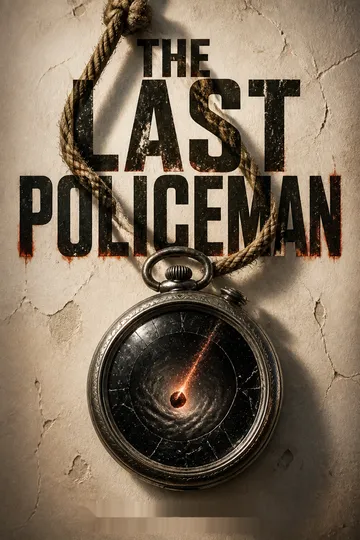

Download PDF
Download EPUB
.epub digital book format is ideal for reading ebooks on phones, tablets, and e-readers.








