

Plot Summary
Father's Drawer Opens
Near Christmas, twins Ivy and Scarlet Grey return to their father's cottage, where their stepmother Edith barely acknowledges them and their father, Mortimer, seems increasingly confused and unwell.
His unexpected gift changes the visit: two photographs of their mother and a carved music box that plays the Swan Lake theme. The girls discover a hidden compartment inside the box, opened by pressing the side at a particular click in the tune. It contains pages written in the Whispers' old numerical code and a letter from their mother, signed Ida Jane Grey.
She warns that she concealed important truths and urges whoever finds the pages to proceed carefully. The sisters hide the papers and carry the box back to school, determined to learn what their mother could not finish.
The gift makes family memory tangible, but it arrives through a father who can barely stay present with his daughters. The music box gives the twins a route into their mother's past while exposing how little Mortimer has allowed himself to remember. Its concealed drawer turns inheritance into an act of interpretation: the girls do not receive a finished account, but evidence they must patiently decode. The Swan Lake melody also links private grief with the sisters' shared life at school. Their curiosity is not simply about solving a puzzle. It is a way to recover a relationship that death and family silence have kept inaccessible.
Bartholomew Takes the Stage
Back at Rookwood, the girls reunite with their friend Ariadne and meet Ebony McCloud, now assigned to share Ariadne's room. Assembly is interrupted by Henry Bartholomew, son of the disgraced former headmaster, who announces that he has inherited ownership of the school.
His inspector, Mr Hardwick, begins measuring rooms and examining the building. Henry first describes the scrutiny as a safety check, then tells the pupils that Rookwood may close permanently if repairs are not worthwhile.
The threat is personal as well as institutional: Ivy and Scarlet could be sent back to Edith, while Ariadne fears being separated from her friends and returned to her former school. Henry's confident manner reassures no one. His control of the building turns the girls' home into a deadline.
Henry's arrival transforms Rookwood from a setting the girls have learned to navigate into property someone else can dispose of. The inspection's bureaucratic language hides a blunt imbalance of power: pupils and teachers live with the consequences, but the owner decides what counts as safety or value. For Ivy and Scarlet, the threat also reactivates the vulnerability of their home life, making school protection more than sentiment. Their unease is grounded in concrete risks, including separation from friends and renewed exposure to Edith. Henry's polished composure therefore works as a form of pressure. He can sound reasonable while steadily narrowing the choices available to everyone else.
The Whispers Reassemble
Ariadne translates the pages and finds their mother's account of returning to Rookwood village after marrying Mortimer. Ida had learned that Edgar Bartholomew might have taken the school from the Wootton family, then searched the building for proof before fear drove her away.
Old documents in the library strengthen her suspicion: Eliza Mary Wootton appears to have lived at Rookwood after it became a school, and a household list suggests she had children. The girls cannot yet prove what happened to the family or how Edgar acquired the property.
Scarlet responds by forming a new Whispers in the Walls, assigning teams to investigate the records, watch Henry, search for concealed rooms, and seek outside help. Even skeptical Penny agrees to join when the girls explain what losing Rookwood could mean.
The investigation expands from maternal biography into a dispute over who has the right to claim a place. Ida's journal shows how fear can interrupt an effort at justice without extinguishing it; her daughters inherit both the unfinished question and the evidence she preserved. Scarlet's club converts private discovery into collective labor, distributing tasks according to what each girl can contribute. That matters psychologically: these pupils have often been treated as troublemakers or dependents, yet the investigation gives them purposeful roles. Their alliance is not built on identical personalities or instant affection. It emerges from recognizing that the threatened school holds their friendships, histories, and practical safety in common.
The School Gets a Deadline
The Whispers' first searches produce fragments, not proof. Madame Lovelace refuses to discuss Edgar Bartholomew's history, and the library papers offer no clear route to ownership. Then Henry circulates a formal notice saying Rookwood will close before the school year ends, cancelling the ballet recital along with it.
The news changes the group's argument about contacting Guinevere Fox, the imprisoned former headmistress who once endangered the twins. Ivy had proposed asking Fox for information, but Scarlet and others initially reject the risk.
With the closure now imminent, Penny, Nadia, Violet, and Rose reconsider, and Scarlet reluctantly joins them. Their ballet teacher, Rebecca Finch, admits she still visits her mother in prison. Headmistress Mrs Knight authorizes a visit, judging that Fox's knowledge of Rookwood may be their last lead.
The closure notice turns an abstract threat into a countdown, forcing the group to revise a decision made under less urgent conditions. The vote's reversal is not fickleness so much as a response to changed stakes: refusing danger no longer means remaining safe. Scarlet's resistance reveals how strongly past coercion still governs her instincts, while Ivy's proposal risks reopening a wound she also fears. Mrs Knight's permission is important because it makes adult authority more complicated than simple obstruction. She does not promise that Fox will help; she allows the girls to choose a calculated danger when inaction has become dangerous too. The school crisis makes their courage practical rather than romantic.
Ten Minutes With Fox
At Broadgate Prison, Rebecca Finch takes Ivy and Scarlet to see her mother. Guinevere Fox is hostile at first, but Henry's plan to close Rookwood draws her into the conversation. Fox confirms that Edgar Bartholomew never truly owned the school and says she suspected he forged Eliza Wootton's will. She never found the original, but believes Wootton may have hidden a second copy somewhere in the building.
Fox offers no location, only the possibility of secret spaces still unknown to the girls. She also makes a veiled threat that recalls how easily people can be bribed into erasing Scarlet from public memory, strengthening the twins' suspicion that Edith took money from her. Scarlet leaves shaken, but less afraid of Fox than before.
The prison visit puts the twins face to face with a person who has used knowledge and power to harm them. Fox's cooperation is limited and self-interested: she cares about Rookwood as her legacy, not because she has become trustworthy. That distinction prevents the encounter from becoming a simple reconciliation. Scarlet's ability to challenge Fox marks a psychological shift, because she can acknowledge the danger without letting it dictate her every move. Meanwhile, the hidden-will theory gives the girls a concrete object to pursue, but not an easy solution. The visit produces both evidence and emotional change, showing that confronting the past can matter even when it cannot repair it.
Matron's Wall Safe
Ariadne reasons that Wootton's original bedroom may be hidden inside Matron's apartment, whose outline on an old map aligns with a disused dumbwaiter. The Whispers distract Matron with a staged corridor quarrel while Scarlet rides the cramped lift into the apartment. Behind a portrait, the girls find an iron safe with three keyholes and a combination dial.
A second nighttime raid into Mrs Knight's office retrieves Fox's confiscated key ring; Ivy and Scarlet find two keys marked with Wootton's initials, but Matron returns before they locate the third. Henry then orders the school emptied for a week of supposed repairs. The girls leave for home without opening the safe, and Ebony takes the two keys away to keep them from Henry.
This sequence makes the school's architecture an active part of the mystery. The dumbwaiter and concealed bedroom reward attention to historical maps, while also forcing the girls to coordinate around real physical risks. Their plan succeeds only partially: two keys are recovered, but the missing third and combination keep the safe from becoming an easy answer. The weeklong closure then interrupts the investigation at its most frustrating point. Ebony's decision to safeguard the keys shows trust developing through action rather than promises. The girls have learned to distribute responsibility, but the separation reminds them that teamwork can be disrupted by forces beyond their control.
Poison in the Herb Jar
At home, Mortimer collapses into an exhausted sleep while Edith orders the twins to clean. A jam jar falls from their mother's old spice rack, revealing a black bottle of powder concealed beneath a false label marked with a poison warning.
Scarlet suspects Edith has been dosing Mortimer, whose confusion and failing health have worsened for months. Rather than alert Edith, the sisters disguise the bottle in a clean jar and watch her prepare supper. When Edith reaches for it over Mortimer's plate, Scarlet catches her wrist and Ivy exposes the warning label.
Edith denies the accusation, but her furious admission that she paid to have Scarlet removed confirms the twins' old suspicions. Mortimer orders Edith out and calls a doctor after his condition worsens. Once he recovers, he apologizes for neglecting his daughters and begins rebuilding their trust.
The domestic plot reveals that danger has been operating not in a hidden school corridor but inside the family kitchen. The poison bottle makes the twins' earlier suspicions materially verifiable, yet they still have to manage the evidence carefully because adults have dismissed them before. Scarlet's plan to catch Edith in the act is brave but risky, and Ivy's vigilance keeps the confrontation grounded in concern for Mortimer rather than revenge alone. Edith's admission exposes the emotional economy of the household: resentment about money and Mortimer's attachment to his first wife has become a justification for cruelty. His later apology cannot erase the years of absence, but it begins a relationship that can be changed.
The Missing Key's Riddle
After their week at home, the twins return to Rookwood with Mortimer newly attentive and Edith gone. The relief lasts only until Matron explains that Henry has removed her from her apartment. Ivy and Scarlet overhear Henry telling Mr Hardwick that the hidden will must be destroyed before the school can be converted into flats.
He knows where the safe is but cannot open it. Ariadne arrives with a line from the Wootton papers describing a child mourned like a missing key. The girls connect the clue to a memorial for Isabella Wootton, who died at two, and to a damaged angel statue nearby.
At this point they know the safe's location and have two keys, but the family memorial may contain the last one. Henry's private admission confirms that the inspection was never about repairs.
The return pairs two kinds of revelation. Henry's overheard plan clarifies the material motive behind his reassuring public language, while Ariadne's deciphered verse turns an obscure family record into a usable clue. The Wootton child's death is not merely a cipher element; it gives the inheritance mystery a human cost, reminding the investigators that ownership records preserve family grief as well as legal claims. Mortimer's changed presence at home offers the twins a contrast to Henry's manipulation: one adult is beginning to listen, while the other uses concealment to secure control. The safe's discovery by the antagonist sharply raises the urgency, but the girls now possess knowledge he lacks.
The Mirror Conceals a Will
At Isabella Wootton's memorial, the Whispers study its reference to broken angels and find a key tucked among stones in a flower jar beside a small statue with damaged wings. That evening they plan to enter Matron's apartment while Henry is inside.
Ebony secretly rings the fire alarm, drawing Henry and Hardwick out of the room. Ivy, Scarlet, and Ariadne unlock the safe using all three keys and test combinations drawn from Isabella's birth and death dates. The first thing inside is a mirror, with a note aimed at Edgar Bartholomew.
Ivy notices that the mirror can be lifted, revealing Eliza Wootton's original will beneath it. The will bars the Bartholomew family from owning Rookwood and requires the building to remain a school. The girls carry it to Mrs Knight before Henry can return.
The safe's design makes the search a test of interpretation as much as access. The memorial's wording, the broken statue, the three keys, and the dates all become meaningful only when the girls combine separate observations. The mirror initially appears to mock their effort, but its deeper function is to make the reader look again at an apparent ending. That visual reversal suits a story in which official accounts have repeatedly concealed the truth. The girls' success also depends on collective risk: Ebony creates the diversion, while Ivy, Scarlet, and Ariadne open the safe together. Their discovery converts a family suspicion into a document that can challenge power publicly.
Henry's Claim Shatters
Mrs Knight presents the will at assembly while Henry believes the twins are being punished for the false alarm. He dismisses the document as a forgery and tears up the copy, but Mortimer enters with Rose's family lawyer, Mr Bloodworth, who has verified the original and secured it in his briefcase.
Henry cannot buy the school back or demolish it: Wootton's terms require Rookwood to remain a school and exclude the Bartholomew family. When Henry tries to win the pupils over with promises of a replacement building, the girls stand together and reject him.
Mortimer also challenges Henry's financial motives, and Henry leaves the hall under the school's disapproval. Mrs Knight confirms that Rookwood will remain open, though its purchase from the bank still needs to be arranged.
The public assembly reverses the usual direction of institutional power. Henry has controlled the building and its official narrative, but now the girls' research is backed by legal verification and witnessed by the whole school. His destruction of the copy reveals the limits of performance: he can still act aggressively, but he cannot erase the secured original. The collective refusal matters because it is not merely a cheer for the protagonists; it denies Henry the consent he expected to obtain through promises. Mortimer's presence adds a second repair to the scene. He uses his adult standing to support the evidence his daughters uncovered, rather than asking them to accept his authority without proof.
Rookwood Writes Itself
With help from parents and investors, Rookwood buys the building from the bank, and Mortimer takes charge of its finances. Mrs Knight announces that the school will stay open, improve its facilities, and reconsider some of its old rules.
The ballet recital, once cancelled by Henry, goes ahead: Scarlet dances Odette, the white swan, and Ivy performs Odile, the black swan. Their father, Aunt Phoebe, Aunt Sara, and the Whispers watch from the audience. Afterward, Ivy proposes that the girls record the school's tangled history in diaries, including their mother's struggle, the Bartholomews, the asylum, and their own investigations.
The friends write the accounts together and hide the books around Rookwood for future pupils to discover. The twins finish not by escaping the school, but by helping it become a home they can claim.
The ending resolves the novel's institutional and familial conflicts through different forms of repair. Rookwood survives because law, funding, and communal resistance converge, while Mortimer's new role gives his renewed commitment a practical shape. The sisters' contrasting swan roles preserve their individuality inside their mirrored bond: they share a history without becoming interchangeable. Most importantly, the diaries transform the Whispers' discoveries into a collective archive. Earlier generations hid evidence because disclosure was dangerous; the girls choose concealment as invitation, leaving future students a puzzle rather than a silence. Their belonging is therefore active and revisable. They do not inherit a perfect school, but help make its history available for change.
Analysis
The novel makes ownership the hinge between its mysteries. Rookwood is at once a building, a school community, a repository of family history, and a possible refuge from an unsafe home. Henry treats it as a transferable asset; the girls understand that its meaning comes from the people who have lived and learned there. The hidden will matters because it converts that moral claim into evidence that institutions can recognize.
The twins' investigation also examines how truth survives neglect. Their mother preserves information in a coded letter and music box, Wootton leaves clues in a bedroom and memorial, and the Whispers turn scattered observations into shared knowledge. Each concealment has a different motive: protection, resistance, or puzzle-making. The girls must learn to distinguish secrecy that safeguards the vulnerable from secrecy that lets powerful people evade responsibility.
Family life gives this process emotional stakes. Mortimer's grief and passivity leave the twins exposed, while Edith's resentment turns ordinary domestic objects into sources of danger. His later willingness to listen does not cancel the harm done, but it demonstrates that accountability can begin with changed behavior. At Rookwood, meanwhile, Scarlet's command and Ivy's caution become complementary forms of leadership. Their circle grows when members who distrust one another still choose to contribute.
The conclusion does not promise a flawless institution or erase the school's history of harm. Instead, the pupils gain a role in deciding what comes next. The final diaries preserve painful events without making them private burdens, inviting future students to inherit knowledge rather than repeat silence. The novel's answer to corrupt inheritance is therefore not simply a better owner. It is a community that remembers, checks its claims, and shares responsibility for the place it calls home.
Review Summary
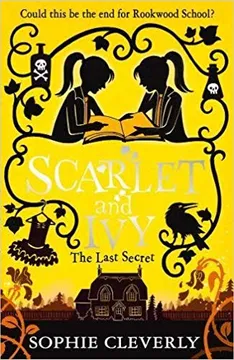
The Last Secret receives overwhelmingly positive reviews, with readers praising it as a fitting conclusion to the Scarlet and Ivy series. Fans appreciate the callbacks to previous books, the resolution of character arcs, and the satisfying ending. Many express bittersweet feelings about the series ending, highlighting their emotional connection to the characters and story. Some readers note that while the mystery may be predictable, the character development and overall execution make it a compelling read. The book is often described as exciting, suspenseful, and hard to put down.
Characters
Ivy Grey
The careful investigatorIvy is one of the Grey twins and the more reflective half of the pair. She watches closely, remembers details, and often notices what an impulsive response might miss. Her caution is not timidity: she is willing to approach Miss Fox and take risks when she believes other options have failed. Ivy's loyalty to Scarlet is the emotional center of her choices, but she also builds bonds with Ariadne and the other girls by listening to them. She is sensitive to the instability at home and to the possibility that adults may ignore danger. Her way of acting is to gather evidence, weigh consequences, and then commit. That combination makes her a steady investigator and a counterbalance to Scarlet's speed.
Scarlet Grey
The fearless instigatorScarlet is Ivy's twin, quick-tempered, funny, and most comfortable when she can turn fear into action. She often takes charge before a plan is fully formed, but her boldness is rooted in fierce loyalty and a refusal to let other people decide what her friends deserve. Her past treatment by adults has left her alert to betrayal and impatient with authority. At Rookwood, she uses that energy to assemble the Whispers and make reluctant allies feel needed. Scarlet's bravado sometimes hides how deeply old injuries still affect her, especially when Miss Fox is involved. She grows not by becoming less forceful, but by learning to listen, share leadership, and let her friends carry part of the risk.
Mortimer Grey
The absent fatherMortimer is Ivy and Scarlet's father, a working man whose grief over his first wife has hardened into long absences and emotional vagueness. His daughters experience him as unreliable: he forgets details, withdraws into his office, and struggles to respond to the danger around them. His passivity is not presented as harmless, because the girls have had to live with its consequences. Yet Mortimer is not without affection; memory and grief have made it difficult for him to act on that affection. His relationship with the twins is shaped by both what he has failed to see and what he may still choose to do. The story asks whether care can become trustworthy only when it takes visible, practical responsibility.
Ariadne Flitworth
The codebreaking allyAriadne is the twins' closest friend and the group's most reliable translator of codes, documents, and obscure clues. Her enthusiasm for learning can make her seem sheltered, but she is resourceful, observant, and willing to take physical risks when her friends need her. She brings notebooks, tools, and a habit of methodical thought to Scarlet's plans, often turning a burst of excitement into an organized investigation. Ariadne also understands how much friendship matters to her because school has offered her a sense of freedom she has not always found elsewhere. She is not simply the clever helper: she argues for trust, takes responsibility, and grows more confident in the group's decisions. Her intellect works best as a form of care.
Henry Bartholomew
The polished inheritorHenry is the son of Rookwood's former headmaster and arrives with confidence, expensive clothes, and the expectation that his claim will be accepted. He presents inspection and closure as reasonable administrative choices, which makes his pressure harder to challenge at first. Henry values possession and control, and he treats the school primarily as an asset rather than as a community built from generations of pupils and staff. His charm is a practiced social instrument, not evidence of openness. By placing him against the girls, the story tests how easily respectable manners can disguise self-interest. He is a consequential antagonist because he understands that public appearances matter, even when he privately pursues a very different outcome.
Edith
The hostile stepmotherEdith is Mortimer's second wife and the twins' severe stepmother. She resents their presence, treats them as unwanted labor, and uses the household's power imbalance to keep them at a distance. Her hostility is sharpened by jealousy of Mortimer's first wife and frustration over money, though those feelings do not excuse the harm she causes. Edith's control depends partly on Mortimer's inattention: she can define the household while he avoids looking closely at it. Her character shows how domestic cruelty can hide behind ordinary routines such as meals, chores, and family authority. For the twins, she represents the danger of returning home without adult protection, making Rookwood's threatened closure feel intensely personal.
Guinevere Fox
The imprisoned schemerGuinevere Fox is Rookwood's former headmistress, a formidable woman whose knowledge of the school's rooms and history gives her unusual reach. She is controlling, strategic, and accustomed to making fear serve her purposes. Her relationship with her daughter, Rebecca Finch, is strained by a history of secrecy and harm, while the Grey twins have reason to distrust her completely. Fox is not a simple source of wisdom or a repentant villain; even when she offers information, she frames Rookwood as her own legacy. Her presence forces the twins to separate useful knowledge from moral trust. She remains psychologically dangerous because she understands how to make other people feel powerless.
Rebecca Finch
The wounded dance teacherRebecca Finch teaches ballet at Rookwood and is the daughter of Guinevere Fox. An old injury affects her movement, but it has not taken away her skill or her attachment to dance. Her relationship with her mother is complicated by what Fox has done and by Rebecca's lingering desire for contact. She becomes a cautious bridge between the twins and Fox, then supports the girls without pretending the visit will be easy. Rebecca's steadiness contrasts with the volatility of her family history. Through her, the story shows that a person can maintain a connection without endorsing the other's behavior, and that care sometimes means helping someone face a painful truth.
Mrs Knight
The pressured headmistressMrs Knight is Rookwood's headmistress, responsible for keeping the school functioning while Henry threatens its future. She tries to reassure the pupils, but the closure crisis exposes how little authority she has against the owner. Her concern is practical as well as emotional: the school's survival determines whether pupils and staff retain a place to belong and work. She is willing to listen to the twins, authorize an uncomfortable prison visit, and later help present their evidence. Mrs Knight's cautious manner can look like indecision, yet she understands that leadership involves weighing risk rather than merely projecting confidence. She gives the girls room to act while remaining accountable for their safety.
Ebony McCloud
The guarded reformerEbony is a Scottish pupil who enters the story carrying the reputation of her earlier tricks and her own uncertainty about where she belongs. She can be guarded and mischievous, but she is capable of recognizing when she has damaged trust and trying to repair it. Her father owns the local theatre, a connection the Whispers hope might help them, though she cannot simply command his support. Ebony's resourcefulness becomes useful in the group's secret operations, and her willingness to take on a risky task shows that she is more than her old reputation. Her place in the group is earned through choices, not granted automatically.
Rose Fitzwarren
The quiet witnessRose is gentle, observant, and often reluctant to push herself into a loud group's conversation. Her experience of being separated from safety has made belonging especially important to her. She is close to Violet, who stands up for her, but she also contributes her own insights when given time. Rose's quietness should not be mistaken for passivity: she notices practical openings others overlook and can act decisively when the group needs a lookout or a fresh idea. Her presence makes the Whispers' promise of shared protection concrete. She reminds the others that the school matters most to those who have few secure alternatives.
Violet Adams
The changed protectorViolet is a pupil whose forceful manner and difficult history shape how others initially see her. Her friendship with Rose gives her a reason to use her strength protectively rather than to dominate a room. She is wary of Guinevere Fox and understands why the twins' plan could go wrong, so her eventual participation is grounded in judgment rather than blind enthusiasm. Violet's presence connects the current investigation to Rookwood's earlier dangers and the students who survived them. She can be blunt, suspicious, and deeply loyal. Her development suggests that trust is not a sudden change of personality; it is a repeated decision to act differently with people who have earned a place beside her.
Penny Winchester
The sharp-tongued skepticPenny is outspoken, provocative, and often the first to question whether a plan is worth the trouble. Her skepticism can sound selfish, but it forces the group to explain what it is trying to save and what risks it is asking others to take. She joins the Whispers reluctantly, then proves willing to participate in their schemes when the threat becomes immediate. Penny's relationship with Nadia shifts from antagonism toward a more cooperative friendship. She does not become sweet or agreeable; her value lies in remaining candid while choosing to contribute. The story gives her a place in the group without requiring her to lose her distinctive edge.
Nadia Sayani
The theatrical allyNadia is a spirited pupil who is comfortable performing when a plan needs a distraction. She shares a prickly history with Penny, but their cooperation grows as the school faces a threat neither can ignore. Nadia can be dramatic and quick to improvise, qualities that make her useful in the Whispers' schemes. She also speaks plainly about the prospect of leaving Rookwood and understands that a school is made valuable by the people who gather there, not only by its building. Her confidence gives the group energy, while her willingness to take a role in a plan shows that performance can be a form of solidarity.
Eliza Mary Wootton
The dispossessed ownerEliza Mary Wootton is the historical owner of Rookwood whose family records become central to the girls' search. The surviving papers and memorials suggest a woman attached to her family and determined to preserve her intentions. She is absent from the present, but the clues she left shape how the girls read the school's rooms and history. Her story matters because ownership is more than a name on a document: it carries a claim about how the building should be used. The twins encounter Wootton through records rather than conversation, so their understanding of her develops through careful inference.
Edgar Bartholomew
The original usurperEdgar Bartholomew is Henry's father and Rookwood's former headmaster. The girls learn about him through their mother's journal, school documents, and the consequences of his actions. He is associated with the school's troubled history and with the claim that the Bartholomews own the property. His influence persists even after he is no longer present, because his son inherits both the institution and the assumptions he established. Edgar's role is therefore less about direct interaction than about the way a false account can become an accepted tradition. The girls' investigation challenges the authority that his reputation has left behind.
The Grey twins' mother
The unfinished investigatorThe twins' mother is present through photographs, a music box, and the coded pages she left behind. Her concealed history at Rookwood and her concern about the school's past give Ivy and Scarlet a mystery to inherit. She appears to have been observant, determined, and cautious enough to preserve evidence in a form that could survive discovery. The girls do not know her through ordinary memories, so they build an image from what she chose to leave. This makes her both a person they long to understand and a source of unfinished responsibility. Her influence draws the twins together without making them identical in how they respond to the past.
Aunt Sara
The mother's sisterAunt Sara is the twins' maternal aunt and a source of family history that Mortimer had not fully understood. She works in fashion and is connected to the girls through both their mother's past and the practical kindness she shows them. Her absence during part of the closure crisis leaves the twins without one possible refuge, but she remains an important link between the sisters and the life their mother had before them. Sara is warm, capable, and independent, offering a model of adult support that differs from the neglect and control the twins have experienced.
Aunt Phoebe
The father's sisterAunt Phoebe is Mortimer's sister and a possible source of support for both him and the twins. She is absent-minded and sometimes mixes up the girls' names, but her affection is genuine. Her own loneliness and illness make her relationship with Mortimer mutually important: they can offer each other company as well as a connection to the girls. Phoebe's presence gives the family a gentler alternative to Edith's household and helps widen the twins' sense of where home might be.
Mr Bloodworth
The family solicitorMr Bloodworth is a lawyer connected to Rose's family. He verifies the original will and provides the legal standing the pupils need when Henry challenges their evidence. His role is brief but important: he turns the girls' discovery into a claim adults and institutions must address.
Miss Bowler
The commanding games teacherMiss Bowler is Rookwood's loud, imposing games teacher. She enforces order with a booming voice and is often impatient with the pupils, but she is part of the staff community that stands to lose the school. Her commanding presence gives the girls a formidable adult to work around, and her restraint during the final confrontation signals that she is not simply an obstacle.
Mr Hardwick
The owner's inspectorMr Hardwick is the inspector Henry hires to examine Rookwood. He measures rooms and studies the building, making the threat of closure feel official and imminent. His work gives Henry a public justification for his plans, even as the girls come to understand that the inspection serves a different purpose.
Plot Devices
The Ballerina Music Box
Carries hidden testimonyMortimer gives the twins a carved music box that once belonged to their mother. Its Swan Lake mechanism clicks at a precise moment, allowing Scarlet to release a concealed drawer. Inside are coded pages and a personal letter, turning a sentimental object into the physical starting point of the investigation. The box links the mother's private history to the sisters' life at Rookwood, and its recurring music later resonates with their ballet performance. It also models the story's method: a familiar object may conceal a second purpose, but only careful attention reveals it.
The Whispers Cipher
Translates buried historyThe numerical code used by the former Whispers in the Walls protects the mother's account from casual readers. Ariadne's ability to translate it reveals that the mother had investigated Edgar Bartholomew's claim to Rookwood and suspected the property had been taken from the Wootton family. The cipher makes secrecy both protective and costly: the truth survives, but only someone with the right knowledge can recover it. When the girls form a new Whispers group, they extend the old resistance through shared research rather than relying on one person's private notes.
The Wootton Safe
Makes memory a lockA portrait in Matron's apartment hides a safe in the remains of Eliza Wootton's bedroom. The safe requires three separate keys and a combination inferred from clues in family records and a child's memorial. The Whispers discover two keys in the school's confiscated ring, then find the last near a broken angel statue. A mirror and a misleading note conceal the original will behind them. The device rewards the combined labor of the group and turns the building's history into a physical puzzle. The will's contents provide the evidence that Henry cannot simply dismiss.
The New Whispers
Distributes detective workScarlet forms a new version of the secret club her mother once belonged to, recruiting Ivy, Ariadne, and schoolmates with sharply different temperaments. Each member receives a task: searching archives, watching Henry, looking for hidden rooms, or seeking outside assistance. The club gives the plot a practical structure while changing the girls' relationships. Skeptics can challenge weak ideas, quieter pupils can contribute observations, and former rivals can earn trust through action. Their meetings also offer a safer space than either the hostile household or the school's formal authority.
The Poisoned Herb Jar
Exposes domestic dangerA bottle concealed inside an old jar on the kitchen spice rack reveals that the danger to the twins is not limited to Rookwood. Scarlet recognizes the bottle as poison, and she and Ivy disguise it again so they can observe Edith's behavior. When Edith reaches for it near Mortimer's supper, the girls expose the warning label in front of their father. The bottle turns months of Mortimer's confusion into a question of immediate safety and forces the family to confront what Edith has done. It also shows why the twins' observations matter even when adults have failed to listen.
Download PDF
Download EPUB
.epub digital book format is ideal for reading ebooks on phones, tablets, and e-readers.








