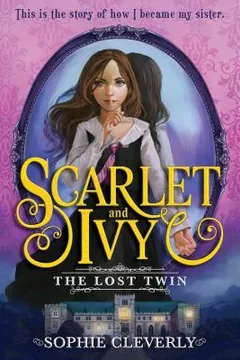


Plot Summary
The Letter After Scarlet
On September 1, 1935, the day after her thirteenth birthday, Ivy Grey finds a letter from Rookwood School on her aunt Phoebe's floor. The school says a place has opened because of recent events and that Ivy's fees are already paid. Ivy understands the euphemism: her identical twin, Scarlet, died at Rookwood the previous term.
Their father has agreed to send Ivy there without asking her. Before the letter arrives, Scarlet had won the entrance place while Ivy was sent to live with Aunt Phoebe, whose grief and absent-mindedness leave Ivy feeling easy to overlook. Ivy resists the idea of entering the school that swallowed her sister, but a severe teacher arrives the next day to collect her.
The school summons Ivy through a letter that turns bereavement into administration: a vacant place, paid fees, an immediate start. That cold efficiency anticipates Rookwood's habit of treating girls as positions to be filled. Ivy's private loss is made harder by the adults around her, who either decide for her or drift away from the decision. The twins' resemblance sharpens the injury. Ivy is not simply being sent to the place where Scarlet died; she is being asked to occupy the social space Scarlet once held. Her journey begins under pressure, not curiosity.
A Name Taken Away
At Rookwood, the teacher, Miss Fox, ignores Ivy's correction and registers her as Scarlet. In her office, she explains that the school has covered Scarlet's absence by claiming she recovered from influenza. Ivy must continue the lie, with her father's permission, because Rookwood's reputation matters more than the truth. Miss Fox tells Ivy there will be no more Ivy at school.
In room thirteen, Ivy finds Scarlet's uniform waiting, then searches the bare room for the belongings the school removed. A lump in the mattress leads her to a slit in its fabric and Scarlet's hidden diary. Its surviving letter anticipates Ivy's arrival and urges her to keep the secret, behave like Scarlet, and find the missing pages.
Miss Fox's command makes impersonation a form of institutional erasure. Ivy is not allowed to grieve openly or even retain her own name; she must become evidence that the school's official account is true. Yet Scarlet's diary complicates this coercion. The school has stripped her room, but Scarlet left behind a private record and an expectation that Ivy would find it. The mattress becomes a counter-archive, preserving what authority has tried to remove. Ivy's first act of resistance is not a public challenge. It is the careful recovery of her sister's handwriting.
The Diary's First Clues
Ivy meets Ariadne Flitworth, her shy new roommate, and invents a story that she was away with flu. The excuse helps conceal her ignorance of Scarlet's routines, but it does not explain why the other girls stare. Penny Winchester confronts Ivy with hostility and hints that Scarlet did something unforgivable. That night Ivy notices an underlined phrase in Scarlet's letter about being wet and looking in a mirror.
She sneaks into the bathrooms and searches beneath the pipes, finding diary pages before Penny catches her in the corridor. Later, a rose scent in Scarlet's history desk guides Ivy to another hidden message. It warns that someone must learn the truth about a girl, while naming Miss Fox as the threat to watch.
The first clues make memory practical. Ivy has to translate Scarlet's private habits into locations, while also imitating a sister whose reputation she does not understand. The gap between them is not only grief: Scarlet has kept secrets even from her twin, and those secrets now determine Ivy's safety. Ariadne's arrival offers a different kind of intimacy, one not founded on childhood resemblance. Penny, meanwhile, embodies the cost of inheriting Scarlet's unfinished conflicts. Ivy's false identity initially protects her, but each unexplained reaction makes the disguise more precarious.
Straw and the Fox
At ballet, Ivy discovers that Scarlet's classmates expect a bold, disruptive dancer, while Miss Finch notices that the returned pupil seems unusually restrained. A later diary clue links the phrase about a final straw to the stables. Ivy searches stall four and finds more pages concealed above the stall wall, but Miss Fox catches her before she can leave.
She beats Ivy with the cane and threatens that nobody would notice if Ivy disappeared too. Back in bed, Ivy reads Scarlet's account of her first year at Rookwood: her wealthy roommate Violet Adams bullied her, while Penny joined in. Scarlet also writes of Miss Finch, a gifted former dancer whose injured leg ended her performing career.
The stable search turns Ivy's investigation into bodily risk. She is no longer merely reading her sister's past; she is being punished by the same authority that controlled Scarlet. Miss Fox's threat exposes the school's coercive logic more plainly than its rules do: a pupil's worth is measured by how little disruption her disappearance would cause. Scarlet's diary also resists a simple division between innocent and guilty girls. Violet and Penny harmed her, but the record is written by Scarlet herself, whose own anger and choices will later matter. The clues deepen both the mystery and Ivy's knowledge of her twin.
Ariadne Joins the Search
After recovering from her beating, Ivy visits Rookwood village with Ariadne. Penny and her friends shove Ivy, blaming her for Nadia Sayani's punishment; Ivy answers by yanking Penny's hair, and Nadia's older sister Meena hints that Penny's hostility began after a girl named Violet vanished from her circle.
Back at school, Ariadne's midnight feast gives Ivy comfort, then Ariadne follows her into the dining hall during another clue hunt. With no excuse left, Ivy tells her that Scarlet was her twin and that she is searching for the truth.
Ariadne accepts the confession and picks the kitchen lock with hairpins. Beneath the dining table they find a note directing them downstairs; Ivy rides the dumbwaiter into the cellar and retrieves pages hidden in an empty wine bottle.
Ivy's friendship with Ariadne begins when the disguise fails. Ariadne does not demand that Ivy perform a more convincing Scarlet; she stays because Ivy has finally trusted her with the truth. That response changes the investigation from solitary inheritance into shared work. The village confrontation shows Ivy borrowing Scarlet's boldness, but her impulsive retaliation does not solve Penny's grievance. Meena's mention of Violet gives the feud a history deeper than schoolyard spite. The dumbwaiter descent makes the partnership physical: Ariadne remains above, lowering Ivy into the school's hidden storehouse, while both girls take responsibility for what they might discover.
The Key in Wilhelmina
The cellar pages describe Violet's growing surveillance of Scarlet and point Ivy toward locker number one. Ariadne helps her test the gym and pool changing rooms; when the locker lacks a key, they find another clue nearby saying that the key has been swallowed. Ivy interprets it through the biology classroom's skeleton, Wilhelmina, and retrieves the tiny key from its jaw.
Inside the locker, more diary entries reveal that Violet searched Scarlet's belongings and that Penny helped mock her in class. Scarlet retaliated by overturning their desk, spilling ink across their books. The next instruction sends Ivy searching on her knees. Miss Finch later recognizes that the girl in ballet is Ivy, not Scarlet, but Ivy begs her to keep the secret.
The skeleton clue makes the school's lessons serve the mystery in an unsettlingly literal way: a prop used to teach anatomy becomes a hiding place for evidence. Ivy's success depends on learning to read Scarlet's eccentric logic rather than simply following directions. The recovered pages also complicate the moral map. Scarlet was bullied, but she fought back in ways that escalated the conflict. Miss Finch's recognition is a second kind of discovery: unlike Miss Fox, she sees Ivy's individual habits rather than treating resemblance as proof. Ivy still needs secrecy, but the school now contains one adult who knows who she is.
The Chapel's Hidden Pages
Ariadne connects Scarlet's instruction about searching on her knees to prayer, so the girls examine the chapel pews and unpick a kneeling cushion. Its pages recount how Scarlet caught Violet using their mother's silver-backed hairbrush and cut off a piece of Violet's hair in revenge.
Another entry admits that Penny pushed Scarlet down the ballet stairs; Scarlet then smashed Miss Finch's piano and planted Penny's hair bow to frame her. Scarlet regretted hurting the teacher, but Penny was punished and barred from ballet. When Ivy and Ariadne return to room thirteen, Scarlet's diary has disappeared from the mattress. Ivy assumes Penny took it and rushes upstairs to the roof, where she finds Penny holding the book.
The chapel yields a record that refuses to let Ivy idealize her twin. Scarlet was defending herself against repeated cruelty, but she also injured Violet and deliberately made Penny bear the blame for a crime she committed. The kneeling cushion turns a place of submission into a hiding place for uncomfortable testimony. Losing the diary immediately after this revelation strips Ivy of the security its pages provided. Her anger at Penny is partly protective, but it also reflects a deeper fear that Scarlet's story can be taken from her again, just as the school took Scarlet's belongings.
Penny Holds the Diary
On the wet roof, Penny threatens to expose Ivy as an impostor and admits she wanted the leading place in ballet, which Scarlet's conflict helped cost her. During their struggle, Ariadne slips into a chimney and strikes her head. To keep Penny from revealing Ivy's identity, Ivy promises to admit that Scarlet smashed the piano and framed her.
Ivy gets Ariadne to the nurse, then makes a convincing confession to Miss Fox, who clears Penny and restores her place in ballet. Penny keeps her side of the bargain and returns the diary's secrets to silence. Soon after, Miss Finch privately tells Ivy that she has recognized her all along, partly because Ivy loves dancing for its own sake rather than for Scarlet's ambitions.
Penny's confession of envy does not erase her cruelty, but it gives her hostility a human motive: she believes Scarlet displaced the future she wanted. Ivy responds by accepting responsibility for a wrong she did not commit, an act that protects Ariadne and offers Penny a path back to ballet. The bargain is uneasy, not a sudden friendship. Miss Finch's recognition matters for another reason: she distinguishes Ivy from Scarlet through their different relationships to dance. For Ivy, dancing is a practice and a refuge, not a performance of fame. Her identity begins to survive outside the disguise.
The Piano Gives Up Pages
After the piano is tuned, Miss Finch finds diary pages hidden inside its lid and gives them to Ivy without reading them. The entries explain that Violet confronted Scarlet on the roof after discovering a secret in Miss Fox's desk. Miss Fox arrived, forced Scarlet down through the hatch, and left Violet with her.
Scarlet was later told that Violet had gone abroad, though Penny suspected the explanation was false. Scarlet feared Miss Fox might have made Violet disappear and resolved to confront her. The pages end with a warning rather than a solution, so Ivy and Ariadne return to the roof. They find its hatch newly locked, then realize Miss Fox must hold the labeled key among the many keys in her pockets.
The piano becomes an archive of Scarlet's guilt as well as a symbol of her abandoned artistic life. Miss Finch's decision to return the pages without reading them models an ethical form of care: she helps Ivy recover evidence without claiming ownership of it. The entries also shift the mystery from peer conflict to institutional danger. Scarlet's earlier retaliation remains real, but Miss Fox's control of the roof and her power to erase pupils explain why the school can bury more than a broken piano. The locked hatch converts the next stage into a test of strategy rather than endurance alone.
The Box Marked End
Ariadne stages a spill of flour and red food coloring over Miss Fox's dress during dinner. While Miss Fox changes, Ivy steals the roof key from the pile she removes from her pockets. The girls unlock the hatch and search the roof, where Ariadne spots a chimney above rooms that no longer use a fireplace.
Inside, Ivy finds a metal box labeled as the end of the diary. Its pages reveal that Scarlet confronted Miss Fox after Violet vanished. Miss Fox injured Scarlet and threatened to replace her with Ivy if she refused to leave quietly.
Scarlet then admits the secret that began the chain of events: she switched the twins' entrance papers, taking Ivy's chance at Rookwood and winning a place herself. She had hidden the diary so Ivy could expose the truth.
The roof box supplies both the conspiracy's missing history and the twins' most intimate breach. Scarlet did not merely inherit a place Ivy lacked; she took it by changing their papers, then left Ivy to confront the consequences. Her confession makes the diary an apology as much as evidence. Yet the pages also reveal that Scarlet's deception was followed by Miss Fox's deliberate coercion, so responsibility cannot be collapsed into one guilty act. Ariadne's flour scheme shows Ivy learning to use planning rather than imitation. She no longer needs to behave like Scarlet to act courageously.
The Fox Loses Control
Ivy decides not to confront Miss Fox alone. She asks Penny and Nadia to alert one another if she and Ariadne fail to return, then enters the office and accuses Miss Fox of removing Violet and Scarlet. Miss Finch arrives and the girls learn she is Miss Fox's daughter, Rebecca, secretly adopted and later forced to work at Rookwood. Ariadne unlocks the desk drawer and finds financial records and a keepsake box.
When the headmaster, Edgar Bartholomew, calls, Ivy reports the suspected abuse and financial wrongdoing. Miss Fox answers him, then flees. A photograph in the box shows the young Miss Fox outside Rosemoor Asylum. Ivy recognizes the possibility that Scarlet and Violet were confined there, and Miss Finch agrees to help her investigate.
The confrontation succeeds because Ivy refuses the isolation that doomed Scarlet's earlier attempt. She recruits former rivals, trusts Ariadne, and brings Miss Finch into the room. The revelation of Rebecca's parentage exposes another version of Miss Fox's control: even her adult daughter has been made to conceal her identity. The financial file gives the accusation material weight, while the telephone connects Rookwood's closed world to an authority beyond Miss Fox. Her escape prevents an immediate legal resolution, but the photograph turns the crisis into a concrete search. Ivy now has a destination, not only suspicion.
The Glass Does Not Mirror
The next morning, Ivy and Miss Finch take a train to Rosemoor Asylum. Aunt Phoebe, reached through a neighbor's telephone, urges Ivy to keep pursuing the truth; Ivy also leaves Ariadne behind with the promise that their friendship will survive the search. At the hospital, the receptionist finds neither Scarlet Grey nor Violet Adams in the records.
Ivy nearly collapses, but the woman studies her face, recognizes that she has a twin, and leads her through the building to a courtyard. There, Ivy sees her own reflection in a glass door. It does not copy her movement. The girl beyond the glass raises a hand of her own, and Ivy places her palm against it. The novel ends with Ivy finding Scarlet, before the sisters speak or leave the asylum.
The ending answers the book's central question through a small physical contradiction: the reflection moves independently. For most of the story, mirrors have threatened to collapse Ivy into Scarlet, while the school has treated their shared face as permission to substitute one girl for another. Here the glass finally proves difference and presence at once. Ivy has not rescued Scarlet yet, and the asylum remains a place of confinement, so the reunion is a threshold rather than a completed repair. Still, the sight transforms grief into action and vindicates Ivy's refusal to accept the official story.
Analysis
The novel treats identity as something people can impose, perform, and eventually reclaim. Rookwood's central deception is not merely that Ivy is mistaken for Scarlet; adults knowingly use resemblance to erase a girl's absence and preserve the school's reputation. Ivy's disguise first makes her vulnerable because she cannot behave naturally, but it also grants access to Scarlet's social world. The diary then challenges the comforting idea that love requires perfect knowledge. Scarlet loved Ivy and still stole her entrance opportunity, concealed parts of her life, and harmed other pupils. Ivy's forgiveness comes after she learns the facts, not instead of learning them.
The diary's scavenger hunt gives memory a material form. It must be found, handled, and assembled, because Rookwood's official account has made ordinary testimony unreliable. Each hiding place turns a school fixture into a counter-record: the mattress, the skeleton, the chapel cushion, and the piano all preserve what the institution would rather leave unseen. The search also changes Ivy's relation to courage. She begins by trying to reproduce Scarlet's manner, then acts through her own qualities: patience, attention, and a growing willingness to trust other people.
The girls' conflicts resist simple moral sorting. Penny's cruelty is real, but so are her grief and frustrated ambition. Scarlet was bullied, yet she retaliated and framed Penny. Ariadne's friendship and Miss Finch's kindness create alternatives to the school's competitive hierarchy, while Miss Fox's treatment of pupils shows how authority can turn vulnerability into leverage. The ending's glass image concentrates the book's central tension. Ivy and Scarlet look alike, but they are not interchangeable. The independently moving figure confirms a person beyond the reflection, and a reunion becomes possible only after Ivy has learned to see her sister, and herself, as separate lives.
Review Summary
The Lost Twin is a widely beloved middle-grade mystery set in a boarding school, earning an impressive 4.33 out of 5. Readers across age groups praise its gripping plot, strong character development, and atmospheric setting. Standout elements include twin sisters, hidden diary pages, secret clues, and a menacing teacher. Many reviewers note that while aimed at 10–13-year-olds, adults enjoy it equally. The fast-paced story and emotional ending leave readers eagerly anticipating the sequels, with multiple reviewers mentioning rereading the series.
People Also Read
Characters
Ivy Grey
The reluctant twinIvy is quiet, observant, left-handed, and used to measuring herself against her bolder identical twin. She is sensitive to other people's moods and often mistakes obedience for safety, especially when adults make decisions on her behalf. Her curiosity is initially cautious, but Scarlet's hidden diary forces her to act under pressure and to distinguish imitation from genuine courage. Ivy loves ballet without needing an audience, finds comfort in books, and is more capable of persistence than she believes. Her central psychological struggle is not simply becoming more assertive; it is learning that her own gentleness and judgment can lead her through danger without turning her into someone else.
Scarlet Grey
The daring twinScarlet is Ivy's mirror twin, her opposite-handed counterpart, and the more outgoing sister in a family that often favored her confidence. She is inventive, theatrical, ambitious, and quick to retaliate when she feels wronged. Her diary shows someone who records small details and invents elaborate hiding places, but also someone capable of secrecy and serious mistakes. Scarlet wants recognition and freedom, yet her loyalty to Ivy remains central to how she imagines their shared future. Her history at Rookwood shapes the mystery before Ivy understands it, making Scarlet both a vivid personality and an imperfect guide.
Ariadne Flitworth
The steadfast new friendAriadne is Ivy's new roommate, a lonely, talkative girl whose nervous manner conceals ingenuity. She loves animals, stories, sweets, and detailed routines, and she longs for the close companionship she has never had with a sibling. Her awkwardness makes her an easy target at school, but she is resourceful under pressure: she picks locks, notices patterns, and keeps thinking when Ivy panics. Ariadne does not treat Ivy's confession as a betrayal once she understands why the lie began. Their friendship gives Ivy a relationship that belongs to her alone, built through trust and shared risk rather than twinship.
Miss Fox
Rookwood's iron authorityMiss Fox is the severe teacher placed in charge of Rookwood while its headmaster is absent. She is meticulous about rules, status, and the school's public reputation, and she uses punishment to make her authority visible. Her sharp scrutiny and jangling collection of keys make her seem to control every corridor and locked space. She treats pupils less as children with private lives than as problems to manage. Her discipline is not neutral: she expects obedience from others while protecting her own position. Miss Fox's presence teaches Ivy to distinguish legitimate authority from mere power.
Penny Winchester
The resentful dancerPenny is a freckled, sharp-tongued pupil who resents Scarlet and tries to dominate the social life around her. She is competitive in ballet and highly sensitive to exclusion, though she covers insecurity with mockery and threats. Her loyalty to friends can shift when she feels dismissed, and she watches closely for opportunities to regain status. Penny's hostility gives Ivy an immediate danger to navigate, but it also points toward a more complicated history than Ivy first suspects.
Miss Finch
The injured dance teacherMiss Finch teaches ballet at Rookwood and once danced professionally in Europe. A serious leg injury ended her performing career, but she still understands dance as a discipline of feeling and technique. She is more compassionate than the school's other authorities, though her financial dependence and private family circumstances limit what she feels able to say. She recognizes differences in the girls' dancing that other adults miss. Her care is measured rather than sentimental, and she gives pupils room to make their own choices.
Violet Adams
The wealthy roommateViolet is Scarlet's former roommate, a wealthy orphan accustomed to fine clothes and a protected life. Scarlet's diary describes her as controlling, invasive, and skilled at appearing blameless in front of teachers. Her strained relationship with Scarlet becomes one of the school's most troubling unresolved histories. Violet's position shows how money and adult sympathy can shape which pupil is believed, while her private motives remain difficult for Ivy to reconstruct.
Nadia Sayani
Penny's watchful allyNadia is a talented ballet student and Penny's close companion. She is polished, clever, and proud of her ability, but she can be cruel when defending her place in the group. Her older sister Meena sees that Nadia is vulnerable to choosing the wrong friends because she wants to belong. Nadia's reactions help Ivy understand the social loyalties surrounding Penny, and her willingness to listen makes her more than a background antagonist.
Aunt Phoebe Gregory
Ivy's grieving guardianAunt Phoebe is Ivy's gentle guardian, a widow whose grief has left her distractible and often absorbed in memories of Scarlet. She offers Ivy affection but does not always notice what Ivy needs in the moment. Her scattered attention makes Ivy feel alone, even though Phoebe cares deeply for her. She represents a home that is emotionally warm but unable to protect Ivy from decisions made by her father and Rookwood.
Ivy and Scarlet's father
The distant fatherThe twins' father works long hours in London and has become withdrawn since remarrying. He once had a fiery temper, but now avoids difficult emotional conversations and lets others make decisions for his daughters. He authorizes Ivy's place at Rookwood without consulting her. His distance leaves the twins to interpret his silence for themselves and makes his approval feel more like an administrative force than an active relationship.
Meena Sayani
Nadia's older sisterMeena is Nadia's older sister, a calm and perceptive girl who approaches Ivy after witnessing the conflict in the village. She is concerned that Nadia has attached herself to Penny for the sake of acceptance. Meena cannot control her sister's choices, but she offers Ivy a more generous interpretation of the girls' alliances and helps reveal the history behind Penny's resentment.
Mrs Knight
The housemistressMrs Knight leads Richmond House and supervises the pupils' daily routines. She is conventional and sometimes distracted by ordinary school matters, such as meals and gardening, but she is less openly cruel than Miss Fox. Her position places her between the girls and the school's harsher authority, though she rarely challenges its rules.
Edgar Bartholomew
The absent headmasterEdgar Bartholomew is Rookwood's headmaster, away from the school on leave while Miss Fox takes charge. His absence allows her control to expand without immediate oversight. When he reappears by telephone, his authority provides a route beyond the closed world she has built.
Miss Bowler
The swimming instructorMiss Bowler runs Rookwood's outdoor swimming lessons with brisk discipline. Her class exposes Ivy to a new physical danger and brings her into direct conflict with Nadia.
Madame Lovelace
The history teacherMadame Lovelace teaches history and expects obedience in the classroom. Her desks and books become part of Ivy's search for Scarlet's hidden messages.
Nurse Gladys
The school nurseNurse Gladys treats Ariadne after her fall and provides practical care without pressing the girls for a full account of what happened.
Dot
A quiet classmateDot is a shy pupil who helps Ivy carry the injured Ariadne to the nurse. Her small act of assistance cuts through the school's social hostility.
Plot Devices
Scarlet's diary trail
Clues across the schoolScarlet hides portions of her diary in mattresses, desks, bathrooms, stables, lockers, the chapel, a piano, and a rooftop chimney. Each recovered section offers memories, corrections, or a location puzzle that carries Ivy into the next stage of the search. The arrangement works as both mystery mechanism and emotional inheritance: Ivy is forced to learn how Scarlet thought, including the parts of her twin she never knew. The fragmented record also prevents any single adult or pupil from controlling the whole account. Its final pages reveal both Scarlet's role in the twins' school placement and her fear of Miss Fox.
Twin impersonation
Identity as camouflageMiss Fox orders Ivy to attend Rookwood under Scarlet's name, relying on their identical appearance and the school's false story that Scarlet recovered from illness. The impersonation gives Ivy access to Scarlet's room, classmates, and history, but it also forces her to perform traits that do not fit her. Teachers and pupils reveal what they remember about Scarlet by reacting to Ivy's differences. The device therefore makes identity a practical obstacle and a way to investigate the absent twin. Ivy's growing confidence comes not from becoming Scarlet but from acting under her own judgment.
Rookwood's discipline
Power through punishmentRookwood's rules, canings, supervised letters, and locked rooms make the school feel like a system designed to prevent pupils from comparing what they know. Miss Fox uses discipline to silence Ivy, punish disobedience, and protect the school's public image. The threat of punishment shapes how the girls communicate: diary pages are hidden, letters are coded, and Ivy initially lies to the one person who might help her. This structure gives the mystery its pressure. It also shows why the truth cannot emerge through ordinary reporting, since the authority meant to hear complaints is implicated in the danger.
Mirrors and ballet
Selfhood made visibleThe twins' matching faces make mirrors a recurring test of identity. As a child, Ivy and Scarlet used reflections for play; at Rookwood, Ivy sees Scarlet in the glass and struggles to separate resemblance from presence. Ballet deepens the device because the dancer must watch and correct her own movement. Miss Finch recognizes Ivy through the way she dances and through her reasons for dancing, not through her face. At the asylum, a reflection that moves independently turns resemblance into evidence that Scarlet is a separate, living person. The motif shifts from confusion toward recognition.
The asylum photograph
A clue beyond RookwoodA photograph of the young Miss Fox outside Rosemoor Asylum is discovered in a keepsake box from her desk. It links Miss Fox's concealed family history to a real institution and gives Ivy a destination after the headmistress flees. Until then, the clues point inward, toward rooms and records at Rookwood; the photograph opens the investigation beyond the school gates. It does not prove that Scarlet or Violet is there, so Ivy must travel on hope rather than certainty. At the asylum, the receptionist's recognition of Ivy's twinship turns the photograph's possibility into a path toward Scarlet.
Download PDF
Download EPUB
.epub digital book format is ideal for reading ebooks on phones, tablets, and e-readers.








