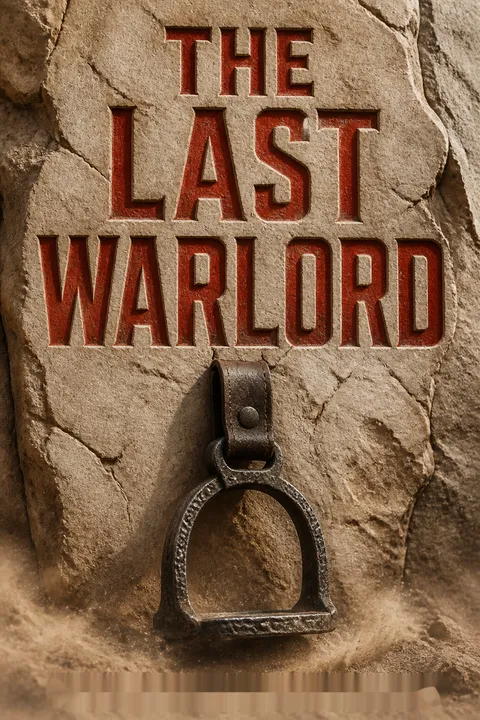


Key Takeaways
Read Dostum as a gray-zone ruler, not a ready-made hero or monster.
A life between labels. In 2003, historian Brian Glyn Williams arrives in northern Afghanistan to meet Dostum, already famous as both a feared warlord and the commander who helped US forces defeat the Taliban. The stories surrounding him include claims of monstrous cruelty, some repeated without firsthand evidence. Williams instead reconstructs a contradictory career: peasant, Soviet-backed officer, autonomous ruler, and anti-Taliban ally. He does not erase Dostum’s role in deadly political violence, including the 1994 attack on Kabul alongside Gulbuddin Hekmatyar.
History with limits. Williams draws on interviews with Dostum, his commanders, local residents, Taliban prisoners, and others. He also warns that some Afghan accounts blend memory and legend, and that he could not investigate every mystery. The book’s central claim is not that Dostum was innocent, but that neither “hero” nor “monster” explains him.
What's striking is how a familiar label can flatten a political actor into a moral type. In conflict studies, the word “warlord” can identify a leader whose authority rests on armed force, but it can also obscure the services, alliances, and local constituencies that sustain that authority. Williams restores that political texture. Still, complexity is not exoneration: acknowledging Dostum’s protection of some communities does not cancel the deaths linked to his campaigns. The useful discipline is to hold competing truths together without treating them as equal in every case.
A peasant's military career became a route to Uzbek power.
From village to command. Dostum grew up in Khoja Doko, a poor Uzbek village where he left school at thirteen to work. The army gave him training, a salary, and a path beyond the local hierarchy. During the upheaval after the 1978 Communist coup, he volunteered to serve in place of his younger brother, then proved himself in combat. His commanders eventually gave him a six-hundred-man Uzbek unit. He recruited poor farmers, oil workers, wrestlers, and other men with few routes to advancement, building loyalty around shared background as much as ideology.
Power through service. His militia expanded dramatically, becoming a major force in the northern war. The state promoted Dostum, but he also used military influence to defend Uzbek interests and negotiate with local rivals. His rise shows how a central government can empower a marginalized commander, then struggle to control the armed institution it helped create.
Dostum’s ascent illustrates a classic state-building paradox: governments recruit local power brokers because they can mobilize people and knowledge more quickly than distant institutions can. Those brokers gain resources, followers, and political claims of their own. The army offered Dostum a route out of poverty, but advancement came through command over armed men, not through stable civilian institutions. That distinction matters. Social inclusion achieved through a militia may correct exclusion in the short term while making future authority dependent on force.
Make terrain, local trust, and mobility matter more than conventional superiority.
A force fitted to place. Dostum’s early campaigns joined military skill to local conditions. In his first major battle, his horsemen approached a rebel position through mountain routes, surprised the defenders, and took prisoners. Rather than execute them, he tried to recruit Uzbek captives by stressing shared identity and offering a place in his unit. Later, his fighters used the Hindu Kush’s narrow trails to raid Taliban outposts and evade vehicles that could not follow them into the mountains.
More than horses. The book presents cavalry as practical mobility, not nostalgia. Dostum’s forces also used rifles, rocket-propelled grenades, tanks, artillery, and negotiation. In 2001, horses helped his men reach positions and attack quickly, but their success depended on intelligence, local networks, and American air support. Mobility mattered because it matched the terrain and the mission.
The military lesson is not that old methods defeat modern weapons by themselves. It is that effectiveness often comes from combining capabilities that solve different problems. Horses carried fighters across routes inaccessible to trucks; local contacts supplied information; airpower struck entrenched positions. This resembles a broader principle in organizational design: specialized teams outperform a single tool when their contributions are coordinated. The limitation is equally clear. Mobility and local loyalty can win battles, but they do not automatically produce disciplined governance or protect civilians from the costs of war.
The Taliban restored order first, then imposed a coercive religious and ethnic order.
Why some welcomed them. The Taliban emerged in 1994 amid predatory behavior by mujahideen commanders, who were supposed to be anti-Soviet fighters but had turned on civilians in parts of the south. Early Taliban forces promised security and punished some of those abuses, winning support. Their rule then grew more coercive: women were barred from many public roles, men were punished for violating religious rules, and public executions became part of life.
A northern threat. As the Taliban expanded beyond Pashtun areas, their restrictions and attacks alarmed Uzbeks, Tajiks, and Hazaras. Williams argues that religious extremism also served a project of renewed Pashtun dominance. Dostum’s northern base, centered on Mazar-e-Sharif and its revered shrine, became a refuge for people seeking greater freedom, including women and students. The book shows how religious policy, ethnic hierarchy, and local memory converged in resistance.
This account is strongest when it explains why a movement can gain legitimacy before its rule becomes oppressive. Security after predation is a powerful political offer, especially when formal institutions have collapsed. It is also important to distinguish the Taliban’s religious ideology from the ethnic effects of its rule. Williams emphasizes the latter, but reducing the movement to ethnic strategy would miss the genuine ideological commitments that shaped its policies. In Afghanistan, religion and ethnic power could reinforce one another without being identical.
Najibullah and Malik showed how quickly Afghan alliances could become traps.
Useful until inconvenient. After Soviet support collapsed, President Najibullah moved to replace Dostum’s Uzbek commanders with Pashtun officers and planned to disarm his forces. Dostum turned against the government in 1992, helping Massoud and other northern leaders overthrow it. Yet the new mujahideen government then excluded him from meaningful power, despite his army’s decisive role in taking Kabul.
Betrayal cuts both ways. In 1994, Dostum allied with Hekmatyar against the Tajik-led government, contributing to the violence that devastated Kabul. In 1997, his subordinate Malik secretly opened the way for the Taliban to enter northern territory, breaking Dostum’s power. These episodes make Dostum more than a victim of others’ betrayal. He repeatedly made tactical alliances, sometimes with former enemies, and paid for them when partners’ interests shifted.
The book’s sequence resembles a commitment problem: armed leaders cooperate against a shared threat, then fear that the postwar settlement will leave them vulnerable. Without trusted institutions to enforce agreements, each side has reason to retain weapons and seek advantage. That helps explain repeated defections, but it does not make every choice inevitable. Dostum’s 1994 alliance with Hekmatyar was an active decision with civilian consequences. Structural insecurity clarifies behavior; it should not erase responsibility.
Pair indigenous fighters with precision airpower, and a small US team can shift a front.
A joint campaign. After al-Qaeda killed Northern Alliance leader Ahmad Shah Massoud on September 9, 2001, Dostum’s position looked increasingly desperate. Following the September 11 attacks, the CIA and US military sought local partners rather than beginning with a massive ground invasion. A twelve-person Green Beret team, CIA officers, and Air Force controllers joined Dostum’s roughly two thousand fighters. The Uzbeks supplied ground forces and local knowledge; American aircraft supplied precision strikes.
Mazar changes hands. In November, Dostum’s force and allied Tajiks and Hazaras pushed through the valleys toward Mazar-e-Sharif. At Bai Beche, an air strike helped break entrenched Taliban defenses before Uzbek horsemen charged. The allies captured Mazar on November 9 and 10. The city’s symbolic importance and the Taliban’s loss of ground helped trigger a wider collapse. The campaign was not a solo American victory, nor a cavalry charge working without technology and allied forces.
The campaign demonstrates a form of asymmetric warfare built around complementarity: local fighters provide access and presence, while a small outside force connects them to powerful air support. The result depends on coordination, not simply technological superiority. That model can be tactically efficient, but it also creates a political risk: the external partner may celebrate battlefield success while underestimating the local power structures it has strengthened. Victory over an enemy is a narrower achievement than building a durable political settlement.
Test warlord legends against evidence, especially when access depends on the accused.
Rumor and record. Williams challenges sensational accounts that portrayed Dostum as a tank-driving executioner, an opium magnate, or a man who had people skinned alive. He reports that a supposed poppy statue was a pomegranate sculpture, and that a journalist’s account of screams may have mistaken peacocks’ calls for human cries. These corrections do not settle every allegation. The book also recounts the 1997 massacre of Taliban prisoners by Malik’s forces, which Dostum later helped expose.
A disputed convoy. Reports about Taliban prisoners transported to Shiberghan in 2001 differ sharply. Some alleged mass deaths through suffocation and abuse; another eyewitness account in the book disputes a deliberate massacre and describes deaths from wounds, illness, and the journey. Williams notes that no full investigation had resolved the claims by the time of publication. The evidence remains uneven, and the accusation cannot be treated as either proven or disproven here.
The section makes a valuable case for source criticism: vivid stories travel easily, especially when readers know little about the people being described. Yet scrutiny must run in both directions. Williams had unusual access to Dostum and his circle, which enriched his account but also gave the subject an opportunity to shape it. The strongest historical method here is not choosing the most sympathetic witness. It is separating firsthand observation, corroboration, hearsay, and unresolved allegation, then keeping uncertainty visible.
Winning Mazar did not make Dostum welcome in Kabul's postwar state.
Military credit, little authority. After the Taliban’s northern collapse, Dostum expected a significant role in Afghanistan’s new government. Instead, President Hamid Karzai gave him a largely ceremonial defense post, while former rival Ustad Atta became governor in Mazar-e-Sharif. The government and its American backers sought to centralize authority and weaken independent armed networks. Dostum’s forces were disarmed, and disputes with Atta showed that the Northern Alliance’s wartime unity had not become lasting political cooperation.
An unfinished ending. Dostum’s public reputation was further damaged by allegations surrounding prisoner deaths, while his own supporters saw him as a defender who had been discarded after serving his purpose. He was exiled to Turkey in 2008 and returned in 2009 after political bargaining. By the book’s 2013 endpoint, he still had influence and networks in the north. His hope that a new generation could govern without his bloodstained past remained an aspiration, not a settled outcome.
Dostum’s postwar fate exposes a recurring gap between operational value and political legitimacy. A coalition may need a commander to win quickly, then fear that the commander’s independent power will obstruct a centralized state. That tension is not solved by simply rewarding battlefield contribution: the same networks that make a leader useful in war can weaken civilian institutions in peace. The book leaves an uncomfortable question in view: how can a government include local constituencies without making armed patronage the price of representation?
Analysis
The Last Warlord is a story-driven military biography with a revisionist purpose. Williams argues that Dostum cannot be understood through the warlord caricature alone, especially because his Uzbek forces supplied ground power that the United States needed in 2001. The narrative follows a compelling arc: a poor village boy enters the army, becomes a commander, builds a regional power base, loses it through defections, returns from exile, and helps retake Mazar-e-Sharif with US support. The arc gives readers a human and political map of a war often told from Washington’s point of view.
Its most useful contribution is the insistence that Afghanistan’s conflicts were not clean contests between modernity and fanaticism, or between good allies and bad enemies. Communist officers, mujahideen, ethnic leaders, and foreign powers shifted positions as state authority weakened. Dostum’s protection of women’s education in the north coexisted with his use of armed force, opportunistic alliances, and participation in devastating conflict. Those contradictions are the subject, not a flaw to be edited out.
The book’s corrective aim also creates its main evidentiary challenge. Williams has access to Dostum, his family, commanders, and allied soldiers, and he acknowledges the role of legend in the accounts he gathers. That access reveals details missing from distant reporting, but it also means much of the biography is shaped by the subject’s own memory and reputation management. The convoy allegations, in particular, remain disputed in the text and should not be treated as conclusively resolved. The author’s critique of sensational journalism is persuasive when he distinguishes rumor from direct observation; it is less decisive when a competing claim rests on interested witnesses.
The larger political insight is that battlefield indispensability does not confer durable legitimacy. Dostum could unite fighters against a common enemy, but the Northern Alliance did not become a stable agreement about governing together. His story therefore resists both hero worship and easy condemnation. It asks readers to examine who benefits from labels, who controls armed power, and what happens when coalitions win a war without agreeing on the peace that follows.
Review Summary
The Last Warlord receives overwhelmingly positive reviews, with readers praising its engaging storytelling, historical depth, and unique perspective on Afghanistan's complex politics. Many appreciate the author's balanced portrayal of General Dostum, acknowledging both his flaws and his significance in the region's history. Readers find the book informative, well-researched, and difficult to put down. Some note the author's admiration for Dostum but consider it a refreshing change from more critical biographies. Overall, reviewers recommend it for those interested in Afghan history and modern warfare.
People Also Read






Glossary
warlord
armed regional rulerWilliams uses warlord for a substate political leader whose claim to authority rests substantially on control of armed forces. In Dostum’s case, the term describes military power and independent rule, but it can also conceal the local networks, political services, and constituencies that supported him.
Northern Alliance
anti-Taliban northern coalitionThe Northern Alliance was a coalition of Afghan groups opposing Taliban rule, especially forces led by Tajik, Uzbek, and Hazara commanders. Its members shared an enemy but not a single ethnic identity, political program, or chain of command. The coalition’s divisions shaped both its military setbacks and its reliance on foreign support.
Jumbesh Party
Dostum's political partyThe Jumbesh Party, also called Jumbesh, was the political organization associated with Dostum and his Uzbek-led northern power base. It provided a political identity and network beyond the battlefield, and included supporters from more than one ethnic group. Its influence rested in part on Dostum’s military authority and regional alliances.
cherik
raiding fighterCherik refers in the book to a raider or irregular fighter. Dostum’s small force in the Hindu Kush in 2001 is described as a band of cheriks: lightly equipped fighters who used local knowledge, mountain routes, and hit-and-run attacks against Taliban positions. Their mobility helped them avoid facing a larger army on its strongest terms.
Parchami
moderate Communist factionParchami, meaning “banner” group, was a faction of Afghanistan’s Communist party. In Williams’s account, many Parchamis favored gradual reform and outreach to non-Pashtun groups, including Uzbeks. Dostum encountered this faction through the army and identified with its modernizing aims, though his understanding of Communist theory was limited.
Khalqi
radical Communist factionKhalqi, meaning “people,” was the more radical faction of Afghanistan’s Communist party. After displacing the Parchamis in 1978, Khalqi leaders pursued rapid social reforms, including land and marriage policies, often coercively. Their approach intensified resistance among conservative rural communities and contributed to the widening civil conflict.
buzkashi
mounted team sportBuzkashi is a rough horse-mounted game practiced in Central Asia and Afghanistan. In the book, it is both a source of local prestige and a tradition that developed riding and competitive skills useful to Dostum’s Uzbek fighters. Its cultural importance also helps explain why cavalry remained practical and meaningful to his forces.
malak
angelMalak is the Uzbek term for an angel. Dostum used the word to describe the American bombers and air strikes supporting his fighters, fitting unfamiliar military technology into a familiar religious and legendary worldview. The imagery also helped build morale among fighters who could not see the aircraft delivering the bombs.
Download PDF
Download EPUB
.epub digital book format is ideal for reading ebooks on phones, tablets, and e-readers.








