

Key Takeaways
Win product-market fit by solving an important need better than alternatives.
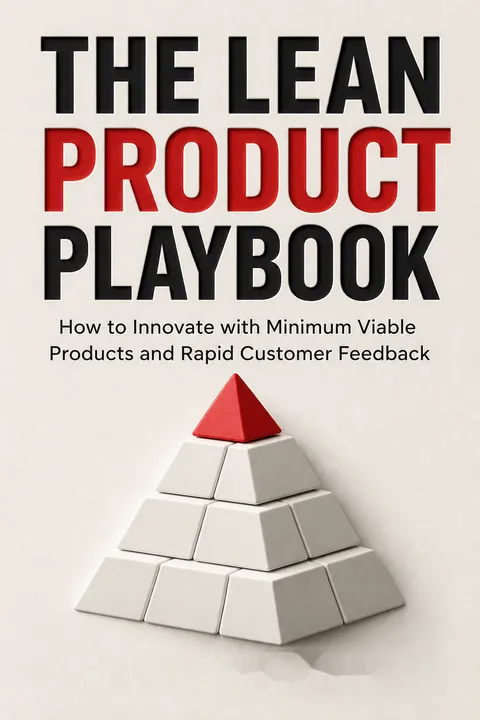
Fit is comparative. Product-market fit means a product meets real customer needs more effectively than the alternatives. The Product-Market Fit Pyramid organizes the assumptions behind that fit: target customers, their needs, the value proposition, the feature set, and the user experience. Each layer rests on the one below it, so a polished interface cannot rescue a product aimed at the wrong customer or need.
Quicken found the gap. Intuit entered a personal-finance market with 46 existing products. Research showed that customers still found those tools difficult to use. Quicken’s familiar checkbook design made the software easier to understand, helping it become the category leader. The lesson is not to be first, but to uncover value competitors have left unserved. Product-market fit describes value created for customers, not necessarily a profitable business.
The pyramid’s strength is that it turns a celebrated outcome into testable assumptions. A team can ask whether weak adoption reflects the customer, the need, the feature choices, or the experience instead of reaching immediately for a redesign. This resembles fault diagnosis in engineering: locate the failing layer before replacing the whole system. The distinction between customer value and profitability is also useful, because a loved product can still have poor economics. The framework is a map, not proof that a market is attractive or that the business can capture the value it creates.
Define the problem before selecting the solution that embodies it.
Separate need from design. Problem space is the set of customer needs a product could address. Solution space is any specific product, feature, or design intended to address them. A team that begins with a favorite solution can mistake its first idea for the customer’s actual need.
The space pen story illustrates the risk. Fisher developed a pen that could write in zero gravity, while Russian astronauts initially used pencils. The broader problem, however, was recording notes for later reference, which could suggest solutions beyond pens. The book also notes that pencils posed safety risks in spacecraft, and that the Space Pen ultimately had practical advantages. Similarly, TurboTax competed not only with tax software, but with people preparing returns using paper forms.
Problem framing determines which solutions a team can even notice. This is closely related to reframing in design: changing the question can expand the option set without requiring new technology. Yet abstraction has its own danger. A statement such as “help people remember” is so broad that it provides little guidance until it is grounded in context, constraints, and tradeoffs. The strongest problem definition is neither a disguised feature request nor a cloud of vague aspiration. It describes the outcome customers need while leaving room to compare credible ways of delivering it.
Choose a specific customer segment before designing for an imaginary average.
Segments have distinct needs. Market segmentation groups prospective customers by relevant traits, such as behavior, attitudes, demographics, or needs. Needs-based segmentation can reveal common ground across otherwise different people. Dropcam, for example, served parents monitoring children, pet owners checking on animals, and businesses watching their premises. They shared a need for remote video, but valued different features.
Personas make assumptions visible. A persona is a concise archetype of a real customer, including goals, behaviors, context, and frustrations. It helps a team make consistent decisions, but it should be revised with research rather than treated as a substitute for it. Quicken discovered that almost one-third of its users were managing business finances, despite the product’s consumer focus. That unexpected segment helped inspire a business-oriented version and QuickBooks.
Segmentation is a practical defense against designing for an imaginary average. An average customer can blur meaningful differences in motivation, context, and willingness to pay. Personas help teams remember those differences, especially when many people make small product decisions. Their weakness is that a vivid name and photograph can make a speculative profile feel more certain than it is. The useful persona is a research-backed working model, not a character sketch that freezes the customer in place. Teams should keep testing whether the segment actually responds to the product they are building.
Prioritize important needs current products still fail to satisfy.
Find the value gap. The importance versus satisfaction framework compares how much customers care about a need with how well existing solutions meet it. High importance combined with low satisfaction points to a promising opportunity. The book visualizes the opportunity as importance multiplied by the remaining satisfaction gap. On a 0-to-1 scale, a need with importance of 0.9 and satisfaction of 0.3 has an opportunity score of 0.63.
Uber addressed a cluster of gaps. Taxi riders valued reliable arrival, safety, clear fares, and easy payment, yet often felt poorly served on those dimensions. Uber’s app made drivers visible, gave riders an arrival estimate, and handled payment automatically. Early teams need not wait for a large survey: interviews with a small number of target customers can reveal patterns, while the framework helps state initial hypotheses even before interviews begin.
The framework gives teams a disciplined way to distinguish a genuine opportunity from a feature that is merely easy to imagine. It also makes an important analytical point: a low satisfaction score matters less when the need itself is unimportant. Still, numerical scores can imply more precision than customer ratings deserve. Averages may hide a dissatisfied subgroup or differences across usage contexts. Early opportunity scores are most valuable as prioritization aids, not objective measurements of market size. The underlying customer stories remain essential for understanding why a need matters and what a better outcome would mean.
Differentiate around a focused value proposition customers can recognize.
Decide where to compete. A value proposition states which customer needs a product will address and how it will be better than alternatives. The Kano model sorts needs into must-haves, performance benefits, and delighters. Must-haves prevent dissatisfaction, performance benefits improve satisfaction as they improve, and delighters exceed expectations. A new product usually needs the basics, but its differentiation depends on the performance benefits and distinctive extras it chooses to pursue.
Search engines show why focus matters. Google gained ground by producing more relevant results, while other engines emphasized index size or freshness. Cuil launched claiming a much larger index, but critics found its results less relevant and its response time poor. The intended advantage did not compensate for weaker performance on what users valued. A value proposition should also account for changes in the market: the Flip camera’s convenience advantage faded as smartphones gained video recording and sharing.
The Kano model helps explain why adding more features does not automatically add more value. Basic expectations, competitive performance, and pleasant surprises play different roles, and yesterday’s surprise can become tomorrow’s minimum standard. That makes differentiation temporary unless it is renewed or anchored in a durable customer advantage. Focus also protects coherence: a product that promises everything can leave users unclear about its central benefit. At the same time, a narrow proposition should not be mistaken for a small ambition. It is a choice about where to excel first, with a view to how competitors and customer expectations may shift.
Test the smallest complete experience, not a cheap, broken fragment.
Viable means valuable enough. A minimum viable product is the smallest amount of functionality that target customers still consider useful. It is deliberately limited in scope, but should not be unreliable, confusing, or too incomplete to deliver its promised benefit. A landing-page test can measure interest in a product idea, but it does not show whether the product itself works for customers.
Manual work can answer product questions. In a concierge MVP, a team personally delivers a service to a small group to learn what customers need before automating it. Airbnb tested whether professional listing photos helped hosts by arranging the photographers and handling the uploads manually. Listings with professional photos received two to three times the market-average bookings. The team could test the hypothesis before investing in an automated system.
The distinction between a demand test and a product test prevents a common category error: clicks can show curiosity, but not successful use or lasting value. Manual delivery is powerful because it allows learning before infrastructure hardens an untested process. It also exposes the work an automated product may eventually need to perform. However, a manual prototype can create expectations the final service cannot meet, and hidden human labor can distort perceived economics. Teams should be clear about what a test establishes, and what remains unproven.
Put prototypes in front of target users before code makes changes costly.
Design has layers. The UX design iceberg describes four levels: conceptual design, the basic idea shaping how the product works; information architecture, how functions and content are organized; interaction design, how users act and the product responds; and visual design, how the product looks. A beautiful surface cannot compensate for a confusing structure or a flawed underlying concept.
Watch people use the design. The author recommends testing with one person at a time, often in waves of five to eight users. Ask participants to attempt realistic tasks and explain their thoughts, while the moderator avoids leading questions or rescuing them. Small waves can uncover repeated usability problems, but usability is not the same as product-market fit. A product can be easy to use and still fail to provide benefits customers care about.
Prototype testing catches misunderstandings while the cost of changing a screen or flow is usually lower than changing built software. It also counters product blindness: familiarity makes design choices feel obvious to their creators, even when new users cannot interpret them. Small qualitative samples are suited to discovering mechanisms and friction, not estimating how common an opinion is in the entire market. Moderators can also influence behavior through prompts or presence. Strong practice pairs careful observation with humility about what a handful of sessions can establish.
Pivot when evidence shows a better customer problem than your original one.
Change direction at the right layer. The Hypothesize-Design-Test-Learn Loop begins with assumptions, creates something that can test them, observes customers, and uses the learning to revise the assumptions. A pivot is a substantial change to a foundational belief, such as the target customer or value proposition. Small interface adjustments are iterations, not pivots.
MarketingReport.com found a stronger problem. Its initial concept showed people what marketing databases knew about them. Customer tests found that profile and score features were not compelling. Money-saving offers drew some interest, but blocking unwanted mail resonated more strongly. The team dropped the original concept and tested a junk-mail service. In the next wave, users reacted positively and asked whether they could sign up. That was encouraging evidence, though not proof that they would pay or use the service.
The case shows how research can surface a stronger opportunity inside a weak initial concept. It also illustrates why a pivot should follow a pattern of evidence, not the discomfort of one disappointing session. The positive reaction to the revised service gave the team a reason to continue exploring, while requests to sign up were still weaker evidence than observed use or payment. This is a useful distinction in decision-making: evidence can increase confidence without eliminating uncertainty. Teams benefit from naming which assumption changed and what result would support the new direction.
Build in small batches so uncertainty cannot hide inside a giant release.
Short cycles limit rework. Agile development builds products in small increments rather than completing requirements, design, and coding in one large sequence. Smaller stories are easier to estimate, review, test, and adjust. Scrum uses fixed-length work cycles; kanban visualizes work moving through stages and limits how much is active at once. Both aim to improve flow and make problems visible sooner.
Quality belongs in the process. Teams can catch defects through code reviews, manual and automated tests, and continuous integration, which automatically combines and checks code changes. Agile is not a license to skip design or planning. The book notes that projects with high failure costs or difficult-to-reverse outcomes, such as spacecraft or submarines, may justify more upfront assurance than a website. The right development rhythm depends on the cost of error and change.
Small batches reduce the amount of unfinished work exposed to hidden assumptions. They also make feedback timely: a misunderstanding discovered in a narrow feature is easier to correct than one embedded across a large release. Yet iteration is not automatically efficient. Poorly chosen work can be delivered quickly and repeatedly without improving customer value. Teams need shared priorities, reliable tests, and enough design clarity to avoid treating speed as the only measure of progress. In high-consequence settings, slower validation can be rational rather than bureaucratic.
Let retention demonstrate value before acquisition magnifies the product's weaknesses.
Measure continued use. The AARRR framework organizes business metrics around acquisition, activation, retention, revenue, and referral. For product-market fit, the book emphasizes retention: the share of customers who keep using a product. Cohort analysis compares users who started in different periods, helping reveal whether newer versions retain customers better. If retention is weak, increasing acquisition may simply bring more people into a product they soon abandon.
Friendster improved a growth lever. Its team measured the stages through which users invited friends, then focused on the average invitations sent per sender. An address-book importer made invitations easier. The metric rose from 2.3 to about 5.3 invitations per sender, more than doubling, and the change improved viral acquisition. After retention and conversion are healthy, teams can use analytics and A/B tests to choose the metric with the best improvement opportunity.
Retention is a valuable behavioral signal because it asks whether customers return, rather than whether they say a product sounds appealing. Cohorts sharpen the signal by separating product changes from the growth of the overall user base. But retention is not a universal verdict: appropriate use frequency differs by product, and some useful services are needed only occasionally. A metric should be interpreted against the customer’s actual job and the business model. A/B tests can estimate the effect of a change, but they do not explain why users behave as they do or whether the team is optimizing the right need.
Analysis
The book’s central contribution is operational rather than inspirational. It translates product-market fit from a vague ambition into a sequence of decisions that teams can inspect: whom to serve, which needs are underserved, what advantage to promise, what minimum functionality to test, and how to learn from the response. The pyramid matters because these choices are dependent. A team can waste months refining an interface when the real error is an incorrect customer segment.
The method also joins two forms of evidence that organizations often separate. Interviews and usability sessions expose reasons, context, and unmet needs; analytics reveal what customers actually do at scale. Neither is sufficient alone. Stated interest can overstate demand, while behavioral metrics can tell a team that a funnel is failing without showing why. The book’s strongest examples, from Quicken to the MarketingReport.com pivot and Friendster’s invitation tool, show how a specific question can connect qualitative discovery to measurable action.
Its main tension is that structured frameworks can create an illusion of certainty. Opportunity scores, personas, and ROI estimates depend on assumptions that may be wrong, especially before a product has customers. The book partly addresses this by treating early conclusions as hypotheses, but teams still need to distinguish a useful working estimate from a validated fact. Small user-test waves reveal recurring problems; they do not establish market prevalence. Likewise, retention is a powerful signal, but its meaning depends on how often a valuable product should naturally be used.
The practical lesson is disciplined flexibility. Use the process to make assumptions explicit and reduce avoidable rework, not to obey a checklist mechanically. Validate foundational beliefs before investing heavily in implementation, then let live behavior refine the product. A team’s advantage is not simply shipping quickly. It is shortening the distance between a consequential assumption and credible evidence about it.
Review Summary
The Lean Product Playbook receives high praise for its practical approach to product management. Readers appreciate its comprehensive coverage of the product development process, from problem identification to market fit. Many find it valuable for both beginners and experienced professionals, highlighting its clear explanations and actionable advice. The book's focus on customer-centric design and lean methodologies is particularly well-received. Some reviewers note that while it synthesizes concepts from other lean books, it offers unique insights and real-world examples. Overall, it's considered an essential read for product managers and entrepreneurs.
People Also Read







Glossary
Product-Market Fit Pyramid
Five linked product assumptionsA framework that decomposes product-market fit into five connected layers: target customers, their needs, the product’s value proposition, its feature set, and its user experience. The layers depend on those beneath them, so a product’s design and features must be grounded in a clear understanding of customers and the needs the product intends to serve.
Lean Product Process
Six steps toward product fitA process for forming and testing the assumptions behind a product. Teams identify target customers, discover underserved needs, define a value proposition, select a minimum viable feature set, create a prototype, and test it with customers. The sequence moves from understanding the market to designing a solution, then repeats as teams revise their assumptions.
Problem space
Customer needs before solutionsThe domain of customer needs, goals, and desired outcomes, considered independently of any particular product design. Starting here helps a team avoid assuming that its first proposed feature is the only way to solve a customer’s problem. Needs can include expressed requests, frustrations with current solutions, and benefits customers do not readily articulate.
Solution space
Products and proposed designsThe domain of specific products, features, prototypes, and designs intended to meet customer needs. A sketch or clickable mockup is part of solution space, as is a live product. Customers often respond more concretely to these artifacts than to abstract discussions of needs, allowing their reactions to improve the team’s understanding of the problem.
Importance versus satisfaction framework
Ranks customer value gapsA prioritization tool that compares how important a customer need is with how satisfied customers are with existing solutions. High importance and low satisfaction suggest an opportunity to create value. The book also expresses the remaining opportunity as importance multiplied by the unsatisfied portion of the need, using normalized values from zero to one.
Kano model
Classifies needs by satisfactionA framework for classifying customer needs according to how meeting them affects satisfaction. Must-haves prevent dissatisfaction, performance needs tend to increase satisfaction as they improve, and delighters create unexpected positive value. These categories change over time: features that once delighted customers can become ordinary expectations or basic requirements.
Minimum viable product
Smallest customer-valued productThe minimum amount of functionality that target customers still consider useful. It is limited in scope so a team can test assumptions without building an entire vision, but it must provide enough value to be viable. In the book, a landing page or mockup is more precisely a test of MVP assumptions, rather than necessarily an actual product.
Hypothesize-Design-Test-Learn Loop
Cycle for revising product assumptionsAn iterative cycle that begins with hypotheses about customers and their needs, creates the least costly artifact that can test them, observes customer responses, and uses the resulting learning to revise the hypotheses. It includes qualitative and quantitative evidence and can use prototypes as well as live products.
AARRR Metrics Framework
Five business metric categoriesA framework that organizes product and business metrics into acquisition, activation, retention, revenue, and referral. It helps teams examine how prospects discover a product, begin using it, continue using it, generate income, and invite others. The book recommends choosing the area with the greatest current improvement potential rather than optimizing every metric at once.
Olsen's Law of Usability
Effort reduces user actionThe principle that the more effort an action requires, the fewer users are likely to take it, while reducing required effort tends to increase participation. Effort includes physical actions, such as clicks or steps, and mental work, such as remembering information or sorting through excessive choices. It applies to usability and important conversion actions.
Metric that matters most
Best current improvement targetThe business metric that offers the strongest opportunity to improve results at a particular moment. It can change as a team improves one area and encounters diminishing returns. The concept encourages teams to focus effort where the expected impact is greatest, rather than treating every available metric as equally urgent.
FAQ
What's The Lean Product Playbook about?
- Focus on Product Success: The Lean Product Playbook by Dan Olsen provides a framework for achieving product-market fit using Lean Startup principles.
- Lean Product Process: It outlines a six-step process to guide teams from identifying target customers to testing their minimum viable product (MVP) with real users.
- Real-World Examples: The book includes case studies, such as Quicken and TurboTax, to illustrate successful product development and refinement.
Why should I read The Lean Product Playbook?
- Practical Guidance: Offers actionable steps and frameworks for immediate application in product development.
- Avoid Common Pitfalls: Helps readers understand why products fail and how to avoid these mistakes.
- Comprehensive Resource: Serves as a reference for Lean Startup concepts, user experience design, and product analytics.
What are the key takeaways of The Lean Product Playbook?
- Product-Market Fit Pyramid: Breaks down product-market fit into five components: target customer, underserved needs, value proposition, feature set, and user experience.
- Iterative Process: Emphasizes iterating based on customer feedback to refine products continuously.
- Focus on MVP: Encourages building only what is necessary to test hypotheses and validate ideas.
What is the Lean Product Process in The Lean Product Playbook?
- Six Steps: Determine target customers, identify underserved needs, define value proposition, specify MVP feature set, create MVP prototype, and test MVP with customers.
- Hypothesis-Driven: Involves forming and testing hypotheses about customers and their needs.
- Iterative Learning: Encourages learning from each iteration to make data-driven adjustments.
How does The Lean Product Playbook define product-market fit?
- Definition: Achieving product-market fit means creating a product that meets real customer needs better than alternatives.
- Critical for Success: Without product-market fit, products are unlikely to gain traction or achieve sustainable growth.
- Framework for Success: The Product-Market Fit Pyramid provides a structured approach to achieving this fit.
How do I determine my target customer according to The Lean Product Playbook?
- Segmentation Techniques: Use demographic, psychographic, behavioral, and needs-based segmentation.
- User vs. Buyer: Distinguish between users and buyers, especially in B2B contexts.
- Personas: Create personas based on target customer attributes to align product development with audience needs.
What are underserved customer needs, and how do I identify them in The Lean Product Playbook?
- Definition: Needs not adequately met by existing solutions, representing opportunities for new products.
- Customer Discovery Interviews: Conduct interviews to uncover pain points and desires.
- Importance vs. Satisfaction Framework: Prioritize needs based on their importance and current satisfaction levels.
What is a value proposition, and how do I define mine according to The Lean Product Playbook?
- Core Definition: Articulates the specific customer needs your product will address and how it is better than alternatives.
- Kano Model: Classify customer needs into must-haves, performance benefits, and delighters.
- Strategic Focus: Helps prioritize features and avoid scope creep.
How do I specify my MVP feature set in The Lean Product Playbook?
- Feature Chunking: Break down feature ideas into smaller, manageable chunks.
- Prioritization: Use ROI to prioritize features based on expected customer value and effort required.
- Iterative Selection: Select top features that align with your MVP candidate, including must-haves and key benefits.
What are the best practices for testing my MVP with customers according to The Lean Product Playbook?
- Qualitative Testing: Conduct one-on-one user tests to gather in-depth feedback on usability and satisfaction.
- Sample Size: Test with five to eight customers per wave to identify patterns and major issues.
- Iterative Feedback: Use insights to iterate on your product, refining features and addressing pain points.
What is the hypothesize-design-test-learn loop in The Lean Product Playbook?
- Iterative Learning: Encourages teams to formulate hypotheses, design experiments, test with users, and learn from results.
- Continuous Improvement: Allows teams to refine products based on real customer feedback.
- Structured Approach: Systematically validates assumptions and makes data-driven decisions.
How does The Lean Product Playbook suggest measuring key metrics after launch?
- Analytics Framework: Set up a framework to track metrics like acquisition, conversion, retention, and revenue.
- Cohort Analysis: Measure retention rates over time to see how different user groups engage with the product.
- A/B Testing: Compare different versions of a product or feature to make informed decisions about changes.
Download PDF
Download EPUB
.epub digital book format is ideal for reading ebooks on phones, tablets, and e-readers.








