

Plot Summary
Prologue
In a letter dated May 6, 2022, a woman addresses someone she once wounded beyond repair. She admits that her desire once overruled every limit, then imagines a rainy day when the person she longs for will come to her door.
The imagined visitor crosses the threshold. The letter promises an explanation, but its deepest wish is more fragile: that understanding might bring someone back.
The frame makes the novel’s central question less about whether forgiveness is deserved than whether a person can be understood without being excused. The imagined reunion gives the story a destination while withholding the identity of both writer and recipient. Its threshold image will matter later: intimacy is not restored by a declaration or a claim of ownership, but by the other person choosing to enter. The letter’s admission of dangerous desire also warns that the story’s pursuit of love will test the boundary between devotion and possession.
A Face from Home
Fifteen years before the letter, Jasmine arrives in New York with little money, no work papers, and a deadline to repay the smugglers who brought her. In a Chinatown teahouse, she unexpectedly recognizes Anthony, her childhood friend from their village. He meets her with anger, convinced she once rejected him and abandoned their friendship.
Jasmine apologizes, but their reunion costs her a possible restaurant job. A woman named Dawn, who overheard the exchange, instead gives Jasmine a lead at Opium, a club that hires without documents. The job offers a way to avoid the smugglers’ threats, but it also draws Jasmine toward the very world she has hoped to escape.
Jasmine’s first problem is not simply poverty, but the way every institution makes her legible only as a liability: employers see missing papers, the smugglers see a debt, and Anthony sees an old injury. Her reflex to hide herself has been a survival skill, but it also prevents her from explaining why she disappeared. Dawn’s job offer opens a narrow path to independence, though its price is not yet clear. The reunion gives Jasmine a glimpse of a relationship built on mutual recognition, then makes her choose between that emotional pull and the urgent work of staying free.
The Daughter's Hidden Life
In China, Jasmine married Wen at fourteen, after her family accepted his bride price. He controlled where she went and used violence when jealousy or anger took him; meanwhile, she suffered miscarriages and was told her newborn daughter had died.
Years later, while searching Wen’s computer, Jasmine finds correspondence with an American couple who adopted a baby girl born on the same day as her child. The attached photograph shows eyes she recognizes as her own.
Wen had arranged the adoption in advance because he wanted a son and could have only one child. Jasmine decides to escape, find her daughter, and reunite with her. After her grandmother dies, she borrows money from smugglers to reach New York, carrying the secret and the debt with her.
The revelation turns Jasmine’s migration from an escape into a pursuit. Wen’s lie does more than take a child from her: it makes grief an instrument of control, since Jasmine could not resist a loss she believed irreversible. Her plan to recover her daughter is an attempt to reclaim both motherhood and the future that was decided for her. Yet the discovery also reveals a danger in her own certainty. Because her childhood was shaped by abandonment, Jasmine assumes that a child must be returned to her to be safe. The novel leaves that conviction open to challenge.
A House of Appearances
Rebecca Whitney leads the publishing house her late father once made famous, but a bestselling author, Carey Madison, has been exposed for plagiarism and false claims, leaving Rebecca’s judgment under attack. Her publisher, Simone, needs her to secure a new book by celebrated novelist Isabel Navarro.
At home, Rebecca and her husband, Brandon, raise their adopted daughter, Fiona, whom they call Fifi. Their Chinese-speaking nanny, Lucy, has become the child’s trusted companion, a closeness that makes Rebecca feel displaced.
At a party, Rebecca defends Fifi after a supermarket worker wrongly accuses her of stealing, then watches Lucy’s effort to help end in a public catering mishap. Mason Grady, Rebecca’s rival, exploits her professional vulnerability while competing for Isabel.
Rebecca’s competence is real, but she has built much of her identity around being seen as competent. The Carey scandal threatens her position, while Lucy’s bond with Fifi unsettles her private conviction that love should confirm Rebecca’s central place in the family. Her discomfort is sharpened by class and cultural distance: she can admire Lucy’s care in theory while failing to notice the person behind the service. Mason’s competition makes every personal insecurity feel professionally consequential. The polished household therefore functions not as proof that Rebecca’s life is secure, but as the arrangement she uses to keep uncertainty from showing.
Entering Opium's Cage
Dawn’s referral leads Jasmine to Opium, where the owner, Aunt Glory, first dismisses her plain clothes, then hires her after Jasmine reshapes her appearance to attract customers.
Jasmine learns that cocktail waitresses are expected to flirt, tolerate unwanted touching, and eventually consider the club’s private Champagne Room. The tattooed bouncer Lone Wolf Jack is tied to the triads, making the workplace perilously close to the smugglers she owes. Jasmine avoids drugs and uses water in place of alcohol, but she needs the cash.
She also returns to Anthony’s self-defense studio, where he teaches alongside his uncle Nick and Yan. Watching Anthony and Yan’s intimacy, Jasmine realizes she may have mistaken their renewed friendship for a chance at romance.
Opium makes Jasmine’s beauty a resource she can deliberately deploy, yet the apparent control is conditional: the club sets the terms, and the threat of destitution limits her ability to refuse. Her choice to keep her mind clear is a small act of self-protection, not a complete escape from coercion. The self-defense class offers a different kind of agency, grounded in learned skill rather than appearance. Yan’s presence punctures Jasmine’s hope that the past has preserved her place in Anthony’s life. She is trying to become powerful in a system that still prices her body more readily than her judgment.
The Red Thread Returns
Jasmine and Anthony meet on the Brooklyn Promenade after she finally accepts his invitation. He plays guitar while she watches, then welcomes her with the affection neither managed at their first reunion.
They discover that each had misunderstood the other: Jasmine believed Anthony’s family had refused a marriage match because he did not want her, while Anthony never knew she had asked to marry him. He had kept the red-thread bracelet she made as a girl. Jasmine tells him that the family who raised her were her aunt and uncle, and that her biological parents abandoned her so they could have a son.
The renewed trust nearly becomes romance, but a call from a smuggler changes everything: her wedding ring has been recovered as stolen, increasing her debt and risking Wen’s discovery that she is alive.
The bracelet gives physical form to a bond that survived contradictory memories. Each friend’s account corrects the other’s private story of rejection, showing how silence can harden into a false history even when affection remains. Jasmine’s confession about her birth family explains why she experiences belonging as something that can be withdrawn at any moment. The ring call immediately interrupts the tenderness: intimacy cannot protect her from the material systems pursuing her. The scene’s emotional movement is therefore deliberately unstable. Jasmine gains a witness to her past just as the past becomes newly dangerous.
The Condom on the Floor
Rebecca finds a condom in Brandon’s coat and spends the night imagining that her marriage has been built on a lie. The next day, she gives it to him at Columbia; he is startled and insists it is not his, then points out that Lucy’s belongings spilled across the floor the previous evening. Rebecca feels relief, but the couple’s trust has already begun to fray.
At Fifi’s ballet studio, Brandon turns the suspicion back on Rebecca by asking whether she has concealed a romantic encounter of her own. Their argument leaves her shaken. Still, Rebecca makes progress with Gina, Isabel’s agent, by speaking candidly about the Carey scandal and her own fear of failing as Fifi’s mother. Gina agrees to send Isabel’s manuscript.
The condom is a small object that exposes how quickly Rebecca turns uncertainty into a verdict, then delays asking for the truth until fear has filled the gap. Her suspicion is not baseless in the broad sense, since both spouses have secrets, but she has no evidence that Brandon is unfaithful. The reversal at the ballet studio reveals a marriage already injured by something neither will explain. In contrast, Rebecca’s honesty with Gina improves a professional relationship. Her success comes not from perfect presentation but from admitting limits, a strategy she has not yet learned to use at home.
Brandon at Opium
Jasmine’s work at Opium becomes more lucrative when Aunt Glory pairs her with Dawn, but the club’s demands intensify. After Dawn warns her that Lone Wolf Jack can be useful as well as dangerous, a group of Chinese officials arrive with Brandon, Rebecca’s husband.
He recognizes Jasmine beneath her club makeup and learns that she is working without papers. Jasmine shows him a compromising photograph of Rebecca with Carey Madison in Frankfurt, then uses the secret to secure his silence about Opium.
Brandon leaves furious and wounded, unable to confront Rebecca without exposing his own visit. Jasmine has protected her job, but she has bound two households together with a threat. Soon afterward, masked men beat Brandon and warn him away, though neither he nor Rebecca knows who sent them.
Jasmine’s leverage is effective because it exploits an existing fracture, not because she can control what follows. She needs to stay near Fifi and sees Brandon’s silence as the price of preserving that access. Yet the bargain traps him in the same structure of concealment that has shaped her life: each person must protect one truth by hiding another. The photograph also recasts Rebecca’s professional scandal as a private betrayal, without resolving what actually happened in Frankfurt. The violence against Brandon signals that Opium’s danger extends beyond the club, while its source remains deliberately uncertain.
The House Is Breached
Someone breaks into the Whitneys’ house and wrecks Henrietta, Rebecca’s cherished porcelain doll, leaving a kitchen knife through its head and what appears to be blood around it. Fifi is frightened, but the damage is confined to her room. Jasmine secretly removes a small object lodged in the knife and recognizes her own wedding ring.
The police arrive after the alarm sounds, and Brandon’s social ease quickly persuades them that the family is safe. Later, while waiting for a bus after ballet, Fifi is struck by a bicycle and breaks her arm. Jasmine blames herself for losing the child’s hand in the crowd. To Rebecca, the incidents suggest Lucy may be involved; to Jasmine, they suggest Wen has found them.
The broken doll turns domestic space into a crime scene, but its meaning is not yet clear to either woman. Rebecca reads Lucy’s composure as evidence, while Jasmine recognizes the ring as a message from Wen. Their incompatible interpretations arise from different kinds of knowledge: Rebecca sees what Lucy has done in the household, while Jasmine knows the man who would threaten her. Fifi’s bicycle accident compounds their fear without confirming its cause. The novel keeps coincidence and menace in uneasy proximity, forcing both women to act under uncertainty rather than wait for proof.
The Auction's Bitter Price
When Fifi is taken to the hospital, Rebecca rushes away from the Isabel Navarro auction and misses its final round. Isabel nevertheless chooses Rebecca, but Mason calls to demand that she withdraw, threatening to reveal her drunken kiss with Carey in Frankfurt. Rebecca refuses. The next morning, a photograph and article appear, linking her to Carey’s memoir scandal.
She then searches Lucy’s room and finds hidden cash and Opium’s red uniform. In Brandon’s office, she discovers that his application to adopt Fifi was rejected because of a drug-possession conviction in China. She also finds the gun safe empty. These discoveries turn her suspicion of Lucy into fear of a larger plot, just as Jasmine prepares to flee with Fifi.
Rebecca’s professional and domestic crises converge because she has relied on concealment as a way to preserve both. Mason’s threat exploits her real mistake, but the public story makes an ambiguous kiss stand in for a complete explanation. Her investigation yields facts, yet she interprets them through the rivalry and jealousy that have narrowed her attention: the uniform becomes proof of an affair, and the adoption record becomes a mark against Brandon without clarifying its cause. The empty gun safe changes the stakes from reputational loss to immediate physical danger. Rebecca can no longer manage this by polishing the story.
Wen Comes Home
Jasmine packs a suitcase and plans to leave with Fifi, but the child refuses to leave Rebecca and Brandon. Before Jasmine can decide what to do, Wen arrives at the house with Brandon, who has brought him over for an interview. Wen identifies Jasmine as his wife and claims that he arranged their daughter’s adoption to save her from China’s one-child restrictions.
He offers to take Jasmine and Fifi home, but Jasmine rejects the offer and tells Rebecca and Brandon that Wen gave their baby away after falsely reporting her dead. Wen admits he found Jasmine through Nick and Opium contacts, and that he planted the ring in Henrietta. He denies causing Fifi’s accident, then pulls a gun when the adults refuse to surrender the child.
The confrontation forces the story’s competing claims of parenthood into the open. Wen frames his decision as protection and national duty, but his secrecy deprived Jasmine of consent and Fifi of any knowledge of her origins. Jasmine’s original plan to take Fifi repeats, in another form, the unilateral choice Wen made for her. Fifi’s refusal interrupts that symmetry: she has attachments and preferences independent of either adult’s longing. Rebecca’s and Brandon’s willingness to resist Wen marks a shift from treating the nanny as a threat to recognizing the danger she faces. The gun makes that recognition urgent.
A Bullet Changes Everything
Wen forces Rebecca to handcuff Brandon to a radiator, then tries to make Lucy bring Fifi downstairs. Lucy refuses and uses a self-defense move to throw Wen off balance. As he raises his gun, Rebecca steps in front of Lucy and is shot in the upper arm. Wen and Lucy grapple; his weapon skitters away, and he reaches for it. Lucy gets Rebecca’s gun from the house and shoots Wen dead.
After freeing Brandon, she tells Rebecca she expects the police to distrust an undocumented worker with ties to Opium. Rebecca wipes Lucy’s fingerprints from the gun and claims she fired it, accepting the risk of a murder investigation. Rather than take Fifi, Jasmine gives Rebecca her jade hairpin and decides to return to China alone.
The climax reverses the household’s earlier hierarchy of visibility. Rebecca, who had treated Lucy as staff and suspected her of betrayal, risks her body to protect her; Lucy, whom Rebecca underestimated, is the person who can physically resist Wen. Their shared action is not a sentimental reconciliation but a practical recognition that both are mothers trying to keep Fifi alive. Rebecca’s decision to take responsibility also acknowledges that legal systems will not expose each woman to equal scrutiny. Jasmine’s choice to leave Fifi with the Whitneys rejects possession as proof of love, though it costs her the life she had imagined.
The Choice to Leave
The next day, Jasmine meets Anthony on the Brooklyn Promenade and tells him what happened, including that Wen is dead and she is leaving. She explains that Wen treated her as property, while Anthony’s care has always been for the person she is. Jasmine admits she loves him. They kiss, and Anthony gives her a matching red-thread bracelet, the pair he once promised to make.
She still refuses to stay: she needs to discover who she can become and to return legally if she can. Anthony accepts that decision and promises to wait. Meanwhile, Rebecca and Brandon remain responsible for Fifi, and Rebecca has a future to rebuild after the scandal. Jasmine leaves New York without her daughter, but not without a chosen bond or a path back.
Jasmine’s departure is neither a surrender of motherhood nor a romantic escape into Anthony’s arms. She recognizes that taking Fifi would satisfy her longing at the cost of the child’s established attachments and safety. The bracelet’s matching pair revises its childhood meaning: connection is not a magical guarantee that distance will disappear, but a commitment that can survive distance without denying it. Anthony offers patience rather than rescue, allowing Jasmine to choose a future beyond the roles imposed on her. Rebecca’s care for Fifi also becomes a responsibility shaped by the birth mother’s trust, not simply an entitlement secured by adoption.
Epilogue
On Mother’s Day in 2022, Fiona, now twenty-one, stands outside a house she recognizes from childhood. She has learned that Jasmine, the nanny who once cared for her, is her birth mother, and that Jasmine gave her up after a desperate attempt to reclaim her.
Fiona has kept a connection with Jasmine through letters and drawings, and now wears the jade hairpin Jasmine left for her. Through the glass, she sees Jasmine with Anthony and a baby. Fiona recognizes her immediately, gathers her courage, and rings the bell.
Fiona’s return fulfills the prologue’s imagined threshold while changing its terms. The adult daughter does not arrive to settle a legal claim or erase the years apart; she comes with knowledge, memory, and a choice of her own. Her visual-art studies echo the drawing that once helped Jasmine make sense of an otherwise unmanageable life, turning inheritance into a practice rather than a bloodline alone. The hairpin links generations, but the doorbell matters more: reunion begins when Fiona chooses to approach, and Jasmine’s earlier restraint has left that choice possible.
Analysis
The novel’s central conflict is not a simple contest between a birth mother and adoptive parents. It asks what love permits a person to claim. Jasmine’s history makes separation feel like another abandonment, so she initially imagines that rescuing Fiona means taking her away. Rebecca, by contrast, has the legal and economic security to treat adoption as settled fact, even while her habits of control leave her emotionally distant from her daughter. Fiona’s attachment to both women exposes the inadequacy of either claim when treated as exclusive.
The book also examines how power shapes whose account will be believed. Jasmine’s undocumented status, limited English, and work at Opium make her vulnerable to exploitation and suspicion. Rebecca’s whiteness, education, and social standing give her access to institutions and credibility that Jasmine cannot count on. Rebecca eventually recognizes this imbalance when she chooses to shield Lucy from the consequences she would face more harshly. That choice does not erase the unequal system, but it shows her beginning to act with knowledge of it rather than relying on abstract good intentions.
The alternating viewpoints make identity a problem of interpretation. Rebecca reads Lucy through clothing, accent, and class; Jasmine reads Rebecca through privilege and distance. Both see real things and miss others. Their errors are not equivalent in consequence, but the narrative makes each woman confront the limits of her perspective. Names, language, and performance enable survival while also obscuring the person beneath them.
The conclusion refuses a neat restoration. Jasmine does not receive custody simply because she suffered, and Rebecca does not become morally flawless because she loves Fiona. Jasmine leaves because she understands that the child’s bonds and wishes matter independently of her own need. The hoped-for reunion in the epilogue remains possible because love has finally been separated from possession: Fiona can approach Jasmine by choice, and Jasmine can meet her without first having to take her.
Review Summary
The Leftover Woman is a compelling novel exploring themes of motherhood, immigration, and cultural identity. Reviews praise Kwok's nuanced portrayal of two women from different backgrounds whose lives intersect through adoption. The story delves into China's One Child Policy and its consequences. While some readers found the pacing slow and characters stereotypical, many appreciated the emotional depth and thought-provoking narrative. The book's twist and ending received mixed reactions, but overall, it was considered a powerful and engaging read.
People Also Read









Characters
Jasmine
The searching motherAn observant artist raised in rural China, Jasmine has learned to make herself small in response to family rejection, early marriage, and Wen’s control. Drawing lets her observe and reshape what she cannot safely say aloud. In New York she uses the name Lucy while working as a nanny, carrying the strain of divided identities into her daily life. Her longing for her daughter is inseparable from her own history of abandonment, which makes her fiercely protective but also vulnerable to confusing love with possession. She is resourceful, wary of men, and capable of calculated compromise, yet her tenderness toward animals and children reveals a self that survival has not extinguished.
Rebecca Whitney
The guarded editorRebecca is an accomplished editor in chief who measures herself against her late father’s reputation and fears that others see her success as inherited rather than earned. Her discipline, social fluency, and habit of planning make her effective at work, but also encourage her to manage appearances instead of admitting uncertainty. As Fifi’s adoptive mother, she wants to offer her daughter opportunity, though career pressure and class assumptions can keep her from noticing what the child needs in the moment. Rebecca is not unloving; she is a woman whose real affection has often been filtered through control, propriety, and the need to prove herself.
Anthony
The faithful childhood friendAnthony is Jasmine’s childhood companion, a gentle-hearted young man who studies accounting while teaching self-defense and volunteering with animals. His kindness is practical: he helps vulnerable creatures and wants people to be able to protect themselves. He is also proud and easily wounded, especially by the years when Jasmine seemed to erase him from her life. Rather than speak plainly when they were young, he built a private explanation for her absence and let it harden into anger. Music gives him a language for feelings he struggles to state directly. His loyalty is deep, but he must learn that caring for Jasmine does not mean choosing her path for her.
Brandon Whitney
The brilliant husbandRebecca’s husband is a Columbia scholar of Chinese language and culture, admired for his intelligence, charm, and fluency. He is devoted to Fifi and has supported Rebecca through infertility and the strain of adoption. His ease with language can make him seem transparent, though he keeps parts of his history private and dislikes being questioned about them. Brandon’s academic knowledge of China coexists with personal entanglements he has not fully explained to Rebecca. His affection is genuine, but the distance between what he knows and what he reveals becomes a pressure point in his marriage.
Fiona, or Fifi
The child between worldsFiona is Rebecca and Brandon’s adopted daughter, a sensitive six-year-old who speaks some Chinese and loves magic tricks, stuffed animals, and the cat Calypso. She is affectionate and observant, but can be shy around unfamiliar adults and frightened by the porcelain doll Henrietta. Her adoption places her between different cultural inheritances, while the adults around her sometimes treat her identity as something they can define on her behalf. Fiona’s wishes and attachments are more complex than either mother’s longing allows. She needs care, but she is also a person whose preferences deserve to shape the decisions made about her.
Wen
The controlling husbandWen is a government official who married Jasmine when she was fourteen. He presents himself as a provider and protector, but his affection is possessive and bound to the status a wife and son can bring him. He expects obedience, monitors Jasmine’s movements, and uses apologies and tenderness to draw her back after cruelty. His work within China’s population-control system gives him access to power that reaches into the most intimate parts of family life. Wen’s orderly, persuasive manner makes him difficult to read until his desire for control becomes unmistakable.
Dawn
The club's bright guideDawn first helps Jasmine by directing her to Opium, then becomes her closest companion there. Her glamour and easy flirtation conceal exhaustion, debt, and a hope for a domestic life she doubts she can have. She knows how to navigate the club’s dangers and teaches Jasmine its unwritten rules, sometimes protecting her from customers and sometimes drawing her deeper into the work. Dawn’s knitting and wish to open a yarn shop reveal a quieter self beneath the performance.
Lucy
The devoted nannyLucy is the Chinese-speaking live-in nanny Rebecca and Brandon hire to care for Fifi. Her English is halting, and her plain clothes lead Rebecca to underestimate her. She is patient with Fifi, cooks with quick skill, and gives the child a sense of cultural and emotional continuity. Lucy’s reserved manner can look like passivity, but she is attentive to danger and capable of decisive action. Her role in the household exposes how easily care work becomes invisible, even to people who depend on it.
Mason Grady
Rebecca's rival editorMason is a talented executive editor who competes with Rebecca for authors and professional standing. His humor and informal manner mask a sharp understanding of publishing politics. He resents the advantages he believes Rebecca has inherited and uses personal knowledge when it serves his ambitions. His rivalry is not merely professional, since their shared history gives him leverage over her private life as well as her career.
Yan
The self-defense instructorYan is a capable martial artist who teaches alongside Anthony and Nick. Direct, observant, and physically assured, she understands the difference between knowing a defensive move and being willing to use it. Her relationship with Anthony gives Jasmine an unwelcome reminder that their shared past does not reserve his future for her. Yan can be guarded, but she is not simply an obstacle; she has her own attachment to Anthony and her own clear sense of what she wants.
Aunt Glory
Opium's hard-eyed ownerAunt Glory runs Opium with a formidable grasp of its business and dangers. She judges workers by the money they can bring in and expects them to adapt quickly, yet she is also navigating pressure from criminal networks, police, and the responsibility of raising her daughter. Her insistence that women make use of their looks reflects both the club’s exploitation and the limited choices she believes are available.
Lily
The owner's wary daughterLily is Aunt Glory’s daughter and works at Opium in a low-status cleaning role despite her influence there. She is suspicious of Jasmine and resents the demands her mother places on her. Her hostility reflects a young woman trying to establish that she deserves her position rather than receiving it as an inheritance, even as she remains protected by the power surrounding her.
Gina Park
The decisive literary agentGina is a leading agent whose calm manner hides considerable authority in publishing. She represents Isabel Navarro and weighs the reliability of an editor as carefully as the size of a publishing offer. As a Korean-born mother raising a daughter across cultural lines, she recognizes pressures Rebecca struggles to name. Her directness gives Rebecca a rare chance to speak honestly without being reduced to her professional scandal.
Nick
Anthony's martial-arts uncleNick is Anthony’s uncle and a longtime martial-arts instructor who helps run the self-defense studio. He teaches practical awareness alongside physical technique and remains warmly connected to his family and students.
Plot Devices
The Red-Thread Bracelets
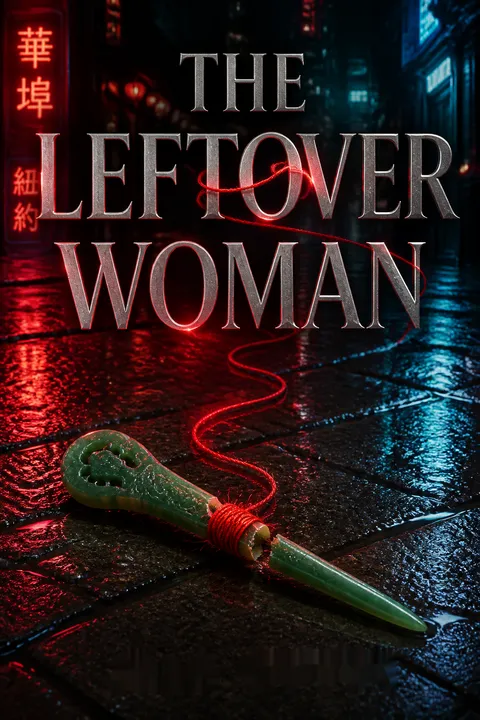
A bond carried through distanceJasmine makes Anthony a braided red-thread bracelet as a childhood gift, using the story of a thread that binds people despite separation. Anthony keeps wearing it into adulthood, and its survival gives Jasmine evidence that their friendship mattered to him even after years of misunderstanding. Near the end, he gives her the matching bracelet he once promised to make. The pair links childhood affection to adult choice, but it does not magically resolve their differences or remove the distance Jasmine must keep. Its meaning depends on what the two characters do with the connection, not on fate alone.
The Jade Hairpin
A legacy carried forwardJasmine’s grandmother gives her a jade-and-gold pomegranate hairpin during a private coming-of-age ceremony. It carries family history and the grandmother’s care, making it more than a valuable object when Jasmine considers pawning it to pay her smugglers’ debt. Jasmine ultimately entrusts the hairpin to Rebecca for Fiona. It becomes a material link between generations and cultures, passing care forward without requiring Jasmine to claim the child as property.
The Stolen Wedding Ring
A clue that exposes dangerJasmine’s wedding ring is recovered by police after she uses it toward her debt, prompting the smugglers to increase what she owes. Later, the ring appears inside the knife lodged in Henrietta, warning Jasmine that Wen has reached the Whitneys’ home. The object connects her hidden life in New York to the husband she fled and makes the apparently isolated attack on Fifi’s room part of a deliberate campaign of intimidation.
Opium's Many Roles
Survival through divided selvesOpium is both a source of cash and a dangerous economy built on performance, tips, coercion, and criminal influence. Jasmine uses her appearance to secure work, then shifts between the club persona that attracts customers and the quiet nanny identity she maintains at the Whitneys’ home. The club’s red uniform, its private Champagne Room, and its hidden criminal relationships make those identities difficult to keep separate. Opium is not merely a setting for danger; it is the place where Jasmine’s choices intersect with Brandon’s, Wen’s, and Rebecca’s secrets.
The Hidden Firearm
Preparedness becomes protectionRebecca keeps a gun in a safe and practices at a shooting range, treating preparedness as a way to control uncertainty. When Wen arrives armed, her weapon becomes part of the struggle that determines whether the family survives. Jasmine has also been taking self-defense lessons at Anthony’s studio, so the climax’s physical resistance has been prepared through earlier training rather than appearing from nowhere. Together, the firearm and the learned defensive techniques reveal the limits and uses of preparation when violence enters the home.
Download PDF
Download EPUB
.epub digital book format is ideal for reading ebooks on phones, tablets, and e-readers.








