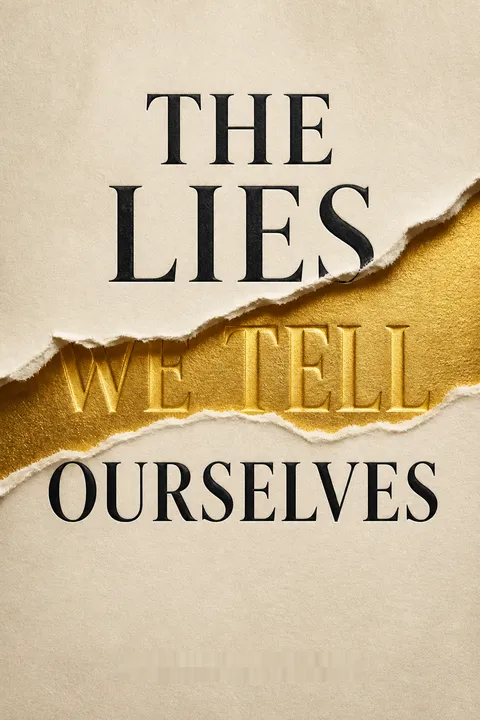


Key Takeaways
Treat symptoms as clues to avoided truths, not proof you are defective

Look beneath the complaint. A woman whose husband repeatedly had affairs focused on his promises to change. Her therapist drew attention to the gap between those promises and his actions. Her pain was not evidence that she was broken; it was entangled with a wish she could not make real: a faithful husband who was not behaving faithfully. The book calls the stories people tell themselves to avoid painful facts lies, even when they are not deliberate deceptions.
Avoidance adds another wound. These defenses may once protect someone from pain, but can keep the underlying loss or conflict out of view. Therapy, in Frederickson’s account, helps people notice what their explanations exclude and face it with another person, rather than treating them as puzzles to fix.
The distinction between a person and a protective story is humane: self-deception is framed as an adaptation with costs, not a character defect. That framing can reduce shame enough to make honest examination possible. Still, a symptom is a clue, not a reliable diagnosis of its own cause. Anxiety, depression, or addiction can involve medical, social, and material pressures that introspection alone cannot resolve. The book’s invitation is strongest when it opens inquiry, not when it becomes a universal explanation.
Ask what anxiety, anger, and guilt are trying to bring into view

Feelings carry information. A woman who led her family business denied being angry when her husband repeatedly undermined her authority. She described her anger as unacceptable, then erupted at employees instead. Her anxiety helped reveal the feeling she was disowning; acknowledging it allowed her to set limits with her husband and act openly as a leader.
Guilt can point toward care. A recovering cocaine user blamed herself for leaving her daughters with their father while she supported her addiction. Her guilt reflected the importance of her daughters to her. The therapist distinguished that feeling from endless self-punishment, which did nothing to repair the harm. She later worked with children and stopped using drugs. The book treats feelings as invitations to examine what matters, not as commands to obey.
This approach treats emotion as data about a person’s concerns, much as a warning light signals that something deserves inspection. Its value lies in asking what a feeling is connected to, rather than automatically suppressing it. Yet feelings do not establish the facts by themselves: guilt can be excessive, and anger can misread another person’s intent. Their meaning emerges through context, reflection, and action. The useful question is not simply what is felt, but what the feeling helps a person notice and choose.
Grieve the relationship you wanted instead of waiting for it to appear

Loss can expose the wish. One woman kept longing for affection from a brother who had rejected her and mistreated her. She maintained a bond through caring for his daughter, until her brother ended those visits too. The loss forced her to face that she had a relationship with him, but not the loving sibling relationship she hoped for. She grieved, and afterward felt less burdened by the struggle to make her brother different.
Grief is not a task to rush through. Frederickson presents it as a way of acknowledging what has ended, including imagined futures and cherished self-images. A man who had repeatedly damaged important relationships wanted to move past shame and guilt. Facing those feelings helped him recognize his responsibility and the care beneath his regret, rather than treating emotion as an obstacle to get over.
The account makes an important distinction between losing a person and losing the hoped-for version of a relationship. Naming both can prevent grief from becoming a vague sense of failure. Contemporary grief models also make room for continuing bonds, rather than requiring a clean emotional severance. The book’s emphasis on accepting loss is compatible with that view when acceptance means seeing the relationship clearly, not ceasing to love. Grief has no guaranteed timetable, and a person’s pain should not be judged by how quickly it changes.
When someone seems wholly wrong, examine what your judgment may conceal
Blame can hide a mirror. A husband was outraged by his wife’s affair and portrayed her as selfish. As he examined the marriage, he saw that he had poured himself into work, dismissed her needs, and treated her as if money could substitute for attention. The book calls it projection when people attribute to others qualities or feelings they cannot acknowledge in themselves. His accusations had obscured his own part in the marriage’s deterioration.
A mirror is not a verdict. Looking at a strong reaction can reveal a person’s fears or rejected traits, but it does not prove that the other person did nothing wrong. The wife’s affair remained her action; the husband’s neglect remained his. The point is to recover omitted facts and responsibility, not to replace one simplistic villain with another.
Projection offers a practical check on certainty: intense condemnation may contain information about the condemner as well as the person being condemned. That is especially useful in intimate conflict, where each side can mistake a partial account for the whole story. The idea becomes harmful if applied mechanically, as though every accusation were self-revelation or every injured person shared equal blame. Some conduct is genuinely abusive or unjust. Self-examination should widen the account, not erase evidence or excuse harm.
Stop waiting for reality to become your preferred version
Denial postpones action. A man whose wife wanted a divorce kept focusing on their better days and expecting her decision to change. His hope centered on a wife who would return to the marriage he wanted, not on the situation in front of him. The book calls the pull toward an imaginary past or future the “universal addiction ”: using activities or fantasies to escape the present and its feelings.
Give up the impossible wish. “Optimal hopelessness” means recognizing that it is futile to expect an established fact to become untrue. It is not a command to abandon life or every hope. Once a person stops waiting for a partner to reverse a decision, attention can turn toward what remains possible, including grieving, making practical plans, or changing one’s own behavior.
The distinction between relinquishing a fantasy and surrendering hope is a useful antidote to false optimism. It separates an outcome a person cannot control from choices that remain available. The word hopelessness, however, can sound dangerous when heard by someone in despair, and the distinction needs to be made explicit. Acceptance is not passivity: it can support planning, advocacy, or leaving a harmful situation. The key is to stop bargaining with facts while continuing to act where action matters.
Accept what others choose, then set limits on what you will support
Love does not require compliance. A mother’s adult son blamed her for his difficulties and repeatedly demanded money, using threats to pressure her. She had made mistakes when he was young, including failing to protect him adequately from abuse. But she could not take responsibility for every choice he made as an adult. After years of financial support failed to restore their relationship, she stopped paying in response to his demands.
Separate acceptance from approval. The book argues that trying to control another person often prolongs a painful pattern. A person can recognize a loved one’s actions as they are, care about that person, and refuse to reinforce behavior that harms either of them. The practical shift is from issuing instructions about what the other person must do to deciding what one will do when a boundary is crossed.
This is one of the book’s most important safeguards against confusing love with rescue. In family systems, repeated accommodation can stabilize a destructive pattern even when it begins as compassion. At the same time, responsibility is not a simple ledger: childhood harm, dependence, disability, and unequal power can shape what choices are realistically available. Setting limits requires attention to safety and context, not just resolve. Accepting another person’s reality means responding to it accurately, not declaring that every person has equal control.
Stay curious about what you do not know in another person
Assumptions can replace listening. A father received a loving card from his daughter but decided she was flattering him to get a trip to France. He challenged her sincerity, and she became angry. His certainty about her motive had turned an expression of affection into evidence for his suspicion. In Frederickson’s terminology, “negative capability” is the capacity to remain with uncertainty until experience provides more understanding, instead of filling the unknown with confident guesses.
Let questions stay open. A person’s motives and inner life cannot be fully reduced to someone else’s theory. Listening means giving another person room to clarify, surprise, or contradict expectations. That does not require believing every claim uncritically. It means distinguishing what was observed from what was inferred, so a guess does not quietly harden into a fact.
The practice of separating observation from interpretation has a close kinship with disciplined inquiry: a hypothesis remains provisional until evidence supports it. In relationships, that discipline can prevent a suspicion from provoking the very conflict later offered as proof. Uncertainty is not always comfortable, and some situations require timely decisions rather than endless openness. Still, even under pressure, a person can acknowledge what is known, what is inferred, and what remains unclear. That simple separation creates room for better questions.
Choose honest help over comforting agreement or therapeutic magic
Support the person, not the defense. Frederickson uses “psychosyrupy” for pseudo-empathy that comforts someone’s self-justifying account while ignoring behavior that is damaging a relationship. A man described mocking and dismissing his wife, then focused on how upset he felt when she ended a phone call. Agreeing only with his hurt would have left his conduct unexamined. The therapist instead asked whether the man wanted honest feedback about how he contributed to the conflict.
Therapy cannot do the work for someone. The book presents therapy as a relationship in which a therapist notices avoidance and helps a client face feelings and facts. It is not a magic trick, a stream of advice, or an effort to force change. The client remains free to disagree or leave, and the therapist must remain accountable for whether an interpretation fits.
The distinction between empathy and collusion is clinically valuable: validating distress need not mean endorsing every explanation or action. The book also rightly resists the fantasy that a skilled helper can transform someone without their participation. But direct challenge carries power, especially when a therapist claims to know the hidden meaning of a client’s behavior. Ethical honesty therefore needs curiosity, consent, and openness to correction. A useful interpretation is an invitation to test, not a verdict the client must accept.
Let mortality expose what matters before loss makes the choice for you
The body’s limits are real. In one teaching exchange, a therapist worried that asking a patient with terminal cancer about her fear of death would overwhelm her. Frederickson pointed out that the illness had already brought death into the patient’s life. The therapist could not remove the prognosis, but could stay present while the patient named fear, loss, and regret. Facing death together made the experience less isolating; it did not make the prognosis disappear.
Let illusions end first. The book’s phrase “die before you die” refers to the collapse of denial and false self-images, not to seeking physical death. Recognizing that life is limited can reorder attention toward relationships and unfinished expressions of care. This is not a claim that every person should feel peaceful about dying. Fear, anger, and uncertainty remain part of the encounter.
The section’s strength is its refusal to treat comfort as the only measure of care. Presence can matter even when neither cure nor explanation is possible. Palliative care similarly distinguishes eliminating suffering from accompanying a person through what cannot be reversed. Still, the language of acceptance must not become a demand that dying people display serenity or find a lesson in illness. Their anger, fear, and wish for more time deserve the same respect as any expression of peace.
Love the living person, not the ideal you keep trying to correct
An ideal partner is not a partner. Frederickson reflects on discovering that his wife differed from the fantasy he had loved. He had treated his preferences as standards she should meet, which left him attached to an image rather than attentive to her actual person. A similar pattern appears in a couple where one partner policed the other’s vacation snacks and treated a harmless difference as a problem to fix.
Notice deeds and difference. Love, as the book describes it, is not merely desire, need, or a feeling of pleasure. It involves responding to another person as someone with an inner life that cannot be contained by a mental picture. That does not mean tolerating betrayal or harm. It means judging the actual relationship, including its limits, instead of demanding that a person become an imagined ideal.
The book’s account of love challenges a consumer model of partnership, in which a person is valued mainly for satisfying a list of desired traits. Attending to another’s distinctness can make intimacy less controlling and more responsive. Yet accepting difference is not a cure for incompatibility, nor does devotion require staying in every relationship. The useful test is whether the other person is being encountered as a person, with agency and boundaries, rather than used as a project designed to confirm someone else’s preferences.
Analysis
Frederickson builds a psychotherapy-centered argument from vivid clinical encounters: people suffer not only from painful events, but from defenses that obscure what happened, what they feel, and what they themselves do. His recurring movement is from a declared problem, through an avoidance visible in the relationship, toward emotion and reality that can be faced with another person. The stories make abstract psychoanalytic ideas legible, and the book’s most useful practical distinction is between accepting a fact and endorsing it. A person can acknowledge a partner’s decision, a parent’s death, or one’s own harmful behavior without approving of it or giving up all agency.
The method also carries risks. Clinical vignettes illustrate a therapist’s interpretation, but they do not establish that the interpretation is the only accurate one. Frederickson sometimes speaks with great certainty about what anxiety, depression, guilt, or a relationship means. That confidence makes the prose forceful, yet readers could mistake a provocative hypothesis for a universal rule. Feelings can reveal concerns without proving a particular explanation, and material conditions, biology, trauma, and unequal power may require attention beyond introspection. His strongest insights invite examination; they are less safe when turned into commands to accept blame or endure pain.
The book is most persuasive when it joins compassion to accountability: a therapist neither flatters a defense nor condemns the person using it. It is less persuasive when emotional pain is treated as though resistance were its primary cause. Some suffering persists despite clear understanding and acceptance. Even so, the central challenge remains valuable: compare cherished stories with observable behavior, make room for grief, and let other people be more than the roles assigned to them. The book’s account of change is not self-optimization. It is the hard, relational work of seeing what is present and choosing a response that does not depend on pretending otherwise.
Review Summary
The Lies We Tell Ourselves receives mostly positive reviews, praised for its insightful exploration of self-deception and psychological defense mechanisms. Readers appreciate its relatable examples and practical approach to confronting personal truths. Some find it repetitive or overly psychoanalytical, while others consider it life-changing. The book encourages readers to face reality and accept difficult emotions, offering a compassionate perspective on human nature. Translated versions are well-received, though some note the translation quality varies. Overall, it's recommended for those seeking self-awareness and personal growth.
People Also Read




Glossary
Universal addiction
Escaping the presentFrederickson’s term for the impulse to avoid present experience by pursuing an imagined past, future, or alternate self. Food, work, alcohol, drugs, sex, and other activities can become ways to escape unwanted feelings. The underlying pattern is not defined by a particular substance or behavior, but by using it to avoid being present to reality.
Optimal hopelessness
Abandoning an impossible wishRecognition that it is futile to expect an established reality to become untrue. The phrase describes giving up a hopeless fantasy, such as waiting for a partner to reverse a decision, rather than giving up on oneself or all future possibilities. Once denial loosens, attention can shift toward choices that remain available.
Projection
Assigning rejected feelings outwardA defense in which a person attributes feelings, motives, or traits they cannot acknowledge in themselves to someone else. Frederickson suggests that persistent judgments and complaints can sometimes reveal what the speaker has disowned. A projection is not proof that the accusation is false; it is a prompt to examine both the other person’s behavior and one’s own assumptions.
Psychosyrupy
Empathy that reinforces avoidanceA term Frederickson attributes to colleague Morris Parloff. It describes pseudo-empathy that comforts a person’s distress while overlooking behavior that contributes to harm. For example, a helper may validate someone’s anger about a partner’s response without addressing the speaker’s dismissive conduct. The result can be collusion with a defense rather than support for the person underneath it.
Negative capability
Staying open to uncertaintyA capacity, named by the poet John Keats, to remain with what is not yet known instead of forcing a premature answer. Frederickson applies it to relationships and therapy: another person’s motives and inner life cannot be fully known from assumptions. Patience with uncertainty allows new information and understanding to emerge through interaction.
Spiritual bypassing
Using spirituality to avoid feelingsA term coined by psychologist John Welwood and used by Frederickson for employing spiritual beliefs or practices to sidestep emotional conflict, psychological pain, or ordinary human limits. In the book, a man treats anger as incompatible with spiritual growth and tries to suppress it, only for the disowned feeling to emerge in destructive outbursts.
Psychache
Unbearable psychological painSuicide researcher Edwin Shneidman’s term for intense psychic pain that a person may seek to escape through suicide. Frederickson uses it while discussing the urge to die after devastating losses. The concept names the suffering involved; it does not imply that suicide is inevitable or that emotional exploration alone is adequate support for a person at risk.
Outsights
Ideas imposed from outsideFrederickson’s term for explanations about a person that come from other people’s theories or judgments rather than from the person’s own emotional experience. Such views may sound insightful while distancing someone from what they actually feel. The book contrasts them with understandings that emerge through listening to and experiencing one’s inner life.
FAQ
What's "The Lies We Tell Ourselves" about?
- Core Theme: The book explores how self-deception and denial prevent us from facing the truth, accepting ourselves, and living a fulfilling life.
- Therapeutic Insight: It provides insights into effective therapy, emphasizing the importance of confronting the lies we tell ourselves to avoid pain.
- Real-Life Examples: The author uses real-life vignettes to illustrate how facing emotional truths can lead to genuine change and healing.
- Psychological and Spiritual Mastery: The book combines psychological insights with a spiritual approach to understanding and embracing one's true self.
Why should I read "The Lies We Tell Ourselves"?
- Self-Improvement: It offers a pathway to self-acceptance and personal growth by encouraging readers to confront uncomfortable truths.
- Therapeutic Guidance: The book is a valuable resource for anyone considering therapy or looking to deepen their therapeutic experience.
- Emotional Freedom: By identifying and letting go of self-deception, readers can achieve emotional freedom and a more authentic life.
- Universal Relevance: The themes of self-deception and truth are universally applicable, making the book relevant to a wide audience.
What are the key takeaways of "The Lies We Tell Ourselves"?
- Self-Deception Causes Suffering: The lies we tell ourselves to avoid pain are the root of much psychological suffering.
- Facing Truth Heals: Embracing the truth about our inner and outer lives is essential for healing and personal growth.
- Therapy as a Relationship: Effective therapy is a collaborative relationship focused on uncovering and facing deep truths.
- Embrace Reality: Accepting reality as it is, rather than how we wish it to be, is crucial for emotional well-being.
How does Jon Frederickson suggest we face the truth?
- Identify Lies: Recognize the lies we tell ourselves to avoid facing painful truths.
- Therapeutic Relationship: Engage in a therapeutic relationship that encourages honesty and vulnerability.
- Embrace Feelings: Allow yourself to feel and express emotions rather than suppressing them.
- Grieve Illusions: Mourn the loss of fantasies and self-images that do not align with reality.
What are the best quotes from "The Lies We Tell Ourselves" and what do they mean?
- "We suffer because we run from life, death, and the teachings they offer." This quote emphasizes the importance of facing life's realities, including its challenges and lessons.
- "Therapy is a relationship between two people devoted to facing the deepest truths of our lives so we can be healed." It highlights the collaborative nature of therapy in uncovering and addressing deep-seated issues.
- "We are not buckets to be filled with medications but people who yearn to connect to our inner life, other people, and life itself." This quote critiques the reductionist view of mental health and underscores the need for genuine connection and understanding.
- "What you run from is where you need to rest." It suggests that the areas of life we avoid are often where we need to focus our attention for healing.
How does "The Lies We Tell Ourselves" define self-deception?
- Avoidance of Pain: Self-deception is defined as the lies we tell ourselves to avoid facing painful truths and emotions.
- Barrier to Truth: It acts as a barrier that prevents us from seeing and accepting reality as it is.
- Universal Human Trait: The book acknowledges that self-deception is a common human behavior, not a personal failing.
- Root of Suffering: Self-deception is identified as a primary cause of psychological suffering and emotional distress.
What role does therapy play in "The Lies We Tell Ourselves"?
- Healing Relationship: Therapy is portrayed as a healing relationship focused on uncovering and facing deep truths.
- Not Just Techniques: It emphasizes that therapy is not just about techniques or methods but about genuine human connection.
- Facing Avoidance: Therapy helps individuals face the truths they have been avoiding, leading to personal growth and healing.
- Mutual Embrace: The therapeutic process involves a mutual embrace of the client's inner life and reality.
How does Jon Frederickson address the concept of denial in the book?
- Denial as Defense: Denial is described as a defense mechanism used to avoid facing uncomfortable truths.
- Barrier to Growth: It prevents individuals from experiencing personal growth and emotional freedom.
- Therapeutic Challenge: Overcoming denial is a key challenge in therapy, requiring honesty and vulnerability.
- Embrace Reality: The book encourages readers to embrace reality, even when it is painful, to overcome denial.
What is the significance of "dying before you die" in the book?
- Metaphorical Death: It refers to the metaphorical death of denial and self-deception, allowing for true self-discovery.
- Letting Go of Illusions: It involves letting go of illusions and false self-images to embrace one's true self.
- Path to Authenticity: This concept is a path to living an authentic and fulfilling life by facing and accepting reality.
- Spiritual Insight: It combines psychological and spiritual insights to encourage a deeper understanding of oneself.
How does "The Lies We Tell Ourselves" approach the topic of love?
- Beyond Projection: Love is described as seeing and responding to the inner beauty of another person, beyond projections.
- Transcendent Experience: It is portrayed as a transcendent experience that goes beyond mere feelings or desires.
- Relational Knowing: Love involves relational knowing, where individuals connect deeply with each other's essence.
- Not Self-Interest: True love is not based on self-interest or need but on genuine appreciation and connection.
What are the universal lies discussed in "The Lies We Tell Ourselves"?
- Reality Should Change: The belief that reality should conform to our desires is a common lie.
- Others Are to Blame: Blaming others for our problems is a way to avoid facing our own responsibilities.
- I Am Not Enough: The lie of self-doubt and inadequacy prevents individuals from embracing their true potential.
- Denial of Feelings: Denying or suppressing emotions is a lie that leads to further suffering.
How can "The Lies We Tell Ourselves" help someone considering therapy?
- Preparation for Therapy: The book provides insights into what effective therapy looks like and how to engage in it.
- Understanding Self-Deception: It helps readers identify and understand their own patterns of self-deception.
- Encouragement to Face Truths: The book encourages individuals to face uncomfortable truths for personal growth.
- Inspiration for Change: Through real-life examples, it inspires readers to embrace change and seek emotional freedom.
Download PDF
Download EPUB
.epub digital book format is ideal for reading ebooks on phones, tablets, and e-readers.








