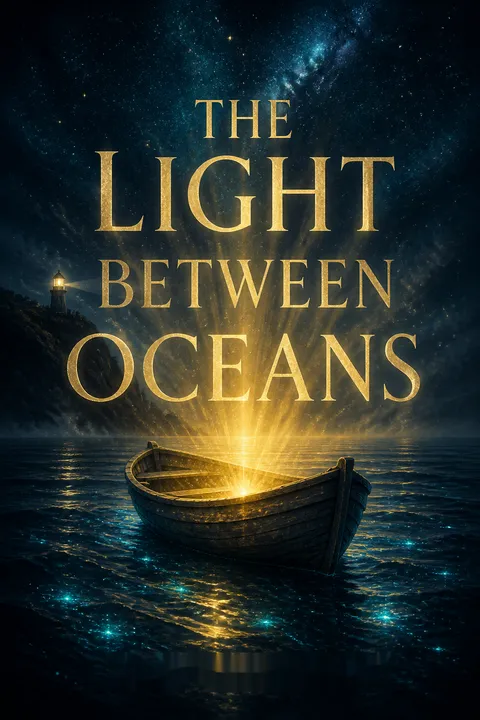


Plot Summary
The Baby on Janus
On Janus Rock in April 1926, lighthouse keeper Tom Sherbourne1 and his wife,2 Isabel,2 hear a baby3 crying from a beached dinghy. Tom1 finds a dead man5 in the boat and a healthy infant3 wrapped in a cardigan. Isabel2 gathers the child3 close, recently bereaved by another pregnancy loss, and responds with the tenderness of a mother who has been waiting years.
Tom1 knows he must report the body5 and the baby,3 but Isabel2 asks him to wait until morning. He agrees, uneasy at the first compromise. The child’s3 arrival seems to offer the couple a life they thought had been denied them, while the unknown man5 and the empty sea make the infant’s3 real story impossible to ignore.
The opening makes private grief collide with public duty before the reader knows the full history behind either. Isabel’s instinctive care is not presented as a calculated act: it grows from a body and a longing already shaped by loss. Tom’s hesitation, by contrast, begins as a brief concession to his wife, but his work depends on truthful records and prompt reporting. The baby becomes both a gift and a test, while the dead stranger prevents the couple from treating her arrival as a simple miracle.
Tom Takes the Lights
Years earlier, Tom1 returns from the Western Front carrying guilt and memories he can manage only by concentrating on practical tasks. He joins the Lighthouse Service and takes an isolated posting at Janus, whose beam had marked Australia’s edge when he left for war. On the ship west, he interrupts a drunken former soldier harassing a young passenger, Hannah Potts,4 and gives her the choice of reporting the assault.
At Point Partageuse, Tom1 spots Isabel Graysmark2 feeding gulls, then recognizes her at a dinner for the new keeper.1 Her quick humor cuts through his reserve. He leaves for Janus alone, intending the island’s routines to keep the past at a distance, not knowing that Isabel2 will soon become the person who changes his life.
Tom’s retreat to the lighthouse is an effort at self-regulation, not a cure: logs, machinery, and fixed routines give form to a mind still organized by wartime danger. His intervention on the ship shows that his moral instincts remain active, even as he distrusts his own capacity to judge. Isabel’s playfulness offers contact without demanding disclosure. Their first connection therefore begins in a small act of protection and a shared moment of levity, precisely the kinds of ordinary human exchanges Tom has learned to avoid.
A Marriage at the Edge
During Tom’s1 leave, Isabel2 draws him into picnics, long walks, and conversations about the family history he normally keeps sealed. She tells him of her brothers’ deaths and her wish for a home full of children; he admits little about his parents, whose coldness still governs his silence.
As his leave ends, Isabel2 proposes marriage and a life on Janus. Tom1 doubts that a nineteen-year-old understands the loneliness and danger of the posting, but her resolve persists through their letters.
He eventually agrees, and they marry before returning to the island. Isabel2 approaches the lighthouse as a world to explore, naming coves and mapping its small landmarks; Tom1 sees that her desire to make a home there differs from his need to make the island feel whole and safe.
The courtship turns marriage into a negotiation between two ways of inhabiting uncertainty. Isabel treats commitment as a choice that should be made before loss makes it impossible; Tom treats it as a duty whose risks he must calculate in advance. Her insistence is not mere innocence, and his caution is not lack of love. Their opposing habits initially enrich the relationship: she draws him toward intimacy, while he offers steadiness. Yet the difference will matter when each believes they know what protection requires.
Three Empty Cradles
On Janus, Isabel2 and Tom1 build a life around the lighthouse, the garden, and the few animals they can raise. Isabel2 becomes pregnant, but their first child is lost; Tom1 makes a small grave and plants rosemary beside it. Further pregnancies end in loss, and the final one comes prematurely as a storm rages outside.
Isabel2 gives birth to a stillborn son and insists on washing and wrapping him herself before Tom1 buries him near the earlier graves. She refuses immediate medical help and asks to keep the death private. Tom1 follows her wishes, though he fears for her health. The infant3 in the dinghy will arrive less than two weeks later, finding Isabel2 at the very place where she has been tending the graves.
The losses make the later decision emotionally legible without making it ethically innocent. Isabel’s grief is both physical and relational: each pregnancy awakens a future she can picture, then removes it without ceremony or explanation. Her private rituals give her some agency over a process otherwise governed by chance. Tom’s care takes the form of practical service and silence. Their coping styles diverge: Isabel asks to control who knows, while Tom experiences secrecy as a threat to the moral order that helped him survive war.
Lucy Becomes Theirs
Isabel2 names the infant3 Lucy3 and believes the dead man’s5 companion has been left without family. Tom1 buries the stranger,5 then finds a silver rattle hidden in the dinghy, a sign that someone may have treasured the child.3 He pockets it and chooses not to pursue what it might mean. Isabel2 argues that reporting Lucy3 would send her to an institution, while Tom1 knows he can still report the boat and seek a lawful adoption.
He yields, sends a false message saying their baby arrived early, and invents a birth weight. As Lucy3 thrives, Isabel2 becomes her devoted mother and Tom1 grows attached, even as he keeps revisiting the blank day in his logbook. Their happiness rests on a lie they must maintain together.
The rattle is a material interruption of the story Tom and Isabel need to believe. Rather than disproving their account outright, it gives Tom enough evidence to suspect another family and enough ambiguity to look away. His choice is not simply obedience to Isabel: he actively suppresses evidence and falsifies a public record. The lie lets care flourish in the immediate present, but it also changes the moral meaning of every ordinary family ritual. Each affectionate act now depends on someone else being kept outside the truth.
The Missing Roennfeldts
Lucy’s3 first years on Janus are filled with games, lessons, and the rhythms of the light station. During a later shore leave, Isabel2 learns that the man in the dinghy5 was Franz Roennfeldt,5 an Austrian baker, and the baby3 was Grace,3 daughter of Hannah Roennfeldt.4 On Anzac Day, townsmen had taunted Hannah4 and Frank5 for his German background; Frank5 fled with the baby3 in a boat and was lost at sea.
At Lucy’s3 christening, Isabel2 sees a memorial bearing their names. Tom1 later encounters Hannah4 at a lighthouse celebration, where she asks whether shipwrecked people can be rescued far away. He gives no answer. Afterward, he sends her a note, then the rattle, trying to tell her Grace3 survived without revealing where she is.
The revelation relocates the story’s moral center. Lucy’s arrival was not an unclaimed gift from the sea but the consequence of a town’s wartime prejudice and a mother’s catastrophic separation. The memorial makes that history public, while Tom’s silence at the celebration shows that he understands what Hannah is asking. His anonymous messages are a partial attempt at repair: he offers reassurance but withholds the information that would restore Hannah’s choices. Compassion remains entangled with control.
The Rattle Reaches Shore
Hannah’s4 letter and the returned rattle revive her search, while her father, Septimus Potts,6 raises the reward for news of Grace.3 Bluey Smart9 recognizes the silver rattle from his visits to Janus and tells his mother, who urges him to claim the money. He reports what he knows, then regrets betraying Tom1 and refuses the reward.
Police arrive at Janus with Ralph Addicott8 and the retired keeper Neville Whittnish.15 Tom1 admits that he concealed Lucy3 and falsified the record; officers uncover Frank’s5 grave. Isabel2 learns that Tom1 had sent Hannah4 the clues and confronts him, seeing his action as another decision made without her. The police take the couple and Lucy3 back to Partageuse, ending the island life the three of them had shared.
The evidence reaches the mainland through ordinary social ties, not a grand investigation: a deckhand remembers an object, a parent calculates its value, and a community acts. Bluey’s remorse complicates the idea of betrayal, because returning the child’s identity to her family is also a breach of loyalty to his friend. Tom’s confession is an attempt to accept responsibility, but Isabel experiences it as an abandonment of their shared family. The island’s privacy can no longer protect the story from those it harmed.
Two Mothers, One Child
In Partageuse, authorities return Lucy3 to Hannah,4 who has waited years to hold her daughter3 again. Lucy,3 nearly four, knows only Tom1 and Isabel2 as parents and resists Hannah’s4 care. Isabel2 is devastated, and Gwen7 secretly arranges brief meetings between the child3 and the woman she calls Mamma.2 When Lucy3 is left outside with a cat, she wanders into the bush and nearly touches scorpions before Tom1 and Bluey9 find her.
Later, unable to understand why she has been separated from her family, she slips through a hedge and heads toward the park, then follows a distant light toward the coast. Sergeant Knuckey12 finds her asleep near the Point. Hannah4 brings her home, recognizing that love cannot restore the missing years by command.
The custody change exposes a distinction between biological kinship and lived attachment without reducing either mother to a claim on property. Hannah’s longing is real, but Lucy’s fear is equally real; she cannot be expected to experience a stranger as home simply because adults know her history. Isabel’s secret meetings offer comfort while deepening the conflict. The runaway makes the stakes physical: a child raised within Janus’s known dangers enters a landscape whose risks she cannot read, because every adult decision has disrupted her sense of direction.
Isabel Chooses the Truth
After Lucy3 is found, Hannah4 visits Isabel2 and offers to let the child3 return if Isabel2 testifies that Tom1 acted alone. Isabel2 has already read a letter from Tom, in which he accepts blame and asks nothing for himself. When torrential rain floods the police station, she arrives intending to speak to Sergeant Knuckey.12
Seeing Tom1 handcuffed to a pipe, she admits that she helped keep Lucy3 and stopped the original report. Tom1 tries to spare her, but she corrects the record herself. The confession reunites them briefly and dismantles the claim that Tom1 forced her. It also means Isabel2 will face legal consequences, while Hannah4 must reconsider the promise she made in pain and the future she can offer Lucy.3
Isabel’s confession is a moral act, but not a clean reversal of her earlier choice. She tells the truth after living through the consequences of concealment and after seeing Tom accept a false account to protect her. Her decision refuses the role of passive victim that his strategy assigned her. The storm and broken pipe make the scene’s physical setting mirror its legal rupture: the confinement is interrupted, but no one can return to the innocence that preceded it. Responsibility becomes shared rather than transferred.
Hannah Lets Go
Hannah4 initially refuses Sergeant Knuckey’s12 suggestion that she ask for leniency, furious that others keep telling her what to sacrifice. Yet she sees how distressed Grace3 remains and begins, with help from Septimus,6 to build a relationship with the girl3 as she is now. He takes Grace3 through the forest, introduces her to its animals, and gives her a future in the family timberland to imagine.
Hannah4 stops measuring her daughter3 against the baby3 she lost. She asks the court for mercy, and Tom1 receives three months in Bunbury jail; Isabel2 receives a suspended sentence. Hannah4 does not erase the harm or restore the stolen years, but her testimony prevents punishment from becoming another way to make Grace3 bear the adults’ pain.
Hannah’s change is not a sudden absolution. She moves from the understandable wish for punishment toward a difficult recognition that justice cannot recreate the child she once held. Septimus helps by offering Grace concrete places and experiences, allowing Hannah to meet her daughter in the present rather than pursue an impossible return to infancy. Her testimony is therefore an act of restraint, not denial. She protects her own grief from becoming the governing force in Grace’s life, even though she cannot recover what was taken.
A Life After Janus
After the trial, Tom1 and Isabel2 reunite in Albany, where Isabel2 receives care while recovering from the shock and loss. They cannot return to their old marriage unchanged; Isabel2 resents Tom’s1 secrecy, and Tom1 knows that love does not erase his choice. Slowly, they decide to remain together and leave Partageuse, where every street holds the story of Lucy’s3 removal.
After Tom1 inherits money through his brother Cecil,16 they buy a coastal farm near Hopetoun and build a quieter life. Isabel2 plants the rose garden she once imagined on Janus. Nearly twenty years pass. When cancer weakens her, Tom1 cares for her at home, and she dies with the old wounds still part of their shared history.
The resolution refuses the fantasy that confession repairs everything. Tom and Isabel’s marriage survives, but survival means living with a permanent absence and an altered understanding of trust. Their move is both practical refuge and acknowledgment that the old community cannot become neutral again. The rose garden carries a modest form of futurity: unlike the lighthouse, it does not save distant strangers, but requires daily tending. Isabel’s death leaves Tom with memory rather than reconciliation as a completed event.
Lucy Returns at Last
A week after Isabel’s2 funeral, Lucy-Grace Rutherford3 arrives at Tom’s1 farm with her three-month-old son, Christopher. She has waited until her mother, Hannah,4 gave her blessing, and now asks about the people and place that shaped her earliest memories.
Tom1 shows her Isabel’s2 kept baby clothes, drawings, and the hand-decorated map of Janus. Lucy-Grace3 remembers fragments of the lighthouse, the gallery, and the sea, but she has come chiefly to understand what happened.
Tom1 holds Christopher, and the old bodily tenderness of fatherhood returns without restoring his claim over Lucy.3 She leaves the keepsakes at the farm so she will have reason to visit again. Tom1 watches the light and accepts that their story continues in her life, not under his control.
The final meeting offers contact without pretending to reverse the separation. Lucy-Grace’s visit belongs to her own adult agency: she comes after receiving her mother’s blessing and brings a family of her own. The saved objects give her a material route into a childhood she cannot fully remember, while the map preserves Isabel’s intimate way of seeing Janus. Tom’s chance to hold Christopher is not compensation for the years he lost with Lucy. It is a limited, present-tense grace, received without entitlement.
Analysis
The novel makes a private act of compassion answerable to people who are not present when it is chosen. Tom1 and Isabel2 find a living infant after losing their own children, and their care for Lucy3 is genuine. But sincerity does not cancel the missing mother’s4 claim, or the child’s3 right to know her origins. The story’s difficult force comes from refusing to make affection a moral exemption.
The lighthouse offers a precise image of the couple’s problem. Its beam is maintained for unseen travelers, yet its own island lies outside the light. Tom1 has devoted himself to protecting strangers through rules and reliable records, then breaks those rules to preserve the family he loves. Isabel’s2 care is equally sincere, but her grief narrows her attention to the child3 before her. Both confuse protection with control: Tom1 later decides that confession is the only way to repair harm, while Isabel2 believes keeping Lucy3 is the only way to spare her further pain.
Hannah’s4 return complicates any simple division between rightful and wrongful mothers. She has biological history and the loss of years; Isabel2 has the daily knowledge, routines, and attachment that formed Lucy’s3 sense of home. The child’s3 distress demonstrates that legal truth cannot instantly create emotional belonging. Yet allowing the lie to continue would preserve one family by denying another its agency. The resolution asks the adults to stop treating Lucy3 as the answer to their suffering and to attend instead to the life she must actually live.
The novel also treats forgiveness as distinct from forgetting. Hannah4 can ask for mercy without recovering her infant or approving the deception. Tom1 and Isabel2 can remain together without returning to their former innocence. Lucy’s3 adult visit does not reunite the families in a sentimental arrangement; it gives her the freedom to approach her own past. The final measure of repair is not that pain disappears, but that the characters cease using another person’s life to make their own pain bearable.
Review Summary
The Light Between Oceans is a emotionally powerful debut novel that has deeply affected many readers. Set in post-WWI Australia, it follows a lighthouse keeper and his wife who find a baby and decide to keep her. The story explores themes of love, loss, and moral dilemmas. While some found it slow-paced or melodramatic, many praised the beautiful writing, vivid setting, and complex characters. The ending was particularly impactful for many. Overall, it's a heartbreaking tale that provokes thought about right and wrong.
People Also Read





Characters
Tom Sherbourne
The war-scarred keeperTom is a returned soldier who seeks solitude and order in the Lighthouse Service. His competence with machinery and records gives him a practical language for care, while his memories of combat and childhood estrangement make emotional disclosure difficult. He is conscientious, but not untouched by desire: when Isabel’s2 longing and his own need for a family meet, he can rationalize a choice that violates the rules he has built his life around. His central tension is between duty as a safeguard against chaos and private love as a force that can make wrongdoing feel merciful. He is neither a cold keeper nor a simple moral hero; his restraint and his capacity for self-sacrifice coexist with a damaging confidence in his own judgment.
Isabel Graysmark Sherbourne
The island’s fierce heartIsabel is the only daughter of Bill10 and Violet Graysmark11, shaped by the deaths of her brothers and by a strong appetite for life. She approaches Janus as a place to make her own, naming its coves, tending its animals, and imagining a family there. Her openness and decisiveness draw Tom1 out of isolation, but her longing for motherhood grows more urgent after repeated pregnancy losses. Isabel acts from attachment rather than calculation, and her great strength can narrow into certainty when she believes a child3 needs her. She is playful, curious, and emotionally direct, though she can also retreat into a private story when reality threatens to take away what she loves.
Lucy, later Lucy-Grace
The child between homesLucy is a lively, observant child whose earliest world is the isolated lighthouse, its machinery, animals, and two devoted keepers1. She grows through concrete rituals: collecting eggs, learning words, watching ships, and climbing the tower. Her attachment to the people who raise her2 is not a considered preference but the foundation of her memory and safety. When adults change her home and name, she responds with confusion and resistance rather than an understanding of legal or biological claims. As an adult, she can approach the fragments of her first life on her own terms. Her story asks what identity is made from when family history and lived experience do not match.
Hannah Roennfeldt
The searching motherHannah is Septimus Potts’s6 elder daughter and Gwen’s7 sister. Her education and independent judgment set her apart from the town’s expectations, especially when she chooses a life with an Austrian baker5 whom her father6 distrusts. She is intelligent, private, and persistent, capable of turning grief into a daily practice of searching and prayer. Her composure can conceal how intensely she feels the loss of family and belonging. Hannah is not simply defined by suffering: she has a sharp moral sense and a capacity to reconsider what she believes, though such reconsideration costs her pride and security. Her struggle concerns how a person can remain a mother when love, memory, and shared experience have been interrupted.
Frank Roennfeldt
The outsider bakerFrank is an Austrian-born baker who becomes Hannah’s4 husband and a target of Partageuse’s anti-German hostility. His gentle manner and readiness to adapt contrast with the suspicion he faces because of his accent and heritage. He values learning, poetry, and family life, and meets hostility without surrendering his warmth. His presence links the town’s wartime resentments to the private lives they damage.
Septimus Potts
The self-made patriarchSeptimus is a wealthy timber merchant who rose from childhood poverty through discipline, business instinct, and an abiding distrust of fate. Protective of Hannah4 and Gwen7, he can mistake control for care, especially when he disapproves of Hannah’s4 choices. Beneath his formidable public manner is a man shaped by abandonment and bereavement. His practical imagination and deep family loyalty make him both a source of pressure and a potential bridge between generations.
Gwen Potts
The sister who intervenesGwen is Hannah’s4 younger sister, accustomed to moving carefully between her sister’s4 strong convictions and their father’s6 authority. She is observant and compassionate, particularly toward a child3 caught in adult conflict. Her wish to relieve suffering sometimes leads her to act without permission, but it comes from a genuine effort to understand what the child3 needs.
Ralph Addicott
The keeper’s steady friendRalph captains the Windward Spirit, the supply boat serving Janus and other remote lights. His humor and practical kindness make him a trusted link between the island and the mainland. He understands isolation without romanticizing it and can sit with another person’s distress without rushing to judge. His loyalty to Tom1 is tested by the consequences of Tom’s1 choices, but his concern remains grounded in what can still be done.
Jeremiah Bluey Smart
The conflicted deckhandBluey is Ralph’s8 young deckhand, a talkative, good-hearted man whose loyalty to friends competes with his hopes for a more settled future. He has lost a brother to war and remains close to his formidable mother. His uncertainty about marriage and work makes him a useful witness to Tom’s1 guarded family life, while his choices show how conscience can survive pressure from both money and friendship.
Bill Graysmark
The grieving schoolmasterBill is Isabel’s2 father and Partageuse’s headmaster. The deaths of his sons have left him quieter and more vulnerable than his respectable public role suggests. He cares deeply for Isabel2 but tends to express protection through practical advice and assumptions about what will keep her safe. His attachment to family is sincere, though grief can make him mistake a comforting story for a reliable one.
Violet Graysmark
The keeper of family griefViolet is Isabel’s2 mother, a capable homemaker whose routines conceal a lasting grief for the sons she lost. She understands the private endurance required of mothers more clearly than she can always articulate. Her care for Isabel2 is tender and practical, while her judgments are shaped by the costs of having already endured too much loss.
Vernon Knuckey
The wary local sergeantKnuckey is the Partageuse police sergeant, a local man familiar with the town’s families and silences. He tries to conduct an investigation without confusing strict procedure with justice. His own experience of family loss makes him alert to the human damage behind legal disputes, though he does not mistake sympathy for proof.
Gerald Fitzgerald
Tom’s sharp-eyed lawyerFitzgerald is the lawyer who explains the charges against Tom1 and the risks of a guilty plea. He is quick to spot weaknesses in the prosecution’s legal theory, but understands that protecting Isabel2 may matter more to Tom1 than winning his freedom.
Kenneth Spragg
The ambitious investigatorSpragg is the senior Albany policeman assigned to the case. Ambitious and suspicious of Tom1, he pushes the investigation toward a murder theory and treats the war record as evidence of violence. His manner contrasts with Knuckey’s12 more locally grounded caution.
Neville Whittnish
The retired lightkeeperWhittnish is the terse former keeper who hands Janus over to Tom1. He speaks sparingly but feels deep affection for the lighthouse and its traditions. His respect for careful maintenance allows him to recognize Tom’s1 devotion to the work.
Cecil Sherbourne
Tom’s distant brotherCecil is Tom’s1 older brother, raised under the same strict father but less burdened by Tom’s1 emotional history. He represents the family life Tom1 left behind and remains a practical connection to the Sherbourne inheritance.
Plot Devices
The Janus lighthouse
Order at the ocean’s edgeThe lighthouse structures the couple’s isolated life through exact routines: lighting the lamp, maintaining the lens, recording weather, and signaling ships. Its beam protects strangers over a great distance, while the island beneath it remains dark. This contrast gives the setting a moral function. Tom’s1 work rewards precision and dependable duty, but the surrounding isolation allows him and Isabel2 to imagine that no one else can be harmed by their private decision. The light also provides the physical center of Lucy’s3 childhood and the enduring image that connects her adult return to the family she once knew.
The keeper’s logbook
A record made unreliableTom’s1 logbook is meant to preserve precise, official truth about the light station. The false report of Lucy’s3 birth and the blank entry for the dinghy turn that routine into evidence of the couple’s deception. Tom’s1 handwriting links separate moments across the years, eventually helping investigators connect the anonymous messages to him. The book therefore moves from a source of comfort, where Tom1 can record measurable facts, to a witness against the story he and Isabel2 have chosen to maintain.
The silver rattle
A keepsake that finds its way homeThe ornate rattle lies concealed in the dinghy and is recognized as an object made for the missing child3. Tom1 first treats it as evidence he can avoid interpreting. Later, he returns it to Hannah4 anonymously, hoping to assure her that Grace3 is alive without exposing the Sherbournes1. Bluey9 recognizes the object during his visit to Janus and alerts the authorities. The rattle turns private guilt into a traceable fact, linking a child’s3 life on the island to the family searching for her.
Letters across the sea
Truth offered in fragmentsTom1 uses anonymous notes and the returned rattle to reach Hannah4 while remaining hidden. The messages offer comfort but withhold the location and identity of the child3, so they cannot restore Hannah’s4 ability to act. Later, Tom’s1 letter to Isabel2 accepts responsibility and asks her to choose freely, helping prompt her confession. Letters serve as a form of contact shaped by distance: they allow the characters to speak when they cannot face one another, but their omissions carry consequences as powerful as their words.
Janus Rock’s isolation
A world that shelters secretsThe island’s distance from the mainland gives Tom1 and Isabel2 a life few people can observe. Supplies arrive only periodically, and the surrounding oceans make travel dangerous. This isolation supports the intimate family rhythms that help Lucy3 thrive, but also makes the couple’s false account seem sustainable. Their secret is not sealed forever: boats, visitors, official records, and remembered objects continually connect Janus to Partageuse. The island protects the family temporarily while magnifying the harm that secrecy causes elsewhere.
FAQ
Synopsis & Basic Details
What is The Light Between Oceans about?
- Moral Dilemma Unfolds: The story centers on Tom and Isabel Sherbourne, a lighthouse keeper and his wife, who find a baby adrift at sea and make a life-altering decision to raise her as their own, grappling with the ethical implications of their choice.
- Love and Loss Explored: The narrative explores the depths of love, loss, and the human capacity for both great compassion and profound deception, as the couple navigates the complexities of their secret.
- Consequences of Choices: The novel examines the far-reaching consequences of their actions, as their lives become intertwined with the biological mother of the child, leading to a heart-wrenching moral and emotional conflict.
Why should I read The Light Between Oceans?
- Emotionally Gripping Story: The novel offers a deeply moving and emotionally resonant experience, exploring the complexities of love, loss, and the human condition, making it a compelling read for those who appreciate character-driven narratives.
- Moral and Ethical Questions: It raises profound moral and ethical questions about duty, responsibility, and the nature of right and wrong, prompting readers to reflect on their own values and beliefs.
- Beautifully Written Prose: M.L. Stedman's evocative prose and vivid descriptions of the Australian landscape create a rich and immersive reading experience, enhancing the emotional impact of the story.
What is the background of The Light Between Oceans?
- Post-WWI Australia: The story is set in post-World War I Australia, a time of rebuilding and recovery, where the scars of war are still fresh, influencing the characters' perspectives and motivations.
- Remote Lighthouse Setting: The isolated setting of Janus Rock, a remote lighthouse off the coast of Western Australia, amplifies the characters' emotional struggles and moral dilemmas, creating a sense of both beauty and isolation.
- Historical Context: The novel incorporates historical elements of the Australian Lighthouse Service, providing a glimpse into the lives of lighthouse keepers and the challenges they faced in a remote and unforgiving environment.
What are the most memorable quotes in The Light Between Oceans?
- "You're my other half of the sky.": This quote, spoken by Tom to Isabel, encapsulates the deep, almost spiritual connection between them, highlighting the profound love that forms the core of their relationship.
- "It's like seeing into the future. You can reach ahead in time to save the ship before it knows it needs help.": Isabel's description of the lighthouse's beam reveals her romantic and idealistic view of their life on Janus, contrasting with the harsh realities they face.
- "Love's bigger than rule books, Tom.": Isabel's declaration underscores her belief that their love for Lucy justifies their actions, highlighting the conflict between personal desires and societal expectations.
What writing style, narrative choices, and literary techniques does M.L. Stedman use?
- Evocative and Lyrical Prose: Stedman employs a rich, descriptive style, using vivid imagery and sensory details to bring the Australian landscape and the characters' emotional states to life, creating an immersive reading experience.
- Dual Perspective Narrative: The story is primarily told from the perspectives of Tom and Isabel, allowing readers to understand their individual motivations and struggles, and highlighting the complexities of their relationship.
- Symbolism and Foreshadowing: Stedman uses recurring symbols, such as the lighthouse, the ocean, and the color blue, to enhance the thematic depth of the story, and employs subtle foreshadowing to create a sense of unease and anticipation.
Hidden Details & Subtle Connections
What are some minor details that add significant meaning?
- The Rosemary Bush: Isabel plants a rosemary bush at the grave of her lost child, a symbol of remembrance and fidelity, which later gains significance when she tends to the new grave of the man found in the boat, highlighting her enduring maternal instincts.
- The Jar of Humbugs: The untouched jar of humbugs in the pantry, belonging to the late Mrs. Docherty, serves as a poignant reminder of the lives that have been lived on Janus Rock, and the lingering presence of the past.
- The Silver Rattle: The silver rattle, a seemingly insignificant object, becomes a powerful symbol of the truth, connecting Lucy to her biological parents and ultimately unraveling the Sherbournes' carefully constructed lie.
What are some subtle foreshadowing and callbacks?
- The "Pride of Birmingham" Shipwreck: The mention of the "Pride of Birmingham" shipwreck early in the novel foreshadows the tragic events that will unfold, highlighting the dangers of the sea and the fragility of life.
- Isabel's Fear of Freckles: Mrs. Graysmark's comment about Isabel's freckles foreshadows the later loss of her own child, as she worries about her daughter's skin being spoiled, highlighting the fragility of life and beauty.
- The Knitting: Trimble Docherty's knitting left behind in the lighthouse foreshadows the later knitting that Tom does, and the knitting that Isabel does for her lost children, highlighting the ways in which people try to cope with loss and loneliness.
What are some unexpected character connections?
- Trimble Docherty and Tom: The connection between Tom and Trimble Docherty, the previous keeper, is subtle but significant, as Tom inherits Docherty's post and his knitting, highlighting the cyclical nature of life on the Lights and the shared experiences of the keepers.
- Hannah Potts and Tom: The unexpected connection between Hannah and Tom, revealed through their shared experience on the boat, adds a layer of complexity to their relationship, highlighting the interconnectedness of their lives and the consequences of their actions.
- Mrs. Mewett and Kitty Kelly: The connection between Mrs. Mewett and Kitty Kelly, as cousins, adds a layer of complexity to Bluey's decision to leave the sea, highlighting the small-town nature of Partageuse and the interconnectedness of its residents.
Who are the most significant supporting characters?
- Ralph Addicott: The skipper of the store boat, Ralph, serves as a confidant and friend to Tom, providing a link to the outside world and offering a perspective on the events unfolding on Janus Rock.
- Bluey: The young deckhand, Bluey, represents the younger generation and their connection to the war, and his admiration for Tom highlights the impact of the past on the present.
- Violet Graysmark: Isabel's mother, Violet, embodies the strength and resilience of women in the face of loss, and her support for Isabel provides a counterpoint to the harsh realities of life on the Lights.
Psychological, Emotional, & Relational Analysis
What are some unspoken motivations of the characters?
- Tom's Need for Redemption: Tom's unspoken motivation is his deep-seated need for redemption, stemming from his experiences in the war, which drives his actions and his willingness to take responsibility for the consequences of his choices.
- Isabel's Fear of Loss: Isabel's unspoken motivation is her profound fear of loss, which fuels her determination to keep Lucy, and her desperate attempts to create a sense of family and stability in the face of her past traumas.
- Hannah's Desire for Closure: Hannah's unspoken motivation is her desperate desire for closure and understanding, which drives her to seek out the truth about her husband and daughter, and to find a way to move forward from her grief.
What psychological complexities do the characters exhibit?
- Tom's PTSD and Guilt: Tom exhibits symptoms of PTSD, stemming from his experiences in the war, which manifest as nightmares and a deep-seated sense of guilt, influencing his decisions and his perception of right and wrong.
- Isabel's Maternal Instincts and Trauma: Isabel's maternal instincts are heightened by her past miscarriages, leading to an almost obsessive need to protect Lucy, and her trauma makes her vulnerable to denial and self-deception.
- Hannah's Grief and Resilience: Hannah's grief over the loss of her husband and daughter is profound, but she also demonstrates remarkable resilience, as she grapples with her emotions and seeks a path toward healing and understanding.
What are the major emotional turning points?
- The Discovery of the Rattle: The discovery of the silver rattle is a major emotional turning point, as it confirms the existence of Lucy's biological family and forces Tom and Isabel to confront the reality of their deception.
- The Visit to the Memorial: The visit to the memorial for Frank and Grace Roennfeldt is a major emotional turning point, as it brings the reality of their actions into sharp focus, and forces them to confront the consequences of their choices.
- Lucy's Disappearance: Lucy's disappearance is a major emotional turning point, as it highlights the fragility of their happiness and forces them to confront the potential loss of the child they have come to love.
How do relationship dynamics evolve?
- Tom and Isabel's Love Tested: The relationship between Tom and Isabel evolves from a deep, almost spiritual connection to one strained by secrets and lies, as they struggle to reconcile their love for each other with their conflicting moral obligations.
- Hannah and Isabel's Complex Connection: The relationship between Hannah and Isabel evolves from one of animosity and resentment to one of understanding and compassion, as they both grapple with the complexities of motherhood and loss.
- Tom and Ralph's Friendship: The friendship between Tom and Ralph is tested by the events on Janus, but ultimately endures, highlighting the importance of loyalty and support in the face of adversity.
Interpretation & Debate
Which parts of the story remain ambiguous or open-ended?
- The Nature of Fate: The novel leaves the question of fate and destiny open-ended, prompting readers to consider whether the events that unfold are the result of chance or a predetermined plan, and whether the characters have any real control over their lives.
- The True Nature of Love: The novel explores the complexities of love, leaving the reader to ponder whether love can justify deception, and whether it can truly conquer all, or if it is ultimately a destructive force.
- The Possibility of Redemption: The novel leaves the question of redemption open-ended, prompting readers to consider whether the characters can truly find peace and forgiveness after the choices they have made, and whether their actions can ever be fully atoned for.
What are some debatable, controversial scenes or moments in The Light Between Oceans?
- The Decision to Keep Lucy: The decision to keep Lucy is a highly debatable moment, as it raises questions about the ethics of taking a child from her biological family, even with the best intentions, and the extent to which love can justify such actions.
- Tom's Silence and Deception: Tom's decision to remain silent about the truth, and his manipulation of Isabel, is a controversial aspect of the story, prompting readers to question his motives and the extent of his responsibility for the events that unfold.
- Isabel's Actions and Motivations: Isabel's actions and motivations are also open to debate, as readers may question whether her love for Lucy justifies her complicity in the deception, and whether she is ultimately a victim or a perpetrator of the tragedy.
The Light Between Oceans Ending Explained: How It Ends & What It Means
- Tom's Sacrifice and Isabel's Choice: The ending sees Tom taking responsibility for their actions, while Isabel is left to grapple with the consequences of their choices, highlighting the themes of sacrifice and the enduring power of love and loss.
- Hannah's Forgiveness and Lucy's Future: Hannah's decision to show mercy and allow Lucy to return to Isabel offers a glimmer of hope, suggesting that forgiveness and healing are possible, even in the face of profound grief and betrayal.
- Ambiguous Hope and Enduring Questions: The ending is not a neat resolution, but rather an ambiguous one, leaving readers to ponder the long-term impact of the characters' choices and the enduring questions about love, loss, and the nature of right and wrong, as the story concludes with a sense of both closure and lingering uncertainty.
Download PDF
Download EPUB
.epub digital book format is ideal for reading ebooks on phones, tablets, and e-readers.








