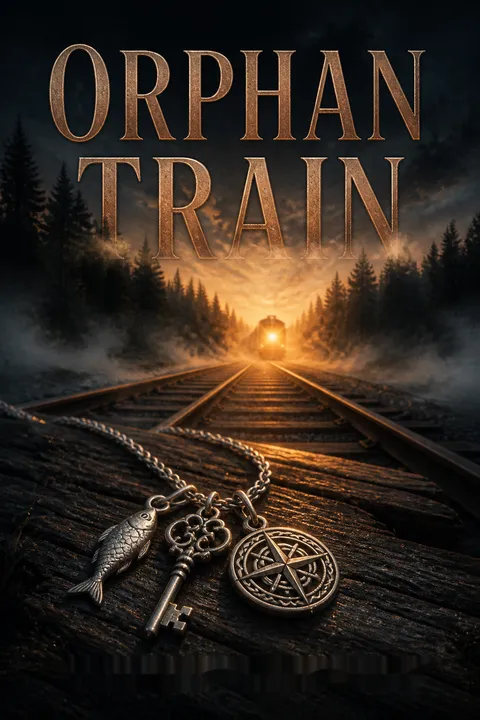


Plot Summary
Prologue
At ninety-one, Vivian thinks of the dead as companions who remain present through memory. She recalls her parents and the love of her youth as their gentlest selves, and imagines that a person survives in the memories of those who loved them. Her sister Maisie, she believes, is still with her in spirit.
The losses have not become small; Vivian has learned to keep living beside them. This opening frames her life as a conversation between past and present, preparing for the old story she has rarely told and the younger listener who will help her face it.
Vivian’s image of the dead is not simple consolation. Memory edits the people she lost, setting aside the harm and instability that marked their lives so she can keep their tenderness. That selective remembering is both protective and incomplete: the prologue makes grief feel intimate while quietly establishing that the past may contain facts Vivian does not know. Her belief that the lost remain present also anticipates the novel’s central act of recognition. People can be absent from daily life and still shape identity, but memory alone cannot recover every truth. The story will ask what happens when remembrance meets evidence.
The Book That Beeps
Seventeen-year-old Molly Ayer has learned not to expect a foster home to last, so when Dina Thibodeau complains about her, Molly packs her bags before anyone has decided to send her away. The trouble began when she tried to steal a worn library copy of Jane Eyre, her favorite novel, and the alarm exposed her.
A juvenile-court order requires fifty hours of community service, but Molly assumes the charge will send her back into the system. Her boyfriend, Jack, intervenes: his mother, Terry, works for elderly Vivian Daly, who needs help sorting her attic. Molly accepts the arrangement because jail is the alternative, though she resents depending on another stranger. The work gives her a reason to stay in Spruce Harbor, at least for now.
Molly’s first response to danger is logistical: pack, prepare to leave, and make rejection hurt less by expecting it. That habit has been shaped by repeated instability, not by a lack of desire for connection. Her theft is more than a bid to own a book; it is an attempt to claim something privately when asking for help feels more dangerous than breaking a rule. Jack’s intervention interrupts her practiced retreat, yet also places her in another dependent position. The community-service arrangement begins as a sentence and a favor, but its deeper importance will be that it creates sustained contact between two people who have both learned to hide their needs.
Fifty Hours in the Attic
Jack brings Molly to Vivian’s large Maine house, where she meets a sharp-eyed ninety-one-year-old widow who is unimpressed by Molly’s borrowed blouse and carefully arranged Goth appearance. Vivian learns that Molly is in foster care; Molly learns that Vivian once lost her parents at nearly the same age.
Their first exchange is prickly, but Vivian agrees to let Molly work through the attic boxes. The job proves less like a cleanup than a long pause over each object: Vivian remembers where things came from, while Molly labels and sorts them.
When an old coat yields a child’s handwriting exercise, Vivian connects it to a former teacher. The small discovery changes the task. The attic is not junk to clear away; it is a storehouse of a life Vivian has not yet explained.
Their meeting works because neither woman offers uncomplicated warmth. Vivian’s questions are blunt, and Molly’s resistance protects her from the embarrassment of being pitied. Yet each recognizes a familiar discipline in the other: Vivian has kept a whole life in boxes, while Molly keeps her feelings locked away and her possessions ready to move. The attic turns memory into physical work. Opening a box requires touch, classification, and a decision about whether an object can be discarded. That process gives Vivian a way to approach painful recollections indirectly, while Molly can listen without having to announce that the story matters to her.
Fire on Elizabeth Street
In 1929, Niamh Power lives with her Irish immigrant family in a crowded New York tenement. Her father drinks, her mother is ill and volatile, and Niamh has become a second parent to her baby sister Maisie and twin brothers Dominick and James.
On the night Maisie cries uncontrollably, Niamh tries to soothe her instead of understanding the danger around them. A fire tears through the building. Niamh wakes among the aftermath and learns that her father and brothers are dead; the neighbors tell her that Maisie did not survive, while her mother is taken away and never returns to her.
With no relatives available to claim her, Niamh is delivered to the Children’s Aid Society. The institution prepares her for placement far from New York, treating a new home as a chance to erase the old life.
The fire makes Niamh’s childhood responsibility brutally literal: she has been asked to care for children while lacking the power or information an adult would need to protect them. Her memory of Maisie’s crying becomes a source of guilt because she interprets a child’s distress as a problem she should quiet, rather than as evidence of danger she could not control. The Children’s Aid Society offers food and placement, but also frames survival as a fresh start that requires forgetting. The collision between those demands explains why Niamh clings to small remnants of home even as she is instructed to become someone new.
The Children on Stage
On the westbound orphan train, Niamh cares for fourteen-month-old Carmine and befriends Dutchy, a streetwise boy whose birth name is Hans. Dutchy distrusts the promise of benevolent families, having survived the streets by shining shoes and playing piano in a speakeasy.
At Chicago’s Union Station, police mistake the children’s brief trip off the platform for an escape; Niamh takes the blame so Dutchy will not be arrested. In Minneapolis, prospective families inspect the riders. A couple chooses Carmine, and Niamh must pry his arms from around her neck.
A farmer selects Dutchy for labor, despite his resistance. Niamh is left behind. She boards the train again without either child, carrying the lesson that affection can form quickly and still be severed by adults’ decisions.
The train makes children visible as candidates but not as people with control over their futures. Adults inspect bodies, assess usefulness, and reserve the right to return a child; the children must perform gratitude while being separated from one another. Niamh’s choice to protect Dutchy at the station is a small act of loyalty in a system designed to make each child compete alone. Her farewell to Carmine exposes the emotional cost of caregiving: she can love and comfort him, yet has no authority to decide where he belongs. The sequence turns the train’s promise of rescue into a question of who gets to define a good home.
A Name for Free Labor
In Albans, Minnesota, the Byrnes take nine-year-old Niamh because she can sew, not because they want to raise a daughter. Mrs. Byrne renames her Dorothy, gives her work in the family sewing business, and makes her sleep on a pallet in the hallway.
Dorothy is denied school and adequate food, while the household insists that discipline will make her useful. Fanny, an older seamstress, secretly shares food, teaches Dorothy to knit, and gives her warm gloves. The stock-market crash then strips the business of customers.
As Mrs. Byrne dismisses the workers, Dorothy’s security disappears too. Agent Chester Sorenson transfers her to the Grote farm, where a mother’s helper is needed. Fanny sends Dorothy off with sewing supplies and reassurance, the first practical kindness she can carry into another household.
The Byrne household reveals how the language of placement can disguise a labor arrangement. Dorothy’s new name and work do not grant her belonging; they make her easier to manage and more productive. Mrs. Byrne’s rules convert basic needs into privileges, while the economic crash exposes how conditional the supposed home is. Fanny offers a sharply different model of care. Her gifts are modest, but they answer Dorothy’s immediate needs without demanding gratitude or obedience in return. The contrast teaches Dorothy that kindness can be found among people who possess little power, even when official systems and respectable households fail to protect her.
Four Miles Before Dawn
The Grote farm is colder and more desperate than the Byrne house. Dorothy feeds the children, hunts for enough to eat, and walks miles to a one-room school where teacher Miss Larsen treats her as intelligent and worth hearing. At home, Gerald Grote begins confiding in Dorothy and then sexually assaults her at night. His wife catches them and throws Dorothy out rather than protect her.
In freezing darkness, Dorothy walks four miles to the schoolhouse and sleeps on its porch. Miss Larsen listens to what happened and refuses to send her back, even when Sorenson questions her account. The teacher brings Dorothy to her landlady, Mrs. Murphy, where a warm room, clean clothes, and care during pneumonia show Dorothy what safety can feel like.
Dorothy’s escape is not a sudden triumph of fearlessness. It is a decision made under conditions in which staying has become more dangerous than walking into winter. The schoolhouse matters because it is one of the few places where adults respond to her words as evidence rather than inconvenience. Miss Larsen’s insistence challenges the placement agent’s preference for preserving an arrangement over hearing a child. Mrs. Murphy’s care then gives safety a material form: heat, food, privacy, and someone who comes when summoned. Dorothy’s growing capacity to trust begins not with a promise, but with repeated acts that meet her needs.
A Room of Her Own
When Dorothy can no longer remain with Mrs. Murphy, the landlady finds her a meeting with Hank and Viola Nielsen, shopkeepers who lost their young daughter. They offer Dorothy a proper bedroom, schooling, meals, and paid work in their general store.
The arrangement is not instant intimacy, but its steadiness lets her learn and belong without pretending her past never happened. Dorothy helps improve the store, expanding its clothing and cosmetics departments and drawing customers during the Depression.
The Nielsens eventually ask her to take the name of their dead daughter, Vivian, and later adopt her. Vivian accepts the name and their care, though she never calls them Mother and Father. For the first time, she has a home whose obligations include protecting her, not merely using her labor.
The Nielsens’ offer is meaningful because it combines affection with concrete structures: education, privacy, wages, and an acknowledged place in the household. Vivian’s choice to accept their daughter’s name is not a simple replacement of one identity with another. She has already been renamed by adults who wanted obedience; this time, she is asked and allowed to consider the name. Her success in the store gives her agency beyond gratitude, turning skills acquired under exploitation into expertise she can direct herself. Yet her inability to use parental titles preserves an emotional boundary, showing that safety can be real without erasing the history that made trust difficult.
Dutchy Finds the Piano
At nineteen, Vivian travels to Minneapolis with college friends and encounters a piano player at the hotel bar. He recognizes her from the train; she recognizes Dutchy beneath his adult name, Luke Maynard. He tells her that the first farm family beat him and worked him until he ran away, and that another escape nearly left him dead in a blizzard.
A widowed farmer later took him in, sent him to school, and arranged piano lessons when he discovered Dutchy’s musical ear. Now Luke earns his living playing music. Vivian and Luke spend the night talking about the years they survived apart, and their childhood promise to find each other becomes a real relationship. They marry, and he builds a life beside her in Hemingford.
Their reunion joins two forms of recognition: each sees the child the other once was, but neither reduces the adult to that past. Luke’s piano is more than a talent; it is a means of emotional expression he found after years in which adults treated him as labor or trouble. Vivian’s disciplined independence meets his spontaneity, creating a relationship unlike the impersonal placements that once separated them. The reunion does not retroactively make the train benevolent or their suffering necessary. Instead, it gives them a witness who understands why survival required adaptation, and why being known by someone from before the name changes feels different from being merely accepted.
The Baby She Could Not Keep
After the attack on Pearl Harbor, Luke is drafted into the Navy, leaving Vivian to run the store and wait for delayed letters. She is pregnant when news arrives that he has been killed in an aircraft accident aboard a carrier.
In 1943, after giving birth to a daughter, Vivian names her May, also called Maisie, and gives her up for adoption. Grief and fear convince Vivian that she cannot risk loving a child and then losing her, though she later recognizes that she had other choices.
About a year after Luke’s death, his friend Jim Daly returns and becomes a companion; Vivian marries him and they run the store together. They build a decent life, sell the business, and eventually settle in Maine, while Vivian keeps the adoption and her early history largely unspoken.
Vivian’s decision to relinquish May is the novel’s most painful repetition of separation. Her own childhood taught her that adults can abandon children, but bereavement leaves her unable to imagine herself as a mother who can endure uncertainty. She frames the choice as a failure of courage, yet the circumstances are not reducible to selfishness: she is grieving, young, and afraid of repeating loss. Jim offers companionship and a workable partnership, not the overwhelming attachment she had with Luke. Vivian’s silence afterward protects her from judgment, but it also preserves an unanswered question that will shape her encounter with Molly.
Maisie Was Not Lost
As Vivian’s memories emerge from the attic objects, Molly recognizes how often both women have learned to hide emotion in order to survive. Her history assignment asks her to interview someone about life’s crossings, and Vivian’s account gives the project a sharper purpose.
Molly also studies Penobscot history and begins to speak openly about her identity at school. Searching ship records and old notices, she confirms the deaths of Vivian’s father and brothers but finds no record of Maisie’s death. A family-history page reveals that the Schatzmans, the neighbors who took Niamh in after the fire, adopted a baby named Margaret.
Molly identifies her as Maisie, then finds an obituary showing that Margaret died only months earlier, after a long life surrounded by descendants. The discovery corrects Vivian’s oldest grief, but arrives too late for reunion.
Molly’s research changes the relationship between memory and truth. Vivian’s belief that Maisie died has organized decades of grief, while records disclose that the neighbors’ silence concealed a different history. The revelation offers neither simple comfort nor a reunion; it restores a life to the past while making its irretrievability undeniable. Molly’s school project also shifts from an assignment into an ethical practice: she gathers testimony, checks it against evidence, and treats an elderly woman’s memories as worthy of preservation. Her growing willingness to name her Penobscot identity parallels Vivian’s gradual return to her own story, though neither woman can recover what was taken from them.
Dina Finds the Book
Molly’s growing closeness with Vivian strains her ties to Jack and his mother. Jack worries that Terry’s favor could jeopardize her job, while Molly resents being treated as a risk everyone else must manage.
At home, Dina discovers Vivian’s copy of Anne of Green Gables in Molly’s room and sees the name Dorothy Power inside. Because she already suspects Molly of stealing, Dina takes the book as proof and demands that she leave. Ralph does not stop her.
Packing what she can carry, Molly considers approaching her mother, then searches online and finds Donna in jail after an arrest for stealing prescription drugs. That possibility collapses. With no safe plan and the bus no longer running, Molly carries her bags to Vivian’s house, uncertain whether the old woman will let her stay.
The conflict exposes how readily suspicion turns a vulnerable teenager into the role adults already expect her to occupy. Dina’s accusation is especially damaging because Molly has lied about the service requirement and is carrying a book with another girl’s name, yet she did not steal Vivian’s gift. The ambiguity gives the accusation force without making it fair. Ralph’s passivity repeats a pattern Molly knows well: a supposedly safer adult withdraws when protection would require confronting someone else. Her brief search for Donna shows that she has not stopped longing for family, but the jail record makes that longing unsafe to act on. Arriving at Vivian’s is therefore an act of necessity and trust.
The Truth Over Tea
Vivian lets Molly inside and makes tea before asking why she arrived with two bags. Molly tells her about her father’s death, her mother’s addiction, the foster homes, and Dina’s accusation. She also admits that the court ordered her service because she stole Jane Eyre, not for a school project.
Vivian does not excuse the theft, but recognizes how much Molly has already paid for it. Then Molly shares what she found: Maisie survived the fire, was adopted as Margaret, and died only recently.
Vivian studies the photograph and recognizes her sister’s eyes. The discovery overturns the story she has carried since childhood. When Molly asks about Vivian’s own daughter, Vivian admits she gave May away after Luke died and has never searched for her.
The scene makes honesty reciprocal. Molly’s confession risks the relationship she has come to depend on, while Vivian’s response refuses both moralizing and easy absolution. The theft remains wrong, but it no longer defines Molly’s character. In turn, Molly’s evidence gives Vivian a truth she could not reach through memory alone. The news that Maisie lived is at once a gift and a wound, because it restores a sister’s history without restoring the sister herself. By asking about May, Molly carries the conversation toward Vivian’s second silence. Their connection now rests not on one woman rescuing the other, but on both allowing the other to witness what has been hidden.
A House With Open Doors
Vivian invites Molly to live in her spare room, and insists that school continue despite Terry’s concern about the unofficial arrangement. Molly and Jack repair their strained relationship after she explains why she did not want him to keep rescuing her; Ralph agrees not to report her missing while they sort out the situation.
Molly finishes her service hours, and her history teacher nominates her oral-history project for a national prize. Vivian, encouraged by Molly, learns to use a computer and finds the story of Carmine, the toddler Niamh once carried on the train.
He grew up, married, and had a family. Seeing that one lost child found a good life encourages Vivian to reconsider Molly’s suggestion that she search for May. Vivian submits her adoption information and receives a match: her daughter, Sarah Dunnell, has been looking for her for years.
The house changes from a museum of preserved objects into a place where the living can make choices. Vivian offers Molly privacy and room to study, while Molly helps Vivian use technology without taking control of her decisions. Their assistance moves in both directions, correcting the imbalance of Molly’s earlier relationships, where help usually carried a debt. Finding Carmine also complicates Vivian’s memories of the train: separation did not determine every child’s fate, though it never justified the system’s risks. The match with Sarah makes possibility frightening rather than purely joyful. Vivian has spent decades treating the past as settled; now she must decide whether knowing the truth is worth the vulnerability of contact.
The Porch at Last
Vivian emails Sarah, who answers and arranges to fly to Maine with her husband and granddaughter Becca. In preparation, Vivian opens rooms she has kept shut, orders clothes online, and lets the house fill with workers and anticipation.
Terry and Jack help make the visit welcoming, while Molly watches Vivian move from guarded curiosity to open fear. When Sarah arrives, Becca runs ahead with red hair and freckles, and Vivian recognizes something of her own family in the girl. Sarah and Vivian face one another across the porch, both searching the other’s expression for a way into the moment.
Molly steadies Vivian as she steps forward. The reunion does not undo the decades apart, but it gives mother and daughter a chance to begin with the truth, while Molly stands close enough to share the beginning.
The ending makes reunion an opening rather than a repair that can erase history. Sarah and Vivian meet with the accumulated weight of separate lives between them, and the story does not pretend that one encounter can restore a mother-child bond formed in absence. Becca’s presence links generations without making her a substitute for the years lost. Molly’s position beside Vivian matters: she is neither merely an observer nor the person who can dictate what the meeting means. She offers support while allowing the two women to approach each other at their own pace. The final movement answers the opening’s idea of ghosts by bringing one absent relationship back into the living present.
Analysis
Orphan Train treats family not as a stable biological category but as a contested arrangement of care, power, and memory. The orphan-train system claims to rescue children from poverty, yet it often evaluates them as labor and gives them little control over where they go. Vivian’s successive homes show that survival depends on more than shelter: school, privacy, food, and an adult willing to believe a child are all forms of protection. The novel does not flatten its caregivers into a simple contrast between good and bad. Some adults are overwhelmed or constrained, while others use authority to exploit. What matters is whether they recognize a child as a person with needs beyond usefulness.
Molly and Vivian connect across age and circumstance because each has learned to manage abandonment by limiting attachment. Molly expects to be moved; Vivian preserves the past but avoids speaking it. Their work together turns listening into reciprocal care. Molly does not simply rescue Vivian from loneliness, nor does Vivian solve Molly’s history. Instead, each helps the other make decisions that fear had kept suspended: Vivian searches for the daughter she surrendered, while Molly accepts shelter without converting it into shame or debt.
The book’s objects and names make identity concrete. A necklace, a book, a coat, or a quilt carries a history that official records may omit. Names can be imposed to smooth a child’s difference, yet they can also be chosen as part of a relationship. The portaging metaphor therefore concerns more than letting go. It asks which memories must be carried because they preserve selfhood, and which inherited beliefs, especially the belief that dependence always ends in betrayal, can be set down. The ending offers no restoration of lost decades. It offers something more modest and credible: people who were separated by silence meet with the truth available to them, while a younger witness helps the next step feel possible.
Review Summary
Orphan Train by Christina Baker Kline tells the story of Vivian, an orphan train rider, and Molly, a modern-day foster child. The novel alternates between past and present, exploring themes of identity, resilience, and human connection. Many readers found the historical aspects fascinating and were moved by Vivian's experiences. Some criticized the simplistic writing style and stereotypical characters, particularly in Molly's storyline. Overall, the book was praised for shedding light on a little-known part of American history and for its emotional impact, despite some flaws in execution.
People Also Read






Characters
Molly Ayer
The guarded foster teenMolly is a bright, fiercely observant seventeen-year-old Penobscot girl who has moved through more foster homes than she can comfortably count. Her Goth style, sarcasm, and readiness to leave help her control how much other people can hurt her. She reads avidly, cares about order, and resists the dependence built into foster care, even when she needs help. Her relationship with Vivian gives her a rare chance to listen without being judged and to offer care without becoming responsible for an adult. Molly’s intelligence is most evident in her habit of noticing what others overlook, but she must learn that receiving support need not mean surrendering independence.
Vivian Daly
The keeper of old storiesVivian is a ninety-one-year-old widow living in a large Maine house filled with carefully stored belongings. Precise, independent, and dryly funny, she is accustomed to controlling her surroundings and keeping painful experiences private. Her habit of preserving objects suggests that memory matters deeply to her, even when she avoids explaining why. Vivian is not sentimental in an easy way; she can acknowledge affection while also naming disappointment and fear. Molly’s presence draws out a more curious and flexible side of her, particularly when the two begin treating the past as something to examine rather than simply endure.
Jack
Molly's loyal boyfriendJack is Molly’s high-school boyfriend, a warm and perceptive student who sees promise beneath her defensive manner. He arranges her community-service placement and repeatedly tries to help, sometimes before understanding how strongly she resists feeling indebted. His optimism is sincere, but his loyalty is divided among Molly, his mother, and the responsibilities of his own life. Their disagreements force him to recognize that support cannot mean taking charge of Molly’s choices.
Terry Gallant
Jack's protective motherTerry is Jack’s mother and Vivian’s housekeeper. She is practical, hardworking, and deeply committed to her son, whose plans she often supports even when she has reservations. Terry worries that Molly’s presence could create trouble for her work and reputation, so her caution can feel like distrust. Beneath that concern is a woman managing a demanding routine and a complicated relationship with her own past.
Dina Thibodeau
Molly's wary foster motherDina is one of Molly’s current foster parents, a police dispatcher whose rigid expectations clash with Molly’s identity and habits. She values order, conformity, and rules, and tends to read Molly’s differences as challenges to her authority. Her suspicion makes the household tense, while her husband’s preference for avoiding conflict leaves Molly without a dependable advocate there.
Ralph Thibodeau
The hesitant foster fatherRalph is Molly’s foster father and a plumber who entered foster care work partly because a mentor once helped him. He is gentle and inclined to see the good in Molly, but his wish to keep peace at home can blunt his willingness to intervene. His care is genuine, though he often mistakes avoiding conflict for protecting someone.
Dutchy
The streetwise piano playerDutchy, born Hans, is a boy from New York’s streets who has learned to survive through quick judgment, humor, and self-reliance. His skepticism toward charity comes from experience rather than cynicism for its own sake. He is alert to danger, protective of younger children, and gifted at finding music by ear. His bond with Niamh begins on the train, where he offers companionship without pretending that either of them can control what comes next.
Maisie Power
Niamh's baby sisterMaisie is Niamh’s much younger sister, a fragile baby whom Niamh helps care for in their crowded New York home. Their closeness gives Niamh a powerful sense of purpose, but it also places a child’s responsibilities on a child who has little protection herself. Maisie’s early life becomes central to how Niamh understands family, loss, and memory.
Miss Larsen
The teacher who listensMiss Larsen teaches at a rural Minnesota schoolhouse and treats her pupils as individuals, even in a crowded, multigrade classroom. She notices Dorothy’s intelligence and offers books, encouragement, and a rare willingness to listen carefully. Her compassion is paired with realism: she cannot solve every problem alone, but she is prepared to challenge an adult when a child’s safety is at stake.
Fanny
The generous seamstressFanny is an older seamstress in the Byrne household who understands the practical cost of being poor and dependent. She shares food, teaches Dorothy useful skills, and gives her warm clothing without making a performance of generosity. Her humor and kindness create a small community inside a household that otherwise treats the child as labor.
Lois Byrne
The controlling seamstress's employerLois Byrne takes Dorothy into her household primarily for her sewing ability. She is strict, status-conscious, and preoccupied with discipline, measuring a child’s worth through obedience and productivity. Economic insecurity intensifies her controlling habits, while her distrust prevents her from offering Dorothy the security that a placement is supposed to provide.
Raymond Byrne
The genial clothierRaymond Byrne runs a women’s clothing business with his wife and is more easygoing toward Dorothy than Lois. He enjoys talking about Ireland and occasionally intervenes when his wife’s rules become especially harsh, though he does little to change the household’s basic arrangement.
Gerald Grote
The isolated farm ownerGerald Grote is a young, self-reliant farmer who distrusts institutions and prefers to live by hunting and gathering. He is burdened by a family he says he never wanted and shares too much of his frustration with Dorothy, a child placed in his care. His self-sufficiency does not translate into emotional responsibility for those around him.
Wilma Grote
The exhausted farm motherWilma Grote is overwhelmed by pregnancy, poverty, and the demands of several young children. She often remains in bed and has little capacity to care for either Dorothy or her own family. Her exhaustion helps explain the neglect in the household, but it does not shield the children from its consequences.
Mrs. Murphy
The practical landladyMrs. Murphy runs a boardinghouse in Hemingford and knows how to make a crowded home function. Opinionated and accustomed to being in charge, she can also be generous and attentive. She offers Dorothy comfort and everyday care, then uses her local connections to help find the girl a more stable placement.
Hank Nielsen
The steady shopkeeperHank Nielsen owns a general store with his wife, Viola, and values reliability, fairness, and civic responsibility. He gives Dorothy work suited to her abilities and appreciates her ideas about the business. His decency is quiet and practical, rooted less in grand declarations than in a willingness to make room for another person.
Viola Nielsen
The attentive shopkeeperViola Nielsen is Hank’s wife and a careful, self-contained woman who has experienced profound family sorrow. She offers Dorothy a stable household without insisting that affection erase the child’s history. Her kindness often appears in practical gestures, including food, clothes, shared work, and respect for the keepsakes Dorothy values.
Sarah Dunnell
The independent musicianSarah is a retired violinist and teacher with a family and an established life of her own. She is thoughtful and self-possessed, yet willing to approach unanswered questions about her beginnings. Music and family both shape her identity, while her careful manner suggests someone accustomed to making decisions for herself.
Plot Devices
The Orphan Train
Children assigned by strangersThe orphan train carries children from New York to Midwestern towns, where adults select them for homes, often according to age, appearance, and usefulness. It drives Vivian’s early journey and shapes her later understanding of family, labor, and identity. Its public presentations make children visible while denying them meaningful choice. The train also introduces key relationships, including Vivian’s bond with Dutchy and her care for Carmine, and its legacy gives Molly a historical story to investigate.
Vivian's Attic
Objects unlock remembered livesThe attic’s boxes, clothes, books, and household objects prompt Vivian to recall events she has rarely discussed. Molly’s inventory gives the memories a sequence and preserves details that might otherwise remain private or fragmented. Each object connects a material trace to a person or decision, making the attic both the setting for their growing friendship and the practical basis of Molly’s oral-history assignment. Sorting the objects becomes valuable even when Vivian chooses to keep most of them.
The Claddagh Necklace
A portable link to homeVivian’s necklace comes from her grandmother and remains one of the few objects connecting her to Ireland and her first family. She carries it through repeated changes of name and household, and later gives it to Luke while he is away at war. The necklace makes memory tangible: its condition changes as it is kept, neglected, or cared for, while its continued presence gives Vivian a private connection to the life that preceded her adopted identity.
Names and Renaming
Identity negotiated by othersVivian’s names mark distinct stages in how others define her and how she chooses to live. Niamh is the Irish name given by her family; Dorothy is imposed by the Byrnes; Vivian is offered by the Nielsens in memory of their daughter. The changes expose the power imbalance in placements, where a child’s identity can be treated as another household possession. The novel contrasts imposed renaming with a later choice made within a more secure relationship.
Portaging
Deciding what to carry forwardA Wabanaki concept of carrying a canoe and belongings between waterways becomes the framework for Molly’s school assignment and a metaphor for both women’s lives. The project asks them to consider what they keep, what they leave behind, and what the journey has taught them. For Molly, it brings her Penobscot identity into active conversation with Vivian’s history. For Vivian, it makes her accumulated memories and stored objects possible material for a story rather than burdens she must either conceal or discard.
FAQ
Synopsis & Basic Details
What is Orphan Train about?
- Dual narratives intertwine: The novel tells the story of Vivian Daly, a 91-year-old woman who was once a child on an orphan train, and Molly Ayer, a troubled teenager in foster care. Their lives intersect as Molly helps Vivian sort through her past, revealing a shared history of loss and resilience.
- Historical and contemporary journeys: The story alternates between Vivian's experiences on the orphan train in the 1920s and Molly's struggles in the foster care system in 2011, highlighting the challenges faced by vulnerable children across different eras.
- Themes of identity and belonging: The novel explores themes of identity, belonging, and the search for family, as both Vivian and Molly navigate their respective journeys of self-discovery and healing.
Why should I read Orphan Train?
- Compelling dual narratives: The novel offers a unique reading experience by weaving together two distinct yet interconnected stories, creating a rich tapestry of human experience.
- Exploration of historical events: Readers will gain insight into the little-known history of the orphan trains and the lives of the children who rode them, as well as the foster care system.
- Emotional depth and character development: The novel delves into the emotional complexities of its characters, exploring their motivations, fears, and hopes, making for a deeply moving and thought-provoking read.
What is the background of Orphan Train?
- Historical context of orphan trains: The novel is set against the backdrop of the orphan train movement, a historical program that transported orphaned and abandoned children from the East Coast to the Midwest between 1854 and 1929. This movement was driven by the belief that these children would have better lives in rural communities.
- Cultural context of Irish immigration: The novel also explores the cultural context of Irish immigration to the United States in the early 20th century, highlighting the challenges faced by Irish immigrants and their children.
- Contemporary foster care system: The contemporary storyline provides a glimpse into the challenges faced by children in the foster care system, highlighting the ongoing need for support and understanding for vulnerable youth.
What are the most memorable quotes in Orphan Train?
- "I believe in ghosts. They're the ones who haunt us, the ones who have left us behind.": This quote from the prologue establishes the theme of memory and the enduring presence of the past, setting the tone for the entire novel.
- "You got to learn to take what people are willing to give.": This quote from Fanny, a fellow worker at the Byrnes' sewing shop, highlights the importance of accepting kindness and support, even in difficult circumstances, a lesson that resonates with both Vivian and Molly.
- "Upright and do right make all right.": This phrase, repeated throughout the novel, represents the moral compass that guides Vivian's actions and her desire to live a life of integrity, despite the challenges she faces.
What writing style, narrative choices, and literary techniques does Christina Baker Kline use?
- Alternating perspectives: Kline employs alternating first-person (Vivian) and third-person limited (Molly) perspectives, creating a dynamic narrative that allows readers to experience the story from multiple viewpoints and understand the characters' inner thoughts and feelings.
- Detailed historical and cultural context: The author incorporates rich historical and cultural details, immersing readers in the worlds of both the orphan train era and contemporary foster care, enhancing the authenticity and emotional impact of the story.
- Symbolism and motifs: Kline uses recurring symbols and motifs, such as the claddagh cross, the attic, and the concept of portaging, to deepen the thematic resonance of the novel and connect the characters' experiences across time.
Hidden Details & Subtle Connections
What are some minor details that add significant meaning?
- The claddagh cross: The small pewter claddagh cross that Niamh wears is not just a piece of jewelry; it's a symbol of her Irish heritage, her grandmother's love, and her connection to her past, which she carries with her throughout her journey.
- The names: The changing of names, from Niamh to Dorothy to Vivian, reflects the shifting identities and the loss of cultural heritage experienced by many orphan train riders, highlighting the impact of forced assimilation.
- The books: The books that Molly reads, such as Jane Eyre and Anne of Green Gables, mirror her own search for identity and belonging, and also foreshadow aspects of Vivian's life, creating a subtle connection between the two characters.
What are some subtle foreshadowing and callbacks?
- The mention of a fire: Early in the novel, the mention of a fire in Vivian's past foreshadows the tragic event that led to her being placed on the orphan train, creating a sense of foreboding and highlighting the trauma she experienced.
- The recurring phrase "My singing bird": The phrase "My singing bird," used by Vivian's father and later by Vivian herself, serves as a callback to her lost family and a reminder of the love and comfort she once knew, emphasizing the enduring power of memory.
- The description of the attic: The description of Vivian's attic as a place filled with "ghosts" foreshadows the exploration of her past and the emotional weight of her memories, setting the stage for the revelations that unfold throughout the novel.
What are some unexpected character connections?
- Vivian and Molly's shared experiences: Despite their different backgrounds and ages, Vivian and Molly share a common experience of loss, displacement, and the search for belonging, creating an unexpected bond between them.
- Dutchy and Jim Daly: The connection between Dutchy and Jim Daly, who become friends in the navy, highlights the unexpected ways in which lives intersect and the enduring impact of shared experiences, even across time.
- Terry and Dina's high school connection: The revelation that Terry and Dina went to high school together adds a layer of complexity to their relationship and highlights the small-world nature of their community, creating an unexpected link between Molly's present and Vivian's past.
Who are the most significant supporting characters?
- Fanny: Fanny, a fellow worker at the Byrnes' sewing shop, provides Dorothy with kindness and support, offering her a glimpse of human connection in a harsh environment. Her small acts of generosity, such as sharing an apple, highlight the importance of compassion and empathy.
- Miss Larsen: Miss Larsen, Dorothy's teacher, offers her a safe haven and a sense of belonging, recognizing her intelligence and potential. Her kindness and support provide Dorothy with a sense of hope and a belief in her own worth.
- Mrs. Murphy: Mrs. Murphy, Vivian's landlady, provides her with a sense of stability and acceptance, offering her a home and a community. Her generosity and understanding help Vivian navigate the challenges of her past and find peace in her present.
Psychological, Emotional, & Relational Analysis
What are some unspoken motivations of the characters?
- Vivian's desire for connection: Despite her outward stoicism, Vivian is driven by a deep-seated desire for connection and understanding, which motivates her to share her story with Molly and seek out her long-lost daughter.
- Molly's need for control: Molly's tough exterior and rebellious behavior stem from a need to control her environment and protect herself from further hurt and disappointment, a result of her experiences in the foster care system.
- Ralph's desire for redemption: Ralph's empathy for Molly and his desire to be a foster parent stem from his own troubled past and a need to make amends for his mistakes, highlighting his unspoken motivations for helping vulnerable youth.
What psychological complexities do the characters exhibit?
- Vivian's trauma and resilience: Vivian exhibits the psychological complexities of a trauma survivor, grappling with the long-term effects of loss and displacement while also demonstrating remarkable resilience and a capacity for love and connection.
- Molly's defense mechanisms: Molly's psychological complexities are evident in her use of defense mechanisms, such as her tough exterior and rebellious behavior, to protect herself from further emotional pain and vulnerability.
- Dutchy's internal conflict: Dutchy's internal conflict is evident in his desire for stability and belonging, while also grappling with the trauma of his past and the uncertainty of his future, highlighting the psychological toll of his experiences.
What are the major emotional turning points?
- Vivian's reunion with Dutchy: Vivian's reunion with Dutchy is a major emotional turning point, offering her a glimpse of happiness and a sense of completion, but also highlighting the fragility of love and the inevitability of loss.
- Molly's decision to leave the Thibodeaus': Molly's decision to leave the Thibodeaus' home is a major emotional turning point, marking her transition from a passive victim to an active agent in her own life, and her willingness to take control of her future.
- Vivian's decision to search for her daughter: Vivian's decision to search for her daughter is a major emotional turning point, representing her willingness to confront her past and seek closure, despite the pain and uncertainty it may bring.
How do relationship dynamics evolve?
- Vivian and Molly's bond: The relationship between Vivian and Molly evolves from a transactional arrangement to a deep and meaningful friendship, as they share their stories and find solace in each other's company, highlighting the power of intergenerational connection.
- Vivian and Dutchy's love: The relationship between Vivian and Dutchy evolves from a childhood friendship to a deep and enduring love, highlighting the transformative power of human connection and the enduring impact of shared experiences.
- Molly and Jack's challenges: The relationship between Molly and Jack faces challenges as they navigate their individual struggles and differing perspectives, highlighting the complexities of young love and the importance of communication and understanding.
Interpretation & Debate
Which parts of the story remain ambiguous or open-ended?
- The fate of Molly's mother: The novel leaves the fate of Molly's mother open-ended, raising questions about the possibility of reconciliation and the long-term impact of her absence on Molly's life.
- The nature of fate and chance: The novel explores the interplay between fate and chance, leaving readers to ponder the extent to which our lives are predetermined or shaped by random events, and whether there is a larger purpose to our experiences.
- The meaning of home: The novel raises questions about the meaning of home and belonging, leaving readers to consider whether home is a physical place or a state of mind, and whether it is possible to find a sense of belonging after experiencing loss and displacement.
What are some debatable, controversial scenes or moments in Orphan Train?
- Vivian's decision to give up her baby: Vivian's decision to give up her baby for adoption is a controversial moment, raising questions about the ethics of adoption and the long-term impact of such decisions on both the mother and the child.
- Mr. Grote's abuse of Dorothy: The scenes depicting Mr. Grote's abuse of Dorothy are disturbing and controversial, highlighting the vulnerability of children in the foster care system and the importance of protecting them from harm.
- The Children's Aid Society's methods: The methods of the Children's Aid Society, while well-intentioned, are also debatable, raising questions about the ethics of separating children from their families and placing them in unfamiliar environments.
Orphan Train Ending Explained: How It Ends & What It Means
- Vivian and Sarah's reunion: The ending of the novel sees Vivian and her long-lost daughter, Sarah, finally reunited, bringing a sense of closure to Vivian's life and highlighting the enduring power of family connections.
- Molly's path to self-discovery: The ending also sees Molly on a path to self-discovery, having found a sense of belonging and purpose through her friendship with Vivian, and her willingness to embrace her own story.
- The cyclical nature of life: The ending underscores the cyclical nature of life, with Vivian's story coming full circle as she reconnects with her past and Molly finding a new beginning, highlighting the enduring power of hope and resilience in the face of adversity.

Download PDF
Download EPUB
.epub digital book format is ideal for reading ebooks on phones, tablets, and e-readers.








