

Plot Summary
Prologue
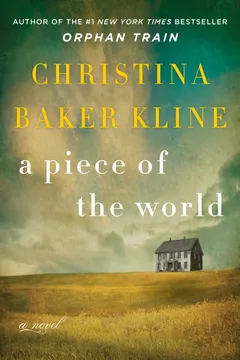
Christina Olson looks back at Andrew Wyeth’s famous painting and insists it is not a literal portrait: its field, house, and crawling figure were reshaped from memory. The house has been her shelter and her confinement, and its rooms hold the stories of generations who could not outrun their past.
When Wyeth asks who she is, Christina understands that her answer must begin long before the painting, among family legends, loss, and the shells gathered in the parlor.
The prologue establishes a tension between being depicted and being known. Christina refuses the idea that a painting can simply record a body; Wyeth has altered the landscape and figure, yet may have captured a truth that ordinary likeness misses. Her family history complicates the image of solitary endurance: the house contains inherited choices, grief, and folklore, not merely a backdrop. By promising to start with the witches and drowned sailors, Christina claims the authority to interpret her own life before anyone else can turn it into a symbol.
Fever Leaves Her Standing
At three, Christina survives a severe fever but wakes unable to move her legs normally. Her mother and grandmother nurse her, while her younger brother Alvaro expects her to return to their games. A doctor prescribes braces that tear her skin; Christina’s mother removes them, leaving scars and a lasting distrust of physicians.
Years later, her father takes her on a long journey to another doctor, hoping for a cure. Christina runs away in Rockland and refuses the examination. Her father brings her home without treatment, and her mother declares that the family will stop trying to help. Christina keeps practicing how to walk, falls often, and learns that stubbornness can preserve her control even when her body will not obey.
The first crisis is bodily, but the consequential wound is also relational. Christina’s refusal in Rockland gives her agency over an examination she fears, yet that agency is interpreted by her parents as self-sabotage. The episode teaches her that accepting help may mean surrendering control, while refusing it can cost her opportunities. Her family’s language of courage and weakness offers no easy answer: Christina’s defiance protects her from further pain, but also hardens into a rule against dependence. The novel roots her pride in a specific history of being handled, diagnosed, and disappointed.
A Small World, Inherited
Christina grows up on Hathorn Point among the sea chests, shells, and family graves that her grandmother Tryphena, called Mamey, uses to teach her about the past. Mamey recounts the Hathorns’ flight from Salem and the family’s seafaring losses; Christina’s father, John Olson, describes leaving a poor Swedish home for the sea.
At school, Christina excels and discovers Emily Dickinson, but her parents need her labor on the farm, so she cannot train to become a teacher. She cooks, sews, tends animals, and finds small freedoms in books and a flower garden. Mamey dies after years of decline, leaving Christina with a chambered nautilus and its lesson that a familiar home can become too small.
The farm is not simply a place Christina cannot leave. It is also the archive through which she learns to imagine lives beyond it. Mamey’s travel stories and the family’s objects make distant places emotionally available, while household labor keeps Christina physically and economically rooted. Her interrupted education sharpens this contradiction: she has a mind reaching outward and a daily life organized around service. The nautilus offers a model of growth, but not a simple promise of escape. Christina must decide whether leaving an old shell is possible when family, disability, and duty are built into its walls.
Walton's Summer Begins
In 1913, Christina meets Walton Hall while selling eggs to summer visitor Ramona Carle and her family. Walton is educated, sociable, and physically marked by a childhood spinal condition, a difference that helps Christina feel understood. Ramona draws Christina into sailing trips, and Walton steadies her when she stumbles on the path.
He asks about her interests, admires the dress she sews, and visits the farm without his companions. Christina begins reading newspapers and novels so she can share his wider world. As summer ends, Walton returns to Harvard, but his letters bring Cambridge into the kitchen and keep their intimacy alive. For Christina, his attention turns a life of chores into the possibility of being chosen for herself.
Walton’s appeal lies partly in recognition: he has known bodily limitation and treats Christina’s competence as visible rather than incidental. But the relationship also attaches her hope to someone who can leave freely. His letters make distance feel intimate while preserving the unequal conditions beneath it. Christina’s new reading is genuine intellectual expansion, yet it is also shaped by the desire to keep pace with him. The novel lets romantic awakening feel liberating without pretending that affection has already become commitment. Her first imagined escape arrives through a person whose future remains largely his to decide.
A Promise Goes Quiet
Walton returns for several summers, and Christina grows increasingly unwilling to accept their relationship as undefined. When she asks what their future means, he answers with tenderness but no clear commitment.
On his last night in Maine, he promises they will be together and says she should meet his parents. Christina holds to that promise through the winter, even after his letters stop. Ramona eventually tells her that Walton is engaged to Marilyn Wales, a Boston woman favored by his parents.
He has asked Ramona to explain because he cannot face writing himself. Christina withdraws, hides his letters, and carries his store-bought cameo shell on a sail with Al. As she leans over the water, Al grips her arm; she drops the shell into the sea.
Walton’s betrayal is not only that he chooses another woman. It is that he lets Christina do the work of maintaining a promise he has already abandoned. His silence leaves her inventing explanations, while his request that Ramona deliver the news transfers the emotional burden to two women. Christina’s attachment to the cameo shell exposes the difference between possession and knowledge: Walton gave her a token but never learned what mattered to her. The shell’s fall marks a refusal to keep carrying his shallow version of their shared history, though Al’s intervention shows how close grief has brought her to danger.
Boston Without Rescue
After Walton’s silence, Christina accepts an invitation to visit Ramona in Boston with her brother Sam. The unfamiliar streets and transit system make every journey difficult, while the city’s energy intensifies her grief for the life she once imagined sharing with Walton.
Sam decides to stay in Boston for work, and Christina, despite feeling left behind, lets him go rather than bind him to the farm. Ramona later arranges an evaluation at Boston City Hospital, and Christina agrees to a week of observation.
Doctors test her but cannot identify a treatment; they send her home with advice to live quietly outdoors. Christina returns convinced that medicine cannot rescue her, and that the hoped-for cure she had feared and resisted will not provide a different life.
Boston tests Christina’s belief that distance might produce transformation. Instead, travel reveals both the possibility of movement and the material labor her body requires at every step. Her decision to let Sam remain is a meaningful contrast with her earlier dependence on Walton: she can recognize another person’s need for a wider life, even while fearing her own abandonment. The hospital deepens her mistrust because expert attention yields no explanation or remedy. Christina’s acceptance is not serene resignation; it is a defensive conclusion built from repeated failures of care. She returns home with fewer illusions, but not with less desire.
The Farm Nearly Sold
As John Olson’s mobility worsens, he pays a Rockland practitioner named S. J. Pole for an apple-based treatment that promises relief from arthritis. The sessions require expensive apples and repeated payments, and the family’s savings disappear before Al learns that Pole has fled angry patients.
A buyer then offers fifty thousand dollars for the house and land. John argues that selling could secure a smaller home and give the children a fresh start, but Christina’s mother, Katie, refuses to surrender property held by her family for generations.
The Olsons remain, now nearly bankrupt and still responsible for the farm. John’s hope in a cure and Katie’s attachment to the land pull in opposite directions, while Christina and Al inherit the work and the consequences.
The failed treatment exposes how hope can be exploited when illness has no clear name or cure. John’s willingness to spend the family’s savings reflects more than gullibility; it is a struggle to recover authority over a body and household he once managed. Katie’s refusal to sell protects family continuity, but that continuity has a price: the children must absorb the labor and financial damage. The house acts as both inheritance and obligation. Christina’s own skepticism is sharpened by seeing her father seek the rescue she once refused, only to find that neither medical authority nor ancestral property can guarantee security.
The House Keeps Its Survivors
Sam marries Mary and brings her into the family home, where their son John is born. When Mary needs help during labor, Christina clashes with Gertrude Gibbons, a former classmate who has come to assist. Christina sends Gertrude away and later keeps her promise never to speak to her again.
Katie’s health declines, and Christina shares the work of caring for her and John as Al manages the farm. Katie dies, followed years later by John, whose long confinement to a wheelchair has left him bitter and isolated.
After his burial, Al takes the wheelchair to the Mystery Tunnel and dumps it into the water. With her parents gone and brothers living separate lives, Christina remains with Al at the old house, where the family’s obligations have outlasted its authority.
Care in Christina’s life is practical, repetitive, and often unacknowledged. She has served her family for years, but that service does not make her endlessly patient; her anger at Gertrude reveals how pity can feel like another form of control. Her refusal to reconcile protects her from humiliation while also narrowing her social world. John’s death loosens one burden, yet his wheelchair discarded at the tunnel gives physical form to the family’s unresolved hopes for cure and escape. Christina and Al survive the household’s losses by continuing its routines, but survival is not the same as choosing that life freely.
Andy Enters the House
In 1939, seventeen-year-old Betsy James brings her new acquaintance, the painter Andrew Wyeth, to Christina and Al’s home. Andy is twenty-two and already drawn to the house’s light, old objects, and weathered rooms.
Within weeks, Betsy and Andy are engaged; they marry the following year, and she accepts that his work will come first. Andy begins visiting the Olson house regularly, eventually setting up his easel in an unused upstairs bedroom. Christina watches him paint the building from different angles, then sees him notice familiar things she has stopped seeing.
He asks about the shells and family stories, while his own limp and difficult childhood establish a quiet kinship. His presence brings company without treating Christina or the house as a project to repair.
Andy’s arrival shifts the value of Christina’s familiar surroundings. The chipped teapot, worn doors, and inherited shells become worthy of sustained attention because he studies them without demanding that they become cleaner or more useful. This differs from the well-meaning visitors who approach Christina as someone in need of improvement. Yet artistic attention is not neutral: Andy selects, removes, and rearranges what he sees. The relationship begins in a productive ambiguity. He offers the rare experience of being observed without immediate pity, while Christina’s stories give his work emotional depth and a human context beyond the landscape.
War Beyond the Fields
During the war years, soldiers patrol the Maine coast, but the conflict reaches the family most sharply when Christina’s nephew John enlists in the navy. He sends letters from distant ports, and the family waits for news as his destroyer takes him toward active service.
Andy continues to work at the Olson home, asking Christina about her routines and family history. She tells him about the doctor she fled, her lost schooling, the Salem stories, and her father’s Swedish past. He studies the house and its occupants in sketches, experimenting with a leaner palette and careful detail.
Christina begins noticing the fields and household objects anew through his attention. His questions do not cure her isolation, but they give her experience a listener and make the ordinary visible as material for art.
The war and Andy’s painting place two forms of distance beside each other. John’s letters connect the farm to dangerous places Christina cannot see, while Andy’s repeated looking makes the local world newly strange. Christina is no longer only the person who maintains the house; her memories and judgments become part of an exchange that shapes another person’s work. That exchange still has asymmetry, since Andy can transform what he sees into paintings while Christina remains in place. Yet his curiosity grants her a kind of interpretive agency: she chooses what to tell and how to frame the history he wants to understand.
The Portrait's Dark Doorway
In 1944, John’s ship is struck by a torpedo, and he survives the sinking before being sent back into service. Two years later, Andy’s father and nephew die when their car stalls on a railway crossing. Andy returns to Maine grieving, and the work he makes grows more severe. He finishes a painting of Al beside a door, then asks Christina to sit for a portrait in the pantry entrance.
When she secretly goes upstairs to see it, she finds herself in a black dress, shadowed and alone. She tells Andy that the image makes her look like a body in a coffin. He explains his intention, but Christina rejects the portrait as a complete account of her. Asked how she sees herself, she answers that she is still a girl.
The portrait makes visible the danger inside artistic recognition: a person may be seen intensely and still be misread. Andy’s image draws on the house’s darkness and Christina’s scars, but its solemnity conflicts with her sense of herself. Her criticism matters because she refuses to let the artist’s interpretation become definitive. At the same time, Andy’s question opens space for an identity not exhausted by disability or age. The deaths surrounding him deepen his attention to mortality, while Christina insists that her inner life contains youth, appetite, and possibility. Their exchange makes collaboration possible only when she can contest the image.
Al Wants Another Life
After the war, John returns home and prepares to marry Marjorie; Christina struggles to sew a dress, then accepts help finishing it. Meanwhile, Al begins seeing Estelle Bartlett, a divorced woman he meets while helping her father.
At a family clambake, Christina greets Estelle coldly and later accuses her of wanting the Olson house. Al finally tells Christina that the farm has become a prison and that he wants a life beyond it. Christina insists the family belongs there, and Al stays.
Estelle soon disappears from their lives. The farm begins to decline as Al stops maintaining buildings and equipment. While sitting for Andy, Christina recognizes that she has used her dependence to keep Al close and has denied him the freedom she wished for herself.
Christina’s conflict with Al reveals the moral cost of turning care into a claim. She has relied on his steadiness so long that his wish for a separate future feels like a threat to her survival. Her accusation against Estelle repeats the suspicion that has protected Christina from being left, but it harms someone else and constrains Al. His decision to stay is not proof that Christina was right; his later neglect of the farm registers the loss of a future he wanted. This section complicates the novel’s praise of loyalty by showing how devotion can become a quiet form of coercion.
The Girl in the Field
By 1948, Christina can no longer walk and refuses a wheelchair, dragging herself across the field to visit her friend Sadie. Andy asks her to pose in the grass and listens as she tells him about Walton and the life she once hoped he would provide.
Christina then apologizes to Al for keeping him from pursuing Estelle. Al says he made his own choice, and the siblings reach for each other’s hands. Months later, Al carries Christina to dinner at Andy and Betsy’s cottage, where Andy reveals his finished painting: a young figure in a pink dress reaching across a vast field toward the Olson house.
Christina recognizes the image as hers without mistaking it for a literal likeness. For once, the painting preserves both her longing and her resistance.
The final painting does not solve Christina’s physical confinement or restore the lives she and Al might have lived. Its resolution is representational: the figure can carry desire without being reduced to defeat. Christina’s apology to Al matters just as much, because it turns retrospective understanding into an act between living people. Andy’s image absorbs details from her life but leaves room for her to recognize herself on her own terms. The title’s world is small in geography yet expansive in feeling. Christina is not rescued from the house; she becomes legible within a landscape that can hold both attachment and the wish to escape.
Analysis
A Piece of the World asks what it means to be seen when every observer brings a use for the person they look at. Doctors see a body to examine; relatives see labor that must be done; townspeople see an object of pity or gossip; Walton sees a summer intimacy that need not govern his future. Andy’s gaze is different, but not automatically innocent. He also edits Christina into images, and she must tell him when his portrait turns her into a figure of death rather than a living woman.
The novel’s most important opposition is not simply freedom against confinement. Christina has real attachments to the farm, her brother, and the rhythms of work, even as those attachments restrict her. Likewise, escape is not a clean cure: Boston offers movement but not medical answers, and romance offers possibility without dependable commitment. The house is both the inherited place that narrows Christina’s choices and the material world through which she becomes legible to Andy. Her identity cannot be separated neatly from disability, family, or landscape, but none of those elements explains her completely.
The story also treats endurance as morally ambiguous. Christina’s persistence lets her continue to move through a world that offers few accommodations. The same pride, however, makes her suspicious of help and eventually helps keep Al from pursuing a life of his own. Her apology matters because resilience becomes more than surviving injury or disappointment: it includes recognizing where one’s defenses have harmed someone else. The painting does not deliver mobility, romance, or escape. It gives Christina a form in which longing and hesitation can coexist, while the act of looking becomes reciprocal. She is not merely the woman in the field; she is a person who can interpret the image and claim what it gets right.
Review Summary
A Piece of the World by Christina Baker Kline is a fictional memoir based on Andrew Wyeth's painting "Christina's World". The novel explores the life of Christina Olson, a woman with a degenerative disease living in rural Maine. Readers praised Kline's vivid prose, atmospheric setting, and complex characterization of Christina. While some found the pacing slow, many appreciated the emotional depth and historical context. The book offers insight into Christina's resilience, struggles, and relationship with Wyeth, providing a poignant exploration of art, disability, and rural life in early 20th century America.
People Also Read










Characters
Christina Olson
The watchful farm daughterChristina is an intelligent, observant woman whose mobility is limited by an undiagnosed condition affecting her legs and arms. She resists pity and values practical skill, but her pride can make accepting help feel like surrender. Books, sewing, family stories, and the sea enlarge a life bounded by farm work and inherited duty. She is drawn to people who notice her mind and competence, yet fear of abandonment can make her guarded and possessive. Her sharp humor protects her from condescension, while her fierce attention to small details gives her a strong sense of place. Her central struggle is not simply with disability, but with deciding what dependence, belonging, and self-determination mean.
Andrew Wyeth
The patient observerAndrew, usually called Andy, is a painter who returns each summer to the Olson property and becomes fascinated by its house, objects, and occupants. His own limp and sheltered childhood give him a point of kinship with Christina, though his artistic freedom differs sharply from her domestic responsibilities. He works through repeated looking, removing and rearranging details to pursue an emotional truth rather than a literal record. Curious and sometimes intrusive, he asks Christina to interpret her own past while using what she shares in his art. He is devoted to painting and struggles with the competing claims of family life, grief, and ambition. His relationship with Christina rests on attention, disagreement, and mutual recognition.
Alvaro Olson
Christina's steadfast brotherAlvaro, known as Al, is Christina’s younger brother and closest companion at the farm. Quiet on land and confident on the water, he builds a life through fishing, farming, and practical problem-solving. He helps Christina move through a world designed for bodies unlike hers, often without calling attention to the assistance. His loyalty is profound, but he also has ambitions and desires of his own. Because the siblings share years of work and loss, Al can understand Christina better than most people, though he finds it difficult to confront her directly. His reticence should not be mistaken for emotional simplicity: he has his own limits, disappointments, and need for a life beyond duty.
Betsy James Wyeth
The energetic bridgeBetsy first visits the Olson farm as a girl and later brings her friend Andy there. Direct, capable, and happiest when useful, she forms an affectionate bond with Christina that is distinct from her marriage. Betsy helps with household tasks and draws Christina into occasional trips beyond the farm, though Christina sometimes resists being managed. She is ambitious for Andy’s art and willing to organize family life around his work, even when that arrangement causes friction. Her gift is movement: she enters Christina’s quiet world with warmth and practical energy. Yet Betsy is not merely a helper; she has her own preferences, judgments, and determination.
Tryphena Olson
The traveling grandmotherChristina’s grandmother, called Mamey, is a former traveler who fills the Shell Room with objects and stories from life at sea. She treats hardship as something to endure without surrendering curiosity. Mamey gives Christina a language for resilience and a vision of life beyond the farm, even as she recognizes how difficult escape may be. Her warmth provides Christina with an early model of affection that does not depend on pity.
John Olson
The Swedish farm fatherJohn, born Johan Olauson in Sweden, comes to Maine as a young sailor and marries Katie Hathorn. He is industrious, resourceful, and proud of building a life far from the poverty of his childhood. He expects hard work from his family and has difficulty responding to Christina’s disability without frustration. His drive to improve the farm and his reluctance to show vulnerability shape the household, even when his efforts do not bring the security he seeks.
Katie Olson
The rooted motherKatie is the last surviving Hathorn heir and the mother of Christina and her brothers. She maintains the household with discipline and takes the family’s land and traditions seriously. Her care for Christina is real, but she often answers uncertainty with firm expectations rather than emotional reassurance. Katie’s attachment to the house reflects both inherited identity and fear of losing the only world she knows.
Walton Hall
The summer suitorWalton is a Harvard student from Massachusetts who spends summers near Christina’s farm. His courtesy, education, and own history of physical difficulty make him seem unusually able to understand her. He introduces her to ideas and places she has not encountered firsthand, and his attention awakens her romantic hopes. Yet he belongs to a social world with greater freedom and choice than Christina’s. His charm and ambiguity make it difficult for her to distinguish affection from a promise of shared commitment.
Ramona Carle
The lively summer friendRamona is a summer visitor who befriends Christina and draws her into sailing, conversation, and a wider social circle. Impulsive and outspoken, she often tries to help by taking action, sometimes before Christina has asked. Her relationship with Christina is affectionate but complicated by the painful news she eventually carries. Ramona’s energy contrasts with Christina’s constrained routines without making her a simple emblem of freedom.
Samuel Olson
The adventurous younger brotherSam is one of Christina’s younger brothers, named for the family’s seafaring ancestors. He is sociable, caring, and more willing than Christina to imagine a life elsewhere. He shares her first major journey beyond Maine and makes his own choices about work and family. His warmth gives Christina a glimpse of independence that is not founded on romantic escape.
Sadie Hamm
The loyal school friendSadie befriends Christina at school and remains a steady presence into adulthood. Tough-minded and generous, she offers companionship without demanding that Christina perform cheerfulness or gratitude. She understands when practical help is welcome and when conversation is not needed. Her friendship gives Christina a relationship grounded in acceptance rather than rescue.
Gertrude Gibbons
The blunt former classmateGertrude is a former schoolmate who loves gossip and speaks with confidence about other people’s lives. Her bluntness can be intrusive, but she is also willing to show up when a household needs help. Christina often experiences her manner as judgment, while Gertrude believes direct advice is a form of friendship. Their uneasy connection exposes how easily concern can become condescension.
Mary Olson
Sam's warm-hearted wifeMary is Sam’s wife, a kind and sociable woman who joins the Olson household after their marriage. She brings ease to domestic life and helps Christina with shared work. Her open manner contrasts with the strain and reserve that have shaped the family, and she builds a close family life without treating Christina as an outsider.
John William Olson
The seafaring nephewJohn William is Sam and Mary’s son and Christina’s beloved nephew. Mild-mannered and affectionate, he grows up close to the family farm and chooses naval service during the war. His letters connect Christina’s sheltered daily life to a dangerous and distant world. His return brings new family occasions and gives Christina someone whose affection is openly expressed.
Estelle Bartlett
Al's possible partnerEstelle is a divorced woman living near Hathorn Point with her father. She is friendly and self-possessed, and Al becomes interested in her while doing work for her family. Christina hears rumors about Estelle from neighbors before meeting her, making Estelle a test of how readily suspicion can shape Christina’s judgment.
Fred Olson
The practical younger brotherFred is Christina’s youngest brother. He grows into a capable worker and supports the family’s farm and household duties. His marriage and work beyond the homestead mark the gradual dispersal of the family around Christina and Al.
N. C. Wyeth
Andy's formidable fatherN. C. Wyeth is Andy’s celebrated father, an illustrator whose forceful presence shapes his son’s training and artistic ambitions. Andy admires his skill while seeking a visual identity distinct from his father’s commercially successful work. His legacy complicates Andy’s ideas about art, family, and the cost of recognition.
Plot Devices
The chambered nautilus
A measure of growthMamey gives Christina a chambered nautilus and explains how its growing occupant must leave one chamber for a larger one. The shell becomes a way of thinking about the tension between attachment and change. Christina understands the appeal of a life beyond the farm, but she also fears what leaving would require and what might be lost. Its meaning does not dictate a solution; it makes her conflict tangible. The shell’s chambers resemble the successive lives Christina imagines, while its hard outer form suggests the protection and confinement of inherited roles.
The Olson house
An inherited worldThe house holds generations of family history, including shells brought from voyages, a graveyard in the field, and the marks of daily work. For Christina it is simultaneously shelter, workplace, and boundary. Andy’s paintings transform its worn objects into subjects worthy of attention, while the family’s arguments over selling it reveal the cost of treating inheritance as obligation. Its rooms and fields give the story a stable physical center, even as the people inside them change, leave, or die.
Letters and the cameo shell
Tokens of distanceWalton’s letters make his distant life feel present to Christina and allow her to imagine a shared future. Their eventual silence leaves her waiting without an explanation. The cameo shell he buys for her becomes a physical reminder that attention and understanding are not the same: he offers a gift but does not know what makes her collection meaningful. Christina carries the shell on a sail with Al and lets it sink, rejecting the token even as she remains wounded by the promise behind it.
Wyeth's paintings
A second way of seeingAndy’s paintings are not straightforward records of the Olson property. He removes and rearranges details to pursue mood and emotional meaning, turning familiar domestic objects into something newly visible. His early portrait of Christina unsettles her because it makes her appear more solemn and isolated than she feels. Their disagreements establish that she is not a passive subject: she can challenge his choices and tell him how the image fails. The final painting draws on her body and landscape while allowing her to recognize a self beyond literal resemblance.


Download PDF
Download EPUB
.epub digital book format is ideal for reading ebooks on phones, tablets, and e-readers.








