

Key Takeaways
Treat the lightworker identity as a commitment to service, not special status.
A purpose-driven identity. Virtue calls a lightworker someone drawn to healing, teaching, counseling, writing, or helping address social and environmental suffering. She believes lightworkers chose this purpose before birth, then forget it amid fear and material concerns. That spiritual origin is her belief, not a verifiable fact, but the practical idea is clear: use what life has taught you in service to others.
Virtue traces that idea through her own life, from a childhood steeped in prayer to struggles with substance use, an abusive marriage, and a career in counseling and writing. The book opens with a client, Lauren, forgiving her deceased father and grandfather. Virtue presents the encounter as spirit communication and as a turning point toward healing. The memoir’s central movement is from feeling lost to using painful experience in service.
A chosen identity can help organize a scattered life into a coherent story. In psychology, meaning-making often helps people turn hardship into values-led action, even when they do not share a spiritual explanation for why the hardship occurred. The useful question is not whether someone was assigned a cosmic role before birth, but what responsibilities and forms of service feel compelling now. The idea also has a risk: believing oneself specially appointed can create pressure, inflate certainty, or make ordinary limits feel like failures. A grounded version treats service as a freely chosen practice, not proof of spiritual rank.
Turn an inner calling into scheduled work before confidence arrives.
Make the next move. Virtue’s writing career begins with a goal she finds intimidating: a self-help book for parents in custody disputes. She drafts a proposal, sends it to four publishers, and receives rejections. After a conference invites her to speak on the subject, she sends the proposal to 40 publishers. She later secures a book deal, though not with the publisher she first envisioned.
Her account combines visualization and affirmations with practical effort. Earlier, she recorded encouraging statements for herself, returned to college, and began writing. When fear made her procrastinate, a teacher’s blunt advice to start writing helped her create a schedule and protect time for the work. Virtue interprets the opportunities as divine guidance. Whatever their source, the sequence is concrete: clarify a direction, take a step, learn from the response, and keep going.
The strongest element here is the bridge between aspiration and behavior. Mental rehearsal can make a goal feel more familiar, but a vision becomes useful when it changes what someone does on Tuesday night, not just what they imagine at bedtime. Virtue’s story also illustrates why rejection is information rather than a final verdict: an early no did not erase the value of her subject or her ability to pursue it. At the same time, visualizing success can create false confidence if it crowds out feedback. The durable formula is hope paired with deadlines, skill-building, and willingness to revise.
Forgive the person without excusing the harm or surrendering your boundaries.
Release without approval. In the opening story, Lauren’s father asks for forgiveness through Virtue, then her grandfather appears and accepts responsibility for violence he inflicted on the father. Virtue says Lauren’s willingness to forgive releases a burden that had obstructed her ambitions. Across the book, forgiveness means loosening resentment toward a person, not declaring abusive behavior acceptable.
Virtue connects this idea to her own history of feeling diminished in a marriage marked by insults and controlling behavior. She describes how fear and isolation eroded her sense of agency. Her account argues that resentment can keep a person psychologically tied to harm, while forgiveness can create room to move forward. The useful distinction is between releasing a grip on the past and restoring access to someone who caused injury. Those are separate choices.
Forgiveness can be a meaningful option for people who want relief from persistent anger, but it is not a universal cure or a moral duty owed to an abuser. Trauma-informed care gives priority to safety, agency, and the survivor’s own pace. A person can stop rehearsing a grievance while maintaining distance, seeking accountability, or refusing reconciliation. Virtue’s emphasis on separating a person from their actions supports that distinction, yet the claim that healing depends on forgiveness can become another demand placed on someone already harmed. The humane test is whether the practice restores choice, not whether it produces a particular spiritual outcome.
Treat intuition as a signal to examine, not an order to obey.
Listen, then discern. Virtue distinguishes a loving, steady inner guide from an ego voice she associates with fear, contempt, and impulsive urges. She recounts ignoring a voice that warned her to put the roof up on her convertible. Soon afterward, a man tried to steal the car. She interpreted the episode as proof that spiritual guidance can anticipate danger.
The more generally useful lesson is to notice recurring inner signals and consider what they may be communicating. Virtue’s career decisions also turn on this kind of reflection: she leaves work that no longer fits and pursues counseling and writing despite uncertainty. She recommends acting on guidance that feels clear and loving, rather than being driven by panic. Her framework is spiritual, but it also invites a practical check: what evidence, consequences, and trusted perspectives support the decision?
Intuition can be a fast form of pattern recognition. People often register small cues before they can explain them, which makes a pause to investigate a hunch valuable. But a compelling feeling is not automatically accurate. Hindsight can make a warning seem more precise than it was, while anxiety can masquerade as certainty. Virtue’s distinction between calm guidance and fear is a helpful reflective prompt, not a reliable test of supernatural information. For consequential choices, intuition works best as one input alongside observable facts, consultation, and a plan for what happens if the hunch is wrong.
Use meditation to steady attention, not to certify psychic impressions.
Build quiet into the day. Virtue recommends brief meditation twice daily, a quiet setting, slow breathing, and keeping a journal of impressions or recurring concerns. She also teaches chakra cleansing, a visualization practice based on seven imagined energy centers, each associated with a body region and a set of life concerns. In her account, meditation and chakra work help her feel calmer and more receptive.
She describes the centers from the root, associated with survival, through the heart and throat, to the third eye and crown, associated with perception and spiritual insight. Readers can understand this as her spiritual map, not as established anatomy. The practical exercises do not require accepting that map: slowing down, noticing thoughts, and recording impressions can help a person recognize emotional patterns and clarify what matters.
Meditation has value even when its metaphysical explanations are set aside. Attention training can help people notice thoughts without immediately reacting, and a journal can reveal patterns that are hard to see in the moment. Those benefits do not demonstrate clairvoyance or validate chakras as physical structures. Keeping these categories distinct protects both curiosity and accuracy: an experience may feel vivid and meaningful without establishing its cause. A helpful practice invites observation rather than demanding belief, and it should leave room for ordinary explanations such as memory, expectation, and unconscious cue-reading.
Use spiritual healing as comfort, never as a substitute for medical care.
Keep care grounded. Virtue’s spiritual healing approach centers on prayer, affirmations, forgiveness, and shifting attention away from fear. She argues that illness can reflect mistaken beliefs or unresolved emotion, and describes clients who felt relief after sessions. The book also includes a disclaimer that it does not provide medical advice and says to consult a physician for physical or medical problems.
That caution matters because the text sometimes goes much further, treating disease and injury as unreal or as products of thought. Those claims are not established medical explanations. Spiritual practices may offer comfort, reflection, or community, but symptoms can have biological causes that require diagnosis and treatment. No one should be blamed for becoming ill, told to stop treatment, or encouraged to delay medical or mental-health care in favor of prayer or energy work.
The book’s compassionate tools, including prayer, reflection, and forgiveness, can support coping without being mistaken for clinical treatment. The danger appears when a spiritual explanation turns into a causal verdict: if illness comes from fear or wrong thinking, a patient may feel responsible for suffering they did not choose. Modern medicine treats illness through interacting biological, psychological, and social factors, not moral or spiritual failure. A safer integration respects personal faith while maintaining evidence-based care, informed consent, and professional support. Spiritual meaning can accompany treatment; it cannot establish a diagnosis or guarantee recovery.
Let afterlife beliefs comfort grief without demanding certainty from others.
Make room for meaning. Virtue recounts seeing her deceased step-grandfather after a fatal car accident. She says his appearance reassured her that he was well. Years later, she describes sensing her deceased editor Dan while writing and receiving guidance she attributed to him. These experiences deepen her belief in life after death and shape her work as a medium.
The book presents mediumship as communication with deceased people and describes sessions intended to help clients resolve grief or unfinished relationships. Virtue also acknowledges that people may be frightened by such claims and recounts choosing not to tell some clients about spirits she believed she saw. The humane principle is to respect grief and belief without treating one person’s interpretation as another person’s obligation. Comfort can be offered without insisting that a bereaved person accept a supernatural account.
Many people maintain a continuing emotional bond with someone who has died, whether they understand that bond spiritually, psychologically, or symbolically. A ritual, remembered conversation, or sensed presence can help someone make meaning of loss. Such experiences deserve respectful listening, but they do not independently verify communication with the dead. Virtue’s own stories are most compelling as accounts of how belief shaped her response to grief. In counseling or support settings, consent matters: a spiritual interpretation should be offered gently, if at all, and never imposed on someone whose beliefs or vulnerability make it unwelcome.
Share psychic impressions tentatively, and never let clients depend on your certainty.
Protect the client’s agency. In her guide to psychic readings, Virtue advises readers to report impressions in the order they arise, distinguish personal advice from what they believe they receive spiritually, and let clients decide what the information means. She also warns against trying to control another person’s choices through visualization and against clients becoming dependent on repeated readings.
Virtue reports that psychics may get 10 to 30 percent of reading details wrong, and notes that a prediction can change as a person’s choices change. That admission supports caution. Her method treats impressions as potentially meaningful but fallible. In practice, a reader should avoid presenting guesses as facts, especially about health, relationships, or major decisions, and should make clear that a client remains the authority on their own life.
This advice aligns with a broader ethical principle: people seeking help should gain agency, not hand it over to a charismatic interpreter. Open-ended impressions can feel accurate because listeners naturally connect them to personal memories, so confidence alone is a poor measure of reliability. Naming uncertainty and avoiding high-stakes predictions reduces the risk of undue influence. The book’s reported error rate reinforces the need for humility, though it does not establish psychic ability. Any useful reflective conversation should leave the client more able to decide independently, rather than more reliant on the reader.
Direct compassion toward harm while still confronting its real causes.
Pair hope with action. Virtue argues that fear and resentment intensify suffering, and she extends her spiritual healing practices from individuals to the planet. She recommends imagining peace, directing loving thoughts toward people who cause harm, and avoiding a fixation on catastrophe. Her claim that collective thought can alter weather or prevent disasters is a metaphysical belief, not demonstrated by the examples she cites.
The practical value is the refusal to let outrage become the only response to social or environmental problems. Compassion can help people resist dehumanizing opponents and stay oriented toward repair. But the book’s emphasis on thought sometimes sidelines material action. Caring for the world also means responding to actual conditions through community support, environmental work, and efforts to change harmful systems. Hope is useful when it strengthens action, not when it replaces it.
Compassion and accountability are not opposites. Seeing an offender as human can reduce the pull toward vengeance while leaving room for protection, consequences, and repair. Likewise, a hopeful outlook can sustain people through difficult collective work, but it cannot establish that thought alone changes weather or prevents disaster. Environmental and social harms have material causes, so responses must address those causes as well as the emotions surrounding them. The book’s strongest contribution here is its ethical challenge to fear-driven contempt. Its weakest is the leap from inner state to external physical control.
Analysis
The Lightworker’s Way is both spiritual memoir and practical manual. Its first half follows Virtue from childhood prayer and reported mystical experiences through adolescence, addiction, an abusive marriage, career setbacks, and a return to spiritual practice. Its second half turns that story into guidance on meditation, psychic readings, mediumship, forgiveness, and spiritual healing. The narrative’s persuasive engine is not a single argument but a recurring arc: fear and disconnection give way to trust, then to work understood as service.
The most transferable ideas are less supernatural than behavioral. Virtue’s recovery includes asking for help, returning to school, writing on a schedule, and leaving work that no longer fits. She encourages forgiveness as a route out of resentment, and advises healers to respect consent, acknowledge uncertainty, and avoid making clients dependent. Those themes can be useful without accepting her account of angels, pre-birth plans, or communication with the dead.
The book’s central weakness is that it repeatedly treats metaphysical convictions as causal explanations. It argues that thought can create or remove disease, affect weather, influence physical objects, and transmit information across distance. The cited psychical research does not establish these conclusions as scientific consensus, and quantum physics does not demonstrate that personal thought controls illness or planetary events. More seriously, portraying disease as the result of fear or unforgiveness can burden patients with blame and discourage evidence-based care. The medical disclaimer does not undo that risk.
A responsible reading preserves the book’s invitation to compassion, reflection, and purposeful action while separating those practices from claims of proof. Prayer or meditation may be personally meaningful; neither replaces diagnosis, treatment, or accountability. The memoir is most useful as a record of how one person built a life around spiritual interpretation. It is least reliable when personal experience is offered as universal evidence about health, nature, or other people’s minds.
Review Summary
The Lightworker's Way receives mixed reviews, with ratings ranging from 1 to 5 stars. Some readers find it inspiring and helpful for spiritual growth, praising Virtue's autobiographical approach and practical advice. Others criticize its focus on Christian Science and A Course in Miracles teachings, finding them problematic or unrelatable. Many appreciate the book's insights on healing and psychic abilities, while some feel it lacks substance or promotes questionable ideas. The book's reception largely depends on the reader's spiritual beliefs and openness to new age concepts.
People Also Read










Glossary
Lightworker
service-oriented spiritual helperVirtue uses this term for a person who feels called to help others or the planet heal from fear. She believes lightworkers chose this purpose before birth and may forget it during life. The term describes her spiritual worldview, not a clinical or scientifically established category.
Divine plan
pre-birth life outlineIn Virtue’s account, a Divine plan is a rough outline created before birth with spiritual guides. It includes a purpose, personal lessons, and relationships with people who support growth or service. The plan is not presented as a detailed script, and a person retains the freedom to ignore it.
true self
self rooted in divine loveVirtue’s term for the spiritual identity she believes is united with God and untouched by fear, illness, or material hardship. She contrasts it with the ego self, which experiences separation and distress. This is a metaphysical concept within the book, not a psychological diagnosis or empirically verified entity.
ego self
fear-based sense of separationVirtue uses this term for a mode of awareness organized around fear, guilt, judgment, material concerns, and the belief that people are separate from God and one another. She treats it as a mistaken perception rather than a separate person. In her framework, spiritual practice shifts attention toward the true self.
chakras
seven imagined energy centersThe book describes seven major chakras as centers of life energy associated with different bodily locations and concerns, from survival and appetite to love, communication, and spiritual insight. Virtue assigns each a color and recommends visualization to cleanse and balance them. These are spiritual concepts, not recognized anatomical structures.
Clairvoyance, clairsentience, clairaudience, and claircognizance
claimed psychic channelsVirtue uses these terms for different ways psychic information is said to arrive: as mental images, feelings or sensations, sounds or voices, and direct knowing. She describes these channels as natural abilities that can be developed through meditation and practice. The book’s definitions explain its system of belief, not scientifically established communication abilities.
spirit-releasement therapy
ritualized spirit releaseVirtue’s name for sessions in which a practitioner communicates with a deceased person she believes is affecting a client, facilitates a conversation or forgiveness, and asks spiritual helpers to guide the spirit away. The practice is presented as a form of healing in the book. Its explanation depends on beliefs about spirits that are not empirically established.
time collapse
forgiveness reframes the pastBorrowing from A Course in Miracles, Virtue uses this term for the idea that present forgiveness can remove the emotional effects of past wrongdoing. She describes forgiveness as changing how a person remembers and experiences an event, rather than changing historical facts. The book also connects this idea to speculative experiments on influence across time.
Bem-Honorton study
ganzfeld telepathy experimentsVirtue cites a series of experiments associated with Daryl Bem and Charles Honorton, conducted between 1983 and 1989. In the described procedure, people isolated from ordinary sensory cues attempted to identify images viewed by other participants. The book reports above-chance matching and treats it as evidence for telepathy; that interpretation is not equivalent to scientific consensus.
FAQ
What's The Lightworker's Way about?
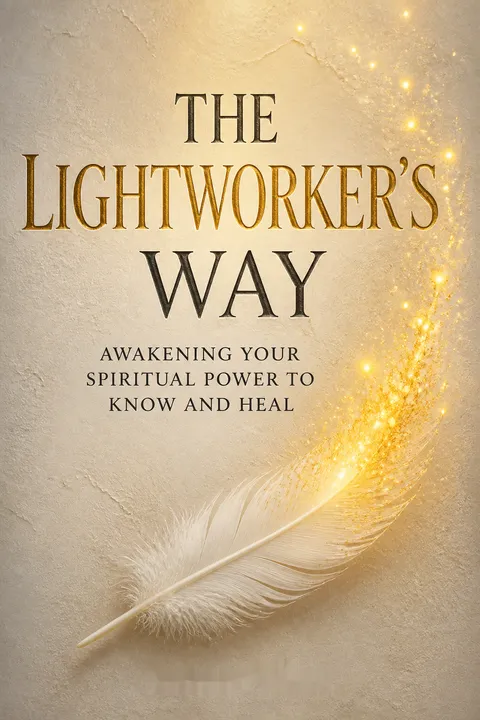
- Spiritual Awakening Focus: The Lightworker's Way by Doreen Virtue is a guide for individuals who feel called to heal and help others, emphasizing the recognition of spiritual gifts and the role of lightworkers in healing the planet.
- Personal Journey: The book combines Virtue's personal experiences with psychic abilities and spiritual healing, serving as both a memoir and a practical guide for readers seeking to reconnect with their divine purpose.
- Healing Techniques: It provides various techniques for spiritual healing, including meditative practices, affirmations, and the importance of forgiveness, encouraging readers to trust their intuition and embrace their unique gifts.
Why should I read The Lightworker's Way?
- Empowerment for Lightworkers: Essential for anyone identifying as a lightworker or feeling a calling to help others, offering insights and encouragement to embrace one's spiritual path.
- Practical Guidance: Offers practical advice on developing psychic abilities and spiritual healing skills, with actionable steps to awaken spiritual power.
- Inspiration and Hope: Filled with inspiring stories and messages, it fosters a sense of community among those on a similar spiritual journey.
What are the key takeaways of The Lightworker's Way?
- Awakening Spiritual Gifts: Emphasizes the importance of recognizing and developing spiritual gifts, with everyone having the potential to be a healer.
- Role of Forgiveness: Highlights forgiveness as crucial in healing, both for oneself and others, with affirmations like “I forgive, accept, and trust myself.”
- Connection to the Divine: Encourages cultivating a relationship with the Divine and trusting spiritual guidance for navigating life's challenges and fulfilling one's purpose.
What are the best quotes from The Lightworker's Way and what do they mean?
- “You are a lightworker if you feel called to heal others.”: Defines the essence of being a lightworker, emphasizing the innate desire to help and heal.
- “Nothing is lost in the mind of God.”: Reassures readers that all is well in the spiritual realm, encouraging trust in divine timing and support.
- “Our thoughts are so powerful that they create the circumstances of our lives.”: Underscores the importance of positive thinking and the impact of mindset on reality.
What is a lightworker according to The Lightworker's Way?
- Definition of Lightworker: A lightworker is someone who has volunteered to help heal the planet and its inhabitants, often feeling a deep sense of purpose.
- Characteristics of Lightworkers: They may have experienced harsh life challenges and possess innate spiritual gifts, such as psychic abilities, feeling compelled to teach or counsel others.
- Awakening Process: Many lightworkers are awakening to their purpose and gifts, especially during significant global shifts, crucial for fulfilling their divine mission.
How does Doreen Virtue suggest developing psychic abilities in The Lightworker's Way?
- Meditation and Visualization: Emphasizes meditation and visualization as tools for developing psychic abilities, helping clear the mind and open channels for intuitive guidance.
- Chakra Clearing: Discusses balancing and clearing chakras to enhance psychic receptivity, providing techniques for chakra clearing.
- Trusting Intuition: Encourages learning to trust one's intuition, paying attention to gut feelings and inner guidance on the spiritual path.
What role does forgiveness play in The Lightworker's Way?
- Healing Through Forgiveness: Highlights forgiveness as vital for spiritual healing, explaining that resentment can block healing and progress.
- Self-Forgiveness: Emphasizes the importance of self-forgiveness for personal growth and healing, encouraging affirmations like “I forgive, accept, and trust myself.”
- Forgiveness as a Spiritual Practice: Presents forgiveness as a spiritual practice that transforms relationships and promotes inner peace.
What techniques for spiritual healing are discussed in The Lightworker's Way?
- Affirmations and Prayers: Provides affirmations and prayers to enhance spiritual practice, aligning thoughts with divine love and healing energy.
- Energy Healing Practices: Discusses energy healing techniques to clear negative energy and promote healing, accessible to anyone willing to learn.
- Connecting with Angels: Encourages calling upon angels for guidance and support, sharing methods for connecting with angelic energies.
How does The Lightworker's Way address the concept of oneness?
- Unity of All Beings: Emphasizes that all beings are interconnected and part of a greater whole, crucial for lightworkers on their spiritual paths.
- Collective Consciousness: Discusses collective consciousness and how lightworkers can influence the world through thoughts and intentions.
- Healing the World: Encourages seeing one's role in healing the world as part of a larger mission, working together to create positive change.
What is the significance of the third eye in The Lightworker's Way?
- Spiritual Sight: The third eye chakra is associated with spiritual sight and intuition, allowing access to higher consciousness and psychic abilities.
- Clairvoyance Development: Provides techniques for developing clairvoyance through third eye activation, including meditation practices.
- Connection to Higher Guidance: Emphasizes the third eye as a gateway to receiving guidance from the Divine and spiritual realms.
How does Doreen Virtue suggest we connect with angels in The Lightworker's Way?
- Simple Invocation: Explains that connecting with angels requires simply asking for their assistance, without needing formal invocation.
- Visualizations and Meditations: Includes guided visualizations to help feel the presence of angels, enhancing connection and spiritual experiences.
- Trusting Intuition: Encourages trusting intuitive feelings as signs of angelic presence, aligning thoughts with divine guidance.
How can I apply the teachings of The Lightworker's Way in my daily life?
- Daily Meditation: Incorporating daily meditation helps maintain a connection with your higher self and the divine, fostering inner peace.
- Practice Forgiveness: Actively working on forgiveness leads to emotional healing and improved relationships, letting go of grudges.
- Engage with Spiritual Community: Connecting with like-minded individuals enhances your spiritual journey, providing support and encouragement.

Download PDF
Download EPUB
.epub digital book format is ideal for reading ebooks on phones, tablets, and e-readers.








