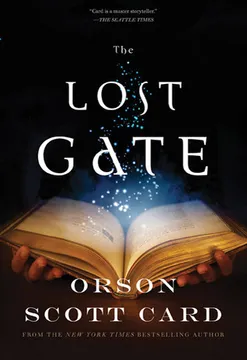


Plot Summary
The Drekka Finds a Gate
Danny North is the son of the North Family’s ruler, yet at thirteen he still cannot make a clant or sense his outself. His cousins treat him as a defective outsider, and the old men mutter that a drekka may have to die for the family’s safety. When Danny catches two girls’ miniature clants in his shirt to stop them misbehaving, their outselves are trapped and the adults nearly beat him to death before recovering them.
Ordered to climb for the shirt, Danny reaches a branch he could not physically have attained. He realizes he has passed through a gate. The jump heals his injured shoulder, confirming what his family would consider a death sentence: Danny can make gates, a forbidden power blamed for an ancient catastrophe.
Danny’s discovery reverses the meaning of his supposed deficiency. The trait that isolates him is not an absence of power but a form the family cannot recognize, and therefore cannot safely acknowledge. His accidental capture of the girls’ clants also shows how easily an excluded child can reproduce the coercion used against him, even without understanding the harm. The adults’ violence reveals that family membership is conditional: blood and parentage matter less than compliance with a political rule. Danny’s first gate brings elation, but the healing it performs immediately turns wonder into danger. His power does not free him until he can hide it.
A Greek Girl Sees Him
A Greek delegation arrives to inspect the North children, and Aunt Tweng identifies Danny as talentless before the visitors. The delegation’s young companion, Yllka, later finds him spying through the wall of the old house’s library.
As adults smash through the plaster, Danny cannot find his familiar escape route and realizes the girl has concealed his gate. He makes another under pressure and lands outside the family boundary. Thor, the North intelligence chief, then reveals that he and Danny’s parents, Alf and Gerd, have quietly protected him.
That protection cannot continue openly: if Danny returns, the family must appear to obey the treaty and kill him. Thor urges him to survive among ordinary people until he can control his gates. Danny leaves, choosing flight over the family that raised him.
The inspection turns private shame into public danger. Danny has spent years trying to be unobtrusive, yet the adults’ rehearsed description of him makes his vulnerability part of the family’s diplomatic performance. Yllka’s ability to interfere with his escape creates a first external counterpart to his power, while Thor’s revelation offers emotional relief with a severe qualification: his parents’ love cannot override political self-preservation. The moment he flees, Danny gains physical freedom but loses the possibility of returning to an ordinary place in the family. His survival begins as an act of mistrust, not confidence.
The Boy Leaves the Oak
In the distant kingdom of Iceway, Eko, an eleven-year-old mountain girl, watches a human shape rise through the bark of a great oak. The figure is not the ancient man her family has imagined, but a naked, frightened boy whose head remains trapped. Eko wakes her father, who lifts her high enough to support the boy until the tree releases him.
By morning the stranger has vanished, leaving no scar in the trunk. Eko grieves that he did not stay, then quietly leaves food and an old tunic beside a young oak near her family’s fields. Both disappear overnight. The family returns home believing the boy has followed them. Eko’s small kindness gives the newly freed wanderer a first human foothold beyond the forest.
Eko’s response to the oak’s mystery is practical before it is romantic: she sees someone in danger and helps him, even though the family’s stories have made the tree both sacred and frightening. Her father’s assistance gives the rescue a communal dimension, but Eko alone continues to care after the boy disappears. The episode establishes a contrast with the North compound, where Danny’s vulnerability invites suspicion and punishment. Here, a stranger receives food and clothing without proof of belonging. Eko cannot claim the boy or demand gratitude; her kindness matters precisely because it leaves him free to go.
Wal-Mart's Barefoot Thief
Danny reaches a Lexington Wal-Mart with no money, no shoes, and no experience of shopping. He talks his way past a skeptical greeter, takes clothes and running shoes, and escapes through a gate with the loaded cart. Behind the stores, Eric, an eighteen-year-old drifter, spots the dangling security tags and recognizes a novice shoplifter.
Eric offers to teach Danny how to beg and find rides, presenting himself as an older brother while planning to use Danny’s youth to earn money. Danny accepts because he needs help navigating the road, and the two travel toward Washington. Eric’s street knowledge gets them food, cash, and transport, but his usefulness is entwined with self-interest from their first meeting.
Danny’s first contact with ordinary society is not a clean liberation but an improvisation built from theft, performance, and an uneasy bargain. His verbal agility, dismissed as mischief in the compound, becomes a survival skill in a store where he has no money or adult protection. Eric offers companionship in the language of utility, and Danny accepts because practical help resembles care when a person has had little of either. The partnership also begins to expose Danny’s moral uncertainty: he can evade consequences through gates, but he cannot yet tell whether that makes him independent or merely more exploitable.
Wad Enters Nassassa
The boy from the oak reaches Nassassa Castle, where a kitchen worker discovers him inside a locked shade garden. Hull, the night cook, suspects he is a gatemage because he appeared without opening a door, but she also recognizes the danger of being identified. She invents a harmless explanation for his entry, feeds him, and gives him a bed among the kitchen boys.
Since he cannot yet explain who he is, she names him Wad, after the dough the cooks knead. Wad rarely speaks and avoids people’s eyes, but begins exploring every beam, wall gap, passage, and hidden room in the castle. His silence makes him seem insignificant; his secret movement soon gives him knowledge no court official possesses.
Hull’s shelter is a form of ethical recognition: she notices Wad’s danger without insisting that he make himself legible before helping him. Naming him gives him a place in the kitchen while keeping his origin concealed, a modest act that contrasts with the formal identities enforced in court. Wad’s silence is not simple passivity. It allows him to observe a political world where speech is often a weapon and visibility invites control. His movement through architectural gaps turns exclusion into access, but the skill also risks making him an instrument of surveillance. The castle offers safety and a new role, not innocence.
Runes in the Library
In Washington, Danny searches the Library of Congress for evidence about gates and reads untranslated runes in a Danish volume, discovering an account of an ancient Loki who manipulated a gate to defeat a foe. A librarian challenges him when he takes the book, so Danny escapes through a gate and later returns it, ashamed of having abused her trust.
Eric has followed him and seen him vanish. He presses Danny to use the power for burglary, arguing that rich households are easy targets. Danny dislikes the idea but accepts that he may need money and experience. Their partnership shifts from begging to a planned crime, while the runes give Danny a fragmentary history that neither his family nor his new companions can fully explain.
The library joins two kinds of knowledge that Danny has been denied: the public record, which treats magic as legend, and his own inherited fluency, which makes the legend suddenly usable. His treatment of the librarian complicates his self-image. He can expose her to magic and take what he wants, yet he recognizes that her kindness deserves better. Eric’s proposal turns power into a means of income, and Danny’s hesitation shows that escape alone has not given him a moral framework. The inscription hints that gates can be manipulated rather than merely traversed, planting a technical clue whose meaning will emerge only through later experiments.
Three Lives in the Safe Room
Danny and Eric enter a Georgetown mansion intending to steal small electronics, but a hidden safe room contains the dead owner, Abel Wheelwright, and three bound survivors: his wife, daughter, and assistant.
Danny abandons the burglary and calls emergency services from a nearby church, giving the rescuers the secret room’s location. Eric is furious that Danny has drawn police attention, but the news later confirms the three women survived.
At Stone’s crowded townhouse, the owner recognizes Danny as a gatemage and explains that he recruits unaffiliated mages, called Orphans, to find teachers and support. Stone offers to connect Danny with the Silvermans. Danny agrees, but first promises Eric one final job, unable to dismiss the debt he feels toward his first companion.
The safe room forces Danny to choose between the clean logic of a getaway and responsibility for people he has actually seen suffering. Eric’s anger makes the cost immediate: doing the decent thing may destroy the only friendship Danny has managed to form. Stone’s arrival offers a different kind of community, but Danny does not instantly trust it. His insistence on one final job shows how obligation can persist after a relationship has become unsafe. The rescue also marks an important distinction in Danny’s growing ethics: he may exploit institutions or break property rules, but he refuses to treat another person’s preventable death as someone else’s problem.
Rico's Bat and Broken Thumb
Danny carries stolen electronics to Rico, a fence who has already threatened the boys. Rico attacks Eric with a baseball bat when they refuse his low offer, leaving him badly injured. Danny gates Eric out of the office, then discovers he can move a gate around a person rather than merely pass through it.
Rico’s arms remain trapped across the boundary while Danny finds the hidden cash and gives Eric money for medical costs. José, Rico’s frightened clerk, takes a gun and shoots his employer after Danny offers him a chance to escape. Danny heals Eric by taking him through a gate, then returns him to his Virginia hometown with cash and an alibi. He leaves for the Silvermans, ending a bond built on need and manipulation.
The confrontation makes Danny’s abstract power bodily and ethically consequential. He can rescue Eric because the gate heals him, but the same ability can immobilize Rico and expose the clerk to a choice between complicity and violence. Danny does not kill Rico himself, yet his actions shape the conditions in which José fires. The episode tests Danny’s tendency to claim innocence because he can escape. He takes responsibility for Eric, gives José a way out, and then refuses to keep serving Eric’s criminal plans. Separation is not a rejection of gratitude; it is recognition that gratitude cannot require permanent submission.
The Orphans' Farm
Stone sends Danny to Marion and Leslie Silverman, a rural couple who are wary of the trouble a gatemage could bring. They agree to teach him basic principles of magery while asking him to work on their farm. Leslie explains that gates are made from fragments of an outself, though neither she nor Marion knows how Danny can call those fragments back.
Danny discovers that he has left roughly 250 gates scattered through the places he has visited, an impossible number by ordinary magical standards. He and Leslie theorize that gatemages serve spacetime through improvisation, language, and pranks, but cannot prove it. Years of farm work and study give Danny safety and affection, even as his power remains largely self-taught.
The Silvermans replace the Norths’ conditional belonging with a relationship that combines limits, labor, and affection. They do not romanticize Danny’s power: they ask what it can do, what risks it creates, and whether he can live responsibly with it. Their ignorance is important. Kindness does not automatically confer expertise, so Danny must collaborate rather than receive a ready-made manual. The theory that he serves spacetime through pranks is both intellectually suggestive and psychologically dangerous, since it could turn immaturity into destiny. Farm chores ground him in reciprocal care, giving him a life in which his value is not measured only by magical capacity.
The Queen's Hidden Fire
In Nassassa, Wad becomes the castle’s unseen witness, tracking possessions and overhearing the rival schemes surrounding King Prayard, his wife Bexoi, and his concubine Anonoei. Wad watches Bexoi closely and falls in love with the queen, whose apparent weakness hides a formidable magical skill. When Luvix enters her chamber intending to murder her, Wad steals the poison and warns Bexoi.
She creates a lifelike clant of herself, allowing Luvix to believe he has killed her while the real queen watches from a hidden passage. Wad reveals his gates to her, and she recognizes him as a powerful mage. Bexoi and Wad become lovers, and she conceives a child by him while maintaining the court’s belief that Prayard may be its father.
Wad’s observation begins as a survival strategy, but Bexoi draws him into a relationship where seeing is no longer enough; he must choose whether to intervene. Her successful deception makes her more than a passive object of protection, and the clant she constructs mirrors Wad’s own hidden life. Their intimacy forms around mutual recognition, yet it is also entangled with succession and political advantage. Wad’s love gives him a reason to act, but it does not make his motives pure. The scene establishes a recurring danger in this world: magical concealment can save a life while also making truth harder to separate from a useful performance.
Veevee Opens a Door
At fifteen, Danny’s isolation on the Silverman farm has grown harder to bear. Victoria Von Roth, known as Veevee, follows one of his gates to Yellow Springs and reveals that she has spent decades studying gatemages, though she believed she lacked the power herself. She can find and pass through Danny’s open gates.
In Florida, she and Danny experiment: overlapping gates become a wider, two-way passage, and he can move one gate through another, a process they connect to ancient accounts of gates being consumed. Veevee’s research gives Danny clues, not certainty, but her excitement makes his magic feel shared rather than shameful. Their collaboration also revives old tensions with the Silvermans, who know Veevee from earlier in their lives.
Veevee changes Danny’s relationship to his ability by making it an object of curiosity rather than a solitary emergency. Her decades of study suggest that intellectual labor can preserve knowledge even when institutions suppress the practice itself. Yet the experiments show how quickly discovery can outrun judgment: a passage can become public, and a gate can be moved without either of them knowing its full consequences. The Silvermans’ discomfort reminds Danny that relationships carry histories he did not witness. Veevee is not simply a mentor or friend; she is a source of insight whose presence alters the emotional balance of the household.
Hull's Murder, Wad's Prisoners
Hull discovers an attempt to poison Queen Bexoi and tells Wad that someone is trying to prevent the queen’s child from becoming heir. Wad recognizes the threat but fails to guard Hull. An assassin kills her in her room, and Wad finds her too late. Grief and guilt turn into action: he abducts Anonoei and her young sons, Eluik and Enopp, placing them in hidden caves above the lake.
He keeps them alive with food and water, but the cells’ looping gates make every escape attempt terrifying. Wad tells himself that imprisonment is less than murder, even as he uses his power to make the captives helpless. His decision protects Bexoi’s pregnancy while beginning a moral collapse he cannot dismiss as mere necessity.
Hull’s death exposes the gap between Wad’s capacity to observe and his ability to protect. He knows danger is gathering, but surveillance has not taught him how to prevent violence. His response is shaped by grief, fear, and a wish to control every future threat; the caves transform those feelings into a system of punishment. By keeping the prisoners alive, he preserves a distinction between himself and a killer, but the torment he devises makes that distinction unstable. The episode asks whether restraint is meaningful when the powerful person still decides another person’s entire world. Wad’s self-condemnation does not stop him from exercising control.
Oath and the Secret Father
Bexoi gives birth to a son, Oath, and Wad secretly uses a gate to ease the delivery and heal her bleeding. Prayard accepts the child as his heir, and Bexoi publicly turns away from Gray’s agents in favor of peace between the kingdoms. The change brings her closer to Prayard and makes Wad’s place beside her uncertain.
He continues visiting the toddler in a hidden playroom, calling him Trick and raising him as a father while the court sees only the kitchen boy. When Bexoi becomes pregnant by Prayard, Wad realizes that the child he fathered may no longer serve her ambitions. He also begins to understand that the imprisoned family could become political leverage rather than a threat to be simply erased.
Oath’s birth creates a public settlement founded on a private deception. The child is accepted as Prayard’s heir, and the political result may preserve peace, yet Wad’s secret paternity complicates every claim of loyalty. His play with Trick offers tenderness inside a life governed by hidden identities, but it also keeps the boy ignorant of dangers that Wad can see. Bexoi’s renewed marriage to Prayard is not simply betrayal or reconciliation; it is a strategic and emotional shift that Wad cannot control. His unease marks the beginning of a moral awakening: the people he imprisoned may be necessary protections against the very woman he loves.
A License to Become Ordinary
As Danny approaches sixteen, Marion and Leslie offer him a car, expecting him to want the freedom to date. Danny instead asks to attend high school because he wants friends, ordinary teenage experiences, and a life beyond the farm. He proposes renting a modest house in Buena Vista, near the Virginia compound he fled, with Veevee posing as his aunt.
The Silvermans reluctantly agree that he needs to learn how ordinary society works. Danny returns to Stone, who arranges a usable birth record, Social Security identity, and immunizations. There he learns that Veevee is Stone’s estranged wife, not a wealthy woman living on alimony. Danny carries the secret carefully, then prepares to enter school under the name Danny Stone.
Danny’s request is not a rejection of the Silvermans but a demand for a fuller kind of development. He has learned to survive through concealment and magic; now he wants the friction of peer relationships, where he cannot simply gate away whenever he feels awkward. His plan depends on another performance, a fabricated identity and an aunt who is not his aunt, but it is aimed toward participation rather than escape. Stone’s revelation about Veevee shows Danny that adults also hide behind incomplete accounts of their lives. The new identity offers access to school while underscoring that ordinary belonging is not equally available to someone without documentation.
The Rope Reaches the Sky
Danny enters Parry McCluer High School determined to look capable without becoming an obvious prodigy. He befriends Hal, a tall, frequently mocked student, and resists Coach Lieder’s attempts to recruit him for track. On Danny’s birthday, Lieder orders Hal to climb a rope.
Danny secretly uses tiny gates to help, intending to spare his friend humiliation, but the rope carries Hal far above the school before returning him safely. Other students try it, turning the rope into an impossible attraction.
Danny recognizes that he has exposed his magic and may draw the Families’ attention. Outside the gym, he finds Yllka, the Greek girl from his childhood, waiting near the school. Believing she has come to expose him, he gates away before she can explain herself.
Danny’s first sustained attempt at ordinary teenage life reproduces the very temptation he hoped to escape: using superior power to manage social pain. His intervention is compassionate toward Hal, but it also lets Danny perform a hidden rescue without asking whether Hal wants one. The rope’s spectacular behavior converts a private impulse into public evidence. Lieder’s humiliations have made the classroom a small hierarchy, yet Danny’s solution risks replacing that hierarchy with his own unaccountable advantage. Yllka’s arrival turns the consequences outward. Danny has not simply made a mistake; he has created a trail that can connect his school, his past, and the political danger he fled.
Hermia Locks the Gates
Danny flees through his older gates, but Yllka follows and asks him to listen. She explains that her parents raised her to recognize gates, while the Greek family kept her true abilities hidden. She has escaped them rather than lead them to Danny. Through a private exchange of their magical senses, she shows him how to lock and unlock gates; he then discovers that he can retrieve gates into himself and close them.
Yllka identifies the rope’s spiral as an accidental attempt to make a Great Gate and warns that such attempts attract the Gate Thief, who strips gatemages of their power. She agrees to help Danny, not because she is safe, but because her own family would punish her for being more than a Finder.
Trust becomes a technical event here. Yllka does not prove her loyalty with a promise; she risks exposing her own magical self, giving Danny a way to judge her through an intimate, nonverbal connection. Danny’s new understanding of locks also changes his sense of agency. The scattered gates that once represented carelessness can now be gathered or closed. Yet the warning about the Gate Thief means mastery is not control over every consequence. Yllka’s escape parallels Danny’s: both are caught between families that value magical potential while fearing what it may do to inherited power.
Twelve Gates to Westil
Danny’s allies gather at the school gym, where the rope first revealed his accidental power. With Hermia and Veevee helping him spin, he creates twelve gates and sends their far ends toward Westil, the homeland cut off from Earth for centuries. Hermia keeps the passages controlled while Marion, Leslie, Veevee, and Stone stand ready; Ced chooses to cross and remain in the other world.
The Gate Thief seizes Danny’s gates and begins drawing in his entire magical reserve. Instead of fighting for each fragment, Danny holds his gates within the thief’s store, then forms a vastly larger passage around the stolen hoard and severs its connection to its owner. The other mages return, but Danny collapses beneath the many voices now held inside him.
The Great Gate is both a technical achievement and a test of Danny’s emerging ethics. He does not open it to claim a throne or restore his own family’s supremacy; he brings witnesses and collaborators, then gives others the chance to choose whether to cross. Ced’s decision to stay makes the passage consequential beyond the spectacle of its creation. Danny defeats the Gate Thief not by overpowering each stolen fragment separately, but by refusing the expected contest and enclosing the whole system. Victory remains dangerous: his success fills him with the voices and desires of those whose power was taken, turning triumph into a crisis of identity.
The Warden Loses His Heart
As the Great Gate draws the Gate Thief’s attention, Wad discovers that his own vast reserve of stolen gates has been taken from him. At Nassassa, soldiers descend toward the caves where he imprisoned Anonoei and her sons, ready to kill them. With only a few gates left, Wad pulls the captives out and sends them to the mountain home of Eko’s family.
He heals Enopp after a pike wounds him. But when he returns to the castle, he finds that Bexoi has already had Trick smothered and carried away by a nurse. Wad does not retaliate against the nurse or Bexoi. He seeks Eko again, entrusting the rescued family to her and grieving over the child he could not protect.
Wad’s loss of power strips away the conditions under which he had made himself judge, jailer, and protector. His first response is still action: he saves the prisoners he once tormented and heals the injured child, but the reduced means force him to confront what he cannot undo. Trick’s death makes the costs of his possessive love undeniable. Wad had treated control as protection, yet he could not control Bexoi’s plans or secure his son’s safety. His refusal to kill the nurse or take immediate revenge does not erase his earlier cruelty. It marks a first movement away from treating punishment as the only available form of justice.
No Gate for the Norths
Danny wakes in the gym as Hermia and Veevee close the stolen outselves around him one by one. He realizes the Gate Thief is Loki, still driven by fear of Bel, though the danger Bel represents remains unclear. Danny’s North relatives arrive: Zog attacks in hawk form, Gyish opens the ground, and Danny’s parents demand access to Westil.
Leslie breaks Zog’s bond with the bird, Marion saves the group from Gyish’s assault, and Danny sends the elders back to their compound rather than killing them. He refuses to make a gate for the Norths and restores passages between his friends. Though his allies debate wider access and a new political settlement, Danny chooses to return to school and build a human life, wary of how much he enjoyed command.
The final confrontation resolves Danny’s opening conflict without granting him a simple homecoming. His parents acknowledge that they expected his power to serve the family, confirming that their protection was conditional on a future use. Danny’s refusal is therefore both political and personal: he will not convert his survival into the restoration of the same hierarchy that condemned him. His restraint matters as much as his strength; he returns the elders instead of killing them, even after their attack. But the ending remains deliberately unsettled. Loki’s fear of Bel suggests that the old barriers may have prevented a larger danger, while Danny’s pleasure in wielding power warns that rejecting inherited authority does not automatically make him just.
Analysis
The novel makes inherited power less a stable privilege than a political system for deciding who may count as fully human. Danny is condemned as a drekka because his ability does not fit the family’s categories, while Wad’s hidden existence similarly leaves him outside the roles that organize Nassassa. Both boys learn to move through walls and social structures, but their contrasting choices matter: Danny’s story asks whether immense power can coexist with ordinary obligations, while Wad’s shows how protection becomes indistinguishable from domination when one person controls every exit.
Magic is also a theory of relation. A mage gains ability by attending to something beyond the self, whether animal, stone, weather, or space. Danny’s supposed affinity for spacetime is therefore ethically suggestive: he changes the conditions that connect people, and his tricks can rescue, deceive, transport, or imprison. His abilities do not supply a moral code. The Silvermans, Eko, and even the people Danny meets on the road teach him that care is demonstrated through consequences, not through the grandeur of a motive.
The two storylines complicate the easy division between gods and ordinary people. The families dismiss drowthers while depending on their technologies, and Danny’s exposure to their generosity unsettles that hierarchy. In Iceway, treaty and succession turn private bodies and children into political instruments. Bexoi, Wad, and Prayard all use concealment to survive, but concealment protects some people while endangering others.
Danny’s victory over the Gate Thief does not resolve the novel’s deepest uncertainty. Loki feared Bel, and Danny has not learned whether opening the worlds will restore community or release the threat that made separation seem necessary. His refusal to empower the Norths is a moral beginning rather than a political solution. The ending’s central discipline is restraint: Danny must learn not only how to cross every boundary, but when not to use the passage he can make.
Review Summary
The Lost Gate received mixed reviews. Many praised Card's world-building and magic system but criticized the underdeveloped characters and pacing issues. Some found the protagonist Danny annoying and the plot predictable. Readers appreciated the unique take on mythology and gods, but felt the story lacked depth. The audiobook narration received positive feedback. Several reviewers noted uncomfortable sexual content. While some enjoyed the book and looked forward to the series, others found it disappointing compared to Card's earlier works.
Characters
Danny North
The reluctant gate-makerDanny is a brilliant, curious boy raised among hereditary mages who cannot recognize his particular gift. Years of exclusion make him observant, quick with language, and skilled at reading what people want to believe. He uses humor and deception to protect himself, but he is not comfortable treating other people as disposable. His central struggle is not simply learning what his magic can do; it is deciding what he is entitled to do with it. The affection he finds outside his birth family gives him a different model of belonging, while his desire for friends and an ordinary adolescence keeps pulling him toward a life his power could easily overshadow.
Wad
The hidden castle wandererWad is a silent, elusive young figure who enters Nassassa Castle without explanation and learns its spaces from the rafters, walls, and forgotten passages. He prefers watching to speaking, partly because he distrusts the court’s formal games and partly because his own past is inaccessible to him. His memory for people’s movements and possessions makes him valuable and unsettling in equal measure. Wad is drawn toward loyalty and affection, but his tendency to equate protection with control places those impulses under strain. His story provides a darker mirror to Danny’s: both possess unusual access to space, yet Wad’s choices show how easily care can become coercion.
Hermia, called Yllka
The Greek gate scholarYllka is the name Hermia uses publicly within her Greek family, while Hermia is the name her parents gave her in connection with their hopes about her abilities. She is clever, bold, and intensely curious about the history of gates. Years of study have made her more knowledgeable than Danny about old accounts, though she has never had his practical experience. Her eagerness can make her seem presumptuous, but it conceals genuine vulnerability: the family that nurtured her curiosity also fears what that curiosity may reveal. She seeks both a partner in discovery and a route out of inherited danger.
Victoria Von Roth, Veevee
The exuberant researcherVeevee is a wealthy, theatrical, and warm-hearted woman whose lifelong fascination with gatemages has not been matched by certainty about her own place in that history. She treats difficult discoveries as invitations to experiment, which makes her an energizing companion for Danny and sometimes a risk-taking one. Her sharp humor can conceal the hurt of old romantic disappointments, especially where Marion and Leslie are concerned. Veevee is generous with her knowledge and resources, but she is not simply a teacher: she wants to understand the mystery for herself and to be recognized as more than the eccentric role others assigned her.
Leslie Silverman
The firm-hearted mentorLeslie is a practical farmer and beastmage whose affection is expressed through work, candor, and clear boundaries. She and her husband welcome Danny despite knowing that his presence may bring danger to their home. Leslie is willing to admit what she does not know, yet she expects Danny to take responsibility for the harm his power could cause. Her humor can be dry and severe, especially when she is frightened for someone she loves. She gives Danny something different from instruction: a lived example of care that does not require obedience, magical usefulness, or a performance of gratitude.
Marion Silverman
The patient stoneworkerMarion is a geologist, skilled stoneworker, and patient presence in Danny’s new household. His work with stone is both practical and personal, and he treats the land and the people around him with a steady respect. Marion is less interested in abstract claims about power than in what a person does with it. He supports Danny’s wish to enter ordinary society while remaining alert to the danger that the old families pose. His loyalty to Leslie is evident, but he does not turn their home into a refuge from every consequence; he helps Danny prepare to meet the world beyond it.
Queen Bexoi
The concealed queenBexoi is a politically constrained queen in Iceway, sent into a marriage shaped by the outcome of war. Publicly, she appears to possess only a slight affinity with small birds, and she keeps her feelings and intentions closely guarded. Her patience is not submission: she understands how marriage, inheritance, and diplomacy can be used as instruments of power. Bexoi is capable of tenderness and strategic calculation, sometimes within the same relationship. She has spent much of her life being treated as a token between kingdoms, and her desire to shape her own future makes her both compelling and difficult to trust.
Eric
The streetwise drifterEric is an eighteen-year-old drifter who knows how to beg, find rides, and read the streets. He helps Danny survive outside the North compound, but he also sees the younger boy’s abilities as a way to make money. Eric’s affection is real, though tangled with possessiveness and self-interest. He has learned to depend on himself and expects other people to do the same, which makes him impatient with Danny’s moral hesitation.
Stone, Peter Von Roth
The Orphan recruiterStone, whose full name is Peter Von Roth, is a self-taught mage who grows Westilian flowers and uses their pollen to attract people with magical ancestry. He recruits for the Orphans, a loose community seeking instruction and mutual support outside the great families. Stone is perceptive but not sentimental; he warns Danny about his dangerous choices even while offering him a safer path. His history with Veevee and the Silvermans gives him a personal stake in their uneasy relationships.
Hull
The protective night cookHull runs the night kitchen at Nassassa with a sharp eye and a fierce sense of responsibility. Her humor is often misunderstood by the people who work under her, but her apparent roughness conceals a deep capacity for loyalty. She shelters Wad when he appears in a locked garden and protects him without demanding that he explain himself. Hull’s understanding of court danger comes from practical experience rather than rank, and she is one of the few people who can challenge Wad’s tendency to disappear into silence.
Eko
The mountain childEko is an observant, brave eleven-year-old who looks after her younger siblings in a poor mountain household. She helps the boy trapped in the oak even though the family’s stories have made the tree unsettling. Eko is tender without being timid: she acts when someone needs help, then respects his freedom to leave. Her small gifts of food and clothing reveal a generosity that does not depend on status or reward.
King Prayard
The embattled seamage kingPrayard rules Iceway as a powerful seamage king whose political choices are constrained by a treaty with Gray. He treats public ceremony as a way to preserve stability, even when his private relationships are far more complicated. He is gracious and capable of affection, but his decisions can diminish the people closest to him. Prayard’s concern for succession reflects the kingdom’s dependence on magical ability and the burden of preserving a dynasty.
Anonoei
The king's concubineAnonoei is Prayard’s concubine and the mother of his two young sons, Eluik and Enopp. The court’s political arrangements make her family’s future uncertain, and she lives under the scrutiny of people who see her children as possible heirs. Her relationship with the king gives her a place at court without the security of a queen’s standing. She is a mother trying to protect her sons in a world where their existence has political consequences.
Thor
The North intelligence chiefThor manages the North Family’s network of informants and is one of the adults who has quietly watched over Danny. He is pragmatic, irreverent, and more willing than the family elders to evade treaties when he believes their purpose is unjust. His protection has limits, however, because he knows the family may still turn against Danny if his secret becomes public. Thor represents the uneasy space between affection and political calculation.
Alf, called Odin
Danny's powerful fatherAlf is Danny’s father and the ruler of the North Family, known within that world by the title Odin. A gifted mage of metals and machines, he has helped keep the family alive in a modern society they cannot openly dominate. His authority requires him to uphold rules even when they threaten his own household. Danny’s relationship with him is marked by distance, making the difference between parental care and public duty difficult to read.
Gerd
Danny's gifted motherGerd is Danny’s mother, a powerful lightmage whose skill can alter what others see. Her marriage to Alf joined two formidable magical lineages, raising expectations for their child. Gerd’s public reserve makes her feelings hard for Danny to interpret, and family law limits what she can safely show. She embodies the tension between private affection and the political discipline demanded of a ruler’s household.
Ced
The wind-minded OrphanCed is a young mage with an affinity for wind who lives in Stone’s house for a time. He is Lana’s husband and a potential source of advice, though he is often more patient with her behavior than Danny or Eric can be.
Lana
The volatile housemateLana is Ced’s wife, a provocative and unpredictable young woman whose approach to intimacy unsettles Danny. Her behavior is shaped by a difficult past and a need to keep control of how close others get to her.
Hal Sargent
Danny's first school friendHal is a tall, frequently mocked student who befriends Danny at Parry McCluer High School. He is self-conscious about his lack of athletic ability, but he is open to Danny’s company and willing to try again after embarrassment.
Coach Lieder
The demanding gym teacherCoach Lieder is a forceful physical education teacher who values competition and measurable performance. He targets students he considers weak and treats Danny’s refusal to compete as defiance, creating an early test of how Danny responds to ordinary authority.
The Gate Thief
The feared gate-hunterThe Gate Thief is a mysterious figure or force in the history of gatemages, blamed for stripping their power when they attempt to bridge the worlds. The Orphans know little about how it works, and its repeated attacks have made gatemagic seem doomed. Its true identity and motives remain hidden from most of the people who fear it.
Plot Devices
Gates and the hearthoard
Passages made from the selfA gatemage makes passages by dividing an outself into fragments that anchor the gates. Danny can travel through his own gates, move them, carry objects through smaller openings, and eventually gather the fragments back. A passage may heal someone who crosses it, while a Great Gate connecting Earth and Westil can magnify magical power. The same abilities create moral and practical risks: gates can be hidden, left open, made public, or used to move another person against their will. Danny’s education consists largely of discovering these rules through accidents and experiments.
Clants and outselves
Magic's unseen working bodyMost mages send an outself away from the body to form a clant, a physical or distant version of themselves, or to bond with a creature. The outself lets a mage act beyond ordinary reach, but it can be trapped, divided, or lost. This system explains why a child’s small clant can leave the body helpless, why Wad can move unseen through a castle, and why a gatemage’s passages are connected to fragments of the self. It also provides a vocabulary for the book’s central question: how much of a person remains their own when their power is divided?
The family treaty
A ban enforced by fearThe magical families have spent centuries fighting over access to Westil and policing one another’s power. Their treaties prohibit a gatemage, especially one born among the Norths, because a family able to reopen the Great Gates could dominate its rivals. The ban creates Danny’s immediate danger and explains why his parents cannot simply announce his ability. It also gives the families a shared rule they distrust one another to obey, so their supposed order rests on mutual suspicion, concealed exceptions, and the constant threat of renewed war.
The Gate Thief
The power that consumes gate-makersThe Gate Thief is believed to take a gatemage’s outself when that mage attempts a Great Gate, leaving the victim unable to create new passages. Stories about the threat keep the Orphans from succeeding and make the families’ prohibition seem even more absolute. The threat becomes tangible when Danny attempts to reach Westil and confronts the force behind the stolen gates. The encounter reveals that the danger has a history far older than the current political order, while leaving unanswered what larger enemy it feared and whether that fear was justified.
The runic inscriptions
A forgotten manual in fragmentsA Danish book in the Library of Congress contains copied runes that Danny can read because he knows old languages. The inscriptions recount an earlier conflict involving Loki, Bel, and a gate described through images of mouths, hearts, and swallowing. At first Danny treats them as a strange historical account; later, Veevee and Hermia help him recognize that the language may encode practical knowledge about moving or consuming gates. The text does not explain everything, but its clues shape Danny’s strategy against the Gate Thief and raise the possibility that the old story has been misunderstood.
About the Author
Other books by Orson Scott Card



Download PDF
Download EPUB
.epub digital book format is ideal for reading ebooks on phones, tablets, and e-readers.








