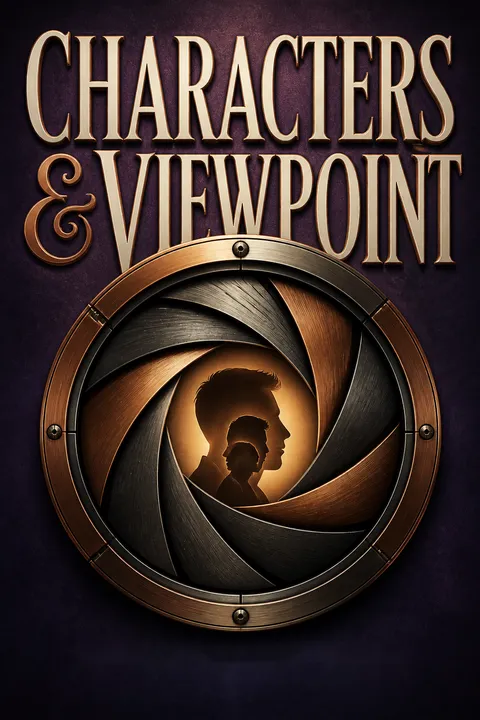


Key Takeaways
Build characters from choices, motives, and history, not a mirror description.
Character is evidence. Readers first judge people by what they do. A resourceful adventurer escaping danger can establish courage and ingenuity without a narrator listing those qualities. But actions alone can mislead: the same apparent betrayal might come from selfishness, fear, or an attempt to protect someone. Motive changes the meaning of behavior, while a character's past helps explain why certain choices matter now.
Looks are only one layer. Reputation, relationships, habits, abilities, preferences, and physical limits all add dimension. A recurring routine can reveal character and create story opportunities, while a physical limitation can shape what a person can do. Appearance matters, but it cannot substitute for decisions, motives, and history, the evidence that most strongly makes a fictional person feel known.
What's useful here is the distinction between observed behavior and inferred character. Everyday social judgment works the same way: actions are visible, motives are hypotheses. Fiction can give readers unusually rich access to those hypotheses, but too much explanation can flatten a character into a diagnosis. The strongest characterization often lets behavior create a question, then supplies enough context to revise the reader's first conclusion. Physical description can still matter when appearance affects how a character is treated or understands the self; it simply needs a job beyond decoration.
Keep asking why until the character escapes the cliché.
Interrogate the premise. When a character idea appears, ask what caused the behavior, what the character wants, and what happens next. Then ask what can go wrong and who suffers most. In a classroom story-making exercise, a twelve-year-old babysitter faces an infant who will not stop crying. Each ordinary solution fails, pushing the situation toward comic escalation and a payoff in which an adult finally recognizes the child's judgment.
Don't stop at acceptable. A first answer often reaches for a familiar stock motive. Keep questioning, or twist an assumption. A fantasy king required to avoid sexual pleasure might be rebellious, or terrified that any lapse will endanger his people. Exaggeration can sharpen a trait, but too much turns a plausible individual into a caricature.
The questioning method resembles causal reasoning: each answer becomes a new condition that can produce consequences. That is valuable because a character becomes story-generating rather than merely descriptive. The twist also works as a test of assumptions, not as novelty for its own sake. A surprising motive should remain psychologically legible once revealed. Excessive escalation can manufacture incident while making the character less human, so the useful question is not simply whether an idea is unusual, but whether it opens a more revealing chain of choices.
Borrow from life, then transform the borrowed material into fiction.
Observation is raw material. A writer can collect ideas from strangers, family, personal memory, interviews, dreams, news, and landscapes. An ordinary grocery-store queue can suggest a family dividing shopping tasks among its members, then become a comic situation through exaggeration and invented motives. A remembered incident can also be moved into a different relationship or setting to reveal a conflict that the original event did not contain.
Copying is not knowing. A real person cannot be fully understood from the outside, and a true event may still seem implausible to readers. Card's early play drew on his mother's family stories, but the imagined motives and misunderstandings proved more alive than the borrowed facts, while the portrayal risked reopening family tensions. Treat a model as a starting point, then invent and disguise.
This approach separates emotional truth from documentary fidelity. Memory is not a recording device; it is a reconstruction shaped by the rememberer's perspective. That makes personal experience powerful material, but also a source of blind spots. Fictional transformation can create distance from identifiable people and make motive more coherent, while analogy helps a writer imagine unfamiliar experiences through a known emotional pattern. The ethical caution is especially important: artistic usefulness does not erase the privacy of people whose confidences or histories supplied the first draft.
Match characterization to the story's main engine, not a universal formula.
Four story engines. The MICE Quotient describes four organizing forces: milieu, idea, character, and event. Milieu centers on exploring a world. Idea begins with a question or problem and ends with an answer, as in a mystery. Character follows someone trying to leave an intolerable social role. Event starts with a disorder in the world and follows efforts to restore or replace order.
Set the reader's contract. Every story can contain all four, but one usually leads. A mystery that opens by promising a solution should not end by resolving only the detective's love life. A world-centered fantasy can support detours because readers were invited to explore its setting. Character depth should serve the chosen structure, not appear as an obligation. The primary tension, introduced early, should be resolved before the story feels complete.
The framework is a practical antidote to the assumption that every story needs the same amount of interiority or plot closure. It asks writers to identify what readers are actually following: a place, a question, a life change, or a disequilibrium. Those forces often overlap, so the categories are better treated as design priorities than rigid genres. A layered story can satisfy more than one expectation, but signaling one promise and paying off another risks feeling less like surprise than a broken agreement.
Make character importance visible through choices, focus, and repeated appearances.
Readers rank the cast. Walk-ons fill the world, minor characters make a brief difference, and major characters shape the continuing story. The levels are flexible, but readers infer importance from cues: how often someone appears, how much time the story spends on them, whether their choices affect others, and whether other characters watch or discuss them.
Attention creates expectations. A peculiar cabdriver can briefly steal a scene and remain a minor character. If that encounter occupies the opening, however, readers may expect the driver to matter to the plot. Conversely, a powerful antagonist can feel central even when rarely present if the other characters continually orient themselves around him. A passive character may fade despite frequent appearances, while a single consequential decision can make someone memorable.
This is an account of attention as narrative currency. Readers do not simply receive a cast list; they infer a hierarchy from the story's allocation of space and consequence. That makes proportion a tool for both clarity and suspense. An apparently minor person can become important, but the shift needs to feel earned rather than accidental. The same principle applies to representation: using a stereotype can quickly place a background figure, but relying on stereotypes for meaningful characters risks replacing individuality with the audience's assumptions.
Raise stakes through chosen loss, credible danger, and earned attachment.
Pain needs context. Suffering can make both victim and tormentor more vivid, but repeated injury or grief eventually numbs readers or turns pain into spectacle. Emotional loss carries more force when the story has first shown what the character loves. A long separation from a beloved partner can matter more than a list of injuries because readers understand the relationship being lost.
Choice intensifies cost. A character who accepts pain to protect a principle creates sacrifice, which can be more affecting than suffering imposed by accident. Jeopardy raises tension through anticipated harm, but the threat must seem possible. A child in danger can command intense attention when the audience understands the child's helplessness and a caregiver's inability to intervene. Sexual tension also creates expectation, though fulfillment usually releases that particular tension.
These techniques work by making possible futures emotionally concrete. A threat matters when the audience can imagine both the loss and the attachment at risk. Sacrifice adds agency, distinguishing chosen cost from mere misfortune. Yet intensity is not automatically depth: extreme jeopardy can exceed a reader's tolerance and prompt disengagement, while relentless suffering can reduce a person to a device. The most effective escalation changes what a character must choose or what the audience believes is at stake, rather than merely increasing the amount of pain.
Give the ordinary hero one uncommon virtue readers can follow.
Believable is not enough. A protagonist who is exactly ordinary may feel familiar but fail to command attention. Readers need some uncommon quality that makes the character worth following, even when the life resembles their own. In Card's example, a young manager's unusual capacity to care about a struggling employee costs him time and career standing. That compassion, rather than wealth or brilliance, gives the character a quiet heroic scale.
Earn sympathy through conduct. Initiative, courage, fair dealing, and keeping promises encourage readers to root for a character. Small flaws help preserve credibility; a flawless hero can feel artificial. A character's goal also matters: readers become invested when they understand what is wanted and what effort it has already taken. Sympathy is a craft effect, not a guarantee that the character is morally right.
The common-person hero works through a productive tension: identification offers access, while uncommon conduct offers admiration. A virtue becomes dramatically persuasive when it has a cost, because the reader sees what the character is willing to lose. This also guards against confusing likability with goodness. A story can make two decent people sympathetic while forcing an uncomfortable choice between them. Conversely, relentless virtue without friction can become a moral advertisement rather than a person, so imperfections should complicate the virtue without canceling it.
Make every surprising change earn its cause on the page.
Give the past a present job. A character's history can be shown through brief memories, habits, relationships, and expectations rather than long interruptions. Card calls this an implied past: present behavior hints at earlier experience. A child recoiling from a harmless gesture, for example, suggests a history of punishment without stopping the current scene for a full account.
Change requires evidence. A shy character who suddenly approaches a stranger needs a cause, or a clear signal that the change itself is a mystery. The more central the character and the larger the transformation, the more justification readers need. Flashbacks can supply context, but they pause current action. A memory works more smoothly when a present event prompts it and changes how the character understands the past.
Readers continually build models of people from patterns. A new action is compelling partly because it violates an established expectation, but the violation also demands explanation. Subtle clues let readers revise their model without an explanatory halt, making the character feel as though a life exists outside the scene. Still, not every shift needs a complete psychological account. Over-justification can make fiction feel like a case history; the craft decision is to provide enough cause for trust while leaving room for surprise.
Choose a viewpoint that buys either intimacy, breadth, or a distinctive voice.
Point of view sets distance. First person gives the story to a participant, whose voice and knowledge limit what can be told. Omniscient narration can move among characters and compress time, but its broad access often keeps readers at a distance. Limited third person follows one character's perceptions at a time, offering strong intimacy without making that character the storyteller.
Control access deliberately. In deep penetration, narration closely reflects the viewpoint character's thoughts and attitudes, often without labeling each thought. It can make a scene feel immediate, but the character's bias colors what readers see. A viewpoint change needs a clear break, such as a new chapter or scene. The right choice depends on the story's desired emotional closeness, range of information, and narrative voice.
Point of view is an information architecture as much as a grammatical choice. It determines who can know what, when readers learn it, and how much interpretation is supplied. Limited access can create intimacy and suspense because uncertainty belongs to the character as well as the audience. Omniscience can create irony by showing a gap between characters' beliefs. Neither is inherently superior; each allocates trust differently. A useful revision question is whether every shift in access serves an emotional or informational purpose.
Choose when to stage a scene and when to let the narrator step forward.
Scenes spend reader time. Dramatic presentation lets an important exchange unfold moment by moment, making conflict immediate and memorable. Narrative summary compresses routine or repetitive action; a day of searching records may need only a sentence if the effort matters but its every step does not. The choice is not simply to show everything. It is to decide what the reader must experience directly and what can be conveyed efficiently.
Comedy manages belief. A comic character needs enough reality to be recognizable, but some deliberate oddness can signal that pain or embarrassment is not to be taken with full tragic seriousness. An impossible accent in a serious fantasy world can create that distance while the character's role remains consequential. The comic writer must keep disbelief controlled: too little, and suffering is painful; too much, and the character stops mattering.
This is a theory of attention, not a contest between showing and telling. A scene gives duration and texture, while summary preserves momentum; either becomes wasteful when it receives more space than its importance warrants. Comedy adds a second contract: the audience must believe enough to recognize the predicament and remain distant enough to laugh. That balance is culturally sensitive, since a joke's target determines who bears the cost. Deliberate oddness works best when it exposes a situation, not when it reduces a vulnerable group to the punchline.
Analysis
Characters & Viewpoint treats characterization as a sequence of design problems rather than a checklist of biographical facts. Its central insight is that readers construct a person from evidence: behavior, motive, history, relationships, and the angle from which the story is told. That approach links invention to structure. A character is not developed in the abstract; the story's dominant engine determines which parts of the character deserve attention, and the chosen viewpoint controls how readers interpret them.
The book's most durable practical method is causal interrogation. Asking why a person acts, what the action changes, and who is most affected turns a premise into conflict. It also exposes the cheapness of the first available explanation. Equally useful is Card's insistence that stories make contracts with readers. Opening emphasis, scene length, and recurring attention all imply what will matter, so craft includes managing expectations as well as creating events.
The framework is strongest when treated as flexible craft vocabulary. The four MICE elements overlap, and modern fiction often deliberately shifts its center of gravity. Likewise, the advice about audience sympathy describes tendencies, not universal laws. Readers differ by culture, experience, and genre; a protagonist can be compelling without being conventionally admirable. These limits do not undercut the model. They clarify that the writer is working with probable responses, not controlling every reader.
Some of the book's examples of demographic stereotypes reflect the assumptions of its 1988 context and should not be treated as neutral facts. The more useful lesson is that readers bring preconceptions into a story, and that writers can either expose, complicate, or merely reproduce them. Overall, this is a practical account of how characters become legible and memorable: not by accumulating detail, but by arranging evidence so that actions invite questions, motives revise judgment, and viewpoint makes the reader feel the consequences.
Review Summary
Characters & Viewpoint receives mixed reviews, with many praising its insightful advice on character development and viewpoint selection. Readers appreciate Card's clear explanations and practical examples. Some find the book particularly helpful for novice writers, while others note its dated content and basic approach. Critics point out Card's biases and outdated examples. Despite these criticisms, many consider it a valuable resource for writers seeking to improve their characterization skills and understand different narrative perspectives.
People Also Read






Glossary
MICE Quotient
Four story enginesA way to identify a story's dominant organizing force: milieu, idea, character, or event. Milieu explores a world, idea resolves a question, character follows a person seeking a new role, and event addresses a disorder in the world. All four can appear, but the dominant one shapes reader expectations and the story's ending.
Implied Past
History suggested by behaviorA technique for making a character's earlier life felt without pausing for a full flashback. Present reactions, habits, expectations, and social connections suggest experiences that shaped the character. A person flinching from an ordinary gesture, for example, can imply a painful history while the current scene continues.
Controlled Disbelief
Comic belief at a distanceThe balance comedy needs between recognizable reality and deliberate improbability. A comic character must feel true enough for the audience to recognize the behavior, yet exaggerated or odd enough that misfortune does not demand the full emotional response of serious drama. Too much realism can make the pain hard to laugh at; too much unreality makes the character irrelevant.
Limited Third Person
One character's viewpointA third-person narrative restricted to what one viewpoint character perceives, remembers, and thinks. The narrator can describe that character's inner life but cannot directly know another character's thoughts. The viewpoint may shift between scenes with a clear break, but it should not jump between minds within a scene.
Deep Penetration
Close access to viewpoint thoughtA mode of limited third-person narration in which the prose closely adopts the viewpoint character's perceptions, judgments, and inner language. Because the character's attitude colors the description, the reader experiences events with particular intimacy. The same closeness can restrict reliability, since the viewpoint character may misunderstand other people or situations.
Presentation vs. Representation
Visible narrator or invisible oneA distinction between storytelling that makes the narrator's presence apparent and storytelling that sustains the illusion of direct access to events. Presentational narration may address readers or offer conspicuous commentary. Representational narration keeps attention on the characters and action, with little visible narrator intrusion. Each approach changes distance, emotional involvement, and how directly ideas can be stated.
FAQ
What's Characters & Viewpoint about?
- Focus on Fiction Writing: Characters & Viewpoint by Orson Scott Card is a comprehensive guide for writers on creating compelling characters and selecting the right narrative perspective.
- Three Main Parts: The book is structured into three parts: Inventing Characters, Constructing Characters, and Performing Characters, each addressing different facets of character development.
- Tools for Writers: Card offers various tools and techniques to help writers understand character motivations, relationships, and how to effectively convey their stories.
Why should I read Characters & Viewpoint?
- Enhance Writing Skills: This book is essential for writers aiming to improve their character development and narrative techniques, making their stories more engaging.
- Practical Advice: Card provides practical advice and insights based on his extensive experience, applicable for both beginners and seasoned authors.
- Understanding Human Nature: The book delves into the psychology of characters, helping writers create believable and relatable figures that resonate with readers.
What are the key takeaways of Characters & Viewpoint?
- Characterization Techniques: Emphasizes understanding a character's actions, motives, past, and relationships to create depth and authenticity.
- Point of View Matters: Discusses how the choice of narrative perspective can significantly impact the reader's connection to the characters and the story.
- Emotional Stakes: Highlights methods to raise emotional stakes, such as suffering, sacrifice, and jeopardy, to engage readers more deeply.
What is the "MICE" Quotient in Characters & Viewpoint?
- Definition of MICE: The "MICE" Quotient stands for Milieu, Idea, Character, and Event, which are the four factors that determine the type of story being told.
- Story Structure: Each factor influences how characters should be developed; for example, a milieu story may require less character depth than a character-driven narrative.
- Balancing Factors: Understanding the MICE Quotient helps writers balance these elements effectively, ensuring that the story aligns with the intended focus.
How does Orson Scott Card define a character?
- Character Actions: Card states, "A character is what he does," emphasizing that a character's actions are the most direct way to understand them.
- Motive and Past: He notes that a character's motives and past experiences shape their actions, providing deeper insight into their personality.
- Complexity of Characters: Encourages writers to create multifaceted characters, avoiding stereotypes and clichés to make them more relatable.
What makes a good fictional character according to Card?
- Reader Engagement: Card identifies three questions readers ask: "So what?" "Oh yeah?" and "Huh?" A good character should engage the reader and answer these questions effectively.
- Character Interrogation: Writers should interrogate their characters, asking why they act a certain way and what motivates them, to create depth.
- Transformation: A compelling character often undergoes some form of transformation or growth throughout the story, making their journey more impactful.
What are some techniques for raising emotional stakes in a story?
- Suffering and Sacrifice: Characters who endure pain or make sacrifices become more memorable and relatable to readers.
- Jeopardy and Tension: Introducing jeopardy, where characters face potential loss or danger, increases reader investment in the outcome of the story.
- Emotional Connections: Creating strong emotional connections between characters and their struggles enhances reader engagement and empathy.
How does Card suggest using stereotypes in character creation?
- Stereotypes as Tools: Stereotypes can be useful for quickly establishing a character's role, especially for walk-ons and minor characters.
- Avoiding Clichés: Writers should be cautious not to rely on stereotypes too heavily, as this can lead to one-dimensional characters.
- Subverting Expectations: Encourages writers to play against stereotypes to surprise readers and create more interesting characters.
What is the importance of point of view in storytelling according to Characters & Viewpoint?
- Narrative Perspective: The choice of point of view shapes how readers perceive characters and events, influencing their emotional connection to the story.
- First-Person vs. Third-Person: Different perspectives offer varying levels of intimacy and insight into a character's thoughts and feelings.
- Unreliable Narrators: Using unreliable narrators can add complexity to the story, challenging readers to question the truth of the narrative.
What are the best quotes from Characters & Viewpoint and what do they mean?
- "Everybody is the hero of his own story.": Highlights that even antagonists have their own motivations and justifications, encouraging exploration of all characters' complexities.
- "The only thing that can save an interloper is vindication.": Suggests that characters must earn their place in the story through their actions and growth.
- "The storyteller’s strongest tools for provoking the readers’ antipathy cannot be overwhelmed by the tools for arousing sympathy.": Emphasizes balancing likable and unlikable traits to create realistic characters.
How does Characters & Viewpoint address the concept of unreliable narrators?
- Understanding Unreliability: Unreliable narrators add depth and complexity by presenting a skewed perspective, creating tension and intrigue.
- Clues for Readers: Writers should provide subtle clues to indicate the narrator's unreliability, allowing readers to engage critically with the text.
- Character Motivation: The motivations behind a narrator's lies or omissions should be clear, enhancing the reader's connection to the story.
How does Characters & Viewpoint suggest handling multiple viewpoints in a story?
- Clear Transitions: Use clear transitions, such as chapter breaks or line spaces, to signal changes in viewpoint characters, helping readers adjust without confusion.
- Consistent Characterization: Each viewpoint character should be well-developed and distinct, with their own voice and motivations.
- Building Tension: Switching viewpoints can build tension and deepen the narrative by revealing different aspects of the story, enhancing understanding of the plot.
About the Author
Other books by Orson Scott Card



Download PDF
Download EPUB
.epub digital book format is ideal for reading ebooks on phones, tablets, and e-readers.








