

Key Takeaways
The expedition’s forgotten half carried the lifeline, then endured its own catastrophe.
A second expedition unfolded. In March 1916, a faint wireless message reached a New Zealand listening station: the Aurora, a polar ship, had broken free of its Antarctic moorings and was drifting in the pack ice. The news raised a question that mattered far beyond the ship: what had happened to the men left ashore? They were the Ross Sea party, assigned to lay food and fuel depots for Ernest Shackleton’s planned crossing of Antarctica from the Weddell Sea to the Ross Sea.
The supporting cast vanished. Public attention centered on Shackleton and the Endurance, whose crew faced their own celebrated survival ordeal. The Ross Sea party’s story was less visible, despite its extraordinary cost: men marched hundreds of miles to build the supply route, then struggled through shipwreck, starvation, and isolation. Kelly Tyler-Lewis reconstructs their experience through diaries, letters, ship logs, and other records, restoring the workers behind the headline expedition.
The framing changes the usual meaning of an expedition’s success. It is not simply the leader’s achievement or the record made on a map. The Ross Sea party’s labor was essential to a plan whose central crossing never took place, and their losses deserve attention on their own terms. This is also a useful corrective to histories organized around famous individuals: the supporting system often performs the work that makes a hero’s story possible. Yet bringing neglected people into view should not turn them into a single exemplary group. Their disagreements, failures, and individual motives are part of the record too.
Ambition without delegated preparation turns improvisation into risk borne by subordinates.
A grand plan ran ahead. Shackleton’s 1913 proposal was a coast-to-coast Antarctic crossing, supported by a second ship that would place depots along the Ross Sea route. The project was privately financed, and its budget, staffing, and preparations remained unsettled as war spread through Europe. Shackleton sailed with the Endurance in August 1914. The Aurora’s contingent followed later, after rushed recruiting and a difficult refit in Australia.
The gap reached the ice. Shackleton bought the Aurora without inspecting her, and the ship arrived in Hobart leaking and damaged. The shore party lacked essential stores, adequate funding, and reliable instructions. Mackintosh, its commander, had to solicit donations and make purchases under pressure. A key letter from Shackleton arrived late, and the available money fell short of what Mackintosh had been led to expect. The resulting improvisation was not an adventurous flourish. It shaped the conditions in which the crew and shore party had to work.
This episode distinguishes adaptability from preventable disorder. Improvisation can be a genuine strength when a plan meets unknown terrain, but it becomes a burden when leaders leave basic responsibilities unresolved and those downstream have no time or authority to repair them. The book’s account also resists a simple verdict against one person: the expedition’s private finances, wartime disruption, and fragmented command all mattered. A useful question for any ambitious project is therefore not only whether its leader can improvise, but who absorbs the cost when improvisation substitutes for preparation.
Listen to field expertise before urgency turns manageable risks into irreversible losses.
Training time mattered. The Ross Sea party’s dogs were mixed breeds, unaccustomed to working together, and had not been conditioned for the long Antarctic haul. Ernest Joyce, the most experienced dog handler, argued that they needed gradual training before pulling heavy loads. Mackintosh, under pressure to recover lost time and meet Shackleton’s schedule, ordered the sledging to begin. The teams fought, balked, and struggled over slushy ice and heavy snow.
The price accumulated. Mackintosh’s party overloaded the dogs, used the whip repeatedly, and lacked enough suitable food for them. By the journey to 80 degrees south, most had died. Joyce’s caution was not abstract reluctance. He understood how a team’s condition and trust in its driver affected performance. Later, in the second season, dogs that had recovered and were fed seal meat helped Joyce’s party travel much faster than the exhausted man-hauling parties.
Urgency is persuasive because it sounds like commitment, especially when other people’s lives may depend on action. But pressure does not make an unsafe system more capable. The contrast between the first season’s depleted dogs and the later team’s improved performance shows why expertise often consists of recognizing limits before they become visible to everyone. This is not a case for always slowing down: deadlines and real emergencies matter. It is a case for distinguishing a genuine constraint from a schedule that has become a substitute for evidence.
A title cannot create trust, judgment, or a team willing to speak plainly.
Authority met resistance. Mackintosh was formally in charge, but his decisions were repeatedly challenged by Joyce, whose experience gave him practical influence without official command. The two clashed over the dogs, sledging plans, and how heavily to load the teams. Mackintosh also put the inexperienced biologist John Lachlan Cope in charge of a sledging group; the party’s members later complained that his leadership was erratic. In the isolated huts, grievances grew as the men debated decisions and formed smaller circles of loyalty.
Cooperation had to be rebuilt. During the second season, Mackintosh and Joyce split their parties after a dispute over loads. Joyce’s group performed well with lighter burdens and dogs, and Mackintosh eventually accepted his approach. The Australian members were comparatively frank about criticizing their officers, unlike the British naval culture of deference. Yet frankness alone did not solve the leadership problem: Joyce could also be abrasive, and his authority over civilians was difficult.
The narrative makes command a practical relationship, not merely a place on an organization chart. Leaders need the confidence to decide, but also the ability to absorb information from people whose knowledge is more specific than their own. A team that suppresses dissent may appear orderly while carrying unexamined risk. A team that turns every disagreement into a contest may lose the capacity to act. The Ross Sea party shows both dangers. Its members’ candor sometimes improved decisions, but friction and mistrust also consumed energy that a small, isolated group could scarcely spare.
Measure the work by what the team completed, not only by the leader’s headline goal.
The support mission survived. The first sledging season went badly: the party placed only limited supplies, lost most of its dogs, and failed to get the motor tractor working. After the Aurora was swept away, the ten men of the shore party faced a second season with makeshift clothing and damaged equipment. They nevertheless returned to the Barrier and continued laying the supply route.
The final distance was immense. Over the second season, the party sledged about 1,330 miles and moved roughly 4,500 pounds of supplies to the depots, including the final cache at Mount Hope, near the Beardmore Glacier. The work took around 200 days. Shackleton’s Endurance had been trapped in the Weddell Sea, so the crossing the depots were meant to support did not occur. Their achievement was real, even though the original purpose of the supply chain was overtaken by events.
This is a sharp example of the difference between an outcome and a contribution. The team could not control whether Shackleton’s ship reached its destination, but it could complete the task assigned to it. That distinction helps avoid two errors: treating effort as proof of success, or dismissing valuable work because the larger plan failed. The depots also complicate the usual heroic measure of exploration, which prizes discovery and record-breaking. Here, repetitive hauling and navigation mattered more than a dramatic arrival, even when the people doing that work received less recognition.
A ration plan can keep bodies moving while quietly pushing them toward collapse.
The food calculation failed. On sledging journeys, the men consumed about 4,300 calories a day, while the book estimates that their heavy labor in extreme cold demanded roughly 5,500 to 6,500. They also lacked fresh food for long stretches. The preserved rations were deficient in vitamin C and other nutrients, while limited fuel made it hard to melt enough snow for water. Physical weakness could be mistaken for ordinary exhaustion until the damage was advanced.
The consequences became fatal. Reverend Arnold Spencer-Smith developed scurvy, a disease caused by too little vitamin C, and grew too weak to walk. The party carried him on a sledge, but he died on March 9, 1916, about thirty miles from safety. Mackintosh and Hayward were also gravely weakened. They later disappeared while attempting to cross unstable sea ice in a blizzard. The men’s symptoms were difficult to diagnose with the medical knowledge available at the time, but their food and fuel shortages were plainly dangerous.
The expedition shows how a plan can look sufficient on paper because it counts supplies without fully accounting for the body that must use them. Calories, water, vitamins, cold exposure, and the length of delays interacted, so a small shortfall could compound into weakness and poor judgment. The historical context matters: the party did not have modern medical knowledge or equipment. Still, the narrative invites a general discipline of systems thinking. In high-stakes work, resources should be assessed against plausible bad conditions, not only the ideal schedule.
Keep people alive through care, routine, and adaptation, not toughness alone.
Small acts sustained the group. When food and clothing ran short, the men scavenged supplies from earlier expeditions, stitched discarded tent canvas into garments, repaired sledges, and learned to make do with whatever remained. Seal meat became essential once they reached shelter because it provided fresh food when stored rations were inadequate. Routine helped too: hunting, cooking, weather observations, reading, and shared work gave shape to days that might otherwise blur into isolation.
Care carried a human cost. On the return from Mount Hope, Ernest Wild stayed behind with Spencer-Smith and Mackintosh when Joyce, Richards, and Hayward went ahead to find supplies. Wild fed and tended the sick men, kept them engaged, and waited through the blizzard until the others returned. The party did not abandon its companions, though carrying the ill slowed the journey and consumed scarce provisions. Their survival depended on practical skills, but also on attention to one another.
The book’s most affecting demonstrations of courage are often acts of maintenance: nursing, sewing, preparing food, or helping a companion stay alert. Such work is easy to overlook because it creates no spectacular scene, yet it preserves the conditions under which a group can continue. The story also sets a useful limit on celebrating toughness. Endurance is not simply an individual virtue when people are sick or depleted. It can become a demand that hides preventable harm. Care does not erase the danger, but it changes what a group is willing to risk for one another.
When the Aurora drifted 1,600 miles, clear priorities kept rescue possible.
The ship became a moving prison. In May 1915, pack ice broke the Aurora’s moorings and carried the ship out of McMurdo Sound. For months, the crew drifted with the ice. The pack later smashed the rudder, and the vessel took on water. Captain Joseph Stenhouse conserved coal, kept the crew working, and eventually relied on a makeshift rudder and sail after the ship broke free. Wireless operator Lionel Hooke kept trying to send messages despite repeated equipment failures.
Rescue required coordination. In March 1916, Hooke finally reached a New Zealand station. The ship arrived in port damaged but afloat, and plans began to rescue the stranded shore party. Disagreements over command delayed preparations: Shackleton wanted to lead, while the governments financing relief appointed the more experienced John King Davis. Davis sailed the Aurora south, and in January 1917 the ship rescued seven survivors. Mackintosh, Hayward, and Spencer-Smith had died.
The Aurora’s survival depended on a series of choices made under uncertainty, not on a single brilliant maneuver. Stenhouse protected the crew and preserved enough power to reach open water, while Hooke’s persistence restored communication. The rescue also shows why command clarity matters when several institutions have a stake in a mission. Personal loyalty, ownership, and public funding pulled in different directions. Davis’s appointment was contentious, but the stated priority became getting the ship out and rescuing the stranded men. In emergencies, procedural conflict can be as consequential as weather.
Restore neglected evidence before fame decides whose endurance counts.
The archive changed the story. The Ross Sea party left diaries, logs, letters, photographs, and official records, but many remained scattered among archives and families. Tyler-Lewis located records from sixteen men and used them to reconstruct events from multiple perspectives. The research also exposed problems in Ernest Joyce’s later account, which exaggerated some of his role and altered the impression of Shackleton’s instructions. Joyce was a skilled and courageous participant, but his version could not stand as the sole record.
Recognition came unevenly. Shackleton praised the party’s work, yet its members remained overshadowed by the Endurance story. The survivors returned to a world transformed by war, and their hardships did not guarantee lasting attention. Later scientific and historical work recovered parts of their contribution. The book’s method matters as much as its adventure: comparing records makes it possible to honor the group without repeating any one man’s self-portrait as settled fact.
Historical recovery is not just the discovery of forgotten names. It requires asking who created the surviving record, who controlled publication, and whose account became authoritative. The comparison of diaries is especially valuable here because no participant saw the whole expedition from the same position. At the same time, archival abundance does not remove interpretation: memories conflict, documents can be incomplete, and people write with motives. The strongest account therefore combines empathy with scrutiny, preserving admiration for what the men did while resisting the temptation to make any survivor’s version definitive.
Analysis
The book’s central achievement is to turn a supporting operation into the main story without pretending the larger expedition can be ignored. The Ross Sea party was meant to serve Shackleton’s transcontinental crossing, yet its own fortunes depended on decisions made across two ships, two coasts, and a chain of command separated by thousands of miles. The resulting drama is not a simple contest between a reckless commander and a wise subordinate. Shackleton’s improvisational habits and incomplete planning created serious liabilities; Mackintosh’s drive and sense of duty also kept the work moving, even when his judgment and leadership were challenged. Joyce’s expertise saved time and lives, but his contempt for authority and later self-promoting account complicate his heroism.
The narrative’s most powerful pattern is the widening distance between intention and consequence. A depot plan becomes a starvation march. A safe winter mooring becomes a drifting ship. A rescue attempt becomes a dispute over who has the right to command. In each case, people must act with partial knowledge, limited equipment, and little margin for recovery. The Antarctic environment does not create every failure, but it magnifies them. Poor nutrition, exhausted dogs, broken stoves, and ambiguous instructions stop being inconveniences when the nearest help is months away.
The book also refuses to equate survival with victory. The party lays its depots and loses three men. The Aurora survives a 1,600-mile drift, but its crew returns to a world consumed by war. Their work mattered even though the crossing it supported did not happen. That distinction gives the story its moral force: duty can produce real achievement without delivering the outcome that justified it. The recovered diaries make this more than an endurance legend. They reveal conflict, error, humor, care, and divergent memory, allowing the reader to see ordinary people making consequential choices in a landscape that offered almost no forgiveness.
Review Summary
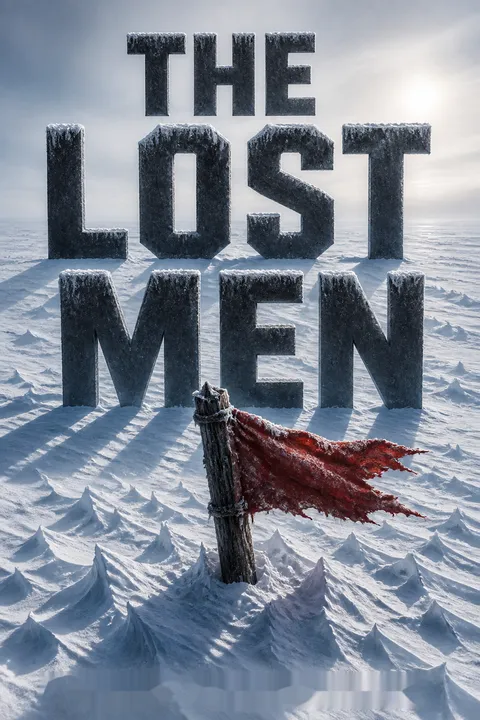
The Lost Men by Kelly Tyler-Lewis is highly praised for its detailed account of Shackleton's Ross Sea Party. Readers appreciate the thorough research, compelling narrative, and insights into the lesser-known side of the Antarctic expedition. The book is described as gripping, well-written, and an excellent companion to other polar exploration literature. Many reviewers highlight the incredible hardships faced by the party and their remarkable achievements despite numerous setbacks. The book offers a balanced perspective on the expedition's leadership and challenges.
People Also Read
Glossary
depot-laying
placing supplies along a routeThe Ross Sea party’s task of transporting food, fuel, and other provisions to marked caches along Shackleton’s planned route across Antarctica. The depots were intended to support the crossing party on its final stretch toward the Ross Sea. The work required repeated sledging journeys, careful navigation, and leaving enough supplies for the men who would return to base.
the Barrier
the Ross Ice ShelfThe expeditioners’ name for the vast Ross Ice Shelf, a floating mass of glacial ice at the edge of the Ross Sea. Its broad surface offered a route inland from Ross Island, but it was far from safe: crevasses, shifting snow, severe storms, and long distances made travel across it perilous. The shelf’s surface also moved gradually toward the sea.
man-hauling
pulling sledges by human powerA method of polar travel in which people wear harnesses and pull loaded sledges themselves, rather than relying primarily on dogs or vehicles. It was familiar to British explorers, but slow and physically punishing. In the Ross Sea party’s second season, it became the main means of moving supplies after the motor tractor failed and Mackintosh initially rejected using the surviving dogs.
hoosh
a hot sledging mealA thick field meal made by heating pemmican, crushed sledging biscuits, and water together. It provided a practical way to prepare food on the trail using a small stove. The Ross Sea party’s ability to cook hoosh depended on having fuel and a working Primus stove, both of which became scarce during their journeys.
sastrugi
wind-shaped ridges in snowRidges and troughs formed when Antarctic winds sculpt the snow surface. Sastrugi could be several feet high, forcing sledgers to climb, descend, or detour around them. The ridges increased the effort of pulling a load and made travel slower, especially when poor visibility hid the shape of the ground ahead.
pemmican
high-energy meat and fat foodA dense expedition food made by mixing dried, crushed meat with fat. It was valued because it provided concentrated energy in a form that could be carried on sledges. On the Ross Sea party’s journeys, pemmican was eaten with biscuits and water as hoosh, although the supplies available to them were old and sometimes unpalatable.
Download PDF
Download EPUB
.epub digital book format is ideal for reading ebooks on phones, tablets, and e-readers.








