

Plot Summary
Prologue
A young woman waits in the rain outside a closed shop, dressed carefully for an evening she hopes will change her life. When a black four-wheel drive stops and opens its door, every instinct warns her to run.
She looks back once, then climbs inside. The scene returns later with its passenger identified as Mina, choosing to enter the same dangerous world that first drew in other women.
The opening makes a choice feel like a trap before the reader knows what Mina is choosing. Its repeated image of the open car door joins two versions of her: the young woman who once mistook risk for freedom, and the older one who knowingly approaches danger. The scene also establishes the book’s central tension between agency and coercion. Mina can decide to enter, but the people waiting inside have built a system designed to make that decision nearly meaningless.
The Doctor Counts
Psychiatrist Mina Murray keeps London at bay with strict routines: timed runs, counted steps, and showers followed by meticulous bleach scrubbing. At Brookfields, a government psychiatric facility, she meets Renée, a young woman found naked near the docks and raving about a coming catastrophe. Mina earns her trust by listening and arranging food and orange juice.
Renée offers her a handful of dead insects, which Mina accepts to preserve the fragile connection, then drops as soon as she reaches safety. The encounter triggers a violent contamination panic and a frantic handwashing episode. Mina records Renée’s strange references to a master, but initially treats them as fragments of trauma rather than clues to a larger danger.
Mina’s rituals are both an accommodation to fear and an attempt to make fear governable. They do not erase her distress; the insect episode shows how quickly her professional composure can collapse when her own triggers are touched. Yet her willingness to accept Renée’s grotesque offering also reveals a real capacity for care. She can briefly direct attention outward, even while privately paying for that effort. The encounter establishes an important tension: Mina’s clinical methods encourage patience and observation, but the institution around her may mistake unusual behavior for a problem to suppress rather than information to understand.
Lucy Calls Home
A desperate email from Lucy Holmswood, Mina’s closest friend before Mina fled Wales twelve years earlier, breaks through Mina’s orderly distance. Lucy says doctors cannot explain her fatigue, lost time, nightmares, sleepwalking, and rash. Mina remembers leaving Lucy without explaining the terrible event that drove her away, and decides to return to Tylluan despite their years of silence.
Her mother, Vanessa, receives her coolly at the old cottage, where herbs and Welsh protections still crowd the rooms. At Ifori Estate, Lucy first challenges Mina over the abandonment. Mina admits something happened to her before she left, though she cannot yet describe it. Lucy embraces her, then reveals the symptoms that prompted her request for help.
Lucy’s appeal makes Mina’s return an ethical decision as well as an emotional one. Mina has built her career around helping women whose suffering is dismissed, yet her own past has kept her from repairing the most consequential friendship in her life. Returning does not immediately heal the relationship: both women carry justified resentment, and Mina still controls how much of herself she exposes. Vanessa’s guarded welcome adds another form of unfinished business. The old house holds the beliefs Mina rejected, so coming home also means entering a world she has spent years defining herself against.
Jonathan at the Shop
On a morning run for groceries, Mina collides with Jonathan Harker, the boy she loved before leaving Tylluan. His face is badly scarred, and his guarded response makes clear that her disappearance hurt him. After Lucy suffers a seizure during a visit, Mina sees the same alarming, pitted rash she described in her email and hears her refer to a master.
Arthur, Lucy’s husband, arrives as Mina calls for hospital care. With Lucy under medical supervision, Mina returns to London because Renée has deteriorated under Dr. John Seward’s care. The old romance, Lucy’s unexplained illness, and Renée’s worsening condition now press on Mina at once, while her instinct is still to retreat into the safety of work and routine.
The collision with Jonathan turns Mina’s return into a confrontation with consequences she has postponed, while Lucy’s seizure makes the present crisis impossible to keep at conversational distance. The matching rash gives Mina a legitimate reason to compare cases, even as she remains cautious about claiming a connection. Her departure for London is therefore emotionally complicated: she is responding to Renée’s needs, but also leaving Wales just as the people there have become vulnerable to her care. The scene tests whether professional duty can be cleanly separated from personal obligation. Mina’s return has already made that separation untenable.
The Card Beneath
At Brookfields, Mina finds Renée restrained, medicated, and frightened after Seward takes over her treatment. Renée attacks him and bites Mina’s neck; beneath her gown, Mina sees the same pitted rash as Lucy’s. Seward dismisses Mina’s objections and blocks her from further access. Reviewing his recordings, Mina recognizes that Renée’s apparently disconnected words answer the questions put to her.
The word fields leads Mina to identify her as Renée Fields. At Renée’s family home, her cousin Desi describes a black car collecting Renée before she became ill, and Mina finds a black business card beneath the mattress. A forum connects similar disappearances to an unnamed London club. Then Ron Wexler reports that Renée has died.
Renée’s fragments become meaningful only when Mina stops treating them as meaningless noise and reconstructs the context in which they were spoken. That interpretive patience contrasts sharply with Seward’s coercive approach, which intensifies Renée’s fear and leaves Mina excluded from her care. The business card turns a clinical mystery into a possible pattern of organized recruitment, but Renée’s death punishes Mina’s belief that recognizing the pattern will be enough. Her guilt is sharpened by the fact that she had earned the patient’s trust and then left her in an institution that did not protect it.
Tylluan’s Missing Girls
Mina returns to Wales after learning that local teenager Seren Evans has disappeared with symptoms resembling Renée’s and Lucy’s. Seren’s friend Rhiannon Jones initially claims the two were bowling, but Mina discovers the venue had closed months earlier.
Pressed again, Rhiannon admits Seren received a mysterious invitation to Cysgod Castle, carried a matching black card, and looked ill before vanishing. Detective Inspector Seb Davies refuses to investigate without stronger evidence.
At the station Mina meets Quincey Morris, Lucy’s former girlfriend, now a police officer. Quincey listens to Mina’s research but warns that suspicion will not survive without proof. She later agrees to help discreetly, giving Mina an ally inside a police force already reluctant to act.
Rhiannon’s lie is not simple malice: she fears getting herself or Seren into trouble, and that fear has helped conceal the last known route into danger. Mina reaches her by recognizing the social vulnerability underneath her defiance, rather than treating her as an unreliable witness to discard. The police response exposes another obstacle: evidence standards are necessary, but institutions can use them as a reason to remain passive. Quincey’s cautious support marks a practical shift. Mina still lacks proof, but she now has someone who understands both the need for verification and the danger of waiting too long.
The Grave at Cysgod
Mina meets Helen Singer, an investigative reporter turned fugitive researcher, who has spent fifteen years tracing girls with the same symptoms after her daughter Beatrice vanished. Singer’s files connect the victims to a secretive club, while Mina adds Rhiannon’s account of Cysgod Castle. The two women break into the estate and discover a concealed underground crypt, but no explanation of its owner.
On their way out, Mina trips over a hand protruding from fresh earth. They uncover Seren’s body in the woods. Quincey arranges for police to recover it, but a local examiner notes the strange rash without pursuing it, and the case is transferred to another agency before a search of Cysgod can proceed.
Singer’s history converts Mina’s private suspicion into a long-running investigation, but her certainty has been purchased through years of loss and isolation. Their break-in yields evidence, though not the kind that guarantees justice: Seren’s body confirms that something happened, while official indifference and jurisdictional interference threaten to make the discovery inert. The burial site also changes the emotional scale of the case. Seren is no longer an abstract missing-person file or a possible parallel to Lucy. The women have found a victim whose remains make the cost of delay visible, and the system still refuses to follow the evidence toward the estate.
Beatrice’s Last Invitation
The separate account of Beatrice Singer begins years earlier, when she accepts a job offer delivered through a blank black card. At the unnamed club, she is pampered, given a false sense of choice, and gradually separated from the outside world. After resisting a man’s attempt to take her upstairs, she is locked in a lightless cell.
Another captive, Tiff, explains that women are periodically taken to parties and returned injured, while some never come back. Beatrice tries to help Tiff escape, but guards shock and drug them; Tiff eventually disappears. At a grand gathering in a Welsh castle, Beatrice sees a vampire feeding on a girl and understands that the captives are not being sold as companions. They are being kept as prey.
Beatrice’s story makes the club’s apparent glamour legible as a staged instrument of control. Money, attention, clothing, and drink offer just enough reward to disguise the disappearance of consent; confinement then turns that seduction into captivity. Tiff’s presence briefly creates solidarity, but the institution isolates them and makes every failed escape costly. The revelation of the feeding reframes earlier symptoms and disappearances without making the women’s choices culpable. Beatrice’s narrative also gives Singer’s obsession its human center. She is not chasing a puzzle for its own sake; she is trying to restore a name and a fate that powerful people have erased.
The Bite Mina Buried
As Mina and Jonathan cautiously rekindle their bond, he explains that a gigantic, unnatural dog mauled him after she left, destroying the future he had planned at university. Later, Lucy’s worsening condition drives Mina to Jonathan’s cottage, where intimacy triggers the memory she has buried since adolescence. On the beach, after Jonathan departed, a man attacked Mina and bit her neck.
Her mother’s rowan charm broke his hold; Mina stabbed him with it, watched him die, and burned his body in the bonfire before fleeing. Jonathan accepts that she acted to survive and comforts her. Mina can now recognize her attacker as the creature behind the women’s illness, rather than interpreting the assault as an unexplained source of shame.
Mina’s memory has not vanished so much as been sealed behind rituals and self-blame. Recovering it changes the meaning of her compulsions: her terror of contamination and need for control grew around a violent event she could not explain. Jonathan’s own account of being mauled gives him a parallel wound without making their experiences interchangeable. His acceptance allows Mina to name what happened without surrendering her professional understanding of trauma. The supernatural explanation does not erase the human injury; it clarifies the threat while preserving the fact that Mina’s response was self-defense.
The Book of Blood
Mina tells her mother what happened on the beach, and the two begin repairing years of mistrust. When Quincey returns with evidence of cases hidden in police archives, Vanessa brings out a family grimoire describing blood-drinking creatures and their venom. Singer finds matching cases worldwide, and the women accept that a vampire conspiracy explains the anemia, confusion, seizures, and rash.
Vanessa says verbena weakens the creatures and that a blessed rowan stake can kill them. The group prepares a protective mixture of verbena and their own blood for Mina to carry into the club. Quincey then traces the haulage routes to Cysgod and discovers that Lucy’s husband, Arthur Holmswood, owns the company transporting goods to the castle.
The grimoire does not simply replace science with folklore. It gives Mina a framework for facts her medical training could describe but not yet explain, while Singer’s global records and Quincey’s archival work test the claim against independent evidence. Vanessa’s knowledge becomes useful only after Mina chooses to listen, making reconciliation a source of practical power rather than a sentimental reward. The protective ritual also turns cooperation into method: each woman contributes blood and accepts mutual vulnerability. Arthur’s company brings the threat out of the abstract and into Lucy’s home, where intimacy has concealed access.
Lucy Dies Twice
After Quincey identifies Arthur’s company, the women rush to Ifori Estate. Mina reaches Lucy’s bedroom and finds the rash covering her face and body; Lucy dies while Mina holds her hand. Quincey and Singer mourn beside her, while Mina blames herself for failing to recognize the danger sooner. She learns that Arthur is missing and decides the only way to reach the source is to enter the club herself.
Vanessa and Quincey oppose the plan, but Singer supports it: they need Mina inside the network to identify its leader. Mina agrees to use the black card and let herself be collected, turning the fear that once drove her from danger into a deliberate risk taken for the women who may still be trapped.
Lucy’s death makes Mina’s earlier return feel both necessary and unbearably insufficient. Her professional skill helped identify a pattern, but it could not undo the time in which the predator had access to Lucy. Grief initially returns Mina to self-accusation, a familiar strategy that offers the illusion of control by making every loss her fault. The decision to infiltrate is not a cure for that guilt; it is an attempt to give it direction. Unlike her younger self, Mina now chooses danger with other women’s knowledge and support, rather than facing it alone.
Seward’s Basement
Mina enters the London club under the name Bambi and provokes its guards by protecting a young woman from an assault. They drag her into the basement, where Seward appears with a syringe. He admits the club has used his psychiatric access to contain Renée after her escape, and that blackmail keeps him compliant.
Mina calls him complicit, then bites through his lip and injects him with his own needle. The guards restrain her but preserve her for the coming event. Fed and kept under observation, she counts routes and watches the staff. When the captives are drugged and transported, Mina recognizes Cysgod Castle from the landscape and understands that the Welsh estate is a central site in the operation.
Mina’s disguise exploits the same assumptions the club uses to sort women: age, appearance, and apparent vulnerability. Her intervention for another captive risks her cover, but it also refuses the logic that survival requires looking away. Seward’s explanation exposes institutional complicity in intimate form: his fear of losing status does not make his actions involuntary, and Mina refuses his attempt to cast himself as another victim. Her captivity then depends on disciplined observation. The counting that once narrowed her life becomes a tool for mapping the maze built to contain her.
The Castle’s Blood Auction
At Cysgod, guards prepare Mina and the other captives for an auction among masked men and vampires. The women’s medical details appear on a screen as bidders assess them like inventory. The leader claims Mina for himself and takes her to a private room, where he offers her a glass of her own blood. Mina drinks enough to create an opening, then spits it into his face and runs through the castle, following the route she memorized.
She escapes through a blocked kitchen window into the grounds, where the vampire catches her and bites her. The verbena-and-blood protection preserves her mind and poisons him. Vanessa, Singer, and Quincey emerge from the trees; Quincey stakes him, Singer beheads him, and the women burn his remains.
The auction makes the story’s dehumanization explicit: the powerful reduce women to measurements while dressing exploitation in ceremony. Mina’s escape depends on preparation rather than a sudden triumph of strength. She remembers the castle’s turns, keeps the protective mixture intact, and uses the vampire’s confidence in his own power against him. The women outside are equally essential; Mina can endure the bite, but the others complete the act that kills the leader. Their coordinated response counters the secrecy and hierarchy that have allowed the predators to operate.
Lucy’s Final Choice
After the castle vampires fall, Mina finds Lucy alive beside Arthur’s corpse at Ifori. Arthur had turned her, believing he was saving her from death; his letter explains that his own transformation had forced him into the network, though he tried to protect Lucy and help Mina’s mission. Lucy is now a vampire and fears the hunger will make her a monster.
She asks Mina to use a stake, and Mina does, grieving the friend she has regained only to lose again. A week later, Mina is living with Vanessa, rebuilding their relationship and planning a practice in Tylluan. She and Jonathan begin a future together, while Singer reports another missing girl abroad, showing that the larger danger may not be entirely gone.
Lucy’s survival does not restore the life Mina hoped to save; it creates a new moral choice between preserving a loved one and honoring her refusal to become a predator. Arthur’s letter complicates his role without absolving the harm he caused. Mina’s final act is therefore neither simple rescue nor vengeance, but a painful respect for Lucy’s agency. The quieter return to Tylluan offers a different kind of resolution: Mina can live without perfect control and repair relationships through honesty. Singer’s last report keeps that private healing from becoming a false claim that every system of violence has been dismantled.
Analysis
The novel’s central method is to make interpretation itself a source of suspense. Mina is trained to notice patterns, but her trauma has also taught her to distrust her own perceptions and to seek safety in routines that can become prisons. The story asks whether skepticism is always rational when institutions have powerful incentives to dismiss evidence. It does not answer by treating folklore as a substitute for investigation: Mina, Quincey, and Singer gather patient histories, records, testimony, and physical evidence before accepting Vanessa’s supernatural account. Their knowledge becomes persuasive because it is tested collaboratively.
The conspiracy’s victims are selected partly because poverty and social stigma make their absence easier to explain away. The club’s polished luxury and Cysgod’s old stonework disguise a system that treats women as consumable bodies, while officials and professionals translate their suffering into manageable paperwork. Seward’s complicity is particularly important: harm is sustained not only by obvious predators but by people who protect status and convenience. Against that structure, the women’s methods differ but work together. Mina observes and connects, Quincey searches official records, Singer tracks digital networks, and Vanessa preserves cultural knowledge.
Mina’s emotional arc moves from solitary control toward chosen interdependence. Her reunion with Lucy and Jonathan does not repair the past by itself; honesty does. Her recovered memory reframes survival as agency rather than guilt, while the final choice concerning Lucy shows that love cannot mean deciding another person’s fate for them. The ending allows Mina to build a less defended life with her mother and Jonathan, but Singer’s report from Madrid refuses easy closure. The immediate predator is gone; the structures that made his crimes possible may still exist.
Review Summary
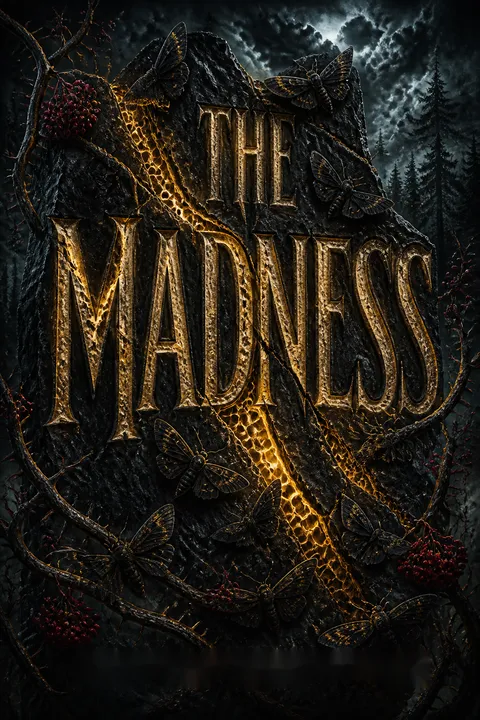
The Madness is a modern feminist retelling of Dracula featuring psychiatrist Mina Murray, who returns to Wales after twelve years to help her estranged friend Lucy, suffering from mysterious symptoms mirroring Mina's patient. The story explores trauma, women's mistreatment, and features Welsh folklore and gothic atmosphere. Reviews are largely positive (3.71/5), praising the atmospheric writing, strong female characters, and creepy plot, though some found pacing issues or predictability. Many recommend going in blind. The mixed-media format (texts, emails) received mixed reactions. Imogen Church's audiobook narration earned high praise.
Characters
Mina Murray
The guarded psychiatristMina is a London psychiatrist whose ability to observe and interpret distress has been sharpened by her own unresolved trauma. Counting, cleaning, and rigid routines give her a sense of safety, but they also keep intimacy at a distance. She is especially committed to women whose suffering institutions dismiss or mislabel, a commitment that draws her into both professional and personal danger. Her estrangement from her Welsh mother and childhood friend reflects how thoroughly she has tried to sever herself from the past. Mina’s central conflict is not simply skepticism versus belief; it is whether she can accept uncertainty, rely on others, and act without mistaking control for safety.
Lucy Holmswood
Mina’s daring old friendLucy is Mina’s childhood best friend, once the bold force who coaxed her into risks and laughter. She is now married to Arthur and inhabits the polished world of Ifori Estate, though her glamour does not erase her frankness or their shared history. Lucy carries the hurt of Mina’s unexplained departure, yet she reaches out when frightened and gives Mina a chance to return. Her relationship with Mina is affectionate but not uncomplicated: years of silence coexist with a familiarity that can reappear in a joke, a shared memory, or a hand held during illness. Lucy’s vitality challenges Mina’s instinct to remain safely on the sidelines.
Jonathan Harker
The scarred first loveJonathan is a Welsh farmer and Mina’s first love, a once-confident young man whose plans for university gave way to family and land. By the time Mina returns, conspicuous scars have altered his face and his guarded manner reflects years of pain and disappointment. He is angry that Mina disappeared without explanation, but his anger is inseparable from the affection he has not managed to erase. Jonathan does not demand that Mina become untouched by the past; he wants honesty and a chance to decide what their connection can mean now. His steadiness offers her closeness without asking her to hide her wounds.
Vanessa Murray
The folklore-keeping motherVanessa, whom Mina calls Mam, lives by Welsh customs, herbal knowledge, and beliefs her daughter spent years rejecting. Her cluttered cottage and protective rituals embody a worldview that Mina initially dismisses as superstition. Their relationship is strained by old blame, emotional distance, and Mina’s refusal to return home, yet Vanessa continues to make room for her. She can be stubborn and difficult to approach, but her care is practical as well as symbolic: she preserves knowledge, notices danger, and offers protection without demanding immediate agreement. Vanessa represents a form of inherited wisdom that Mina must learn to assess rather than reflexively accept or reject.
Quincey Morris
The principled police officerQuincey is a Welsh police officer, Lucy’s former girlfriend, and a friend from the group Mina left behind. Her training makes her cautious about allegations that cannot be supported by evidence, while her personal loyalty makes her willing to keep investigating when official channels stall. She is direct, observant, and capable of humor, but Lucy’s illness complicates the professional distance she relies on. Quincey acts as a bridge between Mina’s private investigation and law enforcement, testing claims rather than dismissing them. Her presence also brings Lucy’s past relationship into the present without reducing either woman to an old romantic role.
Helen Singer
The relentless investigatorHelen Singer is a former investigative reporter who has spent years pursuing the truth about women who disappear after displaying baffling symptoms. Her work is fueled by the loss of her daughter, and she has learned to live outside ordinary institutions after finding them unwilling to help. Helen is technically skilled, secretive, and fiercely practical, with a vigilance that can look like paranoia to people who have not followed the same trail. She distrusts official assurances because she has repeatedly watched evidence vanish. Meeting Mina gives her a new source of information and a collaborator whose professional observations complement her own records.
Arthur Holmswood
Lucy’s aristocratic husbandArthur is Lucy’s husband and the proprietor of a logistics company connected to the Welsh estate. He appears courteous, attentive, and at home in the wealth surrounding Ifori. His work and marriage place him close to the central relationships in the story, even as Mina struggles to understand how much she knows about either. Arthur’s position suggests the ease with which money, access, and respectability can conceal a person’s real obligations. His relationship with Lucy is presented through her memories and Mina’s observations, so affection and suspicion remain difficult to separate.
Renée Fields
The abandoned patientRenée is a young woman brought to Brookfields without identification after being found near London’s docks. She is frightened, physically neglected, and speaks in disconnected images that staff are inclined to treat as symptoms alone. Mina’s patient listening briefly gives her enough security to accept help and communicate in her own fractured way. Renée’s behavior can be disturbing, but it is never merely a spectacle: she is a person trying to convey what has happened to her. Her case becomes the first clinical thread Mina can follow beyond the walls of the hospital.
Seren Evans
The missing village girlSeren is a teenager from Tylluan whose disappearance unsettles her friend Rhiannon and draws Mina deeper into the Welsh part of the investigation. Before she goes missing, she receives an invitation connected to Cysgod Castle and begins showing signs of illness. Her life is often discussed through the assumptions other people make about a poor local girl, which helps explain why her warning signs are not taken seriously. Seren’s case forces Mina to connect the private distress of individual women with a wider pattern of recruitment and concealment.
Rhiannon Jones
Seren’s guarded friendRhiannon is a blunt, defensive teenager who knew Seren and initially conceals what happened before her disappearance. She expects adults and authorities to judge her, so she hides behind bravado and gives Mina an untrue account. Mina’s persistence eventually helps her share the invitation and the warning signs she witnessed. Rhiannon is not an ideal witness, but her fear and loyalty shape what she can say. Her testimony gives the investigation a concrete connection between the missing girl and Cysgod Castle.
Dr. John Seward
The celebrated psychiatristSeward is a prominent psychiatrist at Brookfields whose books and professional status contrast with Mina’s skepticism about his treatment of patients. He approaches Renée as a case to manage and places more faith in medication and control than in the trust Mina has built. His confidence makes him difficult to challenge within the institution. Seward embodies the danger of expertise detached from curiosity: a clinician may possess authority and credentials while failing to hear what a patient is trying to communicate.
Beatrice Singer
Helen’s vanished daughterBeatrice is Helen Singer’s daughter, whose disappearance set her mother on a long search for other missing women. The story follows Beatrice under the assumed name Jennifer as she is drawn into a secret club and then isolated from ordinary life. She is observant, resourceful, and unwilling to surrender her sense of self, even when she has little power over her surroundings. Her story gives the larger investigation an intimate human scale and shows how an ordinary invitation can become the entrance to a carefully managed trap.
Plot Devices
The black business card
A trail to hidden networksA glossy black card without a business name is given to young women through invitations that promise work or access to an exclusive club. Renée’s card leads Mina to online traces, while Rhiannon confirms that Seren carried a similar one before visiting Cysgod. Its anonymity makes it difficult to investigate, but its repeated appearance links otherwise separate cases. The card turns a collection of symptoms and disappearances into a search for a shared point of entry.
The Book of Blood
Folklore becomes field knowledgeVanessa’s inherited grimoire records protective practices and Welsh accounts of blood-drinking creatures. Mina initially regards her mother’s beliefs as superstition, but the book offers the group practical guidance once the clinical and forensic evidence points beyond an ordinary illness. Verbena can interfere with the predator, and a blessed wooden stake can kill it. The grimoire therefore links inherited cultural knowledge to the modern investigation, while requiring Mina to revise her assumptions rather than abandon reason.
Verbena and blood
Protection carried into captivityVanessa grows verbena and explains its protective effect against vampires. Before Mina enters the club, the women make a mixture using verbena and blood from the group, then seal it in an ampoule for Mina to carry in her mouth. It protects her mind when the leader bites her and makes the predator vulnerable. The device converts the women’s shared knowledge and literal contribution into a practical advantage, while Mina’s ability to preserve it depends on preparation and discipline.
The secret club
A respectable entrance to abuseThe unnamed London club recruits women through black cards and presents itself as a luxurious place where they can earn money by flirting with wealthy guests. Its lavish welcome conceals surveillance, confinement, and a pipeline to more secluded gatherings. Women who resist are isolated, and their disappearances are obscured by the influence of powerful patrons and compromised officials. The club is not merely a location: it is the human infrastructure that allows supernatural predators to find victims while making the victims appear forgettable.

Download PDF
Download EPUB
.epub digital book format is ideal for reading ebooks on phones, tablets, and e-readers.








