

Plot Summary
Prologue
A newspaper report dated 2005 records a fire at Elmbridge High: three people dead, one student missing, and the school closed. It names Kaitlyn Johnson as a suspect, though no student by that name appears in the official records.
The report introduces a recovered diary and communication book as evidence in a case that has resisted explanation. The story that follows is assembled from those writings, therapy tapes, police interviews, and a student’s video diary, each offering a different account of what happened before the fire.
The documentary frame turns the novel into an argument over evidence before the reader meets its central witness. A name that official records cannot verify, a missing student, and a school fire make the archive itself feel compromised. Because the account is assembled from recordings and private writings, no single voice can settle what is real. That structure also makes interpretation an ethical problem: the reader occupies the position of investigators who must decide whether Kaitlyn’s claims are symptoms, testimony, or both.
Two Lives, One Body
At Claydon, the psychiatric hospital where she has spent the summer, Kaitlyn writes that she and Carly are sisters sharing one body. Carly takes the daylight hours; Kaitlyn wakes at night. Their parents are dead, their younger sister Jaime lives with guardians, and Dr. Annabeth Lansing treats Kaitlyn as Carly’s trauma-born alter, not as a separate person.
The sisters have learned to deceive staff about eating, medication, and their nightly messages so they can leave Claydon and return to Elmbridge High for their final school year. They plan to graduate, reach London, and live beyond institutional control. For Kaitlyn, that plan is more than escape: it is proof that a life the doctors deny can still be lived.
The opening conflict is not simply between a patient and a doctor. It is between two explanations of identity, each carrying different consequences. Lansing’s clinical framework promises treatment by absorbing Kaitlyn into Carly; Kaitlyn experiences that same outcome as annihilation. Their secret routines give the sisters a measure of agency, but secrecy also keeps their reality from being tested by anyone outside the pair. The London plan therefore works as both practical hope and psychological defense. It lets them imagine a future without deciding whether they can survive separation, public scrutiny, or the loss of their shared system.
The Attic and Ari
Back at Elmbridge, Kaitlyn explores the school after dark, slipping through a basement window and discovering a hidden attic full of abandoned books and furniture. She makes it a private refuge, then meets Ari Hait in the chapel confessional after he surprises her there. His humor and willingness to spend time with her loosen the isolation she has carried since losing an earlier friend, John, whom she calls the Viking.
Through emails and late-night meetings, Ari treats Kaitlyn as a person rather than a symptom. Their friendship remains separate from her daylight life with Carly, however, and Kaitlyn keeps it secret. The attic gives her somewhere to retreat; Ari gives her a reason to leave it.
Both discoveries answer Kaitlyn’s fear of having no place in the world, but in different ways. The attic is a physical space that rewards trespass and secrecy, while Ari offers recognition from another person. Their appeal is therefore bound to risk: she feels more real with him, yet keeps the relationship hidden from Carly and Naida. That secrecy repeats the protective strategy the sisters learned at home and in treatment. It also creates a vulnerable distinction between being seen and being known. Ari recognizes Kaitlyn, but she has not yet tested whether he can accept the whole history she carries.
The Mirror Goes Missing
Kaitlyn’s best friend Naida Chounan-Dupré films school life for a sociology project, while Kaitlyn watches Naida’s closeness with Carly with a jealousy she struggles to admit. Strange events begin to crowd their ordinary routines.
Mike Bowers wakes with unexplained cuts after his dorm door disappears and a bathroom mirror is smashed. When Kaitlyn investigates, the replacement mirror seems to open into a black void where a grinning girl appears, then vanishes, leaving no glass or blood behind.
Kaitlyn also hears Aka Manah, a voice she believes is drawing nearer. Lansing interprets these experiences as worsening delusions and considers changing Kaitlyn’s medication. The more insistently the adults explain the evidence away, the less safely Kaitlyn can distinguish fear from fact.
The missing door and mirror turn ordinary school architecture into a dispute about who has authority to define reality. Kaitlyn’s account may be shaped by medication and trauma, yet the incident report independently confirms damage and injuries, giving her fear an evidentiary foothold without proving its supernatural explanation. Naida’s camera adds another unstable witness: it documents people and shadows, but cannot interpret them. Meanwhile, Kaitlyn’s jealousy of Naida exposes a second pressure on her identity. She wants an independent friend, yet fears that any bond Carly forms diminishes her own claim to the shared life.
The Olen Board
Naida invites Carly and Kaitlyn to a Halloween party at her cousin’s house, hoping to draw Kaitlyn into the group. By nightfall, Kaitlyn has taken over the body and, urged by Naida, joins the dancing instead of withdrawing.
Later, Mike produces a strange board marked with Mala symbols, not the letters of an ordinary Ouija board. Its pointer moves without anyone touching it and singles out Kaitlyn. Naida recognizes the object as dangerous, burns its pointer, and orders the guests out.
Kaitlyn collapses outside, and Naida believes she intervened in time to save her. Juliet McClarin, who left the party earlier, is missing by morning. The gathering has made an unseen danger more immediate, while leaving the students with a human disappearance they cannot explain.
The party’s turn from social experiment to crisis is powered by competing kinds of performance. Naida films, Mike treats the board as entertainment, and Kaitlyn tries to participate in a life she assumes is not meant for her. Once the pointer moves, the group’s joking certainty collapses, but the evidence remains ambiguous enough for some to dismiss it. Juliet’s disappearance complicates the supernatural narrative with a concrete human consequence. The party does not prove who or what caused the events; it creates the conditions for suspicion, guilt, and later investigation to attach themselves to the wrong explanation.
Dawn Without Carly
In November, Kaitlyn wakes after sunrise and discovers that she is still in control of the body. She has taken Carly’s place in the daytime, while Carly is unreachable. The crowded dormitory, bright colors, and attention of other students overwhelm her, and she flees to the roof.
Naida finds her there and calls for help; police take her back to Claydon. Lansing interprets the change as successful integration, believing Kaitlyn was Carly’s alter all along.
Kaitlyn insists that Carly has vanished, but the doctors hear her distress as proof of illness. When Jaime visits and cries for Kaitlyn, the moment briefly challenges Lansing’s account, yet the child is removed before Kaitlyn can respond. Her separation is now both internal and institutional.
The reversal of the sisters’ day-night arrangement turns an abstract fear into an embodied crisis. Kaitlyn must navigate a world she has observed from the margins, but sensory exposure does not grant her ordinary belonging; it makes her feel more endangered. Lansing’s interpretation is psychologically coherent within her treatment model, yet it converts Kaitlyn’s experience into evidence against her. Jaime’s recognition offers a counter-witness, though her guardians’ intervention cuts that testimony short. The scene shows how care can become coercive when the caregiver’s theory is treated as more reliable than the patient’s account, especially when the patient has little power to contest it.
The Dead House
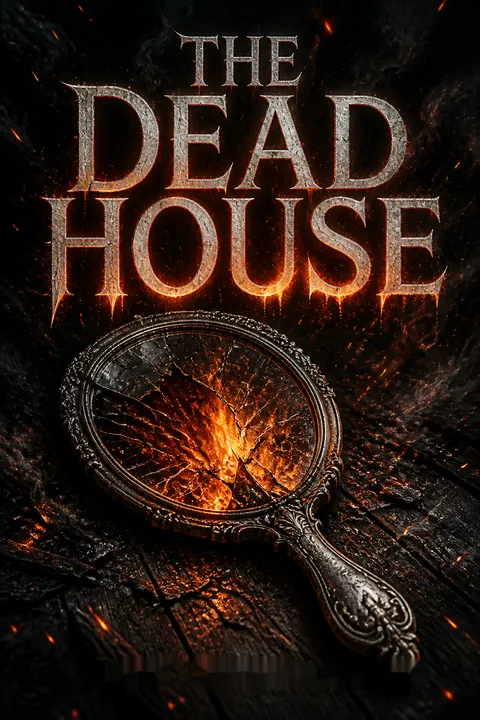
At Claydon, Kaitlyn keeps writing to preserve her sense of herself, while visions of a decaying house grow more vivid. She calls it the Dead House and finds herself trapped in its corridors, with a presence trying to keep her there. When she sees a girl in a mirror and breaks the glass in Lansing’s bathroom, she badly cuts both arms and is placed under close observation.
A period of sedation leaves her unconscious far longer than intended. During recovery, a phone call from John reconnects her with the friend she thought had forgotten her; he offers comfort, but his promises and advice cannot settle what she is experiencing. Kaitlyn’s fear of sleep now competes with the hospital’s insistence that rest and medication will help.
The Dead House gives spatial form to a conflict that neither clinical language nor Kaitlyn’s own explanations can contain. It may be a dream shaped by trauma, a dissociative refuge, or evidence of something supernatural; its force comes from how it changes her behavior, especially her refusal to sleep. The mirror injury makes that ambiguity materially dangerous. Sedation then deepens the problem by making treatment resemble involuntary disappearance. John’s return restores a human connection, but also underscores how precarious recognition is: he can reassure her, yet cannot give her an account of the house or bring Carly back.
Naida Opens the Basement
Naida visits Kaitlyn at Claydon and slips her a plan to escape back to Elmbridge, where the school’s hidden basement passages can conceal her. After Kaitlyn is sedated and left unconscious for days, she eventually escapes and reaches the basement. Naida hides her there, brings supplies, and sets up a camera so they can document what happens.
Kaitlyn tells Naida about the Dead House, the voice, and the girl she sees; Naida believes her account may involve Mala spirits and a dangerous practitioner of Grúndi. She gathers Scott, Brett, and Ari to help keep Kaitlyn hidden. The choice exposes all of them to police scrutiny, especially because investigators already connect Carly to Juliet’s disappearance.
Naida’s decision shifts the story from private testimony to collective action. Her belief does not remove uncertainty, but it gives Kaitlyn an ally who responds to her account with practical care: a place to hide, food, and a record of events. The camera turns friendship into a form of evidence, though surveillance also makes the basement feel like a new institution. The group’s cooperation is uneven; some members trust Naida, others fear the police or suspect illness. That tension matters because the rescue depends not on shared certainty, but on people choosing to remain responsible for one another while they disagree about what is happening.
Haji in London
Naida takes Kaitlyn to London to consult Haji, her older brother, who works within the same spiritual world as their grandmother but practices its dangerous margins. At his underground gathering, Kaitlyn sees a girl treated as a vessel for a spirit and recognizes a snake from her own visions. Haji agrees to advise them, but demands honesty and warns that the forces they are approaching exact a price.
Back at Elmbridge, Naida studies rituals and watches Mike, suspecting his possession of the symbolic board may connect him to the disturbances. Kaitlyn remains hidden and grows more isolated, even as Ari visits. The meeting offers a framework for her experiences, but it also lends new authority to a frightening supernatural explanation.
Haji’s expertise gives the group a vocabulary for what they have witnessed, but vocabulary is not the same as verification. His world makes the supernatural legible through ritual, lineage, and exchange, while Kaitlyn’s clinical history makes those same experiences legible as symptoms. The London visit therefore expands the interpretive field without resolving it. Naida’s willingness to enter an underground spiritual gathering shows how far loyalty has moved her from cautious observer to active participant. For Kaitlyn, the snake’s appearance links private visions to a public ritual, strengthening her conviction while increasing the danger of treating every resemblance as proof.
Naida Pays in Blood
Naida decides to use a ritual to reach the force she believes has taken Carly. Kaitlyn and the others gather at Elmbridge, where Naida attempts to communicate through the dangerous spirit board’s ritual tradition. The effort goes catastrophically wrong. In the vision, a giant snake rises from the floor and threatens Kaitlyn; Naida moves between them, then cuts out her own tongue.
The others rush her to hospital, where surgeons save her life but cannot restore her speech. Ari locks Kaitlyn in an armoire before leaving with Naida, apparently to keep her from being discovered. Kaitlyn emerges alone, horrified by Naida’s sacrifice and uncertain whether the danger came from a spirit, a failed ritual, or something inside herself.
Naida’s injury is the cost of treating friendship as a duty that must be enacted, not merely felt. Her sacrifice may be an attempt to stop possession, a ritual consequence, or an act the frightened witnesses cannot interpret; the novel refuses to make the violence neatly explanatory. Ari’s decision to hide Kaitlyn protects her from immediate discovery while also removing her freedom at a critical moment. That contradiction echoes the book’s larger problem of care: protection can preserve a person, but it can also become confinement. Naida’s voicelessness then makes the group’s shared record even more important and more vulnerable to distortion.
Inside Kaitlyn’s Mind
After Naida is hospitalized, Haji returns and leads Kaitlyn, Ari, Scott, Brett, and John through a ritual into the Dead House. Unlike Naida’s failed attempt, this journey lets the group move through Kaitlyn’s memories. They encounter fragments of her childhood and the old bond with John, while the house seems empty of Carly.
Haji senses that the Shyan, a practitioner working against them, is present among the friends. He tells Kaitlyn to trust no one and urges her to secure the basement. The warning turns the group against itself. John later explains that he was in the car crash that killed Kaitlyn and Carly’s parents, but Kaitlyn cannot reconcile his account with her missing memories.
The shared journey externalizes what had been Kaitlyn’s solitary interior life, but it does not produce shared understanding. Her friends see memories without possessing their emotional history, and Haji’s warning converts intimacy into a security risk. The Dead House is thus both a possible mindscape and a stage on which the group’s trust is tested. John’s account of the crash gives the blank at the center of Kaitlyn’s memory a possible origin, but not a stable meaning. Haji’s instruction to distrust everyone may protect the group from a genuine threat, or intensify paranoia; either way, it narrows the space for ordinary verification.
The Bind and the Fall
Haji gives Kaitlyn a protective bind made with a personal sacrifice, meant to reveal who is working against her. She also discovers Carly’s journal, which describes Brett’s unwanted advances and the fear he inspired. Before Kaitlyn can resolve who the Shyan is, Brett falls to his death on the school grounds, and Haji disappears after warning Naida through a note.
The deaths and disappearance leave Kaitlyn with fewer people to trust and no clear explanation of what the bind has shown. John urges her to abandon the search and seek medical help. Kaitlyn hears betrayal in his advice, while Ari insists the group must continue. The investigation has become inseparable from grief and suspicion.
The bind promises a clean answer, but its price and uncertain result deepen the story’s epistemic trap. Kaitlyn is asked to trust a supernatural test precisely when her relationships have become hardest to interpret. Carly’s account of Brett complicates his public image, yet his death does not establish who caused it or whether it is connected to his behavior. Haji’s disappearance removes the one person who seemed able to read the ritual system. Meanwhile, John’s concern can be understood as care or obstruction, and Kaitlyn’s fear makes the distinction almost impossible. The plot’s suspense arises from the collapse of reliable social cues, not from a shortage of clues.
John’s Buried Memory
John confronts Kaitlyn as she tries to keep pursuing the supernatural threat. He recalls the night of the crash: Kaitlyn argued with her father in the car, which distracted him before the collision. John says she later told him she was glad her parents were dead. The memory breaks her trust in him, though she cannot tell whether he is protecting her or manipulating her.
When John attacks Ari in the basement and clamps a hand around his throat, Kaitlyn grabs a knife and strikes John in the neck to stop him. He dies as she holds him. Ari helps carry the body to the chapel cemetery, where they bury him in the Forgotten Garden. Kaitlyn has now committed an act she cannot explain away as a vision.
The scene forces a distinction between intention, memory, and responsibility that the novel will not allow to settle easily. John’s account could reveal a repressed truth, but it arrives during a confrontation and cannot be independently checked. Kaitlyn acts to save Ari, yet the lethal result belongs to her body and becomes part of her moral reality regardless of how she interprets it. Burying John in the place Kaitlyn associates with herself turns concealment into a psychological act as well as a practical one. The garden holds what she cannot integrate: affection for John, fear of him, and the violence she has caused.
Ari’s Devotion Unmasked
With John dead and Haji gone, Kaitlyn follows the remaining clues to Ari. In a confrontation at the chapel, he admits that he has been using Grúndi and manipulating the force inside her. He says Carly opened a dangerous doorway through an earlier pact and that he took her away to free Kaitlyn from a life divided between day and night.
Ari also claims the force killed Juliet and that he killed Brett and Haji to remove people he believed stood between them. Kaitlyn cannot know which of his explanations are true, but she recognizes that his love has become a rationale for control. In the Dead House, she finds a passage through a window-shaped exit and leaps into the sea beyond it, still unable to reach Carly.
Ari’s betrayal is disturbing because it grows from the same recognition that once made him a refuge. He has paid attention to Kaitlyn’s longing for freedom, then redefined freedom as separation from everyone who might challenge his possession of her. His account of Carly’s pact and the deaths may contain truth, self-justification, or both; the evidence remains divided between his confession, Kaitlyn’s perceptions, and Naida’s later conclusions. The imagined passage out of the Dead House offers movement without certainty. Kaitlyn can leave the mental structure that contained her, but she cannot recover Carly simply by escaping it.
Elmbridge Burns
After the confrontation, Kaitlyn visits Naida in hospital, then returns to Elmbridge and writes a final, unusually calm entry. She believes the force inside her is growing stronger and fears it has used her body to kill, even as she insists that her actions and her self are not identical. On the night of 2 February, a fire spreads through the school.
Security footage shows Kaitlyn entering the burning common room and disappearing into the flames. Ari, Haji, and Brenda are found dead; John is buried in the chapel cemetery, and Juliet’s remains are later discovered hidden in the attic. Kaitlyn’s body is never found, and neither is Carly’s. The school burns, but the evidence does not settle whether Kaitlyn died, escaped, or was taken.
The fire appears to offer a final act of agency, but the footage cannot establish whether Kaitlyn intends self-destruction, sacrifice, or something she no longer controls. Her calmness may suggest a decision, yet the records surrounding the incident repeatedly show how easily observers impose motives on her. The missing bodies preserve the central uncertainty rather than resolving it. Even the recovered remains divide the case into partial truths: violence occurred, people died, and a young woman vanished, but the supernatural explanation remains unprovable. Kaitlyn’s final gesture therefore answers the opening’s demand for an official account with an image that can be read in incompatible ways.
Epilogue
Later investigations uncover Juliet’s remains in a hidden attic panel and establish that Naida helped Kaitlyn escape, though Naida continues to believe her friend was possessed. She is eventually convicted for concealing evidence and aiding the escape. Dr. Lansing loses her medical license; she still insists that illness, not spirits, explains the tragedy.
Kaitlyn and Carly remain missing, and the footage of Kaitlyn walking into the fire offers no certainty about their fate. The ruined Elmbridge continues to attract visitors, while reports of disappearances and whispers keep the Johnson Incident open to belief, argument, and fear.
The aftermath refuses the comfort of a definitive verdict. Legal proceedings establish actions that can be charged, while neither medicine nor the supernatural account explains every disappearance, injury, or missing body. Naida’s belief survives punishment, and Lansing’s professional authority collapses without making Naida’s interpretation objectively true. This is not simply a mystery left unsolved; it is a portrait of institutions trying to convert unstable testimony into a single usable story. The final uncertainty asks whether care, diagnosis, and investigation can ever be neutral when the person at the center has already been defined as unreliable.
Analysis
The Dead House makes identity a conflict over who has the right to interpret a person. Kaitlyn experiences herself as a sister with a life and history; Dr. Lansing sees her as a symptom that must be integrated; Naida reads her through spiritual traditions; and Ari eventually turns recognition into possession. None of these frameworks is neutral. Each offers care or explanation, but also directs what the characters are permitted to do.
The novel’s found-document structure prevents any one framework from winning cleanly. A diary records conviction, a therapy note records diagnosis, and a camera preserves an image without explaining it. Their contradictions require the reader to distinguish observable harm from contested cause. Juliet vanishes, Naida is gravely injured, John and others die, and Elmbridge burns; the supernatural account may connect these events, but the records also show trauma, coercion, medical failure, and deliberate violence. Ambiguity does not erase responsibility. Kaitlyn’s body acts even when she feels estranged from it, and those around her must decide whether belief excuses, explains, or merely names the harm.
The sisters’ alternating hours make intimacy both sustaining and precarious. Their notes preserve a relationship that cannot be witnessed by outsiders, while their wish for a shared future depends on maintaining a division they themselves resent. Kaitlyn’s longing to be free is therefore not simply a wish to escape treatment or danger. She wants recognition without erasure, independence without abandonment, and love without being treated as someone else’s possession. The horror lies in how often those needs are answered with control. By ending without a confirmed body or final explanation, the book refuses to make uncertainty equivalent to innocence, but leaves open the possibility that the person everyone tried to define exceeded every account they made of her.
Review Summary
The Dead House receives mostly positive reviews, with readers praising its unique narrative style, creepy atmosphere, and psychological thrills. Many found the story engaging and unpredictable, appreciating the blend of mental illness themes with supernatural elements. The book's format, combining diary entries, interviews, and visual elements, was widely praised. Some readers felt the ending was ambiguous and unsatisfying, while others enjoyed the open-ended nature. Overall, it's recommended for fans of YA horror and psychological thrillers seeking an immersive, unsettling read.
People Also Read





Characters
Kaitlyn Johnson
The night-bound sisterKaitlyn understands herself as one of two sisters sharing a body, active at night while Carly lives through the day. She is sharp, watchful, reckless, and fiercely protective of the few people she trusts. Her longing to be recognized is tangled with resentment that Carly receives the ordinary social life she cannot access. Kaitlyn uses sarcasm and secrecy as armor, but her writing reveals a deep fear of abandonment and erasure. She resists Dr. Lansing’s account of her as a symptom, even while wondering whether medication and trauma have altered her perceptions. Her desire for freedom is genuine, though she often confuses independence with having no one close enough to hurt her.
Carly Johnson
The daylight sisterCarly is the daylight presence in the Johnson sisters’ shared life and Kaitlyn’s closest bond. Gentle and shy, she is also more emotionally resilient than she believes, working to manage her eating disorder, treatment, and the demands of school. She leaves Kaitlyn books, food, notes, and messages, using small acts to maintain intimacy across the hours they cannot share. Carly values Naida’s friendship but understands that Kaitlyn needs relationships of her own. Her wish for an ordinary future is inseparable from loyalty to her sister. She is caught between the doctor’s explanation of their condition and the private reality she and Kaitlyn have built together.
Naida Chounan-Dupré
The filming friendNaida is Carly’s closest school friend, a confident aspiring journalist whose camera turns everyday scenes into an accumulating record. Raised partly on Fair Island, she follows a spiritual practice called Mala and believes ritual can offer forms of help that conventional medicine cannot. Her loyalty to Carly and curiosity about the unexplained make her brave, but they also draw her beyond her experience. Naida is outspoken, theatrical, and protective, often trying to force others into action when fear has made them hesitate. She wants to be useful, not merely a witness. Her confidence can conceal uncertainty, especially when the spiritual knowledge she trusts begins to demand personal risk.
Ari Hait
The chapel confidantAri is the new student Kaitlyn meets in the chapel, a clever, socially awkward boy who hides behind a bowler hat and a teasing manner. His army family has moved him repeatedly, leaving him wary of attachment and resentful of his father. An exceptional memory makes him observant, while his interest in Kaitlyn gives him a rare reason to put down roots. He treats her nighttime identity as worthy of attention, something few people have done. Ari’s intelligence and apparent openness make him difficult to read: he can be a thoughtful companion without revealing how much he keeps to himself. His relationship with Kaitlyn grows in a world where trust is always being tested.
Dr. Annabeth Lansing
The treating psychiatristLansing is Carly’s psychiatrist and a specialist in dissociative disorders. She believes Kaitlyn is an alter created by trauma and sees integration as the route to recovery. She can be attentive and personally invested, but her confidence in her theory makes her slow to accept experiences that contradict it. Lansing controls medication, access to family, and the language used to describe the sisters, giving her care real institutional power. Her wish to protect Carly is sincere, yet her methods risk repeating the loss of control that has made Carly and Kaitlyn distrustful.
John Hutt
Kaitlyn’s old friendJohn, whom Kaitlyn calls the Viking, is a tall, blunt young man she met in the nightlife of Chester. Their friendship grew through dancing and wandering together without demanding conventional explanations. He gave Kaitlyn companionship while respecting her distance, and she came to regard him as a brother. His return reconnects her with the life she had before Claydon, but that history carries memories and loyalties she has not fully examined. John’s directness can feel reassuring or intrusive, depending on how much control Kaitlyn feels she is losing.
Haji Chounan-Dupré
Naida’s ritualist brotherHaji is Naida’s older brother, a knowledgeable practitioner familiar with Mala and its dangerous offshoots. He is wary of his sister’s inexperience and treats spiritual work as a serious exchange rather than a game. His bearing is imposing, but his concern for Naida appears beneath his severity. Haji offers guidance only on strict terms, insisting that those seeking help understand the cost. He provides the group with a framework for interpreting Kaitlyn’s experiences, while his warnings leave them more conscious of how little control they may have.
Scott Fromley
Naida’s loyal boyfriendScott is Naida’s boyfriend, a lanky classmate with an easy grin and a habit of turning tension into jokes. He is less interested in spiritual ideas than Naida, but his affection for her makes him stay involved when the group becomes frightened. Beneath his clowning, Scott can be practical and protective. He dislikes being treated as a suspect and is wary of the consequences of helping Kaitlyn. His loyalty is real, though it must compete with self-preservation and his instinct to dismiss what he cannot explain.
Brett
The polished class presidentBrett is Elmbridge’s attractive, successful class president, accustomed to being admired and taken seriously. His interest in Carly and later attention to Kaitlyn place him close to both sisters’ social world. He appears confident in public, but his relationships reveal discomfort when attention is not returned on his terms. Brett’s polished image makes it difficult for others to notice the difference between concern and entitlement. He is one of the students drawn into Naida’s circle and its growing confrontation with events none of them understands.
Jaime Johnson
The youngest JohnsonJaime is the Johnson sisters’ much younger sibling, now living with guardians after their parents’ deaths. She is affectionate and observant, with memories that adults try to manage on her behalf. Kaitlyn’s visits matter intensely to her, even when Jaime cannot explain why the adults keep her away. She becomes a fragile bridge to the family life the sisters lost. Her child’s perspective is often more direct than the adults’ theories, but she has little power to make them listen.
Juliet McClarin
The missing schoolgirlJuliet is a younger Elmbridge student who attends Naida’s Halloween party in a Red Riding Hood costume. She is lively, socially self-conscious, and impatient with a party that fails to meet her expectations. Her friendship with Maggie places her among the younger students at the gathering, where adult supervision is absent and the night grows increasingly unpredictable.
Mike Bowers
The careless instigatorMike is an Elmbridge student whose careless confidence shapes the Halloween gathering. He brings marijuana to the party and later produces the strange board that the group mistakes for a Ouija board. He tends to treat risk as entertainment and other people’s warnings as overreaction, making him a catalyst for events he does not appear to understand.
Detective Chief Inspector Floyd Homes
The case investigatorHomes leads the police investigation into the Elmbridge fire, Juliet’s disappearance, and the Johnson case. He questions witnesses and challenges Dr. Lansing’s account of the treatment, looking for inconsistencies in the available evidence. His role is to establish a legally usable narrative, even as the interviews leave central questions unresolved.
Meredith Bailey
Jaime’s guardianMeredith Bailey is Jaime’s guardian and part of the household that gives the youngest Johnson a stable home. She distrusts the influence Kaitlyn may have on Jaime and tries to keep the child away from the sisters’ painful history. Her protectiveness reflects a wish to spare Jaime distress, but it also deepens Kaitlyn’s fear that her family is being taken from her.
Plot Devices
The Evidence Dossier
Competing records of truthThe narrative is assembled from diary pages, a message book, therapy records, police interviews, and Naida’s camera footage. Each format changes what can be known: diaries give access to private fear, clinical notes classify it, and footage preserves gestures that witnesses later interpret differently. Missing, damaged, and contradictory documents keep the reader in the position of an investigator rather than an all-knowing observer. The device also makes the story’s central uncertainty structural. The reader cannot simply trust one narrator, but must compare records whose authors have different motives and incomplete knowledge.
The Message Book
A bridge between sistersCarly and Kaitlyn use the Message Book to communicate across the hours when only one of them is present. Their notes preserve practical routines, affection, arguments, and plans for a future together. The book is more than a convenient correspondence tool: it is evidence that each sister has a relationship with the other, and a record they can revisit when memory or trust falters. When the messages stop, the silence becomes an event in itself. Its blank pages make absence visible before anyone can explain what has changed.
The Day-Night Arrangement
A divided daily lifeCarly and Kaitlyn understand themselves as sisters who share one body, with Carly active by day and Kaitlyn by night. This arrangement shapes where they can go, which relationships they can form, and how they communicate. It also gives the story a practical measure of identity: each sister knows the other through messages, possessions, and traces left behind. The arrangement is interpreted differently by the girls and by Dr. Lansing, making it both a lived reality and a contested diagnosis. Its disruption forces the story’s central question about who can claim the body and its history.
The Dead House
Mind made into a mazeKaitlyn dreams of a decaying house whose corridors, rooms, mirrors, and hidden doors change as she explores them. The house becomes a setting for her fear of sleep and a possible map of her inner life, while the people around her debate whether it is psychological or supernatural. As the haunting intensifies, the house gives Kaitlyn’s private experiences a physical logic that other characters can enter through ritual. Its shifting spaces mirror the instability of memory, but its doors also offer the possibility of movement beyond what she believes is her own mind.
Mala and Grúndi
Ritual with a priceNaida’s spiritual practice and Haji’s knowledge of Grúndi introduce a system of symbols, offerings, binds, and dangerous spirit contact. The characters use these practices to interpret the Olen board, the snake in Kaitlyn’s visions, and the possibility that Carly has been taken. Rituals create concrete consequences, including physical danger and personal sacrifice, but the novel never grants them the uncontested authority of a proven science. Their function is both plot-driving and interpretive: they give the teenagers means to act while intensifying the uncertainty about whether their actions reveal a supernatural truth or deepen a shared delusion.
The Dead House Series

Download PDF
Download EPUB
.epub digital book format is ideal for reading ebooks on phones, tablets, and e-readers.








