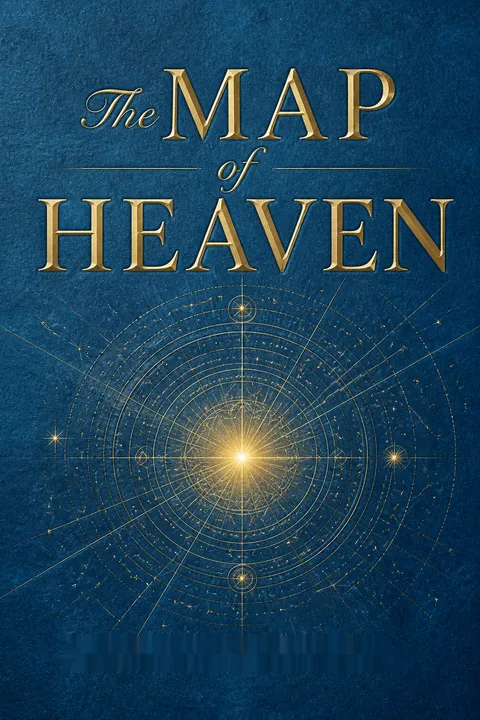


Key Takeaways
Let consciousness back into the map of reality.
A coma changed the map. Neurosurgeon Eben Alexander describes falling into a weeklong coma with bacterial meningitis. He says he travelled through unfamiliar realms, from a bleak, primitive state to a radiant landscape and a divine presence. A woman who guided him felt unknown until he later recognized her in a photograph as Betsy, his biological sister, who had died before they met. Alexander returned with his memories gradually restored and his belief in survival beyond bodily death transformed.
His claim is larger than his story. He argues that consciousness may be fundamental, not merely a product of the brain, and that science and spiritual experience should inform each other. The book’s “Map of Everything” is this proposed account of reality, with inner experience and a possible spiritual world included.
The narrative’s power comes from the change in the narrator, not just the extraordinary landscape he reports. It asks readers to distinguish three questions: what was experienced, what caused it, and what it means about the universe. Taking the first question seriously need not settle the other two. That distinction gives spiritual testimony room to matter without requiring every reader to accept its metaphysical interpretation. The book is strongest as a challenge to premature certainty, whether that certainty says consciousness is only brain activity or that one vivid experience proves an afterlife.
Pair Plato's spiritual memory with Aristotle's disciplined observation.
Two ways of knowing. Alexander uses Plato and Aristotle as contrasting guides. Plato points toward a reality beyond ordinary appearances and the possibility that learning involves remembering truths already known within. Alexander calls this recollection anamnesis. Aristotle, by contrast, represents careful attention to the world at hand. The book argues that neither inward experience nor outward investigation is enough alone.
The cave makes the point. In Plato’s story, prisoners mistake shadows on a wall for the whole world because they have never seen what casts them. Alexander sees modern materialism as a similar narrowing of vision. Yet he also warns against dismissing the physical world: the observational habits associated with Aristotle helped make science possible. The proposed synthesis is to study the visible world while remaining open to what it may not explain.
This pairing is more useful as a method than as a neat division between spiritual and scientific people. First-person experience can generate questions that measurement has not yet asked; disciplined observation can then test claims and expose mistaken interpretation. Each mode also has a failure mode: intuition can mistake conviction for truth, while measurement can overlook what its instruments and assumptions exclude. A productive synthesis does not ask either side to surrender its standards. It asks each to clarify what kind of claim it can support.
Gather firsthand reports as evidence, not as settled proof.
Listen before dismissing. Marine biologist Alister Hardy invited ordinary people to describe spiritual experiences without requiring them to defend a particular religion. His team gathered more than 3,000 accounts. William James had earlier made a related case: unusual experiences could be studied for their patterns and effects, even if they could not be reproduced in a laboratory. Alexander presents accounts of near-death experiences, deathbed visions, and sudden moments of connection as material worth examining.
A report is a starting point. For example, physician Yvonne Kason described an out-of-body perspective during a plane crash and later reported a vivid image that prompted her to urge a friend with a severe headache to seek care. The friend was diagnosed with meningitis. The story raises questions, but a striking narrative alone cannot establish how the event occurred.
A collection of personal accounts can reveal recurring themes, suggest research questions, and show how experiences reshape lives. That is a real contribution, especially when people have learned to keep such events private. But recruitment, memory, cultural expectations, and selective reporting affect which stories are collected and how they are told. The careful reader can hold both points: testimony deserves respectful attention, and the method used to interpret it should match the strength of the claim. The book’s archive is suggestive, not a substitute for controlled investigation.
Use synchronicity to notice meaning without forcing certainty.
Coincidence can feel personal. Alexander adopts Carl Jung’s term synchronicity for coincidences that seem connected by meaning rather than an obvious physical cause. Jung’s famous example came during a therapy session: a patient described a dream about a golden beetle, and a beetle soon tapped against the window. Alexander also recounts a widower who repeatedly saw a lone monarch butterfly near places connected to his late wife, who had loved butterflies.
Meaning changes the observer. Such events can comfort people in grief or make the world feel less indifferent. Alexander goes further, treating them as possible messages from a spiritual reality. The practical invitation is to notice what an event means to the person experiencing it, while recognizing that personal significance does not by itself show what caused it.
Meaning is not a trivial add-on to experience. It shapes attention, memory, grief, and the stories people use to keep loving someone who has died. A butterfly can therefore matter profoundly even when its appearance has an ordinary explanation. The distinction between meaning and evidence protects both sides: it avoids mocking a mourner’s interpretation, and it avoids presenting a comforting interpretation as independently verified fact. This approach lets symbols support reflection without turning every coincidence into a message that must be obeyed.
Remember that your identity may exceed the role you inhabit.
A tiger raised among goats. In a tale from the Hindu sage Ramakrishna, a tiger cub grows up copying goats, eating grass and fleeing danger. Another tiger shows it its reflection and gives it meat, helping it recognize what it is. Alexander uses the story to suggest that people can mistake their learned, everyday identity for their whole nature. Ancient initiation rites, as he describes them, dramatized death and rebirth so participants could experience themselves as belonging to both earthly and spiritual worlds.
Belief can change how life is faced. Alexander connects this idea to his own long struggle with feeling unworthy of love, which he says was healed by the unconditional care he experienced during his coma. He argues that a larger sense of identity can bring strength. The lesson is not that people should invent a grand identity, but that inherited assumptions about their limits deserve examination.
The tiger story captures a familiar psychological pattern: people adapt to the expectations and limits of their surroundings, then treat those adaptations as permanent truths. Narratives of initiation offer a way to reconsider identity and imagine a wider life. Yet a powerful identity story can liberate or mislead, depending on whether it remains open to correction. The most durable strength may come not from certainty about a hidden cosmic status, but from allowing experiences of care, connection, and courage to challenge a narrow self-concept.
Find belonging by sharing experiences grief makes difficult to name.
Silence compounds isolation. Hardy’s respondents often said they had never told anyone about their spiritual experiences before writing to his research team. Alexander hears the same hesitation in letters from readers describing visits from deceased relatives, unusual perceptions around death, or near-death experiences. One woman recounted an elderly relative speaking of dead family members who had come to take her, then dying peacefully. Such accounts can be hard to share when the listener is expected to dismiss them as fantasy.
Listening can be enough. Alexander sees a community forming among people who recognize parts of their own experience in another person’s story. He argues that science and religion should make room for these accounts without insisting on one doctrine. A listener need not certify what happened in order to acknowledge the fear, comfort, grief, or changed outlook the experience brought.
People need social settings where they can describe emotionally important events without being shamed or pressured to adopt a belief. This is especially true in bereavement, when a story may be part of how someone continues a bond with the dead. Respectful listening is not the same as endorsing a supernatural explanation. That distinction makes room for a plural community: believers, skeptics, and the uncertain can discuss what an experience meant while remaining honest about what they do not know.
Keep joy alive without calling suffering a lesson.
Joy is not the same as happiness. Alexander rejects explanations that treat pain as punishment, repayment for past wrongdoing, or a spiritual test designed to improve the sufferer. He draws on the account of Natalie Sudman, who describes severe injuries after a vehicle explosion in Iraq yet says an underlying sense of joy remained available alongside fear, pain, and frustration. In this view, joy is a deeper confidence in being alive, not a cheerful reaction to every circumstance.
Meaning must not erase pain. Alexander’s own medical career exposed him to suffering among patients and families, which informs his refusal to call every hardship beneficial. He proposes that a larger spiritual context can help people endure the world’s opacity and cruelty. The claim is not that grief disappears, but that grief need not be the only truth a person can hold.
The distinction between joy and happiness can help people avoid the demand to feel positive during loss or illness. A sustaining sense of connection may coexist with anger, sadness, and pain. Still, spiritual explanations become harmful when they imply that suffering is deserved or that a person should be grateful for trauma. The book’s rejection of punitive explanations is ethically important. Its more expansive claim that suffering is encompassed by a loving universe may comfort some readers, while remaining difficult to verify or reconcile with the scale of human harm.
Explore consciousness directly, while separating experience from explanation.
Practice is part of the inquiry. In the appendix, Alexander describes using sound-enhanced meditation to revisit states resembling parts of his coma experience. One method presents slightly different tones to each ear. A 100-hertz tone in one ear and a 104-hertz tone in the other can produce a perceived four-hertz binaural beat. Alexander proposes that such beats may influence the brain’s electrical activity and help quiet ordinary verbal thought.
An inner experience is observable to its experiencer. He also discusses chanting and the resonant acoustics of sacred buildings as possible aids to altered awareness. His practical point is that readers need not undergo a near-death crisis to investigate consciousness through meditation. His further claim, that these practices open access to spiritual realms, remains an interpretation rather than an established result of the exercise itself.
Meditation can be treated as a disciplined first-person investigation: establish a practice, record what changes, and notice how attention, emotion, and perception respond. That is valuable even if the experience is understood in psychological rather than spiritual terms. The book’s sound-based explanation is more tentative than its confident language sometimes suggests. A perceived beat and a vivid inner landscape show that experience can be shaped; by themselves, they do not establish that awareness has left the brain or reached another world.
Hold hope by seeing earthly time as one chapter.
The story may continue beyond the body. Alexander argues that earthly life is not the whole of human existence. He uses flowers, which bloom and fade, as images of renewal, and describes near-death reports in which people encounter deceased relatives appearing healthy and young. He also invokes aeveternity, a term associated with Thomas Aquinas for a mode of time unlike ordinary linear time. In this imagined perspective, a life’s different stages may be held together rather than left behind one by one.
Hope changes how the present feels. Alexander’s account of the dying film critic Roger Ebert includes a note suggesting that ordinary reality was not the whole story. Alexander reads such moments as glimpses beyond time and space. Even without accepting that interpretation, the chapter asks readers to treat life as more than a countdown, and to value its relationships and possibilities while they are here.
A belief in continuation can soften the terror of death and help mourners imagine their relationships as more than biological events. The book’s images of reunion and renewed life answer a deep human need, but reports of afterlife encounters do not settle what happens after death. Hope need not depend on certainty. The idea that a life is a chapter can also sharpen care for this one: if relationships matter, the most immediate expression of that belief is how the living attend to one another now.
Analysis
The Map of Heaven is part memoir, part anthology of extraordinary experience, and part argument for a new relationship between science and spirituality. Its narrative engine is Alexander’s transformation after a coma: a trained neurosurgeon who had dismissed spiritual reports becomes a collector and advocate of them. The book widens that personal story through ancient philosophy, mysticism, reader letters, and examples of deathbed visions, synchronicities, and meditation.
Its strongest contribution is cultural rather than demonstrative. Alexander makes private experiences discussable and asks whether a worldview that excludes first-person consciousness has become too narrow. His emphasis on love, belonging, and the life-changing effects of unusual experiences helps explain why such accounts matter even to readers who remain unsure of their cause. The argument also resists two forms of authority that can shut inquiry down: religious doctrine that dictates what must be believed, and scientific reductionism that treats unmeasured experience as unreal by definition.
The central weakness is a recurring slide between distinct levels of evidence. A person’s experience can be vivid and sincere; a pattern across accounts can be worth studying; neither alone establishes that consciousness survives bodily death. Likewise, quantum physics raises difficult questions about measurement, but it does not show that human consciousness creates reality or that an afterlife exists. The book sometimes presents these open questions as though they strongly support its preferred answer. Personal testimony, scientific theory, and metaphysical conclusion need separate standards of proof.
Read most productively, the book is an invitation to curiosity rather than a completed map. Readers can take reports seriously without treating them as verdicts, and can let spiritual possibility deepen compassion without claiming certainty about what follows death. That balance preserves the book’s humane force while keeping inquiry honest.
Review Summary
The Map of Heaven received mixed reviews. Some readers found it thought-provoking and inspiring, appreciating Alexander's blend of science, philosophy, and spirituality. They valued the personal stories and near-death experiences shared. Others felt it lacked the depth and coherence of his previous book, criticizing its dry tone and perceived lack of scientific rigor. Some readers were disappointed by the focus on philosophy and history rather than more personal accounts. Overall, the book sparked discussions about consciousness, the afterlife, and the intersection of science and spirituality.
People Also Read




Glossary
anamnesis
spiritual remembranceA Greek term meaning recollection or remembrance. Alexander uses it for Plato’s idea that learning can involve recovering knowledge already present within the soul. In the book, anamnesis describes remembering a spiritual origin or wider identity that ordinary earthly life may obscure.
Single Vision
material-only perceptionWilliam Blake’s label for a restricted way of seeing that recognizes only the measurable, outward world and ignores inner or spiritual dimensions. Alexander uses the term to criticize a worldview that treats consciousness, meaning, and spiritual experience as unreal simply because they are not ordinary physical objects.
synchronicity
meaningful coincidenceCarl Jung’s term for a coincidence that feels connected through meaning rather than an evident chain of physical cause and effect. Alexander uses it for events such as an unexpected symbol appearing during grief. The experience may be personally significant, although its significance does not by itself prove a supernatural cause.
Earthworm's-Eye View
Alexander's first coma realmAlexander’s name for the dark, primitive state he says he experienced at the beginning of his near-death journey. He describes it as a coarse, earthlike realm with other presences but little interaction. In his account, a luminous being eventually appears and guides him toward brighter, more expansive realms.
ultra-real
more vivid than ordinary lifeAlexander’s term for a quality reported in some near-death experiences, in which the experience feels more vivid, coherent, and real than everyday perception or ordinary dreams. He treats this quality as important evidence about the experience, while its intensity alone cannot determine whether its source is spiritual or neurological.
aeveternity
time beyond ordinary sequenceA term associated with Thomas Aquinas for the time of angels, understood as distinct from ordinary earthly time. Alexander uses it to imagine a mode of existence in which movement and completion coexist, unlike linear time in which events unfold one after another.
binaural beat
perceived difference-toneA beat-like auditory sensation produced when slightly different tones are presented separately to the two ears. For example, tones of 100 and 104 hertz can be perceived as a four-hertz pulse. Alexander discusses using binaural beats in sound-enhanced meditation and proposes that they may influence patterns of brain activity.
FAQ
What's "The Map of Heaven" about?
- Exploration of Afterlife: "The Map of Heaven" by Eben Alexander explores the concept of the afterlife, combining insights from science, religion, and personal experiences.
- Personal Journey: The author shares his own near-death experience (NDE) and how it transformed his understanding of consciousness and existence.
- Integration of Disciplines: The book aims to bridge the gap between science and spirituality, suggesting that both have valuable insights into the nature of reality.
- Stories and Evidence: It includes stories from ordinary people and historical figures, providing evidence and perspectives on the existence of a spiritual realm.
Why should I read "The Map of Heaven"?
- Unique Perspective: The book offers a unique perspective by combining scientific inquiry with spiritual exploration, appealing to readers interested in both fields.
- Personal Transformation: It provides insights into how understanding the afterlife can transform one's approach to life and death.
- Inspiring Stories: The book is filled with inspiring stories of near-death experiences and spiritual awakenings that can offer comfort and hope.
- Challenge Beliefs: It challenges conventional beliefs about consciousness and encourages readers to explore their own spiritual experiences.
What are the key takeaways of "The Map of Heaven"?
- Consciousness Beyond Brain: The book suggests that consciousness exists beyond the physical brain, as evidenced by near-death experiences.
- Interconnectedness of Science and Spirituality: It argues for a new understanding that integrates scientific and spiritual perspectives.
- Personal Experiences Matter: Personal spiritual experiences are valid and can provide profound insights into the nature of reality.
- Love and Unity: The ultimate message is one of love and unity, emphasizing that we are all connected to a greater whole.
How does Eben Alexander describe his near-death experience?
- Journey Through Realms: Alexander describes traveling through various realms, starting from a dark, murky place to a vibrant, heavenly realm.
- Encounter with Divine: He encounters a divine presence he refers to as "Om," which fills him with unconditional love and knowledge.
- Guidance and Learning: Throughout his journey, he is guided by a beautiful woman and learns profound truths about existence and consciousness.
- Transformation: This experience transforms his understanding of life, death, and the universe, leading him to explore these themes further.
What is the significance of the "Spinning Melody" in "The Map of Heaven"?
- Portal to Higher Realms: The "Spinning Melody" is described as a beautiful, heavenly music that serves as a portal from a dark realm to a more vibrant, spiritual one.
- Symbol of Transition: It symbolizes the transition from earthly concerns to a higher state of consciousness and understanding.
- Connection to Divine: The melody is associated with divine presence and love, reinforcing the book's theme of interconnectedness with a higher power.
- Memory and Meditation: Although Alexander cannot recall the exact melody, he uses sound and meditation to reconnect with the spiritual insights he gained.
How does "The Map of Heaven" integrate science and spirituality?
- Challenging Materialism: The book challenges the materialistic view that consciousness is solely a product of the brain, suggesting a spiritual dimension.
- Scientific Evidence: It presents scientific evidence, such as quantum mechanics and studies on consciousness, to support the existence of a spiritual realm.
- Historical Perspectives: The book draws on historical figures and philosophies that have explored the intersection of science and spirituality.
- Call for New Understanding: Alexander advocates for a new understanding that embraces both scientific inquiry and spiritual wisdom.
What role do personal stories play in "The Map of Heaven"?
- Validation of Experiences: Personal stories validate the experiences of those who have encountered the spiritual realm, offering diverse perspectives.
- Emotional Connection: These stories create an emotional connection with readers, making abstract concepts more relatable and tangible.
- Evidence of Afterlife: They serve as anecdotal evidence of the afterlife, supporting the book's central thesis.
- Inspiration and Hope: The stories inspire hope and encourage readers to explore their own spiritual experiences and beliefs.
What are the best quotes from "The Map of Heaven" and what do they mean?
- "I don’t believe; I know." - This quote emphasizes the certainty and conviction that comes from personal spiritual experiences.
- "The universe is based on love." - It highlights the book's central theme that love is the fundamental force connecting all existence.
- "We are one part earth and one part heaven." - This quote reflects the dual nature of human existence, bridging the physical and spiritual realms.
- "What you lose, you can get back." - It offers hope and reassurance that spiritual truths and connections can be rediscovered.
How does Eben Alexander address skepticism in "The Map of Heaven"?
- Scientific Background: As a neurosurgeon, Alexander uses his scientific background to address skepticism and provide credibility to his experiences.
- Evidence and Stories: He presents evidence from scientific studies and personal stories to support the existence of a spiritual realm.
- Open-Minded Inquiry: The book encourages open-minded inquiry and exploration of spiritual experiences, rather than dismissing them outright.
- Integration of Perspectives: Alexander advocates for integrating scientific and spiritual perspectives to gain a fuller understanding of reality.
What is the "Golden Thread" mentioned in "The Map of Heaven"?
- Connection to Divine: The "Golden Thread" symbolizes the connection between the earthly and spiritual realms, linking individuals to the divine.
- Guidance and Purpose: It represents guidance and purpose, helping individuals navigate their spiritual journeys and find meaning in life.
- Ancient Wisdom: The concept draws on ancient wisdom and philosophies that emphasize the interconnectedness of all existence.
- Hope and Reassurance: The "Golden Thread" offers hope and reassurance that we are never truly alone and are always connected to a greater whole.
How does "The Map of Heaven" redefine the concept of reality?
- Beyond Materialism: The book redefines reality by suggesting that it extends beyond the material world to include spiritual dimensions.
- Consciousness as Fundamental: It posits that consciousness is fundamental to existence, rather than a byproduct of physical processes.
- Interconnected Universe: Reality is seen as an interconnected universe where everything is linked by love and spiritual energy.
- Personal Experience: Personal spiritual experiences are considered valid and essential to understanding the true nature of reality.
What is the ultimate message of "The Map of Heaven"?
- Love and Unity: The ultimate message is one of love and unity, emphasizing that we are all connected to a greater whole.
- Hope and Transformation: The book offers hope and encourages personal transformation through spiritual exploration and understanding.
- Integration of Knowledge: It calls for integrating scientific and spiritual knowledge to gain a fuller understanding of existence.
- Rediscovery of Truths: The book encourages readers to rediscover spiritual truths and connections that have been forgotten or overlooked.
About the Author
Other books by Eben Alexander
Download PDF
Download EPUB
.epub digital book format is ideal for reading ebooks on phones, tablets, and e-readers.








