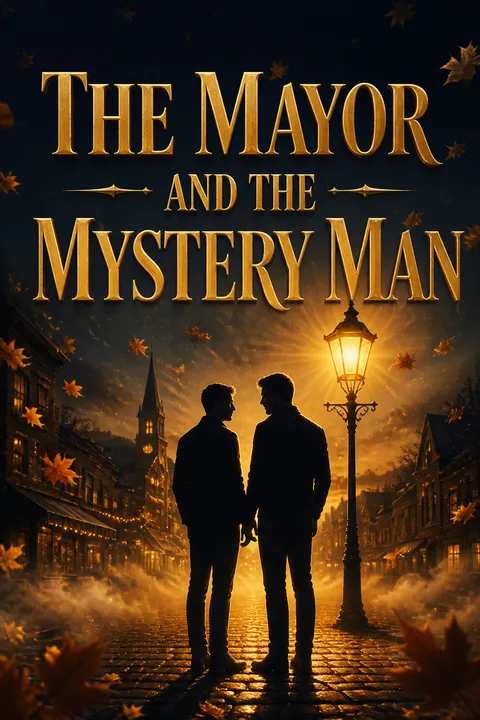


Plot Summary
The Mayor's Exposé
Leo McCaslin has spent eight years as Sourwood’s mayor, protecting its riverfront as public land. Then Damian, a former hookup, publishes their private messages and a revealing photo, framing Leo’s casual sex life as a story of heartbreak. The encounters were consensual, but the scandal reaches voters just as councilwoman Rita Buchanan enters the mayoral race.
Her wealthy family wants the riverfront for development, while Leo wants to preserve it for everyone. Campaign manager Vernita Wallace warns that the article has damaged Leo’s standing and that Rita’s cheerful family videos make her more appealing. Leo refuses to abandon the town he loves, but his confidence in his record cannot counter the sudden force of public image.
The opening collision is between public service and public consumption. Leo’s private behavior is lawful, yet the article converts it into a story voters can use to judge his character. Rita’s entry gives that judgment a political consequence: the scandal threatens not only Leo’s pride but the public park he has defended. His instinct is to answer scrutiny with his record, while Vernita sees that elections are also contests over emotional legibility. The crisis begins because Leo assumes good work should speak for itself, then discovers that people may not hear it through the noise.
Dusty's Triple Collapse
Across the country in Los Angeles, Dusty Michaelson’s carefully concealed life falls apart in a single week. His three young roommates dismiss his requests to clean, so he gives up his room and leaves the apartment. On the television set where he builds scenery, his girlfriend Audrey ends their relationship after falling for her co-star Adam.
When Dusty learns they began sleeping together during rehearsals, he punches Adam and is escorted off the set, losing his job. He has already spent years drifting through unsuccessful careers and business ventures, and now he is unemployed, unhoused, and heartbroken. When Leo asks him to come to Sourwood and pretend to be his boyfriend, Dusty accepts before Leo even explains the details.
Dusty’s losses are concrete, but the deeper wound is his belief that each setback confirms a verdict about his worth. His instinct is to turn humiliation into jokes and to keep Leo from seeing how unstable his life has become. Accepting the trip lets him act before he can retreat into shame. The same loyalty that has made him Leo’s dependable confidant now gives him a place to be useful. The call does not solve his problems, but it interrupts their familiar pattern: Dusty is no longer facing failure alone.
The Mystery Man Arrives
After nearly three years apart in person, Dusty reaches Sourwood, where Leo meets him with a spare jacket and a prepared guest room. Leo’s thirteen-year-old twins, Ari and Lucy, are told that their father and Dusty have become more than friends.
Dusty handles their questions about his sexuality with warmth, then distracts them with souvenirs from his television set. Vernita prepares the men for a newspaper interview, but Dusty waves off her dossier, confident that he knows Leo better than any script.
Their cover story places the beginning of the romance after Damian’s article, using Dusty’s trip to Boston for his great-aunt’s funeral as the explanation for their reunion. A public performance now rests on the ease of a friendship built over decades.
The scheme works because it borrows the credibility of a real history. Dusty does not need to memorize Leo’s preferences; he already knows the details that make their connection particular. Yet the twins’ questions expose the human cost of turning a friendship into campaign material. Leo has to present a tidy account of a relationship that has never been discussed in those terms. The tension is not simply whether the lie will fool reporters. It is whether the men can manage a public version of their bond without changing how they inhabit it in private.
A Tour of Sourwood
At their first interview, Dusty accidentally names the wrong town, then rescues the stiff exchange by recalling Leo’s college band, failed surfing experiment, and favorite chain restaurant. The reporter laughs, readers respond, and Leo begins to close the polling gap.
On an early run, Leo takes Dusty to a high overlook and points out the house where he grew up, the old video store where he learned to negotiate, and the abandoned factory land he is turning into Renegade Park. As Leo explains why the riverfront should remain public, Dusty admits how ashamed he is of his debts and failed ventures. Leo refuses to measure him by money or career, reminding him that loyalty and kindness are forms of achievement too.
Sourwood is made legible through Leo’s memories, not through campaign slogans. The overlook connects his private past to a public plan, allowing Dusty to see why the park is more than a policy dispute. At the same time, Dusty’s confession reverses their usual support pattern: the successful mayor becomes the person who must persuade his friend that a life without a straight career line is not a failed life. Their intimacy deepens through accurate attention. Leo knows what Dusty fears; Dusty sees the convictions beneath Leo’s polished public manner.
The Park Becomes a Battleground
Rita releases a family video suggesting that Leo’s plan for Renegade Park will keep new families from moving to Sourwood and weaken the town. Her claims are misleading, but they make the public park sound like a threat to growth. At a council meeting, she persuades five of eight members to delay the park’s funding vote until after the election, putting Leo’s timetable at risk.
Around the same time, Dusty spends a sick day caring for Ari. Playing the boy’s favorite game, he discovers that Ari has secretly designed a complex game of his own. Dusty urges Leo to take his son’s interest seriously. Leo recognizes that he has mistaken Ari’s passion for idleness, and the campaign’s emotional stakes reach into his home.
Rita’s video works by translating a land-use dispute into a family fear: empty classrooms, lost businesses, and isolation. Leo has evidence and long-range plans, but Rita offers an easily shared image. The parallel with Ari matters. Leo has also been reading a person through a simplified public picture, seeing a distracted gamer rather than a young creator. Dusty’s intervention shows his talent for listening before correcting. By making the park fight and the parenting conflict echo each other, the story tests whether Leo can value what people actually build, rather than what their appearances suggest.
Kissing for the Campaign
After polling shows that some voters doubt the relationship, Vernita recommends more visible affection and a kiss at Applefest. Leo knows the kiss is a campaign tactic, but the prospect unsettles him because he has privately carried a crush on Dusty since college. Dusty proposes practicing, then begins kissing Leo at unexpected moments so they will look natural in public.
Instead of becoming routine, the kisses make Leo want more; Sourwood staff and residents notice their growing ease, and the couple’s image improves. The exercise becomes another contest between them, each trying to prove he is the better fake boyfriend. Beneath the jokes, Dusty is also beginning to look at Leo as a man he wants, not only as his oldest friend.
The campaign’s demand for affection turns performance into an experiment neither man can fully control. Leo understands the political purpose but cannot keep desire separate from the act; Dusty uses repetition as a rational cover for a feeling he has not yet named. Their competitiveness offers emotional camouflage, letting each approach intimacy while pretending it is only practice. Public approval rises, but the more important change is private: the gesture that was supposed to reassure voters begins to unsettle the boundary between their old friendship and a possible romance.
Leo Takes the Stage
At Applefest, Rita reveals that her family arranged for the popular band The English Patients to perform and publicly support her. Dusty refuses to let Leo disappear from the festival. He persuades the band’s crew to give the mayor a chance, using an outdated fairness rule to secure a turn onstage. Leo admits his college band history, straps on a guitar, and joins the group for a Foo Fighters song.
Muscle memory carries him through the performance, and Sourwood erupts. He invites Dusty onto the stage and kisses him in front of the crowd. The moment wins Leo attention Rita had expected to own, but it also strips away their last useful excuse: when they leave the stage, neither wants the kiss to end.
Leo’s performance is a recovery of a self he had set aside for work and family. The guitar does more than supply a counter-image to Rita’s celebrity endorsement; it lets him be exuberant without manufacturing a new persona. Dusty makes the performance possible by recognizing Leo’s capacity before Leo trusts it himself. Their public kiss then changes function. It still benefits the campaign, but the emotional force comes from the fact that Leo sought Dusty in the crowd for his own sake. The political spectacle reveals a private choice.
The Friendship Crosses Over
With the twins away for the weekend, Leo and Dusty reach Leo’s house still charged by the Applefest performance. Dusty has never had sex with a man, so Leo guides him patiently, keeping their familiar teasing and trust intact as they explore a new kind of intimacy. Dusty discovers that desire with Leo feels both thrilling and unusually safe.
The next morning, however, Leo has gone for a run alone, and both men hesitate to name what happened. They laugh through the awkwardness and agree that the friendship remains intact, treating the encounter as a release of tension they can put behind them. Dusty privately knows his feelings have deepened, while Leo insists on the boundary that protects his heart.
Their first sexual encounter is significant not because it erases the friendship but because it makes the friendship bodily. Dusty’s inexperience places trust at the center of the scene, and Leo’s attentiveness grows from years of knowing him rather than from romantic performance. The morning after, they use humor to restore familiar ground. That strategy protects them from immediate rejection, but it also asks Dusty to conceal what he has begun to feel. Their intimacy has become real before either has found a safe language for it.
A Low Blow at the Debate
During the first debate, Rita attacks Dusty’s reputation, revealing that he was fired from Ocean City after punching Adam, the co-star who had been sleeping with Audrey while she dated Dusty. Leo refuses to let the exchange define Dusty, publicly insisting that the kind man he has known for twenty-four years matters more than a disputed piece of television gossip.
Afterward, Vernita points out that the defense clashes with their invented timeline for the romance. Dusty apologizes, but Leo comforts him and recommits to campaigning as a team. Soon after, former senator Harlen Carruthers offers Leo a path toward a future run for governor, conditional on ending the relationship. Leo declines the endorsement rather than cut Dusty loose.
Rita’s attack tries to make Dusty’s worst public moment stand in for his whole character. Leo answers with personal knowledge, but his defense carries political risk because it makes his loyalty visible. Harlen then sharpens that risk into a choice between ambition and attachment. Leo has spent years treating career and family as competing obligations; now he refuses to regard love as expendable simply because it complicates his prospects. The decision does not remove campaign pressure, but it changes what Leo is willing to sacrifice to manage it.
The Past in Photographs
After Leo and Dusty train for Sourwood’s Zombie 5K, Leo asks what Dusty plans to do after the election. Dusty admits he wants to stay, and their renewed intimacy makes the fake relationship feel increasingly real. At a follow-up interview, reporter Maria Lopez surprises them with old photographs collected from their college friends.
The pictures show Leo repeatedly watching Dusty with a tenderness neither had recognized at the time. Overwhelmed, Leo leaves the newsroom and finally admits he had a crush on Dusty in college, then buried it to protect their friendship. Dusty realizes that his own recent feelings have become love. They confess what each had been hiding and let Maria photograph them together without pretending.
The photographs function as external memory: they make visible a pattern that both men’s self-protective stories had erased. Leo’s claim that his feelings began with the campaign can no longer contain the past, while Dusty sees that his own attachment has changed from dependable friendship into desire. The revelation is less a sudden transformation than a correction of perception. Their history has always carried evidence of affection, but neither had a framework for interpreting it. Once they speak honestly, the camera records recognition rather than performance.
The Lie Hits Sourwood
At the Zombie 5K, residents who had been cheering Leo and Dusty turn hostile after a news post reveals text messages about their fake relationship. Someone has accessed Leo’s synced phone and computer, exposing the campaign plan to make him seem more likable. Leo’s private feelings for Dusty are real, but the public has been deliberately misled, and the election is only days away.
Vernita cannot find a clean way to deny or explain the messages. At Stone’s Throw Tavern, Leo’s friends propose rallies and talking points. Dusty instead urges him to approach Sourwood as a community he has wronged, trust residents with the full truth, and apologize. Leo accepts that his final debate must be honest, not another campaign performance.
The leak collapses the distinction Leo had relied on between a deceptive origin and a genuine present. His love is real, but that does not cancel the fact that he engineered a public image for votes. Dusty’s advice recognizes that the injury is relational: voters feel manipulated, not merely misinformed. The only available repair is to treat the community as people capable of hearing an uncomfortable truth. The hacked messages turn a political crisis into a test of the trust Leo has spent eight years asking Sourwood to place in him.
The Honest Debate
At the final debate, Leo abandons prepared image management. He tells the audience that he invited Dusty to pose as his boyfriend because his campaign thought a partner would make him more likable, then explains that their friendship became love. He apologizes for using the town’s trust to shape a more electable version of himself.
Rather than dwell on the scandal, he names what he wants to protect: Sourwood’s local businesses, public spaces, and small-town character, including Renegade Park. The room’s tense silence gives way to sustained applause. Leo has not yet secured a vote, but he has stopped asking residents to believe a manufactured story. Dusty, the twins, and Vernita watch as he risks his campaign on candor.
Leo’s speech is a climax because he accepts accountability without surrendering the substance of his leadership. He does not pretend that sincere love retroactively makes the campaign strategy harmless. Instead, he names the deception and reconnects it to the town’s broader trust. His defense of Sourwood becomes persuasive precisely because he no longer performs perfect electability. The applause matters, but the deeper change is internal: Leo can no longer separate public service from the vulnerability required to serve people honestly.
A Victory With Roots
On election night, Leo helps understaffed Stone’s Throw Tavern rather than pose for a photograph of himself working, then wins reelection as the results arrive. Dusty stays in Sourwood and begins taking carpentry commissions, building shelves and theater sets instead of returning to the unstable life he left in Los Angeles.
After the election, investigators trace the phone hack to a campaign aide working for Rita; Rita and her father, Gus, are arrested two weeks before Christmas.
At the holiday gathering, Leo hosts the Single Dads Club and their families, while Dusty helps guide the twins through setting the table. Surrounded by the community he once feared losing, Dusty toasts the friends who become family. His place in Sourwood is no longer a campaign prop.
The resolution answers both men’s opening insecurities through action. Leo wins, but his choice to help Mitch without staging the gesture shows a more grounded relationship to public image. Dusty’s carpentry gives him a livelihood built from a skill he once treated as one more detour, while his care for the twins becomes a practical form of belonging. The arrests clarify that the campaign’s most serious intrusion came from political opponents, but they do not erase Leo’s own dishonesty. The Christmas gathering offers something more durable than a clean reputation: shared work, chosen family, and a home Dusty helps maintain.
Analysis
The novel uses a small-town election to examine how public character is made, sold, and sometimes recovered. Leo begins by trusting that competence and a long record of service should outweigh a private scandal. His campaign instead treats likability as a product, turning Dusty into a visible sign of warmth. The strategy succeeds only because their friendship already contains the details that make affection believable. That success creates the story’s central irony: the more convincingly they perform intimacy, the less either can pretend that nothing has changed.
The romance is also a study in misrecognition. Leo has mistaken emotional restraint for control, while Dusty has mistaken professional success for proof that his own life is deficient. Their strongest moments come when they correct those readings through attentive acts: Dusty listens to Ari’s ambitions, Leo values Dusty beyond income or status, and old photographs reveal what both had failed to see in themselves. The relationship grows not from one dazzling confession alone, but from the accumulated evidence of being known.
Sourwood provides a civic counterpart to that intimacy. Renegade Park asks whether growth means maximizing private value or preserving shared places where a community can gather. Leo’s final apology matters because he applies the same principle to voters: they are not an audience to manage but people entitled to the truth. His reelection does not erase his manipulation; rather, it follows his willingness to risk the outcome by acknowledging it. Dusty’s decision to build a carpentry business and stay in town completes the novel’s contrast between drifting and belonging. Home emerges as a practice of contributing, listening, and choosing one another, not as a reward for having already succeeded.
Review Summary
The Mayor and the Mystery Man is generally well-received, averaging 3.97 stars. Readers praise the friends-to-lovers and fake dating tropes, appreciating the mature, low-angst characters in their 40s who communicate openly. Many highlight the natural progression of Leo and Dusty's relationship and the charming small-town setting. Audiobook narrator Nick J. Russo receives frequent acclaim. Some criticisms include predictability, an underdeveloped Dusty compared to Leo, and one reviewer strongly objected to offensive content in the opening pages.
People Also Read



Characters
Leo McCaslin
The driven hometown mayorLeo is Sourwood’s long-serving mayor, a former lawyer, and the father of teenage twins. He is disciplined, ambitious, and deeply invested in keeping his town welcoming and locally rooted. His competence can harden into control: he prepares for political risks, hides vulnerability behind sarcasm, and struggles to balance public duty with family life. His preference for casual hookups protects him from the emotional uncertainty he associates with commitment. Beneath the polished suits and brisk decisions is a man who remembers the history of individual streets and businesses because he believes local government should protect real lives, not just abstract growth.
Dusty Michaelson
The loyal, restless carpenterDusty is Leo’s college best friend, a carpenter who has spent adulthood searching for work and a home that fit. He is warm, observant, funny, and unusually good at making people feel heard, especially children. His humor often arrives just before an admission of shame; repeated career setbacks have left him comparing himself with Leo’s apparent certainty. Dusty values loyalty more than status and has a knack for improvising when plans go wrong. Though he presents himself as easygoing, he is emotionally perceptive and longs for a stable place to contribute without having to pretend he has everything figured out.
Vernita Wallace
Leo's unsparing campaign managerVernita has managed Leo’s campaigns for years and understands both his strengths and his blind spots. A former speechwriter, she is strategic, ethically serious, and unwilling to soften bad news for his comfort. Her advice often reflects the cold mathematics of elections, but her investment in Leo is personal as well as professional. She recognizes that voters need to see more than competence, and she pushes him toward a warmer public presence even when the solution makes him uncomfortable.
Ari McCaslin
Leo's inventive sonAri is Leo’s thirteen-year-old son and Lucy’s twin. He loves video games and develops creative skills that are not immediately visible to his father. Comparisons with his academically gifted sister weigh on him, and Leo’s worries about gaming make Ari cautious about sharing what matters to him. He is independent, bright, and capable of sustained focus when adults take his interests seriously.
Lucy McCaslin
Leo's ambitious daughterLucy is Leo’s thirteen-year-old daughter and Ari’s twin. She is academically successful and perceptive about the expectations adults place on her. Her intelligence can make others assume they know her ambitions, even when she is exploring creative interests of her own. She is affectionate with her father but willing to correct him when his standards become unfair.
Rita Buchanan
The polished challengerRita is a city council member and Leo’s opponent in the mayoral race. Her public image emphasizes family warmth and accessibility, while her political priorities align with her family’s real estate interests. She is more strategic than Leo initially gives her credit for, using social media and campaign timing to shape voters’ impressions. Her ambition is closely tied to a vision of growth that conflicts with Leo’s defense of public riverfront land.
Deb Buchanan
Rita's popular wifeDeb is Rita’s wife and a physical therapist in Sourwood. Her work has made her familiar and well liked among residents, lending the Buchanan family a genuine local connection. She appears in the couple’s family-centered public videos and is more socially established in town than Rita.
Gus Buchanan
The developer patriarchGus is Rita’s father and the wealthy real estate developer whose interests include Sourwood’s riverfront. He is a powerful presence behind Rita’s political ambitions, representing the pressure to treat public land as an investment opportunity. His manner is intimidating, and his influence reaches beyond the council chamber.
Deirdre McCaslin
Leo's former wifeDeirdre is Leo’s ex-wife and the mother of Ari and Lucy. She shares parenting responsibilities with Leo and has helped the children navigate family changes through honest conversations. Their marriage ended after Leo came to understand his sexuality, but they remain connected through their children.
Mitch
The steady tavern ownerMitch owns Stone’s Throw Tavern and is one of Leo’s oldest friends in Sourwood. Quiet and direct, he often sees through Leo’s rationalizations before Leo does. His bar serves as a gathering place for the Single Dads Club, and his practical support helps anchor Leo during the campaign. Mitch values loyalty but is not afraid to challenge a friend’s self-protective explanations.
Cal
The exuberant dadCal is one of Leo’s longtime friends and a member of the Single Dads Club. He is expressive, affectionate, and quick to turn a problem into a group mission. His enthusiasm can overwhelm a room, but it also makes people feel included. He is raising his son and has recently begun a relationship with Russ.
Russ
The practical new partnerRuss is part of Leo’s close circle and is dating Cal. More measured than Cal, he offers advice by noticing how Sourwood residents respond to people, not just policies. He is an attentive father and a steady counterweight to the group’s louder personalities.
Maria Lopez
The curious local reporterMaria reports for The Sourwood Gazette. She is personable and diligent, combining friendly interviews with careful background research. Her questions help residents see a more informal side of Leo, and her interest in the history between Leo and Dusty leads her to seek out their old photographs.
Harlen Carruthers
The influential political elderHarlen is a former state senator with a powerful reputation in Hudson Valley politics. He admires political skill and looks for promising candidates to guide toward higher office. His advice is blunt and shaped by a career in which personal relationships can become liabilities, even when others would consider them essential.
Audrey
Dusty's television-star exAudrey is an actor on Ocean City and Dusty’s girlfriend. She is focused on her career and on the public story around her character, leaving Dusty uncertain about where their private relationship stands.
Adam
Audrey's co-starAdam plays a romantic lead on Ocean City and becomes Audrey’s co-star both on screen and off. His involvement with Audrey turns a workplace storyline into a painful personal conflict for Dusty.
Damian Van Drew
The former hookup turned writerDamian is a younger man Leo meets through a dating app. He interprets their brief encounter through a more personal emotional lens than Leo expects and is willing to make their private connection public. His role exposes the mismatch between casual arrangements and the meanings people attach to them.
Buzz
The absent club memberBuzz is a member of the Single Dads Club who has moved away from Sourwood with his partner, Shane, and their young daughter. Though mostly absent from the central campaign events, he remains part of the group’s extended family and returns for the holidays.
Shane
Buzz's tattooed partnerShane is Buzz’s partner and the father of their young daughter. He is affectionate and self-assured, and his relationship with Buzz adds to the close-knit circle of parents who support Leo and Dusty.
Plot Devices
The fake-boyfriend campaign
A romance built for votersAfter Leo’s private dating life damages his reelection prospects, his campaign decides a boyfriend might make him appear more approachable. Leo asks his longtime friend Dusty to play the role, giving them an easy foundation for public affection and a difficult boundary in private. Interviews, campaign events, and staged displays steadily make the relationship seem convincing. The device creates both political momentum and emotional pressure, since their real history cannot be reduced to the convenient story they give reporters.
Renegade Park
The campaign's contested groundThe abandoned riverfront factory is central to Leo’s vision for Sourwood. He wants to turn it into a public park with art, recreation, and a greenhouse, while the Buchanan family favors private development. The park gives the mayoral contest a concrete policy conflict and reveals what each candidate means by growth. It also lets Dusty understand Leo through the work he hopes to leave behind, making civic stewardship part of their personal bond.
The old photographs
A record of unnoticed affectionMaria gathers photographs from Leo and Dusty’s college years and later visits. Their poses and glances expose a tenderness that neither man had consciously acknowledged. The images do not create their feelings; they make a long pattern visible, prompting Leo to speak about his old crush and Dusty to recognize the depth of his own attachment. The device turns memory into evidence and moves their relationship beyond the cover story.
The hacked messages
The public lie becomes evidenceText messages on Leo’s synced devices preserve the campaign’s plan for a fake relationship. When they are exposed during the final days of the election, residents learn that the romance began as a strategy to influence voters. The leak creates a crisis distinct from Leo’s earlier sex scandal: this time, the issue is not private behavior but political deception. Its exposure forces Leo to decide whether to deny, deflect, or admit what he did.
Download PDF
Download EPUB
.epub digital book format is ideal for reading ebooks on phones, tablets, and e-readers.








