

Plot Summary
Prologue
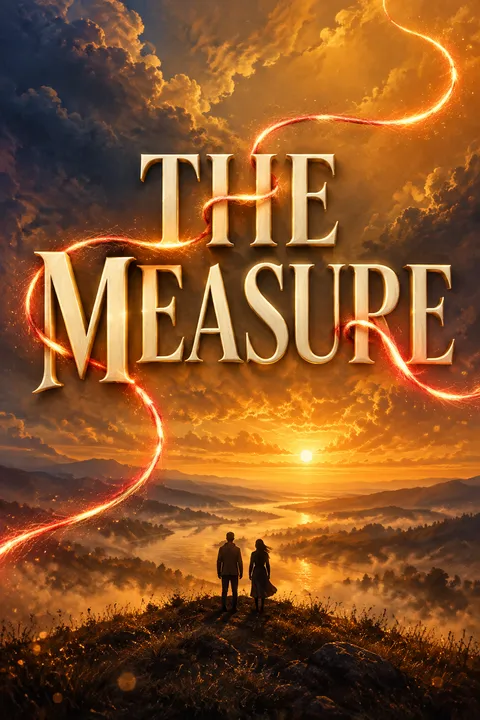
In March, small wooden boxes appear overnight beside every adult on Earth. Each bears its recipient’s name and promises that a personal measure lies inside. Beneath a silver cloth rests a string, different in length for every person.
The boxes cannot be traced or destroyed, and no one knows whether the strings describe fate or merely announce it. For a world accustomed to treating the future as private and uncertain, the arrival turns every doorstep into a question.
The boxes make mortality visible before anyone understands what visibility will cost. Their uniformity creates a shared crisis, but the strings immediately divide that common experience into private measures. The boxes also function as a test of consent: people may choose whether to look, yet they cannot choose whether the knowledge exists or whether others will demand it. By giving an unknowable force the shape of an ordinary object, the opening makes the supernatural feel domestic, intimate, and impossible to ignore.
Millions of Named Boxes
Nina,1 a cautious New York editor, wakes to messages reporting boxes around the world and finds one for herself and another for Maura,2 her girlfriend.2 Her architect friend Ben3 learns about them after his red-eye lands in New York, while his parents keep their boxes closed.
Nina’s younger sister,4 Amie,4 also refuses to look, preferring to let the impossible event remain unexplained. The boxes arrive only for adults, and new ones appear for people turning twenty-two.
Governments and laboratories scramble to identify their material, but the strings resist cutting and testing yields no ordinary explanation. People debate whether to open their chests, while businesses close and families gather. The crisis begins with a choice each person must make alone, even as the whole world faces it together.
The story begins not with a catastrophe that can be escaped, but with a decision that can only be postponed. Nina’s urge to gather information, Ben’s disorientation in a changed city, and Amie’s imaginative refusal establish different defenses against uncertainty. The boxes flatten geography while intensifying intimacy: everyone receives one, but no one can make the choice for another. Their promise of a personal measure also makes privacy fragile from the start. The crisis is supernatural in origin, yet its first consequences are social and psychological, shaped by what people fear others might discover.
Strings Become a Verdict
International medical teams compare strings with health records and confirm that their lengths correlate with lifespan. A calculator estimates the age at which each life will end. Nina1 and Maura2 finally open their boxes together: Nina’s1 string is long, while Maura’s2 points to an end in her late thirties.
Nina1 tries to dismiss the result, but the confirmation makes their shared future feel newly bounded. Ben’s girlfriend,14 Claire,14 has already opened his box without permission.
When she tells him his string ends around his mid-forties, she ends their relationship, unable to live with the countdown. Ben3 is left facing both the short future and the betrayal of losing the choice to learn it himself. The strings are no longer rumor; they have become intimate knowledge with consequences.
The revelation converts mortality from a general human condition into unequal, legible information. Nina’s long string offers relief, but it also sharpens her grief because Maura’s future is shorter. Claire’s breach shows that knowing someone’s fate can distort love into risk calculation, while Ben’s injury comes partly from being denied agency. The calculator appears scientific, yet its authority cannot answer the deeper question of what anyone should do with the result. The first confirmed truth therefore produces no common moral response. It makes people more certain about lifespan while leaving them less certain about how to live together.
Room 204 Takes Shape
Ben3 joins a support group for short-stringers at the Connelly Academy, where Maura2 soon arrives at Nina’s1 urging. Their facilitator, Sean,12 makes space for anger as well as fear, and the members begin to recognize one another as companions rather than cases.
During a writing exercise, Ben3 leaves a letter on the classroom floor. Amie,4 an English teacher who has kept her own box closed, finds it and responds as an anonymous correspondent.
Their notes circle around a wartime letter to a woman named Gertrude, the small consolations of city life, and the question of whether knowing a lifespan is worth the pain. Neither knows the other’s identity. The correspondence gives Ben3 a place to be candid without speaking aloud, while Amie4 finds herself drawn toward the person behind the page.
Room 204 becomes a counterpublic: a small space where short-stringers can speak without being reduced to a headline or a medical forecast. The group’s humor does not cancel grief; it lets people remain more than their grief. The letters extend that protection by allowing intimacy without immediate exposure. Amie’s choice not to look is not simple denial, and her replies show that uncertainty can still invite connection. The Gertrude story gives the exchange a shared object to interpret, revealing how easily readers project their hopes and fears onto incomplete evidence. In this world, listening becomes a form of care.
Fear Enters the Hospital
As short-stringers seek medical help, hospitals stop admitting healthy people solely because of their strings. Hank,7 an emergency doctor, watches one frightened man, Jonathan Clarke, turned away after reporting no symptoms.
On May 15, Clarke returns to New York Memorial with a gun and kills five people before security officers shoot him. Hank7 helps evacuate patients and then treats the wounded. The shooting intensifies public fear of short-stringers, despite the fact that most are not violent. Online discussions reveal people losing insurance, jobs, and loans because of their strings.
Unable to keep watching desperate patients ask for help he cannot provide, Hank7 resigns from the hospital. The crisis has moved beyond private knowledge: institutions now use the strings to decide who deserves care and opportunity.
The hospital makes the book’s central ethical danger concrete: a prediction can become part of the machinery that helps produce the outcome people fear. Clarke’s violence is real, but it becomes a justification for treating a whole group as suspect. Hank’s professional helplessness is sharpened by the institution’s refusal to treat people who may be nearing death. Meanwhile, economic exclusion turns a metaphysical mystery into material deprivation. The strings do not themselves discriminate; people and institutions interpret them, then build policies around those interpretations. The distinction matters because it locates responsibility not in fate, but in the choices made under its shadow.
Rollins Makes Fate Policy
Congressman Anthony Rollins,8 a struggling presidential candidate, makes string disclosure a test of fitness for office and uses fear after a Capitol bombing to push the STAR Initiative. The policy requires disclosures for military personnel and certain high-security government posts, restricting short-stringers from some assignments.
Two graduating cadets, Jack Hunter5 and Javier García,6 face the rule differently. Jack5 has a long string but fears combat; Javier6 has a short one and wants the active service his training has prepared him for.
They switch boxes and report each other’s strings to the Army. Javier6 gains access to the career he wants, while Jack5 is assigned safer duties. Their lie gives Javier6 opportunity, but binds both friends to a secret that can damage their futures.
Rollins turns a measure of mortality into a credential, making longevity appear equivalent to competence and commitment. Jack and Javier’s exchange exposes the contradiction at the heart of the policy: the government claims to protect service members while blocking a capable person from choosing risk. Their decision is neither purely heroic nor purely self-serving. Javier acts from vocation, while Jack seeks both to help his friend and to escape a future he dreads. Their deception complicates the novel’s idea of agency: the strings may predict an ending, but institutions still shape which lives people are allowed to lead before it arrives.
The Lives They Might Want
In the support group, Maura2 jokes with Ben3 and begins to feel less alone, but she privately develops an unexpected longing for a child. She decides against having one with Nina,1 knowing that a child would lose a mother while still young, then tells Nina1 the truth about her conflicted feelings.
Nina1 listens without trying to turn uncertainty into a solution, and the couple recover some of their closeness. The group also learns that Lea,11 another short-stringer, is carrying twins as a surrogate for her brother and his husband.
Her choice shows Maura2 that people facing similar limits can make different decisions without invalidating one another. Hank,7 meanwhile, joins the group after admitting to Anika,13 a surgeon and former partner, that his own string is extremely short.
This section refuses the comforting idea that people with the same prognosis should reach the same conclusion. Maura’s desire for a child does not prove that her earlier choice was wrong; it reveals how the box has made previously abstract possibilities feel painfully closed. Her honesty with Nina matters more than a neat resolution. Lea’s surrogacy offers another model of care, one based on a family arrangement different from Maura’s. Hank’s presence adds a more immediate encounter with mortality. Together, these lives challenge the assumption that a string dictates not only how long someone has, but what their choices should mean.
Hank Steps Into Fire
At a protest against Rollins8 in Manhattan, Hank7 spots a woman moving through the crowd with a concealed gun. She aims toward the congressman,8 but Hank7 lunges in front of her and is shot. The woman is seized, and bystanders try to stop Hank’s7 bleeding as he is carried away.
He dies from the wound. Before the ambulance doors close, Ben3 tells him that the people Hank7 saved as a doctor were genuinely saved; their long strings did not make his work pointless.
Rollins8 survives and treats the attack as proof that short-stringers are dangerous, turning Hank’s7 death into campaign fuel. Maura2 and the support group mourn Hank,7 whose final act reflects the work he spent his life doing: moving toward people in danger, even when he cannot control what happens next.
Hank’s death is the story’s sharpest collision between prediction and action. His short string does not make him passive; his medical training and instinct lead him to intervene, and that choice protects others even as it costs him his life. Ben’s attempt to comfort him reframes rescue as meaningful without claiming that medicine can defeat every ending. Rollins then appropriates the event to support a policy Hank opposed. The same act can be remembered as a life saved, a death, or political evidence, depending on who controls the account. The struggle over interpretation becomes part of the struggle over justice.
Jack Breaks the Script
After Rollins8 uses Jack’s5 supposed short string in a debate to present himself as compassionate, Javier6 confronts Jack5 for allowing his uncle8 to exploit their secret. Their friendship strains.
Months later, Jack5 interrupts a Rollins8 rally, identifies himself as the short-stringer his uncle8 has advertised, and condemns the campaign’s treatment of people like him. Security removes him from the stage, and the family withdraws its support. A viral speech by a South African student urges young people to reject fresh forms of prejudice, helping grow the Strung Together movement.
At another demonstration, Jack5 intervenes when two teenagers harass a campaign volunteer. The small act teaches him that resistance is not only a public speech; it also means refusing to leave a stranger alone with cruelty.
Jack’s public break with Rollins begins as an overdue response to a family’s use of his identity, but it grows into a broader recognition of responsibility. His first instinct is to protect himself from the Hunter family’s disapproval; Javier’s anger makes the cost of that retreat visible. The later street intervention is modest beside the rally, yet psychologically decisive because Jack acts without cameras or family approval. The movement’s international reach also shifts the frame from short-stringers pleading for sympathy to younger people refusing inherited habits of exclusion. Solidarity here is practiced, not merely declared.
Venice Makes Forever
As Maura2 grows weary of fighting at work and in public, Nina1 plans a trip to Italy so the two can leave New York’s pressure behind. In Venice, Maura2 learns how masks once let citizens cross strict social boundaries, and sees a city still standing despite its precarious foundations.
In Verona, she and Nina1 read a message about making their own version of forever. Nina1 proposes beside the river, and Maura2 accepts. Meanwhile, Ben3 and Amie4 discover that their growing attraction is linked to the anonymous letters they have exchanged for months.
Amie4 is frightened by Ben’s3 short string and by her own wish for children. She and Nina1 quarrel over Nina’s1 engagement, but Amie4 later apologizes and returns to the wedding. Her dance with Ben3 renews their connection, though she still has to choose whether to risk loving him.
Venice and Verona turn the novel’s abstractions into places: one city persists through continual repair, while the other carries the weight of a tragic love story. Nina’s proposal does not deny Maura’s short string; it refuses to treat uncertainty as a reason love must wait. Amie’s response to Ben exposes a different pressure. She wants intimacy, yet imagines herself responsible for the grief a future partner and children might endure. Her conflict with Nina arises from love expressed as protection, but protection can become control when it assumes another person cannot choose. The section lets both courage and hesitation remain emotionally credible.
One World Answers Back
At a coordinated Strung Together event, screens in public squares around the world celebrate short-stringers through the work, relationships, and acts of service that define their lives. Ben3 attends in Times Square with his support group and the people closest to him.
The gathering is loud and joyful, not the solemn memorial he expected. During the celebration, Lea’s11 water breaks. Maura2 helps her through the packed streets and rides with her to the hospital, while the rest of the group follows. Lea11 gives birth to twins for her brother and his husband.
Waiting together, the group has become something like a family, sharing the arrival of new life after sharing Hank’s7 loss. The public tribute does not end discrimination, but it gives short-stringers a visible place beyond fear and pity.
The event changes the emotional grammar of public remembrance. Rather than displaying short-stringers only as victims, it recognizes what they have made and whom they have cared for. The birth that follows is not a symbolic cure for grief; Lea’s family still faces the reality of her limited time. Yet the group’s presence makes care collective rather than private. The sequence joins two truths the book keeps in tension: lives end, and life continues through relationships, work, and children. Its celebration is therefore neither denial nor triumph over fate. It is a refusal to let fear monopolize the public meaning of a short life.
Javier’s Choice Costs Everything
Several years later, Javier6 serves as an Army captain. During a rescue mission, he leads a team to a downed aircraft and helps recover pilot and medical personnel, including Anika.13 When hostile forces approach, Javier6 volunteers to draw them away so the wounded can reach the helicopter.
He is shot and dies before it returns. His letter to his parents explains that he and Jack5 switched strings so Javier6 could serve in the role he had earned. Jack5 tells Javier’s6 parents the truth and later brings the letter to Maura2 at the Johnson Foundation, asking her to make the story public.
The disclosure risks punishment, but Jack5 wants Javier’s6 choice known. The story also reopens the account of Hank’s7 shooter: she had been grieving a brother whose death at a fraternity party Anthony8 helped conceal.
Javier’s final mission fulfills his sense of service, but the story does not make his death a simple vindication of the string exchange. His choice saves others and ends his life; both facts remain true. The letter gives his parents an account of his agency, while Jack’s decision to expose it converts private loyalty into public accountability. The revelation about Hank’s shooter further destabilizes the official narrative: she was not acting from a short string, but from a decades-old grievance tied to Anthony’s past. Political fear had concealed the human history behind the violence, making truth-telling necessary even when it cannot restore the dead.
Maura’s Decade, Nina’s Grief
Maura’s2 string ends after the couple have built a marriage and a life together. An undetected heart abnormality takes her life, and Nina1 delivers a eulogy that measures their years by the love and purpose they contained, not by their length.
Maura2 had left publishing to work for the Johnson Foundation, helping defend short-stringers’ rights. Nina1 returns to the manuscript she has been writing about people changed by the boxes and dedicates it to Maura.2 She keeps the work because Maura2 had asked her to keep making plans.
Their marriage does not erase Nina’s1 grief, and Nina1 does not pretend that the strings made Maura’s2 death fair. Instead, she carries forward Maura’s2 public commitment while learning to live without the person who made their shared home feel complete.
Nina’s loss tests the distinction between acceptance and approval. Her eulogy finds meaning in the marriage without claiming its brevity was desirable or deserved. Maura’s work at the foundation extends her character beyond the private relationship, showing that her anger became an instrument of civic action rather than a flaw to be suppressed. Nina’s manuscript, dedicated to her wife, turns personal memory into testimony about a wider population. The demand to keep making plans is not a command to recover quickly; it is a way of remaining answerable to the living while carrying grief that cannot be solved.
An Unopened Future
Ben3 and Amie4 build the family they once feared might be impossible, raising Willie and Midge in a home filled with books, drawings, and memories. Ben’s3 illness advances, but their plans are prepared; then a car crash kills both him and Amie4 unexpectedly. Nina1 learns that Amie’s4 unopened string ended at the same age as Ben’s.3
She adopts Willie and Midge and moves into their home, keeping the promise to give them family around them. Years later, she brings them to Central Park, where a bench bears the message Amie4 once wrote to Ben.3 Nina1 watches the children play and wonders whether leaving her own string unopened might also be a choice. For now, she joins them, holding their hands as the world continues without explaining why.
The ending gives Amie’s refusal to look a consequence that cannot be reduced to either wisdom or mistake. Nina discovers that Amie and Ben shared an ending, but the knowledge arrives too late to alter their choices or prevent the accident. Their children become a continuation of love, not compensation for loss. Nina’s adoption makes her the family’s keeper, yet her final movement toward the playground matters: she does not stay frozen at the memorial. The novel closes on uncertainty rather than a solution to the boxes. What remains open is the middle of life, where people still choose whom to care for and what to do next.
Analysis
The novel’s central invention is not simply foreknowledge of death; it is the unequal social value people attach to that knowledge. A short string begins as a private fact, then becomes a reason to deny medical care, employment, military service, credit, or trust. The injustice is not produced by the boxes alone. It grows through institutions that convert prediction into eligibility and through ordinary people who mistake statistical lifespan for character.
The characters answer that pressure in different ways. Nina1 seeks facts to contain helplessness. Amie4 preserves possibility by refusing to look. Ben3 wants to build something that will outlast him, while Maura2 insists that anger and ambition remain legitimate even when time is limited. Jack5 and Javier’s6 exchanged strings show how rules can distort vocation: the person prepared to serve is restricted, while the person afraid of combat is permitted to proceed. Their choice grants agency but does not free them from consequences.
The book resists both fatalism and easy inspiration. A long string cannot guarantee safety, a short one does not make someone reckless, and a meaningful life is not a consolation prize that makes early death fair. Hank’s7 care saves people without defeating mortality; Maura’s2 love for Nina1 is whole without being permanent; Ben3 and Amie’s4 children inherit a family shaped by both joy and loss. The ending’s emphasis on keeping plans, raising children, and continuing public work does not resolve the origin of the boxes. Instead, it locates meaning in the unmeasured middle: the choices people make, the care they offer, and the stories they leave for those who continue.
Review Summary
Reviews of The Measure are polarizing. Many readers praise its thought-provoking premise—mysterious boxes containing strings that reveal each person's lifespan—and its emotional, character-driven storytelling. Fans highlight its hopeful tone, poignant relationships, and rich discussion potential, making it a popular book club choice. Critics, however, find the execution flat, citing shallow characters, heavy-handed political messaging, short chapters that prevent deep connection, and a predictable plot. The audiobook narration by Julia Whelan receives consistent praise. The novel holds an overall Goodreads rating of 3.96 out of 5.
People Also Read










Characters
Nina
The careful editorNina is a New York magazine editor and Amie’s4 older sister, known for precision, preparation, and an instinct to protect the people she loves. Her relationship with Maura2 asks her to care without pretending she can control the future. The boxes intensify a lifelong need for certainty, shaped in part by an earlier loss of control when she was outed at school. Nina is analytical but not emotionally detached; she searches for facts because she fears helplessness. Her strongest relationships challenge her to listen before solving, and to recognize that commitment can be a deliberate choice even when it cannot guarantee a long life.
Maura
The fearless publisherMaura is a lively publishing professional whose quick humor, confidence, and restlessness make her a natural counterweight to Nina’s1 caution. She changes jobs and follows her curiosity, but a short string makes choices she once treated lightly feel newly urgent. Maura does not want pity or a softened version of the truth; she needs room to be angry without being judged as unstable. Her partnership with Nina1 is rooted in affection and difference, not sameness. She values directness, community, and the right to decide what matters in the time she has, even when the answer is complicated.
Ben
The searching architectBen is a thoughtful architect who has spent much of his life drawing buildings and imagining the people who might inhabit them. A short string unsettles his hopes for partnership, parenthood, and lasting work, while a former girlfriend’s14 decision to open his box without permission deepens his fear of being abandoned. Ben is shy in conversation but candid in writing, and he seeks a way to make something enduring without confusing permanence with worth. His empathy grows through the support group, where he learns that he can accept help as well as offer it.
Amie
The unopened-box teacherAmie, Nina’s1 younger sister, teaches English and lives readily in books, daydreams, and imagined futures. Unlike Nina1, she leaves her box closed because knowing a number would threaten the possibilities she depends on. She is warm and imaginative, but her habit of rehearsing future outcomes can make real choices feel dangerous. Amie cares deeply for Nina1 and wants a family of her own, yet worries about the pain that loving someone with a short string could bring. Her exchanges with an unknown correspondent reveal a thoughtful, vulnerable side beneath her romantic fantasies.
Jack Hunter
The reluctant heirJack is a young Army officer and the nephew of presidential candidate Anthony Rollins8. Raised among a prominent military family, he feels pressured to embody a legacy that does not fit his temperament. He is anxious about combat, uncomfortable with public attention, and often avoids confrontation even when he knows something is wrong. His friendship with Javier6 gives him a rare place to be treated as an ordinary person rather than a Hunter. Jack’s central struggle is learning to separate loyalty from obedience and to define courage for himself.
Javier García
The devoted cadetJavier is Jack’s5 academy roommate and closest friend, the first in his family to attend college. His parents’ sacrifices and example give him a deep commitment to service, while his own discipline and ambition make him determined to earn a meaningful role in the Army. Javier is more direct than Jack5 and less impressed by inherited status. His religious upbringing offers comfort, though the strings test his belief in fairness and providence. He cares about his family and his country, but wants those loyalties to leave room for a life he has chosen himself.
Hank
The exhausted doctorHank is an emergency-room physician whose work has trained him to act quickly in crisis. He takes pride in saving lives, but the strings unsettle his belief that medicine can make a difference. He keeps his own short string private because he does not want pity or to burden his elderly mother. His past relationship with surgeon Anika13 remains affectionate but unresolved, and his decision to seek a support group shows how difficult it is for a caregiver to accept care. Hank’s instinct is to move toward suffering, even when he cannot repair it.
Anthony Rollins
The ambitious candidateAnthony is a wealthy Virginia congressman seeking the presidency, skilled at reading public anxiety and turning it into political advantage. He is charismatic, confident, and convinced that success confirms his sense of destiny. His marriage to Katherine9 joins personal ambition with a powerful family legacy. Anthony frames string disclosure as transparency and security, while treating privacy and equality as obstacles to his goals. He is adept at presenting a polished public self, but his need to win encourages him to minimize the human costs of the policies he advances.
Katherine Rollins
The political partnerKatherine is Anthony’s8 wife and Jack’s5 aunt, raised in a socially prominent Virginia family. She shares her husband’s8 ambitions and helps sustain his campaign, but her affection for Jack5 gives her a more personal view of the consequences of string-based policy. She can be generous and nurturing, yet she is also invested in status and political success. Katherine’s divided loyalties show how family love can coexist with complicity in choices that hurt other people.
Wes Johnson
The short-string senatorWes Johnson is a Black senator running for president who argues that a candidate’s values and record matter more than the length of a string. He understands that his words will be scrutinized and resists Rollins’s8 demand for disclosure as a new form of discrimination. Johnson’s experience makes him alert to how apparently neutral rules can exclude people already facing unequal treatment. He is an eloquent advocate, though public sympathy does not automatically translate into political support.
Lea
The generous surrogateLea is a member of the Connelly Academy support group, known for her warmth and openness. She chooses to carry twins for her brother and his husband, making family through an act of deliberate generosity. Her decision does not erase the risks attached to her short string, and she does not pretend it should. Lea’s presence broadens Maura’s2 sense of what people can choose under pressure and helps the group celebrate a future they will not all share for the same length of time.
Sean
The group facilitatorSean is a clinical social worker who leads the short-stringer group at the Connelly Academy. A wheelchair user, he knows the experience of being treated as an exception and brings that knowledge without claiming every hardship is the same. He encourages members to write, joke, grieve, and speak at their own pace. His steady presence helps Room 204 become a place where people can meet one another without being reduced to their circumstances.
Anika Singh
The gifted surgeonAnika is a skilled surgeon and Hank’s7 former partner. Her commitment to medicine is intense, and her scientific outlook makes her reluctant to accept claims without evidence. She cares about Hank7 but has struggled to give their relationship the same priority she gives her work. Her practical compassion can coexist with curiosity that crosses a boundary, making her neither saint nor villain. Anika’s professional and personal lives meet through the strings in ways that test what she owes to both.
Claire
Ben’s former partnerClaire is Ben’s3 girlfriend before the boxes arrive. She wants the security of a shared future and reacts to uncertainty by seeking information, even when doing so violates Ben’s3 privacy. Her fear is understandable, but it causes lasting harm. Claire represents the painful difference between loving someone and feeling able to live with the risks their future presents.
Terrell
The theatrical producerTerrell is a stylish, quick-witted member of the support group with ties to the theater world. He brings gossip and humor into Room 204, but his theatrical ambitions also help him imagine collective work for short-stringers. He is attentive to how exclusion operates in ordinary social settings and uses charm to keep difficult conversations from collapsing into despair.
Nihal
The searching studentNihal is a Princeton graduate whose Indian immigrant parents raised him with faith, discipline, and high expectations. He loves his heritage but sometimes feels caught between his own beliefs and the religious framework his parents offer as comfort. His short string makes that difference more painful: he wants this life, not only the promise of another. Nihal’s careful intelligence makes him a thoughtful presence in the group.
Chelsea
The irreverent realistChelsea is a lively support-group member who keeps up her spray tans and jokes even as the strings reshape daily life. Her humor is not indifference; it is a way to claim ordinary pleasures amid fear. She is blunt, sociable, and alert to the absurdity of a world that expects short-stringers to stop living.
Carl
The skeptical group memberCarl is a gruff member of the support group who initially resists its exercises and resents being asked to perform vulnerability. His skepticism gives the group a less polished voice, while his continued presence suggests that belonging need not require a person to become openly sentimental.
Deborah Caine
Nina’s editor-in-chiefDeborah leads Nina’s1 magazine and receives early confirmation from a government source that the strings are genuine. She tries to balance the public’s need for information with the risk of adding panic. Her composure reflects the professional discipline required to report on catastrophe without letting language make human losses feel routine.
Simon Starr
The wartime correspondentSimon is a soldier whose wartime letter to his fiancée, Gertrude, becomes the subject of Ben3 and Amie’s4 anonymous correspondence. Though absent from the present-day action, his uncertain words give the pair a shared mystery through which they explore love, loss, and the limits of interpretation.
Plot Devices
The named boxes and strings
Make lifespan visibleEvery adult receives a named box containing a string that corresponds to the full length of their life. The strings cannot be cut or destroyed, and a government-supported calculator initially estimates the age of death within a narrow window before later revisions make the prediction more precise. The device gives the novel its central pressure: characters can choose whether to look, but once the meaning is known, family, employers, governments, and strangers may treat them differently. The boxes never explain their origin or purpose, leaving the characters to decide what the information should mean.
Room 204
Build a chosen communityThe support group at the Connelly Academy gathers short-stringers at different stages of understanding and acceptance. Sean’s12 prompts, including a letter-writing exercise, give members ways to express fears they may not manage aloud. The room also lets the novel show how humor, anger, practical advice, and shared silence can coexist. Its members begin as strangers joined by a label, then become witnesses to one another’s ordinary and extraordinary moments. The group’s weekly rhythm provides a human counterweight to the public institutions that classify people by string length.
The anonymous letters
Let intimacy precede identityBen3 leaves a personal letter in the classroom where Amie4 teaches, and she replies without knowing who wrote it. Their exchanges about a wartime letter, city life, and the meaning of happiness become a private courtship conducted before they meet as themselves. The correspondence gives both characters a safer way to be candid, while the repeated questions about Gertrude and her soldier20 help them recognize each other later. Once the writer’s identity is known, the letters also make the stakes of honesty sharper: they have already formed a bond, but they must decide what to do with the truth about Ben’s3 string.
The string exchange
Expose agency under pressureWhen the STAR Initiative requires military string disclosure, Jack5 and Javier6 exchange boxes so Javier6 can pursue active service while Jack5 avoids the combat role he fears. The deception gives Javier6 a path he believes he has earned, but it also lets the Army’s rule continue unchallenged and entangles both friends in a dangerous secret. The exchange complicates the idea that strings simply determine fate: the friends’ actual lengths remain unchanged, yet the lengths reported to the institution alter their available choices. Its eventual exposure forces Jack5 to decide whether loyalty means preserving the lie or telling the public what Javier6 chose.
Strung Together
Turn visibility into solidarityThe movement begins through acts of protest, public storytelling, and a viral speech by a young South African student. Its symbol, two intertwined lines of different lengths, appears on pins and in public demonstrations. Rather than asking the world to feel sorry for short-stringers, the movement makes their work, relationships, and contributions visible. A coordinated global event celebrates those lives, and advocacy continues through organizations such as the Johnson10 Foundation. The device becomes an answer to the social harm caused by labels: it connects people across string lengths without pretending that discrimination or grief has disappeared.
Download PDF
Download EPUB
.epub digital book format is ideal for reading ebooks on phones, tablets, and e-readers.








